
Reviewed · INCHEON TOURS
Grand South Korea 12 days 11 nights
Korea rewards a packed schedule. This 12-day private tour links Seoul, Jeju Island, Gyeongju, Busan, the mountains, and the DMZ, giving first-time visitors a broad look at the country without asking them to arrange hotels, internal flights, or long transfers themselves. I like the way it mixes famous sights with hands-on activities, especially the kimchi and hanji paper workshops. I also like the inclusion of Jeju’s volcanic sites and Gyeongju’s ancient Silla monuments.
The main drawback is the pace. You change regions often, and several days include four to six major stops. At $8,410 per person, this is a costly trip, so you should value private transport, planning help, four-star hotels, included breakfasts, and domestic airfare enough to justify the price.
In This Review
- Five details that shape the experience
- Arriving in Incheon and starting with Seoul
- Seoul’s hilltop views and Buddhist calm
- Jeju’s craters, caves, and sunrise peak
- From Korean fortifications to Jeonju’s hanok roofs
- Royal portraits, bibimbap, and a surviving Joseon village
- Tea fields, Haeinsa, and Busan seafood
- Silla monuments and Andong’s riverside village
- Seoraksan, Abai Village, and the East Sea
- Cable-car views, Seoul markets, and the DMZ
- Seoul’s final palace walk and what the price buys
- Who should book this South Korea tour?
- FAQ
- How long is the Grand South Korea tour?
- Is this a private tour?
- What is included in the tour?
- Is pickup available?
- Do I need to bring my passport?
- Does the tour visit Jeju Island?
- Are meals other than breakfast included?
- Does the tour include a kimchi class?
- Can I cancel for a full refund?
Five details that shape the experience
- Jeju receives two full sightseeing days, with volcanic craters, lava caves, Seongsan Ilchulbong, and the haenyeo tradition.
- The route covers several UNESCO-linked sites, including Hwaseong Fortress, Haeinsa Temple, Bulguksa, Seokguram, and Gyeongju’s historic areas.
- The tour is private, so only your own group participates rather than a large shared coach.
- Hands-on Korean culture is built in, with kimchi and hanji paper-making experiences, plus a Korean spa visit noted among the tour highlights.
- The DMZ takes about five hours, and you must bring your passport for the security check.
- The schedule is ambitious, with long sightseeing days and frequent hotel changes across the country.
Arriving in Incheon and starting with Seoul
Your tour begins at Incheon International Airport, where a local guide meets you and transfers you to the hotel. The airport transfer is listed at about 30 minutes, though the actual time will depend on traffic and your hotel location.
This is a sensible first step after a long flight. You do not need to figure out airport trains, taxis, or a hotel address while tired. Still, the first day is only an arrival and transfer day, so the sightseeing really begins after you have rested.
The tour is designed for a private group, which matters here. Korea has an excellent public transportation system, but this route reaches places that are easier by private vehicle, especially Jeju’s scattered sights, mountain temples, tea fields, and traditional villages. You trade some independence for a much simpler travel day.
More Incheon trips:
- Private Airport Transfer : Incheon to/from Seoul (up to 7 pax)
★ 5.0 · 344 reviews - Flexible Private Guided Tour in Seoul (Optional Incheon Layover)
★ 5.0 · 323 reviews - Private Airport Transfer * Incheon Airport <-> Seoul (1-5 people)
★ 5.0 · 235 reviews
Seoul’s hilltop views and Buddhist calm
On the second morning, you leave the hotel after breakfast and head up Bugak Skyway. The road reaches a traditional plaza, a pagoda rest area, and a wildflower garden, with broad views over Seoul. This is a useful early introduction to the capital because you see its size before spending time among its palaces and markets.
Next comes Gilsangsa Shrine, a Buddhist temple known for cultural exchange and programs that introduce visitors to Buddhist practice. The setting offers a quieter pause before the trip turns toward Jeju. After the temple, you fly to Jeju Island, known locally as the Island of Gods.
The day ends at Yongduam Rock, or Dragon’s Head Rock, a natural volcanic formation near the sea. The stop is short, but it gives you an immediate sense of Jeju’s volcanic character. It is a good contrast with Seoul’s dense city streets.
The domestic flight is included, which is an important part of the price. You avoid booking a separate ticket and coordinating the airport transfer yourself. Since the exact flight time is not given, ask the operator how much free time you will have on Jeju after landing.
Jeju’s craters, caves, and sunrise peak
Jeju gets some of the tour’s best scenery on the third day. At Sangumburi, you see a broad volcanic crater with a circumference of more than two kilometers. The crater is unusually flat and supports many plant species in a small area. The walk takes about two hours, so comfortable shoes are sensible.
Ilchul Land follows, with a flower garden, a bonsai garden, and Micheon Lava Cave. This stop combines cultivated beauty with the island’s volcanic geology. It also helps break up the day before the climb and views at Seongsan Ilchulbong.
Seongsan Ilchulbong rose from the sea during a volcanic eruption more than 100,000 years ago. Its crater is about 600 meters wide and surrounded by steep rock formations. The one-hour visit can be scenic, but you should expect some uphill walking if you want the best views. In spring, yellow canola flowers add color around the peak.
The Haenyeo Museum explains Jeju’s famous women who gather shellfish and seaweed using simple equipment. This is one of the more meaningful stops because it connects the island’s food culture with the work of local women and coastal communities. The museum presents traditional homes, tools, and daily life.
The Jeju Folklore and Natural Museum adds another layer, covering marine life, rocks, soil, plants, animals, and island customs. It is useful on a rainy day, though two museums in one day may feel less lively than the outdoor stops.
The final visit is Mysterious Road, a short optical illusion where cars and objects appear to roll uphill. It is a quick curiosity rather than a major attraction. I would treat it as a light ending to a very full day.
From Korean fortifications to Jeonju’s hanok roofs
Day four shifts back to the mainland and introduces Korea’s traditional architecture. Hwaseong Fortress in Suwon was built in the late 18th century during the reign of King Jeongjo. Its walls surround Haenggung, a temporary palace used when the king visited his father’s tomb. If the mini train operates that day, the tour may use it to see more of the fortress.
The fortress visit is listed at one hour, which is enough for an introduction but not a complete walk around the walls. If you care about military architecture, ask how much time is planned outside the palace section.
The Hanji Museum focuses on Korean paper, with old books, archives, paper-making tools, and examples of about 100 types of paper. The hands-on hanji activity is a strong feature. You make paper with help from a paper-making specialist, so you leave with more than photographs.
Jeonju Hanok Village is the day’s most atmospheric stop. About 735 traditional Korean houses occupy the historic district, including homes with the gently raised roof edges typical of hanok design. You have about two hours to see the lanes, shops, tea houses, and restored buildings.
The village is popular, and some areas are now commercial. Even so, it remains valuable because the traditional homes are part of a living neighborhood rather than a single museum building. Pay attention to the separation between the anchae, where women traditionally lived, and the sarangchae, associated with men and scholars.
A completely different kind of day:
- Private Airport Transfer: Incheon Airport to Seoul City (1-5 pax)
★ 5.0 · 92 reviews - Private Layover Tour from Incheon Airport to Seoul
★ 5.0 · 78 reviews - Seoul Layover Private Tour from Incheon Airport
★ 5.0 · 65 reviews - (P/Transfer) Incheon Airport ↔ Seoul (Up to 5 Pax)
★ 5.0 · 61 reviews
Royal portraits, bibimbap, and a surviving Joseon village
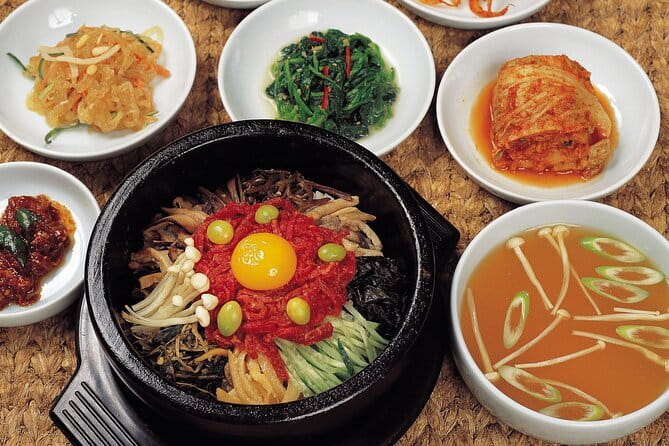
Day five begins at Gyeonggijeon Shrine in Jeonju. Built in 1410, it holds a portrait of King Tae-jo, founder of the Joseon Dynasty. The grounds also include royal portraits, mortuary tablets, and ceremonial carriages. The existing structure was rebuilt in 1614 after damage during the Imjin War.
A bibimbap meal is part of the day’s food experience. Jeonju is closely linked with this dish, which combines rice, vegetables, meat, and gochujang. The meal is practical cultural education: you see how separately prepared ingredients come together at the table.
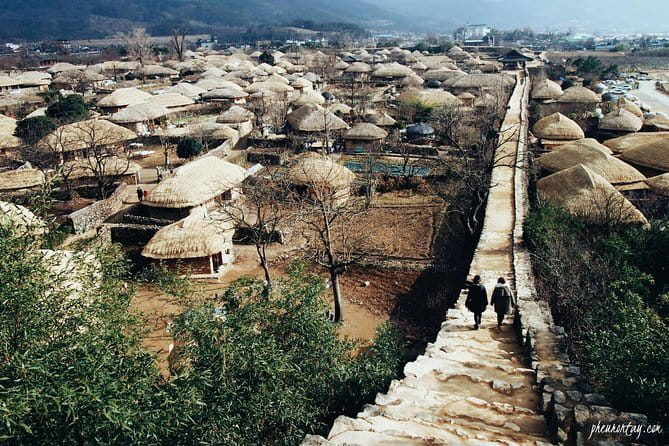
You then travel to Naganeupseong Folk Village near Suncheon. This is the only remaining Joseon-era castle village in Jeollanam-do, with stone walls, government buildings, and traditional homes. About 85 households and 229 people still live there, giving the site a stronger sense of daily life than a fully preserved museum town.
The two-hour visit should allow time to walk inside the walls and see how the houses fit into the defensive settlement. The route is particularly good for people who want more than palace photographs. You see how ordinary communities were organized, not just where kings lived.
Tea fields, Haeinsa, and Busan seafood
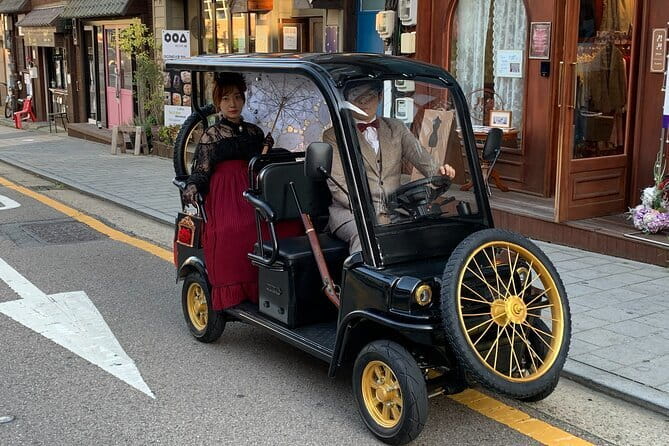
Boseong’s Daehan Dawon tea plantation brings a slower morning. Rows of tea bushes cover the hillside, and the observation deck may offer views toward the sea on a clear day. The visit takes about an hour, so you get the main view without spending half the day on a plantation walk.
The next major stop is Haeinsa Temple, founded in 802. It is home to the Tripitaka Koreana, a vast collection of Buddhist woodblocks, and Janggyeongpanjeon, the historic storage buildings designed to protect them. The temple is recognized for its cultural importance, and the grounds include many other designated treasures.
You have about two hours at Haeinsa. That is enough for a meaningful visit, but listen closely to the guide because the value here lies in understanding what the buildings and woodblocks represent, not simply seeing another Korean temple.
The day ends at Jagalchi Market in Busan. Korea’s largest seafood market sells live and dried fish, and the stalls reflect Busan’s long connection with the sea. The market is a good place to notice local food culture, though the tour data does not specify whether a seafood meal is included, so budget separately if you want to eat there.
The route then introduces Gyeongju, the former capital of the Silla Dynasty. Its historic areas include temple ruins, palace remains, stone pagodas, and sculpture. Gyeongju is often described as an outdoor museum, and that description fits: important sites are spread across the city rather than contained in one building.
Silla monuments and Andong’s riverside village
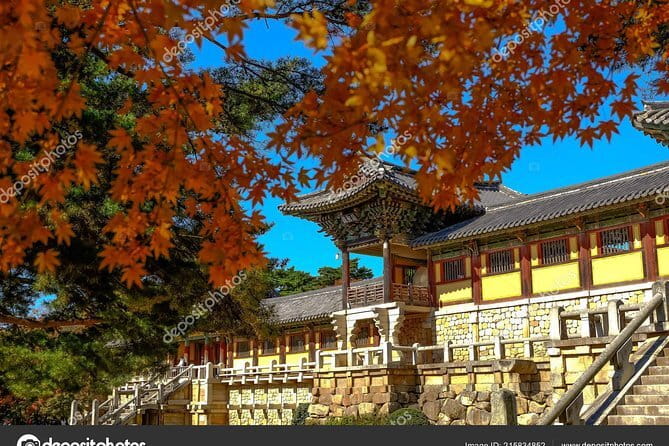
Day seven focuses on Gyeongju’s major treasures. Bulguksa Temple is the best-known religious site in the city, with stone stairways, pagodas, and graceful wooden buildings. Much of what you see reflects rebuilding and preservation over many centuries, so the guide’s explanation will add real value.
Seokguram is higher on Tohamsan Mountain. This artificial granite grotto holds a famous Buddha and dates to the same broad Silla building program as Bulguksa. The approach and mountain setting make it feel different from a city temple, although the two-hour allocation includes transport and walking time.
Daereungwon Tomb Complex contains large burial mounds from the Silla period. Cheonmachong Tomb was excavated in 1973 and yielded more than 11,000 artifacts, including the famous Cheonmado painting. Walking among the grassy mounds gives you a clear sense of how much of ancient Gyeongju remains above ground.
The day continues to Andong Hahoe Folk Village, a traditional settlement surrounded by the Nakdong River. The name means Village Enveloped by Water. Traditional houses, clan residences, and the village layout reveal a different side of Korean culture, one shaped by family, scholarship, and rural life.
Two hours is a useful amount of time here, but you will want walking shoes. The village is not a quick photo stop, and its appeal comes from seeing the houses and river setting at an unhurried pace.
Seoraksan, Abai Village, and the East Sea
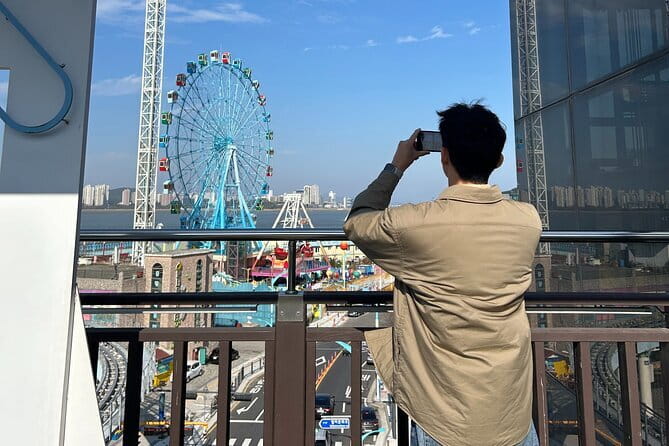
Day eight moves north toward Sokcho and Seoraksan National Park. The schedule includes Sokcho Central Market, although the description provided for this stop refers to a market in Wonju, so you should confirm the exact location before booking. That mismatch is worth clarifying because Sokcho’s food markets and Wonju’s market are not interchangeable stops.
Seoraksan is Korea’s major mountain destination, with Daecheongbong Peak rising to 1,708 meters. The tour description allows you to see the mountain in different seasons, from spring flowers to autumn foliage and winter snow. This is a scenic day, but weather can affect views and transport.
Abai Village, in Cheongho-dong, is linked to families from North Korea who settled there after the Korean War. The modest homes and coastal setting give the area a distinct character. It is also associated with the Korean drama Autumn in My Heart.
At Daepohang Port, you find live fish stalls, dried fish shops, and restaurants serving local seafood. The market sells fish such as eel, flatfish, flounder, and yellowtail, along with regional foods including squid sausage. The tour does not state that a meal is included, so treat dining here as an optional expense.
Cable-car views, Seoul markets, and the DMZ
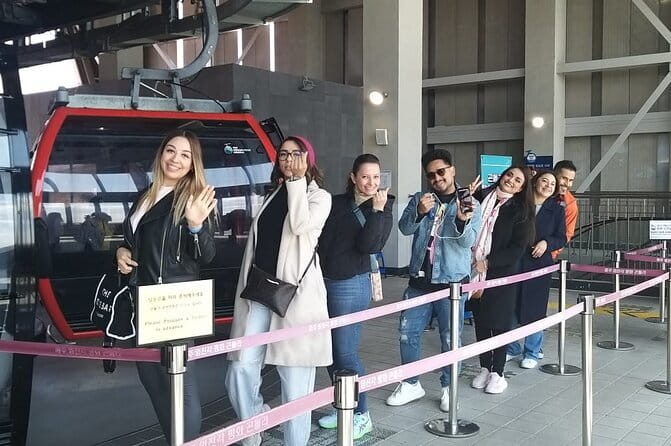
Gwongeumseong Fortress is a ruined castle site on Seoraksan. The old walking route is steep and rocky, while the cable car is used for easier access when operating. The two-hour stop gives you time for mountain views and the ruins, but cable-car availability can change.
Sinheungsa Temple is a short walk from the park entrance and is known for its large bronze seated Buddha. It has been rebuilt several times, and its setting beside mountain ravines makes it a calm counterpoint to the fortress.
Back in Seoul, Myeongdong offers brand-name shops, department stores, cosmetics, clothing, shoes, and food stalls. Namdaemun Market feels more traditional, with goods ranging from kitchenware and clothing to ginseng, flowers, toys, and outdoor equipment. You have about three hours across both areas, enough for browsing but not serious shopping in every section.
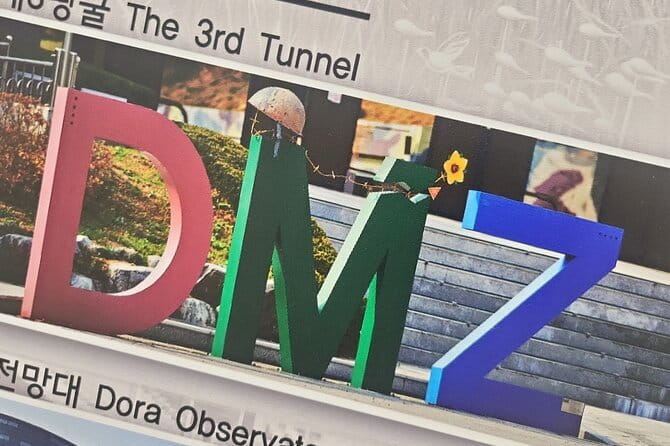
Day ten begins with the DMZ. The five-hour visit includes passport security control, an introduction at a United Nations camp, Dora Observatory, Dorasan Railway Station, and Imjingak Park. You must bring your passport. The border visit is serious rather than simply scenic, and schedules can be affected by security conditions or weather.
The afternoon returns to Korean culture. Museum Kimchikan explains kimchi, Korea’s everyday fermented vegetable dish, and includes a kimchi-making activity. The Hanbok Museum introduces traditional clothing, its colors, simple lines, and role in ceremonies.
Insadong finishes the day with galleries, tea houses, traditional restaurants, and shops selling Korean crafts. It is a good place to buy a small, useful souvenir rather than another mass-produced trinket.
Seoul’s final palace walk and what the price buys
Your last sightseeing day begins at Gyeongbokgung Palace, built in 1395 and later rebuilt after destruction during the Japanese invasions. It is the largest of Seoul’s five major palaces and includes some of the city’s most impressive royal buildings. Two hours gives you time to see the main courtyards and hear the story of Joseon royal life.
Bukchon Hanok Village follows. Its traditional homes sit between Gyeongbokgung, Changdeokgung, and Jongmyo Shrine. Many now contain cultural centers, guesthouses, restaurants, and tea houses, but the area is also a residential neighborhood, so keep your voice down and respect signs asking for quiet.
The final day is a transfer to Incheon International Airport, listed at about two hours. Confirm the pickup time carefully, since Seoul traffic and airport procedures can make this longer than the simple drive suggests.
At $8,410 per person, the trip is not a bargain tour. Its value depends on what you would otherwise spend on private vehicles, guides, domestic airfare, four-star hotels, admissions, airport transfers, and planning across 12 days. Breakfast is included, but the provided information does not say that all lunches and dinners are covered. Ask for a full inclusions sheet before paying.
The private format is the strongest reason to consider the price. You avoid managing Korea’s regional transport on your own, and you can ask for explanations at temples, museums, markets, and historical sites. The tradeoff is that the schedule leaves limited free time and may feel too controlled for independent visitors.
Who should book this South Korea tour?
I would recommend it to first-time visitors who want to see a large portion of Korea in one trip and prefer a private guide and pre-arranged transport. It suits people who want history, food, nature, traditional villages, markets, and modern Seoul in one carefully planned journey.
I would hesitate if you prefer slow mornings, long café stops, or several nights in one hotel. The route is ambitious, and some days may feel like a checklist of major sights. Before booking, confirm the exact hotels, flight schedule, meals beyond breakfast, Korean spa timing, guide language, and the Sokcho Central Market description.
Free cancellation is available up to 24 hours before the start time. Weather-related cancellations offer a different date or a full refund, while late changes are not accepted.
FAQ
How long is the Grand South Korea tour?
The tour lasts approximately 12 days and 11 nights.
Is this a private tour?
Yes. Only your own group participates in the private activity.
What is included in the tour?
The tour includes pre-arranged four-star hotels, domestic airfare, all breakfasts, listed admission tickets, guided touring, and airport transfers described in the schedule.
Is pickup available?
Yes. Pickup is offered, including a meeting and transfer from Incheon International Airport at the start.
Do I need to bring my passport?
Yes. You must bring your passport for the DMZ security and identification check.
Does the tour visit Jeju Island?
Yes. The route includes a domestic flight to Jeju and visits to Yongduam Rock, Sangumburi, Ilchul Land, Seongsan Ilchulbong, the Haenyeo Museum, the Jeju Folklore and Natural Museum, and Mysterious Road.
Are meals other than breakfast included?
The provided information confirms that all breakfasts are included and mentions a bibimbap meal. It does not clearly state that all lunches and dinners are included, so ask the operator for exact meal details.
Does the tour include a kimchi class?
Yes. Museum Kimchikan is scheduled for a one-hour visit that includes a kimchi-making experience.
Can I cancel for a full refund?
Yes, if you cancel at least 24 hours before the experience begins. Cancellations or changes made less than 24 hours before the start time are not accepted, and weather cancellations offer another date or a full refund.
Just added in Incheon
- Seoul Incheon Airport (ICN) to Seoul – Arrival Private Transfer★ 5.0 · 1 review
- Chinatown Incheon★ 5.0 · 1 review
- Private Transfer Incheon Cruise Terminal from and to Seoul★ 5.0 · 10 reviews
- Private Guided Tour in DMZ with Lake (Optional Incheon Layover)★ 5.0 · 9 reviews
- Private Transfer Incheon Airport<->Seoul(12 passengers)★ 5.0 · 2 reviews
- Private Airport Transfer: Seoul City to Incheon Airport 1-12 pax★ 4.5 · 11 reviews
- Incheon Airport ⇄ Seoul: Stress-Free Rides, Just for You!★ 5.0 · 1 review
- Private Airport Transfer – Incheon Airport ⇔ Seoul (Up to 7 or 11 people)★ 5.0 · 42 reviews
Incheon Tours, compared.

Private Airport Transfer : Incheon to/from Seoul (up to 7 pax)
Read our review →
Flexible Private Guided Tour in Seoul (Optional Incheon Layover)
Read our review →
Private Airport Transfer * Incheon Airport <-> Seoul (1-5 people)
Read our review →
Private Airport Transfer: Incheon Airport to Seoul City (1-5 pax)
Read our review →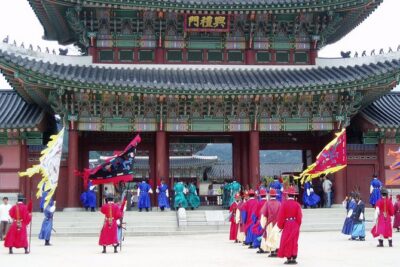
Private Layover Tour from Incheon Airport to Seoul
Read our review →
Seoul Layover Private Tour from Incheon Airport
Read our review →
(P/Transfer) Incheon Airport ↔ Seoul (Up to 5 Pax)
Read our review →
Private Airport Transfer: Seoul City to Incheon Airport (1-5 pax)
Read our review →Browse the lists this tour appears in