
Reviewed · MARKETS
Cook 3 Authentic Korean Dishes with Local Market Tour
Seoul tastes better when you cook it yourself. This experience pairs a Mangwon Market walk with a hands-on class led by Jomin, giving you a useful look at Korean ingredients before you turn them into lunch or dinner. I like the small class format and the fact that you cook at your own station, rather than simply watching a chef work.
I also like the practical extras: a professionally designed cookbook, leftovers to take home, and a choice of vegetarian or vegan food. The main thing to check is group size. The class description says a maximum of four people, while the additional booking information lists up to 11 for the activity, so confirm the expected size before paying.
In This Review
- What makes this Seoul cooking class worth your time
- Meeting Jomin at Mangwon Market
- Why the market tour adds real value
- Inside the cooking studio
- Three dishes, one meal
- Soft tofu stew
- Bibimbap
- Bulgogi
- Japchae, kimchi stew, and stir-fried pork
- The teaching style and the pace
- Food, leftovers, and the cookbook
- Dietary needs and menu planning
- Is $79 a fair price?
- Who should book this experience?
- Useful planning details before you book
- Should you book the Mangwon Market cooking class?
- FAQ
- Where does the Korean cooking class meet?
- Where does the activity finish?
- How long does the experience last?
- How many people can join the class?
- What dishes might I cook?
- Is this a hands-on cooking class?
- Are vegetarian and vegan options available?
- What do I receive after the cooking session?
- Can I cancel for a refund?
What makes this Seoul cooking class worth your time
- Mangwon Market comes first: You meet at Mangwon Metro Station, Line 6, Exit 2, then walk through a working local market while Jomin explains ingredients and Korean food customs.
- You cook three dishes yourself: This is not a demonstration. You receive a personal table, cooking equipment, ingredients, and step-by-step help.
- The menu changes: Possible dishes include soft tofu stew, bibimbap, bulgogi, kimchi stew, japchae, and stir-fried pork.
- Jomin is the key asset: Her clear teaching, patience, and ability to adjust for food restrictions receive repeated praise.
- You eat what you make: The class ends with a proper meal, and leftovers can be packed to take away.
- The $79 price covers more than a recipe lesson: You get a market visit, instruction, food, equipment, cultural context, and a cookbook in about three and a half hours.
Meeting Jomin at Mangwon Market
The class begins at Mangwon Station, Line 6, Exit 2. That simple meeting point matters in Seoul, where a wrong subway exit can turn a short walk into a small expedition. Allow enough time to find the correct entrance and meet Jomin there.
From the station, you head into Mangwon Market. This is not a staged food stop built only for tour groups. It is a neighborhood market where you can see the ingredients and everyday foods that shape Korean cooking. Jomin points out items used in the class and explains how they fit into Korean meals.
You may also have time to taste street foods along the way. The exact market selection can vary, and one class took place during the Chuseok holiday when some stalls were closed. Even then, enough remained open to give a useful sense of the market. That is a fair reminder that local markets are living places, not museum exhibits.
One especially useful part of the walk is seeing ingredients before they appear in a recipe. Depending on the menu, you might learn about soft tofu, clams, prawns, anchovies, vegetables, or other items used for stock and seasoning. Jomin has also bought ingredients such as clams and soft tofu during the market visit, making the shopping stop part of the cooking rather than a separate sightseeing add-on.
I would not treat this as a full market food crawl. The tour is focused on ingredients and the dishes you will prepare, with some opportunity to sample street food. If you want a long, independent market visit, plan to return another time.
More Market Tours in Seoul:
- Seoul: Gyeongbok Palace, Bukchon Village, and Gwangjang Tour
★ 4.9 · 2,321 reviews - Seoul Street Food Market Tour
★ 5.0 · 1,226 reviews - Seoul: Gyeongbok Palace, Bukchon Village, and Gwangjang Tour
★ 5.0 · 1,044 reviews
Why the market tour adds real value
A Korean cooking class can teach you how to follow a recipe. The Mangwon stop helps explain why the recipe works.
Korean meals often involve more than one main dish. Ingredients, stocks, sauces, side dishes, fermented foods, and rice all play a part. Jomin uses the market to explain items such as banchan, kimchi, anchovies, and rice wine, giving you a better sense of how Korean food fits together.
That context is useful when you return home. You are less likely to mistake a seasoning paste for a finished sauce or wonder why a simple-looking stew has so much flavor. You can also ask questions while looking at the real ingredients, which is easier than trying to remember a lecture in a cooking studio.
The walk also gives the class a local feel. You are not just entering a kitchen and measuring ingredients from bowls already placed in front of you. You first see the food culture in public, then use part of it in a private cooking space.
Inside the cooking studio
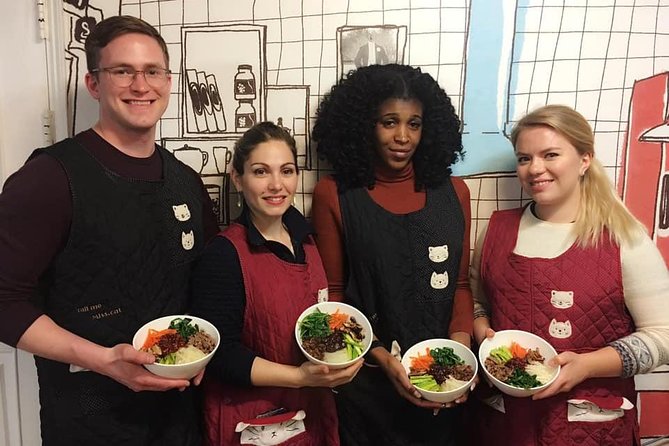
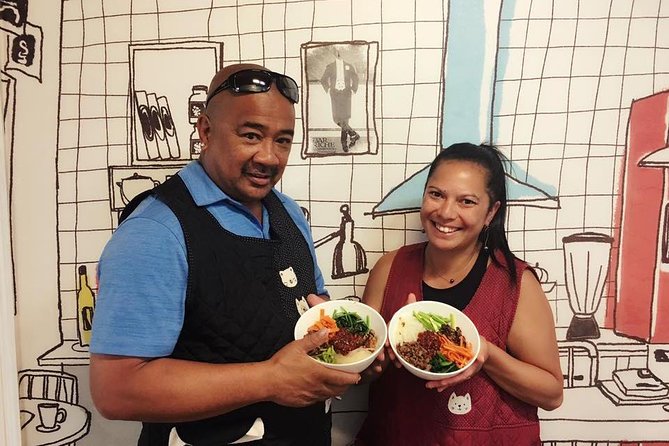
After the market, you go to Jomin’s cooking studio. The space is described as clean, organized, and spacious, with a professional setup but a relaxed mood. You receive your own cooking table and cooker, and ingredients are prepared for each person’s station.
That setup makes a big difference. In a large class, you may spend much of the session waiting for a burner, sharing a chopping board, or trying to see a demonstration from the back. Here, the intention is that you work through each dish yourself while Jomin moves around the room to help.
The format suits beginners. You do not need to arrive with much cooking experience, and you should not feel embarrassed if your knife work is slow or your timing is uncertain. Jomin explains the process clearly and gives personal guidance as you go.
One point worth noting is that the class is hands-on, not a passive demonstration. You will be expected to chop, mix, season, and cook. That is the reason to book it, but it also means this may not be the best choice if you want to sit back and simply watch someone prepare lunch.
Three dishes, one meal
The menu is not fixed in the information provided. It may include soft tofu stew, bibimbap, bulgogi, kimchi stew, japchae, or stir-fried pork. The most frequently described combination is sundubu jjigae, bibimbap, and bulgogi, but you should confirm the exact menu before the class if a particular dish matters to you.
More Shopping Tours in Seoul:
- Local Home Korean Cooking Class & Market Adventure in Seoul
★ 5.0 · 1,024 reviews - Seoul: Night Market Food Tour with Local Guide
★ 4.9 · 943 reviews - Downtown Seoul Guided Food & Market Tour with 8+ Local Tastings
★ 5.0 · 580 reviews - Seoul: Korean Cooking Class at a Local Home and Market Tour
★ 5.0 · 348 reviews
Soft tofu stew
Soft tofu stew, or sundubu jjigae, is a good teaching dish because it brings together stock, tofu, seasoning, and sometimes seafood. One class used clams and soft tofu purchased during the market walk. Even people who were not keen on seafood found the finished stew enjoyable.
You may also learn to make stock from ingredients such as anchovies. This is the sort of small technique that gives a home cook something useful to repeat. The dish is warm, comforting, and well suited to a first Korean meal.
Bibimbap
Bibimbap lets you work with several vegetables, rice, seasoning, and a hot cooking surface. You may be shown how to cut the vegetables and cook them at your individual burner before combining the elements.
It is also a dish where presentation is part of the pleasure. The ingredients remain distinct instead of becoming one anonymous mixture. If you want a recipe that is easy to adapt at home, bibimbap is probably one of the most useful choices in the possible menu.
Bulgogi
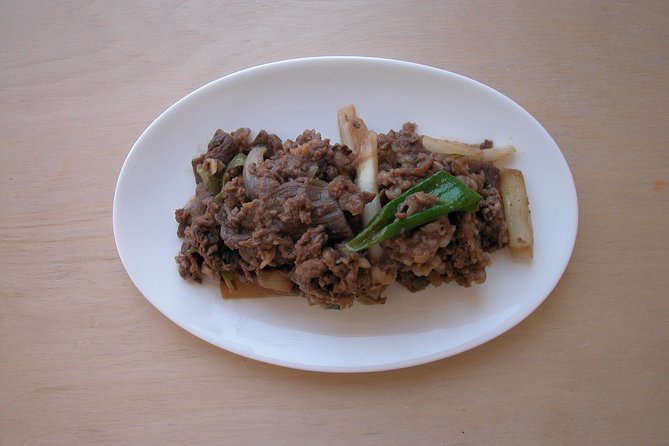
Bulgogi focuses on the marinade and the cooking of thinly sliced meat. Jomin explains how to prepare the marinade before you cook it, so you learn a method rather than simply receiving a finished sauce.
The dish also works well in a class setting because the cooking is direct and satisfying. You can see how the seasoning changes the meat, then eat it soon after it leaves the pan.
Japchae, kimchi stew, and stir-fried pork
Japchae is another possible dish and has been a favorite for some participants. The glass noodles, vegetables, and savory seasoning make it a good introduction to a different Korean texture.
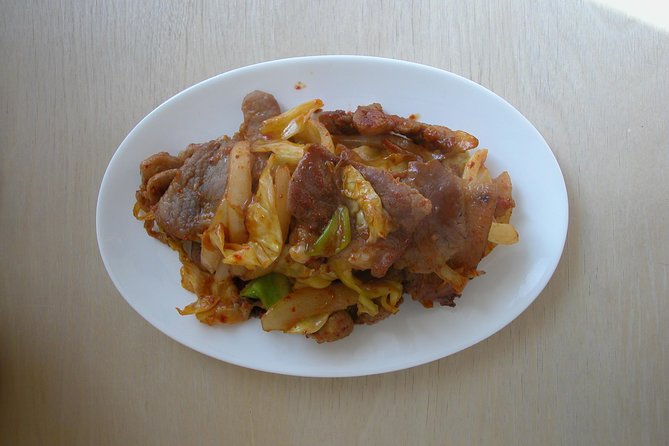
Kimchi stew offers a more intense, fermented flavor. Stir-fried pork provides another route into Korean seasoning and pan cooking. Since the menu may change, ask ahead if you have strong preferences or avoid a particular ingredient.
The teaching style and the pace
Jomin receives the strongest praise for her clear, patient instruction. She explains the market ingredients, walks through each recipe, and answers basic questions without making beginners feel out of place. At the same time, one description called her a strict chef, which may simply mean that she pays attention to technique and expects you to follow directions.
That balance can be a good thing. You are not paying $79 for a loosely organized meal with a little chopping on the side. You are there to learn, and Jomin appears to keep the class moving while offering help at each station.
The three-and-a-half-hour duration gives the activity enough room for both the market visit and the cooking. You are not rushed through three dishes in an hour. Still, the class has several stages, so you should expect an active morning or evening rather than a quick tourist stop.
You eat as the dishes are completed, and one detailed account described taking the first bowl of stew to the dining room while the next preparation was set up. This staggered meal makes sense with three dishes. It means you can enjoy each item at a good temperature instead of waiting for everything to finish at once.
Food, leftovers, and the cookbook
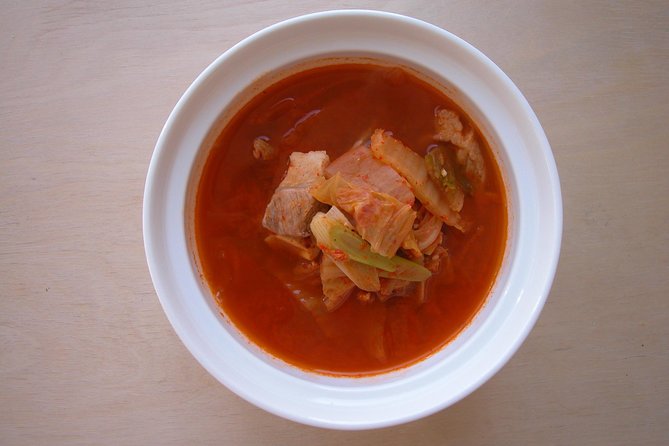
The strongest practical benefit is that you eat a real meal at the end. You are not left with three tiny tasting portions after spending the afternoon cooking. The food is prepared by you, with Jomin’s guidance, and you can take leftovers in provided containers.
The cookbook adds value after the class. It includes the dishes prepared during the session as well as other recommended Korean recipes. A well-designed recipe book is more useful than a loose printed sheet because it gives you a way to recreate the experience once you return home.
You may also receive photos from the session, based on one detailed account. Since the core information guarantees the cookbook but does not formally promise photos, treat that as a possible extra rather than a reason to book.
Dietary needs and menu planning
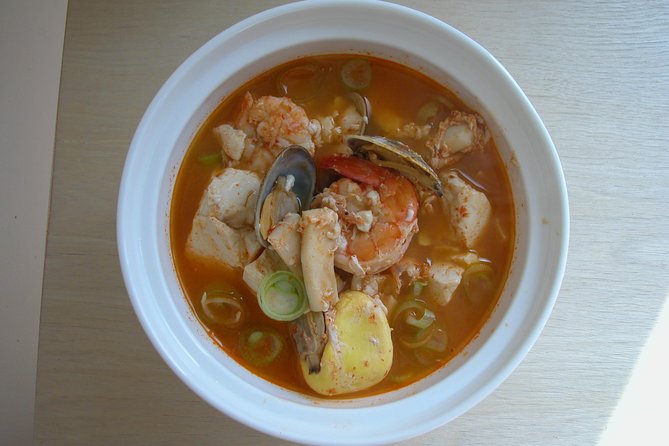
Vegetarian and vegan options are available. Food restrictions have also been accommodated during the class, but you should state your needs when booking and confirm them in advance.
Do not assume every possible dish will suit every diet. Bulgogi and stir-fried pork contain meat, while a seafood-based soft tofu stew may include clams or other seafood. A menu change may be possible, but the supplied information does not promise a particular substitute for every ingredient.
If you dislike seafood but still want to cook the stew, ask what version will be served. One class showed that a seafood-averse person could still enjoy the finished dish, but personal taste varies.
Is $79 a fair price?
At $79 per person, this is not the cheapest way to eat Korean food in Seoul. You could buy several meals at Mangwon Market for less. But that comparison misses the point.
The price includes about three and a half hours of activity, a guided market visit, ingredients, equipment, personal instruction, three dishes, a meal, possible leftovers, and a cookbook. The small class design also gives you more direct help than a large group lesson.
The value is strongest if you want to cook Korean food again at home. It is weaker if you only want a quick meal or a short market tour. You should also check the final group size because the published information gives two different limits: maximum four for the class and maximum 11 for the overall activity. A group of four would offer much more personal attention than a group of 11.
Lunch and dinner sessions are available. Choose lunch if you want to continue exploring Seoul afterward with a full stomach. Choose dinner if you prefer to make the class your evening plan and end the day with a meal you prepared yourself.
Who should book this experience?
I would recommend it most strongly to:
- First-time visitors who want an approachable introduction to Korean food
- Couples, families, and small groups who like doing an activity together
- Beginner cooks who want close guidance
- Home cooks looking for recipes they can repeat
- People who enjoy markets as much as formal sightseeing
- Anyone with a dietary restriction who confirms arrangements ahead of time
It is less suitable if you want a fixed menu, a long market-shopping session, or a quiet activity with little participation. You should also consider the three-and-a-half-hour commitment. The class is social and practical, not a quick stop between major Seoul sights.
Useful planning details before you book
The activity begins and ends at the Mangwon Station meeting point. Since the starting point is near public transportation, the subway is the natural way to reach it.
A mobile ticket is accepted, and confirmation is provided at booking. Free cancellation is available up to 24 hours before the local start time. Changes or cancellations inside that window are not refunded, and the class may be rescheduled or canceled if the minimum number of four participants is not met.
That minimum is worth keeping in mind for solo bookings or low-season visits. If the class is canceled because the minimum is not reached, you are offered another date or experience, or a full refund.
Should you book the Mangwon Market cooking class?
Yes, if you want more than a recipe demonstration. The market visit gives the class a sense of place, Jomin’s teaching is repeatedly praised for being clear and patient, and the personal stations let you take part in all three dishes.
I would book it early in a Seoul stay if you enjoy food. You can use what you learn for the rest of your trip, recognize ingredients more easily, and return to Mangwon Market with better bearings. Before booking, confirm the menu, your dietary needs, and the actual group size. If those details work for you, $79 is a fair price for a market visit, a full meal, personal cooking help, and recipes you can use after Korea.
FAQ
Where does the Korean cooking class meet?
The class meets at Mangwon Metro Station, Line 6, Exit 2, in Seoul.
Where does the activity finish?
The activity ends back at the meeting point at Mangwon Station.
How long does the experience last?
The cooking class and market visit take approximately 3 hours and 30 minutes.
How many people can join the class?
The class description gives a maximum of four people. The additional activity information lists a maximum of 11 travelers, so confirm the expected class size before booking.
What dishes might I cook?
The possible dishes include soft tofu stew, bibimbap, bulgogi, kimchi stew, japchae, and stir-fried pork. The exact three-dish menu may vary.
Is this a hands-on cooking class?
Yes. You receive your own cooking table and cookers, fresh ingredients, and personal guidance. It is not a demonstration-only session.
Are vegetarian and vegan options available?
Yes, vegetarian and vegan options are available. Share your requirements when booking and confirm the arrangements before the class.
What do I receive after the cooking session?
You eat the dishes you prepare, can take home leftovers, and receive a professionally designed cookbook with the class recipes and additional Korean recipes.
Can I cancel for a refund?
You can cancel at least 24 hours before the experience start time for a full refund. Cancellations or changes made less than 24 hours before the start time are not refunded.
Just added in Seoul
- Seoul: Korean & English Language Exchange Global Party★ 5.0 · 28 reviews
- Your Personal Seoul Photographer!★ 4.1 · 15 reviews
- You’re Invited to Our Home in Seoul: The Only Cooking Class!★ 5.0 · 8 reviews
- From Seoul: Yongpyong Ski Day Tour with Transportation★ 4.9 · 40 reviews
- From Seoul: Hwacheon Ice Fishing and Lighting Festival Tour★ 4.5 · 4 reviews
- Seoul: Gangneung BTS K-Pop & K-Drama Filming Locations Tour★ 4.6 · 14 reviews
- Unique Native Experience : Han River Picnic, Board game, BBQ★ 5.0 · 3 reviews
- Seoul: Euljiro Gastroventure Tour★ 4.0 · 1 review
Markets, compared.
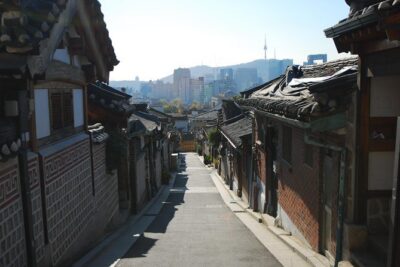
Gyeongbok Palace, Bukchon Village, and Gwangjang Tour
Read our review →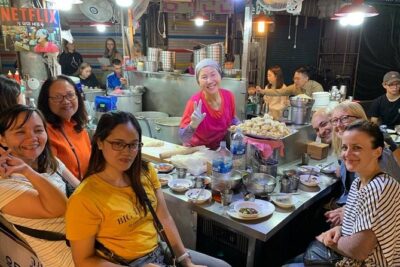
Gyeongbok Palace, Bukchon Village, and Gwangjang Tour
Read our review →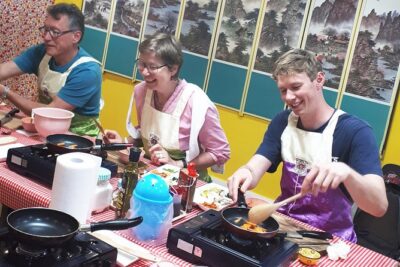
Local Home Korean Cooking Class & Market Adventure in Seoul
Read our review →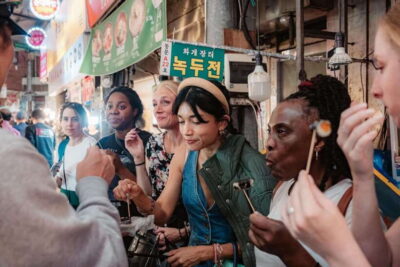
Downtown Seoul Guided Food & Market Tour with 8+ Local Tastings
Read our review →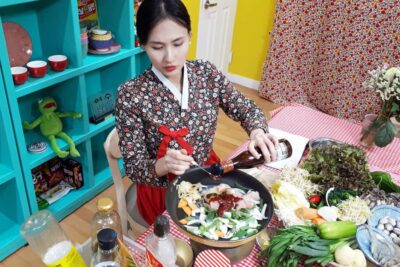
Korean Cooking Class at a Local Home and Market Tour
Read our review →
Seoul Night Palace & Market Food Tour with Vehicle
Read our review →Browse the lists this tour appears in