
Reviewed · FOOD & DRINK
10day Small Group Discover Korea Tour : History, Food and Culture
Korea packs centuries into every day. This 10-day private journey links volcanic Jeju, seafood-centered Busan, Silla-era Gyeongju, food-loving Jeonju, and modern Seoul with a guide, private vehicle, and two domestic flights. I especially like the mix of natural sights and living traditions, plus the freedom to adjust stops and ask for restaurant advice along the way. The main caution is the pace: long drives, early starts, several hotel changes, and a non-refundable $3,800 price require a good deal of energy and planning.
The strongest part is the range. You can walk through a lava tube in the morning, eat at a traditional market that evening, and stand at the Korean Demilitarized Zone the next day. I also like that this is a private activity, so only your own group participates, rather than a large coach crowd. Still, this is not a slow, restful holiday. Some days are packed, and the 2.5 to 3-hour drive from Gyeongju to Jinan may feel long.
In This Review
- Key points at a glance
- What the $3,800 price really buys
- Days 1 and 2: Jeju’s lava, sea, and island traditions
- Days 3 and 4: Busan seafood and Gyeongju Buddhism
- Day 5: Gyeongju, the Silla capital
- Day 6: A long road to Maisan and Jeonju’s food table
- Day 7: Suwon’s fortress and chicken street
- Day 8: Joseon Seoul, markets, and the city from above
- Day 9: The DMZ and the Third Tunnel
- Day 10: NANTA, Korean cooking, and final shopping
- Who will get the most from this trip
- Should you book this Korea tour?
- FAQ
- How long is the tour?
- Is this a private tour or a shared group tour?
- What domestic flights are included?
- Is accommodation included?
- How many meals are included?
- Can the itinerary be changed?
- Does the DMZ visit require an early start?
Key points at a glance
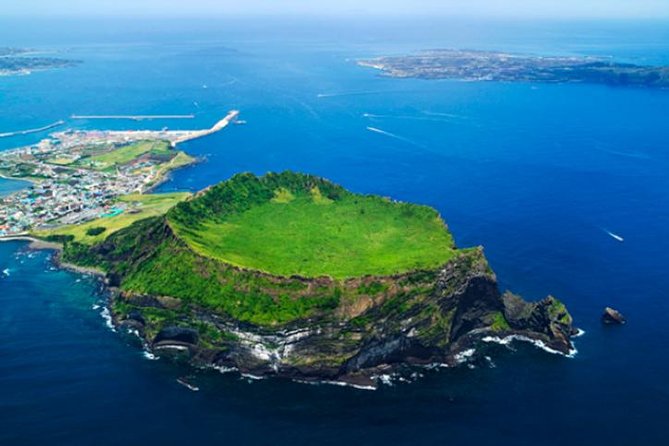
- Jeju brings Korea’s volcanic side to life: Lava tubes, black sand, crater formations, waterfalls, and the columnar rocks at Jusangjeollidae give the island a clear sense of place.
- The food stops are part of the education: Dongmun Market, Busan’s Jagalchi Market, Jeonju bibimbap, makgeolli supper, Suwon fried chicken, and Seoul’s Gwangjang Market keep the trip grounded in everyday Korean life.
- The private format gives you room to adjust: You can discuss changes with your guide and ask for local restaurant suggestions, a useful feature for a 10-day trip with many moving parts.
- Golgulsa Temple Stay breaks up the sightseeing: One night at the temple adds a quieter cultural experience between Busan and Gyeongju.
- The DMZ needs an early start: Tickets are first come, first served, and access follows military-zone rules, so flexibility matters.
- The $3,800 cost covers major logistics: Nine nights in 3.5 to 4-star accommodation, a vehicle, guide, entrance fees, flights, and seven breakfasts, seven lunches, and two dinners are included.
What the $3,800 price really buys
At $3,800 per person, this is a substantial purchase. The value comes less from any single attraction and more from the amount of transport and planning handled for you. The package includes an air-conditioned vehicle, an English-speaking guide, nine nights of 3.5 to 4-star accommodation, entrance fees listed in the plan, and domestic flights from Gimpo to Jeju and Jeju to Busan.
Those flights matter. Moving from Seoul to Jeju and then from Jeju to Busan on your own would add booking work, airport transfers, and the risk of mismatched schedules. Here, the route is built around them.
Seven breakfasts, seven lunches, and two dinners are included, but not every meal is covered. You should budget separately for unplanned meals, drinks, snacks, optional activities, and shopping. The Ocean Cable Car at Songdo is specifically optional, so that is another possible extra cost.
I would call the price reasonable for someone who values a private vehicle, a guide, accommodation, domestic flights, and a tightly organized route. It is harder to justify if you prefer inexpensive hotels, public transport, or several free days. The tour is usually booked about 53 days ahead, which is a useful planning benchmark, especially for a 10-day trip involving flights and a temple stay.
More History Tours in Seoul
- Seoul: Evening Dark History, Folklore & Ghost Story Walking Tour
★ 5.0 · 593 reviews - Hanbok Photoshoot and History Tour at Gyeongbokgung Palace
★ 5.0 · 276 reviews - From Seoul: Dae Jang Geum Park Historic K-Drama Set Tour
★ 4.9 · 143 reviews
Days 1 and 2: Jeju’s lava, sea, and island traditions
Your Korean adventure begins with a flight from Gimpo Domestic Airport to Jeju, which takes about an hour. After meeting the driver, you go to the hotel and check in yourself. Meals and the rest of the first arrival period are your responsibility.
The first sightseeing day covers a lot of ground. Mysterious Road, also called Dokkaebi Road or Goblin’s Road, is a quick and playful stop where a car with its engine off appears to roll uphill. It is a roadside illusion, not a major attraction, but it gives the day an easy start.
At ARTE MUSEUM JEJU, sound, video, and light create large artistic displays. This is a good contrast to the outdoor stops, particularly if the weather turns poor. Spirited Garden follows with bonsai and carefully arranged plant art. You get a look at a Korean garden tradition that is patient and highly controlled.
Hyeopjae Beach adds open space and downtime. You can bring a bathing suit if you want to swim, or use the beach cafes for a view. The schedule allows about an hour, so do not expect a full beach day.
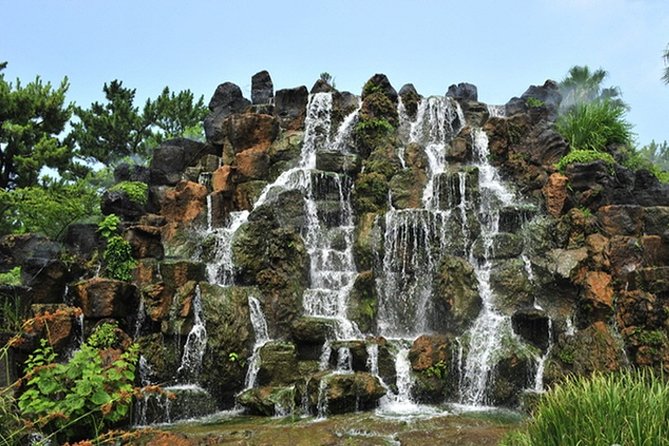
Jusangjeollidae is one of Jeju’s best geology lessons. The island is volcanic, and these jointed column formations show how cooling lava can create striking geometric rock walls. Cheonjiyeon Falls closes the day with a smaller natural stop surrounded by greenery. The attraction is scenic, but the overall day is long, so comfortable shoes and water will help.
Day two begins at Manjanggul Cave, one of the major lava-tube sights on Jeju. You walk through a passage formed by volcanic activity and get a more direct sense of how the island was made. The cave is a stronger stop for people who enjoy geology than for anyone wanting polished cultural attractions.
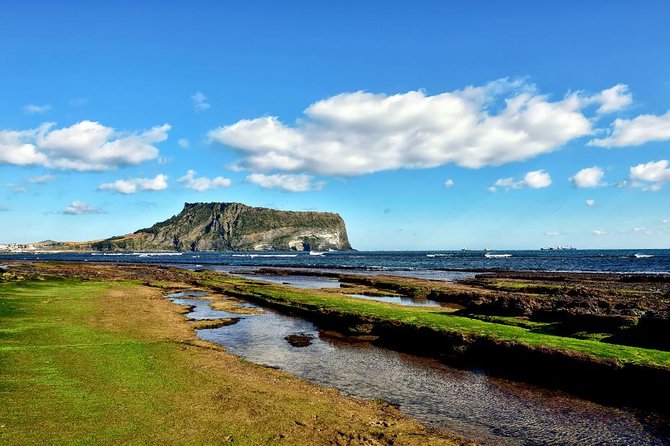
Sangumburi Crater offers another volcanic setting, this time a broad, flat crater. At Gwangchigi Beach, black sand formed from weathered basalt gives the shoreline a different look from Hyeopjae. Then comes Seongsan Ilchulbong, or Sunrise Peak, a tuff cone created by eruptions from the shallow sea. The climb is the day’s most demanding piece, and the hour allocated here may feel short if you want to reach the top at an easy pace.
Seongeup Folk Village shifts the focus to local traditions and older Jeju village life. Finish at Dongmun Market, where you can browse food and goods and start making your own choices about what to eat. This is one of the tour’s best chances to follow your appetite rather than a fixed restaurant menu.
Days 3 and 4: Busan seafood and Gyeongju Buddhism
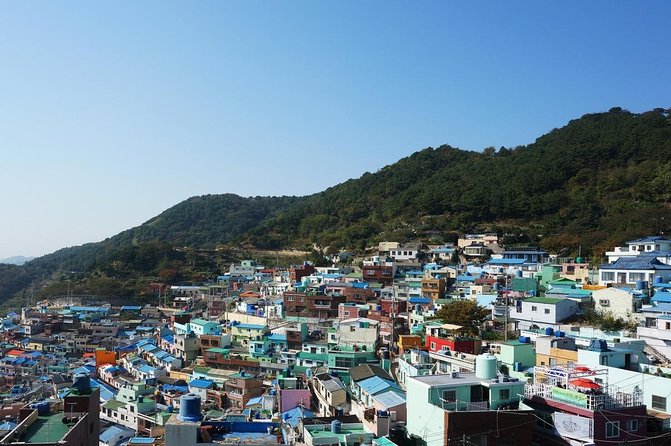
On day three, you fly from Jeju to Busan, with hotel pickup and airport transfer included in the plan. Busan begins with Gamcheon Culture Village, a hillside settlement known for houses arranged in staircase-like rows. The setting is photogenic, but the slopes and stairs mean you should take your time.
Songdo brings you down to the coast. The skywalk is free, and the area has seafood restaurants and an optional ocean cable car. The cable car can add a fine view, but it is not essential to the day, so you can decide based on time and budget.
BIFF Square is both a film-festival area and a food street. Try the sweet pancakes, a local snack especially suited to walking and browsing. Nearby Jagalchi Market is Busan’s major fish market, with live and prepared seafood. It may be fascinating or intense, depending on your comfort with market scenes. The short scheduled visit gives you the choice to move on quickly if it is not your style.
The route also includes Busan’s long double-decker bridge, known for its sea views and evening lighting events. The exact festival or event schedule can vary, so treat those as possibilities rather than guaranteed parts of your visit. Haedong Yonggungsa, a seaside temple, is the day’s most memorable cultural stop. Its position beside the water gives it a different mood from inland temple complexes.
Day four moves to Golgulsa Temple outside Gyeongju. The temple stay is included for one night and is the tour’s clearest chance to slow down. The temple operates templestay programs throughout the year, and your overnight here replaces a standard hotel night. Expect the experience to feel more structured and simple than a conventional accommodation, so pack with that change in mind.
Bulguksa Temple and Seokguram introduce the Buddhist art and architecture of the Silla period. Bulguksa is associated with a thousand years of Korean Buddhist tradition, while Seokguram is known for its Buddha statue. The visits are not long, but they carry more weight when your guide explains what you are seeing.
Day 5: Gyeongju, the Silla capital
Gyeongju is where the tour’s historical focus becomes most concentrated. At Daereungwon Tomb Complex, rounded royal burial mounds rise from the city’s open spaces. The scale helps you picture Silla power without needing a museum label for every object.
Cheomseongdae Observatory is a brief stop, only about 10 minutes in the schedule. It is known as the oldest surviving astronomical observatory in Asia, so I would treat it as a quick historical marker rather than a full visit.
The Gyeongju National Museum gives the Silla story more detail through artifacts from the kingdom that lasted from 57 BC to AD 935. An hour is enough for a focused visit, but anyone deeply interested in archaeology may want more time.
Donggung Palace and Wolji Pond is best saved for evening. Reflections around the pond and the lit palace buildings make this one of Gyeongju’s most attractive night stops. Woljeonggyo Bridge, near the Kyochon village area, continues the evening walk. These two places make the case for staying in Gyeongju rather than rushing through it as a day trip.
More Food Tours in Seoul:
- Seoul Street Food Market Tour
★ 5.0 · 1,226 reviews - Seoul: Night Market Food Tour with Local Guide
★ 4.9 · 943 reviews - Downtown Seoul Guided Food & Market Tour with 8+ Local Tastings
★ 5.0 · 580 reviews - Seoul Night Palace & Market Food Tour with Vehicle
★ 5.0 · 275 reviews
Day 6: A long road to Maisan and Jeonju’s food table
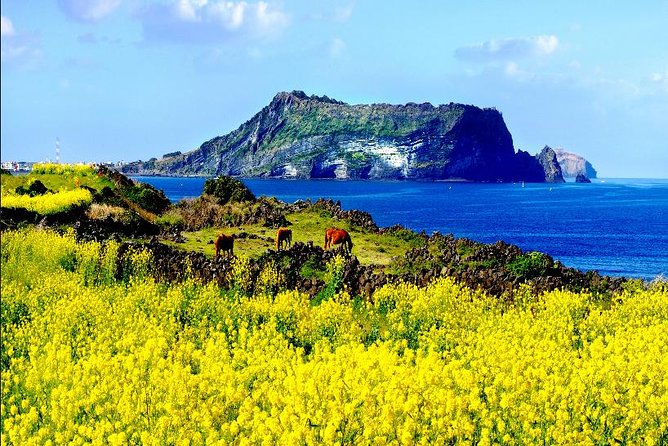
Day six is a transition day, and you should prepare for it. The drive from Gyeongju to Jinan takes about 2.5 to 3 hours. Maisan Mountain gets its name from its horse-ear shape, and the route includes an observatory stop before continuing to Tapsa Temple.
Tapsa is known for more than 80 stone pagodas built by Lee Gapyong, a retired scholar. The uneven towers are the main reason to make this detour. The stop is unusual and memorable, but the long drive means the day will feel more about the journey than a string of quick attractions.
Jeonju provides a welcome food focus. At Jeonju Hanok Village, you have time to walk among traditional houses and try bibimbap, one of the city’s signature dishes. Gyeonggijeon Shrine holds a portrait of King Tae-jo, founder of the Joseon dynasty, while Jeondong Catholic Church recalls Catholic martyrs from the Joseon period.
Omokdae and Imokdae offer a view over the hanok village. The scheduled visits are short, leaving free time to explore at your own speed.
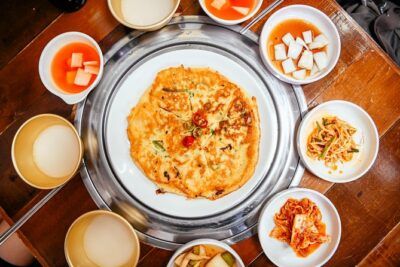
Dinner at 옛촌막걸리 삼천점, an old-style makgeolli pub, is one of the most distinctive meals on the route. Korean rice wine is served with an expanding table of food as you order more. This is not simply dinner, it is a look at a social dining custom, though anyone avoiding alcohol should discuss alternatives with the guide in advance.
Day 7: Suwon’s fortress and chicken street
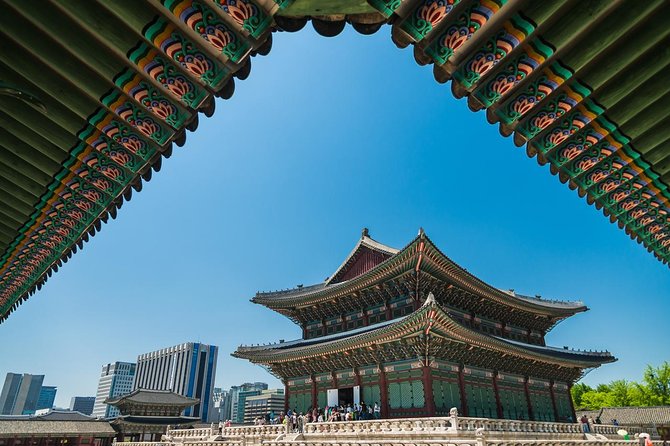
The journey to Seoul takes about three hours, but Suwon breaks up the drive. Hwaseong Fortress is a UNESCO World Heritage site built during the Joseon dynasty to protect the city. The walls, gates, and defensive design give you a different view of Korean history than palaces and temples do.
Allow about an hour for the fortress visit, then consider Suwon’s fried chicken street. Around 20 to 30 chicken restaurants operate in the area, with Korean barbecue-style seasoning among the local specialties. This is a useful food stop because it feels less formal than a planned cultural attraction.
The day is lighter than the Jeju and Seoul schedules, which is welcome. You still have a long transfer, but the fortress and meal make it more than a simple hotel move.
Day 8: Joseon Seoul, markets, and the city from above
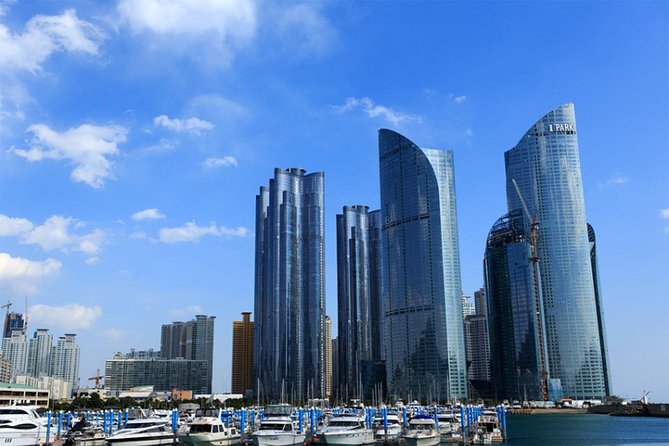
Seoul’s main sightseeing day begins at Gyeongbokgung Palace, the first and largest palace built by the Joseon dynasty in 1395. Two hours gives you time to appreciate the courtyards and buildings without treating the palace as a quick photo stop.
Insadong is the place to look for souvenirs, art galleries, and traditional-style goods. Bukchon Hanok Village follows with narrow lanes and traditional homes dating from the Joseon era. Because Bukchon is a real residential area, keep your voice low and respect signs asking people not to enter private spaces.
Gwangjang Market is the day’s food center. You can find mung bean pancakes, Korean doughnuts, gimbap, tteokbokki, and fruit juice among many other choices. I like this stop because you can build your own meal in small portions.
N Seoul Tower provides a broad view over the city from Namsan Mountain. The top reaches almost 480 meters above sea level, combining the mountain’s height with the tower. Finish at Jogyesa Temple, an important Buddhist temple in central Seoul. Seasonal festivals can add color to the visit, particularly in summer and autumn, but the temple itself is the fixed attraction.
Day 9: The DMZ and the Third Tunnel
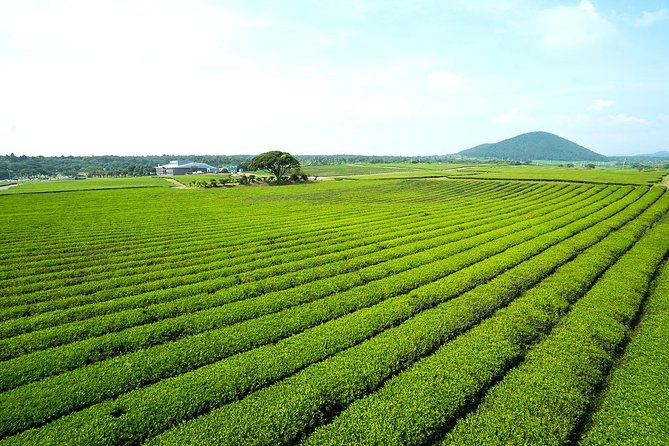
The DMZ requires an early start. Tickets are not reserved in advance, and access is first come, first served. Since the area is a military zone, procedures and rules can affect the day, so you should arrive ready for changes.
The Third Tunnel is an underground passage dug by North Korea after the Korean War. You can walk down into the tunnel, which makes the history physical rather than abstract. Wear sturdy shoes and expect the return climb to take effort.
At Dora Observatory, binoculars and the naked eye can reveal parts of North Korea, including Gaeseong, the industrial complex once operated through cooperation between North and South Korea, and nearby villages. Visibility can vary, but the viewpoint is the emotional center of the DMZ visit.
Tongil Park, or Unification Park, is the final stop on the DMZ shuttle route and includes local products and DMZ-related items. Gamaksan Chulleong Bridge adds a short mountain walk, with about 10 minutes of hiking to reach the suspension bridge. The area was connected to a major Korean War battle and later became a local recreation spot.
Day 10: NANTA, Korean cooking, and final shopping
The final day begins with Cookin’ NANTA in Myeongdong. This nonverbal comedy show uses Korean rhythms and kitchen performance, making it easy to follow even if you do not speak Korean. At 90 minutes, it is a lively change from temples, markets, and military history.
The three-hour small-group cooking class is a practical finale. Menus change monthly and may include bulgogi, gimbap, kimchi, and Korean pancakes. You do not just eat the food, you learn how several familiar dishes are made.
Seonyudo is described as a Han River park with walking paths and broad river views. The listed location says Gunsan, so I would confirm the exact stop and transfer plan with the guide before departure. Myeongdong Shopping Street finishes the tour with cosmetics, souvenirs, street food, and a last chance to spend any remaining won.
Who will get the most from this trip
I would choose this tour if you want Korea’s major regions in one organized trip and prefer a private guide and vehicle to managing trains, hotels, and domestic flights yourself. It is especially suitable for a first visit, families, and mixed-age groups who want help adjusting the pace.
The trip can also work well for older relatives, provided everyone is comfortable with stairs, walking, early starts, and long drives. One published booking describes an elderly mother and daughter having an excellent experience, with the guide support praised as a major part of the success. That is encouraging, but physical limits still vary from person to person.
I would not choose it if you want extended time in Seoul, relaxed beach days, or freedom to improvise for several days at once. The private format allows changes, but the route itself covers a lot of Korea in only 10 days.
The tour confirms at booking, offers pickup, and permits service animals. Most people can participate, though the cave, mountain stops, village slopes, temple stay, and DMZ tunnel all call for reasonable mobility. The cancellation policy is strict: the experience is non-refundable and cannot be changed after booking.
Should you book this Korea tour?
Book it if your ideal first visit includes Jeju’s volcanoes, Busan’s seafood, Gyeongju’s Silla sites, Jeonju food, Seoul markets, and the DMZ without having to arrange the pieces yourself. The guide’s ability to suggest restaurants and discuss destination changes adds real value to such a full schedule.
Skip it if $3,800 feels high for a trip with some meals and optional activities still outside the price, or if you prefer a slower route. For an energetic first-time visitor who wants broad coverage and personal assistance, this is a strong, carefully connected introduction to South Korea.
FAQ
How long is the tour?
The tour lasts approximately 10 days and includes nine nights of accommodation.
Is this a private tour or a shared group tour?
It is a private activity. Only your own group participates.
What domestic flights are included?
The package includes flights from Gimpo Domestic Airport to Jeju and from Jeju to Busan.
Is accommodation included?
Yes. Nine nights in 3.5 to 4-star accommodation are included, along with one night at Golgulsa Temple as part of the temple stay.
How many meals are included?
The tour includes seven breakfasts, seven lunches, and two dinners. Other meals are not planned and are paid for separately.
Can the itinerary be changed?
The destinations can be discussed and customized during the private tour. You can ask the guide about places you wish to visit and possible changes.
Does the DMZ visit require an early start?
Yes. DMZ tickets are first come, first served, and there is no advance reservation for those tickets, so the meeting time is early.
Just added in Seoul
- Seoul: Korean & English Language Exchange Global Party★ 5.0 · 28 reviews
- Your Personal Seoul Photographer!★ 4.1 · 15 reviews
- You’re Invited to Our Home in Seoul: The Only Cooking Class!★ 5.0 · 8 reviews
- From Seoul: Yongpyong Ski Day Tour with Transportation★ 4.9 · 40 reviews
- From Seoul: Hwacheon Ice Fishing and Lighting Festival Tour★ 4.5 · 4 reviews
- Seoul: Gangneung BTS K-Pop & K-Drama Filming Locations Tour★ 4.6 · 14 reviews
- Unique Native Experience : Han River Picnic, Board game, BBQ★ 5.0 · 3 reviews
- Seoul: Euljiro Gastroventure Tour★ 4.0 · 1 review
Food & Drink, compared.
Downtown Seoul Guided Food & Market Tour with 8+ Local Tastings
Read our review →
Seoul Night Palace & Market Food Tour with Vehicle
Read our review →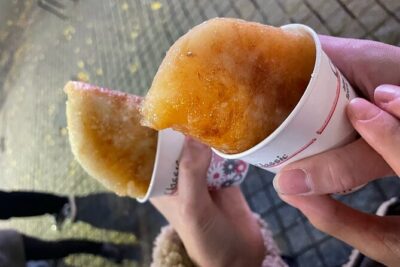
Seoul Fun Food Tour: 12 different food tastings
Read our review →
The Award-Winning PRIVATE Food Tour of Seoul: The 10 Tastings
Read our review →
Baseball Game Ticket with Dinner/Beer with the host
Read our review →Browse the lists this tour appears in