
Reviewed · KOREAN FOLK VILLAGE TOURS
Hwaseong Fortress and Korean Folk Village Tour from Seoul
History gets hands-on here. This 8-hour outing pairs Suwon’s grand Hwaseong Fortress with the Korean Folk Village, giving you two very different views of Korea’s Joseon era. I like the comfortable small-group transport and the chance to see fortress walls, craft workshops, traditional homes, and live performances in one day.
I also like that the tour handles the long trip from Seoul and includes an English-speaking guide. The main caution is uneven guiding: some guides, including Richard, have been praised for clear explanations and helpful Seoul tips, while another guide knew little about the fortress and hurried through the folk village. Lunch details also need checking, since the tour information both says lunch is included and lists it as extra.
In This Review
- Key points to know before booking
- Why this day trip works from Seoul
- Hwaseong Fortress: Joseon ambition in stone
- Korean Folk Village: houses, crafts, and staged tradition
- Lunch and the Korean market stop
- Transport, timing, and walking demands
- Guide quality can shape the entire experience
- Is $91 good value?
- Who should book this experience?
- Should you book it?
- FAQ
- How long does the tour last?
- Is hotel pickup included?
- Where does the tour end?
- How many people can join the tour?
- Is lunch included?
- What will I see at Hwaseong Fortress?
- Are performances guaranteed at the Korean Folk Village?
Key points to know before booking
- A two-part history day: Hwaseong Fortress covers royal architecture and military planning, while the Korean Folk Village focuses on homes, customs, food, and handicrafts.
- Small group size: The vehicle carries no more than nine people, with a minimum of two required to book.
- Hotel pickup, station drop-off: Pickup is offered from your Seoul hotel, but the return drop-off is listed as Myeongdong Station rather than your hotel.
- A moderate amount of walking: You will follow fortress walls, visit gates and towers, and walk around a large outdoor folk village.
- Performance schedules can change: Nongak, horseback martial arts, weddings, and tightrope acts are seasonal or subject to cancellation.
- Check the lunch arrangement: Bibimbap is described in the day plan, yet food and drinks are also listed as not included.
Why this day trip works from Seoul
Seoul offers palaces, markets, towers, and museums by the dozen. What it does not offer is a complete late-Joseon fortress of this scale, paired with a broad outdoor recreation of traditional village life. That makes this trip a useful choice if you want to see more than the capital without arranging trains, taxis, and separate admission tickets yourself.
The morning destination is in Suwon, about 19 miles, or 30 kilometers, from Seoul. The coach ride saves you the effort of working out local transport, and the climate-controlled vehicle matters on a full day that may include sun, rain, or cold weather. One particularly positive account described the van as comfortable, even with only two people on the tour.
The group limit of nine is another plus. You should get more room than on a large sightseeing bus, and a guide can usually respond more easily to questions. The tradeoff is that this is not always a fixed, highly scripted group experience. Guide quality appears to vary, so your experience may depend heavily on who leads the day.
The listed start time is 8:30 am. The tour runs about eight hours, though the exact return time will depend on Seoul traffic and how long the group spends at each stop. You are returned to Myeongdong Station, not necessarily to your hotel, so plan the end of your day around that point.
More Korean Folk Village visits:
- Seoul: Suwon Hwaseong Fortress & Korean Folk Village Tour
★ 4.7 · 214 reviews - Korean Folk Village and Suwon Hwaseong Fortress Day Tour(EG Tour)
★ 4.5 · 80 reviews - Seoul: Suwon Hwaseong, Folk Village, & Starfield Library
★ 4.8 · 55 reviews
Hwaseong Fortress: Joseon ambition in stone
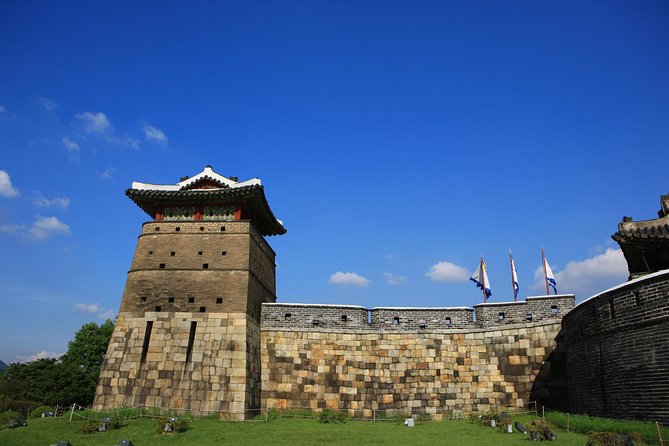
Hwaseong Fortress was built from 1794 to 1796 during the final period of the Joseon Dynasty. Its story is tied to King Jeongjo, who wanted to honor his father and develop Suwon as a strong new city with its own economic base. This was not simply a defensive wall placed around an existing town. It was part of a larger political and urban plan.
Your guide should explain that setting before leading you around the site. You will see fortified walls, gates, artillery towers, and other defensive features. The architecture makes the visit more interesting than a simple walk along old masonry because the fortress combines military purpose with formal Joseon design.
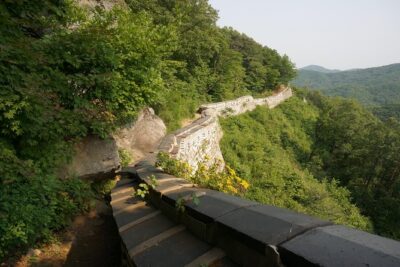
The walls are often described as stretching about 5.7 kilometers. The supplied tour details list the distance as 5,700 kilometers, which is clearly inconsistent with the scale of the site. You should think of the fortress as a substantial walking circuit, not a journey of several thousand kilometers.
Paldalsan Mountain sits at the center of the fortress area, adding changes in height and views as you move around the site. The tour allocates about one hour here. That is enough for the main highlights with a guide, but not enough for a slow, complete walk of every wall section or much unplanned photography.
This is the part of the day where a strong guide matters most. The fortress can look like a pleasant collection of walls and gates if you do not understand why it was built, how it worked, and what King Jeongjo hoped to achieve. One guide named Richard received particular praise for explaining the site clearly and looking after practical needs. Another guide was friendly but reportedly had little information about the fortress, which reduced the value of the stop.
I would book this tour only if you are comfortable with a guided overview rather than a long independent exploration. If you want to trace every rampart, pause at each lookout, or study the construction in detail, you may prefer a separate Suwon visit with more time.
Korean Folk Village: houses, crafts, and staged tradition
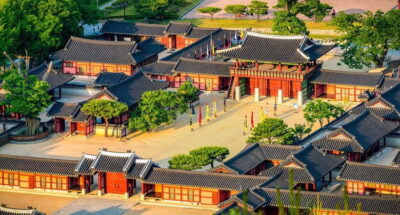
After the fortress, the coach continues to the Korean Folk Village. Opened in 1974, the site was created from more than 260 restored traditional houses representing the late Joseon period and different parts of Korea. It is designed to show how people lived, worked, worshipped, ate, and made household goods.
The village gives you more variety than the fortress. You can enter traditional homes furnished with period items, walk through workshop areas, and watch craftspeople working with materials such as pottery, bamboo, paper, brass, baskets, fans, embroidery, and musical instruments. The point is not only to look at old buildings. It is to connect those buildings with ordinary work and daily routines.
The village also includes performances. Depending on the season and schedule, you might see nongak, a farmer’s musical performance, horseback martial arts, a traditional wedding ceremony, or jultagi, a Korean tightrope act. These shows are a major reason to visit, especially if you are traveling with children or want something more lively than museum displays.
Schedules are not guaranteed. One account described shows being canceled, while another found the guide too eager to move on. If a performance is running, it is worth asking for enough time to watch it. The tour is meant to cover the village, but your guide may set the pace, and you may not get much freedom to wander or shop.
The site also has a family-friendly theme park with 15 attractions. The supplied tour information does not explain how much time this tour allows for those rides, so do not assume they form a major part of the day. The restored homes, museum displays, market, workshops, and shows are the core experience.
A strong point of the folk village is that it makes cultural subjects visible. You can see the shape of a traditional home, watch a craft take form, and then try food in the market. That sequence gives the afternoon a clear rhythm and helps keep the history from feeling too abstract.
Lunch and the Korean market stop
The day plan takes you to the village marketplace for bibimbap, a familiar Korean dish of rice, meat, and vegetables. You can also find rice cakes and traditional liquor at extra cost. For a first visit to Korea, this is a convenient way to sample a classic meal without spending time choosing a restaurant.
There is an important inconsistency in the tour information. The overview says a Korean-style lunch is included, but the included and excluded sections say food and drinks are not included and specifically list lunch as not included. Confirm this before you pay or before departure. At $91 per person, that difference affects the real cost of the day.
If lunch is extra, the market setting still has value because you can choose among traditional foods. If bibimbap is provided, you should still budget for drinks or additional snacks if you want them. The market is also one of the better places to leave the coach routine behind and spend a little time looking at food customs.
More Suwon trips:
- Beyond Seoul: Starfield Library, Hwaseong Fortress & Cave Quest
★ 5.0 · 177 reviews - From Seoul: Suwon Hwaseong Fortress Tour
★ 5.0 · 108 reviews - Suwon Hwaseong+Gwangmyeong Cave+Starfield Library from Seoul
★ 5.0 · 104 reviews - From Seoul: Suwon Hwaseong Fortress Night Tour
★ 5.0 · 78 reviews
Transport, timing, and walking demands
Hotel pickup is included, and the vehicle is described as a comfortable coach or van with climate control. That is a real benefit because Suwon is outside central Seoul, and public transport would add planning and transfer time. The ride also gives your guide a chance to introduce the history before you arrive.
The return arrangement deserves attention. Drop-off is listed at Myeongdong Station, not at your hotel. This may be convenient if you want to continue sightseeing in central Seoul, but it is less useful if you are staying elsewhere or carrying luggage.
You should have a moderate level of physical fitness. The tour involves walking outdoors at the fortress and around the folk village. Hwaseong includes walls, gates, towers, and some changes in elevation around Paldalsan Mountain. The folk village is also spread out, so comfortable shoes are a sensible choice.
Weather can affect the day. A sudden rainstorm once cut a visit short, and outdoor performances can be canceled. Bring weather protection and avoid planning a fixed evening reservation immediately after the stated eight-hour duration.
Guide quality can shape the entire experience
This tour is sold partly on the value of an English-speaking guide, and that promise is important. Hwaseong Fortress needs context, while the folk village has many details that are easy to miss without explanation. A good guide can connect King Jeongjo’s plans, Joseon architecture, village customs, and local food into one understandable story.
Several guide experiences have been very positive. Richard was praised for clear presentations, careful attention, and useful advice about Seoul and what to eat. Another guide was described as kind, helpful, and well informed. Those qualities can turn a long day outside Seoul into one of the more useful history trips from the capital.
But the experience is not perfectly consistent. One guide was friendly and interested in the group but offered little information about the fortress and only basic cultural explanations at the folk village. Another account found the guide rushed and not very interested in stopping for the shows.
That means you should ask questions early. At Hwaseong, ask about King Jeongjo, the purpose of the fortress, and the design of the gates and towers. At the folk village, ask which workshops are active and when the next performance begins. Clear questions may help you get more from the time available.
Is $91 good value?
At $91 per person, the tour is not the cheapest way to reach Suwon. Its value comes from combining transport, admission, a guide, and two major sites in one day. You avoid arranging the trip yourself, and the small group limit is more appealing than a large coach excursion.
The price is easier to justify if you are staying in Seoul for a short visit, prefer organized sightseeing, or want an English explanation at both stops. It is less compelling if you are happy using public transport, prefer setting your own pace, or want to spend a full day at Hwaseong alone.
The uncertain lunch policy weakens the value slightly. You need to verify whether bibimbap is included, since the wording is not consistent. Also remember that the return point is Myeongdong Station, which may mean extra transport at the end.
Who should book this experience?
I would recommend it to first-time visitors who want a clear introduction to Korean history beyond Seoul’s palace district. Families may like the craft displays, traditional homes, food market, and possible performances. Couples and small groups should appreciate the limited group size and easy transport.
It suits you less if you dislike scheduled touring. The fortress visit is short, and the folk village may not leave enough time for unplanned wandering, shopping, or every performance. History fans who want detailed architectural study should consider visiting Hwaseong independently and allowing more time.
The experience is also best for people who can handle outdoor walking and changing weather. If rain arrives, part of the day may be shortened, and there is no guarantee that every seasonal show will run.
Should you book it?
Book this tour if you want a convenient, small-group day from Seoul that combines a UNESCO-listed fortress with a hands-on cultural village. The strongest reasons are the comfortable transport, compact schedule, and variety of things to see.
Before booking, confirm the lunch arrangement and understand that guide quality may vary. If you can accept a one-hour fortress overview, a paced folk village visit, and drop-off at Myeongdong Station, this is a useful and fairly efficient way to see Suwon. If you want freedom, long walks, or guaranteed performances, plan the two sites on your own.
FAQ
How long does the tour last?
The experience lasts approximately eight hours and begins at 8:30 am.
Is hotel pickup included?
Yes. Hotel pickup service is included in Seoul.
Where does the tour end?
The listed drop-off point is Myeongdong Station.
How many people can join the tour?
The tour has a maximum of nine people, and at least two people are required per booking.
Is lunch included?
The tour information is inconsistent. The day plan describes bibimbap at the Korean Folk Village, but the included and excluded sections say food and drinks, including lunch, are not included. Confirm this before departure.
What will I see at Hwaseong Fortress?
You will visit fortified walls, gates, artillery towers, and other parts of the Suwon fortress while learning about its construction during the late Joseon Dynasty.
Are performances guaranteed at the Korean Folk Village?
No. Performances such as nongak, horseback martial arts, traditional weddings, and tightrope acts vary by season, and shows can be canceled.
Just added in Seoul
- Seoul: Korean & English Language Exchange Global Party★ 5.0 · 28 reviews
- Your Personal Seoul Photographer!★ 4.1 · 15 reviews
- You’re Invited to Our Home in Seoul: The Only Cooking Class!★ 5.0 · 8 reviews
- From Seoul: Yongpyong Ski Day Tour with Transportation★ 4.9 · 40 reviews
- From Seoul: Hwacheon Ice Fishing and Lighting Festival Tour★ 4.5 · 4 reviews
- Seoul: Gangneung BTS K-Pop & K-Drama Filming Locations Tour★ 4.6 · 14 reviews
- Unique Native Experience : Han River Picnic, Board game, BBQ★ 5.0 · 3 reviews
- Seoul: Euljiro Gastroventure Tour★ 4.0 · 1 review
Korean Folk Village Tours, compared.
Suwon Hwaseong Fortress & Korean Folk Village Tour
Read our review →
Korean Folk Village and Suwon Hwaseong Fortress Day Tour(EG Tour)
Read our review →
Hwaseong Fortress/Folk Village/Starfield Library Suwon
Read our review →
Suwon Hwaseong, Folk Village, & Starfield Library
Read our review →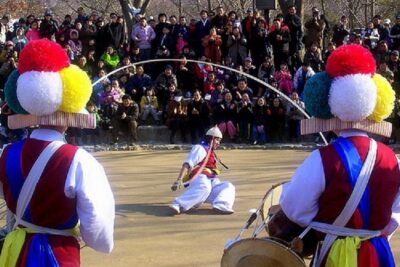
Namhansanseong UNESCO Historical Sites and Korean Folk Village-Private Tour
Read our review →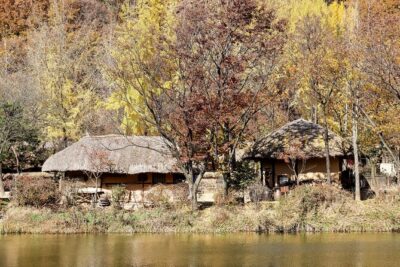
Private Day Trip to Korean Folk Village and Hwaseong Fortress
Read our review →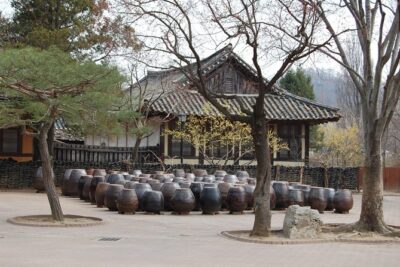
Browse the lists this tour appears in