Reviewed · PRIVATE
Korean Green Tea Tour – from Boseong to Gangjin (Private)
Tea country is South Korea at its most peaceful. This private day tour from Gwangju combines the famous rolling fields of Boseong with the older, quieter tea traditions of Gangjin. I especially like the three styles of Korean tea built into the day: leaf tea, powdered tea, and rice cake tea. I also like the private vehicle and flexible guide service, which make a long route much easier than trying to connect these rural sites by public transport.
The main drawback is the amount of time spent on the road. The drive from Gwangju to Boseong takes about 70 minutes, Boseong to Gangjin about 50 minutes, and Gangjin back to Gwangju about 70 minutes. Lunch is also not included, and the day can feel full if you prefer slow visits over a carefully packed schedule.
In This Review
- Key Details at a Glance
- Why This Route Works for Tea Lovers
- Starting from Gwangju at 9:30 a.m.
- Daehan Dawon: Boseong’s Famous Green Hills
- Lunch in Boseong-eup: Local Food Without a Fixed Menu
- Korea Tea Museum: Turning a Pretty Visit into a Useful Lesson
- Nokcha-ro and Choroknip Tea Farm
- Gangjin Dawon: A Change of Pace at Mt. Wolchulsan
- Baegundong Hermitage Garden and Korea’s Old Tea Culture
- Baegun Tea House and Rice Cake Tea
- What the $195 Price Really Buys
- Who Should Book This Day?
- Should You Book the Korean Green Tea Tour?
- FAQ
- Where does the Korean Green Tea Tour start?
- How long does the tour last?
- Is transportation included?
- What tea experiences are included?
- Is lunch included?
- Which places does the tour visit?
- Can I cancel for a full refund?
Key Details at a Glance
- Three tea regions in one day: Visit major tea fields in Boseong and Gangjin, including Daehan Dawon, Nokcha-ro, and Gangjin Dawon.
- A real Korean tea lesson: Take part in a tea ceremony class in Boseong rather than simply buying tea at a shop.
- Two very different tea stories: Boseong offers grand hillside farms and modern tea tourism, while Gangjin connects tea with Joseon-era gardens and Korea’s first tea brand.
- Private transport from Gwangju: Your group travels together, with no strangers and no need to work out rural bus connections.
- Local food at lunchtime: Choose from selected dishes in Boseong-eup, then pay the restaurant directly.
- Strong guide service: Guides including Veronica and Vicky are praised for clear explanations, local food suggestions, and help with transport questions beyond the tour itself.
Why This Route Works for Tea Lovers
Boseong is the visual star. Its green tea hills fold over the countryside in neat rows, creating one of South Korea’s most recognizable rural scenes. The area has suitable soil and climate for tea growing, and the tea farms are operated organically, according to the tour information.
Gangjin gives the day more substance. It is less familiar to many foreign visitors, yet its tea culture reaches back more than 1,000 years. The area also connects to Baegun Okpan Tea, regarded as Korea’s first tea brand, created in the 1920s by Lee Han-young, a descendant of one of Jeong Yak-yong’s disciples.
That contrast is the reason I find the route worthwhile. You are not simply visiting three photogenic plantations. You are seeing how tea works as agriculture, a drink, a ceremonial practice, a commercial product, and part of Korea’s cultural memory.
A few more options to weigh up in South Korea
- Busan Private Tour with licensed tour guide + private vehicle
★ 5.0 · 1,143 reviews - Private DMZ Tour (No Shopping): 3rd Tunnel & Suspension Bridge
★ 5.0 · 607 reviews - Jeju Island English Private & Flexible Tour any number anywhere
★ 5.0 · 561 reviews
Starting from Gwangju at 9:30 a.m.
The tour begins at 9:30 a.m. in Gwangju Metropolitan City. With private transport, you can use the drive to Boseong as a transition from the city to the countryside instead of worrying about train and bus changes.
The route is long, but the private format matters here. You can travel with only your own group, and the guide can explain the day as you go. Guides named in the feedback, including Veronica and Vicky, receive especially strong praise for their tea knowledge, clear explanations, warmth, and ability to adjust the day to a group’s interests.
The tour lasts about nine to ten hours. Since the three main drives total roughly three hours and 10 minutes, expect a full day rather than a quick outing. You will want comfortable shoes, a phone or camera for the views, and enough energy for walking around sloping fields and gardens.
Daehan Dawon: Boseong’s Famous Green Hills
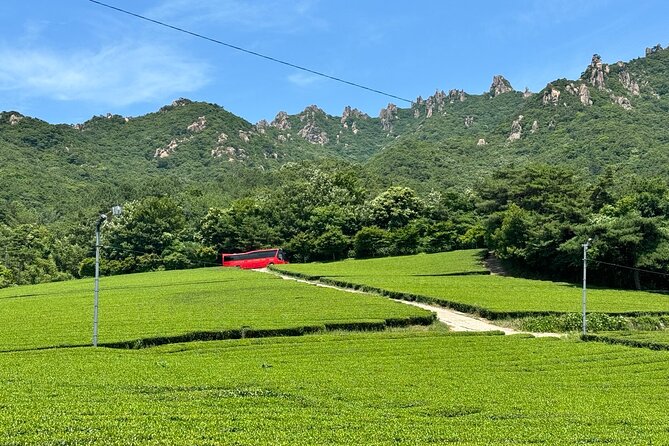
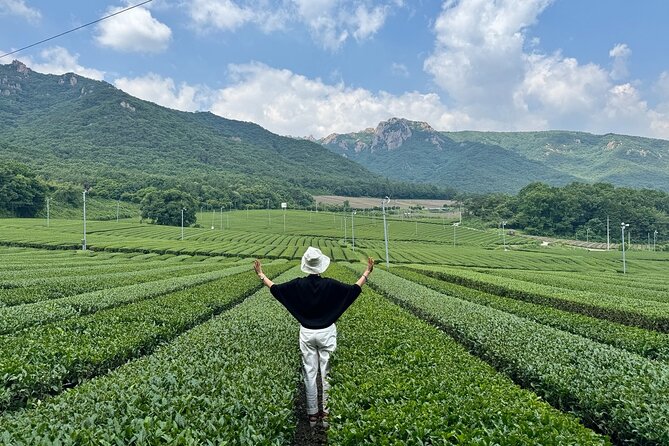
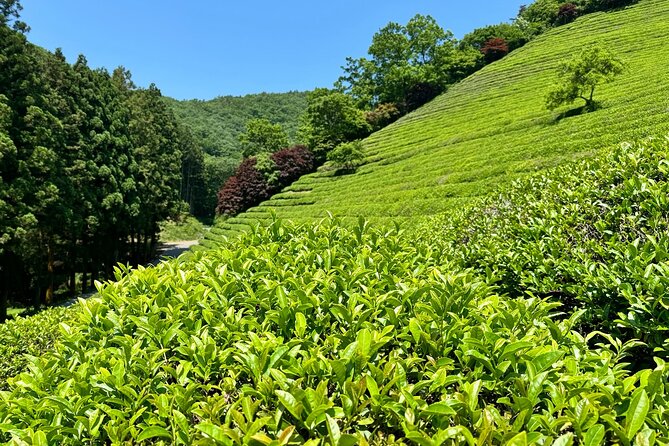
Your first major stop is Boseong Green Tea Field Daehan Dawon, with about 90 minutes to explore. This is the classic Boseong experience: cultivated tea rows running over rounded hills, with broad views that make the trip from Gwangju feel justified.
The setting is especially good for first-time visitors to Korea’s tea country. You can see how tea is grown rather than encountering it only as a packaged drink. The ordered rows also make the farm easy to understand visually, even before the guide explains harvesting and production.
The time allowance is sensible, though not generous. You can walk through the fields, pause for photographs, and enjoy the countryside, but this is not a long hiking excursion. If you want to linger over every viewpoint, the schedule may feel brisk.
The organic farming detail adds useful context. It helps explain why Boseong is treated as a major tea-producing area, not simply a pretty photo stop. Your guide can also connect what you see in the fields with the tea you taste later in the day.
Lunch in Boseong-eup: Local Food Without a Fixed Menu
After the first tea field, you stop in Boseong-eup for about an hour. Lunch is not included, so you choose your preferred dish and pay at the restaurant.
The suggested choices include stir-fried nakji, Korean octopus, along with other popular local dishes. This arrangement has a practical advantage: you are not locked into one meal or forced to pay for food you do not want. It also gives the guide room to steer you toward a suitable local restaurant.
The tradeoff is that the final cost is not fully fixed. At $195 per person, you should budget separately for lunch and any alcoholic drinks. Ask your guide about the current options and prices if you are watching your spending.
An hour is enough for a straightforward meal, but not for a long, leisurely Korean lunch. I would treat this as a useful break between the major tea stops rather than the central food experience of the day.
A completely different kind of day:
- Best DMZ Tour Korea from Seoul (Red Suspension Bridge Optional)
★ 5.0 · 41,422 reviews - DMZ Tour: 3rd Tunnel, Option(Suspension Bridge, Boat) from Seoul
★ 5.0 · 21,373 reviews - DMZ tour south Korea from Seoul (NK experience hall, defector)
★ 5.0 · 20,599 reviews - DMZ Insider Tour: 3rd Tunnel, NK Defector Meet & Red Bridge
★ 4.9 · 15,214 reviews
Korea Tea Museum: Turning a Pretty Visit into a Useful Lesson
The Korea Tea Museum gives you about an hour to learn how one tea plant can produce six types of tea. The museum also covers the history of Korean tea and the development of green tea production in the country.
This stop gives structure to the rest of the day. Without it, the fields might remain mainly a scenic backdrop. Here, you get the basic vocabulary and production context needed to understand why leaf tea, powdered tea, and rice cake tea feel so different.
The museum is also a good pause after walking outdoors. If the weather is hot, wet, or simply tiring, an indoor cultural stop helps keep the day comfortable.
Do not expect a huge museum visit. The scheduled hour suggests a focused introduction rather than an entire afternoon of exhibits. Its value comes from making the tastings and tea ceremony more meaningful.
Nokcha-ro and Choroknip Tea Farm
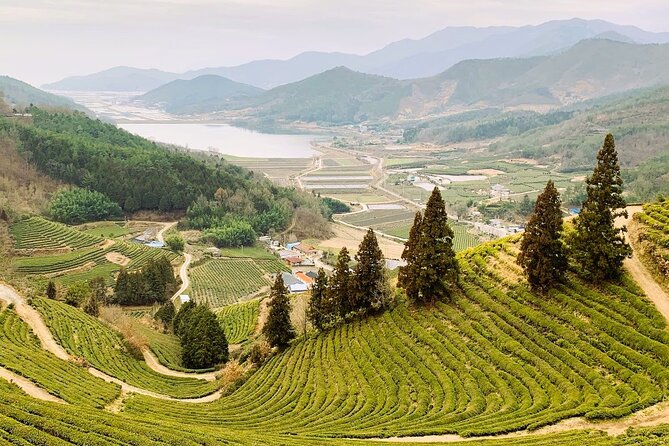
The next Boseong stop lasts about 40 minutes at Nokcha-ro. Choroknip tea farm, operated by Boseong Jeda, is known for its viewpoint over the rolling fields.
The tea house terrace is the key feature. Instead of looking across the rows from ground level, you get a higher view of the farms spreading over the hills. This is likely one of the best places on the route for photographs and for simply sitting with a cup of tea.
The short visit keeps the day moving, but it also means you should not expect a long farm walk here. The stop is about the view and the tea house atmosphere. If Daehan Dawon shows you the scale of Boseong’s cultivation, Nokcha-ro gives you the best chance to take it in from above.
I like this pairing. Two tea fields in the same region could feel repetitive, but they serve different purposes: one offers close contact with the rows, and the other offers a broad scenic perspective.
Gangjin Dawon: A Change of Pace at Mt. Wolchulsan
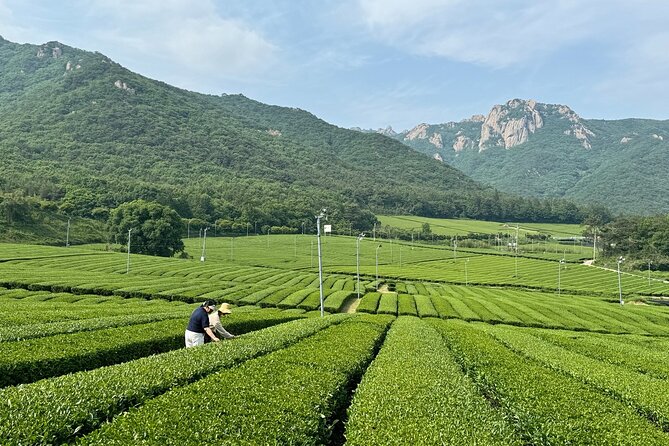
From Boseong, the vehicle continues for about 50 minutes to Gangjin Dawon. The tea field sits at the foot of Mt. Wolchulsan and has been cultivated for green tea production by Osulloc since 1980.
Gangjin Dawon is not presented as only a newer commercial farm. The area’s tea culture reaches back far earlier, with more than a thousand years of connection to tea. That older story is what separates this stop from the modern farming image associated with Boseong.
You have about 30 minutes here, so consider it a short scenic visit. The timing is enough to see the field and understand its setting, but not enough for a long walk or an extended lesson. The mountain setting adds variety after the open, rolling hills of Boseong.
This is one place where expectations matter. If you want a full plantation tour at every field, the stop may seem brief. If you want a broad introduction to two tea regions in one day, the short visit works well.
Baegundong Hermitage Garden and Korea’s Old Tea Culture
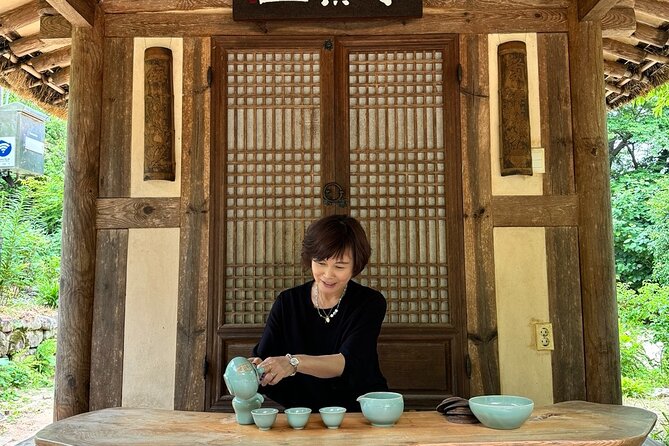
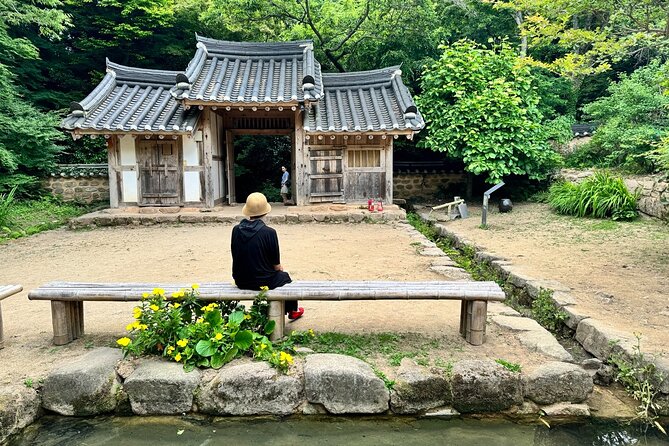
Baegundong Hermitage Garden is one of the most distinctive stops. Built in the late 17th century during the Joseon Dynasty, this private garden was carefully placed to work with its natural surroundings.
You have about 40 minutes to walk through the grounds. The garden connects tea with the setting in which it was enjoyed: water, plants, paths, quiet corners, and a carefully shaped relationship with nature. It is a welcome change from the large commercial fields.
The word hermitage can suggest a religious site, but the important point here is its role as a historic private garden and a place tied to tea culture. Your guide can help explain the site rather than leaving you to see it as just another attractive garden.
I would pay close attention to the transition in the day. Boseong shows tea as a major crop and visitor attraction. Baegundong shows a more intimate side of tea, connected to people, gardens, study, and refined daily habits during the Joseon period.
Baegun Tea House and Rice Cake Tea
The final stop is Seongjeon-myeon, where Baegun Tea House honors Baegun Okpan Tea. The brand was created in the 1920s by Lee Han-young, whose family connection led back to one of Jeong Yak-yong’s disciples.
This is where the included historical rice cake tea becomes important. Rice cake tea is not simply another sweet drink. It represents an older way of preparing and preserving tea, giving you a taste linked to local history rather than only contemporary café culture.
The tour includes tastings across three forms of Korean green tea:
- Leaf tea
- Powdered tea
- Rice cake tea
The included matcha affogato adds a playful modern touch. It combines powdered green tea with green tea ice cream, so the day does not treat tea as a solemn museum subject. You get tradition, education, scenery, and a dessert that is easy to enjoy.
The 40-minute visit should give you enough time to experience the tea house and hear the story behind the brand. If you are especially interested in buying tea, ask what products are available and how they differ before making a purchase.
What the $195 Price Really Buys
At $195 per person, this is not a budget day trip. The value depends heavily on how many people are in your private group and how much you value expert guidance.
The price includes private transportation, admissions, all fees and taxes, the Boseong tea ceremony, matcha affogato, and the historical rice cake tea experience. It does not include lunch, alcohol, or travel insurance.
For a solo visitor or couple, the price may feel high compared with joining a large bus excursion. But this route covers three distant areas, and rural public transport would take more planning and likely more time. You are paying for direct transport, a full-day route, and access to cultural explanations that would be difficult to assemble independently.
For a larger private group, group discounts may improve the value. The exact discount is not provided, so check the current total before booking.
The strongest added value is the guide. Several published comments praise Veronica for explaining Korean tea, recommending good restaurants, and helping with transport problems beyond the scheduled tour. Vicky is also praised for combining tea knowledge with local insight from Gwangju. Those details matter because the route is about much more than reaching a field and taking a photograph.
Who Should Book This Day?
I would recommend this tour to tea lovers, gardeners, photographers, and visitors who want a rural side of South Korea from a Gwangju base. It also suits anyone who prefers a private day with a guide rather than a large group and fixed commentary.
It is a particularly good choice if you want cultural context. The tea ceremony, museum, historic garden, and rice cake tea give the route more depth than a plantation-only outing.
You may want to skip it if you dislike long drives, need a slow schedule, or mainly want to hike around Boseong. The day includes several short stops, and the return to Gwangju makes it a substantial outing.
The tour requires good weather. If poor weather cancels the experience, you are offered another date or a full refund. Most people can participate, service animals are allowed, and the tour is near public transportation, though the actual excursion uses private transport.
Should You Book the Korean Green Tea Tour?
I would book this tour if you are staying in Gwangju and want a well-organized introduction to Korean tea country. The best reason is the combination of Boseong’s famous scenery and Gangjin’s older tea traditions. You get the postcard views, but you also learn why tea matters here.
The main decision is simple: can you accept three hours of driving for a nine to ten-hour day? If yes, the $195 price buys a smooth route through places that are not easy to connect on your own. If you want a relaxed single-site visit, choose a shorter Boseong outing instead.
With a five-star average and a 100 percent recommendation rate across 12 ratings, the experience has a strong record. Still, the practical test is your travel style. Book it for personal guiding, local food help, and a broad tea story. Skip it if you want more free time and less time in the vehicle.
FAQ
Where does the Korean Green Tea Tour start?
The tour starts in Gwangju Metropolitan City at 9:30 a.m.
How long does the tour last?
The experience lasts approximately nine to ten hours.
Is transportation included?
Yes. Private transportation is included, and only your own group participates.
What tea experiences are included?
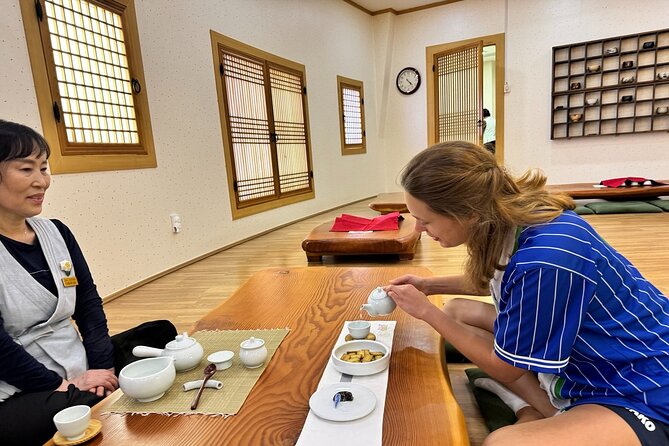
The tour includes a Korean tea ceremony in Boseong, powdered green tea with green tea ice cream in a matcha affogato, and historical rice cake tea in Gangjin.
Is lunch included?
No. Lunch is not included. You choose a local restaurant in Boseong-eup and pay for your meal directly.
Which places does the tour visit?
The route includes Daehan Dawon, Boseong-eup, the Korea Tea Museum, Nokcha-ro, Gangjin Dawon, Baegundong Hermitage Garden, and Seongjeon-myeon.
Can I cancel for a full refund?
Yes. You can cancel at least 24 hours before the start time for a full refund. Cancellations or changes made less than 24 hours before the start time are not accepted, and poor-weather cancellations offer a different date or a full refund.
Just added in South Korea
- Seoul: Korean & English Language Exchange Global Party★ 5.0 · 28 reviews
- Your Personal Seoul Photographer!★ 4.1 · 15 reviews
- You’re Invited to Our Home in Seoul: The Only Cooking Class!★ 5.0 · 8 reviews
- From Seoul: Yongpyong Ski Day Tour with Transportation★ 4.9 · 40 reviews
- Yeosu: Private Taxi Car Private Charter Tour★ 4.7 · 3 reviews
- From Seoul: Hwacheon Ice Fishing and Lighting Festival Tour★ 4.5 · 4 reviews
- Yangdong village & Gyeongju Unesco Site Private Van Tour★ 5.0 · 1 review
- Unique Native Experience : Han River Picnic, Board game, BBQ★ 5.0 · 3 reviews
Private, compared.

Busan Private Tour with licensed tour guide + private vehicle
Read our review →
Private DMZ Tour (No Shopping): 3rd Tunnel & Suspension Bridge
Read our review →
Jeju Island English Private & Flexible Tour any number anywhere
Read our review →
Private Busan Tour -Explore Cultural Landmarks with a Local Guide
Read our review →
Seoul City Private Full-Day Tour Including Lunch
Read our review →
Private DMZ the 3rd Tunnel Tour from Seoul (optional Red Bridge)
Read our review →
Jeju Island Popular Sightseeing Private Car Charter Tour 5/9hours
Read our review →