
Reviewed · TRADITIONAL PERFORMANCES
Private Tour Woman Diver Performance & stone park in Jeju Island
Jeju’s sea has a human story. This private tour brings you to the daily haenyeo performance at Seongsan Ilchulbong, then adds the Haenyeo Museum and Jeju Stone Park for a useful look at the island’s people, folklore, and volcanic past. I like the mix of outdoor scenery and cultural detail, and I like that pickup and drop-off are included.
The main drawback is the fixed timing. The performance begins at 2pm, and bad weather or rough seas can cancel it suddenly. You also need to reach the parking area around 1:30pm, so this is not a leisurely late-start outing.
In This Review
- Key Details to Know Before Booking
- Why the Haenyeo Performance Matters
- Arriving at Seongsan Ilchulbong by 1:30pm
- Watching the Women Divers at Seongsan Beach
- Weather Is a Real Limitation, Not Fine Print
- The Haenyeo Museum Explains the Life Behind the Show
- Jeju Stone Park Turns Volcanic Stone Into a Story
- What You Get for $130 Per Person
- Timing, Transport, and Who Will Enjoy This Tour
- Should You Book This Jeju Private Tour?
- FAQ
- What time does the haenyeo performance begin?
- Do I need a ticket for Seongsan Ilchulbong to watch the performance?
- How long does the performance last?
- Can the performance be canceled?
- What does the $130 price include?
- How long is the complete tour?
Key Details to Know Before Booking
- The performance begins at 2pm: Plan to be at the Seongsan parking area by about 1:30pm.
- The show is free: You do not need a Seongsan Ilchulbong admission ticket to watch the women divers.
- The tour lasts about five to six hours: It includes private transport, parking, fuel, admission fees, and return service.
- You visit three different sides of Jeju: A volcanic crater coast, a museum about haenyeo culture, and a large stone park.
- Weather matters: Heavy rain, poor conditions, or a high sea level can cancel the performance.
- The driver has foreign-tour experience: English ability is described as basic or limited, so do not expect a full museum lecture in English.
Why the Haenyeo Performance Matters
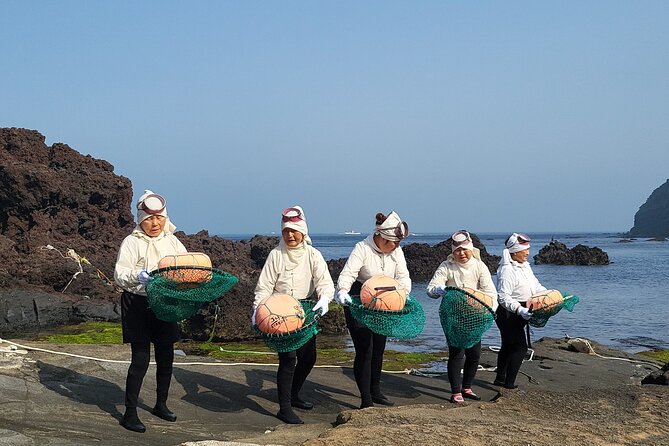
The haenyeo are women who gather seafood from the sea without breathing equipment or powered machinery. In Jeju, the sea has long served as a kind of farm, especially on an island where volcanic ground made ordinary agriculture difficult.
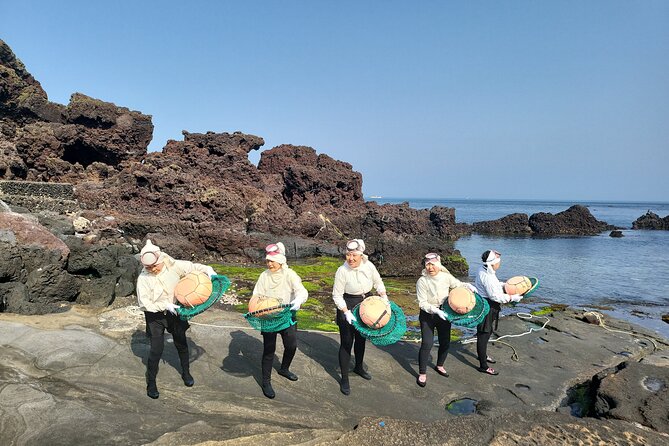
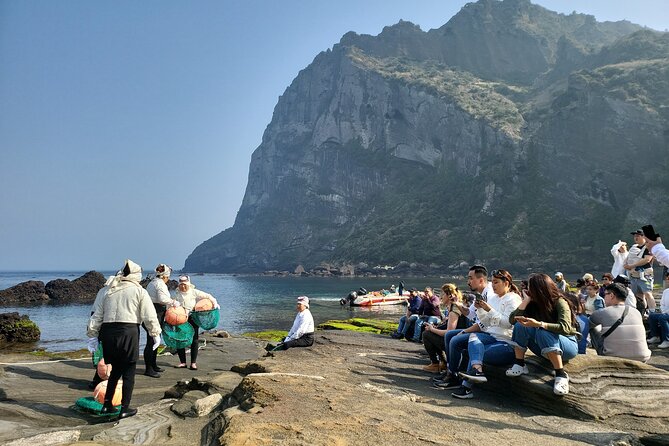
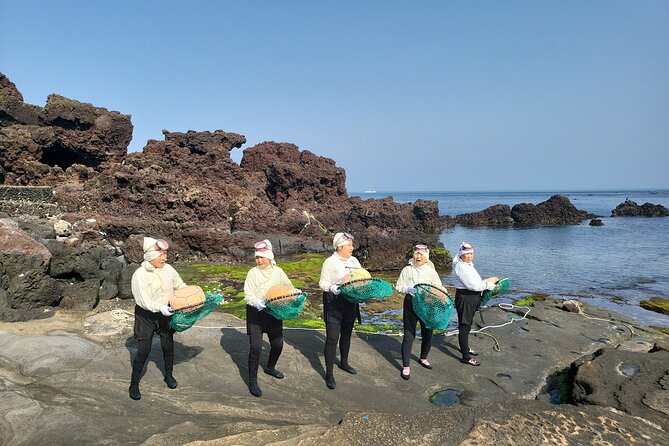
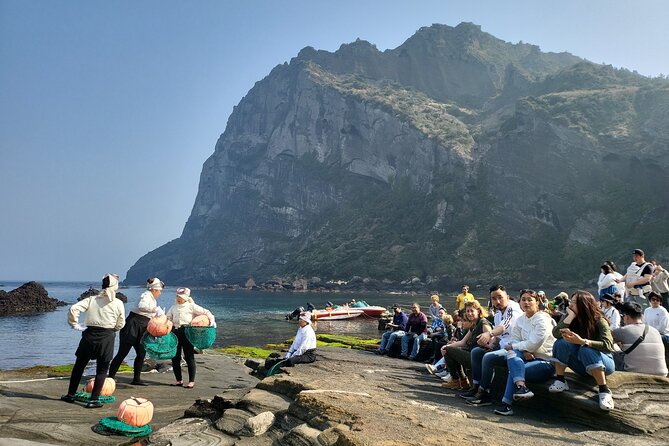
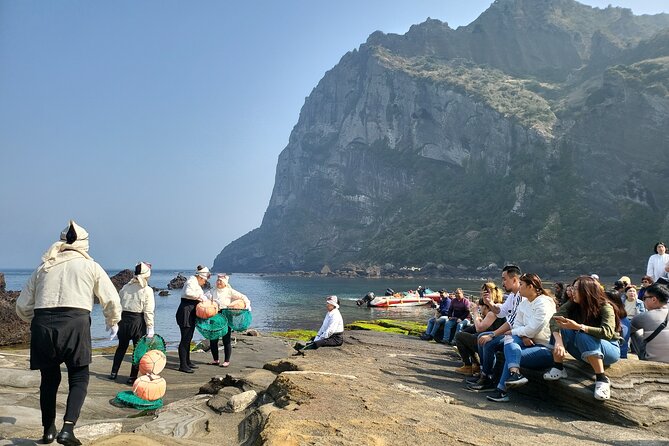
At the performance, four Jeju haenyeo mothers, described as being between 70 and 82 years old, first sing the Ieodo Sana song. They then go out toward the water and demonstrate how they collect seafood such as abalone, conch, and octopus.
The performance lasts about 20 minutes. The first 10 minutes feature singing, followed by about 10 minutes of material work in the sea. It is short, but the point is not spectacle alone. You are seeing a work tradition tied to income, risk, community rules, and family life.
The song is especially meaningful. Ieodo Sana is a traditional work song with repeated lines and a strong rhythm. It expresses the haenyeo’s hopes, fears, and longing for Ieodo, an underwater reef southwest of Jeju that became part of local legend.
Listen for the force of the singing. The lyrics refer to rowing, storms, fate, and the need to reach one’s destination. They also reflect the danger of sea work, where each woman is responsible for her own safety while depending on the wider group.
This is best approached with respect. The women are not simply performers in costumes. Their tradition developed through years of swimming and breath control, often beginning in childhood. Haenyeo also carry detailed knowledge of tides, currents, seasons, seabed conditions, and marine life.
More Jeju trips:
- Jeju: Eastern Jeju UNESCO Spots Day Tour
★ 4.9 · 1,148 reviews - Jeju: Western and Southern Sightseeing Day Tour
★ 4.8 · 972 reviews - East Jeju Essentials – Seongsan Ilchulbong (UNESCO) & Haenyeo
★ 5.0 · 939 reviews
Arriving at Seongsan Ilchulbong by 1:30pm
Seongsan Ilchulbong is the tour’s visual centerpiece. This volcanic formation rose from an eruption beneath the sea about 5,000 years ago. Waves and wind later shaped its outer walls, particularly the exposed eastern side, into steep coastal cliffs.
The name explains the place. Seongsan means a mountain resembling a castle, while Ilchulbong refers to a peak where the sun rises. The circular rim has 99 stone pillars, and from above it is said to resemble a crown.
The climb from the ticket office to the top takes about 30 minutes, with roughly an hour needed for the ascent and return. The tour description allows about three hours here, which gives you time to climb, look around, and reach the performance beach.
You do not have to climb to the summit. A free route on the left side of Seongsan remains open, and this path leads toward the beach where the haenyeo performance takes place. That detail matters because the show is free even if you do not buy a ticket for the main peak.
I would arrive early rather than try to cut it close. You need to park, find the free route, walk down the stairs, and reach the shore before 2pm. The suggested arrival time is 1:30pm, which gives you a useful cushion.
The climb can be tiring, especially in poor weather or strong sun. If your priority is the haenyeo show, use the free coastal route and save your energy. If you want the best view of the crater, allow time for the full climb.
Watching the Women Divers at Seongsan Beach
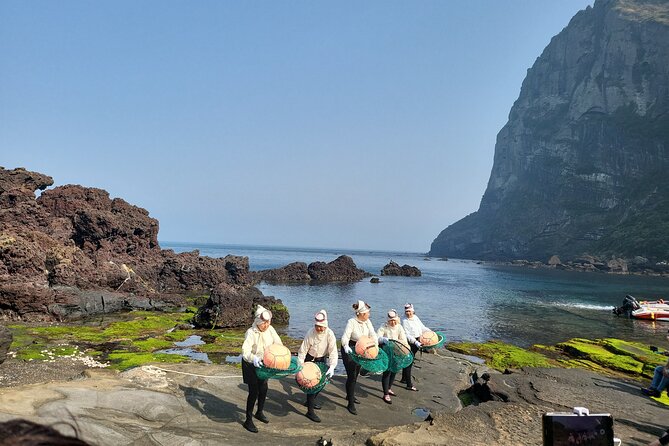
The performance takes place at Seongsan Ilchulbong Beach. From the viewing area, you can watch the women prepare, sing, and demonstrate their work in the water.
Do not expect a long stage production. The show is compact and tied to the sea itself. That makes it more authentic, but it also means the experience depends on visibility, water conditions, and where you are able to stand.
The women use breath control and practiced movement to work below the surface. After spending time underwater, haenyeo make a distinctive whistling breath called sumbisori. It helps them release carbon dioxide and take in fresh air quickly before continuing their work.
The performance gives you only a brief glimpse of this skill. The Haenyeo Museum later supplies the missing context, so the two stops work well together. First you see the practice. Then you learn how the tradition functions.
If you drive along Jeju’s coastal roads at other times, keep an eye on the water. Local haenyeo may be working outside the performance area, collecting seafood in their actual fishing grounds. The tour’s show is arranged for visitors, but the wider tradition remains part of daily coastal life.
Weather Is a Real Limitation, Not Fine Print
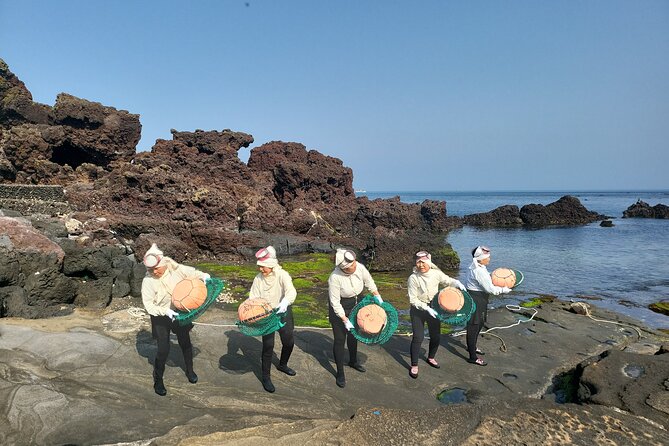
The performance can be canceled suddenly because of heavy rain, poor weather, rough sea conditions, or a high sea level. This is not a minor inconvenience. The activity happens outdoors and in the water, so safety comes first.
If the performance is canceled because of poor weather, the provider offers a different date or a full refund. That protection is useful, but a replacement date may not fit a short Jeju stay.
You can still visit Seongsan Ilchulbong and the other stops if the rest of the tour operates, but the central haenyeo feature may be missing. I would book this experience early enough in your trip to leave room for a possible change.
The cancellation policy also allows you to cancel for a full refund up to 24 hours before the start time. Changes or cancellations made inside that window are not accepted for a refund.
More traditional performances in Jeju:
- East Jeju: Day Tour with Seongsan Peak & Haenyeo Performance
★ 4.9 · 478 reviews - Jeju island Private Tour – UNESCO Day Tour & Haenyeo Performance
★ 5.0 · 58 reviews - Jeju Private Day Tour- Seongsan Ilchulbong & Haenyeo performance
★ 3.0 · 1 review - Seoul: TOUCH FIVE Performance Show Ticket
★ 4.9 · 231 reviews
The Haenyeo Museum Explains the Life Behind the Show
The Haenyeo Museum sits near Sehwa-ri, in Gujwa-eup, overlooking a white sand beach. It is the best stop for understanding why the performance matters beyond its 20 minutes.
The museum covers the sea, fishing villages, folklore, food, childrearing, and community life. The exhibits focus on Jeju’s haenyeo culture, which reaches back to the island’s early past.
Many of the objects were donated by haenyeo themselves. An actual haenyeo house was moved into the museum, giving you a more direct sense of how these women lived and worked.
Look for the displays about bulteok, the meeting place where haenyeo shared sea knowledge and prepared for work. The community passed down information about tides, wind, sea-floor features, and the best seasons for collecting particular marine life.
The museum also explains the rules governing village fishing grounds. Haenyeo work collectively, not as isolated individuals. Fishing villages set boundaries, harvesting methods, qualifications, and seasons. These rules help protect marine life and reduce conflict.
The women are grouped by experience and skill. The strongest and most respected senior members guide the community, while younger haenyeo learn the sea from those who came before them.
A short video, lasting about seven to eight minutes, is worth your time. It gives you visual context that displays alone cannot provide. The museum visit is scheduled for about an hour, which is enough for the main exhibits without turning the stop into an all-day study session.
The grounds also commemorate the 1932 Haenyeo Anti-Japanese Movement, described as Korea’s largest women’s anti-Japanese movement. That part of the visit adds a political and social dimension to the culture. These women were not only workers at sea. They also organized and acted together when their community faced pressure.
Jeju Stone Park Turns Volcanic Stone Into a Story
Jeju Stone Park is both a museum and an ecological park. It presents the island’s stone culture through outdoor paths, traditional buildings, stone figures, and underground exhibition halls.
The park is large. One hour gives you a useful introduction, but you should not expect to see every corner at that pace. The setting near an oreum, one of Jeju’s small volcanic hills, adds open views and a sense of space.
At the entrance, a castle-like wall made from piled stones introduces the material that shapes so much of Jeju. Along the route, you will see sculptures connected with Seolmundae Halmang and her son, General Oh Baek.
The park also explains the meaning of the Dolhareubang, or stone grandfather. These carved figures traditionally served as guardian deities at village entrances, protecting residents and wishing them safety.
You can also see traditional thatched houses and old stone toilets. The toilet displays may raise an eyebrow, but they explain practical rural life. Some traditional toilets included a small pig enclosure, and human waste was used with grass and pig waste as fertilizer for fields.
Stone walls had practical and spiritual roles. They marked property, protected homes, reduced wind, and were also used in hopes of keeping away bad energy.
One point to know before visiting: the main museum is underground. If you expect a grand building above ground, the layout may surprise you. The park works better if you follow the paths slowly rather than treating it as a quick photo stop.
What You Get for $130 Per Person
At $130 per person, this is not the cheapest way to see eastern Jeju. The price makes more sense if you value a private vehicle and want several cultural stops in one outing.
The package includes pickup and drop-off at an airport, hotel, port, or stay house. You return to your starting point or a location around your accommodation. An air-conditioned vehicle, fuel, parking, transportation insurance, and admission fees are also included.
That removes several small costs that can add up on Jeju. You do not need to arrange separate transport between Seongsan, the museum, and Stone Park, and you do not need to pay each admission fee as you go.
The private format is another part of the value. Only your group participates, so the day can be more comfortable than a large coach tour. You can spend more time at a favorite stop, within the limits of the fixed schedule and the driver’s route.
The tradeoff is guiding depth. The driver has foreign-tour experience but speaks basic or limited English. If you want detailed interpretation at every site, bring your own notes or use the museum displays and videos to fill in the background.
For a couple or small private group, the cost buys convenience and a full half-day route. For someone traveling alone, the per-person price is harder to justify unless private transport is especially important.
Timing, Transport, and Who Will Enjoy This Tour
The full experience takes about five to six hours. The listed visits include about three hours at Seongsan Ilchulbong, 20 minutes for the performance, one hour at the Haenyeo Museum, one hour at Stone Park, and return transport.
That schedule is full but reasonable. The main challenge is the afternoon start and the distance between stops. You should eat before pickup or carry food, since meals and drinks are not included.
This tour suits you if you want to combine Jeju’s volcanic scenery with a close look at local culture. It is also a good choice if you are staying outside eastern Jeju and do not want to manage several bus connections.
The tour is practical for most participants, and service animals are allowed. It is near public transportation, though the private pickup means you do not need to rely on it.
You should think twice if you dislike fixed schedules, steep walking, or weather-dependent activities. Seongsan can involve stairs, and the performance may be canceled even after you have made the trip.
The driver’s English level also matters. You can still enjoy the sites, but this experience is better for someone comfortable with self-guided sightseeing than for someone expecting constant historical commentary.
Should You Book This Jeju Private Tour?
Book it if the 2pm haenyeo performance is high on your Jeju wish list and you want transportation bundled with Seongsan Ilchulbong, the Haenyeo Museum, and Jeju Stone Park.
The strongest reason to choose it is the combination. You see a living coastal tradition, learn about it in a museum, and then explore Jeju’s stone-based folklore and rural life. That gives the afternoon more substance than a simple scenic drive.
Skip it if you need guaranteed access to the performance, since weather can cancel it. You may also prefer another option if you want a fluent English-speaking guide or a slower visit at each site.
For the best chance of seeing the show, arrive at the parking lot by 1:30pm, wear shoes suitable for stairs, and keep your afternoon flexible. If those conditions suit you, this private tour offers a useful, well-rounded introduction to eastern Jeju.
FAQ
What time does the haenyeo performance begin?
The performance begins every day at 2pm. You should arrive at the parking lot by about 1:30pm so you have time to reach the beach.
Do I need a ticket for Seongsan Ilchulbong to watch the performance?
No. The performance is free, and you can watch it without buying a ticket for Seongsan Ilchulbong. A free route on the left side leads toward the beach.
How long does the performance last?
The performance lasts about 20 minutes. It includes about 10 minutes of singing and 10 minutes of work in the sea.
Can the performance be canceled?
Yes. Heavy rain, poor weather, rough conditions, or a high sea level can cause a sudden cancellation. If the experience is canceled because of poor weather, you can receive a different date or a full refund.
What does the $130 price include?
The price includes private pickup and drop-off, an air-conditioned vehicle, fuel, parking, transportation insurance, and admission fees. Food, drinks, and personal expenses are not included.
How long is the complete tour?
The tour lasts approximately five to six hours. It includes Seongsan Ilchulbong, the haenyeo performance, the Haenyeo Museum, Jeju Stone Park, and return transportation.
Just added in Jeju
- Small Group 7D Korea package Tour with Seoul Gyeongju Busan Jeju★ 4.5 · 13 reviews
- Discover Jeju in 3days: A Curated All-Inclusive Experience★ 5.0 · 1 review
- 10 Days Essential Korea Tour(Seoul, Nami, DMZ, Andong, Gyeongju, Busan, Jeju)★ 5.0 · 1 review
- 1 Day Free schedule Tour a lot of experince driver in jeju island★ 5.0 · 2 reviews
- Jeju island: Van tour with a guide who the most loves JEJU★ 5.0 · 7 reviews
- Private schedule Day Tour With Local Taxi Driver in jeju island★ 5.0 · 1 review
- Jeju Unesco Eest course Package Private Van Guided Tour★ 5.0 · 17 reviews
- Full Day Jeju Private Customizable highlight Tour★ 5.0 · 5 reviews
Traditional Performances, compared.

East Jeju: Day Tour with Seongsan Peak & Haenyeo Performance
Read our review →
Jeju island Private Tour – UNESCO Day Tour & Haenyeo Performance
Read our review →
Gugak – Korean Traditional Music Museum&Concert Tour
Read our review →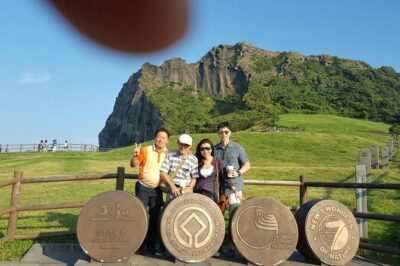
Jeju Private Day Tour- Seongsan Ilchulbong & Haenyeo performance
Read our review →
Gugak Korean Traditional Music and Dance Performance in Seoul
Read our review →Browse the lists this tour appears in