
Reviewed · TRADITIONAL PERFORMANCES
Gugak Korean Traditional Music and Dance Performance in Seoul
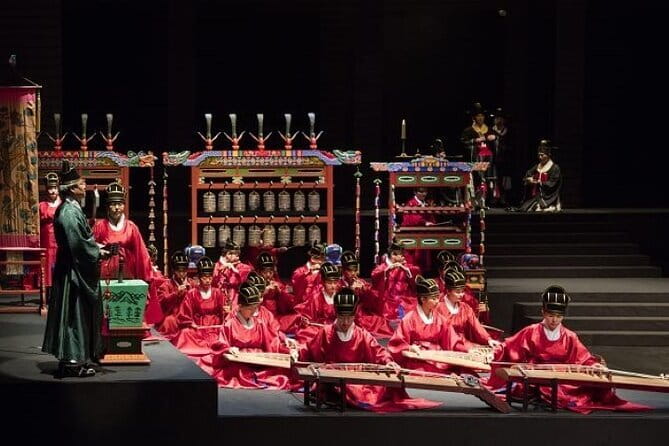
Let the instruments speak for themselves. At Seoul’s National Gugak Center, master artists present Korean music, dance, and song in a polished 70-minute performance. I especially like the natural-acoustic hall, where the musicians perform without microphones or speakers, and the changing weekly program, which gives each visit its own character.
The Saturday show is also a good value at $13.20 per person. You may see court music, traditional instruments, singing, or dance, and the first Saturday of each month features a UNESCO Intangible Cultural Heritage performance. The main drawback is that seats are randomly assigned, and the show is non-refundable once booked.
In This Review
- Key Points to Know Before You Go
- Why Gugak Makes a Good Seoul Cultural Stop
- Entering Yeakdang Hall for the 3 p.m. Performance
- The Special Sound of a Natural-Acoustic Hall
- What You May See on the Stage
- Taepyeongmu and the Strength of the Final Dance
- Is $13.20 Good Value?
- Planning the Experience Around Your Day
- Who Will Enjoy This Performance Most?
- Small Details That Make the Visit Easier
- Should You Book the National Gugak Center Show?
- FAQ
- Where is the Gugak performance held?
- What time does the performance begin?
- How long does the performance last?
- When can I enter the hall?
- Can I enter if I arrive late?
- Are seats assigned in advance?
- Does the performance use microphones or speakers?
- Does the program stay the same each week?
- Is there transportation after the show?
Key Points to Know Before You Go
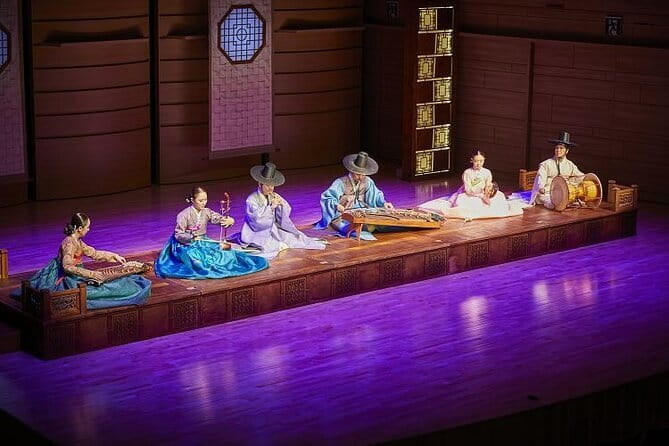
- Natural acoustics: The performance uses no microphones or speakers, letting traditional instruments carry through the hall on their own.
- Different program each week: The first Saturday focuses on UNESCO-recognized heritage performances, while the second through fourth Saturdays feature traditional instruments, song, dance, and other performances.
- A compact 70-minute show: The length works well for a Saturday afternoon in Seoul and does not take over your whole day.
- A strong price for live master artists: At $13.20, this is an affordable way to see a formal Korean performance at the country’s main gugak center.
- Easy return transport: After the show, a free shuttle runs toward Seocho Station, Seoul National University of Education Station, and Nambu Bus Terminal Station.
- Family details matter: Children over age seven may attend the show, and a playground is available on the second floor for children from age three through eight.
Why Gugak Makes a Good Seoul Cultural Stop
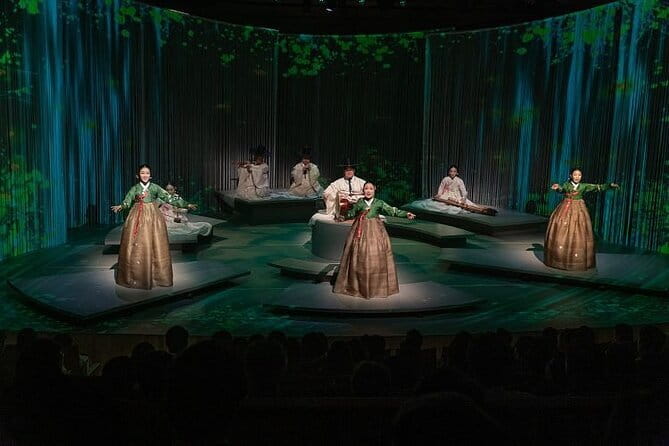
Gugak is the broad Korean term for traditional Korean music. It includes court music, instrumental pieces, vocal styles, and music connected with dance and ceremony. A live performance gives you a better sense of the art than a short cultural display or background music in a palace courtyard.
The National Gugak Center is the right place for this introduction. It is Korea’s leading center for gugak, and the Saturday program brings together skilled singers, dancers, and instrumentalists. You are not simply watching a folk demonstration. You are attending a formal stage performance by artists trained in demanding traditional forms.
I like the balance of the program. You can expect music, singing, and dance to share the stage, but the exact mix changes from week to week and month to month. That keeps the experience from feeling like a fixed tourist presentation. It also means you should check the performance date carefully if you have a particular interest in dance, instruments, or UNESCO-recognized works.
The show lasts about one hour and ten minutes. That is enough time to give you a real taste of Korean performance without requiring the patience of a full evening concert. It fits neatly into a Saturday itinerary, especially if you have already visited the National Gugak Center or plan to continue on to southern Seoul afterward.
More traditional performances in Seoul:
- Seoul: TOUCH FIVE Performance Show Ticket
★ 4.9 · 231 reviews - Seoul: Comic Martial Arts Performance JUMP Show Ticket
★ 4.7 · 62 reviews - SEOUL: Gugak – Korean Traditional Music Museum&Concert Tour
★ 4.7 · 17 reviews
Entering Yeakdang Hall for the 3 p.m. Performance
The ticket redemption point is Yeakdang Hall at the National Gugak Center, on Nambusunhwan-ro in Seoul’s Seocho District. The listed start time is 3 p.m. Admission begins 30 minutes before the performance, so you can enter from about 2:30 p.m.
I would aim to arrive around 2:50 p.m. The official advice is to be there 10 minutes before the start, and that gives you time to find the hall, handle your ticket, and settle into your randomly assigned seat. Since seats are not chosen in advance, arriving early may also make the entry process less rushed, even though it does not guarantee a particular location.
Your voucher is sent through a Viator message, so check your messages before heading to the center. Keep the voucher easy to access when you arrive. The supplied information does not specify a separate ticket office process beyond redemption at Yeakdang Hall, so having the message ready is the sensible approach.
Oversized outerwear can be stored in a locker in the lobby. That small detail matters in Seoul, where a heavy coat can become awkward inside a concert hall. You can leave it behind and enjoy the performance without keeping it on your lap.
Late arrival is allowed, but not at any moment. If you miss the opening, you can enter after a song or during an intermission. That policy is helpful, but it is still better to arrive on time because entering between pieces can be distracting for both you and the performers.
The Special Sound of a Natural-Acoustic Hall
The most distinctive technical feature is the hall itself. The performance does not use a microphone or speaker. The musicians and singers rely on the room’s natural acoustics, which lets you hear the sound as it carries from the stage through the hall.
That changes the feeling of the event. Amplified sound can make every seat feel similar, while a natural-acoustic concert asks you to listen more closely to the room and the performers. Traditional instruments can have delicate tones, and the absence of electronic amplification keeps the presentation formal and direct.
You may notice that this is not designed as a loud spectacle. The appeal is precision, control, movement, and the sound of instruments played in a purpose-built performance space. If you enjoy concerts where atmosphere comes from the performers rather than lighting or special effects, this will suit you well.
At the same time, natural acoustics make your random seat more relevant. The experience is still designed for an audience throughout the hall, but the sound and view may vary according to your assigned position. Since you cannot select your seat, go in expecting a fair but unpredictable placement rather than a carefully chosen front-row view.
What You May See on the Stage
The program can include Korean court music, traditional instruments, songs, and dance. The contents differ every month and every week, so the show is not identical from one Saturday to the next.
The first week of each month is devoted to a UNESCO Intangible Cultural Heritage performance. That makes this date especially appealing if you want to see forms recognized for their cultural importance. The second, third, and fourth weeks present traditional instruments, song, dance, and related performances.
The supplied program information does not name every piece or guarantee a specific sequence. You should therefore view the performance as a carefully prepared sample of Korean traditional arts rather than a single named show with a fixed storyline.
That variety is part of the fun. A dance may communicate through controlled gestures and posture rather than spoken explanation. A vocal performance may sound unfamiliar at first, but the live setting helps you notice the relationship between voice, rhythm, and instruments. Instrumental sections can be especially valuable if you want to hear the sound of Korean traditional instruments without a modern concert arrangement covering their character.
The program changes often enough that even repeat visitors may find something different. If you want a particular art form, confirm the date before booking. If your main goal is simply to see a respected live gugak performance, the changing schedule works in your favor.
A few more options to weigh up in Seoul
- Best DMZ Tour Korea from Seoul (Red Suspension Bridge Optional)
★ 5.0 · 41,422 reviews - DMZ Tour: 3rd Tunnel, Option(Suspension Bridge, Boat) from Seoul
★ 5.0 · 21,373 reviews - DMZ tour south Korea from Seoul (NK experience hall, defector)
★ 5.0 · 20,599 reviews - Seoul: DMZ Tour with Optional Suspension Bridge
★ 4.8 · 5,277 reviews
Taepyeongmu and the Strength of the Final Dance
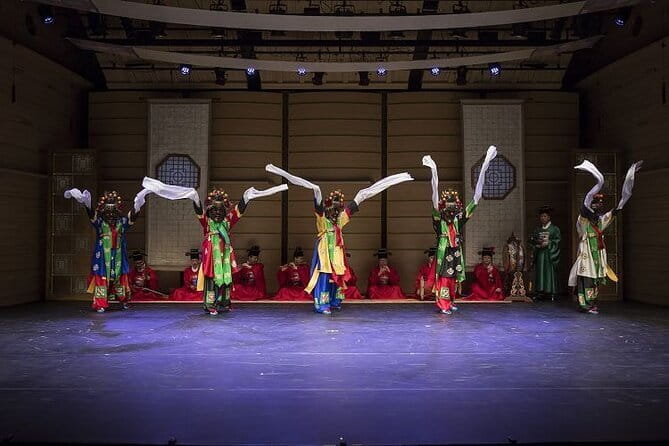
One performance detail deserves special attention: Taepyeongmu, also known as The Sexy Toe Dance in the supplied audience comment. It was singled out as the highlight of the show, and that gives you a useful clue about the power of the dance portion.
Taepyeongmu is known for precise footwork and controlled movement. Even without a detailed explanation of the choreography, the name points to the importance of the dancer’s feet, balance, and small gestures. A performance can look calm from a distance while demanding remarkable control from the artist.
If Taepyeongmu appears on your program, watch the feet and the way the dancer shifts weight. The appeal is not only in large movements. Small steps, turns, and changes in posture can carry much of the expression.
The exact closing number is not guaranteed because the program changes. Still, the strong response to this dance shows why it is worth paying attention to the full performance rather than treating the music as background before a final flourish.
Is $13.20 Good Value?
At $13.20, this is one of the more affordable ways to attend a formal Korean cultural performance in Seoul. The admission includes the Saturday Korean Music and Dance ticket, and the show runs for about 70 minutes.
The value becomes stronger if you care about the setting and performers. You are seeing artists at the National Gugak Center, not just watching a short demonstration arranged for passing visitors. The natural-acoustic format also gives the event a clear artistic purpose.
The free shuttle after the show adds practical value. It can take you toward Seocho Station, Seoul National University of Education Station, and Nambu Bus Terminal Station. That may save you the trouble of figuring out your next subway or bus connection immediately after the performance.
Parking is not included, and parking fees are your responsibility. The center is near public transportation, so the ticket price is most attractive for people arriving by subway or bus. If you are driving, add the parking cost before comparing this with other Seoul activities.
The main financial warning is the strict cancellation policy. This experience is non-refundable and cannot be changed for any reason. Only book once your Saturday plans are firm.
Planning the Experience Around Your Day
The 3 p.m. start leaves the morning and early afternoon open. You can use that time for another Seoul attraction, lunch, or a relaxed trip to the Seocho area. Give yourself enough time to reach the National Gugak Center because arriving late may mean waiting for the next song or intermission before you can enter.
After the 70-minute performance, the free shuttle is useful for continuing your day. The listed destinations are Seocho Station, Seoul National University of Education Station, and Nambu Bus Terminal Station. Since shuttle details can depend on the operating schedule, confirm the departure information at the venue rather than assuming an exact frequency.
This is not a tour with a guide leading you through several locations. The experience is centered on one performance at one venue. That is a benefit if you want a focused cultural activity, but it may not suit you if you prefer a packed itinerary with sightseeing and commentary between stops.
The show is open to anyone over age seven. Families should note that a playground is provided on the second floor for children from age three through eight. The playground does not change the age rule for the performance itself, so children attending the show must meet the stated minimum age.
Who Will Enjoy This Performance Most?
I would recommend this show to you if you want a polished introduction to Korean traditional culture and do not need every moment explained in English. The visual language of dance and the sound of the instruments communicate much of the experience directly.
It is also a good fit for music lovers. The natural acoustics reward careful listening, and the chance to hear traditional instruments in a formal hall is more meaningful than a quick photo stop at a historic site.
Families with children over seven can consider it, especially if the young audience members can sit quietly during a performance. The second-floor playground may help families with younger children who are waiting before or after the show, but the performance itself is not a children’s entertainment program.
I would be more cautious if you need a guaranteed seat, a fixed program, or a flexible booking. Random seat assignment and changing content are built into the experience. The non-refundable policy also means you should not reserve it as a maybe activity.
The show may be less suitable for someone who wants a high-energy stage production with amplified sound, large visual effects, or a long narrative. Its pleasures are quieter and more exact: the sound of an instrument, a singer’s phrasing, the shape of a dancer’s movement, and the discipline of a traditional art form.
Small Details That Make the Visit Easier
Keep these practical points in mind:
- Check your Viator message for the voucher before leaving for the venue.
- Plan to arrive at Yeakdang Hall by about 2:50 p.m.
- Admission begins 30 minutes before the 3 p.m. show.
- Use the lobby locker for oversized outerwear.
- Expect randomly assigned seats.
- If you arrive late, wait for a song to finish or for an intermission before entering.
- Ask about the free shuttle after the show if you want to continue toward one of the three listed stations.
A traditional badge is given to people who attend the Saturday luxury performance. It is a small souvenir, but a pleasant touch, especially if you enjoy collecting simple reminders of the places you visit.
Should You Book the National Gugak Center Show?
Book it if you want an affordable, focused cultural experience with respected performers, live traditional instruments, Korean song, and dance. The natural-acoustic hall is the strongest reason to choose this particular performance, while the changing weekly schedule gives you a chance to see something different depending on your date.
Choose the first Saturday of the month if the UNESCO Intangible Cultural Heritage program is your priority. Pick another Saturday if your schedule is fixed, but understand that the exact balance of music, song, and dance can change.
I would skip it only if you need a fully predictable program, selected seating, or a refundable reservation. For everyone else, $13.20 is a sensible price for 70 minutes at Seoul’s National Gugak Center, especially with the free shuttle afterward. Taepyeongmu may even become the moment you remember most.
FAQ
Where is the Gugak performance held?
The performance is held at Yeakdang Hall at the National Gugak Center in Seoul’s Seocho District, at 2364 Nambusunhwan-ro.
What time does the performance begin?
The show starts at 3 p.m.
How long does the performance last?
The performance lasts approximately one hour and ten minutes.
When can I enter the hall?
Admission is allowed from 30 minutes before the show. You should arrive about 10 minutes before the scheduled start.
Can I enter if I arrive late?
Yes. Late arrivals may enter after a song has finished or during an intermission.
Are seats assigned in advance?
Seats are randomly assigned.
Does the performance use microphones or speakers?
No. The concert is held in a natural-acoustic hall without microphones or speakers.
Does the program stay the same each week?
No. The content changes every month and every week. The first week of each month features a UNESCO Intangible Cultural Heritage performance, while the second through fourth weeks feature traditional instruments, song, dance, and other performances.
Is there transportation after the show?
Yes. A free shuttle bus is available after the performance to Seocho Station, Seoul National University of Education Station, and Nambu Bus Terminal Station.
Just added in Seoul
- Seoul: Korean & English Language Exchange Global Party★ 5.0 · 28 reviews
- Your Personal Seoul Photographer!★ 4.1 · 15 reviews
- You’re Invited to Our Home in Seoul: The Only Cooking Class!★ 5.0 · 8 reviews
- From Seoul: Yongpyong Ski Day Tour with Transportation★ 4.9 · 40 reviews
- From Seoul: Hwacheon Ice Fishing and Lighting Festival Tour★ 4.5 · 4 reviews
- Seoul: Gangneung BTS K-Pop & K-Drama Filming Locations Tour★ 4.6 · 14 reviews
- Unique Native Experience : Han River Picnic, Board game, BBQ★ 5.0 · 3 reviews
- Seoul: Euljiro Gastroventure Tour★ 4.0 · 1 review
Traditional Performances, compared.

East Jeju: Day Tour with Seongsan Peak & Haenyeo Performance
Read our review →
Jeju island Private Tour – UNESCO Day Tour & Haenyeo Performance
Read our review →
Gugak – Korean Traditional Music Museum&Concert Tour
Read our review →
Private Tour Woman Diver Performance & stone park in Jeju Island
Read our review →
Jeju Private Day Tour- Seongsan Ilchulbong & Haenyeo performance
Read our review →Browse the lists this tour appears in