
Reviewed · PALACE TOURS
Seoul: Deoksugung Palace Night Tour
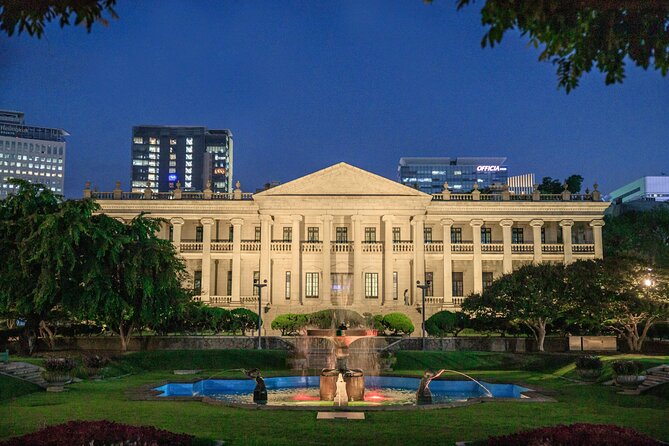
Palace walls look different after sunset. This two-hour Deoksugung Palace tour brings Seoul’s royal past into the evening, when the buildings are lit and the nearby City Hall district is easy to reach. I especially like the chance to study traditional and Western-style architecture together, and I value the guide’s focus on the Korean Empire, the final years of the Joseon era, and the pain of Japanese invasion. The main caution is practical: the tour needs at least four participants, and late arrivals cannot join once the group has entered.
The $35 price feels fair if you want context rather than a quick walk through palace grounds. English and Chinese explanations are offered, and guides such as Alan Han and Mr. Lee have been praised for clear storytelling and strong knowledge of the palace’s architecture. Still, the fixed evening meeting time, possible weather cancellation, and strict contact requirements mean you should plan this one carefully.
In This Review
- Key points at a glance
- Why Deoksugung feels different from Seoul’s other palaces
- Meeting at City Hall at 6:20pm
- Junghwajeon, the main throne hall
- Seokjojeon and the palace’s Western face
- Seokeodang and King Gojong’s favorite building
- Hamnyeongjeon, the king’s bed-chamber
- Jeonggwanheon, the unusual final stop
- How the guides shape the two-hour walk
- Is $35 good value for Deoksugung at night?
- Who should book this evening palace tour?
- My recommendation for booking Deoksugung after dark
- FAQ
- How long does the Deoksugung Palace Night Tour last?
- Where does the tour begin?
- What time should I arrive?
- Where does the tour end?
- What languages are offered?
- What happens if fewer than four people book?
- Can I cancel for a full refund?
Key points at a glance
- Night lighting changes the palace experience: Deoksugung’s buildings take on a quieter, more atmospheric look after dusk.
- The Korean Empire is the central story: You learn about the short period when Korea was called the Korean Empire, not simply Joseon or South Korea.
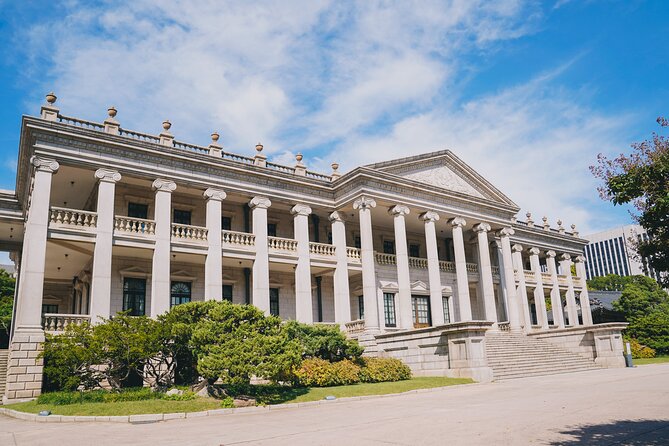
- Traditional and Western buildings share one royal compound: Junghwajeon, Seokeodang, and Hamnyeongjeon sit alongside the Western-style Seokjojeon.
- The guides add real value: Alan Han and Mr. Lee are praised for strong historical narration and thoughtful answers.
- The tour ends at Jeonggwanheon: This former royal café, also called Jungkwanhun in the tour details, gives the walk a distinctive finish.
- Small-group numbers are not guaranteed: The tour can hold up to 20 people, but it may be canceled if fewer than four book.
Why Deoksugung feels different from Seoul’s other palaces
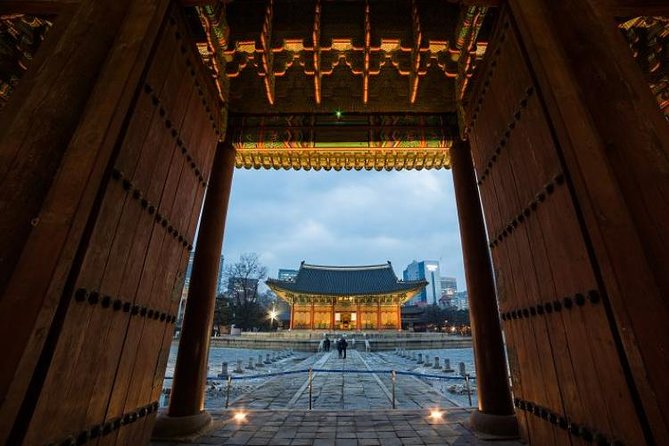
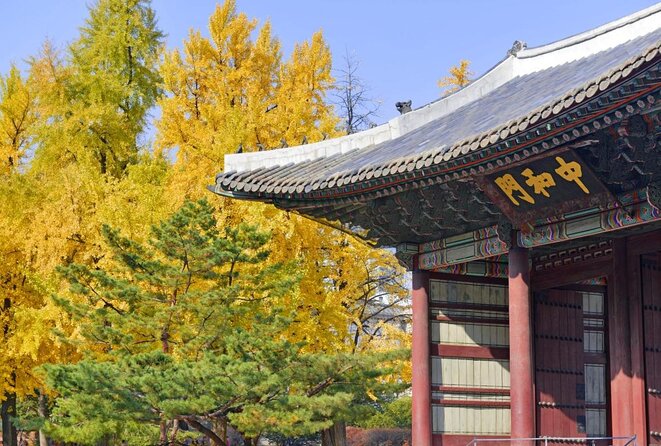
Deoksugung is not simply another royal compound to check off in Seoul. Its importance comes from the way it reflects a country caught between older court traditions and the pressure to modernize.
About a century ago, Korea entered the period known as the Korean Empire. Deoksugung served as the main palace instead of Gyeongbokgung, placing it at the center of this uncertain transition. A visit here gives you a look at royal life during a period of political change, foreign pressure, modernization, and Japanese invasion.
I find that setting especially useful because the palace is not presented as a perfectly preserved royal world. Its buildings show several different directions at once. Some follow familiar Korean palace forms, while others reflect Western design. The result is a more complicated picture of the country’s past than you get from a single architectural style.
The night setting supports that story. Deoksugung is beside the modern City Hall area, yet the palace walls create a sharp break from the surrounding streets. As darkness gathers, the illuminated buildings can feel more peaceful than they do during a busy daytime visit.
More Evening Tours in Seoul
- Seoul: Night Market Food Tour with Local Guide
★ 4.9 · 943 reviews - Seoul: Evening Dark History, Folklore & Ghost Story Walking Tour
★ 5.0 · 593 reviews - Seoul Night Palace & Market Food Tour with Vehicle
★ 5.0 · 275 reviews
Meeting at City Hall at 6:20pm
The stated meeting point is in front of Exit 1 at City Hall Station, served by Seoul Subway Lines 1 and 2. The address given is 362-1 Taepyeongno 2-ga, Jung District, Seoul.
The tour start time is listed as 6:30pm, while the meeting instruction says to arrive at 6:20pm. Treat 6:20pm as the time you need to be there. That ten-minute cushion matters because joining after the tour begins is not allowed if you miss the group.
City Hall Station is a sensible starting point. The palace is near major transport links and Gwanghwamun, so you do not need to make a long trip across Seoul just to reach the evening walk. I would still allow extra time for finding the correct exit and meeting point, especially if you are new to the Seoul subway system.
The operator sends meeting details and timing by email or WhatsApp. You must provide a name and a phone number or a messaging contact that works in Korea. An incorrect number, an unavailable contact, or no contact information can lead to a missed tour without a refund, so check these details before you leave home.
Junghwajeon, the main throne hall
The first major stop is Junghwajeon, Deoksugung’s main throne hall. This is where the guide begins to connect the physical palace with royal ceremony and the political importance of the Korean Empire.
A throne hall can look formal and familiar at first glance, but the guide’s explanation is what gives it meaning. You can ask how the building functioned, how it related to the king’s authority, and how Deoksugung’s role changed during the final Joseon years and the Korean Empire period.
This is also a good place to pay attention to the contrast between the palace’s traditional forms and the modern city outside the walls. The tour does not treat Deoksugung as an isolated relic. Its story makes more sense when you remember that the palace was near the center of a country trying to respond to powerful changes.
I would not expect a long architectural lecture at every building. The tour lasts about two hours and covers several stops, so the guide needs to keep the walk moving. The advantage is a focused introduction rather than an exhaustive study of every gate, roof, and courtyard.
Seokjojeon and the palace’s Western face
Seokjojeon is the clearest example of Deoksugung’s unusual architectural mix. It is a Western-style building within a royal palace that also contains more traditional Korean structures.
This stop helps explain why Deoksugung is so distinctive. You are not looking at two unrelated sites. The Western building belongs to the same royal story as the throne hall and the king’s private spaces. Its presence reflects the Korean Empire’s effort to engage with modern institutions, technology, and international influence.
The evening light is particularly useful here. The buildings are lit at dusk and after dark, creating a different visual experience from a daytime palace visit. The lighting can bring out the form of the architecture while reducing some of the visual noise of the surrounding city.
If architecture interests you, this is likely one of the tour’s strongest stops. You can ask the guide about the design differences between Seokjojeon and the Korean-style buildings nearby. The tour is advertised with English and Chinese explanations, so language support is part of the value for international visitors who want more than a quick photo.
More Palace Tours in Seoul:
- Seoul: Gyeongbok Palace, Bukchon Village, and Gwangjang Tour
★ 4.9 · 2,321 reviews - Best Seoul City Tour (Gyeongbokgung Palace,Insadong,Namsan Tower)
★ 5.0 · 1,647 reviews - Small-Group Royal Palace and Seoul City Tour (hotel pick-up)
★ 5.0 · 1,474 reviews - Seoul City Sightseeing Tour Including Gyeongbokgung Palace, N Seoul Tower, and Namsangol Hanok Village
★ 5.0 · 1,423 reviews
Seokeodang and King Gojong’s favorite building
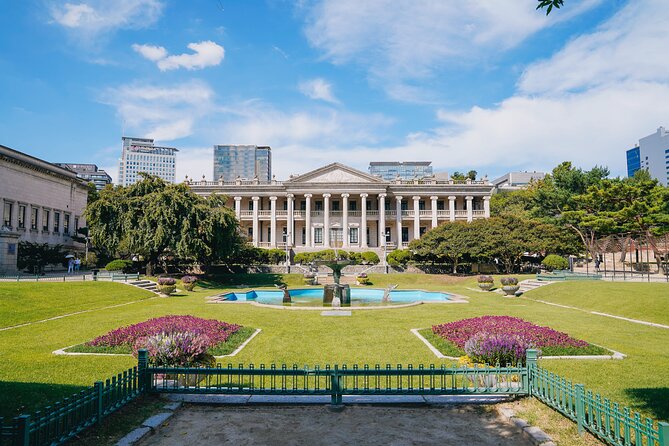
Seokeodang is described as the building most beloved by King Gojong. That detail gives the tour a more personal turn.
Grand halls tell you about official power. A favorite building can tell you something about taste, comfort, and private attachment. I like this part of the route because it moves beyond dates and political events. You get a sense that the palace was also a lived-in place, with spaces that mattered to the people who used them.
The guide can help place Seokeodang within King Gojong’s life and the unsettled period around the end of the Joseon dynasty. That context is important. Without it, you might see another traditional structure. With it, the building becomes part of a personal and national story.
The tour’s strongest praise has gone to this kind of storytelling. Alan Han, one of the named guides, gave a solo participant a detailed account of the end of Joseon and the architecture of Deoksugung. Mr. Lee was also praised as a strong narrator who arrived on time and held attention with stories about what happened inside the palace.
Those comments suggest that the guide can make a real difference here. The quality of the experience depends less on covering a huge number of sites and more on how well the person leading you connects the buildings to people and events.
Hamnyeongjeon, the king’s bed-chamber
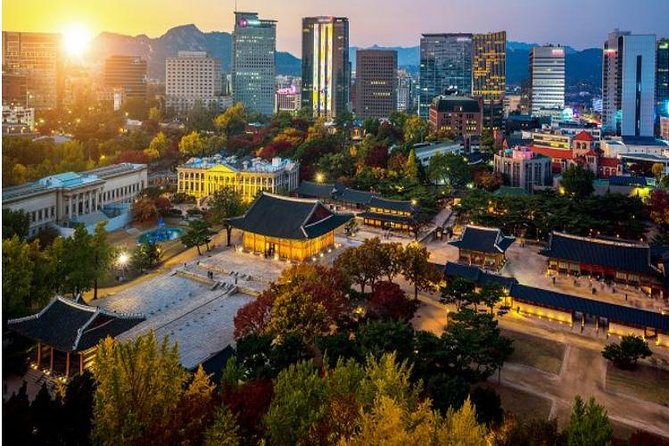
Hamnyeongjeon was the king’s bed-chamber. This stop shifts the focus from public ceremony to the king’s private quarters.
A royal bedroom may seem less grand than a throne hall, but it can be more revealing. The guide can explain how private and official life fit together within the palace, and how King Gojong’s position changed as Korea faced internal reform and outside pressure.
You should expect interpretation rather than a theatrical performance. The experience is built around walking, viewing the buildings, and asking questions. Recording or filming the tour is not allowed, so bring your attention instead of planning to document every explanation on your phone.
That rule may disappoint visitors who like to film guided walks, but it also keeps the group focused. If you want photographs, ask the guide what is permitted at the palace, rather than assuming that filming and still photography have the same rules.
Jeonggwanheon, the unusual final stop
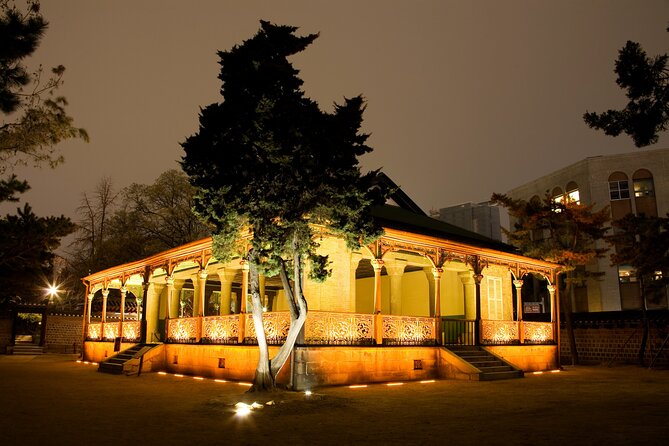
The tour finishes at Jeonggwanheon, identified in the itinerary as Jungkwanhun, a former royal cafeteria. Its location is given as 99 Sejong-daero, Jung District.
Ending here gives the route a fitting final note. After seeing ceremonial, architectural, and private spaces, you finish with a building linked to food and daily court life. It is another reminder that palaces were not only stages for official events. They were working homes with places for rest, meals, and informal activity.
The end point is different from the subway meeting point, so you should not assume you will return to City Hall Station with the guide. The walk finishes at Jeonggwanheon, leaving you to continue independently from there.
The tour information does not provide a detailed plan for transport after the final stop. I would check your map before starting and keep your phone charged, especially if you have a dinner reservation or another evening activity.
How the guides shape the two-hour walk
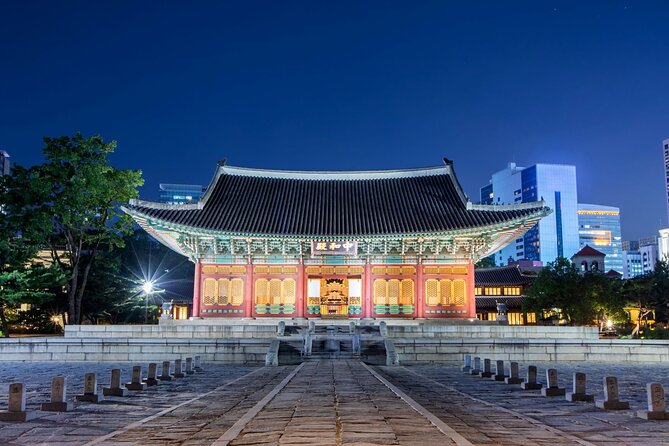
This is a history and architecture tour, not simply a palace entry ticket. The guide is the reason to choose it over walking through Deoksugung on your own.
The strongest praise has focused on guides who explain the end of the Joseon dynasty, the Korean Empire, and the palace’s buildings in a clear way. Alan Han led one booking with only one participant and still provided a full tour. That suggests the experience can remain worthwhile even when the group is very small, provided the tour operates.
Mr. Lee was praised for punctuality, preparation, and storytelling. Those are useful qualities on a short evening tour. You need someone who can keep the route organized while giving enough detail to make each building matter.
You can ask questions throughout the tour. That is a real advantage if you have a particular interest in Korean royal history, architecture, modernization, or the effects of Japanese invasion. If you prefer to explore silently and at your own pace, a self-guided visit may suit you better.
The tour allows a maximum of 20 people. That is not a guaranteed group size, and the minimum requirement is four participants. If fewer than four people book, the operator may cancel and offer another date, another experience, or a refund.
Is $35 good value for Deoksugung at night?
At $35 per person, this experience is not the cheapest way to enter a Seoul palace. Its value comes from the explanation, evening timing, and structured route.
You are paying for about two hours with a professional guide, English or Chinese interpretation, and a visit centered on some of Deoksugung’s most important buildings. The price makes more sense if you want to understand why the palace matters and how the Korean Empire fits into Korean history.
It makes less sense if you mainly want photographs or a short stroll. You may prefer visiting independently if you already know the history, do not need language support, or want to spend as much time as you like at one building.
The tour information marks the admission ticket as free within the itinerary details, but you should confirm exactly how entry is handled at booking. The listed experience price is still $35, and the main benefit is the guided interpretation rather than simply access to the grounds.
A rating of 4.5 from four published ratings is encouraging, but it is a small sample. I would treat the guide quality as a promising feature, not a guarantee that every departure will feel identical.
Who should book this evening palace tour?
I would recommend it most strongly to you if:
- You want a short, organized introduction to Deoksugung.
- You care about Korean history and architecture.
- You want to see a palace after dusk rather than during a standard daytime visit.
- You would like to compare Korean and Western-style buildings in one compound.
- You prefer asking questions to reading signs on your own.
- You are staying near City Hall or Gwanghwamun and want an easy evening activity.
Families and older visitors may appreciate the two-hour length, though the supplied details do not promise a specific pace or accessibility arrangement. Pets are not allowed, and there is no place to leave them during the tour.
I would think twice if your Seoul schedule is tight around 6:30pm, if you dislike fixed meeting times, or if you need a guaranteed departure. The four-person minimum and weather requirement introduce some uncertainty. Poor weather can lead to a different date or a full refund, while late cancellation rules are strict.
Free cancellation is available up to 24 hours before the local start time. Cancellations or schedule changes made less than 24 hours ahead are not refunded or accepted.
My recommendation for booking Deoksugung after dark
Book this tour if you want the palace to make sense, not just look attractive. The evening lighting, the unusual mix of buildings, and the story of the Korean Empire give Deoksugung a character that rewards careful attention.
I especially like that the route includes Junghwajeon, Seokjojeon, Seokeodang, Hamnyeongjeon, and Jeonggwanheon. Together, they cover public power, Western influence, personal royal space, private life, and everyday court activity.
Before booking, make sure four things work for you: you can reach City Hall Station by 6:20pm, your Korean contact number or messaging app is active, you can accept a possible weather or minimum-number change, and you want a guided experience rather than independent wandering. If those conditions fit, $35 is a reasonable price for a focused night tour with a strong storytelling element.
FAQ
How long does the Deoksugung Palace Night Tour last?
The tour lasts approximately two hours.
Where does the tour begin?
It begins in front of Exit 1 at City Hall Station, served by Subway Lines 1 and 2. The listed address is 362-1 Taepyeongno 2-ga, Jung District, Seoul.
What time should I arrive?
The meeting instruction says 6:20pm, and the listed start time is 6:30pm. Arrive by 6:20pm because joining after the tour begins is not allowed.
Where does the tour end?
The tour ends at Jeonggwanheon, at 99 Sejong-daero in Seoul’s Jung District.
What languages are offered?
The tour offers explanations in English and Chinese.
What happens if fewer than four people book?
The tour can be canceled if fewer than four participants book. You will then be offered a different date or experience, or a full refund.
Can I cancel for a full refund?
Yes. You can cancel up to 24 hours before the local start time for a full refund. Cancellations or changes made less than 24 hours before the start are not accepted or refunded.
Just added in Seoul
- Seoul: Korean & English Language Exchange Global Party★ 5.0 · 28 reviews
- Your Personal Seoul Photographer!★ 4.1 · 15 reviews
- You’re Invited to Our Home in Seoul: The Only Cooking Class!★ 5.0 · 8 reviews
- From Seoul: Yongpyong Ski Day Tour with Transportation★ 4.9 · 40 reviews
- From Seoul: Hwacheon Ice Fishing and Lighting Festival Tour★ 4.5 · 4 reviews
- Seoul: Gangneung BTS K-Pop & K-Drama Filming Locations Tour★ 4.6 · 14 reviews
- Unique Native Experience : Han River Picnic, Board game, BBQ★ 5.0 · 3 reviews
- Seoul: Euljiro Gastroventure Tour★ 4.0 · 1 review
Palace Tours, compared.
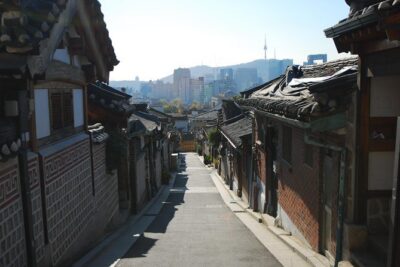
Gyeongbok Palace, Bukchon Village, and Gwangjang Tour
Read our review →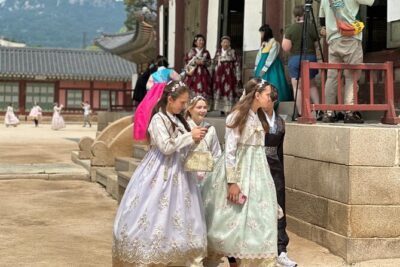
Best Seoul City Tour (Gyeongbokgung Palace,Insadong,Namsan Tower)
Read our review →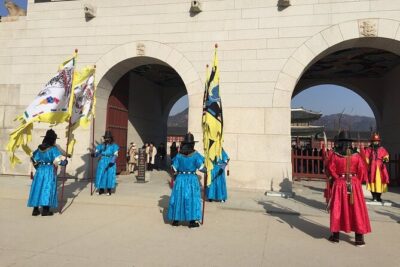
Small-Group Royal Palace and Seoul City Tour (hotel pick-up)
Read our review →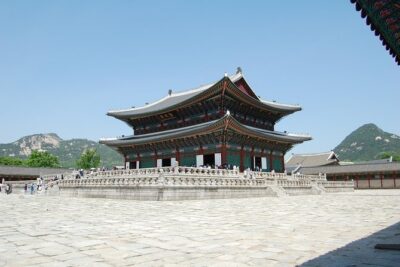
Seoul City Sightseeing Tour Including Gyeongbokgung Palace, N Seoul Tower, and Namsangol Hanok Village
Read our review →Gyeongbok Palace, Bukchon Village, and Gwangjang Tour
Read our review →
Seoul Highlights: Gyeongbok Palace, Insadong & N Seoul Tower
Read our review →
Seoul City Half Day Tour-Gyeongbok Palace Guard Changing Ceremony
Read our review →Browse the lists this tour appears in