
Reviewed · PALACE TOURS
Small-Group Royal Palace and Seoul City Tour (hotel pick-up)
Seoul’s royal past fits neatly into one day. This eight-hour small-group tour links two grand palaces with Jogyesa Temple, the Blue House, Insadong, and Namdaemun Market, giving you a useful first look at the city’s history and daily culture. I especially like the hotel pickup and the chance to see both Gyeongbokgung and UNESCO-listed Changdeokgung without working out Seoul’s sprawling transport system yourself.
I also like the guides’ strong personal touch. Young, BK, Sookee, Lua, Joey, Yeoni, and Wong are praised for clear explanations, humor, patience, and help with photos or translation. The main consideration is the pace: eight hours covers a lot, and traffic can eat into sightseeing time. The ginseng-center stop may also feel more commercial than cultural.
In This Review
- Key points to know before booking
- Why this tour works for a first day in Seoul
- Jogyesa Temple: calm beside Jongno traffic
- Gwanghwamun Gate and the royal guard ceremony
- Gyeongbokgung Palace: the Joseon capital in stone and timber
- The National Folk Museum: everyday Korea, briefly
- The ginseng center: useful context, commercial flavor
- Insadong: lunch, tea, and traditional goods
- Changdeokgung Palace: the more atmospheric palace
- Namdaemun Gate and market: a practical final stop
- Transport, walking, weather, and pace
- Who will get the most from this $56.44 tour
- Should you book it?
- FAQ
- How long does the Seoul palace tour last?
- Is hotel pickup included?
- Does the tour include hotel drop-off?
- Is lunch included?
- What happens if Changdeokgung Palace is closed?
- What happens if Gyeongbokgung Palace is closed?
- Can the royal guard ceremony be canceled?
- How many people can join the tour?
Key points to know before booking
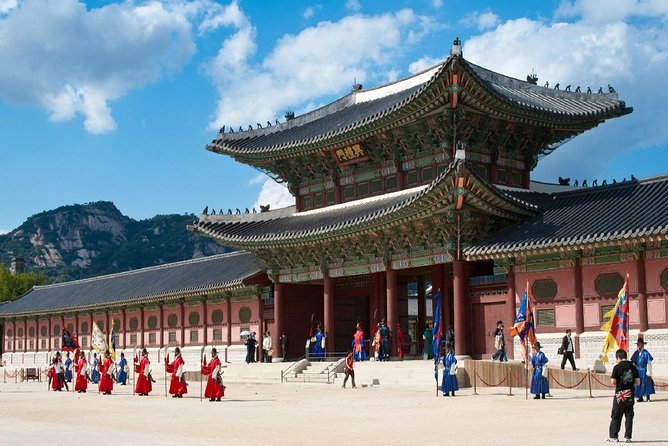
- Two royal palaces in one day: See Gyeongbokgung, the main Joseon palace, and Changdeokgung, one of the dynasty’s best-preserved palace complexes.
- A true small-group format: The maximum is 16 people, and some departures have only three participants, making questions and personal help easier.
- A useful first-day route: Jogyesa Temple, Gwanghwamun Gate, the Blue House, Insadong, and Namdaemun cover several sides of Seoul.
- Hotel pickup, central drop-off: Pickup is offered from central Seoul, but the tour ends at City Hall or Myeongdong rather than returning you to your hotel.
- Lunch is now your responsibility: Since September 1, 2024, lunch is not included. You get free time in Insadong to choose where and what to eat.
- Closed-day alternatives matter: Monday replaces Changdeokgung with Bukchon Hanok Village. Tuesday replaces Gyeongbokgung and the National Folk Museum with Changdeokgung, including the Secret Garden, followed by Bukchon.
Why this tour works for a first day in Seoul
Seoul can feel enormous at first. Its historic core sits among modern streets, office towers, markets, palaces, and hills, and the best sights are not all beside one subway stop. This tour solves that problem with a vehicle, a local guide, and a route that moves from Buddhist tradition to royal Seoul and then into shopping districts.
At $56.44 per person, the price is attractive for a full day. Entrance fees, bottled water, a guide, and transport during the tour are included. You are mainly paying for convenience and interpretation, not luxury. The vehicle saves time and energy, though heavy traffic means you should not expect every minute to be spent walking through monuments.
The group size is capped at 16. That is small enough for the guide to keep an eye on people and answer questions, but it is not a private tour. Departures can be much smaller, and that makes the day feel more personal. The strongest guide reports single out Young and BK for historical explanations, while Sookee is praised for stories about palace intrigue and the Joseon royal family. Lua is noted for adjusting the day kindly and helping with translation during shopping.
Guide quality can vary, as it does on any shared tour. Most of the guide feedback is highly positive, but one account found the historical commentary less balanced and too focused on royal drama. If you want a specialist scholar or a private itinerary, book privately. If you want a friendly guide who can put Seoul into context while keeping the day moving, this group tour is a sensible choice.
More Palace Tours in Seoul:
- Seoul: Gyeongbok Palace, Bukchon Village, and Gwangjang Tour
★ 4.9 · 2,321 reviews - Best Seoul City Tour (Gyeongbokgung Palace,Insadong,Namsan Tower)
★ 5.0 · 1,647 reviews - Seoul City Sightseeing Tour Including Gyeongbokgung Palace, N Seoul Tower, and Namsangol Hanok Village
★ 5.0 · 1,423 reviews
Jogyesa Temple: calm beside Jongno traffic
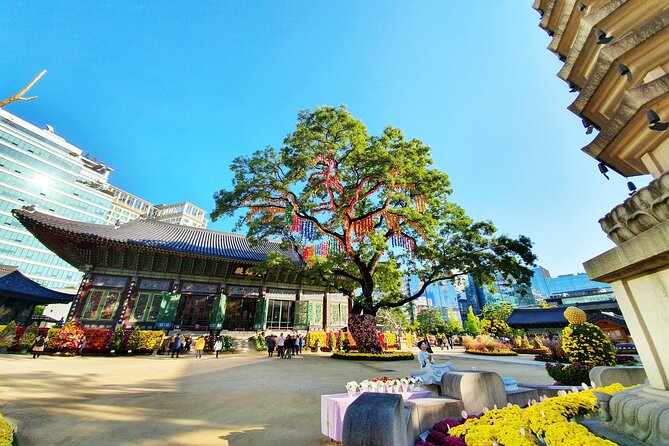
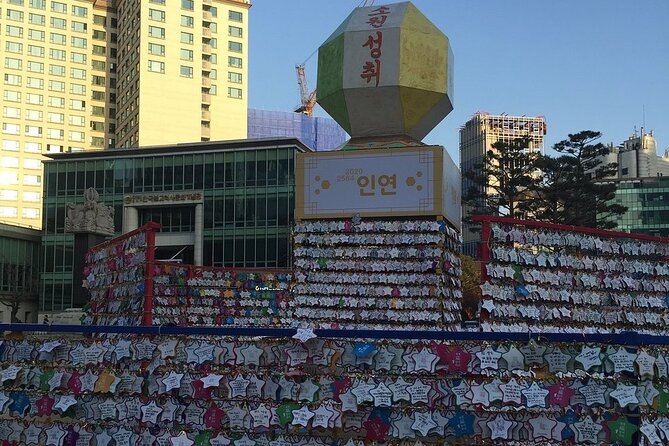
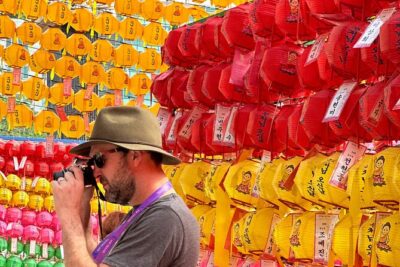
The first stop is Jogyesa Temple, a Zen Buddhist center in the Jongno district. Its location is part of the appeal. You leave a crowded city street and enter a quieter temple courtyard decorated with colorful details and large golden Buddha statues.
You get about 30 minutes here. That is enough for a look around and a short explanation of Korean Buddhism, but not enough for a slow, reflective visit. The stop is best understood as a gentle opening to the day, before the route turns toward royal architecture.
Jogyesa is also an easy place for your guide to explain how old religious traditions fit into present-day Seoul. You are not visiting a remote temple reached after a long climb. You are seeing a working urban place of worship right in the middle of the city.
Gwanghwamun Gate and the royal guard ceremony
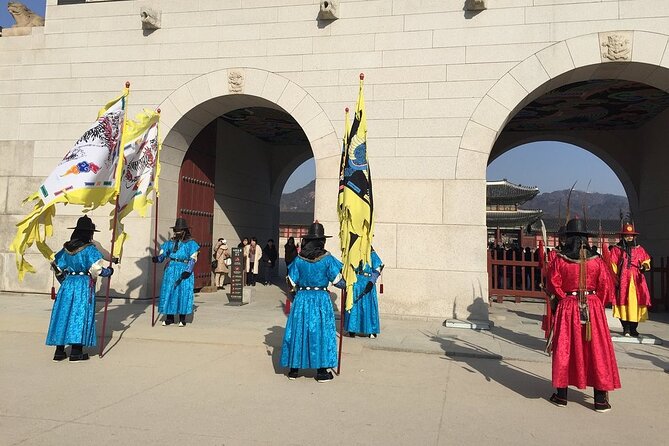
At Gwanghwamun Gate, the tour aims to catch the changing of the royal guards. Keep your camera ready, since the ceremony is brief and the schedule matters. The stop is listed at about 20 minutes, and the ceremony may be canceled in bad weather.
Gwanghwamun is the main gateway to Gyeongbokgung, so this is more than a photo stop. It gives you a visual introduction to the palace complex and the Joseon court. The guards’ costumes and formal movements make the transition from modern Seoul to dynastic Seoul easy to grasp.
Do not build your entire day around the ceremony. Weather can cancel it, and timing can change. The palace visit still gives the morning real value even if the guards do not appear.
Gyeongbokgung Palace: the Joseon capital in stone and timber
Gyeongbokgung was the main palace during the Joseon dynasty. You have roughly an hour inside, with entrance included, and the guide explains the royal compound and its role in Korean history.
This is the grandest palace on the route. Its broad courtyards and formal buildings show the power of the court, while the surrounding mountains help explain why this area was chosen for the capital. You will spend much of the visit moving between major spaces rather than wandering every corner.
An hour is a practical compromise. It gives first-time visitors a strong introduction, but you will not see every building at leisure. If you are fascinated by architecture or palace details, plan to return independently on another day.
The palace visit is especially useful with a guide. Without context, a sequence of courtyards can blur together. A good guide points out how the grounds worked, who used them, and how royal life differed from ordinary life.
A few more options to weigh up in Seoul
- Best DMZ Tour Korea from Seoul (Red Suspension Bridge Optional)
★ 5.0 · 41,422 reviews - DMZ Tour: 3rd Tunnel, Option(Suspension Bridge, Boat) from Seoul
★ 5.0 · 21,373 reviews - DMZ tour south Korea from Seoul (NK experience hall, defector)
★ 5.0 · 20,599 reviews - Seoul: DMZ Tour with Optional Suspension Bridge
★ 4.8 · 5,277 reviews
The National Folk Museum: everyday Korea, briefly
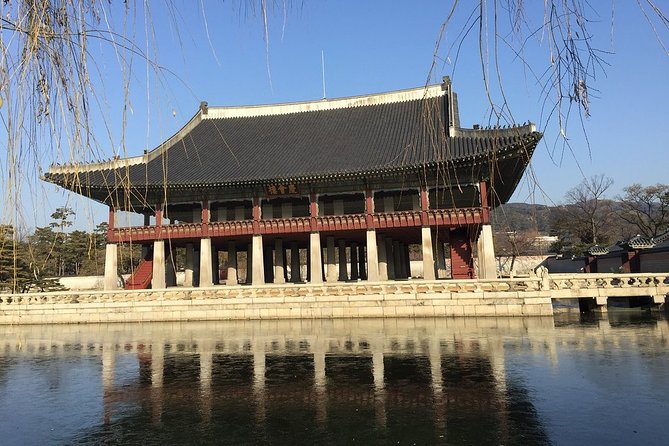
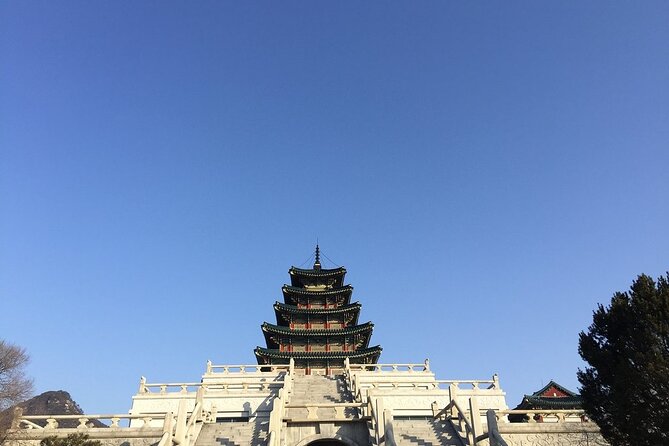
Inside the Gyeongbokgung compound, the National Folk Museum of Korea shifts attention from kings to ordinary life. Displays cover how people in Korea lived from ancient times to the present, including domestic life and social customs.
The scheduled visit is about 20 minutes. That is the clearest weakness in the morning for museum lovers. One guide, Yeoni, was praised for the overall pacing, but the Folk Museum was specifically felt to be rushed. You can learn from the displays, but you will need to move quickly.
Still, the museum earns its place. Palaces explain government and ceremony. The Folk Museum helps you picture food, clothing, homes, work, and family life. That contrast makes the morning more useful than a palace-only tour.
The Blue House, or Cheong Wa Dae, is also viewed from outside. It was built on the grounds of a Joseon royal garden and served as the official presidential residence until May 2022. You will see the traditional-style buildings with Mt. Bukak behind them, but this is not an interior tour.
The ginseng center: useful context, commercial flavor
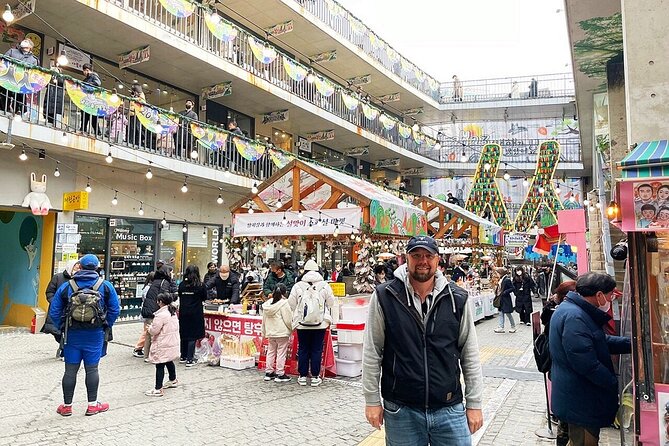
Before lunch, the vehicle stops at the Government-approved Korean Ginseng Center, also identified as the Cheongha Korea Ginseng Museum. The visit lasts about 30 minutes and includes a chance to taste ginseng tea and learn about ginseng products.
This stop divides opinion for good reason. It offers a look at an important Korean product, and the tasting can be interesting if you are curious about local health traditions. But it is also a shopping stop, and some people may prefer more time at a museum, market, or historic site.
My advice is simple: treat it as an educational pause, not as a required shopping mission. You do not need to buy anything to benefit from the explanation. If your priority is monuments and neighborhoods, this is the easiest part of the tour to regard as optional in spirit, even though it is built into the route.
Insadong: lunch, tea, and traditional goods
Insadong receives about 1 hour and 20 minutes, making it the longest free-style stop on the day. This district is associated with traditional culture, antique shops, tea houses, crafts, and souvenirs.
Since September 1, 2024, lunch is not included. That change is actually useful for some people because you can choose your own meal rather than accept a fixed menu. The tradeoff is that you must decide where to eat during limited free time. If you want a leisurely lunch and serious shopping, return to Insadong on your own.
The guide may point you toward a Korean tea house or help you understand the goods in the shops. Insadong is designed for browsing, so resist the urge to rush from one store to the next. You might find traditional crafts, art, antiques, and food products, but the district also caters heavily to tourists.
This is where the small-group format helps. You can ask for practical suggestions, and guides have sometimes helped with translation during purchases. Lua, in particular, was praised for assisting with a specific gift search.
Changdeokgung Palace: the more atmospheric palace
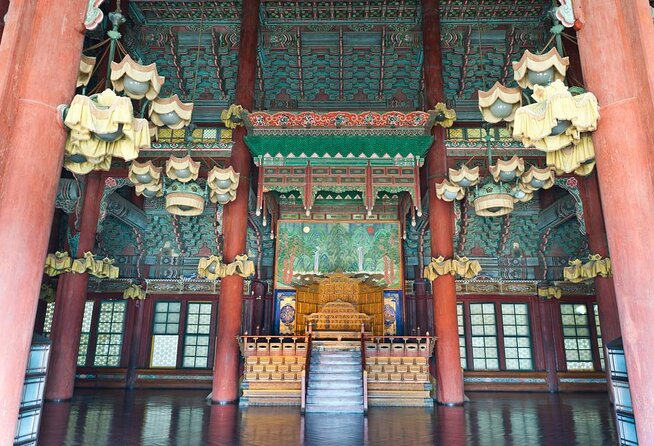
Changdeokgung was built in 1405 as the second royal villa after Gyeongbokgung. It later became the principal palace for several Joseon kings and is considered the best-preserved of the royal palaces. It is also a UNESCO World Heritage Site.
You have about an hour here, with admission included. Compared with Gyeongbokgung’s formal scale, Changdeokgung often feels more connected to its setting. The buildings and grounds follow the land rather than forcing everything into one strict axis, which helps explain its appeal.
The schedule does not promise a full Secret Garden visit on a normal day. On Tuesdays, however, Gyeongbokgung and the National Folk Museum are closed, so the route changes to Changdeokgung, including the Secret Garden, followed by Bukchon Hanok Village in the afternoon. If the garden is a priority, Tuesday may be the most appealing departure, though the rest of the standard route changes too.
Changdeokgung is closed Mondays. The replacement is Bukchon Hanok Village, a strong alternative for anyone interested in traditional residential architecture. This is not a minor footnote. Check the day of your tour before booking, since the experience changes substantially.
Namdaemun Gate and market: a practical final stop
The final stop is Namdaemun, also called Soongryemun. The gate was built in 1396 during the reign of King Taejo and reconstructed in 1447 under King Sejong. It is recognized as Korea’s most important National Treasure.
You get about 30 minutes at the gate and nearby Namdaemun Market. That is enough to see the landmark and sample the market atmosphere, but not enough for a serious shopping expedition. The market is a useful ending because it brings you back from royal ceremony to ordinary commerce.
You can browse traditional goods and food stalls, though the short visit means you should decide what interests you most. If you want to shop carefully, note the location and return later. The tour ends at City Hall or Myeongdong, both practical places for continuing your evening, but hotel drop-off is not included.
Transport, walking, weather, and pace
Hotel pickup is offered from central Seoul, with the meeting time adjusted by location. The stated start time is 9:00 a.m. The vehicle is comfortable, and having a driver-guide or separate driver saves you from figuring out several transfers.
Traffic is the unavoidable catch. Seoul roads can be slow, and one account found that a fair amount of time went into transfers. The route is still efficient for a first visit, but it is not a walking tour where every minute is spent at a sight.
You should have moderate physical fitness. Expect walking through palace grounds, markets, temple areas, and city streets, plus time on your feet during ceremonies and explanations. Winter can be cold, so dress properly. Sookee was praised for warning people in advance about winter conditions, a small courtesy that matters when much of the day takes place outdoors.
Bring comfortable shoes, water, sun protection in warmer months, and room in your schedule afterward. The tour ends in a different location from where it begins, so do not book a tightly timed evening activity far from Myeongdong or City Hall.
Who will get the most from this $56.44 tour
I would recommend this tour most strongly to first-time visitors with one or two full days in Seoul. It gives you a broad foundation: religion, royal government, presidential history, domestic life, traditional shopping, and a working market.
Families can also benefit. The small group makes it easier for a guide to adjust explanations for different ages, and one family with young teenagers found the content suitable for a mixed-age group. The day has enough variety to prevent a palace-heavy schedule from becoming dull.
This tour is less ideal if you want long museum visits, quiet photography, or free time in each neighborhood. The 20-minute Folk Museum stop is short, and the one-hour palace visits are introductions rather than exhaustive tours. You should also skip it if you dislike shopping-oriented stops, since the ginseng center is part of the morning.
The value is strongest when you count the included entries and hotel pickup alongside the guide. You receive a full day of sightseeing for $56.44, without paying separate admission at the palaces or arranging transport between distant districts. Lunch is extra, and the hotel return is not included, so budget for both.
Should you book it?
Book this tour if you want Seoul’s main historic sights explained in plain English and covered efficiently in one day. The best parts are the two palaces, the small group, the central pickup, and guides such as Young, BK, Sookee, and Lua, who have been praised for history, humor, patience, and personal help.
Before paying, check the weekday. Monday means Bukchon replaces Changdeokgung. Tuesday means Changdeokgung and the Secret Garden replace Gyeongbokgung and the Folk Museum. If those changes suit your interests, they can improve the day rather than weaken it.
I would not choose this for a private, slow-paced cultural experience. For a first look at Seoul, though, it is a well-priced and practical introduction, with enough free time in Insadong and Namdaemun to give the schedule some breathing room.
FAQ
How long does the Seoul palace tour last?
The tour lasts approximately eight hours and starts at 9:00 a.m.
Is hotel pickup included?
Yes. Pickup is offered from hotels in central Seoul, and the meeting time can vary depending on the location.
Does the tour include hotel drop-off?
No. The tour ends at City Hall or Myeongdong rather than returning you to your hotel.
Is lunch included?
No. Since September 1, 2024, lunch has not been included. You have free time in Insadong to choose your own meal.
What happens if Changdeokgung Palace is closed?
Changdeokgung is closed on Mondays. On Monday departures, the tour visits Bukchon Hanok Village instead.
What happens if Gyeongbokgung Palace is closed?
Gyeongbokgung Palace and the National Folk Museum are closed on Tuesdays. The tour visits Changdeokgung, including the Secret Garden, and Bukchon Hanok Village instead.
Can the royal guard ceremony be canceled?
Yes. The changing ceremony at Gwanghwamun Gate may be canceled because of bad weather.
How many people can join the tour?
The tour operates with a minimum of two people and has a maximum group size of 16.
Just added in Seoul
- Seoul: Korean & English Language Exchange Global Party★ 5.0 · 28 reviews
- Your Personal Seoul Photographer!★ 4.1 · 15 reviews
- You’re Invited to Our Home in Seoul: The Only Cooking Class!★ 5.0 · 8 reviews
- From Seoul: Yongpyong Ski Day Tour with Transportation★ 4.9 · 40 reviews
- From Seoul: Hwacheon Ice Fishing and Lighting Festival Tour★ 4.5 · 4 reviews
- Seoul: Gangneung BTS K-Pop & K-Drama Filming Locations Tour★ 4.6 · 14 reviews
- Unique Native Experience : Han River Picnic, Board game, BBQ★ 5.0 · 3 reviews
- Seoul: Euljiro Gastroventure Tour★ 4.0 · 1 review
Palace Tours, compared.
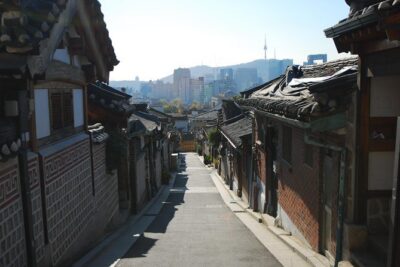
Gyeongbok Palace, Bukchon Village, and Gwangjang Tour
Read our review →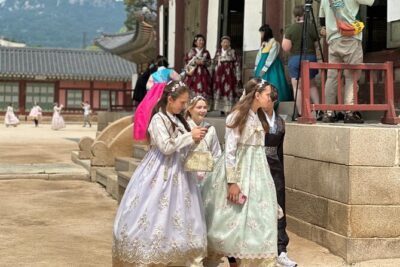
Best Seoul City Tour (Gyeongbokgung Palace,Insadong,Namsan Tower)
Read our review →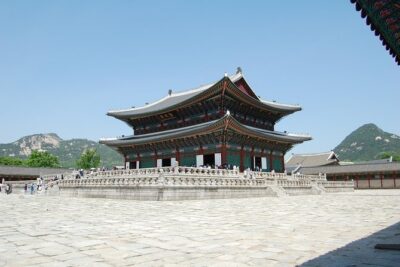
Seoul City Sightseeing Tour Including Gyeongbokgung Palace, N Seoul Tower, and Namsangol Hanok Village
Read our review →Gyeongbok Palace, Bukchon Village, and Gwangjang Tour
Read our review →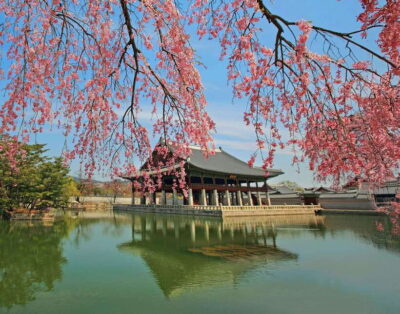
Seoul Highlights: Gyeongbok Palace, Insadong & N Seoul Tower
Read our review →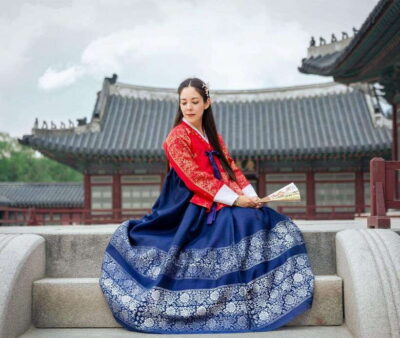
Seoul City Half Day Tour-Gyeongbok Palace Guard Changing Ceremony
Read our review →
Browse the lists this tour appears in