
Reviewed · 2-DAY EXPERIENCES
2 Days Gyeongju Private Tour from Seoul and Near Seoul
Ancient Korea is closer than you think. This private two-day trip from Seoul makes Gyeongju easy to reach, with private transport and hotel stay handled for you. I like the mix of major sights and quieter cultural stops, and I especially like the freedom to adjust the plan to your interests.
The tour also gives you a useful sequence for understanding Silla history: first the museum, then royal sites, temples, and mountain sculpture. The main drawback is the price, $628 per person, while lunch, dinner, and drinks are not included. You are paying for convenience and privacy, not a budget ride.
The available feedback is especially positive about the punctual hotel pickup and guide Kim, who shared information about Korean life and culture and took numerous photos for the couple he escorted. If you value personal attention and do not want to plan Seoul to Gyeongju transport, this is a strong option.
In This Review
- Key points at a glance
- Why Gyeongju works well as a two-day escape from Seoul
- Starting with Silla at Gyeongju National Museum
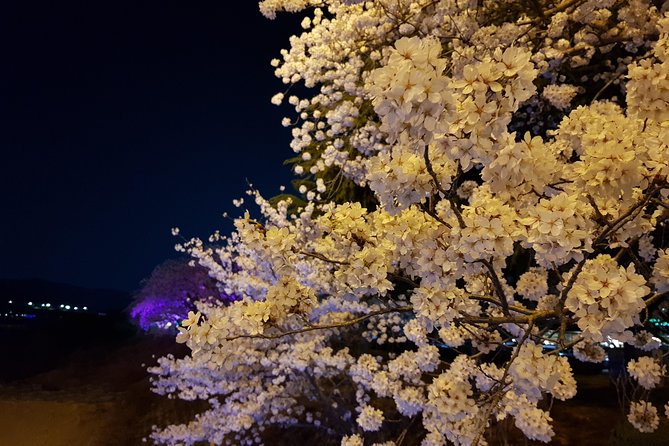
- Wolji Pond and the palace after sunset
- Royal burial mounds at Daereungwon
- Cheomseongdae, an observatory built from 362 stones
- Seokguram, a mountain temple carved in granite
- Bulguksa Temple and the finest Buddhist stop
- Gyeongju Folk Craft Village and the modern local touch
- Meals, rooms, and what the price really covers
- The guide can make the difference
- Who should book this private Gyeongju tour?
- FAQ
- Where does the tour begin?
- How long does the experience last?
- Is this a private tour?
- Is transportation included?
- Is accommodation included?
- Are meals included?
- Which major historic sites are visited?
- Are entrance fees included?
- Can the itinerary be customized?
- Should you book it?
Key points at a glance
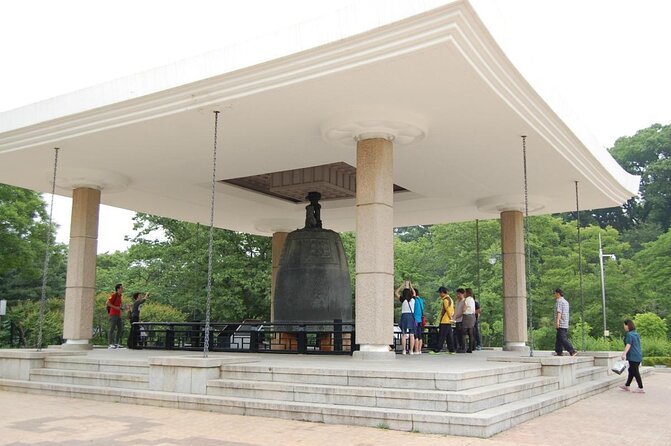
- Gyeongju National Museum comes first: The opening museum visit gives you the Silla context that makes the outdoor monuments easier to understand.
- A genuinely private format: Only your party joins the tour, and the itinerary can be adjusted around your interests.
- The famous Silla pair is included: Seokguram and Bulguksa Temple receive two hours each on the second day.
- Evening Wolji Pond is a highlight: Donggung Palace and Wolji Pond offers one of Gyeongju’s most attractive historic settings.
- The pace is full but sensible: Day one covers four stops, while day two focuses on major Buddhist sites and crafts.
- The price includes the costly parts: Transport, hotel, breakfast, entrance fees, parking, tolls, and a private driving guide are covered.
Why Gyeongju works well as a two-day escape from Seoul
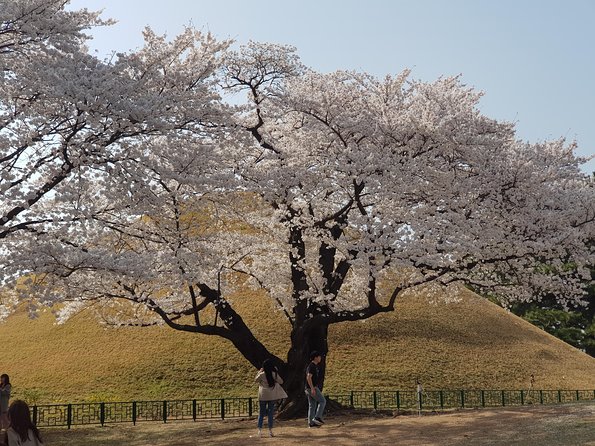
Gyeongju was the capital of the Silla Kingdom from 57 BC to AD 935. That long period left the city with royal burial mounds, Buddhist monuments, old palace grounds, and artifacts spread across a wide area.
That spread matters. Gyeongju is not a single compact ruin you can inspect in an hour. The sights are connected by roads, and private transport saves you from arranging each leg yourself. You can focus on the places rather than checking bus routes or figuring out how to fit distant mountain sites into one day.
The tour begins and ends with hotel pickup and return service. Your party travels in private transportation, and tolls, parking charges, and taxes are covered. For a first visit to Korea, that removes several small hassles that can otherwise eat into your sightseeing time.
The cost is $628 per person. That is a serious sum, especially for one or two people, but the value improves as your party grows because transportation and guiding are shared. The room arrangement allows one room for one to three people, two rooms for four to six people, and three rooms for seven people.
More Gyeongju trips:
- Small Group 7D Korea package Tour with Seoul Gyeongju Busan Jeju
★ 4.5 · 13 reviews - Gyeongju UNESCO Sites Tour by KTX train; The Museum Without walls
★ 4.5 · 11 reviews - 3-Days 2-Nights Gyeongju UNESCO Sites & Busan City [Private Tour from Seoul]
★ 4.5 · 11 reviews
Starting with Silla at Gyeongju National Museum
The first stop is Gyeongju National Museum, with about an hour inside. This is a smart opening move because the museum gives names, dates, objects, and religious context to the monuments you see later.
The museum holds many artifacts from the Silla period, which lasted nearly a thousand years. Its galleries cover the culture and traditions of the kingdom, and the facility has recently been renovated. You should expect this stop to be more about orientation than spectacle. It is the place to listen closely, notice the objects, and ask your guide questions before the outdoor sightseeing begins.
I like this choice because ancient tombs and temple courtyards can be beautiful without being immediately clear. After the museum, the stonework and burial customs have a frame. You can better understand why Silla rulers invested so heavily in Buddhist art and elaborate tomb construction.
An hour is enough for a well-selected visit, though anyone who enjoys museums could easily want more time. Since this is a private tour, ask your guide to point out the objects most relevant to the afternoon stops rather than trying to see every gallery at equal length.
Wolji Pond and the palace after sunset
Donggung Palace and Wolji Pond receives about an hour. This former secondary palace served the crown prince and hosted important state events and visiting dignitaries. The pond was once called Anapji, but a pottery fragment bearing the name Wolji, meaning a pond that reflects the moon, helped restore its older name.
That detail gives the site a human touch. This was not just a formal royal compound. It was also a place for ceremonies, gatherings, and carefully planned views across the water.
The surviving palace foundations and reconstructed buildings are arranged around the pond. The setting is especially appealing later in the day, when the water and architecture take on a softer look. The schedule does not guarantee a particular sunset or evening arrival, so treat that atmosphere as a possibility rather than a promise.
One hour gives you time to walk around the main area and hear the story. The site is designated Historic Site No. 18, and admission is included. If photography matters to you, this is one of the stops where a private guide can help with timing and framing.
Royal burial mounds at Daereungwon
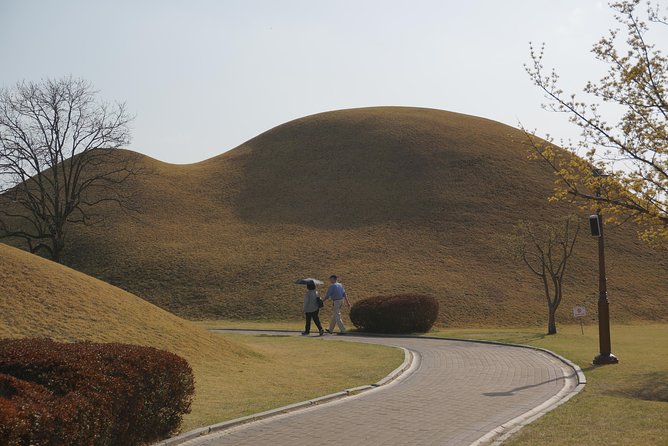
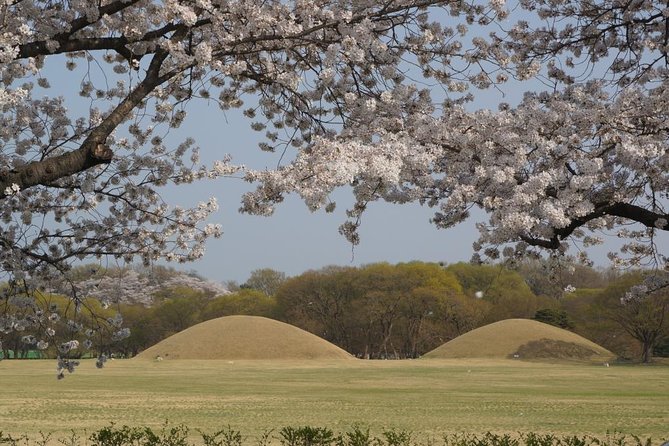
Daereungwon Tomb Complex receives about 90 minutes, making it one of the longer first-day stops. The grassy burial mounds are not ordinary hills. They are royal and upper-class tombs from the Silla period, with their contents hidden beneath carefully built layers of stone and earth.
The main interior experience is Cheonmachong Tomb, also known as Ancient Tomb No. 155. Excavated in 1973, it contained a wooden coffin inside an underground chamber covered by boulders and an earthen mound. The mound measures about 12.7 meters high and 50 meters across, and the excavation produced 11,526 artifacts.
That scale helps you see the tombs differently. From outside, the rounded mounds can look calm and almost park-like. Inside, you learn how much labor and ceremony went into royal burial. The site also helps explain the power structure of Silla, where royal identity continued through clothing, objects, and ritual after death.
Wear shoes you can walk in comfortably. The tour information recommends comfortable clothing and walking shoes, and that advice applies particularly well here and at the temples. The complex is open and spacious, so the stop is less about a single dramatic building and more about seeing how the city’s past remains part of its everyday setting.
A few more options to weigh up in Seoul
- Best DMZ Tour Korea from Seoul (Red Suspension Bridge Optional)
★ 5.0 · 41,422 reviews - DMZ Tour: 3rd Tunnel, Option(Suspension Bridge, Boat) from Seoul
★ 5.0 · 21,373 reviews - DMZ tour south Korea from Seoul (NK experience hall, defector)
★ 5.0 · 20,599 reviews - Seoul: DMZ Tour with Optional Suspension Bridge
★ 4.8 · 5,277 reviews
Cheomseongdae, an observatory built from 362 stones
Cheomseongdae takes about 30 minutes. That sounds brief, but the monument is small enough for a focused stop, especially after the museum, palace, and tomb complex.
Built during the reign of Queen Seondeok, from 632 to 647, Cheomseongdae is described as the oldest surviving astronomical observatory in Asia. Its curved, bottle-like form was made from 362 stones arranged in 27 levels. The structure was used to observe the stars and help forecast weather.
The numbers make the construction easier to appreciate. This was not a rough pile of stones. The builders used a deliberate pattern, with an entrance partway up and distinctive stones arranged in the shape of the Chinese character for a well.
You will not spend hours here, and you should not expect an interior climb. The value is in seeing the monument in its setting and hearing how science, farming, royal authority, and belief were connected in Silla society. The short visit also keeps the first day moving.
Seokguram, a mountain temple carved in granite
Day two begins with Seokguram, allowing about two hours. Located on Tohamsan Mountain, this artificial stone temple is one of Korea’s most important Buddhist monuments and a UNESCO World Cultural Heritage site.
Construction began in 751 under King Gyeongdeok and ended in 774. Kim Daeseong is associated with the project, which used granite to create a carefully designed shrine. The central Buddha and surrounding stone figures are famous for their proportions and fine carving.
This is a different experience from Bulguksa. Seokguram is enclosed, focused, and sculptural. You go for the concentrated beauty of the stonework and for the sense of how ambitious Silla Buddhist art could be. The mountain setting adds to the feeling of separation from the city, though the important point is the shrine itself.
Two hours allows time for the drive, the approach, and an unhurried visit. The exact amount of walking and the experience at the site can vary, so good shoes matter. Ask your guide to explain how Seokguram connects with Bulguksa before you leave. Seeing the two together makes the religious and artistic program much clearer.
Bulguksa Temple and the finest Buddhist stop
Bulguksa receives another two hours. Built in 528 and rebuilt in 751, the temple is a central work of Silla Buddhist culture. It was damaged by fire during the Imjin War from 1592 to 1598 and later suffered further losses, but restoration work began in 1920 and has continued.
The temple now contains seven national treasures, along with other important cultural objects. You can expect stone stairways, carved details, courtyards, and buildings that reward a slow walk rather than a quick photograph.
I would give this stop the attention it deserves. It is easy to treat Bulguksa as another item on a sightseeing list, but the layers of rebuilding and repair are part of its story. The temple is both an old religious site and a carefully maintained national cultural treasure.
Some travelers may find two hours longer than needed if they are not interested in architecture or Buddhism. For most people, though, the time is useful. A private guide can explain the symbols and point out details that are easy to miss when you walk through alone.
Gyeongju Folk Craft Village and the modern local touch
The final listed stop is Gyeongju Folk Craft Village, with about an hour. The village contains 40 thatched and tile-roofed houses used by local artisans. Crafts include metalwork, pottery, timber, jewelry, hanbok, and stone carving.
This stop changes the mood. After royal tombs and Buddhist monuments, you see traditional skills being practiced and sold in a working craft setting. Some shops offer hands-on programs, though the tour information does not promise that a workshop will be available during your visit.
You can browse the work, watch part of the production process, and buy items at prices described as lower than usual retail. Keep your expectations practical. This is a craft village and shopping stop, not a major archaeological site. It suits you if you like handmade objects and want a present connected to Korean tradition.
The village is also near Bulguksa Temple and the Bomun Tourist Complex. That location makes it a sensible final stop before returning toward Seoul or your drop-off point.
Meals, rooms, and what the price really covers
Breakfast and accommodation are included. Lunch, dinner, personal food, and drinks are not, so you should plan to pay separately for two main meals and any snacks.
The included breakfast removes one morning decision, especially before the early second-day sightseeing. The hotel setup depends on party size, with one room for one to three people, two rooms for four to six, and three rooms for seven. The information does not specify the hotel name, room category, or exact meal menus, so ask for those details before booking if they affect your decision.
At $628 per person, the tour is best judged as a private travel package rather than a simple guided walk. You receive a private driving guide, hotel pickup and return, transport, accommodation, breakfast, admission fees, tolls, parking, and taxes.
For one person, the price may feel high. For a couple, it buys comfort and a guide dedicated to your schedule. For a family or small group, the shared vehicle and private format can make the cost more reasonable. Group discounts are offered, but the exact reduction is not specified.
The guide can make the difference
The strongest personal praise goes to guide Kim. He was described as punctual, pleasant, and able to explain Korean culture, people, and daily life. He also took many photos and later supplied them to the couple he guided.
That photography help is a valuable extra for couples and families. It means you do not have to choose between taking pictures and appearing in them. Still, it is best to treat photography as something Kim provided on that trip, not as a formally listed service guaranteed for every departure.
The private setup gives you more room to ask questions and adjust the balance between museums, monuments, crafts, and food. The tour promises a customizable itinerary, but you should discuss your priorities at the start. The listed schedule is already full, so adding a major extra site may require shortening another stop.
Who should book this private Gyeongju tour?
I would recommend it to you if you want Gyeongju without arranging intercity transport, hotel rooms, entrance tickets, and local transfers yourself. It is also a good match for families, couples, and small groups who value privacy over the lowest possible fare.
It suits people with a clear interest in Silla, Korean Buddhism, royal tombs, or traditional crafts. The museum and guide commentary give the monuments meaning, while the private vehicle makes the wide spacing between sites less tiring.
I would hesitate if you are traveling on a tight budget, dislike structured sightseeing, or want long independent time at each place. The schedule covers major sights, but it is still a planned tour. Lunch and dinner are also extra, and the accommodation details should be confirmed before payment.
The tour is private, and most people can participate. Children must be accompanied by an adult. Wear comfortable clothes and walking shoes, and remember that the cancellation cutoff is three full days before the experience begins for a full refund.
FAQ
Where does the tour begin?
The tour begins in Seoul or near Seoul with hotel pickup.
How long does the experience last?
The experience lasts approximately two days.
Is this a private tour?
Yes. Only your group participates in the private tour or activity.
Is transportation included?
Yes. Private transportation, hotel pickup and return, toll fees, parking fees, taxes, and a private driving guide are included.
Is accommodation included?
Yes. Accommodation is included. One room is provided for one to three people, two rooms for four to six people, and three rooms for seven people.
Are meals included?
Breakfast is included. Lunch, dinner, personal food, and drinks are not included.
Which major historic sites are visited?
The route includes Gyeongju National Museum, Donggung Palace and Wolji Pond, Daereungwon Tomb Complex, Cheomseongdae Observatory, Seokguram, Bulguksa Temple, and Gyeongju Folk Craft Village.
Are entrance fees included?
Yes. The listed admission fees and all taxes are included.
Can the itinerary be customized?
Yes. The private format allows the itinerary to be adjusted to suit your interests, subject to the time available.
Should you book it?
Book this tour if you want maximum convenience with personal guiding and have room in your budget for a private two-day trip. The strongest reasons are the well-chosen Silla route, included transport and admissions, and the direct hotel pickup from Seoul.
Skip it if your priority is saving money or moving at your own pace. For everyone else, especially a couple or small group, this offers a practical way to see Gyeongju’s most important sites without turning your vacation into a transport project.
Just added in Seoul
- Seoul: Korean & English Language Exchange Global Party★ 5.0 · 28 reviews
- Your Personal Seoul Photographer!★ 4.1 · 15 reviews
- You’re Invited to Our Home in Seoul: The Only Cooking Class!★ 5.0 · 8 reviews
- From Seoul: Yongpyong Ski Day Tour with Transportation★ 4.9 · 40 reviews
- From Seoul: Hwacheon Ice Fishing and Lighting Festival Tour★ 4.5 · 4 reviews
- Seoul: Gangneung BTS K-Pop & K-Drama Filming Locations Tour★ 4.6 · 14 reviews
- Unique Native Experience : Han River Picnic, Board game, BBQ★ 5.0 · 3 reviews
- Seoul: Euljiro Gastroventure Tour★ 4.0 · 1 review
2-Day Experiences, compared.
Jeju English Private Taxi Tour(1day, 2days, 3days & 1 to 12pax)
Read our review →
Best 2 Days Guided DMZ and Seoul City Tours from Seoul
Read our review →
2 Days Jeju Island Private Taxi Tour (East/West of Jeju Island )
Read our review →
2Days Private tour in jeju island – East/West/South of Jeju
Read our review →
Private 2Days Tour Best Jeju attraction place in Jeju island
Read our review →
2 Days Jeju Private Jumbo Taxi Tour with Mr.Ko (Suhong)
Read our review →Browse the lists this tour appears in