
Reviewed · DMZ TOURS
7 Days Highlight Korea Tour(Seoul, Nami, DMZ, Andong, Gyeongju, Busan)
Korea rewards a long look. This seven-day private trip links royal Seoul, the DMZ, old Andong, Silla-era Gyeongju, and coastal Busan without asking you to plan every train, ticket, and transfer. I especially like the private air-conditioned vehicle and the way the route mixes famous sights with quieter cultural places, including Buseoksa Temple and Byeongsan Seowon. I also like that a licensed English-speaking guide travels with your group, which matters when a site’s meaning is not obvious from a quick look.
The main catch is the $2,999 price per person. It covers a lot, but not all meals, and only three nights of accommodation outside Seoul are included. You should also expect several long road days, with a full schedule that suits active sightseers more than people who prefer slow mornings and plenty of free time.
In This Review
- Five details that shape the experience
- Seoul’s royal center and everyday traditions
- Nami Island, French kitsch, and garden calm
- The DMZ and Seoul from above
- Andong’s wooden temples, village lanes, and Confucian ideals
- Gyeongju’s Silla treasures in one concentrated day
- Busan’s shore, war memorials, and fish market
- Gamcheon’s hillside lanes and the end of the road
- What the $2,999 price really buys
- Should you book this Korea tour?
- FAQ
- How long is the tour?
- Is this a private tour?
- What transportation is provided?
- Is an English-speaking guide included?
- Which meals are included?
- Is accommodation included?
- What is the cancellation policy?
Five details that shape the experience
- The route crosses much of South Korea: You see Seoul, the northern DMZ, Andong, Gyeongju, and Busan in one carefully connected journey.
- A private car changes the pace: Your group travels together in an air-conditioned vehicle rather than managing public transport and luggage on your own.
- Day one is packed with old Seoul: Palaces, a folk museum, a hanok neighborhood, a Buddhist temple, a tea garden, a stream, and a food market all appear before the day ends.
- The cultural center is Andong and Gyeongju: Hahoe Folk Village, Confucian academies, Bulguksa, Seokguram, royal tombs, and ancient observatories provide the strongest historical focus.
- Only five meals are included: You receive three breakfasts, one lunch, and one dinner, so you need to budget for most lunches and dinners.
- One useful human touch: Guide Bergen Park took special care of a couple with vegetarian needs and even found vegetarian restaurants during their seven-day journey.
Seoul’s royal center and everyday traditions
The opening day gives you a strong introduction to Seoul, though it is not a gentle orientation. You begin at Gyeongbokgung Palace, the first and largest royal palace built during the Joseon Dynasty. The palace represented the authority of the new capital, and the changing ceremony of the Royal Guard adds a clear visual link to that past.
Allow the full 90 minutes here. The scale of the grounds matters, and a quick photograph at the gate would miss the courtyards and formal spaces that show how Joseon court life was organized. Admission is included, as it is at the other listed sights.
Next, the National Folk Museum of Korea puts daily life beside royal power. Its displays cover Korean culture from prehistoric times through the end of the Joseon period. I see this as useful context for the rest of the tour: after seeing the palace, you get a sense of how ordinary people lived, worked, and marked important occasions.
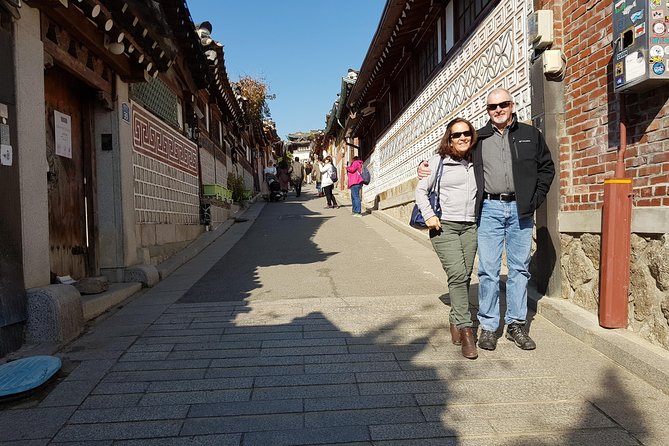
Bukchon Hanok Village shifts the setting to lanes on a hill, lined with traditional Korean houses. The area preserves a 600-year-old urban setting, but you should remember that it is also a real neighborhood. Keep your voice down in the narrow alleys and wear shoes that handle slopes well. The one-hour visit gives you a look at the architecture without turning the day into a long hike.
Jogyesa Temple offers a different kind of Seoul. Located in the center of the city, it serves as a headquarters of Korean Buddhism. Half an hour is enough for a respectful visit, especially if you pause to look at the temple details rather than treating it as another quick photo stop.
Insadong is the day’s best place for traditional crafts, galleries, antique shops, restaurants, and tea houses. The tour includes time at a traditional hanok-style tea garden, with tea tasting included. This is a pleasant break after the palace and museum, and it gives you a chance to experience an old Seoul custom in a polished but approachable setting.
Cheonggyecheon Stream shows modern Seoul’s public side. The 11-kilometer waterway was reborn through a major downtown renewal project and is now used by local residents and people sightseeing in the city. The 30-minute stop is brief, but it helps you see how Seoul combines dense urban life with open public space.
The Baek In-je House is another worthwhile stop in Bukchon. This preserved hanok sits on raised ground, has a spacious garden, and offers views over the surrounding neighborhood. It became a museum and a citizens’ cultural heritage site because of its size, beauty, and unusual history. It is closed on Mondays, so the operator may need to adjust this part of the route if your first day falls then.
The finale is Gwangjang Market, one of South Korea’s oldest traditional markets. You have 90 minutes to sample Korean street food and, if you choose, traditional rice wine called makgeolli. Food and drink are generally not included unless specified, so treat this as a chance to choose what you want rather than an included meal.
More DMZ tours:
- Best DMZ Tour Korea from Seoul (Red Suspension Bridge Optional)
★ 5.0 · 41,422 reviews - DMZ Tour: 3rd Tunnel, Option(Suspension Bridge, Boat) from Seoul
★ 5.0 · 21,373 reviews - DMZ tour south Korea from Seoul (NK experience hall, defector)
★ 5.0 · 20,599 reviews
Nami Island, French kitsch, and garden calm
Day two heads outside Seoul to three very different attractions. Nami Island gets three hours, enough time for its tree-lined paths, woodland, and riverside walks. It is known for all-season scenery and for its connection with the Korean drama Winter Sonata. If that show is meaningful to you, the visit has extra appeal. If not, the island still works as a scenic pause after the city.
The drawbacks are simple: Nami Island is a famous outing, and its appeal depends heavily on weather and season. You may find the grounds especially pleasant when trees and gardens are at their best, but the tour does not promise a particular seasonal display.
Petite France is a one-hour stop at a French-themed cultural village. You can see European-style buildings, cultural programs, and performances. It is an intentionally made attraction, not an old Korean town, so I would treat it as light relief between more serious historical sites.
The Garden of Morning Calm is the longest stop of the day, with two hours among more than 20 themed gardens spread over 82 acres at the foot of Chungnyeongsan Mountain. Bonsai, herbs, plum trees, and a Korean-themed garden give you several types of planting to see. You will want comfortable shoes, though the schedule does not suggest a strenuous walk.
This day is visually appealing, but it also has the most deliberately designed attractions. That balance works well for families and mixed-age groups. If your priority is history, Day four and Day five will likely be more rewarding.
The DMZ and Seoul from above
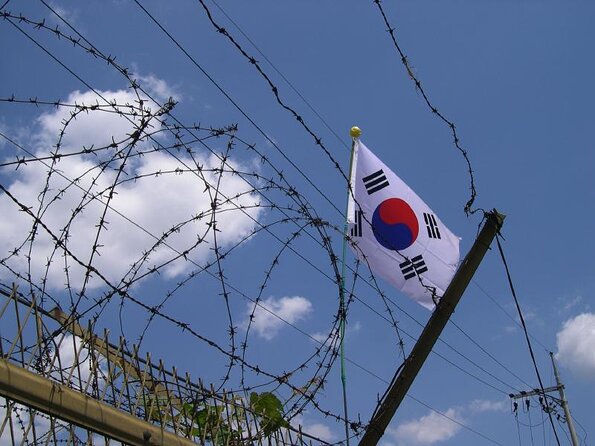
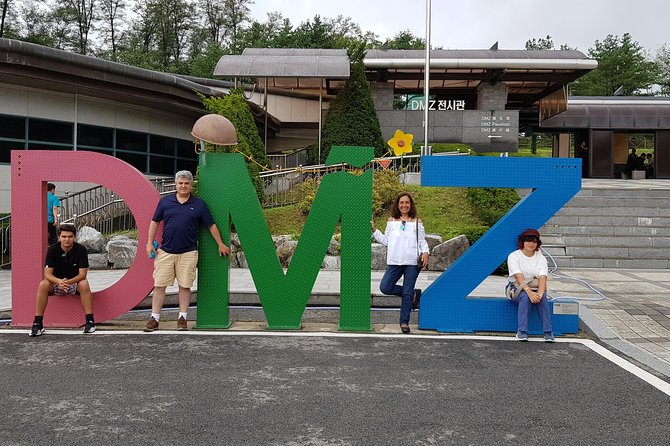
The DMZ visit takes about three hours and includes major sites such as Freedom Bridge, Imjingak Park, the Third Infiltration Tunnel, and Dora Observatory. From the observatory, you can see North Korea. The visit gives the political division of the peninsula a physical setting, rather than leaving it as an abstract subject from a textbook.
Conditions at the DMZ can affect what you see, and the schedule may depend on site access. Still, the combination of the tunnel, bridge, park, and lookout provides a fuller picture than a single roadside stop. Listen closely to your guide here, since the meaning of each place depends on the events surrounding the Korean War and the 1953 armistice.
After the DMZ, N Seoul Tower provides a sharp contrast. From Namsan, you get a broad view over Seoul, a city that can feel hard to grasp at street level. Two hours allows time for the viewpoint and the setting around the tower. Weather will make a difference, so do not judge the stop only by the tower itself.
Andong’s wooden temples, village lanes, and Confucian ideals
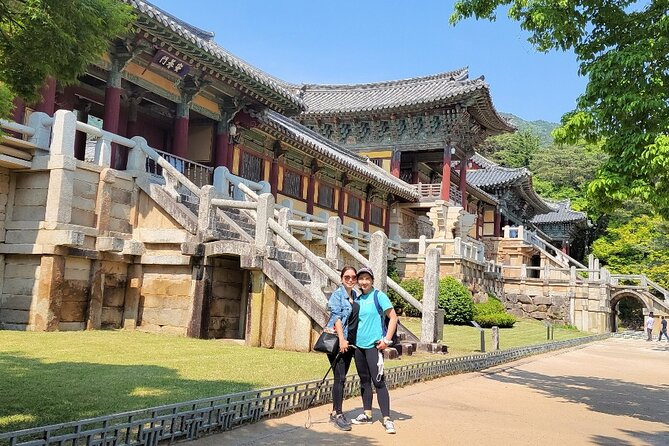
Day four moves into Korea’s traditional heartland. Buseoksa Temple dates to 676 and is known for its setting and for having Korea’s longest wooden building. Its grounds contain national treasures, including wooden structures, Buddhist images, pagodas, and stone lanterns.
The two-hour stop gives the temple room to breathe. You are not simply checking off a gate and returning to the car. The setting on the mountain and the long history of the buildings make this one of the more meaningful places on the route.
Andong Hahoe Folk Village is the day’s main event, with three hours. The community preserves houses and living patterns from the early Joseon period, and its location follows traditional feng shui principles, with a mountain behind and water in front. The village is also linked to mask dancing, a performance tradition connected with prayers for safety and prosperity.
Hahoe became a UNESCO World Heritage Site in 2010. The designation matters because the place is valued not just for attractive houses, but for the way its settlement pattern and customs have survived. You get more from the visit if you look at how homes, paths, and the river relate to one another.
Buyongdae is a 64-meter cliff across the river. The walk to its summit is brief in the schedule, only 30 minutes, but the payoff is the broad view over Hahoe Village. If you dislike heights or uneven paths, ask your guide what the climb involves before setting out.
Byeongsan Seowon completes the day. Founded in 1613, this private Confucian school and shrine reflects the educational, social, and philosophical ideas that shaped Joseon society. It is one of nine seowon recognized together as a UNESCO World Heritage site, and its buildings have an especially fine setting.
This is a day for people who want more than royal palaces. You see how education, village life, religious practice, and political thought shaped Korea over many centuries.
More Nami Island trips:
- Mt. Seorak+Nami Island+Garden of Morning Calm Day Trip from Seoul
★ 5.0 · 959 reviews - Seoul: Nami Island and Garden of Morning Calm opt Railbike
★ 4.6 · 907 reviews - From Seoul: Nami Island, K-drama Garden & Rail Bike Day Tour
★ 4.6 · 724 reviews - Seoul: Gangwon-do Day Trip with Alpaca World & Nami Island
★ 4.7 · 581 reviews
Gyeongju’s Silla treasures in one concentrated day
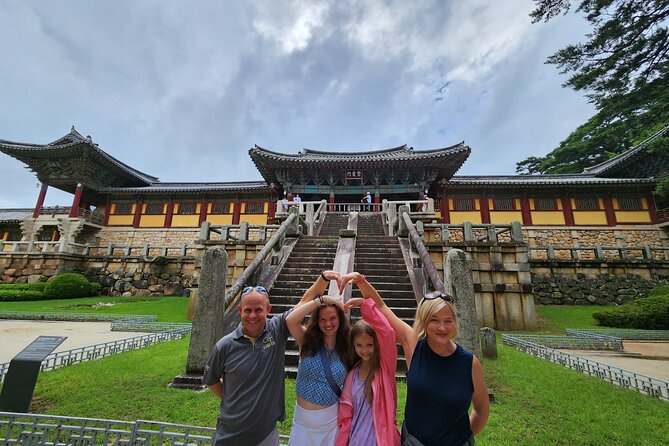
Gyeongju was the center of the Silla Kingdom, and Day five gathers several major sites in a compact route. Bulguksa Temple, built in 751, is the essential first stop. Wooden halls, stone bridges, and pagodas show the period’s craftsmanship, while seven national treasures give the complex added importance.
Seokguram, also built in 751, sits on the slope of Mount Tohamsan. Its round stone chamber contains a large granite Buddha surrounded by figures, with a lotus design and curved ceiling above. The visit is short at one hour, but the sculpture’s calm expression and careful construction reward a quiet look.
The route then turns to Donggung Palace and Wolji Pond. The pond was created in 674 as part of a secondary palace used by the Silla crown prince and for important banquets. Its former name was Anapji, but an inscription found on pottery revealed the older name Wolji, meaning a pond that reflects the moon.
Only 30 minutes are scheduled here, which is enough for an overview but not a long wander. The site is particularly appealing when you can take in the relationship between the reconstructed palace buildings, water, islands, and surrounding hills.
Cheomseongdae Observatory is one of Korea’s oldest astronomical structures. Built in the Silla period, its hollow cylindrical form uses 362 granite blocks, linked to the days of a lunar year. Twelve stone layers sit below its central window and 12 above it. You need about half an hour, but the unusual design makes it more than a routine photo stop.
Daereungwon Tomb Complex brings Silla power back to ground level. Twenty-six large tombs belong to kings and nobles, and Cheonmachong is open inside. Excavations in the 1970s revealed gold crowns, jewelry, accessories, and paintings, giving you a tangible look at royal life about 1,500 years ago.
Gyeongju is one of the tour’s strongest sections. The limitation is pace: five major sites in one day leave little room for lingering. Still, the private vehicle makes this practical, especially when you are moving between temple grounds, tombs, and palace ruins.
Busan’s shore, war memorials, and fish market
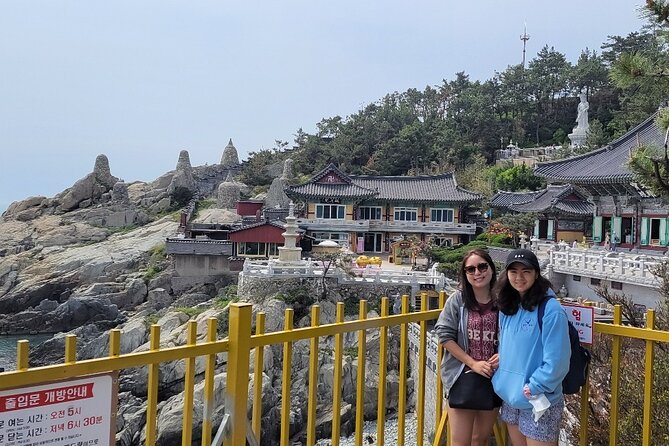
Day six begins at Haedong Yonggungsa, a rare Korean temple set directly beside the sea instead of in the mountains. Built in 1376, the complex includes a main sanctuary, shrine, cave sanctuary, pagoda, and the Seawater Great Goddess Buddha. One hour lets you see the main features and the unusual coastal position.
Nurimaru APEC House occupies a wooded part of Dongbaek Island and served as the conference hall for the 2005 APEC summit. Its design expresses a traditional Korean pavilion, while the terrace looks toward Haeundae Beach, Gwang’an Bridge, and five islands. The one-hour visit combines modern diplomacy, architecture, and sea views.
Dongbaekseom provides a shorter coastal walk. Its name comes from the Korean word for camellias, and a 30-minute path follows the shore. The stop is brief, but it adds fresh air and a little movement after time in the vehicle.
Jagalchi Market represents Busan’s working seafood culture. The market is known for buying fish on the first floor and having it prepared in restaurants upstairs. Admission is free, but food is not included, so you can decide if a seafood meal suits your budget and appetite.
The UN Memorial Cemetery offers a quieter and more solemn hour. It honors UN soldiers from 16 countries and aid workers from five countries who died in the Korean War. The grounds include memorial halls, national monuments, ponds, and about 2,300 remaining graves.
This stop gives Busan historical weight beyond beaches and shopping. Keep your voice low and allow the cemetery’s calm to set the pace.
Gamcheon’s hillside lanes and the end of the road
The final morning visits Busan Gamcheon Culture Village. Houses climb the foothills in stair-step rows, and narrow alleys contain murals and sculptures created through local renewal work. The community began as a settlement for Korean War refugees, and the later city project helped repair and refresh the area.
The nickname Santorini of Busan explains the photo appeal, but the refugee story is more important. Look past the painted walls to the steep layout and crowded homes. The one-hour visit is enough for a taste, though people who enjoy browsing galleries and side lanes may wish they had more time.
What the $2,999 price really buys
At $2,999 per person, this is not a budget sightseeing package. The cost pays for a private air-conditioned vehicle, an official English-speaking guide, admission fees, hotel pickup and drop-off in Seoul, and three nights of accommodation outside Seoul in a three-star or four-star hotel.
Three breakfasts, one lunch, and one dinner are included across the seven days. You pay separately for most food and drinks, plus anything outside the route. That arrangement gives you some freedom, but you should set aside money for meals in Seoul, Gyeongju, Andong, and Busan.
The value is strongest if you place a high price on time and ease. A private car removes the need to organize several intercity journeys and allows your group to stay together. It also makes a route covering Seoul and Busan, with inland stops in between, far easier to manage.
The value is weaker if you already know Korea’s transport system, prefer independent hotels, or want long unplanned evenings. The tour is best for a first visit, families, couples, and small groups with a long list of must-see places.
A booking is normally confirmed within 48 hours, subject to availability. The tour begins at 9:00 a.m., pickup is offered, and group discounts may be available. You can cancel for a full refund up to three full days before the local start time. Changes or cancellations inside that period are not accepted.
Should you book this Korea tour?
Book it if you want one private trip to connect Korea’s major cultural regions, and if a guide and driver are worth paying for. The strongest parts are Seoul’s palace and market day, Andong’s Hahoe and Confucian sites, Gyeongju’s Silla monuments, and Busan’s coastal temple and war memorial.
Think twice if you want a relaxed holiday. The schedule is full, meals are only partly covered, and the price is high. Before booking, confirm the hotel arrangements, ask how vegetarian meals can be handled, and check the plan for any Monday visit to Baek In-je’s House.
Guide Bergen Park’s personal attention to vegetarian dining is a useful sign for people with food needs. If you value that sort of hands-on help and want to see a large portion of South Korea without managing the details yourself, this tour makes a strong case.
FAQ
How long is the tour?
The tour lasts approximately seven days and begins at 9:00 a.m.
Is this a private tour?
Yes. Only your group participates in the activity.
What transportation is provided?
Private transportation in an air-conditioned vehicle is included, along with hotel pickup and drop-off in Seoul.
Is an English-speaking guide included?
Yes. A professional English-speaking guide with an official tour guide license is included.
Which meals are included?
The tour includes three breakfasts, one lunch, and one dinner over seven days. Other food and drinks are not included unless specified.
Is accommodation included?
Three nights of accommodation outside Seoul are included in a three-star or four-star hotel. Rooms are arranged for two people, with a single room used when the group has an odd number.
What is the cancellation policy?
You can receive a full refund if you cancel at least three full days before the experience start time. Cancellations or changes made less than three full days before the start are not accepted.
Just added in Seoul
- Seoul: Korean & English Language Exchange Global Party★ 5.0 · 28 reviews
- Your Personal Seoul Photographer!★ 4.1 · 15 reviews
- You’re Invited to Our Home in Seoul: The Only Cooking Class!★ 5.0 · 8 reviews
- From Seoul: Yongpyong Ski Day Tour with Transportation★ 4.9 · 40 reviews
- From Seoul: Hwacheon Ice Fishing and Lighting Festival Tour★ 4.5 · 4 reviews
- Seoul: Gangneung BTS K-Pop & K-Drama Filming Locations Tour★ 4.6 · 14 reviews
- Unique Native Experience : Han River Picnic, Board game, BBQ★ 5.0 · 3 reviews
- Seoul: Euljiro Gastroventure Tour★ 4.0 · 1 review
DMZ Tours, compared.
Best DMZ Tour Korea from Seoul (Red Suspension Bridge Optional)
Read our review →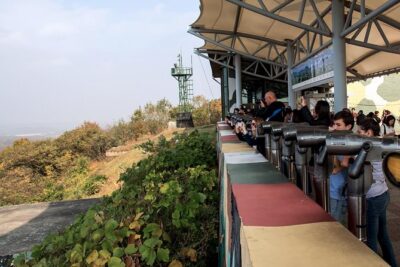
DMZ Tour: 3rd Tunnel, Option(Suspension Bridge, Boat) from Seoul
Read our review →DMZ tour south Korea from Seoul (NK experience hall, defector)
Read our review →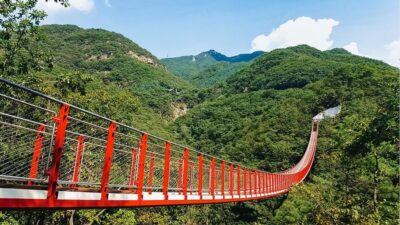
DMZ Insider Tour: 3rd Tunnel, NK Defector Meet & Red Bridge
Read our review →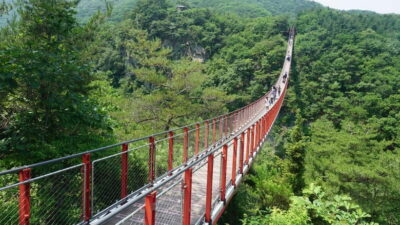
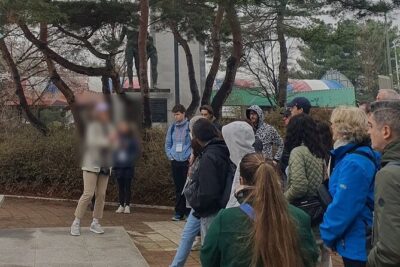
Signature DMZ Tour: Exclusive Defector Talk & Suspension Bridge
Read our review →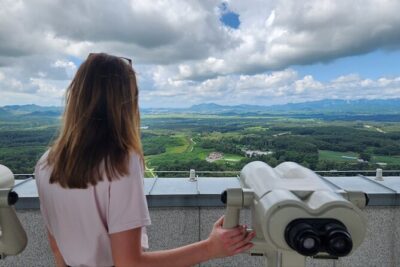
Thrilling Korean DMZ 3rd Tunnel Tour from Seoul + Red Bridge Rush
Read our review →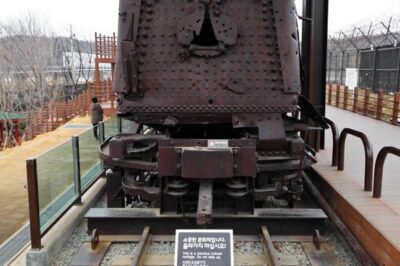
DMZ Past and Present: Korean Demilitarized Zone Tour from Seoul
Read our review →Browse the lists this tour appears in