
Reviewed · DMZ TOURS
Closest Observatory to DMZ: North Korea View(Starbucks Tour)
Coffee with North Korea in view. This half-day outing takes you to Jogang Observatory, said to be the closest observatory to North Korea, then to a Starbucks only 1.4 kilometers away. I like the unusual mix of serious Korean War history and an ordinary coffee stop, and I also like that the trip is quieter and shorter than many standard DMZ excursions. The main catch is that access depends on military operations, so the planned visit can be canceled without warning.
The strongest part is the guide. Henry, Shin, Dragon, Sophie, Thomas, Leo, Grace, Rachel, Stella, Sunny, and others have been praised for clear English, history lessons, thoughtful help, and even taking photos. You should also expect steep slopes, military photography rules, and a long drive each way from Seoul.
In This Review
- Key details before you book
- Why this DMZ outing feels different
- From Hill 154 to Aegibong Peace Ecopark
- The walk to Jogang Observatory
- The Christmas tree that became bridges
- Starbucks 1.4 kilometers from North Korea
- The guide can shape the entire visit
- Transport, timing, and the value of $48
- How this compares with a standard DMZ day
- Who should book this experience
- Practical ways to get more from the visit
- Should you book the Jogang Observatory tour?
- FAQ
- How much does the tour cost?
- How long does the experience last?
- Where does the tour start?
- Where does the tour finish?
- What is included in the price?
- Are food and drinks included?
- What languages are available?
- Do I need to bring my passport?
- Can I take photographs and videos?
- What happens if Aegibong Peace Ecopark closes?
- Is the tour suitable for wheelchair users?
Key details before you book
- See North Korea from Jogang Observatory: The viewing point looks across the Jogang River toward northern territory from one of the closest public viewpoints.
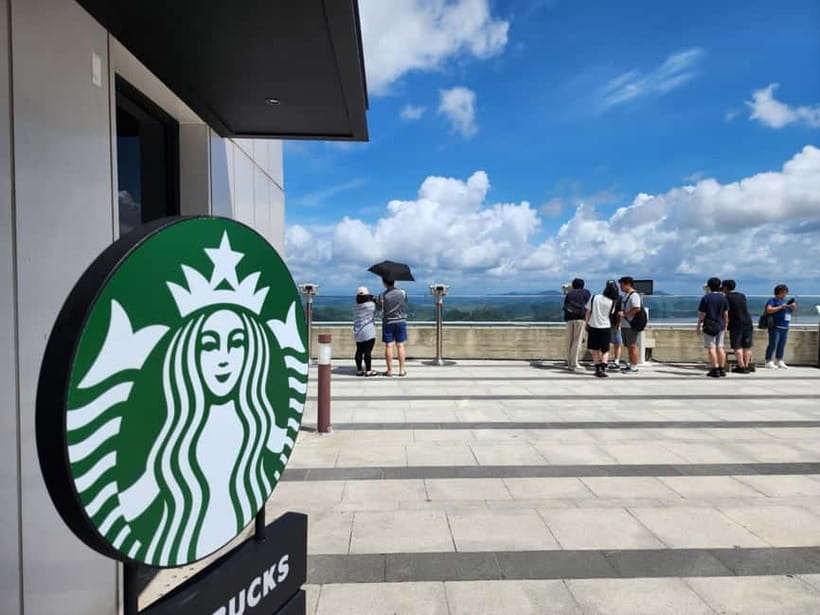
- Sip coffee near the border: The Starbucks at the observatory is just 1.4 kilometers from North Korea, making this one of Seoul’s more unusual café stops.
- Learn the human story of Aegibong: The park is tied to displaced Korean families who came here after the Korean War to look toward their former homes.
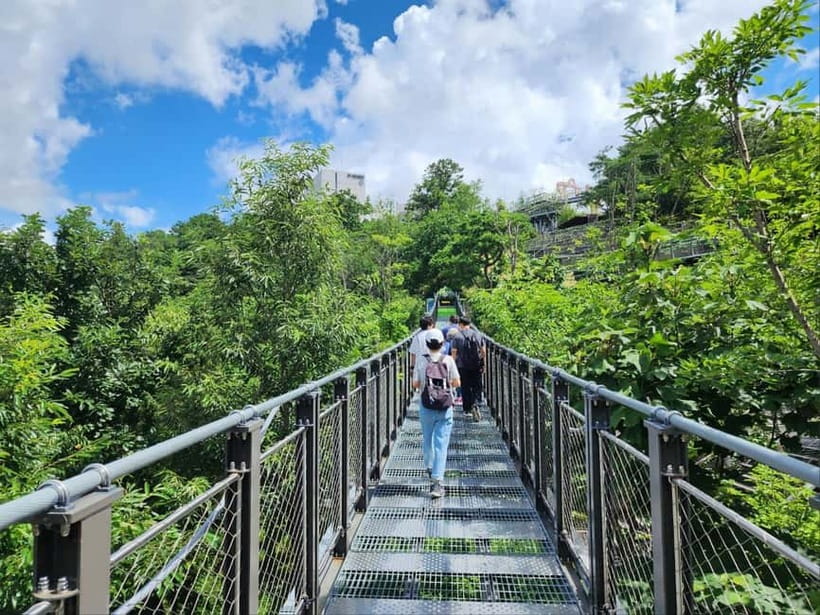
- Look for the Christmas tree shape: The original giant tree was removed, but bridges near the observatory were built in a similar star-like form.
- Expect a half-day outing: The advertised duration runs from 270 minutes to five hours, with about 1.5 hours of free time at Aegibong Peace Ecopark.
- Bring your passport: The park is operated by the military, and access or photography rules can change.
Why this DMZ outing feels different
Many DMZ trips focus on formal military sites, underground tunnels, and large visitor facilities. This one takes you to Aegibong Peace Ecopark in Gyeonggi Province, at the meeting area of the Hangang and Jogang rivers.
The appeal is not only the view. You get a quieter place to think about the division of Korea, with the northern side visible across the water. The setting is less about military hardware and more about distance, memory, and the people who once lived in villages they can no longer visit.
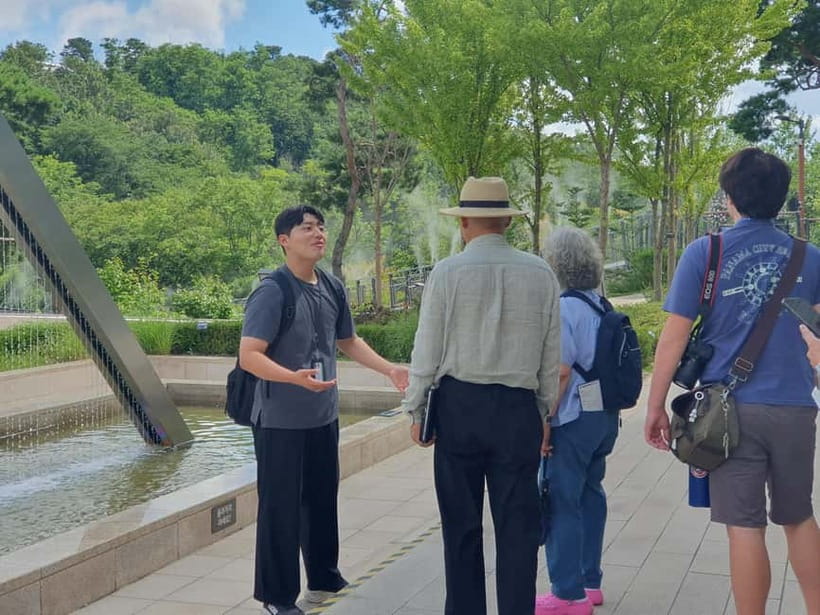
I like that the experience does not pretend the border is just a sightseeing backdrop. Your guide explains the Korean War, the continuing division, and the lives of separated families while you are looking across at North Korea. That context matters. Without it, the view can feel like a distant patch of hills. With it, the river becomes a real border with a painful human story.
The coffee stop adds a strange but memorable contrast. You can sit inside a familiar international café while looking toward one of the world’s most closed countries. It is an odd pairing, but that is exactly why it sticks with you.
More DMZ tours:
- Best DMZ Tour Korea from Seoul (Red Suspension Bridge Optional)
★ 5.0 · 41,422 reviews - DMZ Tour: 3rd Tunnel, Option(Suspension Bridge, Boat) from Seoul
★ 5.0 · 21,373 reviews - DMZ tour south Korea from Seoul (NK experience hall, defector)
★ 5.0 · 20,599 reviews
From Hill 154 to Aegibong Peace Ecopark
The site was once known as Hill 154, a position where the two Koreas fought fiercely during the Korean War. The park now carries the name Aegibong Peace Ecopark and presents itself as a place connected with peace and harmony.
Aegibong also has a strong connection to displaced people. After the war, many Koreans who had been separated from their homes came here to look north toward their hometowns. You do not need a military specialist to understand the power of that story. A short explanation from your guide can make the visit feel personal rather than merely strategic.
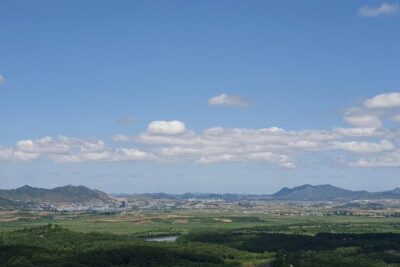
The park’s location at the mouth of the Hangang River, alongside the Jogang River, gives the observatory its broad view. On a clear day, you might see northern land, buildings, fields, people working, or soldiers. Conditions vary, and mist or haze can soften the view, so do not treat a perfectly sharp panorama as guaranteed.
You should also expect restrictions. The park is operated by the military, and some facilities cannot be photographed. Ask your guide before taking out your camera or phone. This is not the place for casual photography first and questions later.
The walk to Jogang Observatory
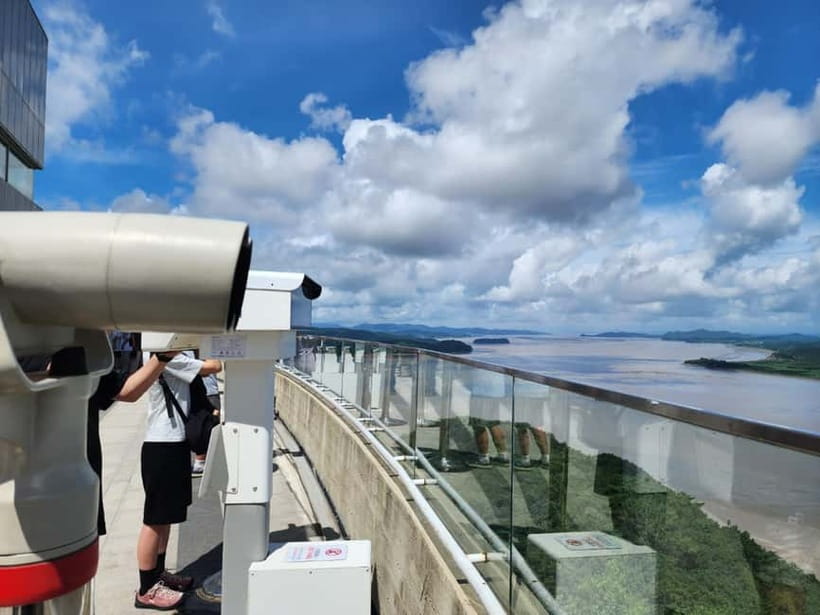
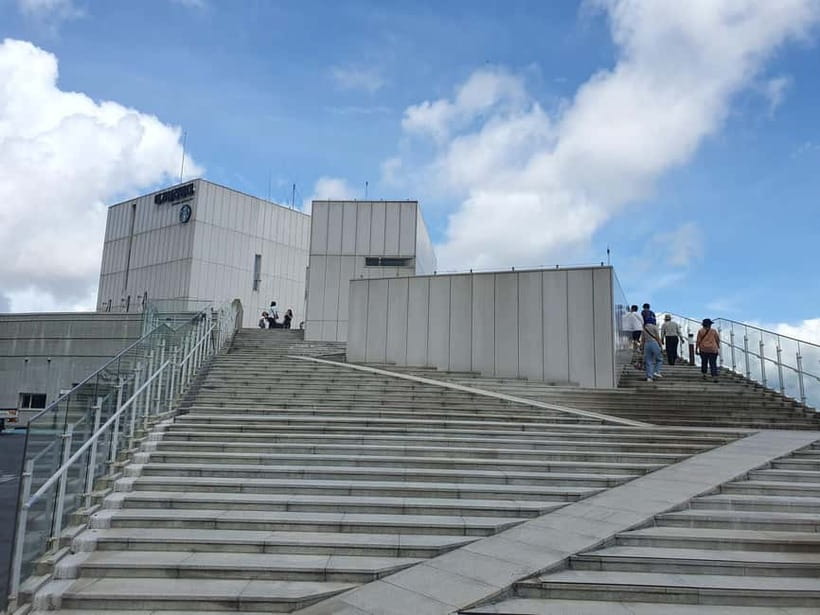
The old observatory opened in 1978, but it was later demolished and replaced by the current Jogang Observatory. The new viewing area lets you look toward North Korea from very close range, making it the central reason to choose this tour.
The visit includes free time of about 1.5 hours at the park. That gives you room to reach the observatory, take in the view, hear more from your guide, and spend time at the café without being rushed through every stop.
The route includes steep slopes and hills. This is important if you have limited mobility, are pregnant, have heart problems, or rely on a wheelchair or stroller. The experience is not suitable for wheelchair users, and some paths cannot accommodate strollers or wheelchairs.
If you are comfortable walking uphill, the physical effort is manageable as part of a short outing, but you should wear practical shoes. The park is not just a bus-to-viewpoint stop. You may need to walk on slopes to reach the main areas.
The Christmas tree that became bridges

Aegibong was once famous for a huge Christmas tree. The lights were so bright that they could be seen from North Korea, where electricity was scarce. This led to conflict, and the original tree was removed.
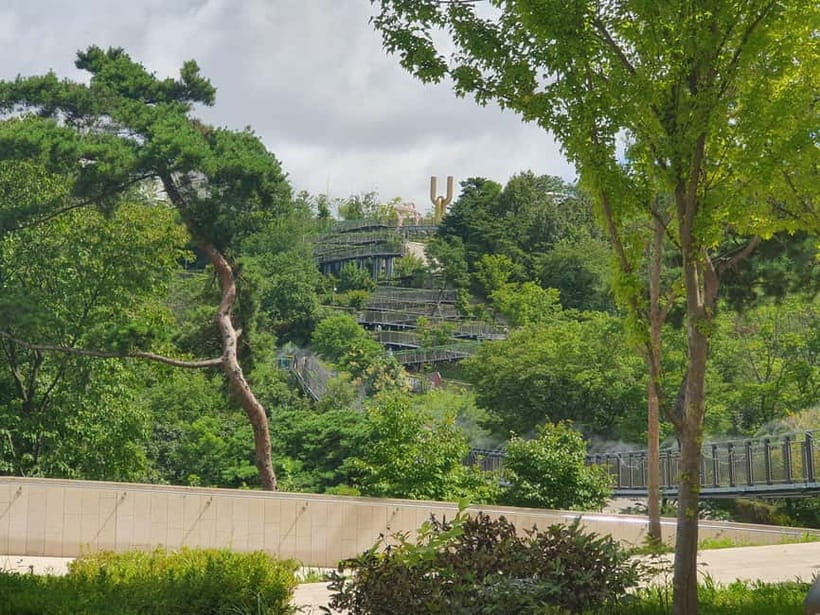
The park’s workers later created bridges shaped like the tree, with lights that form a star-like Christmas tree pattern. This is a small detail, but it gives the place a visual identity beyond the usual lookout platform.
You may find the design a little playful for a site shaped by war and division. That contrast is part of the experience. The bridges connect a present-day peace park with an older border tradition that was far more provocative. If you visit after dark or during a time when the lights are visible, the shape can be especially striking, though the exact appearance may depend on operating conditions.
A few more options to weigh up in Seoul
- Seoul: DMZ Tour with Optional Suspension Bridge
★ 4.8 · 5,277 reviews - Signature DMZ Tour: Exclusive Defector Talk & Suspension Bridge
★ 5.0 · 4,459 reviews - Thrilling Korean DMZ 3rd Tunnel Tour from Seoul + Red Bridge Rush
★ 5.0 · 3,097 reviews - DMZ Past and Present: Korean Demilitarized Zone Tour from Seoul
★ 5.0 · 2,481 reviews
Starbucks 1.4 kilometers from North Korea
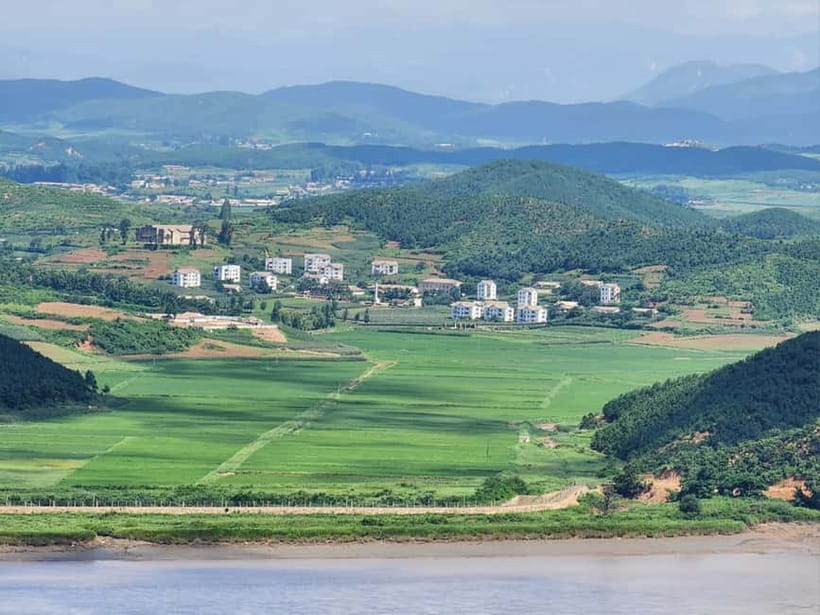
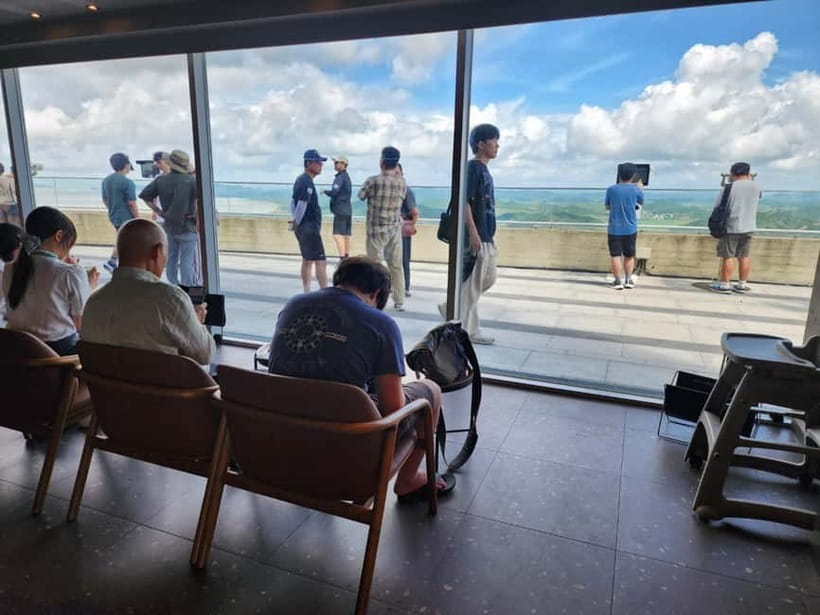
The Starbucks stop is the tour’s most unexpected feature. The café is located at the observatory and only 1.4 kilometers from North Korea. You can order your own food or drink, since refreshments are not included in the tour price.
I would treat the café as a bonus, not the main reason to book. A coffee in this setting is memorable because of the view and the location, not because the menu is unusual. You are still visiting a Starbucks, so people who want a more traditional Korean food experience may find this stop limited.
Still, the juxtaposition works. After hearing about soldiers, separated families, and the Korean War, you can sit down with a familiar cup of coffee and look across the border. One person described the experience as seeing North Korea while sipping coffee, and that captures the odd, surreal quality of the stop without overstating it.
Bring extra money if you want a drink or snack. Food and beverages are not included.
The guide can shape the entire visit
The drive from Seoul takes about an hour each way, according to one detailed account. That makes the guide’s role on the road important. A silent transfer would leave you with a long ride, but a good guide turns the journey into part of the visit.
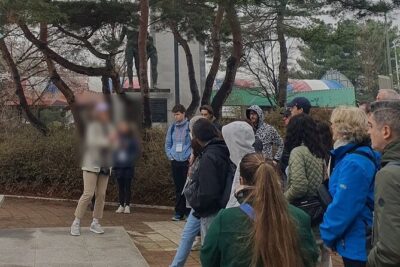
Shin has been praised for explaining the Korean War, separated families, and present-day politics. Dragon has been described as attentive, helpful, and strong in English, with patience for questions and photographs. Henry receives repeated praise for answering difficult questions and offering extensive background.
Thomas is another strong choice if guide availability is shown at booking. He has been credited with making the drive interesting and explaining Korean history in a clear, enthusiastic way. Sophie has been praised for her friendly manner, useful explanations, and attention to safety. Leo has also been singled out for taking photographs and sharing stories during the outing.
You cannot usually choose a specific guide, so do not book on the assumption that Henry, Shin, Sophie, Thomas, or another named guide will lead your group. The useful point is that the guide service appears to be a major strength of this experience. If English is not your first language, live guiding is available in English and Japanese.
Transport, timing, and the value of $48
At $48 per person, the tour is reasonably priced if you want a guided border visit without arranging a private car. The cost includes round-trip transport from Seoul, admission to the observatory, and a licensed professional guide when you select the guide option.
You also save the trouble of working out transport to a military-operated park on your own. That matters here because access rules can change and the destination is outside central Seoul. The drop-off is in Myeong-dong, which is convenient if you plan to continue sightseeing, shopping, or dining there.
The duration is listed as 270 minutes to five hours. That is a fairly wide range, so check the available departure time and option carefully before booking. Traffic, military access, and the chosen pickup arrangement may affect the total day.
There are two starting-location options connected with 62-10, Hongdae Entrance Station, but the exact meeting point can vary by booking option. Read the meeting instructions closely and keep your passport with you. The passport requirement is not a minor detail at a military-controlled site.
The tour does not include travel insurance, food, or drinks. It does include free cancellation up to 24 hours before departure and a reserve-now, pay-later option, which is useful when your Seoul plans are still shifting.
How this compares with a standard DMZ day
This tour is a good alternative if you have already seen a conventional DMZ route or do not want to spend a full day on one. It focuses on one park, one observatory, and one clear purpose: looking into North Korea while learning why this border matters.
You will not get every famous DMZ attraction on this outing. The supplied itinerary does not include the Third Tunnel, Freedom Bridge, or other well-known stops associated with longer DMZ programs. That is a limitation if you want a broad survey of the whole border.
The tradeoff is a more focused visit. The time at Aegibong gives you a chance to slow down, look carefully, and listen. One account described it as less crowded with better views than a Third Tunnel option, while another praised it as a perfect short trip for limited vacation time.
Weather matters. On a clear day, you might see North Korean soldiers, people working in rice fields, an old propaganda village, and homes still in use. Fog and haze can block much of that. The experience is still worthwhile for the history and setting, but you should not expect a guaranteed close-up view of daily life.
Who should book this experience
I would recommend it to you if you want a half-day Seoul excursion with a strong historical focus and a distinctive view. It suits first-time visitors who want to see North Korea without committing a full day to a large collection of military sights.
It also suits people who prefer a smaller, calmer-feeling stop over a packed schedule. The café makes it approachable for visitors who are curious about the border but may not want a highly formal military tour.
You should think twice if your priority is an extensive DMZ program with tunnels, bridges, and several observation points. You should also reconsider if steep paths are difficult for you, if you are pregnant, or if you have heart problems.
Photography-focused visitors need patience. Military facilities cannot all be photographed, and your guide must tell you where pictures are allowed. Video recording is not permitted, and drinks cannot be consumed inside the vehicle.
Practical ways to get more from the visit
Keep your passport in an easy-to-reach but secure place. You may need it for access, and leaving it behind could prevent you from joining.
Wear comfortable shoes and allow extra time for slopes. The walk is not described as extreme, but the park is not fully accessible to wheelchairs or strollers.
Bring a little money for Starbucks. Since drinks and food are excluded, you will want to budget for anything you order rather than assuming it is part of the $48 price.
Ask questions during the drive. The strongest part of the outing may be the explanation you receive before reaching the observatory. Ask about the Korean War, separated families, the rivers, the former Christmas tree, and what you are seeing across the border.
Confirm photography rules before raising your camera. It is better to miss one picture than cause trouble near a restricted military facility.
Finally, keep your schedule flexible. Because the park is operated by the military, cancellation can happen without prior notice. If that occurs, the replacement visit is Starbucks The Bukhansan Branch, so the day may become a café outing rather than a border visit.
Should you book the Jogang Observatory tour?
Book it if you want a focused, unusual look at North Korea, especially if a full DMZ itinerary feels too long. The combination of Jogang Observatory, Aegibong’s story of displaced families, the Christmas tree bridges, and a Starbucks 1.4 kilometers from the border gives you an experience that is hard to duplicate elsewhere in Seoul.
The $48 price makes sense for guided transport, admission, and the time saved arranging a visit to a military-operated park. Just keep your expectations sensible: the view depends on weather, photography is restricted, the paths are steep, and access can be canceled.
If you value clear explanations, ask about the guide option. Names such as Shin, Henry, Dragon, Sophie, Thomas, and Leo have been associated with particularly warm and informative service. You may not choose your guide, but the consistent strength of the guiding is one of the best reasons to book.
FAQ
How much does the tour cost?
The tour costs $48 per person.
How long does the experience last?
The advertised duration is between 270 minutes and five hours. You should check the available start time and booking option for the exact schedule.
Where does the tour start?
There are two starting-location options connected with 62-10, Hongdae Entrance Station. The exact meeting point may vary depending on the option you book.
Where does the tour finish?
The tour finishes in Myeong-dong.
What is included in the price?
Round-trip transport from Seoul and admission to the observatory are included. A licensed professional guide is included when you select the guide option.
Are food and drinks included?
No. Food and beverages are not included, including anything you choose to buy at Starbucks.
What languages are available?
Live guiding is available in English and Japanese.
Do I need to bring my passport?
Yes. Your passport is listed as a required item.
Can I take photographs and videos?
Photography is restricted around some military facilities, so ask your guide before taking pictures. Video recording is not allowed.
What happens if Aegibong Peace Ecopark closes?
Because the park is operated by the military, the trip may be canceled without prior notice. In that case, the replacement visit is Starbucks The Bukhansan Branch.
Is the tour suitable for wheelchair users?
No. The park has steep slopes and hills that wheelchairs and strollers cannot access. The experience is also not suitable for pregnant women or people with heart problems.
Just added in Seoul
- Seoul: Korean & English Language Exchange Global Party★ 5.0 · 28 reviews
- Your Personal Seoul Photographer!★ 4.1 · 15 reviews
- You’re Invited to Our Home in Seoul: The Only Cooking Class!★ 5.0 · 8 reviews
- From Seoul: Yongpyong Ski Day Tour with Transportation★ 4.9 · 40 reviews
- From Seoul: Hwacheon Ice Fishing and Lighting Festival Tour★ 4.5 · 4 reviews
- Seoul: Gangneung BTS K-Pop & K-Drama Filming Locations Tour★ 4.6 · 14 reviews
- Unique Native Experience : Han River Picnic, Board game, BBQ★ 5.0 · 3 reviews
- Seoul: Euljiro Gastroventure Tour★ 4.0 · 1 review
DMZ Tours, compared.
Best DMZ Tour Korea from Seoul (Red Suspension Bridge Optional)
Read our review →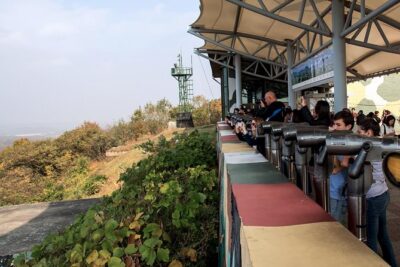
DMZ Tour: 3rd Tunnel, Option(Suspension Bridge, Boat) from Seoul
Read our review →DMZ tour south Korea from Seoul (NK experience hall, defector)
Read our review →
DMZ Insider Tour: 3rd Tunnel, NK Defector Meet & Red Bridge
Read our review →
Signature DMZ Tour: Exclusive Defector Talk & Suspension Bridge
Read our review →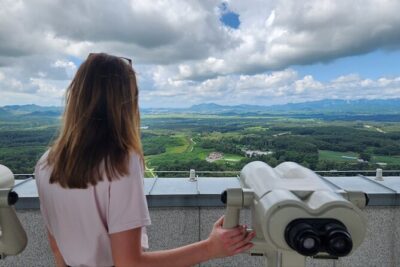
Thrilling Korean DMZ 3rd Tunnel Tour from Seoul + Red Bridge Rush
Read our review →
DMZ Past and Present: Korean Demilitarized Zone Tour from Seoul
Read our review →Browse the lists this tour appears in