Reviewed · SEOUL TOURS
Discover Eastern Korea in 4days: All-Inclusive Experience
Four days, four very different Koreas. This all-inclusive Eastern Korea tour links Busan’s seafood culture, Gyeongju’s Silla-era monuments, Andong’s traditional village life, and Seoraksan’s mountain scenery in one well-planned route. I especially like the no-shopping policy and the mix of included meals, cultural activities, and major entrance fees.
The tour also earns points for its hotels, air-conditioned transport, and attentive guiding. Guides such as Mr. Jay and Mark received especially warm praise for staying organized, helping with practical needs, and keeping the mood light. The main concern is the transport plan on the first day: the published meeting point is Seoul Station, while the first sightseeing stop begins in Busan, and some tour members have been asked to take the KTX independently.
In This Review
- Four details worth knowing before you book
- What the four-day route really offers
- Day 1: Jagalchi Market and the Songdo sea crossing
- Day 2: Busan’s coast gives way to Silla royalty
- Day 3: Korean sweets and a village that still feels lived in
- Day 4: Seoraksan and the Jujeongol Valley
- Hotels, meals, guides, and group size
- Is $1,200 a fair price?
- Who will enjoy this tour most?
- Should you book it?
- FAQ
- Where does the tour start?
- Where does the tour end?
- How long does the experience last?
- Is transportation included?
- Are meals included?
- Are entrance fees included?
- How large can the group be?
- Is the tour physically demanding?
Four details worth knowing before you book

- No shopping stops: Your time is devoted to markets, temples, museums, villages, food, and scenery rather than forced retail visits.
- A long-distance Eastern Korea route: The itinerary covers Busan, Gyeongju, Andong, Pyeongchang, and Seoraksan in four days.
- Food is part of the experience: Four lunches, three breakfasts, and two dinners are included, with traditional Korean dishes featured along the way.
- Small-group possibilities: The vehicle can carry up to 35 people, but the group may be smaller depending on bookings.
- The first-day meeting plan needs checking: The tour lists Seoul Station as the starting point, yet the first sightseeing stop is in Busan and one past arrangement involved independent KTX travel.
- Moderate fitness is needed: Walking at temples, tombs, markets, villages, and Seoraksan makes this more active than a simple coach ride.
What the four-day route really offers
At $1,200 per person, this is not a budget bus trip. The price includes three nights of twin or double accommodation, entrance fees, an English-speaking guide or driver-guide, an air-conditioned vehicle, and seven included meals. That can be fair value if you want someone else to coordinate a complicated route across eastern Korea.
The real value comes from the range. In four days, you move from Busan’s working port culture to Silla royal history, then to a living traditional village and a national park. You will not study each place at a slow pace, but you will get a broad and useful introduction to the region.
I also like the clear promise of no option and no shopping. That wording means the tour is designed as a fixed program rather than a menu of add-on stops. You trade flexibility for a schedule that keeps moving.
The pace is brisk. Day 2 includes five stops, and the route involves several long transfers between cities. If you prefer lingering over one temple or spending a whole afternoon in a museum, this may feel rushed. If you have limited time in Korea and want to cover ground without arranging several train trips and hotels yourself, the pace makes more sense.
A few more options to weigh up in Seoul
- Best DMZ Tour Korea from Seoul (Red Suspension Bridge Optional)
★ 5.0 · 41,422 reviews - DMZ Tour: 3rd Tunnel, Option(Suspension Bridge, Boat) from Seoul
★ 5.0 · 21,373 reviews - DMZ tour south Korea from Seoul (NK experience hall, defector)
★ 5.0 · 20,599 reviews
Day 1: Jagalchi Market and the Songdo sea crossing
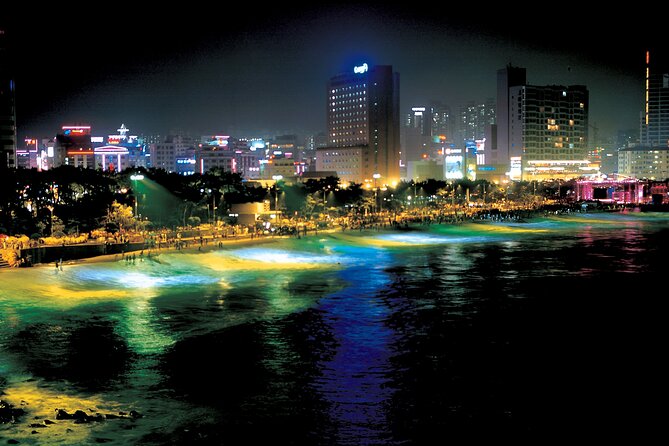
Jagalchi Market gives the first day a strong local flavor. This is one of Busan’s best-known seafood markets, with stalls centered on fresh catch and the daily life of a major port city. The scheduled visit lasts about one hour, with lunch arranged after meeting the guide.
You should expect a practical market visit rather than a long food tour. An hour is enough to see the rows of seafood stalls and get a feel for Busan’s coastal identity, but not enough for a slow, detailed exploration. The included lunch helps make this stop more than a photo opportunity.
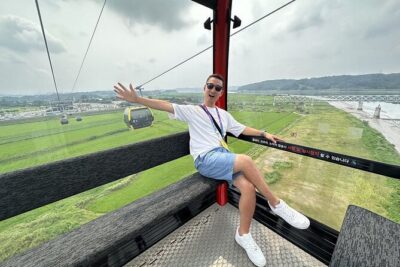
The day’s highlight is the Songdo Sea Cable Car. The line runs about 1.6 kilometers between Songdo Beach Station and Songdo Sky Park, crossing above the coast. The two-hour allocation allows time for the ride and the surrounding stop, with admission included.
This is a good contrast to Jagalchi. The market puts you at street level among food and commerce. The cable car gives you open views over the shoreline and Songdo area. It is one of the easiest ways on this route to get a broad sense of Busan’s coastal setting without a long hike.
The first day has one important logistical wrinkle. The official start point is Seoul Station at 8:00 a.m., but the itinerary describes meeting the guide at Busan Station before lunch and sightseeing. A past arrangement gave a few four-day participants KTX tickets and asked them to make their own way to Busan, while a larger group continued on a separate day-tour structure.
Do not treat that as a minor detail. Confirm before paying exactly how your first-day transfer works, whether the KTX ticket is included, and where you meet the guide in Busan. The tour ends at AMID Hotel Seoul, so the overall design clearly connects Seoul with eastern Korea, but the handoff between Seoul and Busan should be spelled out.
Day 2: Busan’s coast gives way to Silla royalty
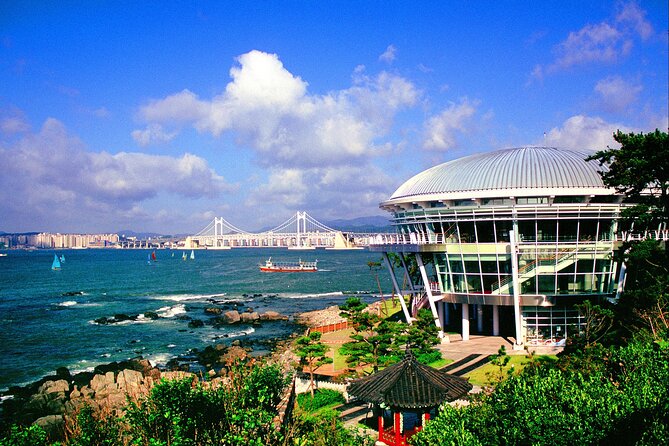
The second morning starts at Dongbaekseom Island and Nurimaru APEC House. The building hosted the 2005 APEC Summit and has a modern, glass-walled meeting hall. This stop offers a look at recent international history, with the Busan shoreline providing the setting.
The visit lasts about an hour. It is a useful change of tone after the market and cable car because it shows Busan as a modern conference city, not only a port and beach destination.
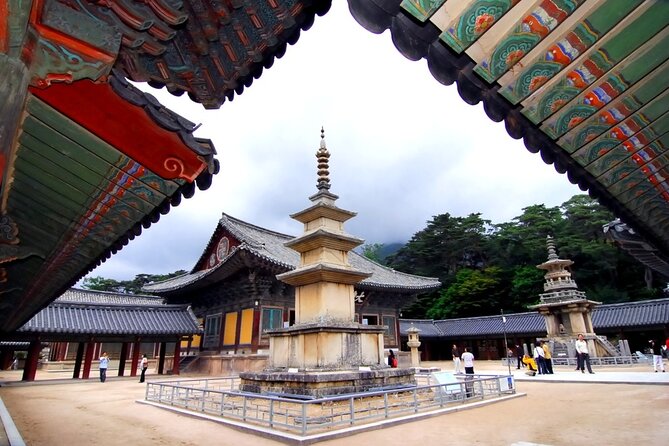
After Busan, the route heads to Gyeongju, Korea’s ancient capital for roughly a thousand years. The first stop is Bulguksa Temple, a UNESCO World Heritage Site. With about 90 minutes scheduled and admission included, you have enough time to see the main setting and absorb the temple’s importance without turning the visit into a rushed photo stop.
Bulguksa is one of the places where a guide adds real value. The stones, gates, pagodas, and courtyards are easier to appreciate when you understand their connection to Silla-era Buddhism and royal power. Still, the schedule remains fixed, so you should follow the group closely and wear comfortable shoes.
At Daereungwon Tomb Complex, the focus shifts from religion to royal burial customs. Large grass-covered mounds mark the tombs of Silla rulers and elites. The site is a direct reminder that Gyeongju is not simply an old town with a few monuments. Its central areas preserve the scale and authority of a former capital.
The one-hour visit should suit anyone who wants clear historical context without spending an entire day among tombs. The included admission keeps the stop simple, although independent visitors might choose to spend longer examining the grounds.
The Gyeongju National Museum is the most substantial history stop of the trip. You will see famous Silla artifacts, including golden crowns and other objects from about a millennium ago. The scheduled hour and a half gives you time to go beyond the headline pieces, though museum lovers may still want more.
There is also a museum gift shop. That does not conflict with the tour’s no-shopping promise, which refers to the program itself rather than preventing you from browsing a site’s own shop. You are not being taken to commercial outlets as part of the route.
The day ends at Cheomseongdae Observatory, with only about 20 minutes allotted. This ancient astronomical structure is one of Gyeongju’s best-known symbols. The short stop works well for seeing the monument and hearing its place in Silla science, but do not expect a long lesson in astronomy.
Day 2 is the historical center of the tour. Bulguksa gives you sacred architecture, Daereungwon shows royal burial traditions, the museum supplies the objects, and Cheomseongdae connects the city with scientific study. It is a full day, but the stops fit together well.
Day 3: Korean sweets and a village that still feels lived in
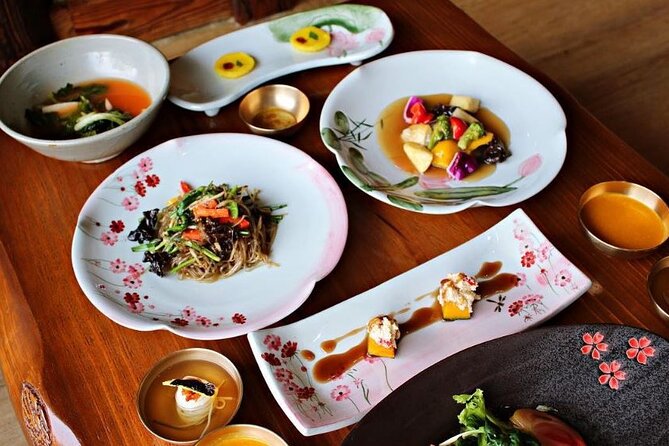
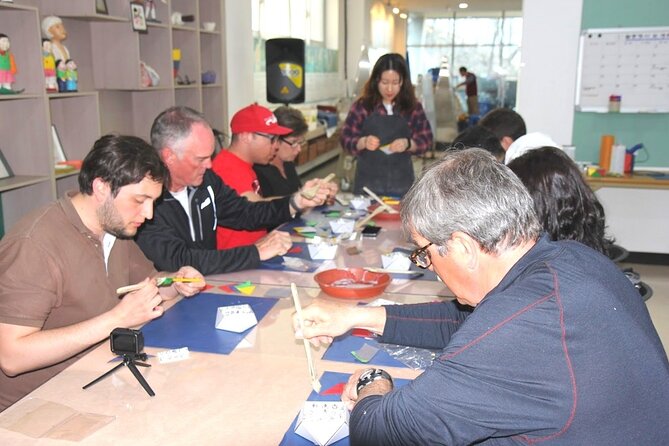
Day 3 begins with a traditional dessert-making session at Momyeongjae, held through a Korean Traditional Culture Center. Expert instructors lead the activity, and you make Korean sweets yourself. The session lasts about 90 minutes and admission is included.
This is one of the most personal parts of the itinerary. A museum shows you objects behind glass. Making food asks you to handle the ingredients, follow a method, and share a small piece of everyday culture. The activity also gives the tour a slower rhythm before the afternoon village visit.
The supplied information does not specify the exact dessert or how much you eat during the class, so confirm dietary details if that matters to you. The broader food program is a strength, with Korean traditional dishes included at several meals, but specific menus are not guaranteed.
Next comes Andong Hahoe Folk Village, a UNESCO World Heritage Site with more than 600 years of history. The village remains a living traditional settlement rather than a collection of isolated displays. Its houses, lanes, and cultural setting offer a different kind of historical experience from Gyeongju’s royal sites.
Two hours is a reasonable introduction. You can walk through the village, look at its traditional architecture, and get a sense of how community life shaped the settlement. It is not enough time to inspect every corner, but the visit avoids reducing Andong to a quick roadside photograph.
This day may be the best match for you if you want direct contact with Korean customs rather than only famous monuments. The dessert session is hands-on, while Hahoe shows how traditions are tied to a real place.
A completely different kind of day:
- Seoul: DMZ Tour with Optional Suspension Bridge
★ 4.8 · 5,277 reviews - Signature DMZ Tour: Exclusive Defector Talk & Suspension Bridge
★ 5.0 · 4,459 reviews - Thrilling Korean DMZ 3rd Tunnel Tour from Seoul + Red Bridge Rush
★ 5.0 · 3,097 reviews - DMZ Past and Present: Korean Demilitarized Zone Tour from Seoul
★ 5.0 · 2,481 reviews
Day 4: Seoraksan and the Jujeongol Valley
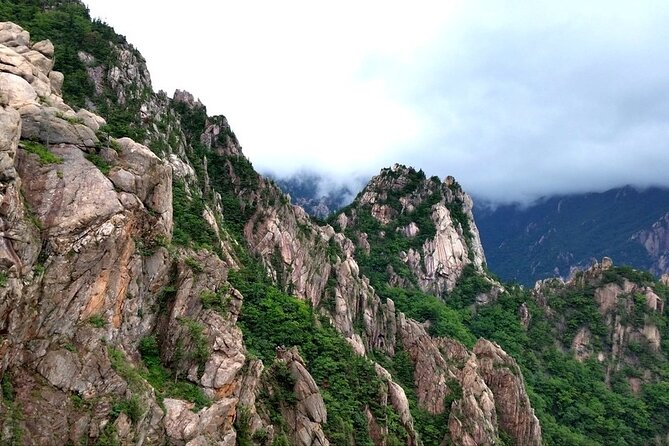
The final day turns outdoors. After the morning departure from Pyeongchang, the group heads to Jujeongol Valley in Seoraksan National Park. The park is known for dramatic rock formations, high peaks, and clear streams.
The scheduled visit lasts about two hours. That is enough for a scenic walk and time to enjoy the surroundings, but it is not a full mountain expedition. You should expect uneven ground and a moderate level of walking, which explains the stated fitness requirement.
The tour describes Seoraksan as the final natural stop, and it is a sensible way to finish. After three days of markets, buildings, museums, and village streets, the park gives you open air and mountain scenery. Weather matters here, and the experience requires good conditions. If poor weather cancels the tour, you are offered another date or a full refund.
The itinerary refers to greeting the morning in Pyeongchang, but it does not give the hotel names or exact walking route. Ask about the expected trail conditions if you have mobility concerns. The general guidance says moderate fitness is needed, and the activity is listed as suitable for ages 1 to 80 and above, but age suitability does not remove the need for sensible footwear and steady walking ability.
Hotels, meals, guides, and group size
Three nights of accommodation in twin or double rooms are included. The actual hotels are not named in the information provided, but accommodation quality received strong praise, along with the food and professionalism of the operating team.
Meals include four lunches, three breakfasts, and two dinners. This is a useful saving on a route where you may not have much free time to search for restaurants. It also supports the tour’s focus on Korean food, including traditional dishes.
Drinks, tips, laundry, telephone, fax, pay television, and other personal expenses are not included. Travel insurance is also your responsibility. Budget for those separately rather than assuming that all-inclusive covers every purchase.
The maximum group size is 35 people. That is large enough to feel like a traditional coach tour, especially at the busiest stops. Yet the actual group may be smaller. One arrangement involved only three people on the four-day portion alongside a larger one-day group, which shows that the format can vary.
The guide can be an English-speaking guide or a driver-guide. The strongest personal praise went to Mr. Jay, who was described as attentive, amusing, and good at keeping everyone informed. Mark was also singled out for professionalism, while the driver team received praise for high service standards.
Those comments matter because the route has several moving parts. A good guide can explain why Gyeongju matters, keep meal times clear, and help prevent confusion during transfers. The opposite is also true: if the first-day KTX plan is not explained well, even a polished itinerary can begin with unnecessary stress.
Is $1,200 a fair price?
The price makes the most sense when you value convenience. You are paying for hotels, a guide, transportation during the tour, admissions, and most main meals. Booking those pieces independently would require planning city transfers, accommodation, meals, and entrance tickets across a wide area.
The price is less attractive if you already have Korean rail travel arranged or prefer low-cost accommodation and independent meals. The fixed schedule also means you cannot easily remove stops you do not care about or add extra time in Gyeongju.
Group discounts may improve the value for people booking together. The mobile ticket is useful for keeping the confirmation on your phone, but it does not remove the need to check the starting instructions.
I would judge the price as reasonable for a guided regional circuit, provided the first-day Seoul to Busan transfer is clearly included or priced into the arrangement. That point deserves written confirmation before booking.
Who will enjoy this tour most?
I would recommend it to you if you want a broad introduction to Eastern Korea and prefer a ready-made plan. It suits people who want history, food, nature, and local culture in one trip without handling several hotel and transport bookings.
It is also a good choice for families and mixed-age groups, since the tour is listed as suitable for ages 1 to 80 and above. The moderate fitness requirement is the important qualifier, especially on the Seoraksan day and during temple and village walking.
You may want another format if you need long museum visits, late mornings, independent restaurant choices, or a slower pace. The route is full, and Day 2 in particular asks you to move efficiently from one major site to the next.
Cancellation is flexible only up to a point. Cancel at least six full days before departure for a full refund. Two to six full days before the start brings a 50 percent refund, while cancellation less than two full days before departure is nonrefundable. The operator requires good weather for the experience, with a new date or full refund offered if weather causes cancellation.
Should you book it?
Book this tour if you want the hard work taken out of seeing Busan, Gyeongju, Andong, and Seoraksan. The no-shopping policy, included meals, quality accommodation, hands-on dessert class, and strong guide feedback give it a clear advantage over a basic sightseeing coach trip.
Before you commit, confirm the exact first-day procedure from Seoul Station to Busan Station. If that transfer is handled clearly, this is a strong four-day sampler of Korea’s eastern coast, ancient capital, living traditions, and mountain country. If you want time to wander freely, choose a slower independent plan instead.
FAQ
Where does the tour start?
The listed meeting point is Seoul Station, at 43-203 Dongja-dong in Yongsan District, Seoul. The scheduled start time is 8:00 a.m.
Where does the tour end?
The listed end point is AMID Hotel Seoul at 38 Insadong 5-gil, Jongno District, Seoul.
How long does the experience last?
The tour lasts approximately four days and includes three nights of accommodation.
Is transportation included?
An air-conditioned vehicle is included, with the vehicle type varying according to group size. The first-day itinerary begins with a meeting at Busan Station, so you should confirm how the Seoul to Busan transfer is arranged.
Are meals included?
Yes. The package includes four lunches, three breakfasts, and two dinners. Personal drinks and additional food or other expenses are not included.
Are entrance fees included?
Yes. All entrance fees during the tour are included, including listed admissions such as the Songdo Cable Car, Bulguksa Temple, Daereungwon Tomb Complex, Gyeongju National Museum, the dessert-making activity, and Andong Hahoe Folk Village.
How large can the group be?
The maximum group size is 35 people. The actual group size can be smaller.
Is the tour physically demanding?
A moderate level of physical fitness is required. The route includes walking through markets, temples, tomb grounds, villages, and Jujeongol Valley in Seoraksan National Park.
Just added in Seoul
- Seoul: Korean & English Language Exchange Global Party★ 5.0 · 28 reviews
- Your Personal Seoul Photographer!★ 4.1 · 15 reviews
- You’re Invited to Our Home in Seoul: The Only Cooking Class!★ 5.0 · 8 reviews
- From Seoul: Yongpyong Ski Day Tour with Transportation★ 4.9 · 40 reviews
- From Seoul: Hwacheon Ice Fishing and Lighting Festival Tour★ 4.5 · 4 reviews
- Seoul: Gangneung BTS K-Pop & K-Drama Filming Locations Tour★ 4.6 · 14 reviews
- Unique Native Experience : Han River Picnic, Board game, BBQ★ 5.0 · 3 reviews
- Seoul: Euljiro Gastroventure Tour★ 4.0 · 1 review
Seoul Tours, compared.
Best DMZ Tour Korea from Seoul (Red Suspension Bridge Optional)
Read our review →
DMZ Tour: 3rd Tunnel, Option(Suspension Bridge, Boat) from Seoul
Read our review →DMZ tour south Korea from Seoul (NK experience hall, defector)
Read our review →
Signature DMZ Tour: Exclusive Defector Talk & Suspension Bridge
Read our review →
Thrilling Korean DMZ 3rd Tunnel Tour from Seoul + Red Bridge Rush
Read our review →
DMZ Past and Present: Korean Demilitarized Zone Tour from Seoul
Read our review →