
Reviewed · DMZ TOURS
DMZ Tour Seoul to North Korea’s 3rd Tunnel & Majang Lake Crossing
History feels close here. This eight-hour DMZ tour combines war memorials, a tunnel beneath the border, and a telescope view into North Korea, all for about $35 per person. I especially like the thoughtful route through Imjingak and the chance to pair serious Korean War history with the peaceful Majang Lake crossing.
The guides are a major strength. Nancy, Alex, Kelly, Moon, Lina, Crystal, and others have been praised for clear explanations, personal stories, good timing, and friendly help with photographs. The main drawback is the long day and the physical effort required, especially in the Third Tunnel, where steep slopes, stairs, and low ceilings can test your legs and your helmet.
In This Review
- Five details that shape the day
- Meeting the bus in Seoul
- Imjingak Park and the human cost of division
- The Bridge of Freedom and the Iron Horse
- The Peace Gondola: scenic, optional, and not essential
- Passing the military checkpoint at Unification Bridge
- Walking into the Third Tunnel
- Dora Observatory and the view into North Korea
- Tongilchon and the civilian-controlled village
- Majang Lake and the Red Suspension Bridge
- Guides, pace, and group size
- Is $35 good value?
- What to bring and how to prepare
- Who should book this DMZ tour?
- Should you book it?
- FAQ
- How long does the DMZ tour last?
- Where can I meet the tour bus in Seoul?
- Is hotel pickup included?
- Where does the tour end?
- Do I need my passport?
- Is lunch included?
- Is the Majang Lake suspension bridge included?
- Is the Gamaksan Red Suspension Bridge included?
- Is the Third Tunnel difficult to walk through?
- What languages are available for the guide?
- How large can the group be?
- Can I cancel for a full refund?
Five details that shape the day
- The Third Tunnel is physical: You walk downhill into a narrow passage, then climb back up the same way.
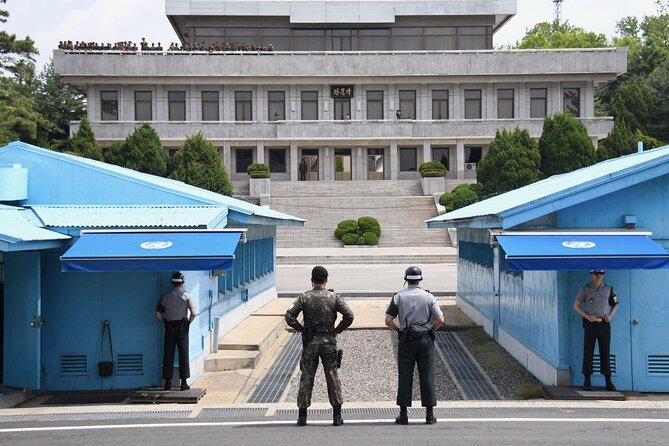
- Dora Observatory gives you a real border view: Telescopes let you look toward North Korea, though weather affects what you can see.
- Imjingak is more than a photo stop: Its bridges, memorials, bell, locomotive, and altar give the conflict a human face.
- Majang Lake is optional: The suspension bridge adds a scenic finish, but it is not part of the basic DMZ-only package.
- Your passport matters: Soldiers inspect identification at Unification Bridge before the bus enters the controlled area.
- The group can be large: The maximum listed size is 150 people, so staying close to your guide is important.
Meeting the bus in Seoul
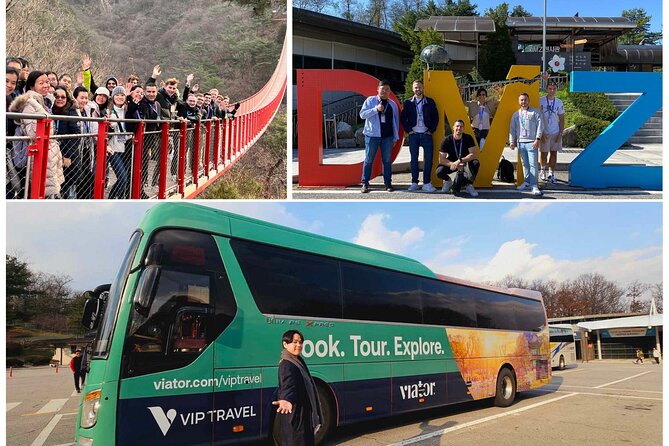
The day begins with a choice of central meeting points: Myeongdong Subway Station Exit 9, Seoul City Hall Subway Station Exit 6, or Hongik University Station Exit 3 in Hongdae.
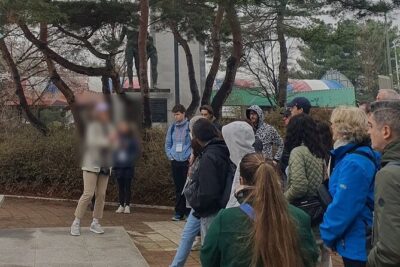
You should arrive 10 to 15 minutes early. These are busy departure areas, and several coaches may gather at the same place. The meeting process can feel confusing if you arrive at the last moment, so give yourself time to find the correct bus and guide.
Hotel pickup is described as complimentary, but it means pickup from a main subway station near your hotel or from the downtown area, not necessarily from your hotel door. The return is also more specific than a hotel drop-off. You can get off at Myeongdong, Hongik University Station, or City Hall.
That arrangement works well if you are staying in central Seoul and already use the subway. It is less convenient if your accommodation lies outside the downtown area.
More DMZ tours:
- Best DMZ Tour Korea from Seoul (Red Suspension Bridge Optional)
★ 5.0 · 41,422 reviews - DMZ Tour: 3rd Tunnel, Option(Suspension Bridge, Boat) from Seoul
★ 5.0 · 21,373 reviews - DMZ tour south Korea from Seoul (NK experience hall, defector)
★ 5.0 · 20,599 reviews
Imjingak Park and the human cost of division
After the drive from Seoul, the first major stop is Imjingak Resort, also called Imjingak Peace Park. The park was created in 1972 to remember people separated from their families by the Korean War.
This is where the day begins to feel personal rather than merely military. You see memorials, the Peace Bell, and Mangbaedan, an altar where families with relatives in North Korea pay tribute during traditional holidays.
The Mangbaedan visit is brief, about 10 minutes, but its purpose gives the surrounding park greater meaning. Korea’s division is not only a matter of soldiers, fences, and official statements. It has affected families for generations.
You also visit the 21-ton Peace Bell, cast in 2002 as a symbol of unity. The bell is visually striking, but the value of this stop comes from the wider setting. Take time to look around instead of treating every site as a quick photograph.
The Bridge of Freedom and the Iron Horse
The Bridge of Freedom is one of the most memorable places at Imjingak. The wooden span replaced a railway bridge damaged during the Korean War. In 1953, 12,773 prisoners of war crossed here while returning to South Korea.
The bridge is short and simple. That is part of its power. It is easy to imagine the relief of people walking across it after years of war and captivity.
Nearby, the steam locomotive at Jangdan Station offers another physical reminder of the conflict. The train was damaged and left stranded when the war stopped railway service along the Gyeongui Line in 1950. Its scarred body has been preserved as a memorial.
I like this part of the route because the objects do the work. You are not looking at a distant museum display. You are seeing a bridge and a locomotive directly linked to the events being explained.
The Peace Gondola: scenic, optional, and not essential
The Paju Imjingak Peace Gondola is an optional addition. The ride crosses the Imjin River and reaches about 20 meters above the water, giving you a broad view toward the edge of the DMZ.
This can be a pleasant change of pace after the memorials. The ride also gives you a different sense of the river, which has remained a natural boundary between two heavily separated worlds.
Still, I would not treat the gondola as essential to understanding the DMZ. If you skip it, you can spend more time at Imjingak Park, where there are plenty of memorials and historic sights. The gondola also adds another scheduled activity to an already full day.
Check your booking carefully. Optional additions such as the gondola, Gamaksan Red Suspension Bridge, Majang Lake Bridge, and strawberry picking are not necessarily included in the $35 base price.
A few more options to weigh up in Seoul
- Seoul: DMZ Tour with Optional Suspension Bridge
★ 4.8 · 5,277 reviews - Signature DMZ Tour: Exclusive Defector Talk & Suspension Bridge
★ 5.0 · 4,459 reviews - Thrilling Korean DMZ 3rd Tunnel Tour from Seoul + Red Bridge Rush
★ 5.0 · 3,097 reviews - DMZ Past and Present: Korean Demilitarized Zone Tour from Seoul
★ 5.0 · 2,481 reviews
Passing the military checkpoint at Unification Bridge
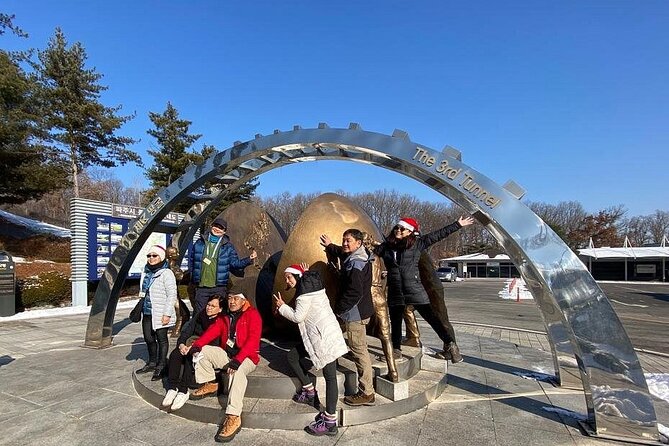
The bus makes a short stop at Unification Bridge, a military checkpoint before entry into the civilian-controlled area.
Soldiers inspect the bus and check identification. You must bring your passport, a military ID card, or a South Korea-issued ID accepted by the operator. Do not leave your passport at the hotel. This is one of the most important practical details of the entire excursion.
The checkpoint is a reminder that the DMZ is not a normal sightseeing district. Access can depend on military activity, exercises, weather, and local operating decisions. You should expect the schedule to change if the authorities restrict entry or close an attraction early.
One useful example from the day-to-day operation of this tour is that the route may be reversed. If fog makes the observatory view poor in the morning, the guide may adjust the order so you reach the tower after conditions improve. That kind of flexibility matters in a place controlled by more than tourism schedules.
Walking into the Third Tunnel
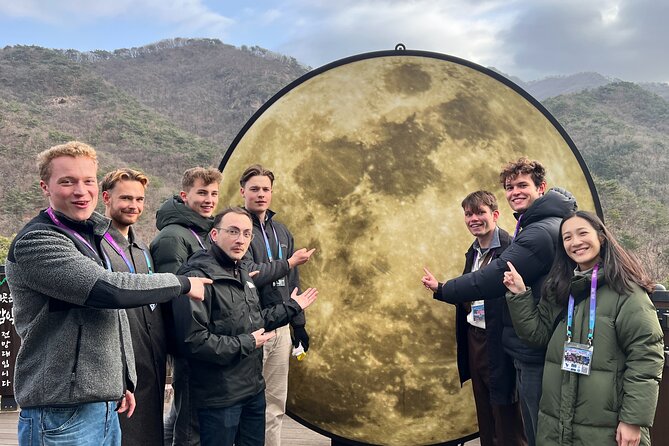
The Third Tunnel of Aggression is the physical centerpiece of the tour. North Korean workers dug it as an infiltration route, and South Korean authorities discovered it in 1978. It is about 1,635 meters long, roughly 52 kilometers from Seoul, and 12 kilometers from Munsan.
You walk into the tunnel from the South Korean side. The route slopes downward, then requires a climb back out. The passage is narrow and low in places, and you wear a hard hat. If you are taller than six feet, keep your head down and make sure the helmet is fastened securely.
The tunnel is not a gentle stroll. It demands more stamina than many first-time visitors expect. The heat and humidity can make the uphill return harder, and there are stairs and inclines elsewhere on the tour as well.
Photography rules may apply in controlled areas, so listen closely to your guide and follow posted instructions. The tunnel itself is valuable because it turns a military story into something you can physically feel. You see the confined space, the rough rock, and the engineering effort involved.
If you have limited mobility or dislike enclosed spaces, this is the part to think about carefully. The tour information says most people can participate, but that does not mean every stop will feel easy.
Dora Observatory and the view into North Korea
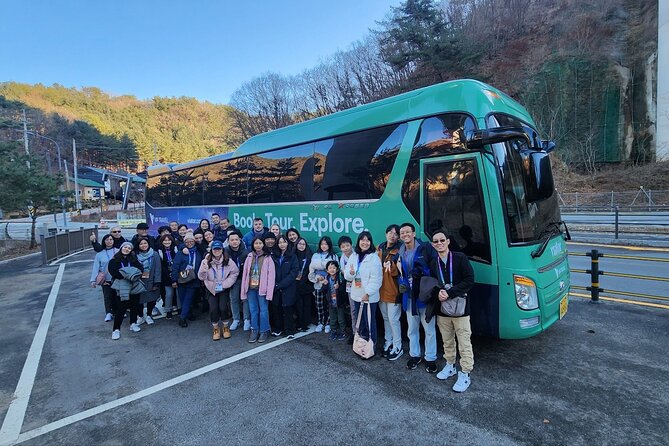
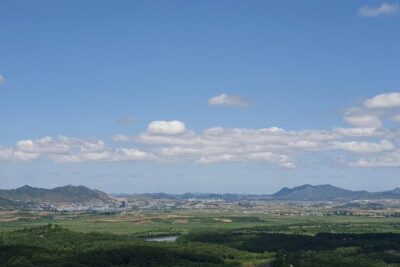
Dora Observatory is often the emotional high point of the day. From the viewing area on Dorasan, you look toward North Korea through high-powered telescopes.
The exact view depends on weather. Clear conditions can reveal parts of North Korea across the border, while fog or haze may soften the scene. Do not expect a dramatic city panorama every time. The significance lies in looking across a border that is normally closed to ordinary movement.
The observatory was established in 1986 and renovated in 2018. The site helps you understand the geography of the DMZ, not just its politics. Your guide can point out features and explain what you are seeing, which makes the telescope experience far more useful than simply scanning the horizon alone.
You may also find North Korean products for sale at the observatory. That is a curious detail, though it should not distract from the main purpose of the stop. Allow enough time for the view, the explanation, and a quick look around.
Several guides receive strong praise for this section. Alex is noted for adding personal family connections to his explanation, while Moon is praised for answering questions and helping with photographs. Nancy is often described as energetic and warm, and Crystal is especially effective at making the historical material easy to follow.
Tongilchon and the civilian-controlled village
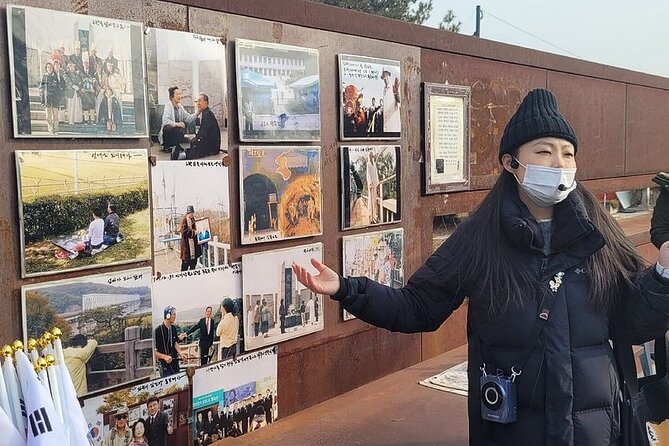
Tongilchon-gil offers a quieter pause after the tunnel and observatory. The village lies just past the Civilian Control Line, where local agriculture includes Jangdan soybeans grown in the area’s long-protected soil.
You have about 20 minutes here. The stop may include the chance to buy local products, including the village’s prized soybean goods. It is not a major sightseeing center, but that is precisely why it adds balance to the day.
You get a glimpse of ordinary life beside one of the world’s most tense borders. The stop also gives you a chance to stretch, use facilities, or buy something connected to the local area.
Time is limited. One of the clearest practical criticisms of the schedule is that the village stop can feel too short if you want lunch, time in the garden, and a look through the shop. Bring realistic expectations and do not assume this is a leisurely rural visit.
Majang Lake and the Red Suspension Bridge
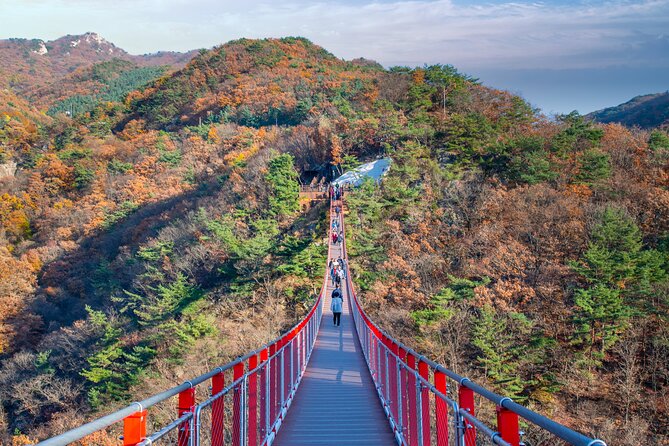
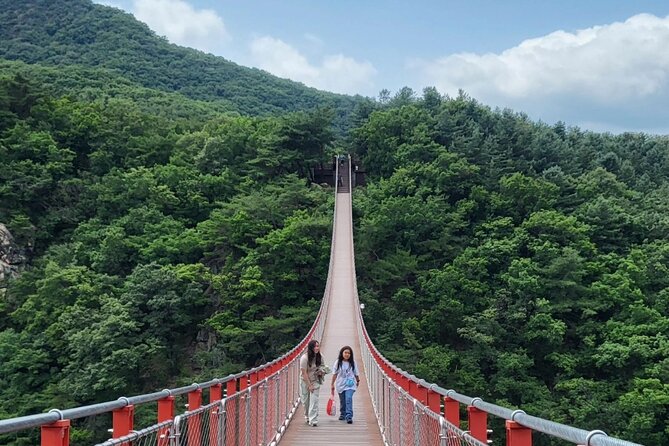
The Majang Lake crossing is an optional finish. The suspension bridge stretches 262 meters over the reservoir, about 25 meters above the water, and opened in 2020.
After a day of war memorials and military controls, the bridge provides a lighter ending. You get open views over the lake and a straightforward walk with a bit of height and movement. It is a good choice if you want scenery and a change of mood.
The crossing is not part of the basic DMZ-only option, so select it during checkout if it matters to you. The listing also refers to a Gamaksan Red Suspension Bridge, which is a separate optional add-on. Check exactly which bridge is included in your chosen package.
This extra stop can make the tour feel like a fuller day out, but it also means more walking and a later finish. If your priority is the DMZ itself, the tunnel, Imjingak, and Dora Observatory are the key experiences. If you like adding a scenic walk to a cultural day, Majang Lake is worth considering.
Guides, pace, and group size
The guide can shape the entire experience. The strongest guide names attached to this tour include Nancy, Alex, Kelly, Moon, Lina, Crystal, Hana, Emily, K, Ray, Gogo, and others.
The praise is consistent in several areas: clear directions, personal stories, practical advice, humor, and help with photographs. Alex is especially good at connecting Korean War history to family experience. Kelly is praised for keeping the group moving at a comfortable pace. Emily is noted for balancing history with useful tips about souvenirs and nearby sights.
Guide assignments are not guaranteed, so book this tour for the route and structure rather than for one particular person. A good guide matters, but military timing and weather can matter just as much.
The maximum group size is 150 people. That is a large possible group, though the bus and guide system keep the day organized. Stay alert at each stop, note the bus location, and return promptly when asked.
Is $35 good value?
At around $35 per person, the tour offers strong value if you want to visit the DMZ without arranging transport, permits, border-area access, and site tickets yourself.
The price includes a professional English or Chinese-speaking guide, transport from a central Seoul pickup point, and admission to the DMZ, the Third Tunnel, and Dora Observatory. For a full day with several major sights, that is a reasonable price.
Lunch is not included. You should budget for food, and the village stop may not allow much time for a relaxed meal. Optional activities also cost extra or require a package selection at checkout.
The main tradeoff is scale. A low price and possible group size of 150 mean this is not a private, slow-moving experience. You are paying for access, transport, and a well-planned route, not personal attention at every moment.
What to bring and how to prepare
Bring your passport. Without acceptable identification, you may lose time or be unable to pass the checkpoint.
Wear comfortable shoes and clothing suitable for stairs, inclines, and the tunnel. A jacket is a smart choice because conditions can feel different from the weather in Seoul, and one direct piece of advice from the feedback is to bring a comfortable jacket.
Plan for an early start. Some departures may begin about 30 minutes earlier than the advertised time, depending on the operation of the day. Keep your schedule flexible after returning, since military exercises, early closures, traffic, or weather can affect timing.
The tour offers mobile tickets and free cancellation up to 24 hours before the start time. Changes or cancellations made inside that 24-hour window are not accepted for a refund.
Who should book this DMZ tour?
I would choose this tour if you want a first visit to the DMZ with clear transport from Seoul and a strong mix of memorials, military history, and views.
It suits you especially well if:
- You want to see the Third Tunnel and North Korea from Dora Observatory.
- You prefer a guide to explain the Korean War and the division of the peninsula.
- You are comfortable with a full eight-hour day.
- You can manage stairs, slopes, and a low tunnel.
- You like combining serious history with a scenic bridge walk.
- You are staying near Myeongdong, City Hall, or Hongdae.
I would think twice if you need a slow pace, dislike enclosed spaces, or have firm plans immediately after the tour. The schedule is full, and access rules can change with little notice.
Should you book it?
Yes, if you want an affordable and organized introduction to the DMZ. The Third Tunnel, Bridge of Freedom, Imjingak memorials, and Dora Observatory give the day real substance, while Majang Lake offers an optional scenic finish.
Choose the basic DMZ option if history is your main goal. Add Majang Lake if you have the energy for another walk and want a more relaxed ending. Bring your passport, arrive early, wear good shoes, and keep your afternoon flexible. Those small choices will make this demanding but worthwhile day much easier.
FAQ
How long does the DMZ tour last?
The tour lasts approximately eight hours, including transport from Seoul, the DMZ visits, and the return to the city.
Where can I meet the tour bus in Seoul?
Meeting points are Myeongdong Subway Station Exit 9, Seoul City Hall Subway Station Exit 6, and outside Hongik University Subway Station Exit 3 in Hongdae.
Is hotel pickup included?
Complimentary pickup is available from a main subway station near your hotel or from the downtown area. It does not necessarily mean pickup directly outside your hotel.
Where does the tour end?
Drop-off is available at Myeongdong, Hongik University Station, or City Hall. Hotel drop-off is not included.
Do I need my passport?
Yes. You need your passport, military ID card, or an accepted South Korea-issued ID for the checkpoint at Unification Bridge.
Is lunch included?
No. Lunch is not included in the tour price.
Is the Majang Lake suspension bridge included?
Majang Lake is optional and must be selected during checkout if you want to include it.
Is the Gamaksan Red Suspension Bridge included?
It is an optional addition. The basic DMZ-only package does not include Gamaksan Red Bridge, Majang Lake Bridge, or strawberry picking.
Is the Third Tunnel difficult to walk through?
The tunnel involves slopes, stairs, and low ceilings. You should expect a physically demanding walk and wear comfortable shoes.
What languages are available for the guide?
Professional guides are available in English or Chinese.
How large can the group be?
The maximum group size is 150 people.
Can I cancel for a full refund?
You can cancel at least 24 hours before the experience start time for a full refund. Cancellations or changes made less than 24 hours in advance are not accepted.
Just added in Seoul
- Seoul: Korean & English Language Exchange Global Party★ 5.0 · 28 reviews
- Your Personal Seoul Photographer!★ 4.1 · 15 reviews
- You’re Invited to Our Home in Seoul: The Only Cooking Class!★ 5.0 · 8 reviews
- From Seoul: Yongpyong Ski Day Tour with Transportation★ 4.9 · 40 reviews
- From Seoul: Hwacheon Ice Fishing and Lighting Festival Tour★ 4.5 · 4 reviews
- Seoul: Gangneung BTS K-Pop & K-Drama Filming Locations Tour★ 4.6 · 14 reviews
- Unique Native Experience : Han River Picnic, Board game, BBQ★ 5.0 · 3 reviews
- Seoul: Euljiro Gastroventure Tour★ 4.0 · 1 review
DMZ Tours, compared.
Best DMZ Tour Korea from Seoul (Red Suspension Bridge Optional)
Read our review →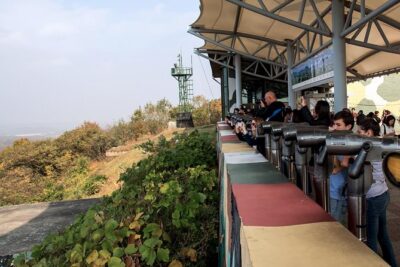
DMZ Tour: 3rd Tunnel, Option(Suspension Bridge, Boat) from Seoul
Read our review →DMZ tour south Korea from Seoul (NK experience hall, defector)
Read our review →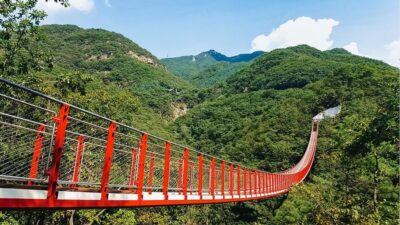
DMZ Insider Tour: 3rd Tunnel, NK Defector Meet & Red Bridge
Read our review →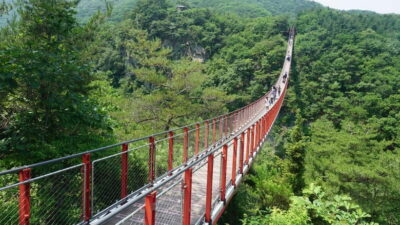
Signature DMZ Tour: Exclusive Defector Talk & Suspension Bridge
Read our review →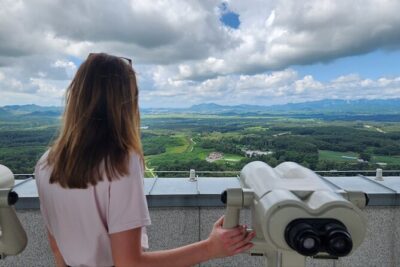
Thrilling Korean DMZ 3rd Tunnel Tour from Seoul + Red Bridge Rush
Read our review →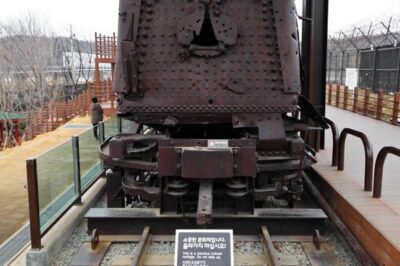
DMZ Past and Present: Korean Demilitarized Zone Tour from Seoul
Read our review →Browse the lists this tour appears in