
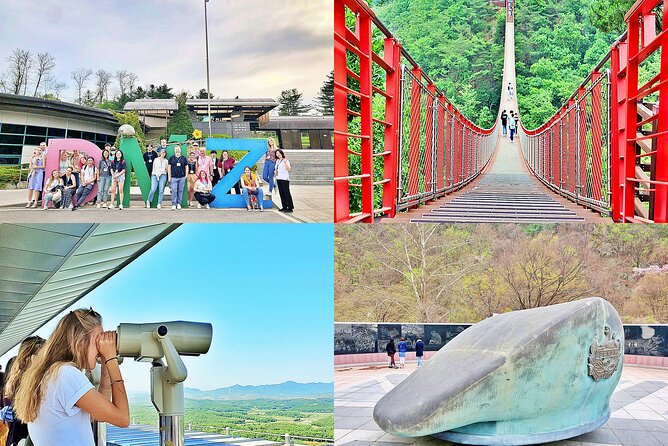
Reviewed · DMZ TOURS
DMZ Tour w/ North Korea Experience Hall & Opt. Suspension Bridge
The border makes history feel close. This seven-and-a-half-hour DMZ tour combines the Third Tunnel, Dora Observatory, Imjingak Park, and the North Korea Experience Hall with a guide who handles the permits, transport, and military-zone rules. I like the clear focus on Korean War history, and I like the option to add Gamaksan Chulleong Suspension Bridge for a change of pace. The main drawback is that access and departure times can change with little notice.
I also appreciate the range of guides assigned to this experience. Junie, Mr. Young, Brian, Veronica, and Youngmi have all been praised for clear explanations, humor, and steady organization. You should still arrive ready for a long day, a crowded bus, and a strenuous walk back up the tunnel.
The DMZ is not a place you can visit independently. A guided tour is required, and this one takes care of the difficult pieces. You meet near City Hall Station, ride north from central Seoul, pass through controlled checkpoints, and visit several places that explain both the war and the uneasy peace that followed.
In This Review
- Key points to know before you book
- Why this DMZ tour is worth your Seoul day
- Starting at Imjingak Pyeonghoa-Nuri Park
- The North Korea Experience Hall
- Looking north from Dora Observatory
- Walking through the Third Tunnel
- What the DMZ portion feels like
- Adding Gamaksan Chulleong Suspension Bridge
- Guides make a major difference
- Timing, pickup, and changing routes
- Backup routes are part of the experience
- Who should book this tour?
- Should you book it?
- FAQ
- Where does the tour begin and end?
- Is a passport required?
- How long does the experience last?
- What happens if the Third Tunnel or Dora Observatory is closed?
- Is the Third Tunnel suitable for everyone?
- Is the suspension bridge included in every tour?
Key points to know before you book
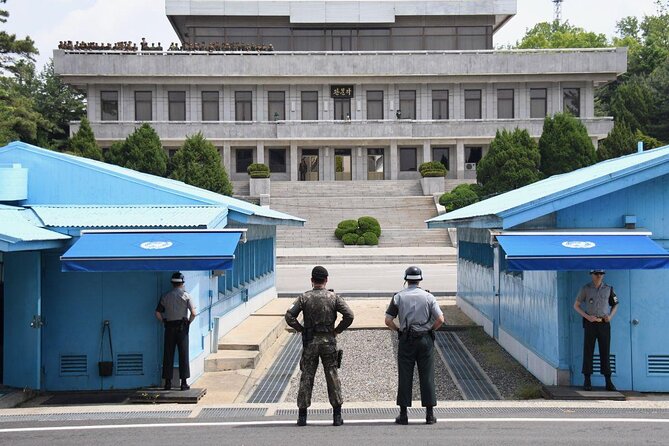
- The Third Tunnel is the physical centerpiece: You walk about 500 meters underground, then climb back up a steep route. Helmets are provided, but this is not an easy stroll.
- Dora Observatory offers a real view toward North Korea: Telescopes let you look toward Kijŏng-dong, often called a propaganda village, and see its oversized flagpole on a clear day.
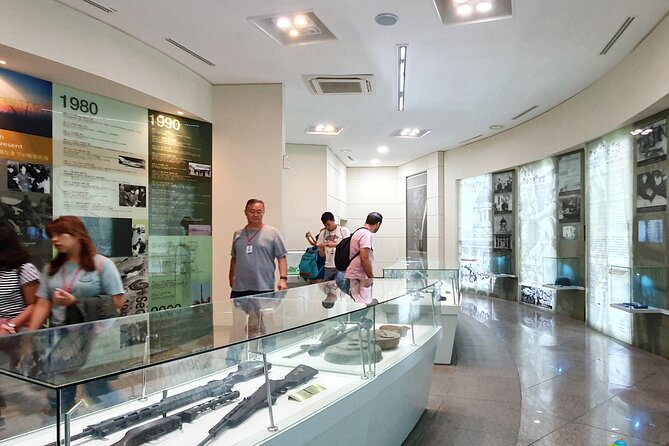
- The North Korea Experience Hall adds useful context: It provides exhibits, war relics, and a short film that help explain what you are seeing beyond the viewing platforms.
- The suspension bridge is optional: Gamaksan Chulleong Bridge takes you into a mountain setting and gives the day a more scenic, physical finish.
- Military conditions can change the route: The Third Tunnel and Dora Observatory may close. The backup program can include the Peace Gondola, Odusan Unification Observatory, Gloster Hill Memorial Park, or the War Memorial of Korea.
- Central Seoul transport is included, but not every hotel: Pickup is offered only at specified meeting points, with City Hall Station used as the start and end point.
Why this DMZ tour is worth your Seoul day
At about $55 per person, this is a reasonable price for a full-day outing that includes round-trip transport from central Seoul, a professional guide, and admission to the main DMZ sites. The value comes less from luxury and more from convenience. The border area has strict access rules, military controls, and changing opening conditions. You would have a hard time arranging this visit alone.
I also like that the experience is not limited to one lookout point. You see memorials at Imjingak, learn about North Korea’s tunnel operations, visit an exhibition hall, and look across the border. Each stop gives you a different piece of the story.
The price does not include lunch, food, or drinks. There is no hotel pickup or drop-off, and the meeting point is near City Hall Station. Coffee shops are available at various stops, but I would still carry water and a small snack. The schedule can be long, and the tour may not include a formal lunch break.
Groups can reach 40 people. That keeps the cost down, but it also means you should not expect a private, quiet visit. You may change vehicles or join another group during the day, and crowd levels at the DMZ can affect the pace.
More DMZ tours:
- Best DMZ Tour Korea from Seoul (Red Suspension Bridge Optional)
★ 5.0 · 41,422 reviews - DMZ Tour: 3rd Tunnel, Option(Suspension Bridge, Boat) from Seoul
★ 5.0 · 21,373 reviews - DMZ tour south Korea from Seoul (NK experience hall, defector)
★ 5.0 · 20,599 reviews
Starting at Imjingak Pyeonghoa-Nuri Park
Imjingak Pyeonghoa-Nuri Park is a fitting first stop because it introduces the human cost of division before you enter the controlled DMZ area. The park was created as a place of comfort for people who fled North Korea during the Korean War.
You see the Freedom Bridge, the Soldiers’ Memorial, and other reminders of families separated by the border. These are not abstract military symbols. They point to people who could not return home, contact relatives, or cross the line dividing the peninsula.
You get about 30 minutes here. That is enough for photographs and a quick look at the major monuments, though you may want more time if memorials are important to you. The park also helps you understand why the DMZ is not just a curious place to visit. For many Korean families, it remains tied to loss and unfinished business.
The North Korea Experience Hall
The North Korea Experience Hall is one of the more useful additions to the day. It gives you a way to learn about North Korea before or alongside the border views, rather than relying only on a guide’s running commentary.
The attraction is designed to answer basic questions about North Korea, its people, and the division of the peninsula. It is especially helpful if you know little about the Korean War or current relations between North and South Korea.
You have around 30 minutes here. That is enough for an introduction, but not a full academic study. I would treat it as preparation for the later stops. The hall gives meaning to the maps, military barriers, village views, and historical references you encounter during the rest of the tour.
Because the DMZ program can change, this hall may become even more important on a special-route day. If the Third Tunnel or Dora Observatory is closed, the North Korea Experience Hall remains part of the alternate itinerary.
Looking north from Dora Observatory
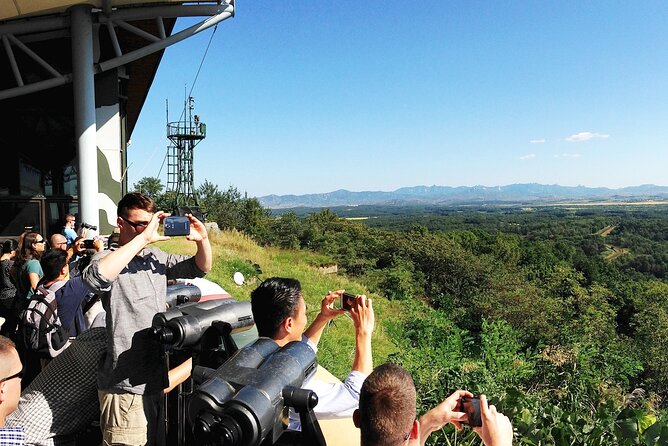
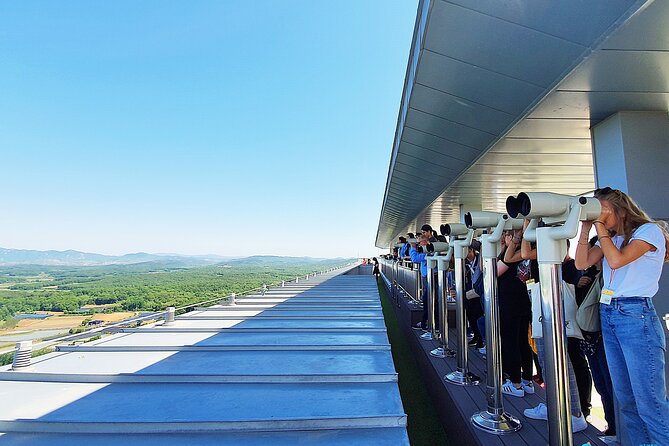
Dora Observatory is the place most people imagine when they picture a DMZ visit. From the viewing area, you look across the border toward North Korea. Telescopes are available at different heights, which makes viewing easier for children and people of different heights.
On a clear day, you may see Kijŏng-dong, the southernmost village in North Korea, including its tall flagpole. The view is not a close look at ordinary life. It is distant, controlled, and shaped by political symbolism. That distance is part of the experience.
You have about 40 minutes at the observatory. Take time to look through the scopes, but do not expect a dramatic panorama in every kind of weather. Haze and visibility can reduce what you see, and security conditions can close the observatory altogether.
A practical warning matters here. Access has sometimes been restricted because of security concerns, including incidents involving balloons from North Korea. If Dora Observatory is unavailable, the operator may substitute another site. That is frustrating if this is the stop you most want, but it is a normal risk of visiting an active military border.
More suspension bridge walks:
- Seoul: DMZ Tour with Optional Suspension Bridge
★ 4.8 · 5,277 reviews - Signature DMZ Tour: Exclusive Defector Talk & Suspension Bridge
★ 5.0 · 4,459 reviews - Ultimate Korea DMZ Tour from Seoul (Gondola & Suspension Bridge)
★ 5.0 · 2,396 reviews - DMZ; NK Defector, 3rd Tunnel, Suspension Bridge,Hotel pickup
★ 4.9 · 2,055 reviews
Walking through the Third Tunnel
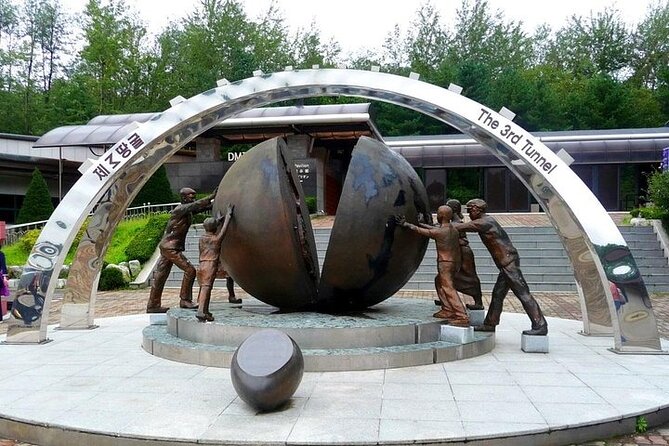
The Third Tunnel is the most memorable and demanding stop for many people. North Korea built it in the 1970s as part of a plan to move forces into South Korea. South Korean authorities discovered it in 1978.
The tunnel lies about 52 kilometers from Seoul and reaches roughly 1.6 kilometers in length. The public route takes you around 500 meters underground. You wear a safety helmet and walk through a narrow passage before turning around and making the uphill journey back.
This is not a gentle museum visit. The route slopes downward on the way in and upward on the way out. Several people who have taken the tour describe the return climb as taxing, and that is the point where comfortable shoes matter most. You need a moderate level of fitness.
The tunnel can also feel tight. If you have claustrophobia, you can wait outside rather than enter. The same applies if steep slopes are difficult for you or if you are elderly and do not want to risk the walk.
The tunnel itself is plain. Its power comes from what it represents: the effort and secrecy involved in building a military route beneath the border. I find that the physical work of walking it makes the history easier to grasp than a display case would.
What the DMZ portion feels like
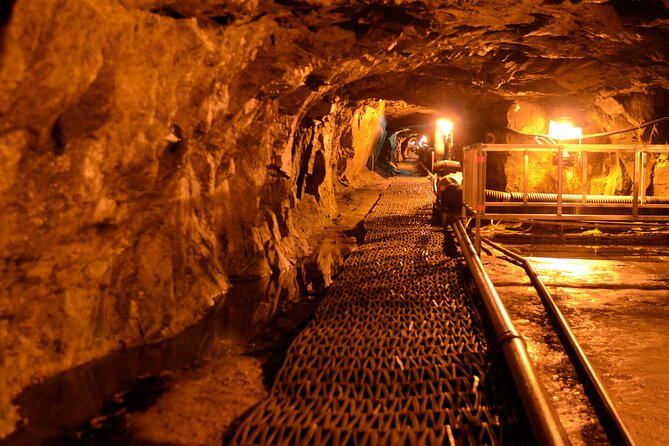
The core DMZ visit lasts about two hours and ten minutes, with the tunnel and observatory taking up much of that time. You also visit the DMZ Exhibition Hall and Unification Village, depending on the operating route.
The exhibition hall contains Korean War relics and a short film about the conflict and the division of Korea. This is where the day’s separate pieces begin to connect. The park shows the human cost, the tunnel shows military planning, and the observatory shows the present-day border.
The tone of the visit can shift quickly. One moment you are looking at a memorial, and the next you are passing through security control or following a guide’s instructions about where you may stand and what you may photograph. That controlled atmosphere is not a flaw in the tour. It is part of visiting a live border zone rather than a preserved battlefield.
Adding Gamaksan Chulleong Suspension Bridge
The suspension bridge option changes the mood of the day. Gamaksan Chulleong Bridge opened in 2016 and is described as the longest mountain suspension bridge in South Korea. The visit lasts about an hour.
After the heavy subject matter of the DMZ, the bridge gives you a scenic walk and a physical challenge of a different kind. You cross above a mountain setting, with open views and a sense of movement under your feet. It is a strong addition if you enjoy heights and want more than a history-focused outing.
The bridge is not a good fit for everyone. If you have a fear of heights, you can remain at the viewpoint. Heavy rain, snow, or security controls may also close it. In that case, the itinerary may shift to Odusan Unification Observatory or another approved location.
Check the option you book carefully. The standard DMZ program and the DMZ plus Suspension Bridge program have different approximate return times. The standard tour returns to City Hall at around 3:30 p.m., while the version with the bridge may return around 4:50 p.m.
Guides make a major difference
The guide is one of the most important variables on this tour. The strongest experiences have featured guides such as Junie, Mr. Young, Brian, Veronica, and Youngmi.
Junie has been praised for keeping the group on schedule while sharing stories and historical detail. Mr. Young is known for a light, funny style that keeps a serious subject from becoming dry. Brian has been credited with explaining not only the DMZ but also broader Korean history. Veronica’s clear English and careful answers have also been singled out.
That does not guarantee the same guide on your departure. Guide quality can vary, and one weaker experience involved limited English and basic support. A large group can also make the guide harder to hear, especially when many tour buses gather at the same stops.
Still, the tour structure gives a good guide plenty to work with. You are not simply being driven to a photo stop. The history, security procedures, and changing political situation all need explanation, and a strong guide can turn the day into something thoughtful rather than mechanical.
Timing, pickup, and changing routes
The listed duration is about seven hours and 30 minutes, but you should keep your schedule flexible. The DMZ can delay departures, shorten stops, or alter the route because of military control, weather, public holidays, or site closures.
The meeting point is City Hall Station in Seoul. Pickup is available only at specified places, so do not assume the vehicle will come to your hotel. Airport and cruise-port pickup are not provided.
Departure times deserve special attention. Some departures have been moved earlier to improve the chance of entering the DMZ, especially on busy days. In at least one case, a late-night change caused a major problem for someone who could not meet the revised time.
I recommend checking your messages the evening before and keeping your morning open. A tour that begins earlier than expected may be inconvenient, but missing the departure can mean losing the entire booking.
You must bring a current, valid passport on the day of the tour. Children need to be accompanied by an adult. Wear comfortable shoes, expect walking, and bring layers because the day moves between buses, indoor exhibits, open viewing areas, and the tunnel.
Backup routes are part of the experience
You should not book this tour expecting every listed stop to operate exactly as planned. Mondays, public holidays, and military or weather closures can produce a special DMZ route.
That version may include the North Korea Experience Hall, Imjingak Pyeonghoa-Nuri Park, the DMZ Peace Gondola, Gloster Hill Memorial Park, and the suspension bridge. If the bridge or Gloster Hill is restricted, the operator may use the Peace Gondola, Odusan Unification Observatory, or the War Memorial of Korea instead.
This flexibility is practical, but communication is important. Make sure you understand that the itinerary can change without prior notice. If Dora Observatory is the single reason you want to go, the risk of a substitution should weigh heavily in your decision.
I see the backup plan as a strength overall. A military border is not a normal sightseeing district, and a responsible operator needs alternatives. The key is to approach the day as a study of the Korean division, not as a guarantee of one particular photograph.
Who should book this tour?
I would recommend it to you if you want a guided introduction to the Korean War, the DMZ, and present-day relations between North and South Korea. It suits first-time visitors to Seoul who want a substantial day trip without arranging transport or permits.
Families can enjoy it, provided children can manage a long day and adults are prepared to supervise them. History fans will get the most from the tunnel and exhibition hall. The suspension bridge option works well for anyone who wants scenery and a little adventure after the historical sites.
I would think twice if you dislike strict schedules, crowded group transport, or uncertain itineraries. The Third Tunnel is unsuitable for people with claustrophobia, limited mobility, or difficulty with steep slopes. The bridge is unsuitable for anyone uncomfortable with heights, though waiting at the viewpoint is possible.
Should you book it?
Book this tour if you want the best practical introduction to the DMZ from Seoul, especially with the suspension bridge added. The included transport, admissions, guide support, and backup routes make the $55 starting price good value.
Go with realistic expectations. You may face an early pickup, a large group, no proper lunch break, and a last-minute route change. Bring your passport, water, a snack, and sturdy shoes. If you can accept those conditions, the Third Tunnel, the memorials, and the distant view toward North Korea can make this one of the most meaningful day trips you take from Seoul.
FAQ
Where does the tour begin and end?
The tour begins and ends near City Hall Station in Seoul. Pickup is provided only at specified meeting points, not from every hotel.
Is a passport required?
Yes. You must bring a current, valid passport on the day of the tour.
How long does the experience last?
The approximate duration is seven hours and 30 minutes. The return to City Hall is around 3:30 p.m. for the standard DMZ tour and around 4:50 p.m. for the DMZ plus Suspension Bridge option.
What happens if the Third Tunnel or Dora Observatory is closed?
The operator provides a special route on Mondays, public holidays, or closure days. Possible stops include the North Korea Experience Hall, Imjingak Pyeonghoa-Nuri Park, DMZ Peace Gondola, Gloster Hill Memorial Park, Odusan Unification Observatory, or the War Memorial of Korea.
Is the Third Tunnel suitable for everyone?
No. The tunnel includes a sloped route and a walk of about 500 meters. It is not recommended for people with claustrophobia, elderly visitors who find slopes difficult, or anyone with limited physical fitness. You may wait outside.
Is the suspension bridge included in every tour?
No. Gamaksan Chulleong Suspension Bridge is an optional upgrade. It may also close because of heavy rain, snow, or security control, in which case another site may be substituted.
Just added in Seoul
- Seoul: Korean & English Language Exchange Global Party★ 5.0 · 28 reviews
- Your Personal Seoul Photographer!★ 4.1 · 15 reviews
- You’re Invited to Our Home in Seoul: The Only Cooking Class!★ 5.0 · 8 reviews
- From Seoul: Yongpyong Ski Day Tour with Transportation★ 4.9 · 40 reviews
- From Seoul: Hwacheon Ice Fishing and Lighting Festival Tour★ 4.5 · 4 reviews
- Seoul: Gangneung BTS K-Pop & K-Drama Filming Locations Tour★ 4.6 · 14 reviews
- Unique Native Experience : Han River Picnic, Board game, BBQ★ 5.0 · 3 reviews
- Seoul: Euljiro Gastroventure Tour★ 4.0 · 1 review
DMZ Tours, compared.
Best DMZ Tour Korea from Seoul (Red Suspension Bridge Optional)
Read our review →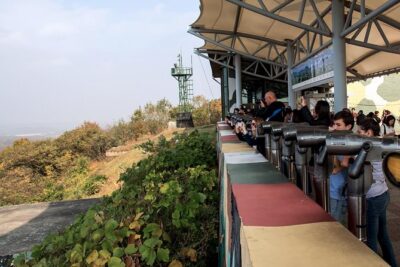
DMZ Tour: 3rd Tunnel, Option(Suspension Bridge, Boat) from Seoul
Read our review →DMZ tour south Korea from Seoul (NK experience hall, defector)
Read our review →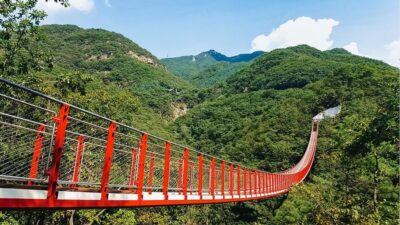
DMZ Insider Tour: 3rd Tunnel, NK Defector Meet & Red Bridge
Read our review →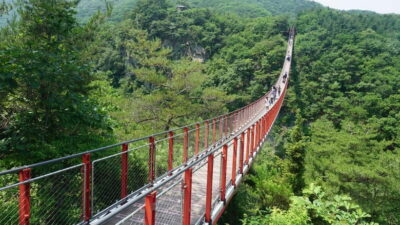
Signature DMZ Tour: Exclusive Defector Talk & Suspension Bridge
Read our review →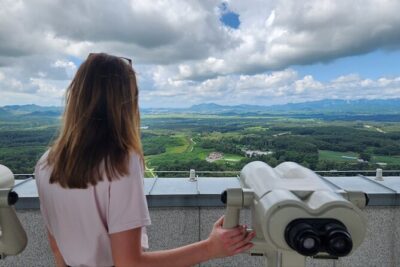
Thrilling Korean DMZ 3rd Tunnel Tour from Seoul + Red Bridge Rush
Read our review →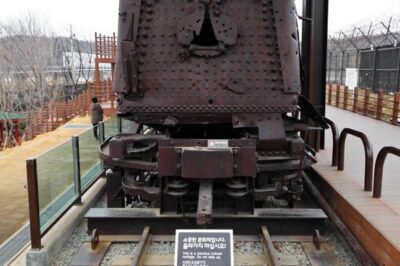
DMZ Past and Present: Korean Demilitarized Zone Tour from Seoul
Read our review →Browse the lists this tour appears in