Reviewed · PRIVATE
Explore North Korea Observatory: Ganghwa Island Private Tour
Ganghwa puts Korea’s border story within reach. I like the mix of North Korea views and older Korean culture, especially the Peace Observatory, Jeondeungsa Temple, and ancient fortress sites. I also like that this is a private tour, so your group can travel with a guide rather than follow a large coach crowd. The main drawback is the long 11-hour day, with several short stops and lunch not included.
This works best if you want one organized outing from Seoul that covers history, faith, craft, war, and the coast. Charlie, the guide praised for sharing many useful facts, helped make the past easier to understand. Still, you should know that Dongmak Beach and the Hwamunseok museum receive only about 20 to 30 minutes each, so this is an overview rather than a slow island holiday.
In This Review
- Key points to know before booking
- Why Ganghwa Island makes a worthwhile day from Seoul
- A full day by private vehicle
- Looking across the border at Ganghwa Peace Observatory
- Seeing Ganghwa’s craft at Hwamunseok Munhwagwan
- Walking the battle lines at Gwangseongbo Fortress
- Entering Jeondeungsa Temple through Samnang Fortress
- Ending at Dongmak Beach
- How the schedule feels in real terms
- Who will get the most from this tour
- Is $156 per person fair value?
- Should you book the Ganghwa Island private tour?
- FAQ
- Where does the Ganghwa Island tour begin?
- How long does the experience last?
- Is this a private tour?
- What is included in the price?
- Is lunch included?
- Are personal expenses included?
- Does the tour visit the North Korea border area?
- Is admission to Ganghwa Peace Observatory included?
- How much time is spent at Jeondeungsa Temple?
- Can I cancel for a full refund?
Key points to know before booking
- The Peace Observatory faces North Korea: Learn about the Korean War and current relations while looking across the Northern Limit Line.
- Jeondeungsa Temple sits inside Samnang Fortress: The approach adds a defensive layer to an already atmospheric temple visit.
- Ganghwa’s rush-mat tradition has royal roots: Hwamunseok developed during the Goryeo Dynasty, when Ganghwa served as the capital for 39 years.
- Gwangseongbo Fortress tells a hard military story: The site recalls the 1871 Sinmi battle and the Joseon soldiers who died defending it.
- A private vehicle keeps the day simple: Pickup, an air-conditioned vehicle, a guide, and entrance fees are included.
- Budget extra time and money for lunch: Food and personal expenses are not covered, and the full outing lasts about 11 hours.
Why Ganghwa Island makes a worthwhile day from Seoul
Ganghwa Island gives you a different view of South Korea. Seoul is filled with royal palaces, shopping streets, and modern towers. Ganghwa adds a border setting, old defensive works, a Buddhist temple, traditional craft, and a beach in one day.
The island also has an unusual position in Korean history. It helped protect the mainland from foreign attacks and served as the Goryeo capital for 39 years. Its location near North Korea gives the day a present-day edge, too. You are not simply looking at old stones. At the Peace Observatory, the division of the Korean Peninsula remains part of the experience.
I think the route suits you if you want context rather than a single photo stop. The guide ties the places together, explaining why Ganghwa mattered during the Goryeo period, the Joseon era, the Korean War, and the tense years that followed.
The format matters. With only your group participating, you avoid being folded into a large mixed tour. That can make the day more flexible and easier to follow, although the supplied details do not promise a fully customizable route or longer stays at each stop.
A few more options to weigh up in Seoul
- Best DMZ Tour Korea from Seoul (Red Suspension Bridge Optional)
★ 5.0 · 41,422 reviews - DMZ Tour: 3rd Tunnel, Option(Suspension Bridge, Boat) from Seoul
★ 5.0 · 21,373 reviews - DMZ tour south Korea from Seoul (NK experience hall, defector)
★ 5.0 · 20,599 reviews
A full day by private vehicle
The tour lasts approximately 11 hours and includes pickup, an air-conditioned vehicle, a tourist guide, and entrance fees. For a day that reaches Ganghwa Island from Seoul and covers five different locations, the vehicle is a practical part of the price, not just a convenience.
At $156 per person, this is not the cheapest way to see Ganghwa. The value improves if you are traveling with family or friends and can use the private format and any available group discount. You are paying for transport, guiding, admission, and the ease of having the day arranged in advance.
Lunch is not included, so plan for that cost. Personal purchases are also extra. Since the schedule is long, I would not treat lunch as a minor detail. You will need a break during the day, and the best choice depends on where the route pauses and what is available locally.
Pickup is offered, mobile tickets are available, and the tour is near public transportation. Confirmation arrives at booking, and most people can participate according to the supplied tour information. The experience requires a minimum number of participants, so check the confirmation details before setting other firm plans.
Looking across the border at Ganghwa Peace Observatory
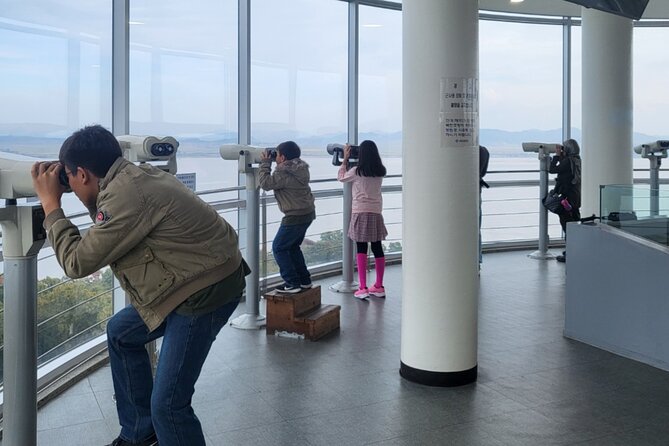
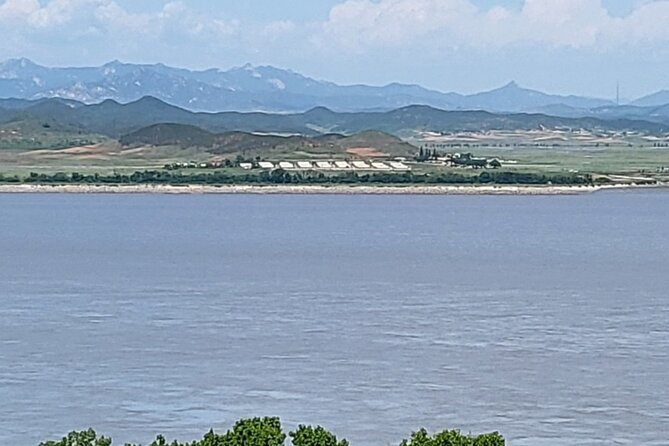
The Peace Observatory is the emotional center of the tour. Built in 2008 as a symbol of peace, it looks toward the Northern Limit Line, the maritime border between South Korea and North Korea.
You receive about 45 minutes here, with admission included. That is enough time to take in the panoramic view, learn about the Korean War, and consider the current relationship between the two Koreas. This is not simply a viewpoint. The setting asks you to connect geography with politics and family separation, even if the visit itself remains fairly brief.
The view will naturally depend on conditions, and the tour does not promise a particular level of visibility. I would approach it as a place for orientation and historical context, not as a guaranteed close-up view of North Korea.
A guide adds real value here. The single five-star account of the tour specifically praised Charlie for explaining many facts about the places visited. At the observatory, clear explanations can help you understand what you are seeing and why this coast remains sensitive.
Bring patience and attention. The most useful part may not be the photograph. It may be the explanation of how the border works and why Ganghwa has been tied to conflict and defense for centuries.
Seeing Ganghwa’s craft at Hwamunseok Munhwagwan
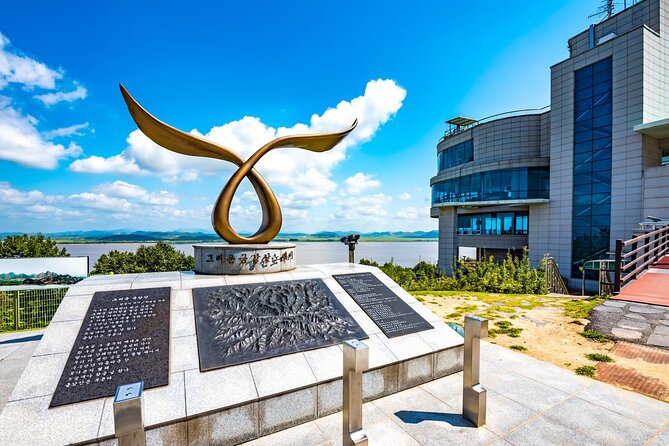
The Hwamunseok Munhwagwan stop lasts about 20 minutes, and admission is included. Hwamunseok refers to Ganghwa’s traditional rush mats, a craft linked to the Goryeo Dynasty.
Ganghwa’s role as the Goryeo capital helped this craft develop. Wanggol mats were considered the finest products of their time and were made for the royal family and officials who moved to the island. The materials came from rush plants, with parts of the plant described as roots, leaves, stems, ears, and flowers. The stems were used to make Hwamunseok.
This short stop gives you a useful glimpse of everyday material culture. A mat may seem modest beside a fortress or temple, but craft tells you how people lived, worked, and served powerful households. It also gives the day a welcome change of pace after the military focus of the observatory.
Twenty minutes is enough for an introduction, not a detailed workshop. If you are especially interested in Korean handicrafts, you may wish the schedule allowed more time. For most people, the stop works as a compact explanation of why Ganghwa’s woven mats remain part of the island’s identity.
A completely different kind of day:
- Seoul: DMZ Tour with Optional Suspension Bridge
★ 4.8 · 5,277 reviews - Signature DMZ Tour: Exclusive Defector Talk & Suspension Bridge
★ 5.0 · 4,459 reviews - Thrilling Korean DMZ 3rd Tunnel Tour from Seoul + Red Bridge Rush
★ 5.0 · 3,097 reviews - DMZ Past and Present: Korean Demilitarized Zone Tour from Seoul
★ 5.0 · 2,481 reviews
Walking the battle lines at Gwangseongbo Fortress
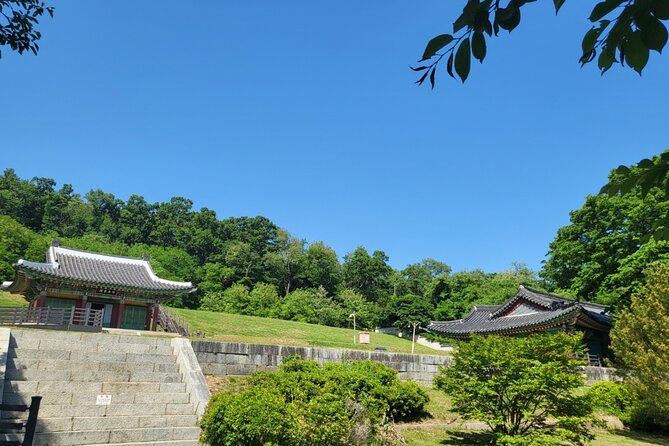
Gwangseongbo Fortress protects the Ganghwa Strait and reflects the island’s military role. The fortification was built with stone and soil after the Goryeo court moved to Ganghwa while resisting the Mongol invasion.
The site later became a fierce battlefield during the 1871 Sinmi battle. On April 23, American forces landed at Chojijin Fortress and attacked Gwangseongbo. The Joseon defenders had weaker weapons, and almost all of them died, including the soldiers remembered through tombs for unknown troops and a monument to General Eo Jae-yeon.
You have about 25 minutes here, with admission included. That is a short visit for a site carrying this much weight, so listen closely to the guide and focus on the main defensive features, memorials, and the story of the battle.
I find this stop valuable because it avoids presenting Korean history as a smooth procession of palaces and scenic views. Ganghwa was a place of survival and sacrifice. The tombs and monument give the military story a human scale.
The drawback is the pace. You may not have time to inspect every part of the fortress or linger in quiet reflection. If you prefer long walks through historic sites, this tour’s schedule may feel brisk.
Entering Jeondeungsa Temple through Samnang Fortress
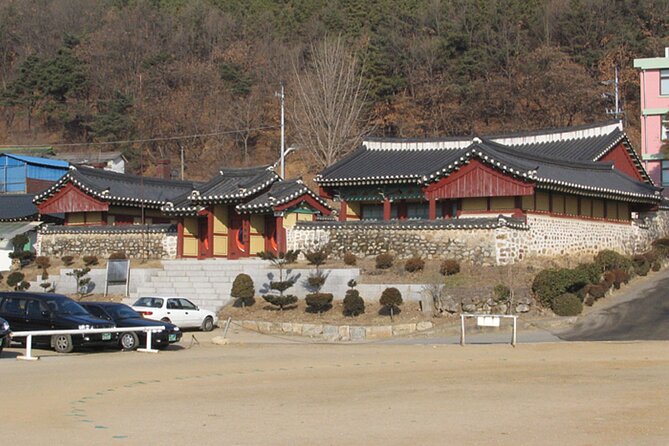
Jeondeungsa Temple offers the day’s calmest stop. It has been an important religious and historic place from ancient Gojoseon traditions through the present day, and its setting feels different from ordinary city temples.
You leave the vehicle and walk uphill toward the temple. The approach passes through Samnang Fortress, which encircles the area and was built to help defend it from foreign attackers. That combination makes Jeondeungsa unusual. You are entering a sacred place through a defensive structure, with religion and military history sharing the same ground.
The temple visit lasts about 30 minutes and has no admission fee. You can see the Daeungbojeon, or Main Buddha Hall, the Yaksajeon, or Medicine Buddha Hall, and a large temple bell, along with other cultural treasures.
The temple is best treated as a place for quiet observation. Notice the change in atmosphere as you move uphill and away from the vehicle. The supplied details also point to an intriguing story connected with one of the building’s eaves, though the full story is not provided. Ask Charlie about it if he is your guide, as his ability to explain local history was a major strength of the tour.
The uphill walk is worth noting. The information says most people can participate, but anyone concerned about slopes should keep the approach in mind. This is not a vehicle-to-door sightseeing stop.
Ending at Dongmak Beach
Dongmak Beach changes the mood again. After observatories, fortifications, and a temple, you reach a coastal setting with blue water, pale sand, restaurants, cafés, and shops.
The stop lasts about 30 minutes and admission is free. That gives you time to look at the shore, take photographs, and get a quick sense of the area. It is not enough time for a full beach day, swimming session, or long meal.
I like the beach as a closing stop because it reminds you that Ganghwa is more than a military frontier. The island also offers open coastal scenery and ordinary leisure. If the weather is pleasant, this may be the easiest place to simply slow down before returning to Seoul.
The tradeoff is that the beach can feel rushed. You will not have the freedom of a dedicated coastal outing. Think of it as a final breath of fresh air, not the main purpose of the tour.
How the schedule feels in real terms
The five stops cover a lot of ground, but the time at each place is tightly set:
- Ganghwa Peace Observatory: 45 minutes
- Hwamunseok Munhwagwan: 20 minutes
- Gwangseongbo Fortress: 25 minutes
- Jeondeungsa Temple: 30 minutes
- Dongmak Beach: 30 minutes
These visits total only 150 minutes, or two and a half hours, before driving, meals, pickup, and any transitions. That tells you exactly what this experience is: a broad introduction to Ganghwa rather than an unhurried exploration.
The private vehicle helps make the route manageable. You are not dealing with public transport connections between widely separated stops, and pickup reduces the effort of getting the day started. Still, the long total duration means you should reserve the day rather than squeeze this between other Seoul plans.
The tour’s strongest feature is its range. You can discuss North Korea in the morning, see a traditional craft, walk through a battle site, visit a Buddhist temple, and finish by the sea. Its weakest feature is the limited time at places where you may want to stay longer.
Who will get the most from this tour
I would recommend it to you if you want:
- A private day trip from Seoul with transport arranged
- A clear introduction to Ganghwa’s military and political importance
- A guide who can explain historical details in person
- A mix of cultural sites and coastal scenery
- A route that works for a small group, family, or friends
- North Korea viewpoints without arranging an independent border-area visit
It may be less suitable if you want a relaxed beach day, extensive temple time, or a single subject studied in depth. It also may not suit you if an 11-hour schedule feels too long or if you dislike short stops.
The tour is a good fit for first-time visitors to Ganghwa. It gives you enough background to decide what you would return to later, perhaps the fortress, temple, or beach.
Is $156 per person fair value?
The answer depends on your group size and priorities. The fee includes the air-conditioned vehicle, guide, and entrance fees, while lunch and personal costs remain yours. Since the experience is private, the price buys more than admission to five sites. It buys a full-day plan and a direct way to reach an island that would take more effort to cover independently.
The value is strongest when you care about interpretation. Charlie’s guide work received specific praise for explaining facts about the places visited, and that kind of context is especially useful at the observatory and Gwangseongbo Fortress.
The value is weaker if you mainly want free time. Several stops last only 20 to 30 minutes, and Dongmak Beach is not scheduled as a full seaside break. Compare the cost with your preferred travel style before booking.
Free cancellation is available if you cancel at least 24 hours before the start time. Changes or cancellations made inside that window are not accepted for a refund, and a minimum number of participants is required for the tour to operate.
Should you book the Ganghwa Island private tour?
Book it if you want a well-organized, history-focused day from Seoul and like the idea of combining a North Korea viewpoint with temples, fortresses, traditional craft, and the coast. The private format, included admissions, and air-conditioned vehicle make the high price easier to justify, particularly for a small group.
Skip it if you want slow sightseeing or a substantial beach visit. The schedule is packed, lunch costs extra, and several locations are introductions rather than extended visits.
For the right reader, this is a useful and memorable way to understand why Ganghwa matters. It connects Korea’s ancient past, foreign invasions, modern division, spiritual life, and coastal setting in one demanding but rewarding day.
FAQ
Where does the Ganghwa Island tour begin?
The tour is based in Seoul, and pickup is offered.
How long does the experience last?
The tour lasts approximately 11 hours.
Is this a private tour?
Yes. Only your group participates in the activity.
What is included in the price?
The price includes an air-conditioned vehicle, a tourist guide, and entrance fees.
Is lunch included?
No. Lunch is not included, so you should budget separately for it.
Are personal expenses included?
No. Personal expenses are not included.
Does the tour visit the North Korea border area?
It visits Ganghwa Peace Observatory, which overlooks the Northern Limit Line, the maritime border between South Korea and North Korea.
Is admission to Ganghwa Peace Observatory included?
Yes. Admission to the observatory is included.
How much time is spent at Jeondeungsa Temple?
The scheduled visit to Jeondeungsa Temple lasts about 30 minutes, and admission is free.
Can I cancel for a full refund?
Yes, if you cancel at least 24 hours before the experience start time. Cancellations made less than 24 hours in advance are not refunded.
Just added in Seoul
- Seoul: Korean & English Language Exchange Global Party★ 5.0 · 28 reviews
- Your Personal Seoul Photographer!★ 4.1 · 15 reviews
- You’re Invited to Our Home in Seoul: The Only Cooking Class!★ 5.0 · 8 reviews
- From Seoul: Yongpyong Ski Day Tour with Transportation★ 4.9 · 40 reviews
- From Seoul: Hwacheon Ice Fishing and Lighting Festival Tour★ 4.5 · 4 reviews
- Seoul: Gangneung BTS K-Pop & K-Drama Filming Locations Tour★ 4.6 · 14 reviews
- Unique Native Experience : Han River Picnic, Board game, BBQ★ 5.0 · 3 reviews
- Seoul: Euljiro Gastroventure Tour★ 4.0 · 1 review
Private, compared.

Busan Private Tour with licensed tour guide + private vehicle
Read our review →
Private DMZ Tour (No Shopping): 3rd Tunnel & Suspension Bridge
Read our review →
Jeju Island English Private & Flexible Tour any number anywhere
Read our review →
Private Busan Tour -Explore Cultural Landmarks with a Local Guide
Read our review →
Seoul City Private Full-Day Tour Including Lunch
Read our review →
Private DMZ the 3rd Tunnel Tour from Seoul (optional Red Bridge)
Read our review →
Jeju Island Popular Sightseeing Private Car Charter Tour 5/9hours
Read our review →