Reviewed · FULL-DAY
Ganghwa Island – Full day private tour
Trade Seoul’s towers for a border view. This private Ganghwa Island tour pairs important wartime sites with a Buddhist temple, local market, and quiet countryside. I like the private minivan, which keeps the day flexible, and the chance to use binoculars at the Peace Observatory, where North Korea is only about 2 kilometers away. The main drawback is the $220-per-person price, especially since lunch and the optional luge ride cost extra.
The strongest part is the guide service. Mr. Lee and Miae are praised for bringing useful context, explaining events in a way that makes sense to Western visitors, and adding food and coffee stops to the day. You should also expect a full schedule with several short stops, so this suits you best if you prefer variety over a slow, unhurried day at one place.
In This Review
- Key things to know before you book
- Why Ganghwa Island makes a good break from Seoul
- Gwangseongbo Fortress and the 1871 battle
- Jeondeungsa Temple inside Samrangseong Fortress
- A choice at Ganghwa Seaside Resort
- Ganghwa Pungmul Sijang and local products
- The Peace Observatory and the view across the border
- Yeonmijeong Pavilion and another border view
- Ganghwa Anglican Cathedral and the island’s wider story
- What the private minivan adds
- Is $220 per person a fair price?
- Who should book this day trip?
- Should you book the Ganghwa Island tour?
- FAQ
- Where does the Ganghwa Island tour start?
- How long does the tour last?
- Is this a private tour?
- How many people are required to book?
- Is transportation included?
- Is lunch included?
- Are entrance fees included?
- Can I ride a luge during the tour?
- Can I see North Korea?
- What is the cancellation policy?
Key things to know before you book
- North Korea is roughly 2 kilometers away: The Peace Observatory offers binocular views across the water, while Yeonmijeong Pavilion gives you another chance to look toward the northern side.
- The tour covers seven distinct stops: You see a fortress, mountain temple, resort, traditional market, observatory, pavilion, and Anglican cathedral in about eight hours.
- Private transport changes the day: Hotel pickup and drop-off from Seoul, plus an air-conditioned minivan, spare you the work of connecting separate trains and buses.
- The guide adds real value: Mr. Lee and Miae receive particular praise for clear explanations, energy, and personal service.
- Lunch is not included: You will need to pay for your own meal, although the day includes time for local food and coffee.
- The luge is optional: Ganghwa Seaside Resort can add a playful break, but the ride is not part of the included price.
Why Ganghwa Island makes a good break from Seoul
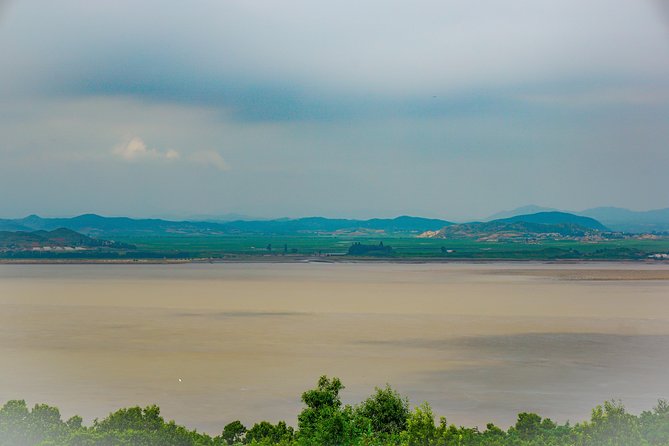
Ganghwa Island gives you a different picture of South Korea. Instead of staying among Seoul’s dense streets and high-rise buildings, you spend the day around agricultural areas, historic defensive sites, a traditional market, and views toward North Korea.
That change of pace is the point. The island is close enough to visit in a day, yet the stops cover subjects that are easy to miss in Seoul: Joseon-era defense, foreign conflicts, Korean Buddhism, rural products, Christianity, and the modern division of the peninsula.
I especially like the way the tour links these subjects. Gwangseongbo Fortress and Jeondeungsa Temple show why the island mattered in earlier centuries. The Peace Observatory and Yeonmijeong Pavilion bring you into the present, with the border visible across the water.
The private format also matters. You are not moving with a large group or waiting for strangers at every stop. With a driver-guide and your own vehicle, you can ask questions as they come up and spend your time on the places that interest you most.
The start time is 8:30 a.m., and the total outing lasts about eight hours. That makes it a substantial day trip rather than a quick excursion. Hotel pickup and drop-off are provided for hotels in Seoul, which is useful when you want to avoid figuring out the first and last parts of the journey yourself.
A few more options to weigh up in Seoul
- Best DMZ Tour Korea from Seoul (Red Suspension Bridge Optional)
★ 5.0 · 41,422 reviews - DMZ Tour: 3rd Tunnel, Option(Suspension Bridge, Boat) from Seoul
★ 5.0 · 21,373 reviews - DMZ tour south Korea from Seoul (NK experience hall, defector)
★ 5.0 · 20,599 reviews
Gwangseongbo Fortress and the 1871 battle
The first stop is Gwangseongbo Fortress, with about 30 minutes set aside for the visit. This was a battlefield during the 1871 conflict with the United States, and it helps explain why Ganghwa Island was so important to the Joseon dynasty.
The fortress is not simply an old wall to photograph. Its location gave it a defensive role, and the guide’s explanation helps connect the site to Korea’s effort to control access toward Seoul. Since the island served as an entrance route to the capital, its defenses mattered far beyond the local area.
Thirty minutes is enough for a focused visit, but not a long, leisurely exploration. I would treat this as a strong introduction to the island’s military past. Pay attention to the setting and ask your guide to explain the battle and the island’s wider role, since the spoken context is likely to make the site more meaningful than the physical remains alone.
The entrance fee is included, so there is no extra charge at this stop.
Jeondeungsa Temple inside Samrangseong Fortress
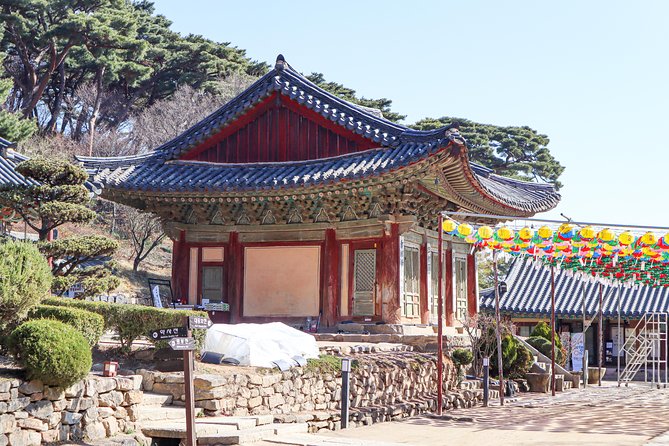
Jeondeungsa Temple brings a very different mood. You have about 40 minutes to see this old Buddhist temple within Samrangseong Fortress, another place connected with conflict, including the 1866 battle with France.
The temple is valuable for two reasons. First, it gives you a look at Korean Buddhist culture in a mountain setting. Second, it shows how religious sites and defensive sites can share the same place. The contrast with Gwangseongbo is useful: one stop focuses more directly on military history, while Jeondeungsa adds spiritual and cultural context.
Forty minutes should give you time to take in the temple and listen to the guide without turning the visit into a rushed photo stop. You should still wear comfortable shoes and expect some walking, since the tour calls for a moderate level of physical fitness.
This is one of the more rewarding stops for anyone who wants something beyond border views. The entrance fee is included, and your guide can help you understand the temple’s place in Korean culture rather than leaving you to guess at the meaning of what you see.
A choice at Ganghwa Seaside Resort
Ganghwa Seaside Resort is the flexible part of the day. The stop lasts about 50 minutes, and the resort offers a luge ride down the hill for an additional charge.
This option can break up the historical sites with something light and active. If you enjoy rides and want a more playful afternoon, it may be a welcome change. If your priority is culture, photography, or a slower look at Ganghwa’s rural side, you may prefer to treat this stop as optional time rather than an essential part of the tour.
The luge is not included in the tour price. That matters when you compare the total cost, especially because lunch is also separate. Ask about the ride and its price before committing, so the day’s spending does not surprise you.
The resort’s presence also makes the tour less narrowly historical. You get a mix of serious sites, local shopping, views, and recreation. That variety works well for couples or families with different interests, though people seeking an entirely heritage-focused outing may find this stop less important.
A completely different kind of day:
- Seoul: DMZ Tour with Optional Suspension Bridge
★ 4.8 · 5,277 reviews - Signature DMZ Tour: Exclusive Defector Talk & Suspension Bridge
★ 5.0 · 4,459 reviews - Thrilling Korean DMZ 3rd Tunnel Tour from Seoul + Red Bridge Rush
★ 5.0 · 3,097 reviews - DMZ Past and Present: Korean Demilitarized Zone Tour from Seoul
★ 5.0 · 2,481 reviews
Ganghwa Pungmul Sijang and local products
The traditional Ganghwa Pungmul Market gives you about 30 minutes to see what the island produces and sells. This is where the day moves from national history to everyday life.
A market can tell you more about a place than a polished attraction. Here, you have a chance to see the island’s special products and get a feel for its rural economy. The supplied experiences also point to local food, including fish barbecue, as one of the memorable parts of the day.
Lunch is not included, so this stop may be a practical chance to discuss food with your guide. The exact meal is not fixed in the tour details, but the guide can help you understand your choices. You should bring a card or cash suitable for personal purchases and meals, since market items and lunch are your responsibility.
Thirty minutes is fairly short. You will not have endless time to browse every stall, but the stop works as a compact introduction to local commerce. If you enjoy markets, tell your guide early. A private tour gives you a better chance of adjusting the pace than a large scheduled group would.
The Peace Observatory and the view across the border
The Peace Observatory is the emotional center of the outing. You spend about 40 minutes here, using binoculars to look toward North Korea. The island is only about 2 kilometers from North Korea at this point, making the border feel unusually close.
The important thing is to keep expectations realistic. You are not entering North Korea, and the view depends on the available conditions and the observatory’s equipment. Still, looking across such a narrow stretch of water gives the division of the peninsula a physical scale that maps cannot provide.
Your guide’s role is especially useful here. The best part is not simply pointing binoculars at the opposite shore. It is understanding what you are seeing and why the area remains significant. The tour description says you may see North Korean people’s living conditions through the binoculars, so take time to look carefully rather than treating the observatory as a quick photo stop.
The admission fee is included. This is also a place where you should follow the site’s instructions about photography and viewing. The border setting adds seriousness to the day, even though the tour itself remains accessible and straightforward.
Yeonmijeong Pavilion and another border view
Yeonmijeong Pavilion offers about 30 minutes for views of Ganghwa Island and another look toward North Korea. I like the fact that the tour does not rely on a single observatory stop. The pavilion gives you a second angle and a quieter outdoor setting.
The two border viewpoints serve different purposes. The Peace Observatory is the more direct viewing experience, with binoculars and an official observation point. Yeonmijeong is more about the open view, the island, and the feeling of looking across a narrow divide from a historic pavilion.
Because this stop is free, it adds value without increasing the admission costs. The visit is short, so you should listen to the guide’s explanation and use the time for photographs if conditions allow. It is another reason to bring a phone or camera with enough battery for a full day.
Ganghwa Anglican Cathedral and the island’s wider story
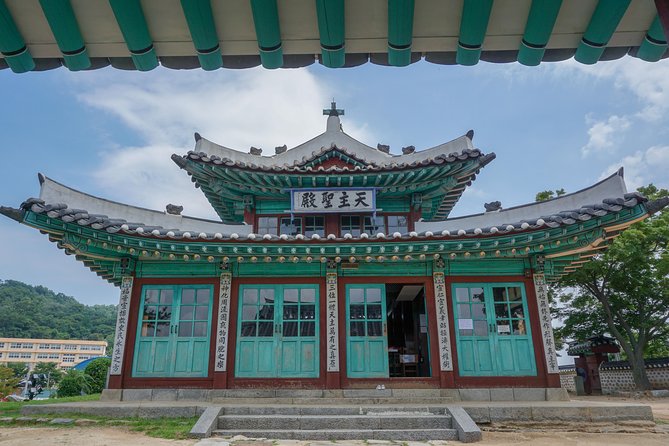
The final listed stop is Ganghwa Anglican Cathedral, with about 30 minutes to visit. The island’s position as an entrance route toward Seoul brought Westerners here, and the cathedral reflects that contact.
This stop helps round out the story. The fortresses show Korea defending its territory. Jeondeungsa represents Buddhist culture. The cathedral shows how foreign religious and political contact also reached Ganghwa.
You should not expect a giant city cathedral. The value here is the connection between place and history. Ganghwa was not an isolated rural corner. Its location made it a point of contact, conflict, trade, and outside influence.
Admission is free. After a day of military sites and border viewpoints, the cathedral provides a calmer cultural finish.
What the private minivan adds
The vehicle is an air-conditioned minivan, and transport is included from Seoul hotels and back. That is a major practical advantage because Ganghwa Island involves several stops spread around the area.
The driver also serves as your guide. This arrangement can make the day feel personal, but it means your experience depends heavily on the assigned guide. The strongest feedback centers on clear explanations and warm personalities. Mr. Lee is praised for his enthusiasm and for sharing interesting facts, while Miae is praised for being personable and helping make a first day in Korea feel welcoming.
You should ask questions. This is not a tour where you need to stay silent and simply follow a flag. Ask about the 1871 conflict, the 1866 conflict with France, local products, the border, or the island’s role in reaching Seoul. A private guide has more room to adjust the explanation to your interests.
Bottled water is included. Hotel pickup applies to hotels located in Seoul, and the tour requires at least two people per booking. Only your group participates, which makes it a good fit for couples, families, or friends who want a shared day without strangers.
Is $220 per person a fair price?
At $220 per person, this is not a budget day trip. The price needs to be judged against what it includes: about eight hours, private hotel transport from Seoul, an air-conditioned minivan, a driver-guide, bottled water, and the listed entrance fees.
For two people, the cost buys convenience and privacy. You do not have to arrange several forms of transport, work out the route, or explain every question through a crowded group setting. That can be worth a lot on a first trip to Korea, especially when your time in Seoul is limited.
The price is less attractive if you are happy using public transport, do not need hotel pickup, or prefer to explore at your own slow pace. You also need to budget separately for lunch, personal market purchases, and the optional luge ride.
Group discounts are available, but the supplied details do not state the exact discount. Since this is a private activity, larger groups may find the cost easier to justify when divided among several people.
Who should book this day trip?
I would choose this tour if you want to see rural South Korea without giving up comfort. It works particularly well for first-time visitors who want a guide to explain difficult historical subjects, especially the island’s battles and its proximity to North Korea.
It also suits you if your group has mixed interests. One person can focus on history, another on Buddhism and architecture, and someone else can enjoy the market or optional luge ride. The private setup gives the guide more room to respond to those differences.
You should think twice if you dislike early starts, several short visits, or a full eight-hour schedule. The moderate fitness requirement also matters. You will be moving between multiple sites, so comfortable walking shoes are sensible.
The tour has a 5.0 rating from 14 reviews and a 100 percent recommendation rate. That is a small sample, but the praise is consistent around the guide’s service, the chance to see another side of Korea, and the meaning of the border viewpoint.
Should you book the Ganghwa Island tour?
Book it if you want history, rural life, and a close view toward North Korea in one organized day. The private minivan, hotel pickup, and strong guide service make the $220 price easier to defend, particularly for two or more people who value comfort and a flexible conversation.
I would skip it if your main goal is a cheap outing or a slow, self-directed day. Lunch and the luge cost extra, and the schedule moves quickly between seven stops.
For most people, the best reason to book is the range. You get fortresses, Buddhist culture, a market, a cathedral, and two border viewpoints without having to piece the day together yourself. Ganghwa Island offers a useful counterpoint to Seoul, and this tour makes that contrast easy to experience.
FAQ
Where does the Ganghwa Island tour start?
The tour starts at 8:30 a.m. Hotel pickup is offered for hotels located in Seoul.
How long does the tour last?
The experience lasts approximately eight hours.
Is this a private tour?
Yes. Only your group participates in the activity.
How many people are required to book?
A minimum of two people is required per booking.
Is transportation included?
Yes. The tour includes hotel pickup and drop-off from Seoul hotels and transport in an air-conditioned minivan.
Is lunch included?
No. Lunch is not included in the tour price.
Are entrance fees included?
Entrance fees listed in the tour schedule are included. The luge ride at Ganghwa Seaside Resort is not included.
Can I ride a luge during the tour?
Yes, the luge ride at Ganghwa Seaside Resort is available as an optional activity. It requires an additional payment.
Can I see North Korea?
The Peace Observatory offers binocular views toward North Korea, which is about 2 kilometers from the island. Yeonmijeong Pavilion also provides a view toward North Korea.
What is the cancellation policy?
You can cancel at least 24 hours before the experience starts for a full refund. Cancellations or changes made less than 24 hours before the start time are not accepted for a refund.
Just added in Seoul
- Seoul: Korean & English Language Exchange Global Party★ 5.0 · 28 reviews
- Your Personal Seoul Photographer!★ 4.1 · 15 reviews
- You’re Invited to Our Home in Seoul: The Only Cooking Class!★ 5.0 · 8 reviews
- From Seoul: Yongpyong Ski Day Tour with Transportation★ 4.9 · 40 reviews
- From Seoul: Hwacheon Ice Fishing and Lighting Festival Tour★ 4.5 · 4 reviews
- Seoul: Gangneung BTS K-Pop & K-Drama Filming Locations Tour★ 4.6 · 14 reviews
- Unique Native Experience : Han River Picnic, Board game, BBQ★ 5.0 · 3 reviews
- Seoul: Euljiro Gastroventure Tour★ 4.0 · 1 review
Full-Day, compared.
Full Day Tour In The Soop BTS Ver in PyeongChang Filming Location
Read our review →
Seoul City Private Full-Day Tour Including Lunch
Read our review →
Jeju Southern UNESCO Full Day Tour with Mt.Halla
Read our review →
Full-day Customizable Private Seoul Highlight Tour
Read our review →