Reviewed · SEOUL TOURS
Gwanghwamun Tour l 120 minutes to Understand Local Korean Society
History is hiding in plain sight here. This two-hour walk with history graduate June connects Gwanghwamun, Bukchon, and North Korean studies to the way Korean society works today. I like the clear link between old events and modern habits, and I like the modest $14.10 price, which makes the tour an easy addition to a Seoul itinerary. The main drawback is that the walk includes a few uphill sections and offers little time for long independent stops.
I also appreciate the compact route and small maximum of 20 people. June explains difficult subjects in plain language, with humor and room for questions. If you want palaces and pretty alleys without discussing politics, social values, or the pressures of modern development, this may feel more like a walking seminar than a sightseeing stroll.
In This Review
- Five things to know before you go
- Why Gwanghwamun is the right place to begin
- The US Embassy stop and Korea’s outside influences
- Samcheongdong-gil and the cost of fast development
- Bukchon Hanok Village and the preservation problem
- North Korean studies in an unexpected setting
- How June teaches Korean society in two hours
- What the $14.10 price really buys you
- Timing, walking demands, and where you finish
- Who will get the most from this Seoul walk
- Should you book the Gwanghwamun Tour?
- FAQ
- How long is the Gwanghwamun Tour?
- Where does the tour start?
- What time does the tour begin?
- Where does the tour end?
- How many people can join the tour?
- Is the walk difficult?
- Can I cancel for a full refund?
Five things to know before you go
- June connects history to daily life: Joseon-era ideas, postwar capitalism, age hierarchy, coffee culture, and Korean spa culture all enter the conversation.
- The route covers five distinct places: Gwanghwamun Square, the US Embassy area, Samcheongdong-gil Road, Bukchon Hanok Village, and the University of North Korean Studies.
- It is an easy two-hour walk overall: A few uphill stretches require ordinary walking stamina, but most participants can take part.
- The discussion goes beyond monuments: You explore Korean views of North Korea, Japan, and the United States, along with work culture and social priorities.
- The tour ends near the Blue House: That gives you a useful starting point for further sightseeing in northern Jongno.
- The value is strong: At $14.10 per person, the tour costs less than many short city walks while offering a focused cultural explanation.
Why Gwanghwamun is the right place to begin
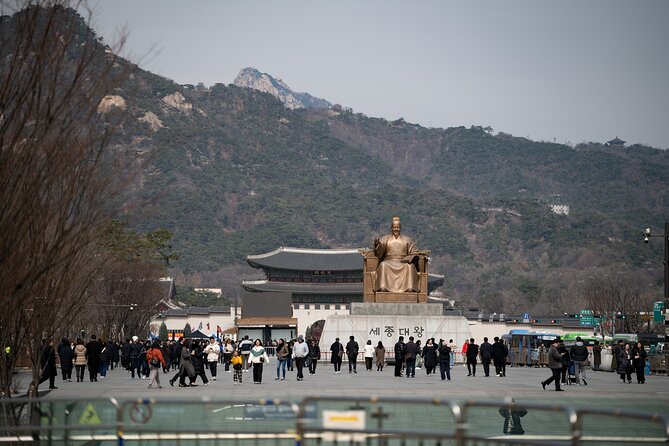
Meet at Gwanghwamun Square at 10:30 a.m., in front of 172 Sejong-daero. This is not just a convenient central meeting point. It is the political and historical heart of Seoul, a place where the story of Korea can be told in one broad sweep.
June begins with the Joseon kingdom and the long role of this area as the center of Korean public life. That opening matters because the tour is not simply a list of dates. The goal is to show how older ideas still affect behavior, expectations, and social relationships.
One major theme is Confucian influence. The tour uses Joseon history to explain Korean age hierarchy and other social customs. You get a way to understand why age can matter so much in conversation and daily interaction, rather than treating the subject as an odd custom to memorize.
Gwanghwamun Square also gives the group a clear sense of modern Seoul. Old royal authority, twentieth-century upheaval, and the present-day capital all meet here. June’s approach, according to the experience description, is to connect those layers to the main concerns of Korean society now.
That approach is the tour’s strongest feature. You are not only looking at a famous square. You are being shown how a location can help explain a country’s institutions and habits.
A few more options to weigh up in Seoul
- Best DMZ Tour Korea from Seoul (Red Suspension Bridge Optional)
★ 5.0 · 41,422 reviews - DMZ Tour: 3rd Tunnel, Option(Suspension Bridge, Boat) from Seoul
★ 5.0 · 21,373 reviews - DMZ tour south Korea from Seoul (NK experience hall, defector)
★ 5.0 · 20,599 reviews
The US Embassy stop and Korea’s outside influences
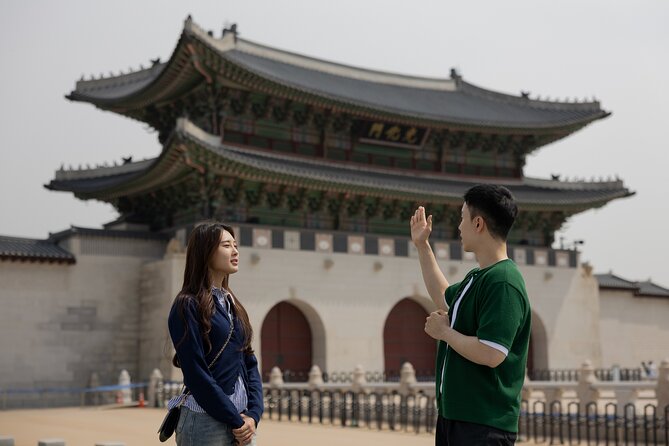
The next stop is the area around the US Embassy and Consulate in the Republic of Korea. There is no admission charge, and the scheduled visit lasts about 15 minutes.
The subject is the influence of the United States on Korea, from the establishment of the relationship to the present. That makes this a useful counterpoint to the opening discussion of Joseon traditions. Korea’s present identity was shaped not only by its own past, but also by war, alliances, international pressure, and rapid economic change.
June also addresses how Koreans think about the United States. This is a more useful question than simply asking whether Korea is friendly or unfriendly toward America. Public opinion can contain gratitude, dependence, criticism, and disagreement at the same time. The tour promises to explain those attitudes in a direct, understandable way.
This stop will suit you if you want political context without taking a full-day class. It may feel brief if you hope for a detailed account of every stage in modern Korean diplomacy. Still, its purpose is clear: to help you see foreign relations as part of ordinary Korean identity, not as a separate subject reserved for textbooks.
Samcheongdong-gil and the cost of fast development
From the embassy area, the walk continues along Samcheongdong-gil Road, a retro-style street with shops and restaurants. The scheduled stop is about 15 minutes.
This section shifts from national politics to the working life of modern Seoul. June discusses rapid development and some of its side effects, including the pressures that come with a fast-changing economy. The street itself provides a useful setting because it brings commercial activity, older buildings, and modern city life into one short stretch.
I like this part of the route because it makes economic history easier to grasp. Instead of hearing only about growth figures or postwar recovery, you can consider what development means for workers, neighborhoods, and the way people spend their time.
The stop also helps explain Korean working culture. That subject is important for anyone who has noticed Seoul’s long hours, intense competition, or strong emphasis on achievement but has not known how to place those habits in context.
The visit is short, so do not expect a detailed food tour or much time to shop. The shops and restaurants are part of the setting, not the main product. This is a place for observation and discussion rather than a series of tastings.
Bukchon Hanok Village and the preservation problem
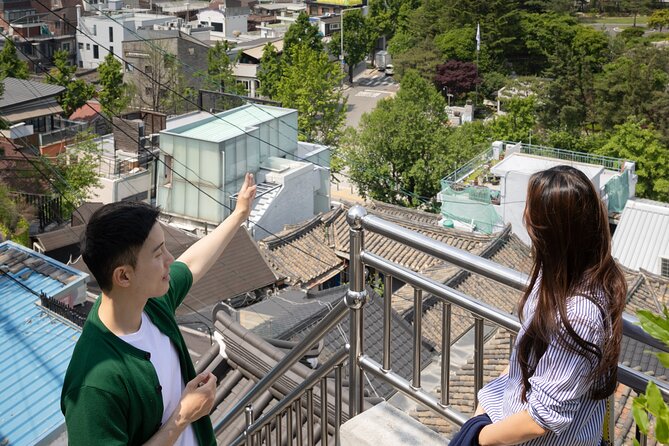
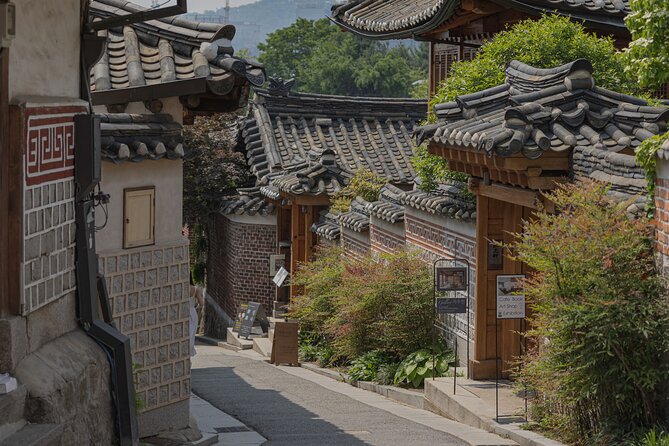
The route then reaches Bukchon Hanok Village, with about 25 minutes devoted to the area. Bukchon is known for its traditional hanok houses, and it offers the most visual change of the walk.
Here, June explains the tension between development and preservation. That tension is easy to see in a neighborhood where traditional homes remain important, yet the area also attracts visitors and commercial activity. Protecting old buildings is not as simple as freezing a neighborhood in time. People still need homes, businesses, roads, and ordinary services.
This is one of the most valuable stops for you if you want to think beyond postcard views. Bukchon can look like a preserved historical district, but the discussion points toward the practical choices behind that appearance. Who gets to decide what remains? How does a city handle pressure to modernize? What happens when a residential area becomes a sightseeing destination?
The uphill sections are most relevant here. The route is described as easy overall, but you should be ready for a few inclines and uneven walking conditions associated with the village streets. Comfortable shoes are a sensible choice.
The 25-minute timing gives this stop more space than the earlier ones, though it is still not a full neighborhood tour. You will get an explanation of the social and urban issues, not a long period to wander every lane.
A completely different kind of day:
- Seoul: DMZ Tour with Optional Suspension Bridge
★ 4.8 · 5,277 reviews - Signature DMZ Tour: Exclusive Defector Talk & Suspension Bridge
★ 5.0 · 4,459 reviews - Thrilling Korean DMZ 3rd Tunnel Tour from Seoul + Red Bridge Rush
★ 5.0 · 3,097 reviews - DMZ Past and Present: Korean Demilitarized Zone Tour from Seoul
★ 5.0 · 2,481 reviews
North Korean studies in an unexpected setting
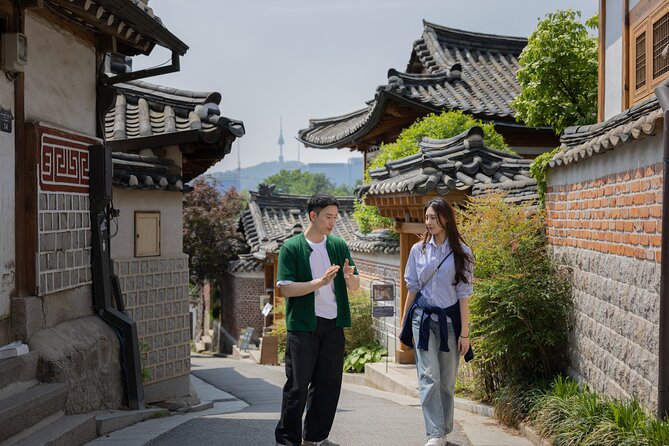
The final major stop is the University of North Korean Studies, described as the only college specializing solely in North Korea. The group spends about 20 minutes here discussing relations with North Korea and Korean attitudes toward the North.
This is an unusual inclusion. Many Seoul walks stay with royal palaces, markets, and food. Adding a university focused on North Korea gives the route a sharper political edge and helps explain why the division of the Korean Peninsula remains part of present-day life.
June also addresses the question of what Koreans think about North Korea. There is no single answer, and the subject can involve security, family history, national identity, politics, and fatigue with continued division. A short stop cannot cover every position, but it can give you a more grounded starting point.
For me, this is where the tour’s different threads meet. The Joseon past, American influence, postwar development, work culture, and Korean ideas about national identity all connect here. You begin to see why history is not treated as something finished and separate from modern life.
The stop will appeal most to anyone interested in politics and contemporary society. If your ideal walking tour is mainly visual, this may be the most demanding section. The reward is a better understanding of an issue that shapes Korean public discussion even when it is not visible in the streets.
How June teaches Korean society in two hours
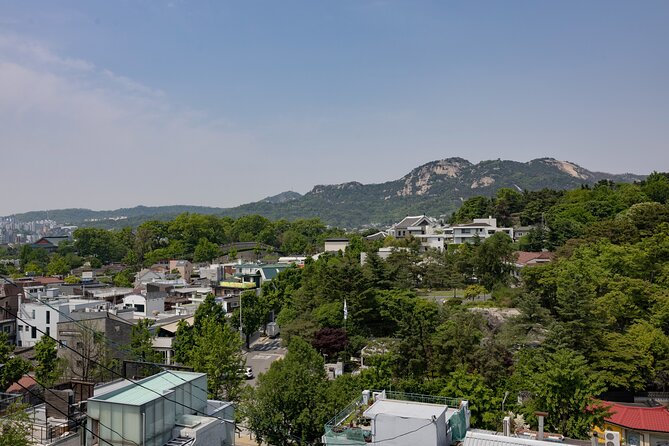
June is the guide and a history major. The strongest praise for his style centers on clarity, structure, humor, and his willingness to answer questions. One useful comparison from the experience is that the explanations can feel like a well-prepared lecture, but delivered during a relaxed walk.
That balance is important. A guide can know a great deal and still make a tour tiring if every stop becomes a speech. June’s format appears to keep the material organized while allowing time to mingle with the group and ask questions.
The subjects go beyond the five stops. Along the way, June connects history and politics to everyday customs, including age hierarchy, Korea’s strong coffee culture, and spa culture. These details help you understand the country through ordinary routines, not only through royal sites and national events.
I especially like that the tour asks broad questions. What do Koreans value most? What are the country’s main concerns? How do people view Japan, the United States, and North Korea? These are not questions with one neat answer, but they give the walk a useful framework.
The experience is also designed to be easy to understand. That makes it a good choice early in your Seoul visit, when you want context before exploring more museums, palaces, or neighborhoods on your own. June has also offered personal tips based on individual interests, which can make the final few minutes especially useful.
What the $14.10 price really buys you
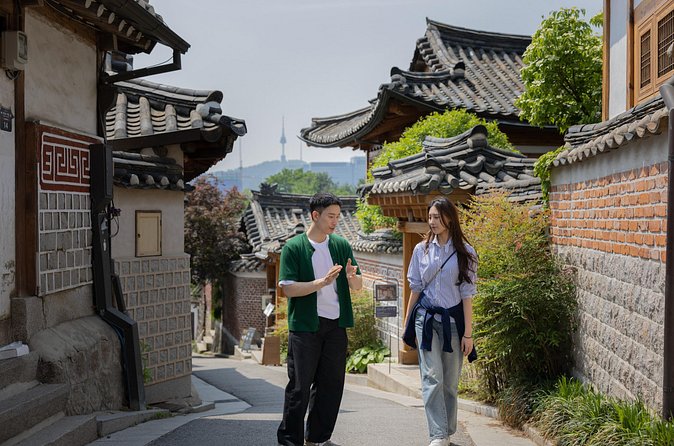
At $14.10 per person, this is inexpensive for a two-hour guided experience in central Seoul. There are no paid admission tickets at the listed stops, so the fee is mainly paying for June’s preparation, explanations, route planning, and time.
The value depends on what you want from a city walk. If you are looking for food samples, entry to historic buildings, or a long list of photo opportunities, the price does not buy those things. If you want a compact explanation of Korean society from someone who can connect history to daily life, the value is much better.
I would compare the cost to a short orientation session with a local historian. In two hours, you cover political history, social customs, urban change, Korea’s international relationships, and present-day attitudes toward North Korea. That is a lot of ground, but the themes are linked rather than random.
The group can include up to 20 people. That is not a private walk, but it is still limited enough to keep the experience more personal than a large sightseeing group. You should expect some variation in how much time is available for individual questions, depending on the group size.
The tour is booked, on average, 18 days ahead. That suggests you should not assume you can always arrange it at the last minute, especially if your Seoul dates are fixed.
Timing, walking demands, and where you finish
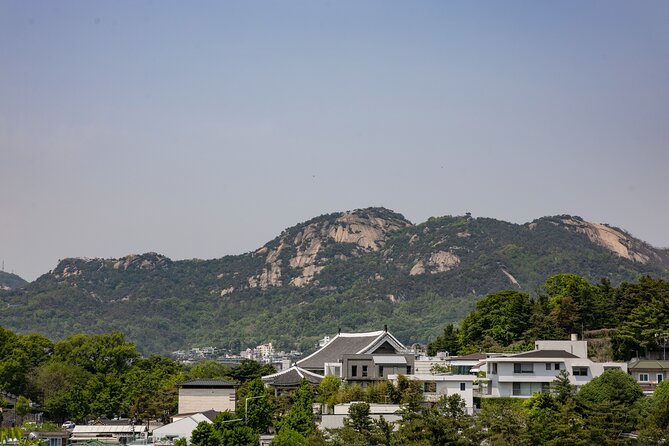
The tour lasts about 120 minutes and starts at 10:30 a.m. Its finish is in front of the Blue House, the presidential house, at 1 Cheongwadae-ro.
That timing works well with the rest of a sightseeing day. You finish around lunchtime, close to several areas in northern Jongno. The endpoint also gives you a natural place to continue exploring, though the tour itself does not include additional activities there.
The route is near public transportation at the starting point, which makes reaching Gwanghwamun practical. You should arrive ready to walk rather than treating this as a vehicle-based city tour.
Most people can participate, and the walk is described as easy. Still, do not ignore the note about uphill sections. Wear shoes you can use comfortably for two hours, and be realistic if hills are difficult for you.
The experience requires good weather. If poor weather forces cancellation, you are offered another date or a full refund. The same applies if the minimum number of participants is not met. For your own booking, free cancellation is available until 24 hours before the start time. Changes or cancellations inside that window are not accepted for a refund.
Who will get the most from this Seoul walk
I would choose this tour if you want to understand Seoul rather than simply photograph it. It is particularly useful for first-time visitors who want a framework for later sightseeing, as well as repeat visitors who have already seen the major palaces and want more social and political context.
It should suit you if you enjoy:
- Modern Korean politics and international relations
- The effects of Confucian ideas on social behavior
- Questions about work, development, and urban change
- Small details of daily culture, such as coffee and spa habits
- A clear, lecture-style explanation during a manageable walk
Couples in their early 30s have found the mix of history, politics, and present-day life appealing, and solo participants can comfortably join the group. The guide’s respectful manner and willingness to answer questions are useful if you are visiting alone or have a long list of things you want clarified.
I would think twice if you want a slow photo walk, a food-focused experience, or extensive time inside attractions. The route is about interpretation. You will see important places, but the explanations are the main event.
Should you book the Gwanghwamun Tour?
Book it if you want a concise, affordable introduction to the forces shaping Korean society. June’s route gives you royal history, American influence, rapid development, traditional housing, North Korean relations, and everyday customs in one focused morning.
Skip it if you prefer sightseeing without political discussion or if uphill walking is a serious problem. For most curious visitors, though, the combination of a $14.10 price, a two-hour schedule, and a guide who explains complex ideas clearly makes this one of the better-value ways to get your bearings in Seoul.
FAQ
How long is the Gwanghwamun Tour?
The experience lasts approximately two hours, or 120 minutes.
Where does the tour start?
It starts at Gwanghwamun Square, 172 Sejong-daero, Jongno District, Seoul.
What time does the tour begin?
The scheduled start time is 10:30 a.m.
Where does the tour end?
The walk finishes in front of the Blue House, also called Cheong Wa Dae, at 1 Cheongwadae-ro in Jongno District.
How many people can join the tour?
The maximum group size is 20 participants.
Is the walk difficult?
It is described as an easy walk, and most people can participate. A few sections go uphill, so comfortable walking shoes are recommended.
Can I cancel for a full refund?
Yes. You can cancel at least 24 hours before the experience starts for a full refund. Cancellations or changes made less than 24 hours before the start time are not accepted for a refund.
Just added in Seoul
- Seoul: Korean & English Language Exchange Global Party★ 5.0 · 28 reviews
- Your Personal Seoul Photographer!★ 4.1 · 15 reviews
- You’re Invited to Our Home in Seoul: The Only Cooking Class!★ 5.0 · 8 reviews
- From Seoul: Yongpyong Ski Day Tour with Transportation★ 4.9 · 40 reviews
- From Seoul: Hwacheon Ice Fishing and Lighting Festival Tour★ 4.5 · 4 reviews
- Seoul: Gangneung BTS K-Pop & K-Drama Filming Locations Tour★ 4.6 · 14 reviews
- Unique Native Experience : Han River Picnic, Board game, BBQ★ 5.0 · 3 reviews
- Seoul: Euljiro Gastroventure Tour★ 4.0 · 1 review
Seoul Tours, compared.
Best DMZ Tour Korea from Seoul (Red Suspension Bridge Optional)
Read our review →
DMZ Tour: 3rd Tunnel, Option(Suspension Bridge, Boat) from Seoul
Read our review →DMZ tour south Korea from Seoul (NK experience hall, defector)
Read our review →
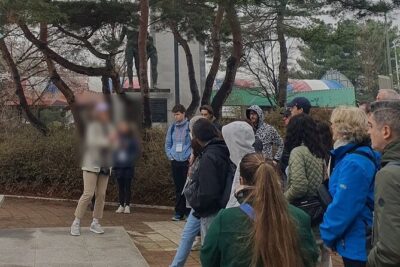
Signature DMZ Tour: Exclusive Defector Talk & Suspension Bridge
Read our review →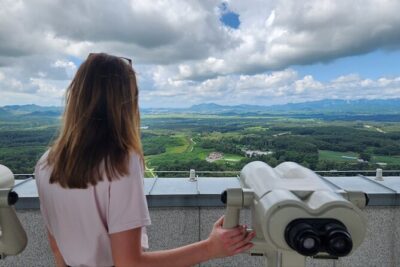
Thrilling Korean DMZ 3rd Tunnel Tour from Seoul + Red Bridge Rush
Read our review →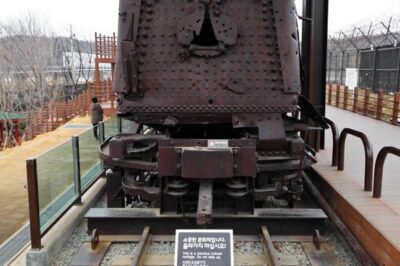
DMZ Past and Present: Korean Demilitarized Zone Tour from Seoul
Read our review →