
Reviewed · JEONJU TOURS
Jeonju – Southern Korea (Private tour)
Jeonju serves Korea on a plate. This eight-hour private tour pairs serious food stops with the old lanes, shrines, crafts, and family traditions of Jeonju Hanok Village. I like the balance: you are not simply eating your way from restaurant to restaurant, and you are not spending the day staring at buildings without context. You also get a kimchi-making class and a tea ceremony, two hands-on moments that help Korean customs make sense.
I also like the full meal plan, with lunch, dinner, Jeonju bibimbap, and bean sprout soup included. The possible drawback is the pace. Thirteen stops, several meals, and a full cooking class make this a busy day, and transportation to and from attractions is not included. You should be comfortable walking and ready to dress for the weather.
In This Review
- Key points to know before you book
- Why Jeonju makes such a good food-and-culture day
- Starting at 10:00 in Jeonju Hanok Village
- Poetry, fans, and the first look at Jeonju’s character
- Jeondong Catholic Church and the meaning of sacred ground
- Lunch with dozens of Korean side dishes
- Rice wine and the old brewing tradition
- Gyeonggijeon Shrine and King Taejo
- Hanji paper and the Yangban way of life
- Omokdae, Imokdae, and a hilltop view
- Jeonjuhyanggyo Confucian School
- Tea with descendants of a noble family
- Making kimchi with a local master
- Dinner with bibimbap and bean sprout soup
- Is $75 good value for eight hours?
- Practical details that can shape your day
- Who should book this Jeonju tour?
- Final verdict
- FAQ
- Where does the tour start and finish?
- How long does the experience last?
- Are lunch and dinner included?
- Is the kimchi-making class included?
- Is a vegetarian option available?
- What happens if I need to cancel?
Key points to know before you book
- Jeonju Hanok Village is the day’s main stage: Most stops are within the historic area, with short walks connecting food, architecture, museums, and shrines.
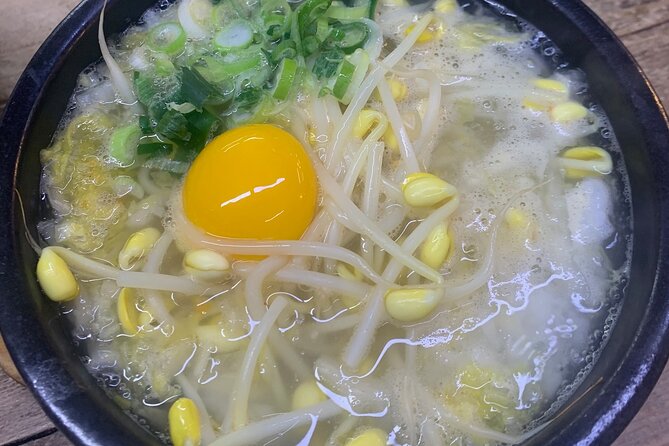
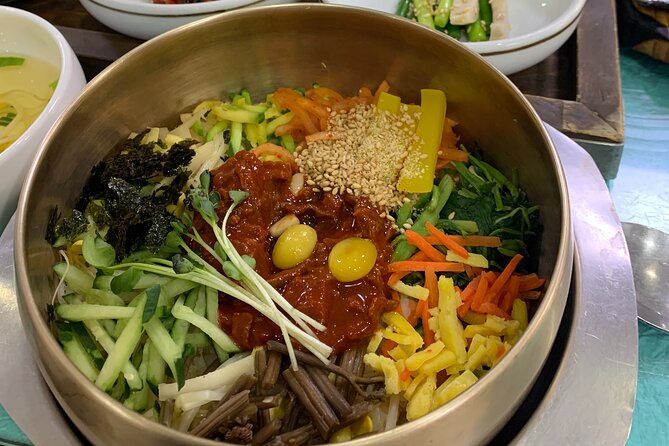
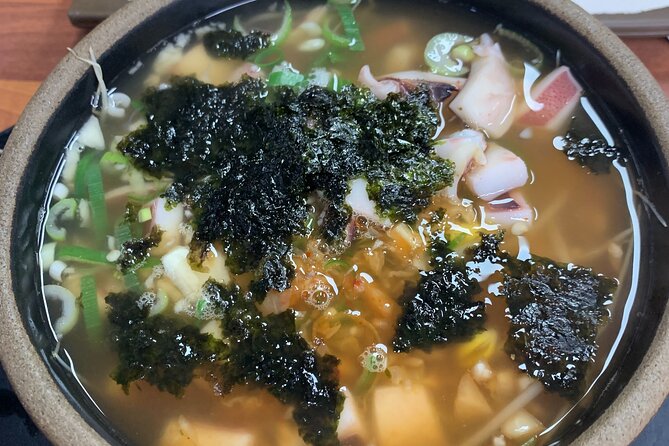
- The food is part of the culture lesson: Lunch comes with many colorful side dishes, while dinner features Jeonju bean sprout soup with rice and bibimbap.
- You make kimchi with a local master: This is more useful than simply sampling a small dish, since you learn through your own hands.
- Tea is served in an old noble residence: The family-hosted ceremony adds a personal note to the day.
- The price covers two meals and activities: At $75, the value is strongest if you plan to eat everything and use the guide fully.
- Walking shoes matter: The tour lasts about eight hours and includes a hilltop viewpoint, museums, historic sites, and village streets.
Why Jeonju makes such a good food-and-culture day
Jeonju is especially well suited to a tour that treats food as part of daily life rather than as a separate attraction. The city is closely associated with bibimbap and other Korean dishes, but the appeal here is not just a famous bowl of rice. You see how food connects with royal tradition, regional brewing, household customs, and the old social order.
The setting helps. Jeonju Hanok Village gives you tiled roofs, narrow lanes, old residences, and a compact historic district. The tour moves beyond the prettiest streets, adding a poetry museum, fan center, paper museum, Catholic church, Confucian school, and hilltop pavilion.
That range is useful if you are visiting Korea for the first time. A guide can explain what you are seeing and help with ordering, etiquette, and language. It also gives you a starting point for later meals. The operator’s other food tours have been praised for taking people to less obvious local areas and for helping foreign visitors feel connected to Korean life rather than treated like a commodity. That same local approach is the main reason to consider this Jeonju day.
More Jeonju trips:
- Jeonju Hanok Village Full-Day Tour:Jangtaesan Autumn Foliage
★ 4.7 · 45 reviews - Jeonju Hanok Village Full-Day Tour: Jangtaesan Autumn Foliage
★ 5.0 · 16 reviews - Jeonju Hanok Village and Maisan Tapsa Temple Day Tour From Seoul
★ 5.0 · 12 reviews
Starting at 10:00 in Jeonju Hanok Village
The meeting point is at 99 Girin-daero in Jeonju Hanok Village, with a 10:00 am start. The tour returns to the same meeting point, which makes planning simpler if you are staying near the village or using nearby public transport.
The activity is described as private, so only your group participates. At the same time, the booking information gives a maximum of 15 people and notes that the tour may be canceled if the minimum of two people is not met. If you are booking alone, check the confirmation carefully and keep the minimum-group condition in mind.
The day is best approached as a walking tour with food breaks, not as a vehicle-based sightseeing trip. Since transport to and from attractions is not included, confirm your route to the starting point before the morning begins. Wear shoes you can use comfortably for several hours, and bring weather protection. The tour operates in all weather conditions.
Poetry, fans, and the first look at Jeonju’s character
The first stop is the Chae Myeong-sun Poetry Museum, with about 20 minutes inside. The focus is Korean poetry that was not written in Chinese characters. That small detail opens a useful window into language and identity, especially if you are still getting used to Korea’s writing system and literary traditions.
Do not expect a long museum visit here. Twenty minutes is enough for an introduction, not a full study of the collection. The benefit comes from having a guide explain why Korean-language poetry matters and how it differs from older literary traditions.
Next comes the Jeonju Fan Culture Center for another 20-minute visit. Jeonju’s handmade fans are presented as objects of art, tradition, and elegance. This stop gives the morning a craft element and breaks up the food focus.
I like the inclusion of the fan center because it reminds you that a cultural souvenir can carry real meaning. The limitation is time. You will probably receive a concise explanation rather than a long workshop, so treat it as a focused cultural stop.
Jeondong Catholic Church and the meaning of sacred ground
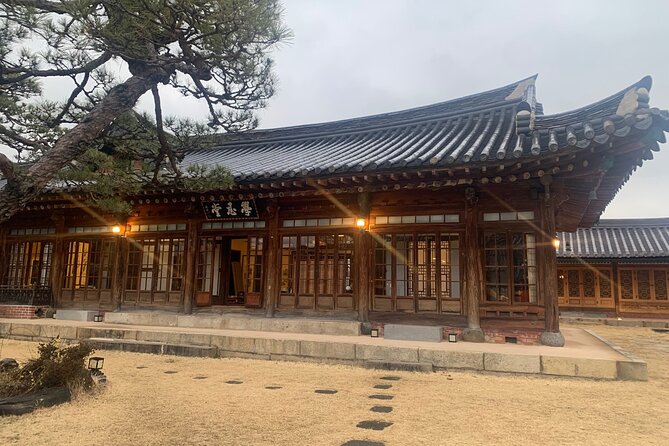
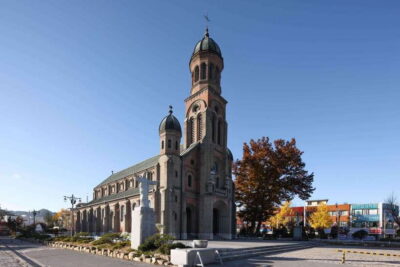
The visit to Jeondong Catholic Church lasts about 30 minutes. It is described as one of Korea’s first Western-style churches, built on sacred ground. The site brings a very different architectural and religious note to a day otherwise centered on Korean traditional culture.
This is a good example of the tour’s broader range. Jeonju is not presented as a frozen picture of old Korea. You see how outside influences entered the country and how religious sites became part of its modern story.
Thirty minutes should allow time to admire the church and hear its background without turning the stop into a long architectural lecture. You will want to keep the walking pace in mind, though. With thirteen stops, the guide has to keep each visit moving.
A few more options to weigh up in Jeonju
- Jeonju: Private Taxi Tour Car Charter
★ 4.8 · 8 reviews - Private Jeonju Hanok Village – Culinary tour
★ 5.0 · 4 reviews - Explore Jeonju/Yeosu/Suncheon with Private Day Tour from Gwangju
★ 5.0 · 1 review - Busan Private Tour with licensed tour guide + private vehicle
★ 5.0 · 1,143 reviews
Lunch with dozens of Korean side dishes
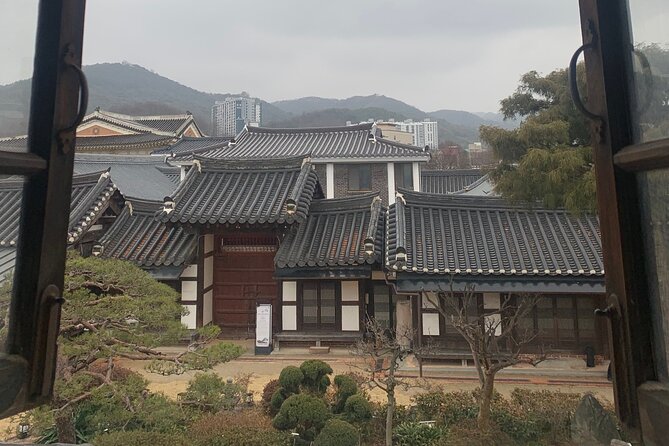
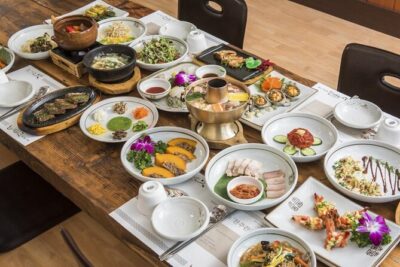
Lunch is one of the day’s strongest sections. You receive a full Korean meal with many colorful side dishes, the type of spread that can be confusing if you are unfamiliar with Korean dining customs. Having a guide beside you is valuable here because you can ask what each dish is, how to eat it, and which flavors are mild, sharp, sweet, or fermented.
The meal lasts about 50 minutes. It is not simply a quick snack between museums. Lunch gives you a proper look at the Korean habit of serving several shared accompaniments alongside the main food.
The description identifies the meal as Hanjeongsik, a full-course Korean spread. Exact dishes can change, so you should not book this expecting a fixed menu. The important point is variety, presentation, and the chance to eat in a way that is difficult to arrange when you are unfamiliar with local restaurants.
A vegetarian option is available, but you need to request it when booking. This is one detail worth handling early, since Korean side dishes can include fish sauce, seafood, meat stock, or other ingredients that are not obvious at first glance.
Rice wine and the old brewing tradition
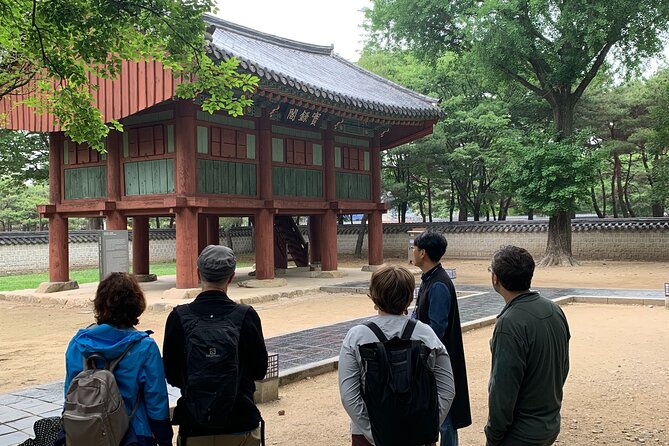
The Jeonju Korean Traditional Wine Museum gets about 30 minutes. Here, you learn about older Korean brewing methods and taste regional rice wines. Alcohol is not included in the tour price, but drinks can be purchased.
This stop works well after lunch because it adds context to another part of Korean dining. Rice wine is not just a drink placed on the table. It is tied to local production, ceremonies, and the broader practice of making food and drink at home or within a community.
The tasting is an optional expense, so people who do not drink are not forced to pay for it. You can still visit the museum and learn about brewing. If you do choose a taste, remember that this is a long walking day with more food ahead.
Gyeonggijeon Shrine and King Taejo
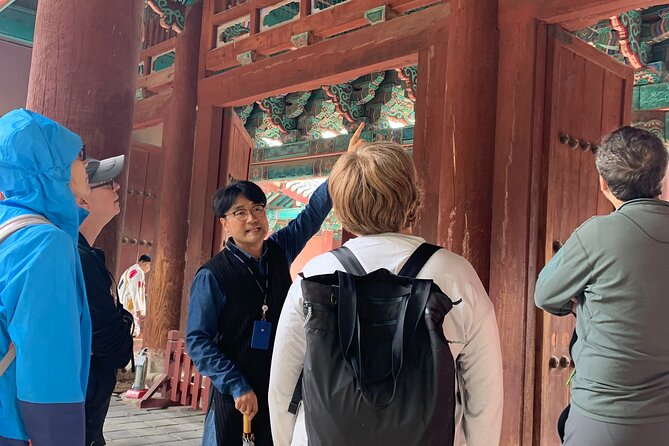
At Gyeonggijeon Shrine, you spend about 40 minutes visiting the site that holds a portrait of King Taejo, founder of the Joseon Dynasty. This is one of the day’s key historical stops, and it gives the food traditions a political and royal setting.
A guide is especially helpful here. A shrine can look quiet and simple if you do not know why it matters. The story of King Taejo and the Joseon court gives the buildings and grounds a clear purpose.
The 40-minute stop is long enough to take in the setting without exhausting your attention. Still, this is a history-focused section, so people who want only food may find it less exciting than lunch or the cooking class.
Hanji paper and the Yangban way of life
The Hanji Museum introduces traditional Korean paper and the craft behind it. Hanji is valued for its beauty and long-standing use, and the museum adds another hands-on craft tradition to the day’s collection of local arts.
You then spend about 30 minutes at the Yangban Culture Museum. The Yangban were the noble class during the Joseon period, and this stop focuses on their refined lifestyle. Together, the two museums show both material culture and social structure: one looks at what people made, and the other at how an upper class lived.
These are compact visits, each lasting around 30 minutes. You will not receive a full academic course on Korean paper or Joseon society, but you get enough background to notice more as you walk through the village.
Omokdae, Imokdae, and a hilltop view
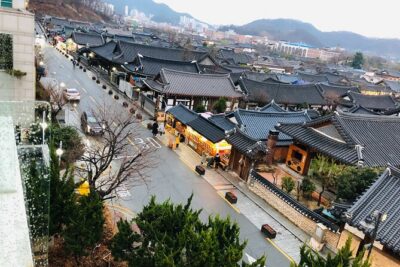
Omokdae and Imokdae provide a change of pace. The tour climbs to a historic hilltop pavilion for panoramic views over Hanok Village, with about 40 minutes set aside.
This is likely to be one of the most memorable visual moments of the day. From above, the tiled roofs and layout of the village make more sense than they do from street level. You can see how the old district fits together rather than experiencing it as a series of separate lanes.
The climb also explains the advice about moderate physical fitness. The tour is not presented as strenuous, but it is not a flat museum circuit either. If your knees are sensitive or you dislike hills, this is the part to consider carefully. Good shoes will make a real difference.
Jeonjuhyanggyo Confucian School
The Jeonjuhyanggyo Confucian School is another 30-minute stop. You walk through an old academy where Confucian scholars studied. This adds a strong educational thread to the day and helps explain the values that shaped Joseon-era public life.
The school pairs naturally with the Yangban Culture Museum and Gyeonggijeon Shrine. One shows elite life, one presents royal memory, and one reflects education and scholarship. In a shorter sightseeing visit, these details can blur together. Here, the guide can connect them as you move through the village.
The trade-off is schedule pressure. By this point you have already visited several museums and historic places, so you may need to pace yourself. The itinerary is rewarding for people who like variety, but not ideal for someone who wants to linger at every site.
Tea with descendants of a noble family
The Noble Family Tea Experience offers about 50 minutes in an old noble residence. Tea is hosted by descendants of a noble family, giving the stop a personal quality that a standard museum visit cannot provide.
This is one of the most distinctive parts of the tour. You are not just looking at a traditional house from outside. You sit down, slow the pace, and take part in a ceremony connected with a living family tradition.
Expect a cultural experience rather than a large tasting session. The value lies in the setting, the ritual, and the chance to ask questions through the guide. It is also a welcome pause before the final food activities.
Making kimchi with a local master
The kimchi cooking class lasts about 50 minutes and is led by a Kimchi Master. This is the most practical food activity of the day because you participate instead of simply watching someone else prepare a dish.
Kimchi can seem like one thing to newcomers, but the class gives you a better sense of the care behind it. You can ask about ingredients, preparation, and flavor while working with the food yourself. The experience should also make the fermented side dishes at lunch easier to understand.
The class is included in the $75 price, along with lunch and dinner. That improves the value considerably. If you are comparing this with a standard sightseeing tour, remember that you are receiving instruction and food, not only admission to attractions.
Dinner with bibimbap and bean sprout soup
The day ends with Jeonju bean sprout soup with rice and bibimbap, prepared by the Kimchi Master. Dinner lasts about 50 minutes and gives you two classic comfort foods associated with the city.
Bibimbap is familiar to many people, but eating it in Jeonju gives the dish a stronger local context. The bean sprout soup offers a simpler counterpoint, with warmth and comfort after a long day of walking.
This final meal also makes the tour feel like a complete food story. You begin with a full Korean lunch, learn about traditional alcohol, work with kimchi, and finish with local staples. Alcoholic drinks are not included, though you can buy them if available.
Is $75 good value for eight hours?
At $75, the price is reasonable if you want a packed day and plan to take part in every included activity. You receive a professional guide, lunch, dinner, admission to the listed cultural stops, and a kimchi-making class.
The strongest value comes from the combination. Paying separately for two meals, a private guide, museum visits, a cooking class, and a tea experience could easily become complicated. The tour also removes much of the guesswork around food and language.
The value is less clear if you prefer free time, independent restaurant choices, or a slow visit to one or two major sites. You are paying for structure, access, and explanation. You are not paying for transport, alcoholic drinks, or an open-ended day.
The private format is useful for couples, families, and small groups who want to ask questions freely. With a maximum of 15 people, the group may still be fairly large if your booking fills, so confirm how your reservation will be handled if group size matters to you.
Practical details that can shape your day
Confirmation arrives at booking, and the tour can use a multilingual guide. That is useful for international groups, though the exact language arrangement should be checked before you go if it is important.
Service animals are allowed. Vegetarian meals are available with advance notice. The tour runs in all weather, so bring suitable clothing rather than assuming the day will stay dry or mild.
Free cancellation is available if you cancel at least 24 hours before the local start time. Cancellations or changes within 24 hours are not refunded or accepted. If the minimum of two people is not reached and the operator cancels, you are offered another date or experience, or a full refund.
Who should book this Jeonju tour?
I would choose this experience if you want food and context in equal measure. It suits first-time visitors who want help with Korean dining, people interested in craft and tradition, and anyone who prefers a guide to handle the language barrier.
It is also a good choice if you have one full day in Jeonju and want a clear introduction rather than a list of unconnected sights. The tea ceremony and kimchi class give the day a personal touch, while the shrine, school, museums, and hilltop view keep it from becoming a meal crawl.
I would hesitate if you dislike long walking days, do not want a set schedule, or expect transport between every stop. The itinerary is full, and the day asks you to move from museum to meal to historic site without much idle time.
Final verdict
Book this tour if you want Jeonju explained through its food, crafts, beliefs, and old homes. The two included meals, kimchi class, family tea ceremony, and professional guide make $75 a fair price for a full eight-hour program.
Skip it if you want to explore at your own pace or spend hours at one museum. For everyone else, this is a useful first day in Jeonju, especially if Korean food feels exciting but a little hard to navigate alone.
FAQ
Where does the tour start and finish?
It starts at 10:00 am at 99 Girin-daero in Jeonju Hanok Village. The activity ends back at the same meeting point.
How long does the experience last?
The tour lasts approximately eight hours.
Are lunch and dinner included?
Yes. Lunch is a full Korean meal with many side dishes. Dinner includes Jeonju bean sprout soup with rice and bibimbap.
Is the kimchi-making class included?
Yes. The tour includes a 50-minute kimchi-making class led by a Kimchi Master.
Is a vegetarian option available?
Yes. A vegetarian option is available, but you must advise the operator when booking.
What happens if I need to cancel?
You receive a full refund if you cancel at least 24 hours before the local start time. Cancellations within 24 hours are not refunded, and changes within that period are not accepted.
Just added in Jeonju
- Explore Jeonju/Yeosu/Suncheon with Private Day Tour from Gwangju★ 5.0 · 1 review
- Jeonju Hanok Stay & Mt. Jiri Hiking from Seoul★ 5.0 · 6 reviews
- Private Jeonju Hanok Village – Culinary tour★ 5.0 · 4 reviews
- Jeonju & Yeosu: 4-Day Foodie & Artist Journey★ 5.0 · 3 reviews
- Jeonju Hanok Village Tour★ 5.0 · 1 review
- Gwangyang Maewha Flower and Jeonju Hanok Village 1 day trip from Seoul★ 5.0 · 2 reviews
- Donghaksa Temple Cherry Blossom and Jeonju Hanok Village★ 5.0 · 2 reviews
- Jeonju Hanok Village Hanbok Rental Experience Hanboknam★ 3.5 · 3 reviews
Jeonju Tours, compared.
Jeonju Hanok Village Full-Day Tour:Jangtaesan Autumn Foliage
Read our review →Jeonju Hanok Village Full-Day Tour: Jangtaesan Autumn Foliage
Read our review →
Jeonju Hanok Village and Maisan Tapsa Temple Day Tour From Seoul
Read our review →
Essence of Jeonju, Hanok Village & Maisan Mountain
Read our review →
Browse the lists this tour appears in