
Reviewed · HANOK VILLAGE TOURS
Jeonju Hanok Village Tour
Step back in time. This long day from Seoul brings you to Jeonju Hanok Village, where hundreds of traditional Korean homes sit inside a modern city. I like the included hotel pickup and small group limit of nine, and I especially like that the guide adds context at Gyeonggijeon Shrine instead of leaving you to wander without a clue.
The main drawback is the travel time: you spend about three hours going to Jeonju and roughly three and a half hours returning to Seoul. Lunch is also on your own, and the non-refundable booking terms mean you need to be certain before paying the $110 price.
In This Review
- Key points about the Jeonju day trip
- Why Jeonju is worth the long ride from Seoul
- A 7:00 am pickup that keeps the morning simple
- The three-hour journey to Jeonju
- Gyeonggijeon Shrine and the Joseon royal portrait
- Four hours among Jeonju’s hanok homes
- Local food advice adds value to the free time
- What the $110 price really covers
- The small group and guide can shape the day
- Who should book this Jeonju experience?
- Should you book the Jeonju Hanok Village Tour?
- FAQ
- What time does the tour start?
- Where does hotel pickup take place?
- How long does the experience last?
- Is lunch included?
- Where is the drop-off point?
- How many people can join the tour?
Key points about the Jeonju day trip
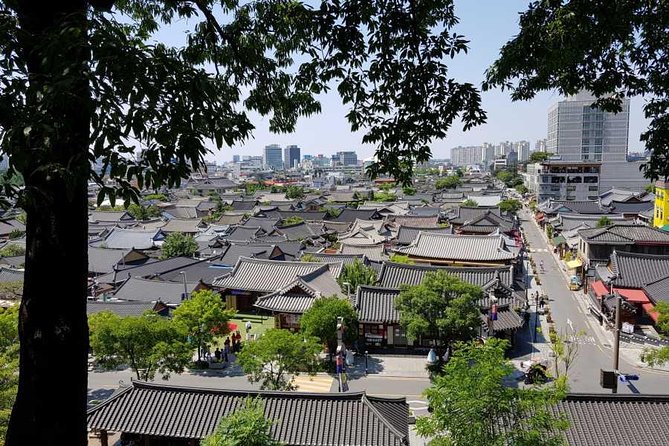
- 800 traditional homes in an urban setting: Jeonju Hanok Village gives you a large, walkable look at Korean architecture without leaving the city center.
- Gyeonggijeon Shrine included: This historic site holds a portrait of King Tae-jo, founder of the Joseon dynasty, and adds meaning to the village visit.
- Hotel pickup at 7:00 am: You meet the guide in your hotel lobby, which is simpler than finding an unfamiliar meeting point before sunrise.
- Small group capped at nine people: A smaller party should make walking, questions, and food suggestions easier than on a full coach tour.
- Guide Jason receives special praise: His shrine explanation, local food recommendations, and friendly approach are important strengths of this experience.
- Return to Myeongdong Station: The day ends in central Seoul, but not at your hotel, so plan your evening from that location.
Why Jeonju is worth the long ride from Seoul
Jeonju is not a quick side trip from Seoul. The drive takes about three hours each way, so the question is not simply if the village is attractive. The real question is if you want to give up a full day for a slower look at traditional Korea.
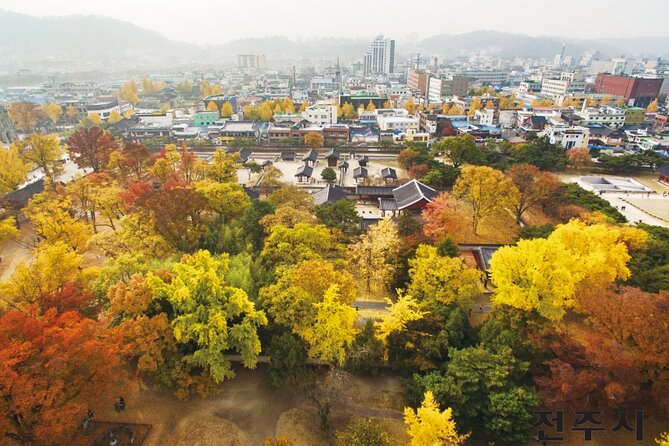
For me, the answer makes sense if you care about architecture, food, and cultural background. Jeonju Hanok Village contains more than 800 traditional houses, with about 700 hanoks in the main Pungnam-dong area. These homes are not isolated museum pieces. They form a traditional district within the modern city of Jeonju.
That setting gives the visit its appeal. You can see how older Korean building styles fit into a living urban area, rather than viewing one preserved house behind a fence. The village also connects several parts of Korean culture, including hanok architecture, Korean food, hanji paper, hanbok clothing, and traditional medicine.
The numbers need a little care. The tour information refers to more than 800 traditional houses across the village and also describes about 700 hanoks in Pungnam-dong. Either way, you are visiting one of Korea’s largest concentrations of traditional homes, not a small reconstructed street.
The long road from Seoul is the cost of reaching that setting. You will not have much free time in Seoul that day, and the return trip can make the day feel tiring. Still, the schedule gives you four hours in and around Jeonju Hanok Village, which is enough time to see the main area without racing from one photo stop to another.
More Hanok Village Tours in Jeonju
- Maisan Cherry Blossom and Jeonju Hanok Village
★ 5.0 · 8 reviews - Jeonju Hanok Stay & Mt. Jiri Hiking from Seoul
★ 5.0 · 6 reviews - Private Jeonju Hanok Village – Culinary tour
★ 5.0 · 4 reviews
A 7:00 am pickup that keeps the morning simple
Pickup takes place at your hotel’s first-floor lobby, with departure scheduled for 7:00 am. You are asked to be ready 15 minutes early, so 6:45 am is the sensible target. That small detail matters because a late start could affect the fixed shrine and village schedule.
Hotel pickup is one of the tour’s strongest practical features. Seoul is a large city, and getting across town to a meeting point before breakfast can be a chore. Here, you only need to reach your lobby and wait for the guide.
The group has a maximum of nine people. That is a useful middle ground. You get the convenience of organized transport and a professional English-speaking local guide without joining a large sightseeing bus.
The tour does not provide a return trip to your hotel. After the Jeonju visit and the drive back, drop-off is at Myeongdong Station between about 3:30 and 7:00 pm. The exact return timing depends on the road, but the overall experience lasts about 12 hours.
That ending works well if you plan to eat, shop, or continue sightseeing in Myeongdong. It is less convenient if your hotel is far away or if you have an evening reservation elsewhere in Seoul. I would avoid booking a strict nighttime activity after this day.
The three-hour journey to Jeonju
The first part of the day is transportation, not sightseeing. You travel from Seoul to Jeonju for about three hours. That is a serious block of time, but it also explains the value of having someone else handle the route.
The tour gives you a full day away from Seoul without asking you to arrange intercity transportation, locate the village, or coordinate separate admission tickets. If you were already planning to visit Jeonju, the organized ride can remove several moving parts.
On the other hand, this is not the best choice for someone who dislikes long road journeys. You spend around six hours on the road in total, and the village visit must justify that time for you.
I would bring water and plan to buy lunch during the Jeonju portion. Food is not included, and neither lunch nor dinner is provided. Since the guide can recommend local food, you have a better chance of choosing something connected to Jeonju rather than settling for a familiar chain meal.
Gyeonggijeon Shrine and the Joseon royal portrait
The first scheduled sightseeing stop is Gyeonggijeon Shrine, from about 11:00 to 11:30. Admission is included, and the visit gives you a focused introduction before the longer village walk.
Gyeonggijeon was built in 1410 and is listed as Historic Site No. 339. It holds a portrait of King Tae-jo, the founder of the Joseon dynasty. The shrine was first called Eoyongjeon, and parts of it were destroyed during the Imjin War from 1592 to 1598. Restoration took place in 1614.
Those dates are more useful when you can connect them to a place. At Gyeonggijeon, the Joseon dynasty is not just a name from a textbook. The shrine links the city to the royal family and to the long period when Joseon shaped Korean government, culture, and daily life.
Thirty minutes is a short visit, so do not expect an exhaustive study of every building or artifact. The advantage is focus. With an English-speaking local guide, you can spend the time understanding why the site matters instead of trying to translate every sign.
This is also where the guide can make a major difference. Jason is specifically praised for walking through Gyeonggijeon Shrine while explaining its historical setting. If your visit is led by him, his approach appears to be one of the experience’s best features: personal, clear, and connected to the rest of the day.
More Hanok Village Tours in Seoul:
- Seoul: Gyeongbok Palace, Bukchon Village, and Gwangjang Tour
★ 4.9 · 2,321 reviews - Seoul City Sightseeing Tour Including Gyeongbokgung Palace, N Seoul Tower, and Namsangol Hanok Village
★ 5.0 · 1,423 reviews - Seoul: Gyeongbok Palace, Bukchon Village, and Gwangjang Tour
★ 5.0 · 1,044 reviews - Seoul: Gyeongbok Palace and Bukchon Hanok Walking Tour
★ 4.8 · 157 reviews
Four hours among Jeonju’s hanok homes
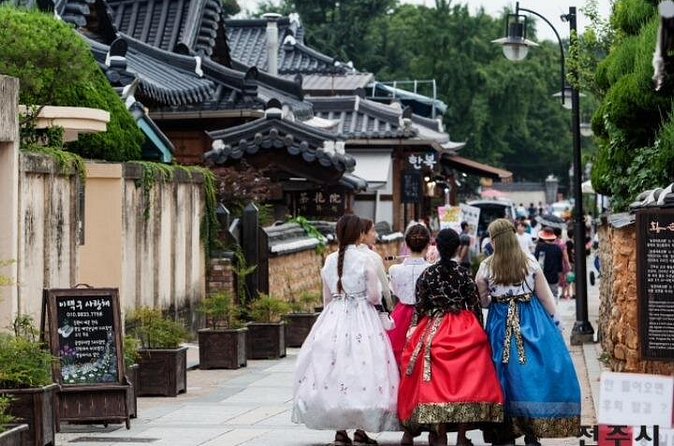
From about 11:30 am to 3:30 pm, the tour centers on Jeonju Hanok Village. Four hours gives you room to walk at a reasonable pace, look at the homes, pause for food, and follow your own interests.
A hanok is a traditional Korean house. In Jeonju, the houses are gathered in a large district rather than displayed as a single historic building. That makes the experience more varied. You see streets, homes, businesses, and cultural attractions sharing the same area.
The village is located across Pungnam-dong and Gyo-dong. Its importance comes partly from its place in the development of modern residential culture in Korea, which began changing around 1910. The district shows how traditional forms continued to exist as Korea became more modern.
I like that this is not presented as only an architecture stop. The village also represents Korean food, hanji, hanbok, and oriental medicine. You can think of it as a place where several parts of Korean culture meet, rather than a row of attractive roofs made only for photographs.
Four hours can feel generous or short depending on your habits. If you want only a quick look at the roofs and lanes, you may have spare time. If you want to stop for lunch, browse cultural shops, take photographs, and listen to the guide, the block will pass quickly.
The village is a tourist destination, so it is not a completely quiet historic quarter. Its appeal comes from the mix of preserved homes and modern use. You should expect a popular destination with places to eat and shop, not an untouched old town.
Local food advice adds value to the free time
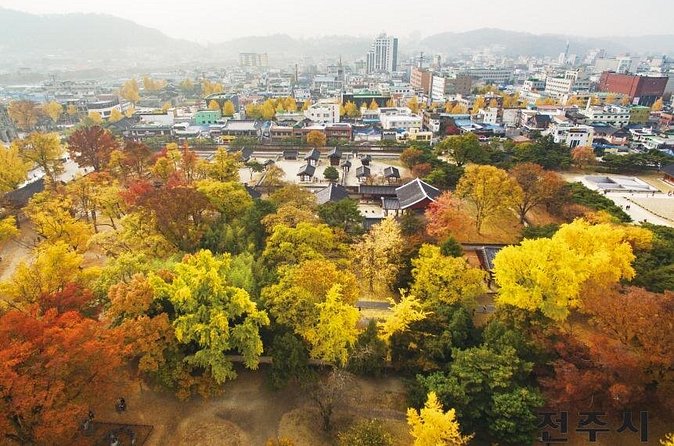
Lunch and dinner are not included, which keeps the base price from climbing but leaves you responsible for one of the day’s main pleasures. Jeonju is presented as a place strongly tied to Korean food, so I would treat lunch as part of the cultural experience, not as a minor break.
The guide can help you choose. Jason is praised for recommending delicious local food, and that kind of advice is especially useful when you have only a few hours and do not speak Korean. A local suggestion can save you from spending your limited village time comparing menus or choosing at random.
The tour does not specify a restaurant, menu, or meal budget. Keep that uncertainty in mind when calculating the real cost. The $110 price covers transportation, the guide, admission fees, taxes, and hotel pickup, but your food is extra.
I see this as a fair trade. You keep control of what and when you eat, but you should bring enough money and time for lunch. If you want a fully prepaid food tour, this is not that kind of experience.
What the $110 price really covers
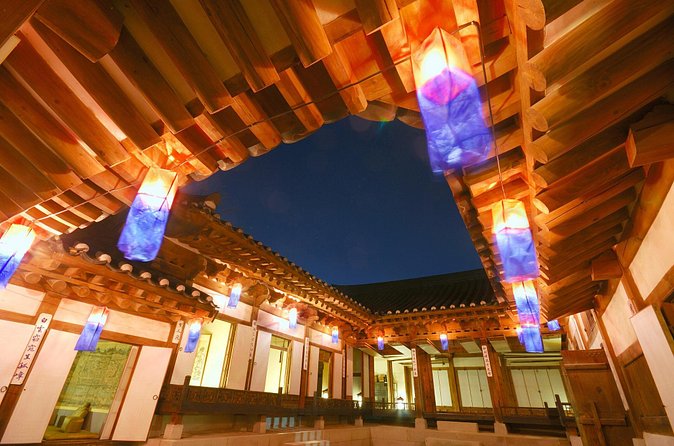
At $110 per person, this is not the cheapest way to see Jeonju. The price becomes easier to defend when you count the long round-trip transport, hotel pickup, English-speaking guide, admission to Gyeonggijeon Shrine, admission to the hanok village attraction, and the small group size.
The included transport is the biggest value. Jeonju is far enough from Seoul that arranging the day independently requires more planning and leaves you to manage the return journey. This tour puts the driving and timing in someone else’s hands.
The guide adds value in places where self-guided sightseeing can feel thin. The strongest example is Gyeonggijeon, where dates, names, and royal connections can blur together without explanation. Food suggestions during the village visit are another practical benefit.
Still, you should not expect every expense to disappear. Personal spending, lunch, and dinner are excluded. You also pay for convenience and structure, not a packed schedule of many attractions. The day focuses on two main places, with most of the sightseeing time given to the village.
For someone with only a few days in Seoul, the price may be reasonable if Jeonju is a priority. For a visitor who wants to keep costs low or prefers independent train travel, it may feel high.
The small group and guide can shape the day
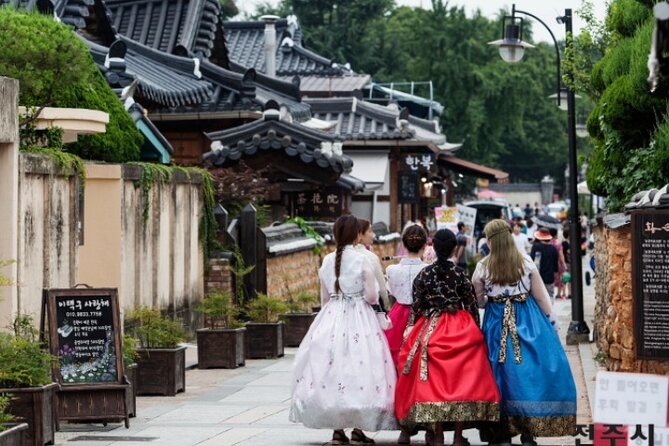
A maximum of nine people makes this more personal than a large bus outing. You should have a better chance to hear the guide, ask questions, and stay together while walking through the shrine and village.
The experience includes a professional English-speaking local guide. The most positive detail available is the praise for Jason, who combined a guided shrine visit with local food recommendations and exploration of the temple area. The description also presents him as friendly enough to make the day feel social rather than purely instructional.
That matters on a 12-hour outing. Long transport becomes easier when the guide is approachable and the group feels comfortable. The value is not just factual information. It is also having someone help you understand where to eat and how the different parts of Jeonju connect.
The group minimum is two people per booking. If the required minimum is not met, the experience may be canceled, with an alternative date or experience, or a full refund offered. This is worth knowing if your plans are tightly fixed.
Who should book this Jeonju experience?
I would recommend it to you if you want a guided cultural day outside Seoul and do not want to arrange the transport yourself. It suits people who enjoy traditional buildings, royal sites, Korean food, and a relaxed block of time in one main district.
It also fits first-time visitors who want context. The guide’s explanation at Gyeonggijeon and food advice in the village can make the day easier and more rewarding than simply arriving with a map.
Families and older adults may appreciate hotel pickup and the small group, though the experience still involves walking around the village. The tour data says most people can participate, but it does not provide detailed mobility information, so anyone with specific access needs should ask before booking.
I would hesitate if you have only one or two days in Seoul and want to focus on the capital. I would also hesitate if a long road journey sounds unpleasant, if you need to return to your hotel, or if you want a fully flexible schedule.
The non-refundable policy deserves real attention. Once booked, the experience cannot be changed or refunded for personal cancellation. Since the day starts early and depends on a minimum group size, confirm your Seoul plans before committing.
Should you book the Jeonju Hanok Village Tour?
Book it if Jeonju’s traditional homes are high on your list and you value a guide, hotel pickup, and managed transportation more than a low-cost independent day. The strongest reasons are the four hours in the village, the focused visit to Gyeonggijeon Shrine, and the chance to receive local food advice from a guide such as Jason.
Skip it if you dislike spending six hours on the road or if you need complete control over your schedule. At $110, it is a convenience-focused day trip, not a bargain excursion.
For the right visitor, the long ride is a fair price for seeing a different side of Korea. You leave central Seoul, learn why Jeonju matters, and walk through a traditional district that still functions inside a modern city.
FAQ
What time does the tour start?
The tour starts at 7:00 am. You should wait in your hotel’s first-floor lobby and be ready 15 minutes before departure.
Where does hotel pickup take place?
Pickup takes place at your hotel’s first-floor lobby.
How long does the experience last?
The tour lasts approximately 12 hours. The schedule includes about three hours of travel to Jeonju, sightseeing from roughly 11:00 am to 3:30 pm, and the return trip to Seoul.
Is lunch included?
No. Lunch, dinner, and personal expenses are not included in the price.
Where is the drop-off point?
Drop-off is at Myeongdong Station in Seoul, not at your hotel.
How many people can join the tour?
The tour has a maximum of nine participants, and at least two people are required per booking.
Just added in Seoul
- Seoul: Korean & English Language Exchange Global Party★ 5.0 · 28 reviews
- Your Personal Seoul Photographer!★ 4.1 · 15 reviews
- You’re Invited to Our Home in Seoul: The Only Cooking Class!★ 5.0 · 8 reviews
- From Seoul: Yongpyong Ski Day Tour with Transportation★ 4.9 · 40 reviews
- From Seoul: Hwacheon Ice Fishing and Lighting Festival Tour★ 4.5 · 4 reviews
- Seoul: Gangneung BTS K-Pop & K-Drama Filming Locations Tour★ 4.6 · 14 reviews
- Unique Native Experience : Han River Picnic, Board game, BBQ★ 5.0 · 3 reviews
- Seoul: Euljiro Gastroventure Tour★ 4.0 · 1 review
Hanok Village Tours, compared.
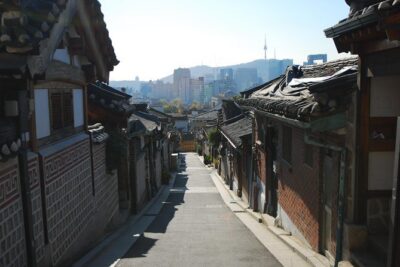
Gyeongbok Palace, Bukchon Village, and Gwangjang Tour
Read our review →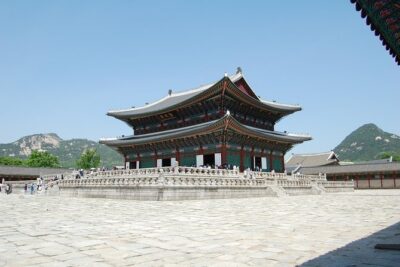
Seoul City Sightseeing Tour Including Gyeongbokgung Palace, N Seoul Tower, and Namsangol Hanok Village
Read our review →Gyeongbok Palace, Bukchon Village, and Gwangjang Tour
Read our review →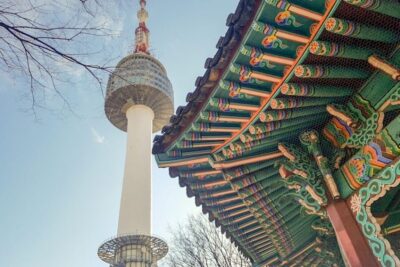
Gyeongbok Palace and Bukchon Hanok Walking Tour
Read our review →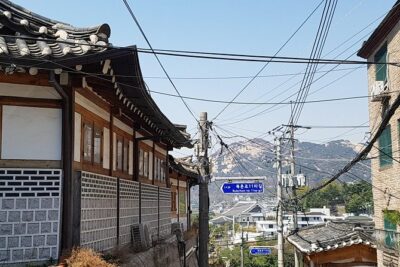
Best Walking Tour to Gyeongbok Palace Bukchon Hanok Village
Read our review →
Royal Seoul Cooking Class in a 100-Year-Old Hanok
Read our review →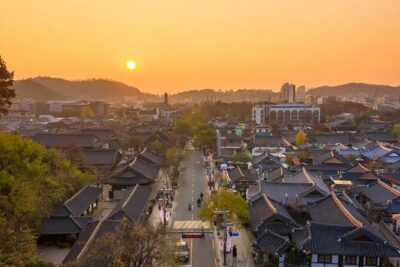
Jeonju Hanok Village Full-Day Tour:Jangtaesan Autumn Foliage
Read our review →
Afternoon Seoul: Hanok Vibes, Netflix Street Food & N Seoul Tower
Read our review →Browse the lists this tour appears in