
Reviewed · HANOK VILLAGE TOURS
Jeonju Hanok Village and Maisan Tapsa Temple Day Tour From Seoul
Tradition comes dressed in silk here. This day trip links Jeonju’s old tiled houses with the unusual stone pagodas of Maisan Tapsa Temple, giving you both Korean culture and mountain scenery in one long day. I especially like the included hanbok experience, which turns a walk through Jeonju into something more memorable, and the small group size, capped at nine people.
The main trade-off is time. Jeonju is a long way from Seoul, and the village stops are fairly short, with about one hour listed for the main village visit. Lunch is not included, and the day requires moderate physical fitness, especially at the temple.
In This Review
- Quick points before you book
- Why Jeonju makes a good day away from Seoul
- Gyeonggijeon Shrine and the Joseon royal portrait
- Hanbok in Jeonju Hanok Village
- Jeondong Catholic Church and Korea’s early Catholic story
- Pungnammun Gate and the old city fortress
- The stone towers of Maisan Tapsa Temple
- What the $60 price really includes
- A long day that rewards an early start
- The best season and the best kind of visitor
- How this tour compares with going independently
- Should you book the Jeonju and Tapsa day tour?
- FAQ
- How much does the tour cost?
- How long does the experience last?
- Is transportation included?
- Is the hanbok experience included?
- Are entrance fees included?
- Is lunch included?
- Are hair accessories and hats included with the hanbok?
- How many people can join the tour?
- Is travel insurance included?
- Can I cancel for a full refund?
Quick points before you book
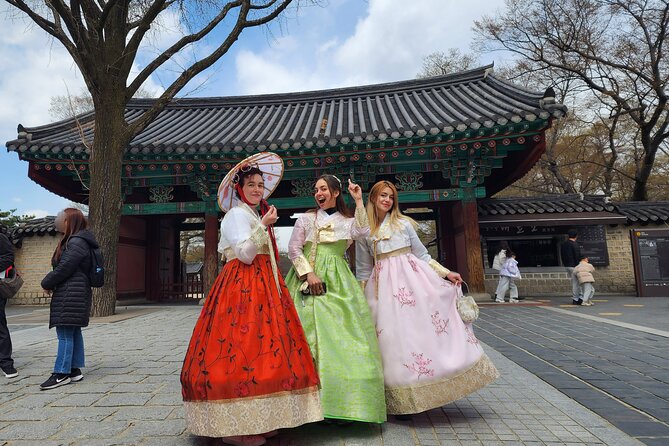
- Hanbok time is included: You get a basic traditional outfit for 1.5 hours, with hair accessories and hats available at your own cost.
- Two very different sights: Jeonju offers tiled roofs, royal history, food, and Catholic heritage. Maisan offers a quiet temple and mysterious stone towers.
- The group stays small: A maximum of nine people makes this more personal than a large coach excursion.
- The price covers the big costs: At $60 per person, round-trip transport, entrance fees, the hanbok session, and car accident insurance are included.
- The day is tightly packed: The experience lasts about 8 to 10 hours, so you get a lot in one outing but little free time at each stop.
- Guide Dos may lead the day: Dos, who runs Dream Journey Korea, is specifically praised for keeping the tour going even when only one person remained booked and for accommodating a family.
Why Jeonju makes a good day away from Seoul
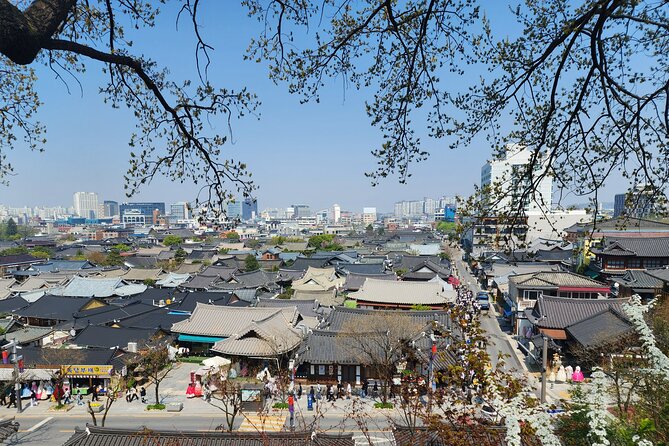
Jeonju gives you a clear look at traditional Korean architecture without requiring a museum-only visit. Jeonju Hanok Village contains roughly 700 to 800 traditional houses, with curved rooflines, narrow lanes, and buildings that make a strong contrast with Seoul’s modern streets.
The village is also a food stop. The tour description points you toward bibimbap, one of Jeonju’s best-known dishes, along with other snacks sold around the lanes. Since lunch is not included, you can use the meal as a chance to choose what appeals to you rather than accepting a fixed restaurant menu.
I like that the tour does not treat Jeonju as just a pretty photo backdrop. The route includes a royal shrine, a Catholic cathedral, and an old fortress gate. Each stop gives you a different piece of the city’s story.
The visit is also popular. Jeonju Hanok Village attracted 15 million tourists in 2024, according to the supplied tour information. That popularity means you should expect a well-known attraction rather than a quiet village with no other sightseers.
More Hanok Village Tours in Jeonju
- Jeonju Hanok Village Full-Day Tour:Jangtaesan Autumn Foliage
★ 4.7 · 45 reviews - Jeonju Hanok Village Full-Day Tour: Jangtaesan Autumn Foliage
★ 5.0 · 16 reviews - Maisan Cherry Blossom and Jeonju Hanok Village
★ 5.0 · 8 reviews
Gyeonggijeon Shrine and the Joseon royal portrait
The first major stop is Gyeonggijeon Shrine, with about one hour set aside and admission included. The shrine was built to hold the portrait of the first king of the Joseon dynasty, giving the visit a direct link to Korea’s royal past.
This is a strong place to begin because the buildings and grounds create a clear sense of ceremony. Wearing a hanbok here also makes visual sense, and you can take traditional-style photos among the shrine buildings.
The one-hour schedule should give you enough time to see the main areas and take pictures, but it is not an open-ended historical visit. If you like reading every sign or lingering over architectural details, you may want to move efficiently.
The included entrance fee matters here. You do not need to budget separately for the shrine, and the guide can help make the stop more than a quick walk through attractive buildings.
Hanbok in Jeonju Hanok Village
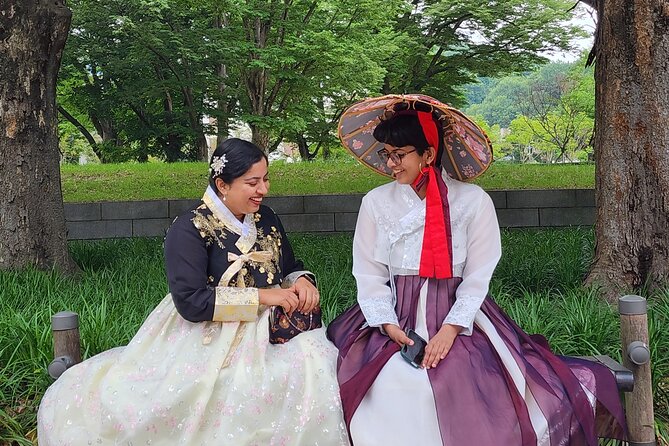
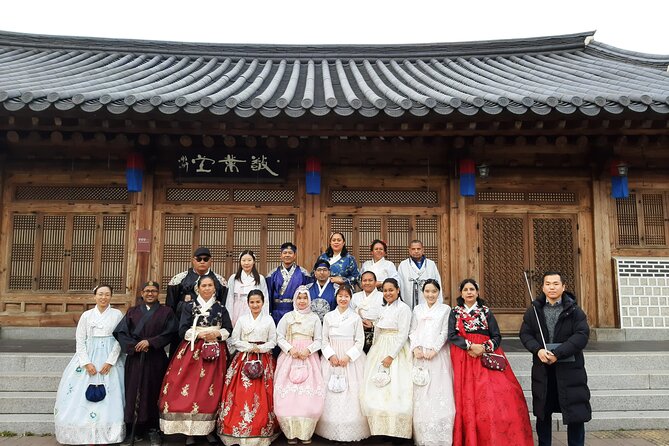
The basic hanbok experience lasts 1.5 hours and is included in the $60 price. You can wear Korean traditional clothing while walking through the village, which adds a playful, visual side to the cultural visit.
The tour does not include hair accessories or hats, so plan on paying extra if you want those additions. The included option is described as basic, which is useful to know if you are expecting an elaborate costume session.
I like the length of the clothing rental. Ninety minutes is long enough for photos and a proper stroll, rather than a rushed change-and-return arrangement. At the same time, it does not take over the entire day.
The village portion itself is listed at about one hour, so the hanbok session and sightseeing schedule are closely connected. You may spend part of the clothing time taking pictures near the traditional houses, then use the remaining minutes to sample food or look through the lanes.
This is one of the tour’s best features for families and first-time visitors to Korea. It gives you a simple activity with a clear purpose, and the outfit helps you feel part of the setting rather than just passing through it.
Jeondong Catholic Church and Korea’s early Catholic story
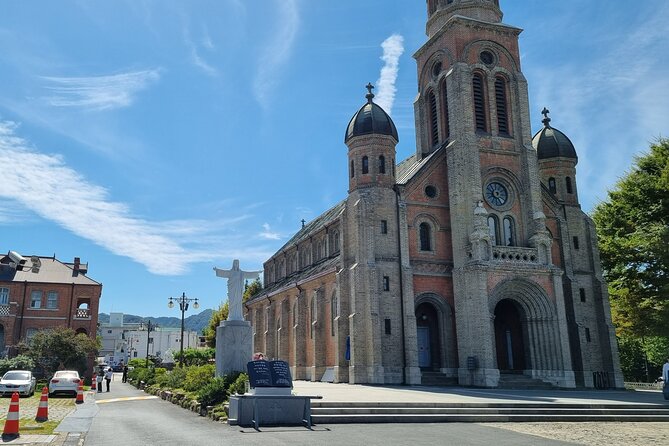
Jeondong Catholic Church receives a short 10-minute stop. That is enough for a quick look at the building and its setting, but not enough for a long interior visit or detailed study.
The church is described as the first Catholic martyrium in Korea. That makes it an important counterpoint to the royal material at Gyeonggijeon Shrine. You are not seeing only traditional houses and palace-style buildings. You are also seeing a place connected with the early and difficult history of Catholicism in Korea.
The short timing is the main limitation. Treat this as a brief architectural and historical pause, not a full church tour. It works well in a packed day because it adds another layer to Jeonju without taking you far from the central sights.
A completely different kind of day:
- Jeonju: Private Taxi Tour Car Charter
★ 4.8 · 8 reviews - Jeonju Hanok Stay & Mt. Jiri Hiking from Seoul
★ 5.0 · 6 reviews - Jeonju: Essence of Jeonju, Hanok Village & Maisan Mountain
★ 5.0 · 6 reviews - Private Jeonju Hanok Village – Culinary tour
★ 5.0 · 4 reviews
Pungnammun Gate and the old city fortress
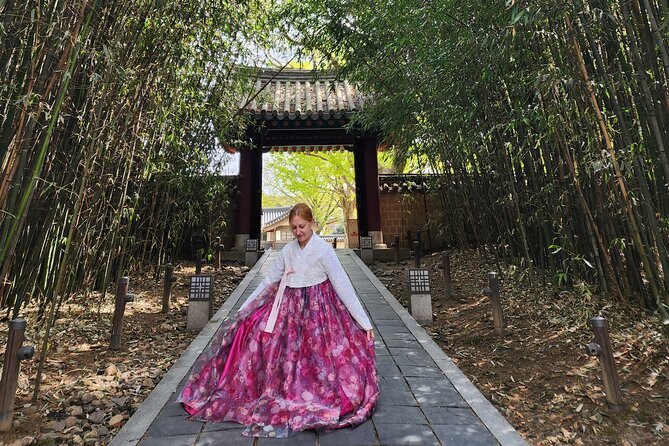
Pungnammun Gate is another quick stop, listed at about 10 minutes. It was the main gate of Jeonju’s city fortress, so it gives you a compact look at the city’s defensive past.
Ten minutes is suitable for photographs and a short explanation. You will not have time for a long walk around the former fortress area, but the stop breaks up the day and helps explain how Jeonju was organized before modern roads and urban growth changed the city.
These two brief visits, the church and the gate, are useful because they prevent the itinerary from becoming only a hanok photo session. They also show why this tour is more than a clothing rental with transport.
The stone towers of Maisan Tapsa Temple
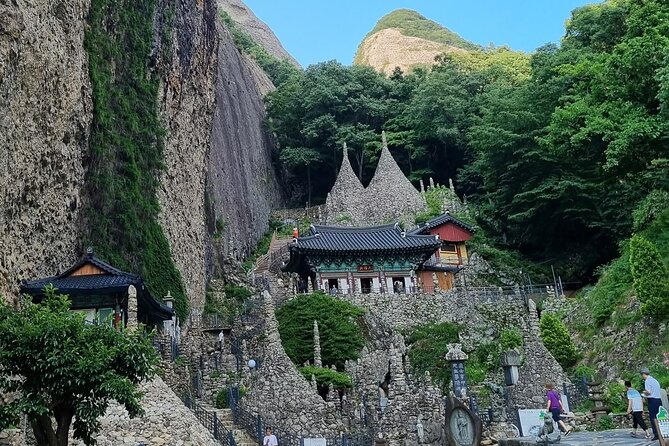
The final major sight is Tapsa Temple, with about 1 hour and 10 minutes planned and admission included. The temple is known for its unusual stone pagodas, described as looking like upside-down icicles.
That shape is the reason to make the trip. The towers have a strange, almost improbable appearance, and the temple setting gives you a quieter change of pace after Jeonju’s busy cultural district. CNN has selected Tapsa Temple as one of South Korea’s most beautiful temples, according to the tour information.
The attraction here is not only the pagodas. You also get mountain scenery and a peaceful Buddhist setting. The contrast is useful: Jeonju gives you streets, food, clothing, and city history, while Tapsa gives you stillness, stone, and nature.
You should be ready to walk. The tour asks for moderate physical fitness, and the temple visit will likely feel more active than the short urban stops. The supplied information does not give a precise elevation, stair count, or route length, so you should not expect a detailed accessibility plan.
The 70-minute stop is a sensible amount of time for seeing the pagodas and taking in the grounds. It is long enough to avoid a rushed photograph, though anyone hoping for a long temple stay or a serious mountain walk may find the schedule limited.
What the $60 price really includes

At $60 per person, the tour offers good value if you want transport and several paid elements handled in one booking. The price includes round-trip transportation, every entrance fee, the basic 1.5-hour hanbok experience, and car accident insurance.
The inclusion of transportation is important. Jeonju and Maisan are separate destinations, and arranging both independently would require more planning than visiting one central Seoul attraction. You are paying for a full day of movement as well as the sights.
Lunch is not included. Set aside money for a meal in Jeonju, where bibimbap and local snacks are part of the appeal. You should also budget for any hanbok hair accessories or hats.
Travel insurance is not included either. The supplied information confirms insurance for car accidents, but that is not the same as a personal travel policy covering illness, lost belongings, or other trip problems.
A small group of no more than nine people adds value. You avoid the scale of a large bus group, and it should be easier to hear explanations and ask Dos questions. The positive feedback specifically praises the guide for accommodating a family, which suggests some flexibility in how the day is handled.
A long day that rewards an early start
The total duration is about 8 to 10 hours. That makes this a serious day trip from Seoul, not a casual half-day outing.
You should expect much of the day to be shaped by transport between Seoul, Jeonju, and Maisan. The benefit is that you can see two destinations in one booking. The cost is less free time and a more structured pace.
The schedule also depends on the group. The maximum is nine, but the experience may feel different with only a few people compared with a full small group. One particularly positive account describes Dos continuing with the tour even when other bookings were cancelled and only one participant remained.
That detail matters if you worry about a small-group tour being called off because of low numbers. It does not guarantee how every future departure will operate, but it shows a willingness to provide the experience even when the group is tiny.
The tour has a mobile ticket, and confirmation is provided when you book. It is near public transportation, and service animals are allowed. These are useful practical points, but the key planning issue remains the long day and moderate walking requirement.
The best season and the best kind of visitor
Spring and fall are likely the most comfortable times for this itinerary because you will be outside at the shrine, village, gate, church, and temple. One piece of direct feedback calls out spring or fall as the preferred seasons for doing the trip again.
That seasonal advice makes sense for a route with both city walking and temple grounds. Summer heat or winter cold could make the hanbok portion and the Tapsa visit less comfortable, though the supplied information does not promise any particular weather conditions.
I would recommend this experience to you if you want several sides of Korea in one day:
- You want to wear a hanbok without arranging a rental yourself.
- You want Jeonju’s traditional houses and food but also want a nature stop.
- You prefer a group of nine or fewer.
- You want entrance fees and transport bundled into one price.
- You are comfortable with a full day and moderate physical activity.
- You are happy with short stops at some sights.
I would be more cautious if you prefer slow travel. One hour in the main village and 10 minutes at both the church and gate leave little room for wandering. You may also prefer an independent Jeonju visit if eating is your main goal, since lunch is not part of the tour and the schedule controls how long you can stop.
How this tour compares with going independently
An independent trip gives you more control over your meals, shopping, photo stops, and time inside Jeonju Hanok Village. You could spend a whole day in the village and skip Maisan if you wanted a slower visit.
This guided option earns its place by joining two destinations that are not simply next door. Round-trip transportation removes much of the route planning, while the guide provides context at the shrine, cathedral, gate, and temple.
The hanbok inclusion is another advantage. If you were already planning to rent traditional clothing in Jeonju, the tour may reduce the separate work and expense. If you have no interest in wearing hanbok, part of the tour’s value becomes less important.
At $60, I see the tour as a practical package rather than a luxury experience. You get a lot of ground covered, but you trade personal control for convenience.
Should you book the Jeonju and Tapsa day tour?
Book it if you want a full cultural day with a strong visual element, especially the hanbok walk through Jeonju and the strange stone pagodas at Tapsa. The combination is unusual, and the small group, included entrances, and round-trip transport make the price appealing.
Skip it if you want a slow, food-focused Jeonju visit or dislike long days with several timed stops. For everyone else, this is a well-packed way to move beyond Seoul, with enough variety to keep the day interesting and a guide such as Dos adding a personal touch.
FAQ
How much does the tour cost?
The tour costs $60 per person.
How long does the experience last?
The tour lasts approximately 8 to 10 hours.
Is transportation included?
Yes. Round-trip transportation is included.
Is the hanbok experience included?
Yes. A basic hanbok-wearing experience lasting 1.5 hours is included.
Are entrance fees included?
Yes. Every entrance fee listed for the experience is included.
Is lunch included?
No. Lunch is not included, so you should plan to pay for your own meal.
Are hair accessories and hats included with the hanbok?
No. Hair accessories and hats are not included.
How many people can join the tour?
The tour has a maximum group size of nine people.
Is travel insurance included?
No. The tour includes insurance for car accidents, but personal travel insurance is not included.
Can I cancel for a full refund?
Yes. You can cancel up to 24 hours before the experience starts for a full refund. Changes or cancellations made less than 24 hours before the start time are not accepted for a refund.
More Temple Visits in Jeonju
- Donghaksa Temple Cherry Blossom and Jeonju Hanok Village
★ 5.0 · 2 reviews - Seoul: Mt Seorak + Naksansa Temple or Nami Island Group Tour
★ 4.7 · 422 reviews - Best Things to Do – Half Day Seoul Trip (Seoul Palace & Temple)
★ 5.0 · 190 reviews - Mount Seorak and Naksansa Temple One Day Tour from Seoul
★ 4.5 · 167 reviews
Just added in Jeonju
- Explore Jeonju/Yeosu/Suncheon with Private Day Tour from Gwangju★ 5.0 · 1 review
- Jeonju Hanok Stay & Mt. Jiri Hiking from Seoul★ 5.0 · 6 reviews
- Private Jeonju Hanok Village – Culinary tour★ 5.0 · 4 reviews
- Jeonju & Yeosu: 4-Day Foodie & Artist Journey★ 5.0 · 3 reviews
- Jeonju Hanok Village Tour★ 5.0 · 1 review
- Gwangyang Maewha Flower and Jeonju Hanok Village 1 day trip from Seoul★ 5.0 · 2 reviews
- Donghaksa Temple Cherry Blossom and Jeonju Hanok Village★ 5.0 · 2 reviews
- Jeonju – Southern Korea (Private tour)★ 5.0 · 4 reviews
Hanok Village Tours, compared.
Gyeongbok Palace, Bukchon Village, and Gwangjang Tour
Read our review →
Seoul City Sightseeing Tour Including Gyeongbokgung Palace, N Seoul Tower, and Namsangol Hanok Village
Read our review →Gyeongbok Palace, Bukchon Village, and Gwangjang Tour
Read our review →
Gyeongbok Palace and Bukchon Hanok Walking Tour
Read our review →
Best Walking Tour to Gyeongbok Palace Bukchon Hanok Village
Read our review →
Royal Seoul Cooking Class in a 100-Year-Old Hanok
Read our review →
Jeonju Hanok Village Full-Day Tour:Jangtaesan Autumn Foliage
Read our review →
Afternoon Seoul: Hanok Vibes, Netflix Street Food & N Seoul Tower
Read our review →Browse the lists this tour appears in