
Reviewed · DMZ TOURS
Paju DMZ : 3rd Tunnel, Gondola, Former US Military Base fr Seoul
History is never far away here. This full-day Paju DMZ tour from Seoul takes you to places where Korea’s division feels tangible, from the underground 3rd Tunnel to Dora Observatory, where you can look toward North Korea. I especially like the Peace Gondola ride across the Imjin River and the chance to visit Camp Greaves, a former US military base that gives the day a less familiar angle. The main drawback is the long 9 to 10-hour schedule, with a fair amount of time spent on the road and strict passport requirements.
The tour also works well for first-time visitors because transportation, entry fees, the gondola, and an English or Chinese-speaking guide are included. Guides Julie and Stella received particular praise for keeping the history clear and making sure everyone understood what they were seeing. The 3rd Tunnel and Dora Observatory are the strongest stops, but you should be ready for walking, stairs, security checks, and possible itinerary changes caused by weather or security conditions.
In This Review
- Key points at a glance
- Why this Paju DMZ day trip matters
- Imjingak Pyeonghwa Nuri Park: beginning with the human cost
- The Peace Gondola across the Imjin River
- Camp Greaves and the former US military presence
- Entering the 3rd Infiltration Tunnel
- Dora Observatory and the view toward North Korea
- The pace, transport, and group size
- Is the $54.86 price good value?
- Passport rules you cannot ignore
- Who should book this tour?
- FAQ
- How long does the Paju DMZ tour take?
- What is included in the tour price?
- Do I need to bring my passport?
- What passport information is required when booking?
- Is the 3rd Tunnel physically demanding?
- Can the tour be canceled or changed?
- Should you book the Paju DMZ tour?
Key points at a glance
- The 3rd Tunnel is the physical highlight: You go underground through a tunnel North Korea built for a possible invasion of the South.
- The Peace Gondola enters the civilian control zone: The 30-minute ride offers an unusual view across the Imjin River toward a restricted border area.
- Camp Greaves adds a human military story: The former US base operated for about 50 years and was later renovated as an officers’ quarter.
- Dora Observatory looks into North Korea: On a clear day, you may see the North Korean propaganda village across the heavily guarded border.
- The day lasts 9 to 10 hours: This is a serious day trip, not a quick photo stop, and traffic can affect the schedule.
- Your passport details matter: You must provide accurate nationality, passport name, passport number with gender in brackets, and date of birth.
Why this Paju DMZ day trip matters
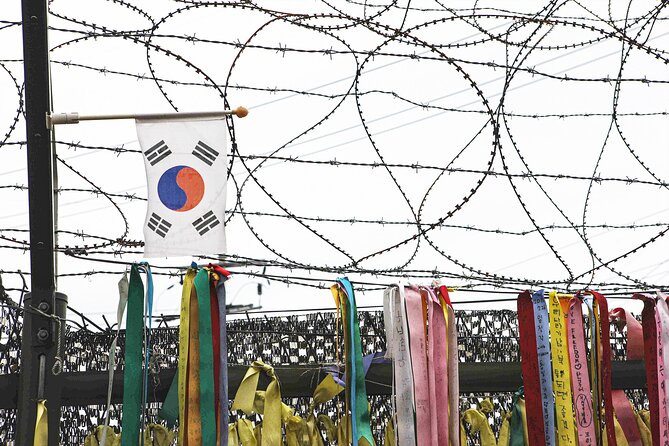
The Korean War ended with a cease-fire on July 27, 1953, not a peace treaty. The two sides pulled their troops back from the Military Demarcation Line, creating the buffer zone known as the Demilitarized Zone, or DMZ.
That background changes the way you experience the day. This is not simply a collection of viewpoints and military exhibits. The DMZ remains part of a divided peninsula, and the stops show different sides of that division: families separated by war, soldiers stationed near the border, tunnels built in secret, and modern efforts to make the area accessible without removing its tension.
I like that the tour does not rely on one attraction alone. Imjingak gives you the emotional and civic context. The gondola offers a view of the restricted zone. Camp Greaves shows the long US military presence in the area. The tunnel makes the threat physical, and Dora Observatory places North Korea directly in front of you.
The guide is important because the sites themselves cannot explain every detail. An English or Chinese-speaking guide accompanies the group, and the praised guides Julie and Stella are noted for explaining events carefully and checking that the group understood. That can make a major difference on a subject filled with unfamiliar military terms and dates.
More DMZ tours:
- Best DMZ Tour Korea from Seoul (Red Suspension Bridge Optional)
★ 5.0 · 41,422 reviews - DMZ Tour: 3rd Tunnel, Option(Suspension Bridge, Boat) from Seoul
★ 5.0 · 21,373 reviews - DMZ tour south Korea from Seoul (NK experience hall, defector)
★ 5.0 · 20,599 reviews
Imjingak Pyeonghwa Nuri Park: beginning with the human cost
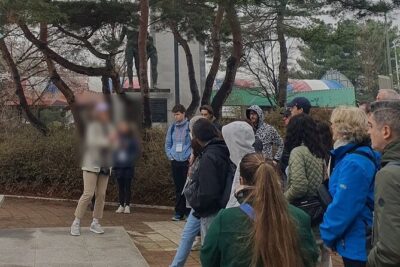
Imjingak is about 7 kilometers from the Military Demarcation Line. The park was created to console people displaced by the Korean War, and its monuments focus attention on separation and loss before you enter the more restricted parts of the day.
You have about 40 minutes here, which is enough to see the main area and understand why this location matters. I would use this first stop to get your bearings rather than rush from monument to monument. The park prepares you for the rest of the tour by showing that the DMZ is not only a military boundary. It is also tied to families who could not return home and a conflict that technically remains unresolved.
The free admission keeps the opening stop simple. Still, 40 minutes is not a long time if you want to study every memorial. Treat it as an introduction, then save your attention for the guide’s explanation and the later sites.
The Peace Gondola across the Imjin River
The Paju Imjingak Peace Gondola is one of the most unusual parts of this tour. In about 30 minutes, you ride across the Imjin River and into the DMZ civilian control zone, an area with tighter limits on movement than an ordinary public park.
The ride gives you a view that is difficult to get from a normal road trip. You can look over the river toward a heavily restricted area separating North and South Korea. The gondola is also a welcome change of pace after the initial historical stop and before the walking sections later in the day.
The ride is included in the tour price, so you do not need to arrange a separate ticket. Keep your expectations realistic, though. This is a short crossing, not a long scenic cable-car journey. Its value comes from where it goes and what the river represents, not from the length of the ride.
I would pay close attention to the guide here. The view may look peaceful, but the surrounding restrictions are a reminder that this is not an ordinary river crossing. The contrast between the calm ride and the guarded border area is part of what makes the stop effective.
Camp Greaves and the former US military presence
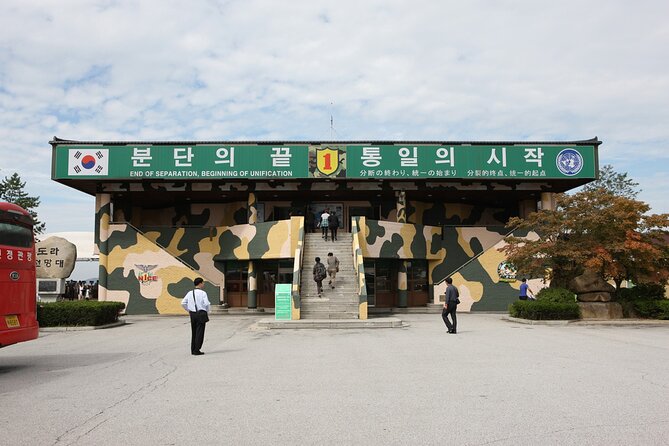
Camp Greaves sits about 2 kilometers from the Southern Limit Line of the DMZ. US forces used the base for roughly 50 years, and the site was renovated as an officers’ quarter in 2013. It now functions as a youth hostel and DMZ experience site.
You have about 1 hour and 10 minutes here. That gives the stop more weight than a quick look at an abandoned military building. Camp Greaves helps explain how the border shaped daily life for service members stationed in the area over many decades.
I like this stop because it broadens the story. The 3rd Tunnel shows a possible act of invasion, while Camp Greaves shows the long period of military readiness that followed the Korean War. You get a sense of how the area remained tied to US and South Korean defense for generations.
The former base may be less immediately dramatic than the tunnel. If your main goal is to see North Korea or walk underground, Camp Greaves might feel slower. Give it time, though. Its value is in the accumulated history of the site rather than one spectacular view.
A few more options to weigh up in Seoul
- Seoul: DMZ Tour with Optional Suspension Bridge
★ 4.8 · 5,277 reviews - Signature DMZ Tour: Exclusive Defector Talk & Suspension Bridge
★ 5.0 · 4,459 reviews - Thrilling Korean DMZ 3rd Tunnel Tour from Seoul + Red Bridge Rush
★ 5.0 · 3,097 reviews - DMZ Past and Present: Korean Demilitarized Zone Tour from Seoul
★ 5.0 · 2,481 reviews
Entering the 3rd Infiltration Tunnel
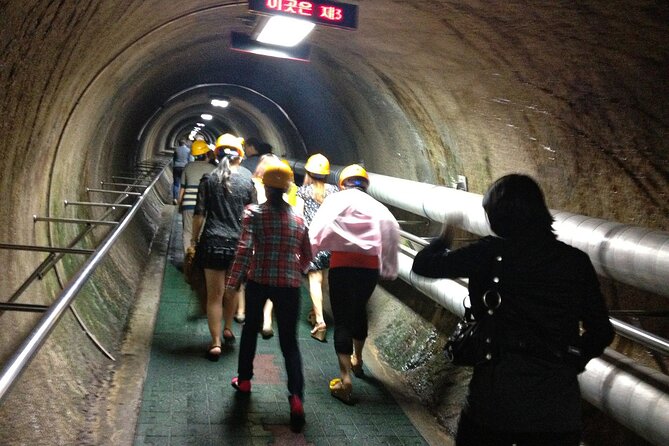
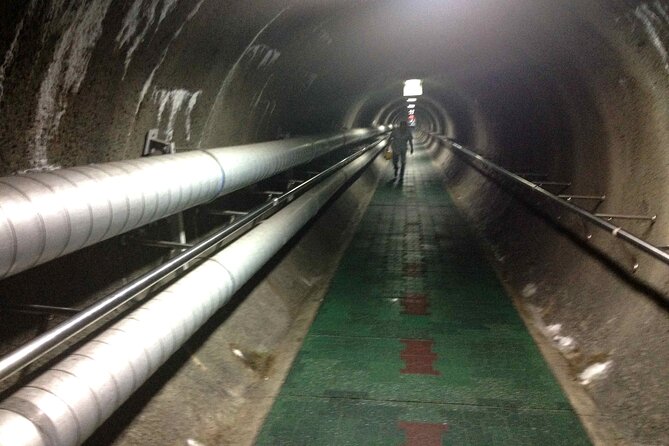
The 3rd Infiltration Tunnel is the stop that gives the DMZ its strongest physical impact. Discovered in 1978, it is one of four tunnels built by North Korea in an attempt to invade South Korea. The tunnel stretches for more than 1.6 kilometers and was large enough to move an estimated 30,000 troops in an hour.
The visit takes about 2 hours, making it the longest individual stop. You go below ground through the tunnel area, and the experience involves walking and a steep underground route. The supplied tour information does not give a specific distance for the public walking section, so be ready for a physical visit rather than a simple museum display.
The tunnel’s power comes from its purpose. A narrow passage cut into rock becomes evidence of military planning and secrecy. You are not merely hearing that the peninsula was divided. You are standing inside a structure designed to move soldiers across that division.
This is also where practical preparation matters most. Wear comfortable shoes and expect the underground section to be more demanding than the observatory or gondola. If you dislike confined spaces or steep walking, this stop may be uncomfortable, even though most people can take part in the activity.
The tunnel was built for speed and military use, not visitor comfort. That is part of its lesson, but it also means you should not expect a polished attraction. The rough, functional setting is precisely why it feels so different from a standard Seoul sightseeing stop.
The two strongest comments attached to this experience singled out the 3rd Tunnel, along with Dora Observatory. One described going down into the tunnel as amazing and fun, while another called it the main highlight. That praise makes sense: this is the point where the history becomes something you can feel in your legs and shoulders.
Dora Observatory and the view toward North Korea
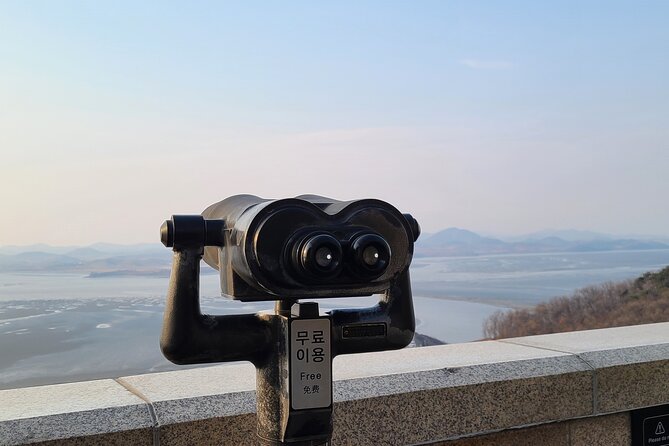
Dora Observatory sits on Mount Dora and looks across the fortified DMZ toward North Korea. You have about an hour here, enough time to listen to the guide, look across the border area, and wait for a clear view.
On a clear day, you may see the North Korean propaganda village. Weather matters greatly. Haze or poor visibility can reduce the view to distant hills and border infrastructure, so you should regard the observatory as a chance to see across the border, not a guaranteed close-up of North Korean life.
That uncertainty is part of the experience. The observatory asks you to look carefully at a distant and tightly controlled area, rather than offering a dramatic city panorama. Your guide can help identify what you are seeing and explain why the area is so heavily guarded.
I would place Dora Observatory among the tour’s essential stops even if the weather is not perfect. The view may change from day to day, but the act of looking toward North Korea from the South gives the day a clear ending. After the tunnel’s underground tension, this stop opens the view outward.
The pace, transport, and group size
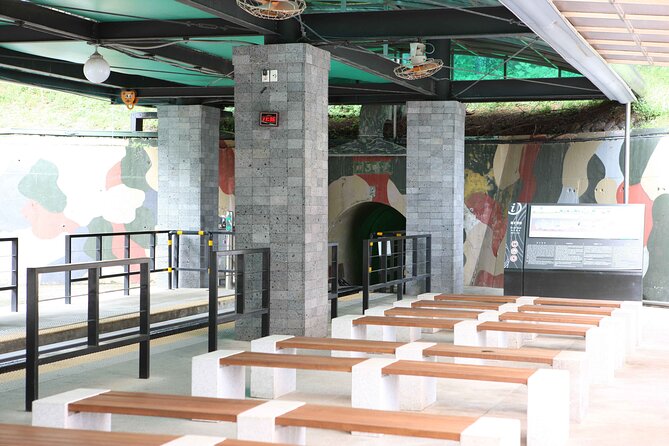
The full experience lasts approximately 9 to 10 hours from Seoul. Round-trip transportation is included, and the tour is near public transportation. Traffic can affect the schedule, so do not plan an important evening commitment immediately afterward.
The listed maximum is 43 people. That is a fairly large group, especially at sites where everyone needs to listen to instructions and move through controlled areas. A good guide becomes even more useful in a group of this size. Julie and Stella were praised for clear explanations and for making sure people understood, which are exactly the skills you want on a border tour.
The schedule is carefully packed:
- Imjingak Pyeonghwa Nuri Park: 40 minutes
- Peace Gondola: 30 minutes
- Camp Greaves: 1 hour and 10 minutes
- 3rd Infiltration Tunnel: 2 hours
- Dora Observatory: 1 hour
The remaining time covers transportation and transitions between locations. You are getting a full day, not a rushed half-day outing. That is good value if you want several DMZ sites in one booking, but it can feel tiring if you prefer a slow morning or independent exploration.
Food is not included. Bring money or plan ahead for meals and personal expenses. Traveler’s insurance is also not included. The tour includes the guide, round-trip transport, DMZ admission, Camp Greaves experience fees, and the gondola ticket, so the main extra costs are meals and personal purchases.
Is the $54.86 price good value?
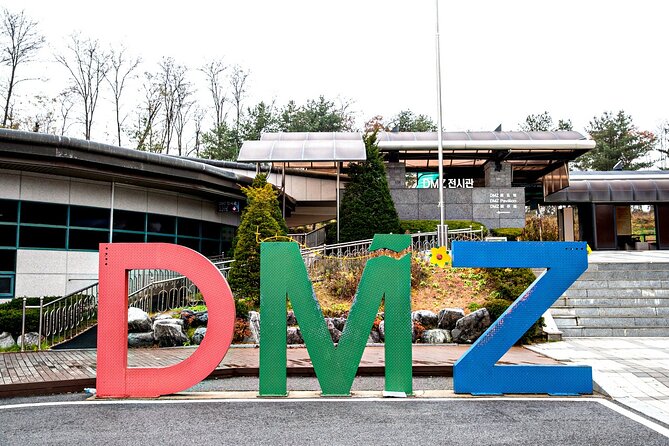
At $54.86 per person, this tour offers solid value for a 9 to 10-hour day. The price includes transportation from Seoul, a guide, DMZ admission fees, Camp Greaves, and the Peace Gondola. Buying each element separately would require more planning, and access to the DMZ involves controls that are easier to handle with an organized group.
The value is strongest if you want the full set of stops. You are not paying only for a viewpoint. You are getting a historical park, a restricted-zone gondola ride, a former US base, an infiltration tunnel, and an observatory aimed at North Korea.
The price is less compelling if you only want a quick look at the DMZ or dislike fixed schedules. The group may include up to 43 people, and traffic or security restrictions can alter the plan. You are paying for access and structure, not total independence.
The tour is often booked around 8 days ahead, so I would avoid leaving it until the last minute if your Seoul schedule is tight. The operator can cancel the activity for security reasons, and the itinerary is subject to weather and traffic. That is not a flaw unique to this tour. The DMZ is an active security area, and access can change.
Passport rules you cannot ignore
A valid passport is required on the tour day. You must also provide accurate details for every person entering the DMZ:
- Nationality
- Passport name
- Passport number, followed by gender in brackets, such as Male or Female
- Date of birth
The information must match the passport exactly. If the details are wrong, you may be denied entry into the DMZ area. Check every spelling and number before submitting the booking information, and carry the same valid passport on the day of the tour.
This requirement is more serious than a routine identification check. The DMZ is a restricted area, so an incorrect passport detail can affect your entire day.
Who should book this tour?
I would recommend it to you if you want history with a strong physical sense of place. The 3rd Tunnel suits people who like unusual sites rather than polished attractions, and Dora Observatory is a must for anyone curious about seeing North Korea from the South.
It also suits first-time visitors to Seoul who want the main Paju DMZ sights in one organized day. The included guide and transport remove much of the planning burden, while Camp Greaves gives the tour more range than a basic tunnel-and-observatory trip.
You may want to skip it if you have limited time in Seoul, need a flexible schedule, or strongly dislike underground spaces. The day is long, meals are not included, and the tour can change because of security or weather. The group limit of 43 also means you should not expect a private, quiet experience.
FAQ
How long does the Paju DMZ tour take?
The experience lasts approximately 9 to 10 hours, including transportation from Seoul and visits to all scheduled sites.
What is included in the tour price?
The price includes round-trip transportation, an English or Chinese-speaking guide, DMZ admission fees, the Camp Greaves experience fee, and the Peace Gondola ticket.
Do I need to bring my passport?
Yes. Every participant must bring a valid passport on the tour day to enter the DMZ area.
What passport information is required when booking?
You must provide each participant’s nationality, passport name, passport number with gender in brackets, and date of birth. The information must match the passport exactly.
Is the 3rd Tunnel physically demanding?
The tour information indicates an underground visit involving walking, and the 3rd Tunnel stop lasts about two hours. Most people can participate, but you should be prepared for a more physical stop than the observatory or gondola.
Can the tour be canceled or changed?
Yes. The itinerary can change because of traffic or weather, and the tour may be canceled for security reasons. You can cancel for a full refund up to 24 hours before the experience start time.
Should you book the Paju DMZ tour?
Book it if you want a serious, well-organized look at Korea’s divided border, not just a quick photo opportunity. The 3rd Tunnel gives the day its strongest moment, Dora Observatory provides the most direct connection to North Korea, and Camp Greaves adds a useful story about the long military presence in the area.
The tour is a good buy at $54.86 because the major admission costs, gondola ride, guide, and transport are already covered. Bring your passport, wear comfortable shoes, leave room in your schedule, and expect a day that is more sobering than entertaining. For many visitors, that is exactly why it belongs on a Seoul itinerary.
Just added in Seoul
- Seoul: Korean & English Language Exchange Global Party★ 5.0 · 28 reviews
- Your Personal Seoul Photographer!★ 4.1 · 15 reviews
- You’re Invited to Our Home in Seoul: The Only Cooking Class!★ 5.0 · 8 reviews
- From Seoul: Yongpyong Ski Day Tour with Transportation★ 4.9 · 40 reviews
- From Seoul: Hwacheon Ice Fishing and Lighting Festival Tour★ 4.5 · 4 reviews
- Seoul: Gangneung BTS K-Pop & K-Drama Filming Locations Tour★ 4.6 · 14 reviews
- Unique Native Experience : Han River Picnic, Board game, BBQ★ 5.0 · 3 reviews
- Seoul: Euljiro Gastroventure Tour★ 4.0 · 1 review
DMZ Tours, compared.
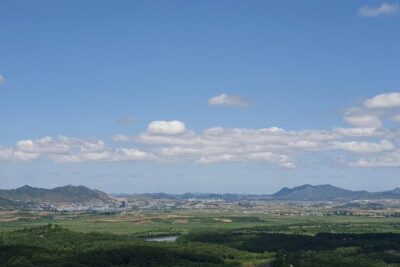
Best DMZ Tour Korea from Seoul (Red Suspension Bridge Optional)
Read our review →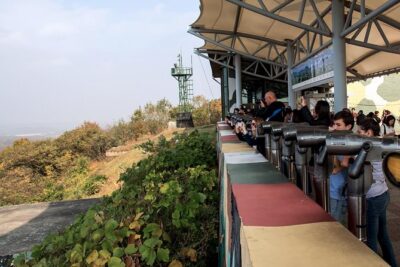
DMZ Tour: 3rd Tunnel, Option(Suspension Bridge, Boat) from Seoul
Read our review →DMZ tour south Korea from Seoul (NK experience hall, defector)
Read our review →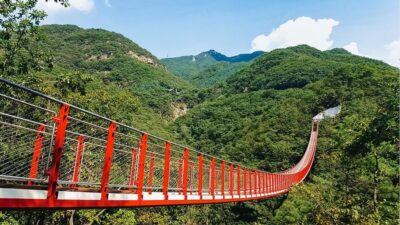
DMZ Insider Tour: 3rd Tunnel, NK Defector Meet & Red Bridge
Read our review →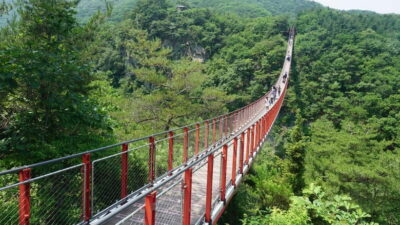
Signature DMZ Tour: Exclusive Defector Talk & Suspension Bridge
Read our review →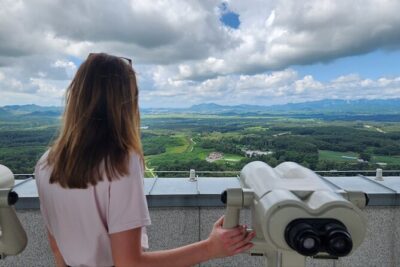
Thrilling Korean DMZ 3rd Tunnel Tour from Seoul + Red Bridge Rush
Read our review →
DMZ Past and Present: Korean Demilitarized Zone Tour from Seoul
Read our review →Browse the lists this tour appears in