
Reviewed · DMZ TOURS
Private DMZ Tour
History here is close enough to see. This six-hour Seoul DMZ tour brings Korea’s divided past into focus through places such as Freedom Bridge, the 3rd Infiltration Tunnel, and Dora Observatory. I like the easy hotel pickup and the personal attention from guides such as AJ, BK, Jun, and Lizzy. The main catch is that the tour may use a private car for the Seoul transfer but join a larger bus inside the DMZ.
I also like the strong historical storytelling, especially when guides use maps and photos to explain what you are seeing. At $240 per person, it is costly, but the price can make sense for families or small groups who want door-to-door transport and help with military checkpoints. Bring a passport, wear good walking shoes, and keep your expectations flexible because weather and security rules can change the day.
In This Review
- Key points to know before you book
- Why the Seoul DMZ tour matters
- Hotel pickup and the ride north
- Imjingak Park and the meaning of Freedom Bridge
- The 3rd Infiltration Tunnel is the day’s workout
- Dora Observatory and the view toward North Korea
- The DMZ Exhibition Hall adds context
- What the private service is really worth
- Timing, weather, and border rules
- Who will enjoy this DMZ experience most
- Should you book the private DMZ tour?
- FAQ
- How long does the private DMZ tour last?
- What time does the tour start?
- Is hotel pickup and drop-off included?
- Is the tour completely private inside the DMZ?
- Do I need to bring my passport?
- Is lunch included?
- Can I cancel for a full refund?
Key points to know before you book
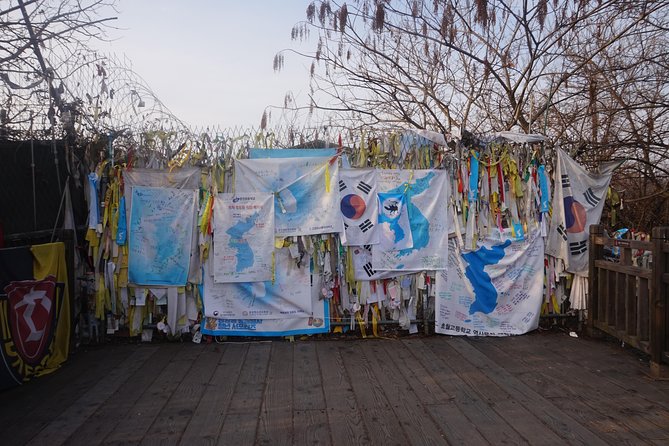
- The private part may end at the DMZ entrance: You receive private pickup and guide service, but access within the zone may require joining a larger authorized bus.
- The 3rd Infiltration Tunnel is physical: The walk back up is steep and long, with narrow sections that require crouching, especially for taller people.
- Dora Observatory gives you a view toward North Korea: Binoculars are available at the observatory, but photography is restricted there.
- Guides are the tour’s greatest strength: AJ, BK, Jun, Miel, Felicity, Lizzy, and others are praised for clear explanations, patience, and thoughtful care.
- The day takes about six hours: Morning pickup begins around 8:00 a.m., with hotel pickup and drop-off included.
- Military conditions control the itinerary: A stop can be cancelled because of local circumstances or security orders, with no refund for that removed portion.
Why the Seoul DMZ tour matters
The DMZ is not a normal sightseeing stop. It is a working border zone shaped by military rules, family separation, war, and an uneasy ceasefire. You are not simply looking at an old battlefield. You are visiting a place where the Korean conflict remains unresolved.
That makes a guided visit worthwhile. A guide can explain the difference between the DMZ and the Military Demarcation Line, point out why a bridge matters, and give meaning to the concrete, fences, checkpoints, and signs around you. Without that background, the visit can feel like a series of guarded facilities. With good commentary, the pieces connect.
This tour is especially useful if you want history explained in plain language. Several guides are praised for combining Korean history, war context, and modern culture rather than treating the DMZ as an isolated attraction. AJ, for example, used photographs when rain blocked views, while Miel brought maps and images to explain the sites before arrival.
The experience also carries an emotional weight. Freedom Bridge is tied to the return of nearly 13,000 Korean prisoners of war to South Korea. That detail changes how you see the bridge. It becomes more than a photo stop.
More DMZ tours:
- Best DMZ Tour Korea from Seoul (Red Suspension Bridge Optional)
★ 5.0 · 41,422 reviews - DMZ Tour: 3rd Tunnel, Option(Suspension Bridge, Boat) from Seoul
★ 5.0 · 21,373 reviews - DMZ tour south Korea from Seoul (NK experience hall, defector)
★ 5.0 · 20,599 reviews
Hotel pickup and the ride north
The tour begins with pickup from your Seoul hotel, generally around 8:00 a.m. The operator asks you to confirm the exact pickup time, so do not rely only on the general start time. A comfortable, air-conditioned coach or private vehicle is provided, and hotel drop-off is included at the end.
The drive toward the DMZ takes roughly an hour according to the experience details and several accounts of the service. That travel time is useful rather than wasted. Your guide can introduce Korea’s division, explain the basic timeline of the Korean War, and prepare you for the rules you will follow near the border.
The private setup gives you more room to ask questions than a standard large-group excursion. Guides such as BK and Jun are praised for giving clear explanations and making the ride feel personal. Families may appreciate this most, since you can pause for clarification instead of trying to catch every word from the back of a crowded bus.
There is an important detail to understand before paying the premium price. Private transport from your hotel does not always mean that every section inside the DMZ is private. One arrangement described for this tour used a private van to carry the group to a staging point, then required everyone to board a larger authorized bus for the DMZ sites.
That is not necessarily a flaw. Military authorities control access, and large buses may be required within restricted areas. Still, the phrase private tour can create the wrong expectation. You are paying for private service, a dedicated guide, and a smoother transfer, not guaranteed exclusive access at every stop.
Imjingak Park and the meaning of Freedom Bridge
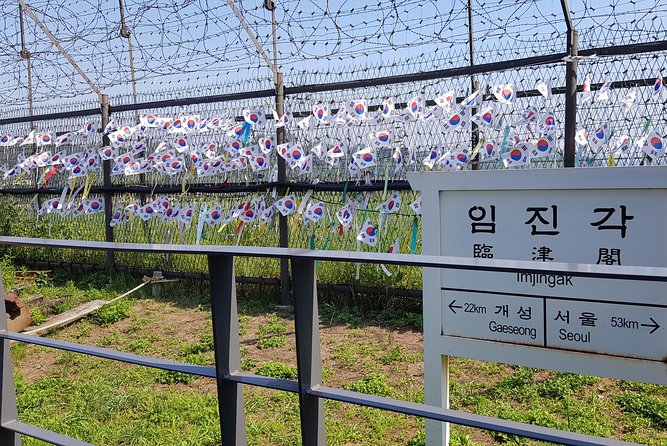
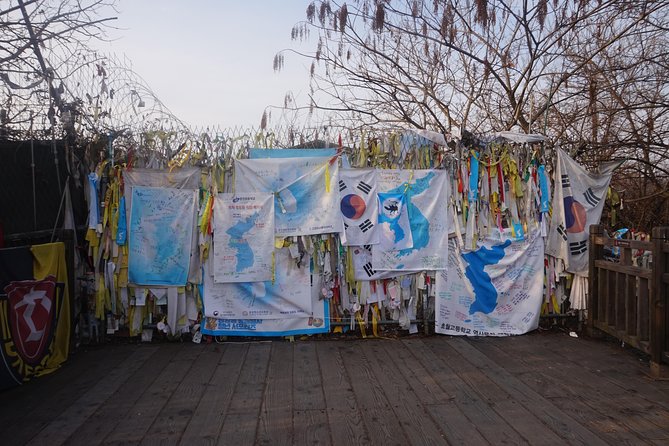
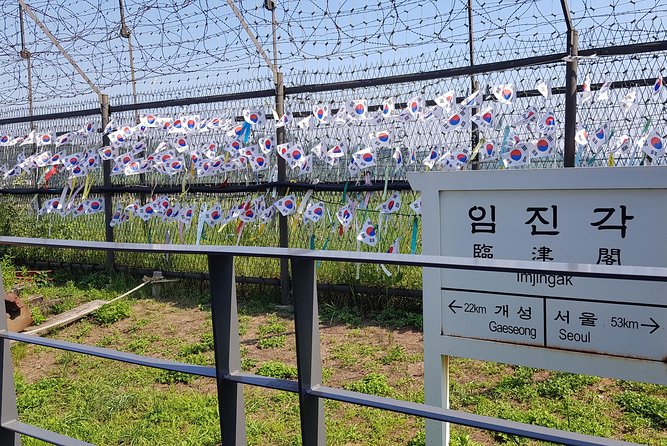
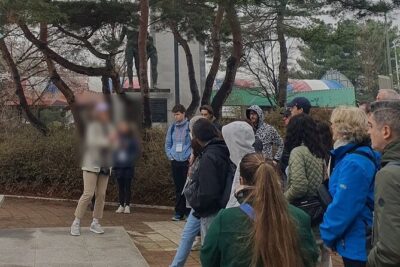
Your first major stop is Imjingak Park, beside the Imjin River. The park displays artillery and other war-related objects connected with the Korean conflict. It is an effective introduction because the setting combines public remembrance with the reality of a nearby military border.
The visit then continues to Freedom Bridge. Nearly 13,000 Korean prisoners of war crossed here when they returned to South Korea. Your guide can help you understand the bridge as a symbol of return, separation, and the families who never received a simple ending to the war.
I would give this stop your full attention. It can be tempting to treat the bridge as a quick picture opportunity, especially if the schedule is busy. Listen to the explanation first, then take your photos where permitted. The story is what makes the structure memorable.
The park also gives you a chance to see war artifacts at close range. These objects are not polished museum pieces removed from all context. They help show the physical side of the conflict before the tour moves into the more controlled border area.
The 3rd Infiltration Tunnel is the day’s workout
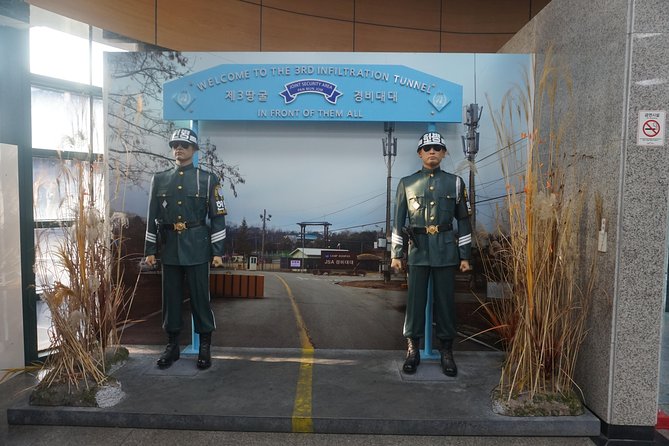
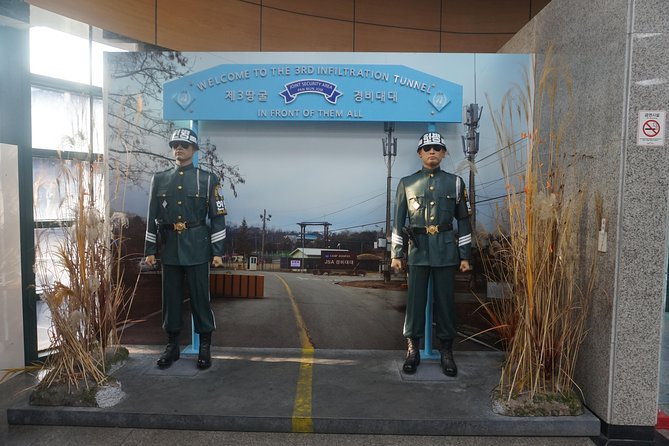
The 3rd Infiltration Tunnel is the most physical part of the tour. It runs beneath the border area and was discovered as an underground route linked to North Korean military planning. South Korean authorities blocked the route at the Military Demarcation Line.
Expect a steep and narrow walk. The return route is a long uphill ramp, and some sections require you to crouch. Comfortable clothing and sturdy shoes are not optional niceties here. They will make the difference between an interesting stop and an exhausting one.
Tall visitors should take the height issue seriously. One detailed account specifically warns that taller people may need to stoop in the tunnel. The tour information describes the walking requirement as moderate, but the steep return can still challenge anyone with limited stamina.
Photography is not allowed in the tunnel. That restriction may feel strict, but it reinforces the fact that this is a controlled military site rather than a casual underground attraction. Follow the guide’s instructions closely, including rules about where you may stop and when you may take photos.
The tram is not included. If you want to use it, expect an extra charge. The available information does not promise that a tram will always be offered, so ask the local operator or guide about current arrangements. If you have knee, heart, or mobility concerns, ask before booking rather than assuming the walking portion will be easy.
A few more options to weigh up in Seoul
- Seoul: DMZ Tour with Optional Suspension Bridge
★ 4.8 · 5,277 reviews - Signature DMZ Tour: Exclusive Defector Talk & Suspension Bridge
★ 5.0 · 4,459 reviews - Thrilling Korean DMZ 3rd Tunnel Tour from Seoul + Red Bridge Rush
★ 5.0 · 3,097 reviews - DMZ Past and Present: Korean Demilitarized Zone Tour from Seoul
★ 5.0 · 2,481 reviews
Dora Observatory and the view toward North Korea
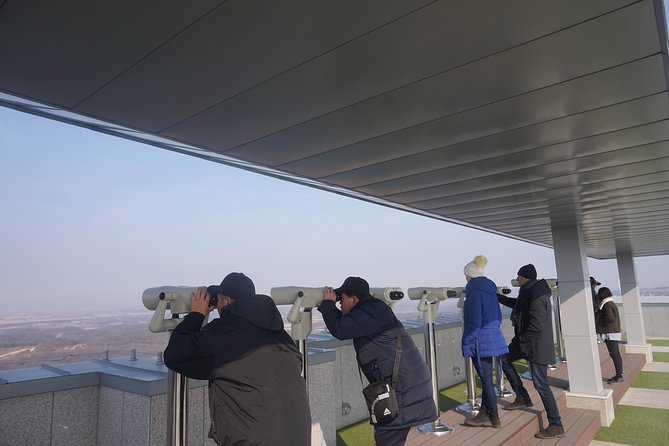
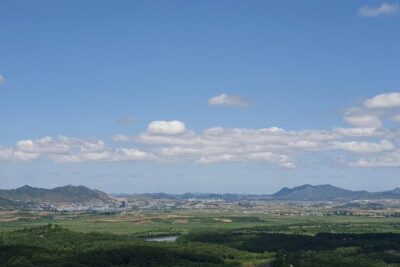
Dora Observatory is the stop that gives the tour its most direct visual connection with North Korea. You can look across the border through binoculars and try to make sense of the distant view. On a clear day, the experience can feel striking. In rain, haze, or low cloud, the view may be limited.
Do not judge the whole day by the weather at this one stop. AJ handled a rainy visit by bringing umbrellas and showing photographs of areas that could not be seen clearly. That kind of preparation matters because the border zone does not offer the flexibility of an ordinary city attraction.
Photography is restricted at the observatory. Follow the guide and military instructions about cameras and phones. Guides may take photos for you at permitted points, as Miel did for one couple, but you should never assume that a good viewpoint allows photography.
The observatory works best when you treat it as a place for perspective rather than a guaranteed dramatic panorama. You may see North Korean territory from afar, but the view alone is not the point. The guide’s explanation gives the distant scene its political and human meaning.
The DMZ Exhibition Hall adds context
The DMZ Exhibition Hall is included among the main stops and helps fill in the background behind the outdoor sites. It gives you a more structured place to understand the division, military history, and continuing tension between North and South Korea.
This stop is useful after the tunnel and observatory because it lets you gather the facts in one place. Instead of only seeing barriers and distant hills, you can connect them to the larger story of the peninsula.
The exact order of stops can change. Security conditions, weather, lines, and local closures may force the guide to adjust the route. Lizzy handled one rain-affected day by changing the plan and visiting the parts still open, including alternatives when several facilities shut down.
That flexibility is valuable, but it comes with a hard limit. If military conditions cancel part of the itinerary, the tour terms say there is no refund for the cancelled portion. You are buying access to a controlled region, not a fixed sightseeing circuit with guaranteed entry.
What the private service is really worth
At $240 per person, this is not a budget outing. The price includes an expert guide, air-conditioned transport, hotel pickup and drop-off, admission, and the convenience of having someone manage the route and checkpoints.
For one or two people, the cost may feel steep. A standard group tour could be cheaper, though the supplied information does not give a comparison price. For a family or small group, group discounts may improve the value, and private transport can be worth paying for if you want a quieter ride from your hotel and a guide focused on your questions.
The service also removes much of the day’s practical friction. Guides have helped visitors through security points, stayed with them during the large-bus portion, explained where to go, and kept the schedule moving. Miel was praised for timing the route to avoid some lines and crowds, though you should not treat that as a guarantee.
The strongest reason to pay more is the guide. AJ, BK, Jun, Lizzy, Miel, Felicity, and others receive praise for warmth, clear English, historical detail, and personal care. One guide, Felicity, even responded to an emergency at the observatory and performed the Heimlich maneuver on a choking child. That was an unusual event, not a tour feature, but it reflects the attentive role guides can play.
Lunch is not included, so plan to eat before or after the tour. The details supplied do not promise a meal stop. The tram is also extra, and the experience does not say that other optional costs are covered.
Timing, weather, and border rules
The tour lasts about six hours, but the exact day can shift. You are going through a security-controlled area, so military instructions take priority over the advertised route. Local circumstances can also close a stop without warning.
Heavy rain has caused access problems, including flooding that prevented entry into the DMZ on one occasion. That is a useful warning for anyone planning the visit around a tight international flight or a fixed evening booking. Leave plenty of time after the tour, especially if you must reach the airport.
A current valid passport is required on the day of travel. You do not need to send a copy in advance, but you must carry the actual passport. Keep it accessible, not buried at the bottom of your luggage.
Photo rules vary by location. You may be told not to photograph the tunnel or observatory, and your guide will explain where cameras are allowed. This is one time when ignoring a sign or sneaking a picture is a poor idea. The rules exist because the area remains sensitive.
Free cancellation is available if you cancel at least 24 hours before the local start time. Cancellations or changes made less than 24 hours ahead are not accepted for a refund. Check the exact pickup time with the operator after booking.
Who will enjoy this DMZ experience most
I would choose this tour if you care about Korean history, want direct access to the border region, or prefer a guide who can adjust explanations to your group. It works well for families, couples, and small groups who value hotel pickup and personal assistance.
The tour also suits first-time visitors to Seoul who want something far removed from palaces, markets, and shopping streets. The DMZ offers a sobering contrast to the city’s modern energy. You see how Korea’s present prosperity exists alongside a division that has never been fully resolved.
It is less suitable if you want a relaxed day with little walking. The tunnel is steep and narrow, and the return climb demands effort. It is also a poor fit if you need a fully predictable itinerary or guaranteed clear views at Dora Observatory.
You should also decide how much privacy you need. If you require a private vehicle and private guide at every single stop, confirm the current operating arrangement before paying. The tour’s private benefit may mainly cover the Seoul transfer and guide service, while the restricted zone uses a shared bus.
Should you book the private DMZ tour?
Book it if the history matters to you and you want help making sense of a sensitive, complicated place. The private guide service, hotel pickup, strong historical commentary, and chance to see Freedom Bridge, the 3rd Infiltration Tunnel, Dora Observatory, and the DMZ Exhibition Hall make this a serious half-day experience rather than a quick photo stop.
I would be comfortable recommending it to a small group that can handle the $240 price and the tunnel walk. Before booking, confirm whether your date uses a shared bus inside the DMZ, ask about current weather and access conditions, and make sure everyone has a passport and suitable shoes.
Skip it if your budget is tight, your mobility is limited, or you need every advertised stop guaranteed. For the right visitor, though, this is one of Seoul’s most meaningful excursions, provided you approach it with patience and respect for the rules.
FAQ
How long does the private DMZ tour last?
The tour lasts approximately six hours, including transport from Seoul and return to your hotel.
What time does the tour start?
The listed start time is 8:00 a.m. You should contact the local operator to confirm your exact hotel pickup time.
Is hotel pickup and drop-off included?
Yes. Round-trip hotel pickup and drop-off in Seoul are included.
Is the tour completely private inside the DMZ?
Not always. The Seoul transfer may use a private car or van, but access inside the DMZ may require your group to join a larger authorized bus.
Do I need to bring my passport?
Yes. A current valid passport is required on the day of the tour. You do not need to send a passport copy before the tour.
Is lunch included?
No. Lunch is not included in the tour price.
Can I cancel for a full refund?
Yes, if you cancel at least 24 hours before the experience start time, based on local time. Cancellations or changes made less than 24 hours before departure are not accepted for a refund.
Just added in Seoul
- Seoul: Korean & English Language Exchange Global Party★ 5.0 · 28 reviews
- Your Personal Seoul Photographer!★ 4.1 · 15 reviews
- You’re Invited to Our Home in Seoul: The Only Cooking Class!★ 5.0 · 8 reviews
- From Seoul: Yongpyong Ski Day Tour with Transportation★ 4.9 · 40 reviews
- From Seoul: Hwacheon Ice Fishing and Lighting Festival Tour★ 4.5 · 4 reviews
- Seoul: Gangneung BTS K-Pop & K-Drama Filming Locations Tour★ 4.6 · 14 reviews
- Unique Native Experience : Han River Picnic, Board game, BBQ★ 5.0 · 3 reviews
- Seoul: Euljiro Gastroventure Tour★ 4.0 · 1 review
DMZ Tours, compared.
Best DMZ Tour Korea from Seoul (Red Suspension Bridge Optional)
Read our review →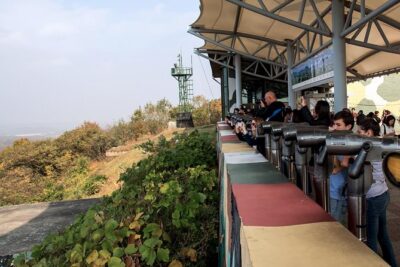
DMZ Tour: 3rd Tunnel, Option(Suspension Bridge, Boat) from Seoul
Read our review →DMZ tour south Korea from Seoul (NK experience hall, defector)
Read our review →
DMZ Insider Tour: 3rd Tunnel, NK Defector Meet & Red Bridge
Read our review →
Signature DMZ Tour: Exclusive Defector Talk & Suspension Bridge
Read our review →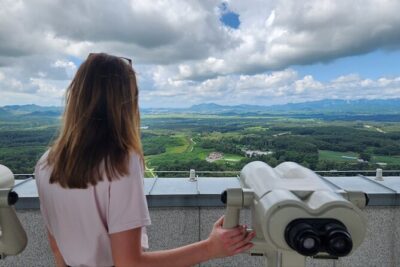
Thrilling Korean DMZ 3rd Tunnel Tour from Seoul + Red Bridge Rush
Read our review →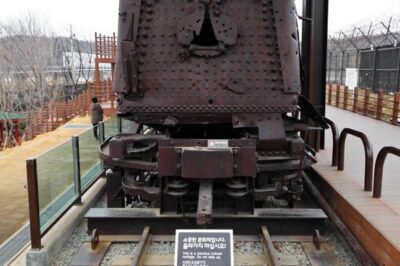
DMZ Past and Present: Korean Demilitarized Zone Tour from Seoul
Read our review →Browse the lists this tour appears in