
Reviewed · DMZ TOURS
Seoul DMZ Tour with 3rd Tunnel and Red Suspension Bridge
The border is closer than you expect. This full-day outing combines Korean War history with the Third Tunnel and a scenic suspension bridge, giving you both solemn context and fresh mountain air. I especially like the later 9 a.m. start and the strong guides, including Winnie, Thomas, Grace, Kenny, and Stella. The main drawback is physical: the tunnel and bridge require steep walking, and there is no formal lunch break.
At $45 per person, the tour offers solid value for eight hours of transport, admission tickets, and guiding. You should bring a passport, snacks, and sturdy shoes. The Third Tunnel is cramped and strenuous, so this is not a casual sightseeing bus ride.
In This Review
- Key details before you book
- Why this Seoul DMZ tour is worth your day
- A practical start from Myeong-dong
- Imjingak Park and the meaning of Mangbaedan
- Walking into the Third Tunnel
- Dora Observatory and the view toward North Korea
- The red suspension bridge at Gamaksan
- Guides make a major difference
- Food, transport, and the end of the day
- Who should book this outing?
- Should you book the Seoul DMZ tour?
- FAQ
- How long does the Seoul DMZ tour last?
- Where does the tour begin?
- Where does the tour end?
- Is the Third Tunnel included?
- How difficult is the Third Tunnel?
- Is the Gamaksan suspension bridge included?
- Can you see North Korea from Dora Observatory?
- Is lunch included?
- Do you need a passport?
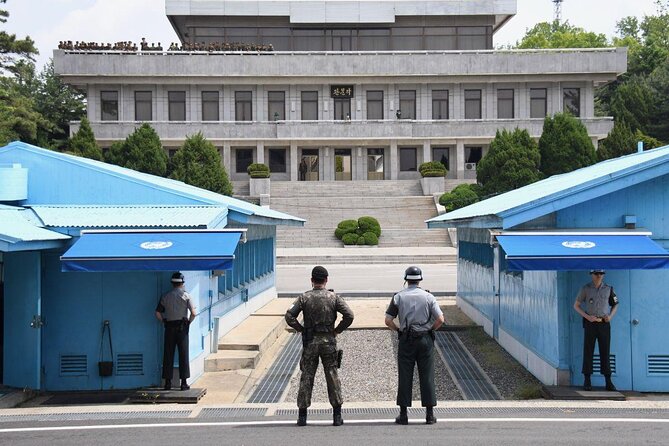
- Does the tour visit the JSA?
- Can the tour be canceled by the operator?
Key details before you book
- The Third Tunnel is narrow, low, and demanding: You walk downhill, stoop beneath a low ceiling, then climb back up.
- Dora Observatory provides a view toward North Korea: On a clear day, you may see Gaeseong, Songaksan, farms, and other sites across the border.
- Gamaksan Chulleong Bridge adds a moving Korean War connection: The 150-meter bridge is linked to the 1951 Battle of Solma-ri, also called the Battle of Gloster Hill.
- Imjingak Park gives the day emotional context: Mangbaedan and the Bridge of Freedom connect the modern border with families separated by war.
- The 9 a.m. departure suits late risers: Some DMZ trips begin around 6:30 a.m., while this one generally starts later.
- The day is active and tightly timed: Plan for about eight hours, plenty of stairs, and snack stops rather than a sit-down meal.
Why this Seoul DMZ tour is worth your day
The Demilitarized Zone is not simply a line on a map. It is a living border shaped by the Korean War, divided families, military restrictions, and the unresolved relationship between North and South Korea. This tour gives you several ways to understand that story without requiring you to arrange separate transport or figure out the restricted-area procedures yourself.
I like the mix of stops. Imjingak Park introduces the human cost of division, the Third Tunnel shows the military danger beneath the ground, Dora Observatory lets you look toward North Korea, and Gamaksan Chulleong Bridge brings the day back to a wooded mountain setting tied to a British military battle. The result is more varied than a single border viewpoint.
The price also makes sense. For $45, you receive an air-conditioned vehicle, admission tickets, and a professional guide for roughly eight hours. You do not receive meals, drinks, hotel pickup and drop-off, travel insurance, or a visit to the Joint Security Area, known as the JSA. Even so, the included transport and admissions make this an economical way to reach places that are not convenient to visit independently.
More DMZ tours:
- Best DMZ Tour Korea from Seoul (Red Suspension Bridge Optional)
★ 5.0 · 41,422 reviews - DMZ Tour: 3rd Tunnel, Option(Suspension Bridge, Boat) from Seoul
★ 5.0 · 21,373 reviews - DMZ tour south Korea from Seoul (NK experience hall, defector)
★ 5.0 · 20,599 reviews
A practical start from Myeong-dong
The tour begins at a designated meeting point in Myeong-dong, near Myeong-dong subway station. Pickup arrangements depend on the meeting point selected at booking, so check your confirmation carefully rather than assuming the vehicle will stop outside your hotel.
A later departure, generally around 9 a.m., is a real advantage. Many Seoul DMZ outings begin at about 6:30 a.m., which can be rough after a late arrival or a full evening in the city. The later start still gives you a full day while allowing a more reasonable morning.
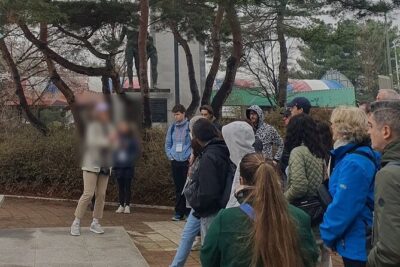
The ride toward the border is useful preparation time. Your guide explains the Korean War and the division of the peninsula, often using photos and videos during the drive. That matters because the stops make more sense once you know what you are looking at. Guides such as Thomas, Winnie, Grace, Kenny, Leo, Stella, and Chloe have been praised for clear explanations, humor, patience, and help with photographs.
Traffic can affect the pickup. One report describes a delay of about 10 minutes, likely because Seoul traffic was heavy. Keep some flexibility in your morning schedule.
Imjingak Park and the meaning of Mangbaedan
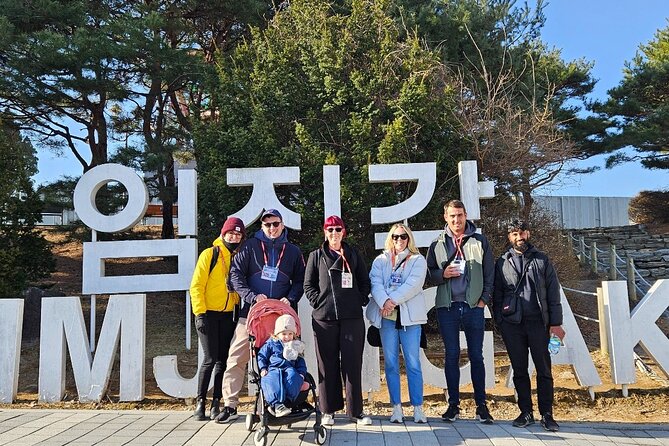
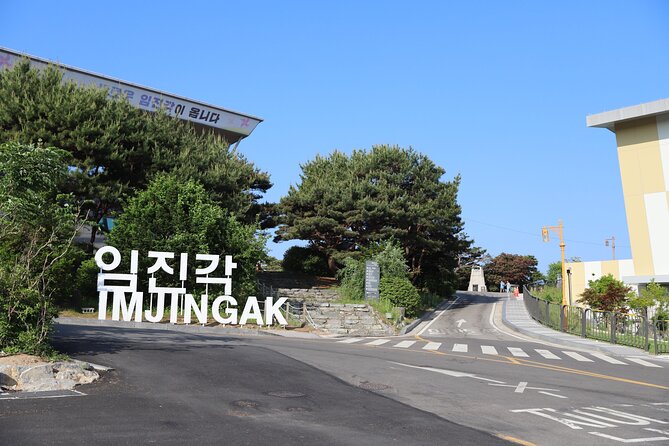
Imjingak Pyeonghoa-Nuri Park lies about seven kilometers from the Military Demarcation Line. Imjingak itself was built in 1972 with the hope that reunification might one day be possible. The three-story building and surrounding monuments form an important first stop because they show how the border has affected ordinary Korean families.
You have about 30 minutes here. Use it to look around rather than treating the park only as a restroom break. The North Korea Center and Unification Park add background, while the nearby Bridge of Freedom recalls prisoners of war and the long separation between families.
Mangbaedan receives a shorter visit of about 15 minutes. This memorial site is especially important around Lunar New Year, when people with family roots in North Korea come to remember relatives they cannot visit. It gives the political division a personal face. Maps and military facts can feel distant, but a family memorial makes the separation easier to grasp.
Imjingak also includes Dokgae Bridge, which was blown up during the Korean War and later reconstructed. That detail captures the pattern you will see all day: destruction, separation, rebuilding, and an uneasy present.
The park can also be a useful place for breakfast or a quick snack and restroom stop. Since lunch is not formally included, do not arrive empty-handed.
Walking into the Third Tunnel
The Third Tunnel is the most physical part of the tour and one of the most memorable. South Korea discovered it in 1978. The passage extends about 1,635 meters, is roughly two meters wide, and is roughly two meters high. It was considered large enough for an estimated 30,000 soldiers to pass through in a single hour.
You do not walk the entire length. The visit lasts about 40 minutes, including the descent and return. The route begins with a long downhill section, then becomes low enough that you need to bend forward for several minutes. Helmets are used for safety, and that is not merely ceremonial. A person around 176 centimeters tall reported hitting the helmet repeatedly against the ceiling while stooping.
The return is the hard part. You have already walked downhill, and now you must climb back toward the entrance. The incline can feel steeper than expected. Several people compare it to a serious workout, and one person recorded more than 22,000 steps over the whole day, much of it on slopes and stairs.
This stop suits you if you have moderate physical fitness and are comfortable with confined spaces. It may be difficult for older people, anyone who is sedentary, or anyone with trouble climbing. Wear proper walking shoes. Flip-flops, slippers, and heels are specifically discouraged, and sensible advice here is to take it seriously.
The tunnel is not a polished attraction. Its value comes from the uncomfortable reality of why it exists. You are walking through an excavation made for a possible military attack, close to one of the world’s most heavily watched borders. That makes the awkward posture and tired legs part of the lesson.
More suspension bridge walks:
- Seoul: DMZ Tour with Optional Suspension Bridge
★ 4.8 · 5,277 reviews - Signature DMZ Tour: Exclusive Defector Talk & Suspension Bridge
★ 5.0 · 4,459 reviews - Ultimate Korea DMZ Tour from Seoul (Gondola & Suspension Bridge)
★ 5.0 · 2,396 reviews - DMZ; NK Defector, 3rd Tunnel, Suspension Bridge,Hotel pickup
★ 4.9 · 2,055 reviews
Dora Observatory and the view toward North Korea
After the tunnel, Dora Observatory offers a very different experience. Instead of looking underground, you look across the border from an official observation point. The visit lasts about 30 minutes.
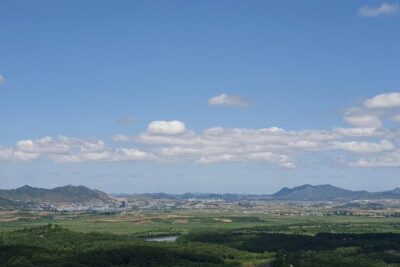
From the observatory, you may see Gaeseong, Songaksan, the Kim Il-sung statue, and the Geumamgol Cooperation Farm. On a clear day, the view can extend into North Korea, where you might see people living and working. On a hazy day, the scene may be less distinct, so keep expectations realistic.
This is a place where weather matters. Clear conditions make the geography easier to understand, but even a limited view still carries weight. You are not simply seeing a distant country. You are looking at communities and farmland separated from the South by a military boundary.
Listen closely to the guide here. The visual details can be hard to identify without explanation, and the observatory has more meaning when you understand what lies beyond the border. Guides Grace and Chloe have been singled out for answering questions clearly and using photos and videos to make the region easier to understand.
Photography rules and military instructions can change. Follow your guide and the posted directions rather than treating the observatory like an ordinary city viewpoint.
The red suspension bridge at Gamaksan
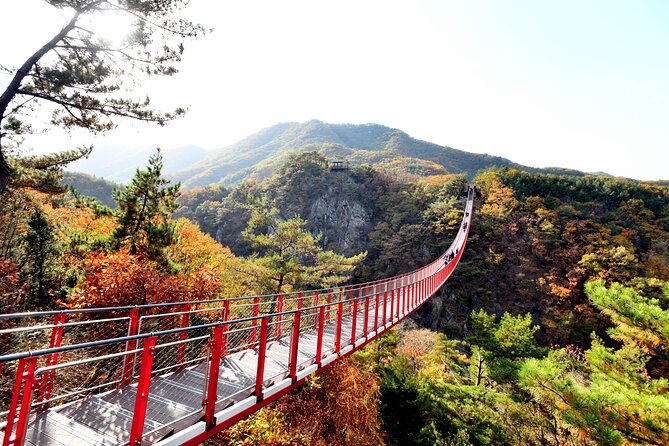
The final major stop moves away from the DMZ facilities and into the mountains around Mt. Gamak. Gamaksan Chulleong Bridge is a red suspension bridge measuring 150 meters long and about 1.5 meters wide. It lies in Solma-ri, where the Battle of Solma-ri, also called the Battle of Gloster Hill, took place in 1951.
The bridge itself is scenic and photogenic, but the military story gives it more meaning. British troops fought and died here while defending against North Korean forces. The combination of forest, height, and wartime memory makes this stop feel different from Imjingak and Dora Observatory.
Getting to the bridge takes effort. You may climb roughly 400 steps from the road to the bridge area, with a fairly steep section near the top. The bridge visit lasts about an hour, so you have time to cross it, take photographs, and pause to catch your breath.
The bridge is only about 1.5 meters wide, which can feel narrow when other people are crossing. If heights make you uneasy, take your time and stay focused on the walkway. If you are comfortable with heights, the setting provides a welcome change after the enclosed tunnel.
This is also where the physical demands add up. The tunnel requires a steep return climb, and the bridge involves a long uphill approach. The day is rewarding, but you should not mistake the word tour for easy walking.
Guides make a major difference
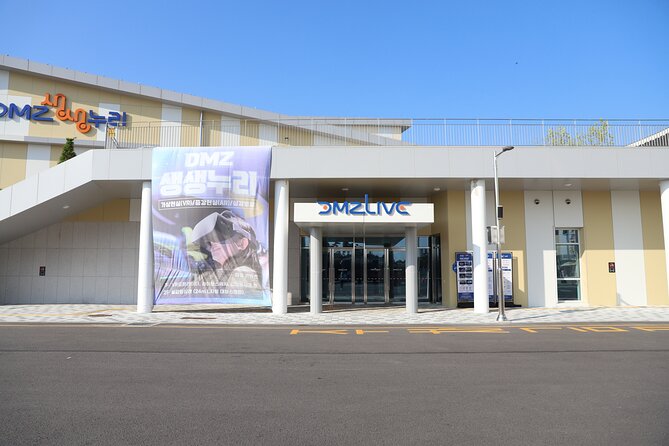
The strongest part of this experience is the guide service. The names most often praised include Winnie, often called Mama Winnie, along with Thomas, Grace, Kenny, Stella, Leo, and Chloe. Their styles differ, but the repeated strengths are clear: good English, useful historical explanations, humor, patience, punctuality, and help with photographs.
Winnie is praised for making a difficult subject lively without losing its seriousness. Thomas is described as warm and clear, with a talent for making history feel connected to present-day Korea. Grace has helped with individual and group photos, while Kenny is known for an entertaining manner and friendly explanations.
Your exact guide is not guaranteed, so do not book solely for one person. Still, the range of positive guide comments suggests that the operator places real value on interpretation rather than simply moving you from one stop to the next.
A good guide matters especially at the DMZ. Military boundaries, memorial sites, and distant views are not always self-explanatory. The guide gives you the context needed to understand why a bridge, tunnel, or memorial deserves your attention.
Food, transport, and the end of the day
The air-conditioned vehicle is included, which is helpful after the tunnel and bridge walks. The tour returns you to the Myeong-dong area, but the exact final drop-off may not always be identical to your original pickup point.
One person reported being dropped at a station about two kilometers from the pickup location and needing a taxi back to the hotel. Treat the listed Myeong-dong subway area as the general return zone, not a guaranteed hotel door drop-off. Ask your guide about the final stop before the tour ends.
There is no included meal or formal lunch break. You may have chances to buy snacks, coffee, or local food near the border. Soybean ice cream has been mentioned as a regional treat, but you should still pack something small and bring water or another drink.
At the advertised $45, the lack of lunch is reasonable. You are paying mainly for transport, entry tickets, and a full day of guiding. Bring Korean won if you want to buy food, since the supplied details do not specify accepted payment methods.
Who should book this outing?
I would recommend it to first-time Seoul visitors who want a clear introduction to the Korean War and the present-day border. It also suits solo visitors, couples, and families with teenagers. The guided format removes much of the difficulty of reaching restricted military areas, while the range of stops keeps the day from feeling repetitive.
You should book it if you enjoy history, political geography, memorials, and active sightseeing. The day has enough variety to appeal to someone who wants more than a museum, especially with the open-air bridge and observatory.
You should think twice if you dislike enclosed spaces, struggle with steep climbs, or want a relaxed day with a long lunch. The Third Tunnel is low and tiring, and the Gamaksan approach adds another serious climb. Moderate physical fitness is not a minor suggestion here.
A current valid passport is required on the day. The JSA is not included, so check the tour description carefully if entering the Joint Security Area is your main goal. The DMZ is controlled by the military, and the trip can be canceled without prior notice. If the minimum number of participants is not reached, a different date or experience, or a full refund, may be offered.
You can cancel for a full refund up to 24 hours before the start time. Changes or cancellations inside that window are not accepted for a refund.
Should you book the Seoul DMZ tour?
Yes, if you want a well-priced, full-day introduction to the border and can handle the walking. The Third Tunnel, Dora Observatory, and Gamaksan bridge create a strong sequence: military threat below ground, a view toward the North, then a mountain site tied to wartime sacrifice.
The best practical choice is to wear sturdy shoes, carry water and snacks, bring your passport, and leave room in your schedule for traffic. I would also avoid booking this on a day when you need to catch a flight or keep another demanding appointment.
For $45, this is a lot of history and scenery in one day. It is not effortless, but the physical work helps you remember the places. If you want a gentle bus tour, choose something else. If you want the DMZ explained by an engaging guide and experienced through several very different sites, this is a strong choice.
FAQ
How long does the Seoul DMZ tour last?
The tour lasts approximately eight hours, including transport between Seoul and the DMZ area.
Where does the tour begin?
The meeting area is in Myeong-dong, Jung District, Seoul, near Myeong-dong subway station. Pickup is arranged according to the designated meeting point selected when booking.
Where does the tour end?
The tour returns to the Myeong-dong area in Seoul. The exact final drop-off may not always be the same as the original pickup point.
Is the Third Tunnel included?
Yes. Admission to the Third Tunnel is included, and the visit lasts about 40 minutes.
How difficult is the Third Tunnel?
You should have moderate physical fitness. The route includes a long downhill walk, a low section where you must stoop, and a strenuous climb back up.
Is the Gamaksan suspension bridge included?
Yes. Gamaksan Chulleong Bridge is included, with approximately one hour at the stop. Reaching it requires a steep uphill walk and many steps.
Can you see North Korea from Dora Observatory?
Dora Observatory looks toward North Korea, including places such as Gaeseong and Songaksan. On a clear day, you may see more detail, including people or workers, but visibility depends on conditions.
Is lunch included?
No. Meals and beverages are not included. You are strongly advised to bring snacks and drinks, and there may be opportunities to buy food or coffee during the day.
Do you need a passport?
Yes. A current valid passport is required on the day of the tour.
Does the tour visit the JSA?
No. A visit to the Joint Security Area is not included.
Can the tour be canceled by the operator?
Yes. Because the DMZ is operated by the military, the tour may be canceled without prior notice. If the minimum number of participants is not met, you may be offered another date or experience, or a full refund.
Just added in Seoul
- Seoul: Korean & English Language Exchange Global Party★ 5.0 · 28 reviews
- Your Personal Seoul Photographer!★ 4.1 · 15 reviews
- You’re Invited to Our Home in Seoul: The Only Cooking Class!★ 5.0 · 8 reviews
- From Seoul: Yongpyong Ski Day Tour with Transportation★ 4.9 · 40 reviews
- From Seoul: Hwacheon Ice Fishing and Lighting Festival Tour★ 4.5 · 4 reviews
- Seoul: Gangneung BTS K-Pop & K-Drama Filming Locations Tour★ 4.6 · 14 reviews
- Unique Native Experience : Han River Picnic, Board game, BBQ★ 5.0 · 3 reviews
- Seoul: Euljiro Gastroventure Tour★ 4.0 · 1 review
DMZ Tours, compared.
Best DMZ Tour Korea from Seoul (Red Suspension Bridge Optional)
Read our review →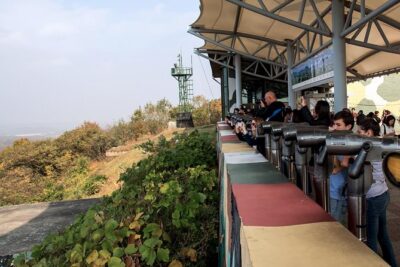
DMZ Tour: 3rd Tunnel, Option(Suspension Bridge, Boat) from Seoul
Read our review →DMZ tour south Korea from Seoul (NK experience hall, defector)
Read our review →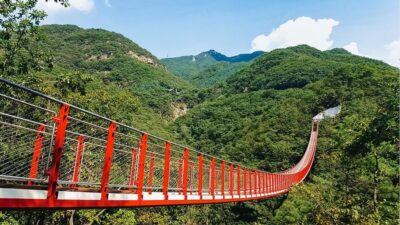
DMZ Insider Tour: 3rd Tunnel, NK Defector Meet & Red Bridge
Read our review →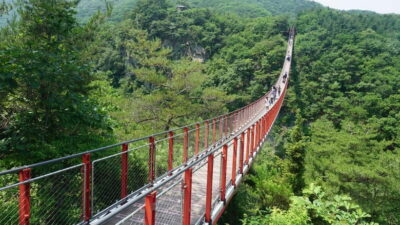
Signature DMZ Tour: Exclusive Defector Talk & Suspension Bridge
Read our review →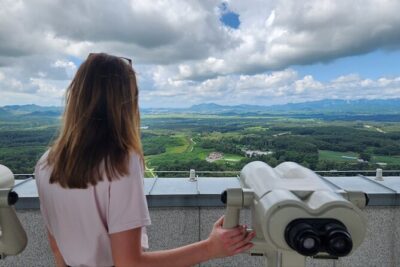
Thrilling Korean DMZ 3rd Tunnel Tour from Seoul + Red Bridge Rush
Read our review →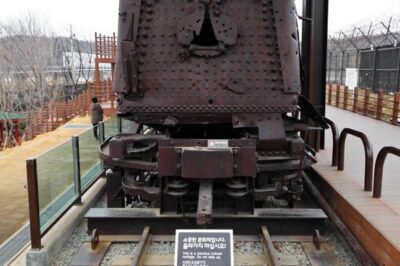
DMZ Past and Present: Korean Demilitarized Zone Tour from Seoul
Read our review →Browse the lists this tour appears in