Reviewed · SEOUL TOURS
Seoul Film Camera Club
Hongdae looks different through film. This three-hour Seoul Film Camera Club outing pairs a simple automatic Canon camera with a walk through Hongdae and Yeonnam-dong, including the narrow lanes of Maze Road. I like the hands-on format, since you take the pictures yourself, and I like that the club develops and scans the roll afterward.
The small group, limited to four people, should make it easy to ask questions and keep the pace relaxed. The main point to consider is that you only get 36 shots, so digital-camera habits will not help much. Meals and drinks are not included, and film photography always involves a little waiting and uncertainty.
In This Review
- Four things to know before you book
- Why film changes a Hongdae walk
- Meeting at Hongik University Station Exit 3
- Learning the Canon camera before the first frame
- Walking Maze Road and Yeonnam-dong
- Four kinds of pictures you may look for
- What happens to the film afterward
- Is $55 a fair price?
- Kinam’s role in the experience
- Practical details for your afternoon
- Should you book Seoul Film Camera Club?
- FAQ
- Where does the Seoul Film Camera Club experience begin?
- How long does the activity last?
- What camera and film are provided?
- Are film development and scans included?
- Is the experience suitable for beginners?
- How large is the group?
Four things to know before you book
- You shoot 36 Kodak frames yourself: The automatic Canon film camera keeps the controls friendly for beginners, but every press counts.
- You walk through Hongdae and Yeonnam-dong: The route includes Hongdae Street and the narrow lanes of Maze Road, with local context along the way.
- Kinam teaches the basics in plain English: His guidance covers how the camera works, basic photography, and the story of the neighborhood.
- Your film is developed and scanned afterward: You receive a download link, so you leave with digital copies as well as the memory of making them.
- The group is capped at four: This is a personal neighborhood walk, not a large sightseeing procession.
- The meeting point is Exit 3 of Hongik University Station: That makes the outing easy to reach by Seoul’s subway system.
Why film changes a Hongdae walk
Hongdae is one of Seoul’s most active areas. It is known for its youthful energy, independent shops, cafes, food places, music, and street life. You can certainly visit it with a phone and come away with hundreds of images. This experience asks you to slow down and choose.
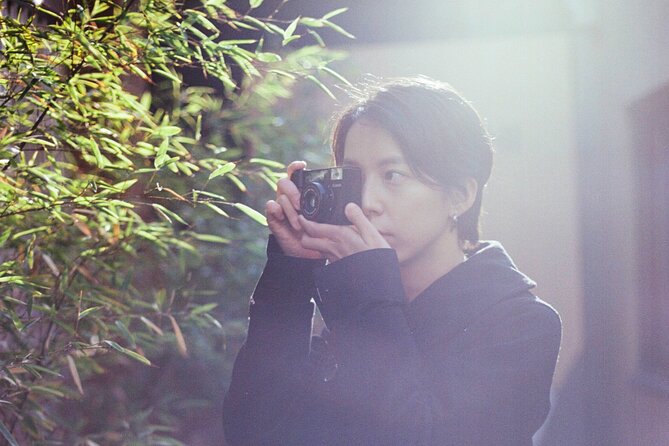
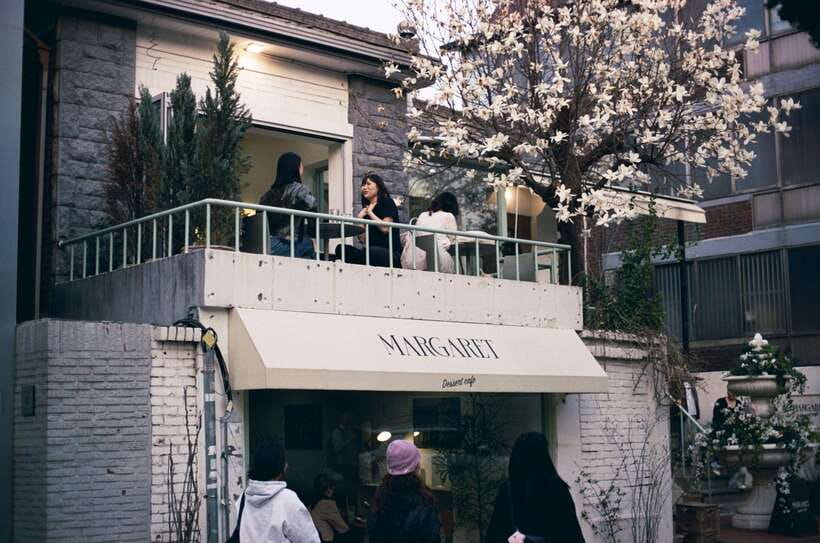
That choice is the heart of the outing. With 36 frames, you need to look before pressing the button. A crooked sign, a cafe front, a Korean-style house, or a passing moment in an alley may seem ordinary at first. Framing it on film gives the scene more weight because you cannot instantly check the result.
I like that the camera is automatic. You do not need to arrive with photography skills, and you will not spend the whole walk adjusting settings. The guide handles the technical introduction, then you can focus on what catches your eye.
The film also gives the activity a clear finish. You are not simply walking around and taking pictures that may disappear into your phone gallery. The roll is developed and scanned, and a download link is sent to you later. That makes the photographs useful as a trip memento and gives the outing a sense of completion.
There is still a tradeoff. Film is less immediate than digital photography. You will not know how every picture turned out during the walk, and some frames may not be perfect. If your main goal is to collect polished images quickly, a phone or digital camera gives you more control.
A few more options to weigh up in Seoul
- Best DMZ Tour Korea from Seoul (Red Suspension Bridge Optional)
★ 5.0 · 41,422 reviews - DMZ Tour: 3rd Tunnel, Option(Suspension Bridge, Boat) from Seoul
★ 5.0 · 21,373 reviews - DMZ tour south Korea from Seoul (NK experience hall, defector)
★ 5.0 · 20,599 reviews
Meeting at Hongik University Station Exit 3
The meeting point is Exit 3 of Hongik University subway station. This is a practical choice because Hongdae is well connected, and the station places you close to the district that gives the experience its character.
You should arrive ready to walk. The activity lasts three hours and returns to the starting area, so this is not a short camera lesson followed by a single photo stop. It is a neighborhood outing with photography woven into the route.
The group size matters here. With no more than four participants, the guide can explain the camera without shouting over a crowd. You can also ask for help when you are unsure about a shot, and the pace should feel more like walking with a local acquaintance than following a flag through a city center.
The activity is offered in English with a live guide. That makes the explanations about the camera and the neighborhood accessible to English-speaking visitors. Since the walk depends on observing small details, clear guidance is especially useful.
Learning the Canon camera before the first frame
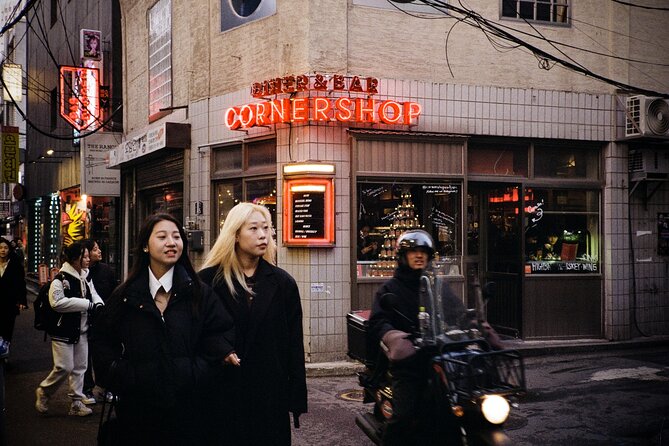
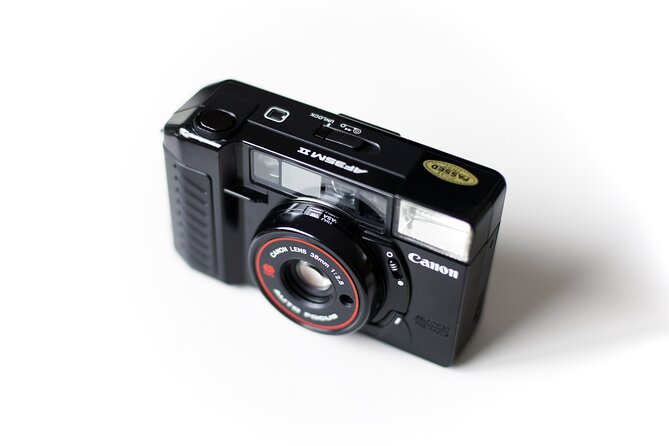
The camera provided is an automatic Canon film camera, loaded with one roll of Kodak film containing 36 exposures. This is a good setup for someone who wants to try film without buying equipment or learning a fully manual camera.
Kinam begins by explaining the basics. One of the strongest parts of the experience is the beginner-friendly approach. You are shown how the film camera works in an easy-to-follow way, then given room to practice as the walk gets under way.
That matters because film can seem intimidating if you have only used a phone. You need to understand that the image will not appear on a screen, and you need to keep track of your remaining frames. An automatic camera removes much of the worry, while the limited roll encourages you to make each picture deliberate.
I would still suggest asking questions early. If you are unsure about how to hold the camera, frame a subject, or decide when to press the shutter, the beginning is the right time to sort it out. The small group should help, since the guide can respond to your particular level.
You should also treat the roll as a fixed budget. Thirty-six shots sounds generous until you begin photographing signs, alleys, buildings, cafes, and people. A little restraint will leave you with a stronger set of images and reduce the chance of using the last frame before the walk is over.
Walking Maze Road and Yeonnam-dong
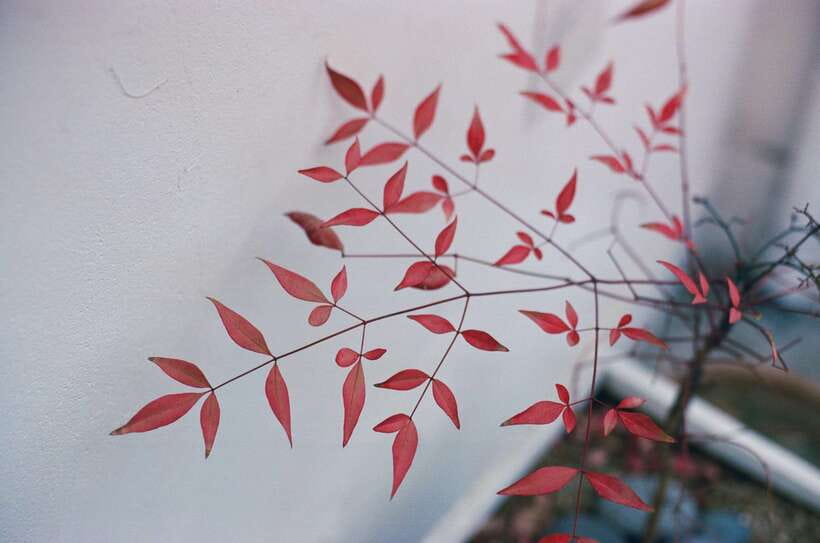
The route takes you through Hongdae Street and Yeonnam-dong, including the famous Maze Road area. The appeal is not a single grand landmark. It is the changing texture of the neighborhood as you move from active streets into narrower lanes.
Yeonnam-dong gives you a different view of Hongdae from the most crowded commercial stretches. You might find small alleys, cafes, Korean-style houses, and unusual street details that are easy to miss when you are rushing between major sights.
This is where the guide’s local knowledge adds value. Kinam explains the area’s history as you walk, so the neighborhood is not treated as a collection of attractive backgrounds. You get a sense of how the streets fit into the wider identity of Hongdae and why the area has become such a popular place to spend time.
I like this combination of history and photography. A normal walking tour can give you information, while a normal photo walk can give you images. Here, the two activities reinforce each other. Once you know something about a street or building, you may look at it with more care. Once you begin searching for a good frame, you notice details that a standard explanation might pass over.
The route also gives you practical local tips. Kinam has pointed out restaurant options and delicious places to eat in the area during the walk. Food is not included, and no meal stop is promised, but those recommendations can help you decide where to go afterward.
Because the exact sequence of streets can vary, I would not book this expecting a checklist of famous sights. Book it for a closer look at Hongdae. The reward is the act of noticing, not a long list of landmarks.
A completely different kind of day:
- Seoul: DMZ Tour with Optional Suspension Bridge
★ 4.8 · 5,277 reviews - Signature DMZ Tour: Exclusive Defector Talk & Suspension Bridge
★ 5.0 · 4,459 reviews - Thrilling Korean DMZ 3rd Tunnel Tour from Seoul + Red Bridge Rush
★ 5.0 · 3,097 reviews - DMZ Past and Present: Korean Demilitarized Zone Tour from Seoul
★ 5.0 · 2,481 reviews
Four kinds of pictures you may look for
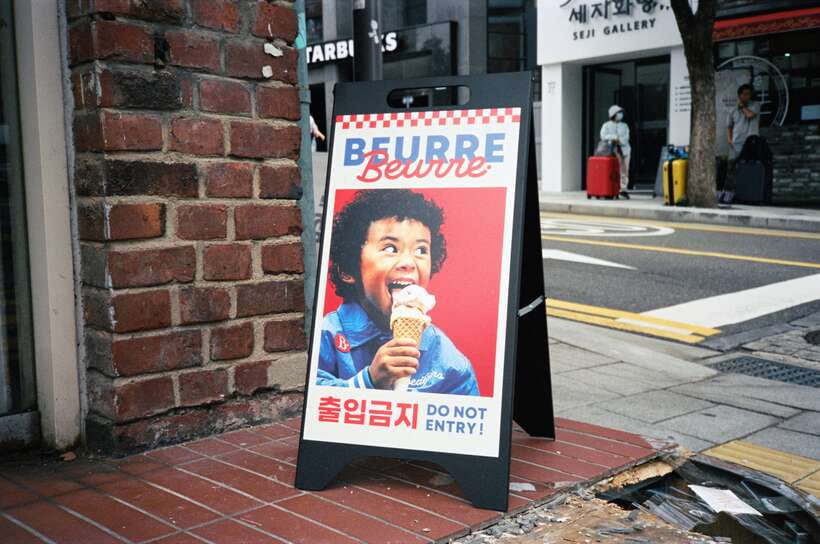
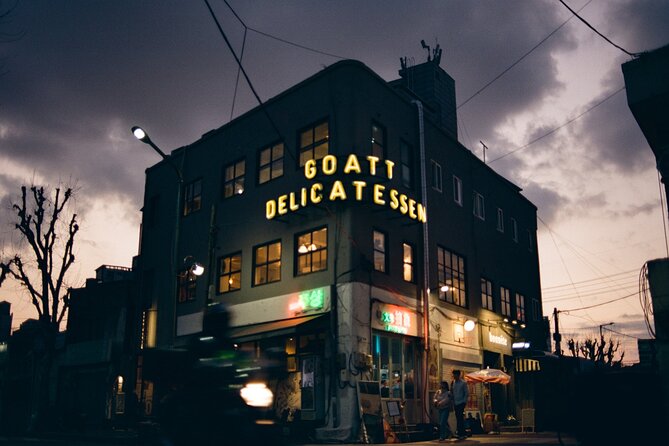
The activity gives you room to photograph the neighborhood in your own way. Previous participants have focused on narrow street alleys, distinctive cafes, Korean-style houses, and the everyday character of Hongdae.
You might use one frame for a strong architectural detail, another for a storefront, and another for a street scene. The guide’s explanations can help you understand the setting, but the final selection is yours.
The automatic camera is useful for this kind of route because it lets you react quickly. You do not need to stop for a long technical setup each time something catches your attention. At the same time, the film limit prevents the walk from becoming a frantic search for anything that might look good.
I would approach the 36 frames as a small visual diary. Try to include a mix of wide scenes and close details. Photograph something that shows where you are, then something that would make sense only to you. A cafe sign or house may not be Seoul’s most famous sight, but it can carry the strongest memory of your afternoon.
You should also remember that people may appear in street scenes. The experience is about capturing moments in the neighborhood, but it is still wise to be respectful and avoid treating anyone as a prop. The guide can help you understand how to photograph the surroundings thoughtfully.
What happens to the film afterward
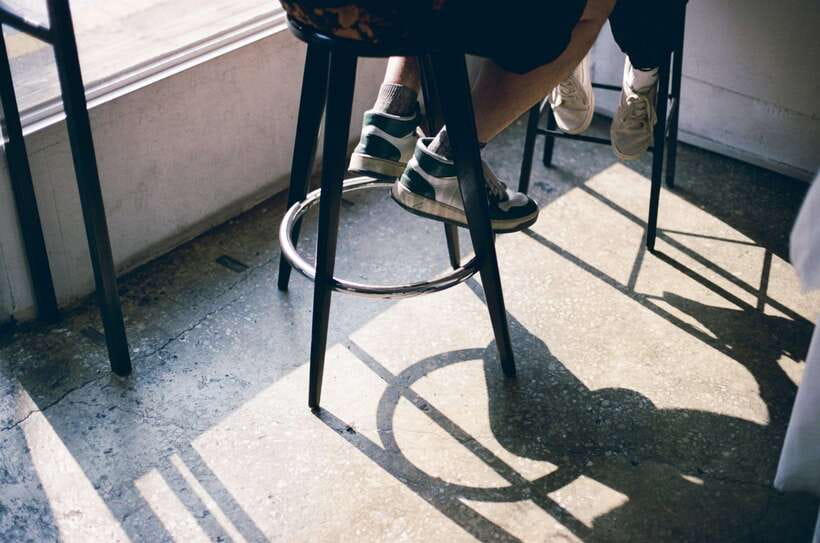
At the end, the club develops the film and scans the photographs. You then receive a download link. This included service is one of the biggest reasons the $55 price can make sense.
If you bought a camera, film, and processing separately, you would have to learn which supplies to choose, find a place to develop the roll, and arrange scans after the fact. Here, that part is built into the experience. You press the button, then the club handles the technical work.
The wait is also part of the film process. You do not receive instant results before you leave, so this is not ideal if you need the images immediately for social media or a same-day project. But the delay can make the photographs feel like a small later gift from your Seoul visit.
The download link means you get digital files, not just physical negatives. The supplied information does not promise prints, so you should not assume printed photographs are included. If prints matter to you, ask the provider before booking.
The scans also make the experience easier to share. You can keep the images with the rest of your trip photographs, while still knowing that you made them on film rather than applying a filter to a phone picture.
Is $55 a fair price?
At $55 per person, this is not the cheapest way to see Hongdae. You can walk through the neighborhood for free, and you can take pictures with your own phone without paying for film or processing.
The price becomes easier to justify if you value the full package: a three-hour guided walk, an automatic Canon camera, one roll of Kodak film, instruction, neighborhood context, development, and scanning. You are paying for access to the camera and film, but also for the structure that helps you use them.
The group limit of four adds value. A larger group would make it harder to get camera advice and personal feedback, especially if you are new to film. Here, the guide can spend more time helping you understand the camera and pointing out details that suit the route.
This experience is a particularly good buy for three types of people:
- Film beginners: You can try analog photography without purchasing equipment.
- Repeat visitors to Seoul: You get a fresh way to experience a familiar district.
- People who prefer memories over checklists: The finished scans become a personal record of the walk.
It is less suitable if you want a classic sightseeing tour, a meal, printed photos, or a large number of finished images. The value depends on your interest in the process as much as the result.
Kinam’s role in the experience
The guide, Kinam, is a central part of the outing. His strengths include explaining the camera to beginners, teaching basic photography, sharing the area’s history, and recommending places to eat.
That mix is important. A camera instructor alone might not give you much insight into Hongdae, while a local guide without photography skills might leave you unsure how to use the equipment. Kinam connects the two.
The personal tone also appears to be part of the appeal. The experience can feel like spending time with a local friend who happens to care about film, rather than attending a formal classroom. That does not mean the activity lacks structure. You still have a starting point, a route, a fixed duration, and a clear way to finish the project.
For a beginner, patience matters more than technical language. The guidance is designed to be understandable, so you can learn without feeling embarrassed about asking basic questions. If you already shoot film, you may find the camera lesson simple, but you can still use the walk to see Hongdae through a local’s eyes.
Practical details for your afternoon

The activity lasts three hours and returns to the starting area at Exit 3 of Hongik University Station. Starting times vary, so you need to check availability for the day you want.
Bring comfortable walking shoes and keep your schedule open for the full outing. Meals and drinks are not included, though restaurant recommendations may help you plan food before or after the walk.
The experience is offered in English and is limited to four people. You receive the camera, Kodak film, development, and scanning as part of the booking. Free cancellation is available up to 24 hours before the activity for a full refund, and you can reserve now and pay later if you want to keep your plans flexible.
The activity is not presented as a meal tour or a formal photography course. Think of it as a guided neighborhood walk with a creative assignment and a finished set of scanned images.
Should you book Seoul Film Camera Club?
I would book this if you want to see Hongdae at a slower pace and like the idea of making a physical, personal souvenir. It is especially well suited to beginners, couples, solo visitors, and small groups who enjoy street scenes, cafes, architecture, and local stories.
The strongest reasons to go are the four-person limit, Kinam’s patient teaching, the chance to explore Yeonnam-dong beyond the main streets, and the fact that development and scanning are included. The main cautions are the 36-frame limit, the lack of included food and drinks, and the wait for the finished scans.
If you want instant photos or a fast list of Seoul’s top sights, choose another activity. If you like slowing down, choosing carefully, and seeing what the city gives you one frame at a time, $55 is a reasonable price for a memorable Hongdae afternoon.
FAQ
Where does the Seoul Film Camera Club experience begin?
The meeting point is Exit 3 of Hongik University subway station.
How long does the activity last?
The experience lasts three hours and returns to the starting area.
What camera and film are provided?
You receive an automatic Canon film camera and one roll of Kodak film with 36 shots.
Are film development and scans included?
Yes. The provider develops and scans the film, then sends you a download link.
Is the experience suitable for beginners?
Yes. The guide explains how the camera works and covers basic photography. The activity is offered in English.
How large is the group?
The group is limited to four participants.
Just added in Seoul
- Seoul: Korean & English Language Exchange Global Party★ 5.0 · 28 reviews
- Your Personal Seoul Photographer!★ 4.1 · 15 reviews
- You’re Invited to Our Home in Seoul: The Only Cooking Class!★ 5.0 · 8 reviews
- From Seoul: Yongpyong Ski Day Tour with Transportation★ 4.9 · 40 reviews
- From Seoul: Hwacheon Ice Fishing and Lighting Festival Tour★ 4.5 · 4 reviews
- Unique Native Experience : Han River Picnic, Board game, BBQ★ 5.0 · 3 reviews
- Seoul: Gangneung BTS K-Pop & K-Drama Filming Locations Tour★ 4.6 · 14 reviews
- Seoul: Euljiro Gastroventure Tour★ 4.0 · 1 review
Seoul Tours, compared.
Best DMZ Tour Korea from Seoul (Red Suspension Bridge Optional)
Read our review →
DMZ Tour: 3rd Tunnel, Option(Suspension Bridge, Boat) from Seoul
Read our review →DMZ tour south Korea from Seoul (NK experience hall, defector)
Read our review →
Signature DMZ Tour: Exclusive Defector Talk & Suspension Bridge
Read our review →
Thrilling Korean DMZ 3rd Tunnel Tour from Seoul + Red Bridge Rush
Read our review →
DMZ Past and Present: Korean Demilitarized Zone Tour from Seoul
Read our review →