
Reviewed · UNESCO WORLD HERITAGE TOURS
UNESCO Jeju Island EAST Tour (entrance fee included)
Jeju’s east side is a full-day story. This private, nine-hour tour brings together a UNESCO lava tube, haenyeo culture, Sehwa Beach, Seongsan Ilchulbong, and a traditional village without asking you to rent a car. I especially like the hotel pickup and private vehicle, plus the way the schedule can change with the season. The main concern is that the day is tightly timed, and Manjanggul Cave may close with little warning, as happened to one guest because of rockfalls.
The price is $180 per person, with entrance fees included. That is not cheap, but Jeju is much larger than many first-time visitors expect, and the east coast sites are spread out. I also like that a certified guide can explain Jeju’s volcanic origins and local customs as you go, though you should confirm your language service carefully: the basic English option includes a driver only, not a tour guide.
In This Review
- Quick Take: What Makes This Tour Useful
- Why Jeju’s East Side Works Best by Van
- Manjanggul Cave: Jeju’s Volcanic Architecture
- The Haenyeo Museum Explains a Jeju Tradition
- Sehwa Beach Brings a Welcome Change of Pace
- Seongsan Ilchulbong Combines a Crater and a Live Tradition
- Seongeup Folk Village Adds Local Texture
- The Guide Question Matters More Than It First Appears
- Is $180 Per Person Good Value?
- Who Should Book This East Jeju Day?
- Final Decision: A Strong Introduction With One Caveat
- FAQ
- How long is the UNESCO Jeju Island East Tour?
- Does the tour include hotel pickup and drop-off?
- Are entrance fees included?
- Is this a private tour?
- Does the basic English option include a tour guide?
- Will the Jeju woman diver show run in rain?
- What happens if the tour is canceled because of weather?
Quick Take: What Makes This Tour Useful
- A full east Jeju route in about nine hours: You cover five major stops while someone else handles the roads and timing.
- Manjanggul Cave access is included when open: The lava tube reaches about 7.4 kilometers in total, with a huge main passage and a famous 7.6-meter lava column.
- Haenyeo culture gets two looks: You visit the Haenyeo Museum and may see a live women divers performance at Seongsan.
- Sehwa Beach adds a slower hour: This is your chance for coastal views, carrot juice, carrot cake, photos, and a postcard from a slow post box.
- The private format has real value: Only your group participates, so the day can be adjusted rather than run as a large bus circuit.
- Cave closures can change the plan: Check the latest operating status before departure and ask what replacement stop will be used if access is suspended.
Why Jeju’s East Side Works Best by Van
Jeju is about three times larger than Seoul. That simple fact changes the way you should plan your sightseeing. A map can make Manjanggul, Sehwa Beach, Seongsan Ilchulbong, and Seongeup Folk Village look manageable, but road time adds up quickly.
This tour removes the most tiring part of the day: finding the right roads, parking, and connecting scattered sights. Hotel pickup and drop-off are offered in downtown Jeju City, and the air-conditioned van or minibus matters on a long day with several outdoor stops.
The advertised duration is about nine hours, and driving time is part of that total. You should not expect nine full hours at attractions. The schedule gives you a useful introduction to the east, but it does not leave room for long meals, extended shopping, or a leisurely climb at every stop.
Because it is a private activity, only your group participates. That is a better setup for families, couples, or small groups with shared interests. It also makes the seasonal customization more meaningful. A guide may recommend different places and foods in spring, summer, autumn, or winter.
More Jeju trips:
- Jeju: Eastern Jeju UNESCO Spots Day Tour
★ 4.9 · 1,148 reviews - Jeju: Western and Southern Sightseeing Day Tour
★ 4.8 · 972 reviews - East Jeju Essentials – Seongsan Ilchulbong (UNESCO) & Haenyeo
★ 5.0 · 939 reviews
Manjanggul Cave: Jeju’s Volcanic Architecture
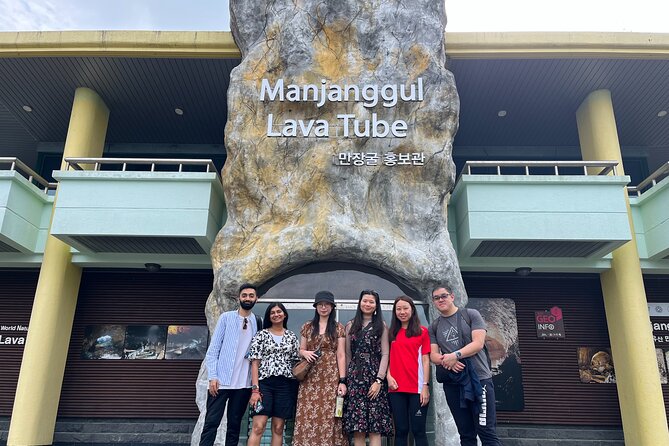
Manjanggul is the most unusual stop on the route. It is a lava tube formed thousands of years ago, not a limestone cave shaped slowly by dripping water. That difference gives the walls and floor a darker, more sculpted look, with features such as lava shelves, flowstones, lava rafts, stalactites, and stalagmites.
The full tube is about 7.4 kilometers long, but only part is open to the public. The main tunnel reaches roughly 18 meters wide and 23 meters high, so you can expect a broad underground passage rather than a narrow crawl. At the end of the visitor area, the 7.6-meter lava column is the headline feature. It is described as the highest known lava column in the world.
The scheduled visit lasts about 70 minutes, including admission. That is enough time for a proper look if the public section is open, but you should wear sensible shoes and expect an underground walk rather than a quick photo stop.
There is one important warning. Access can be suspended because of rockfalls or safety work. One guest received notice three days before departure that the cave had closed, while another had the route changed and still enjoyed the day with guide Marco. That tells you two things: the closure risk is real, and the quality of the replacement plan matters.
Before departure, ask whether Manjanggul is open and what happens if it is not. The included entrance fee is useful, but it does not protect you from a last-minute change in the route.
The Haenyeo Museum Explains a Jeju Tradition
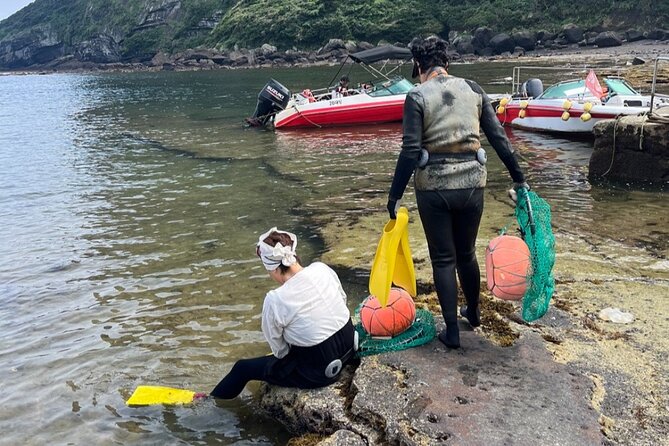
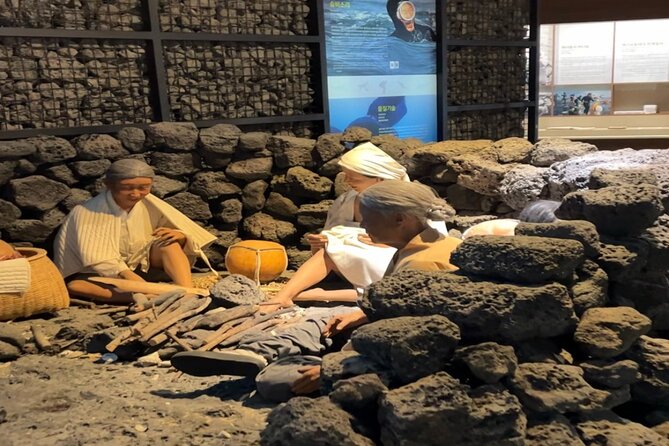
The Jeju Haenyeo Museum gives the day a human side. Haenyeo are women who gather shellfish and seaweed from the ocean without modern underwater equipment. Their work is tied to family income, village life, and Jeju’s coastal identity.
The museum was established in 2003 and uses photographs and exhibits to show the women’s daily work. You have about 40 minutes here, so this is a focused introduction rather than a long museum visit.
I like the placement of this stop because it gives context before the women divers performance at Seongsan Ilchulbong. You first learn about the tradition, then see a public presentation connected to it. The two stops are not interchangeable. The museum explains the social side, while the performance shows a more immediate part of the custom.
The museum may feel brief if you prefer large museums with many rooms and extended displays. Still, it is one of the tour’s more meaningful stops because it keeps Jeju from becoming only a parade of scenic viewpoints.
Sehwa Beach Brings a Welcome Change of Pace
After the cave and museum, Sehwa Beach gives you a more relaxed hour. The beach is known for clear cobalt-colored water and soft sand, and it sits along the Gimnyeong coastal road, also called the Sunrise Coastal Road.
This stop is not built around a major entrance attraction. Instead, you get time for coastal photos, a café break, and a look at the local character of Gujwa-eup, an area responsible for about 60 percent of South Korea’s annual carrot crop.
The suggested local treats are carrot juice and carrot cake, including a café associated with a K-drama. You can also use a slow post box to send a postcard to yourself or someone at home. Those details may sound small, but they are exactly what makes a busy sightseeing day feel less mechanical.
The tradeoff is simple: an hour goes quickly. If you sit down for cake, take photos, walk the shore, and write a postcard, you may not have time for everything. Treat this as a pleasant pause, not a full beach day.
More UNESCO sites in Jeju:
- Jeju: Southern Top UNESCO Spots Bus Tour
★ 4.9 · 648 reviews - Jeju Southern UNESCO Full Day Tour with Mt.Halla
★ 5.0 · 400 reviews - Jeju: Eastern UNESCO Sites Tour with Haenyeo Show
★ 4.8 · 217 reviews - Jeju island Southern UNESCO Day Tour With Hallasan MT
★ 5.0 · 200 reviews
Seongsan Ilchulbong Combines a Crater and a Live Tradition
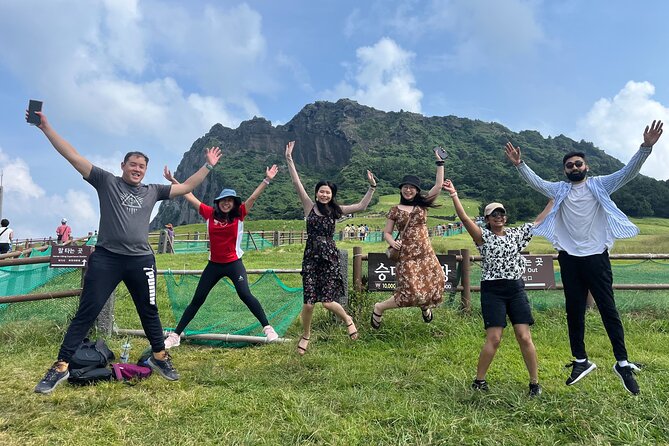
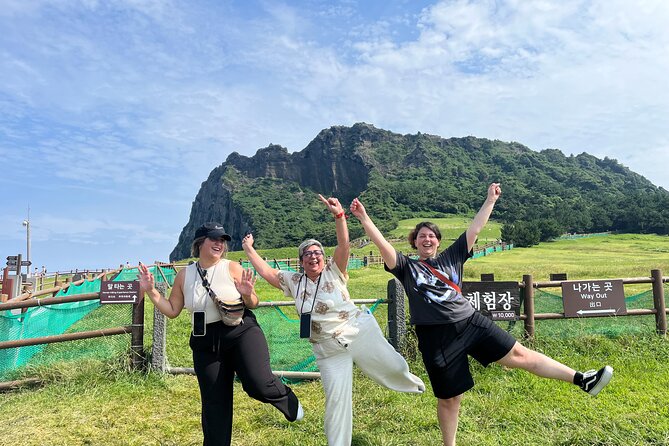
Seongsan Ilchulbong is the major scenic stop. The volcanic peak rises 180 meters above sea level and formed underwater about 5,000 years ago. Its unusual origin is part of the reason it has UNESCO World Natural Heritage status.
From the area, you can look toward the sea, Udo Island, Hallasan Mountain, and Jeju’s volcanic terrain. The views are the main reward, but the stop also gives you a chance to understand how much of Jeju was shaped by volcanic activity.
The total stop lasts about 80 minutes and includes admission. That time also includes the Jeju woman diver show, when scheduled. The performance presents the women’s preparation, their work at sea, and their catch. Fresh seafood may be cut and offered in front of the audience.
The show does not run in rain, so do not build your entire decision around seeing it. Weather can affect this part of the program, and the broader tour also requires good conditions.
You should also think about your priorities. If you want the full summit experience, 80 minutes may feel short once the performance and movement between areas are included. If you mainly want the view and a taste of the local tradition, the timing is more workable. Ask your guide how the stop will be divided on the day.
Seongeup Folk Village Adds Local Texture
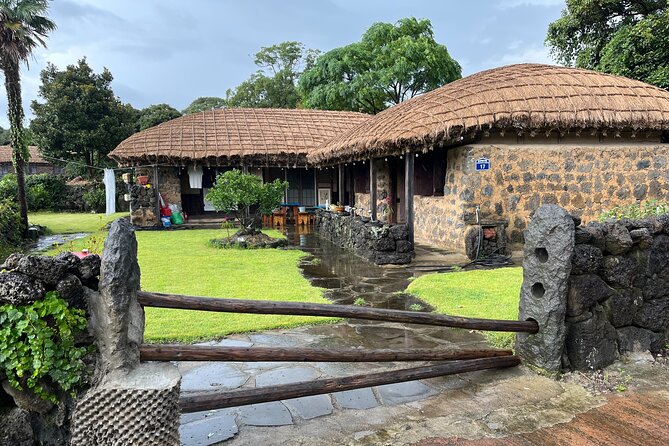
Seongeup Folk Village is a 30-minute stop with a different mood from the coast. The village preserves buildings and objects connected to local life from 1410 to 1914, including homes, Confucian shrines and schools, former government offices, stone statues, millstones, fortress remains, and stone markers.
The village also keeps less visible parts of culture alive, including folk performances, local food, craft traditions, and the Jeju dialect. Several old zelkova and nettle trees are part of the protected heritage as well.
Thirty minutes is enough for a first look, but not for a slow exploration of every lane and building. You should see this as an introduction to Jeju’s rural past. The stop works best for visitors who want more than natural scenery and who appreciate the connection between architecture, language, food, and daily life.
It is also a useful counterpoint to Seongsan. At the peak, the focus is geology and the sea. At Seongeup, the focus shifts to settlement and tradition.
The Guide Question Matters More Than It First Appears
The tour information describes a driver or certified tour guide, but it also makes a clear distinction: the basic English option does not include a tour guide and provides only a driver.
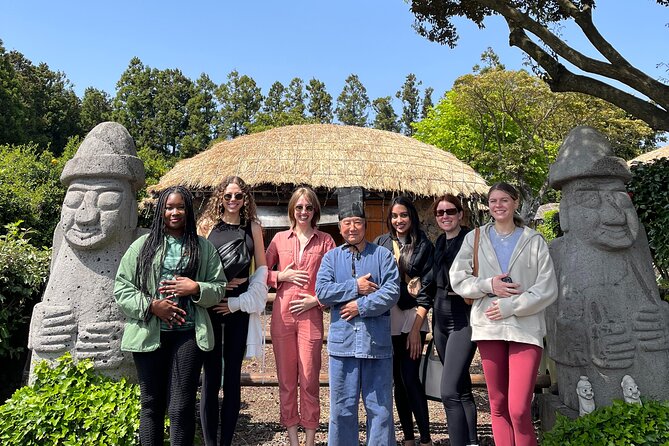
That difference affects the whole experience. A driver can get you from place to place, but a certified guide can explain Jeju’s volcanic formations, haenyeo customs, village traditions, and seasonal foods. If you want interpretation rather than transportation, confirm that you are booking the guided option.
Marco is specifically praised for being funny and knowledgeable, and for making the day enjoyable after the cave closure changed the plan. That is useful evidence of how much the person leading the day can shape the experience. It also explains why the guide question deserves attention before you pay.
If the cave is closed, a good guide can keep the day from feeling like a failed promise. If you have strong interests, such as geology, local food, or haenyeo culture, tell the provider in advance so the customization can work in your favor.
Is $180 Per Person Good Value?
At $180 per person, this is a premium day out. The price includes hotel pickup and drop-off in downtown Jeju City, an air-conditioned vehicle, a driver or certified guide, and admission fees for the listed paid attractions.
The value is strongest for a small private group that would otherwise need to hire a vehicle, plan the route, pay entrance fees, and manage a full day of driving. You also gain flexibility that a large group tour may not provide.
The value is weaker if you are traveling alone, staying outside downtown Jeju City, or mainly want beach time. You are paying for transport across a large island and for a packed selection of stops. Personal expenses, such as café food and other purchases, are not included.
I would also factor in the cave risk. Since Manjanggul can close, ask how the price is handled if that stop is unavailable. The tour may still be worthwhile, especially if the replacement plan is thoughtful, but the cave is one of the main reasons many people choose this route.
Who Should Book This East Jeju Day?
I would recommend it most to first-time Jeju visitors who want a broad introduction without renting a car. It suits couples, families, and small groups who value a private vehicle and want nature, culture, and coastal scenery in one day.
It is also a good match if you want local explanation. The route has more meaning when someone connects the lava tube, the haenyeo tradition, the carrot-growing area, and the old village.
You may want a different plan if you prefer slow travel. Five stops in nine hours means regular movement, and the schedule includes driving. Independent visitors who already know Jeju or want long hikes may get better value by choosing fewer sites and spending more time at each one.
The tour requires good weather. If poor weather cancels it, you are offered another date or a full refund. If the minimum number of participants is not met, the provider offers another date, another experience, or a full refund. You can cancel for a full refund up to 24 hours before the start time, but cancellations or changes within 24 hours are not refundable or accepted.
Final Decision: A Strong Introduction With One Caveat
Book this tour if you want the east side’s major sights handled in one private day, especially if you value hotel pickup, air conditioning, and a guide who can explain what you are seeing. The combination of Manjanggul, the Haenyeo Museum, Sehwa Beach, Seongsan Ilchulbong, and Seongeup gives you a well-rounded picture of Jeju.
Before booking, confirm two things: that the English option includes a certified guide, and what replacement stop will be used if Manjanggul Cave is closed. If you can accept that uncertainty, this is a practical and culturally focused way to get your bearings on eastern Jeju.
FAQ
How long is the UNESCO Jeju Island East Tour?
The tour lasts about nine hours, including travel time between stops.
Does the tour include hotel pickup and drop-off?
Yes, hotel pickup and drop-off are included for locations in downtown Jeju City.
Are entrance fees included?
Yes, admission is included for Manjanggul Cave, the Jeju Haenyeo Museum, Seongsan Ilchulbong, and Seongeup Folk Village as listed for the tour.
Is this a private tour?
Yes. Only your group participates in the private tour or activity.
Does the basic English option include a tour guide?
No. The basic English tour includes only a driver, not a tour guide. Confirm the selected service if you want guided explanations.
Will the Jeju woman diver show run in rain?
No. The show does not take place when it is raining.
What happens if the tour is canceled because of weather?
You are offered a different date or a full refund if poor weather causes the tour to be canceled.
Just added in Jeju
- Small Group 7D Korea package Tour with Seoul Gyeongju Busan Jeju★ 4.5 · 13 reviews
- Discover Jeju in 3days: A Curated All-Inclusive Experience★ 5.0 · 1 review
- 10 Days Essential Korea Tour(Seoul, Nami, DMZ, Andong, Gyeongju, Busan, Jeju)★ 5.0 · 1 review
- 1 Day Free schedule Tour a lot of experince driver in jeju island★ 5.0 · 2 reviews
- Jeju island: Van tour with a guide who the most loves JEJU★ 5.0 · 7 reviews
- Private schedule Day Tour With Local Taxi Driver in jeju island★ 5.0 · 1 review
- Jeju Unesco Eest course Package Private Van Guided Tour★ 5.0 · 17 reviews
- Full Day Jeju Private Customizable highlight Tour★ 5.0 · 5 reviews
UNESCO World Heritage Tours, compared.
Gyeongju UNESCO World Heritage Guided Day Tour
Read our review →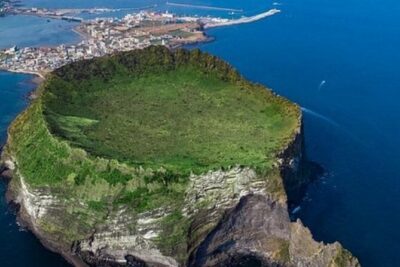
East Jeju Essentials – Seongsan Ilchulbong (UNESCO) & Haenyeo
Read our review →
Gyeongju UNESCO World Heritage Guided Day Tour from Busan
Read our review →
Jeju Southern UNESCO Full Day Tour with Mt.Halla
Read our review →
Gyeongju UNESCO sites Private tour with licensed tour guide
Read our review →
Private Gyeongju Tour – Explore Gyeongju UNESCO Sites
Read our review →Browse the lists this tour appears in