
Reviewed · UNESCO WORLD HERITAGE TOURS
From Busan: Gyeongju UNESCO World Heritage Guided Day Tour
History comes alive in Gyeongju. This full-day outing from Busan brings together Silla-era tombs, Buddhist art, traditional villages, lively cafes, and glowing evening monuments without making you solve the transport puzzle yourself. I especially like the strong mix of major sights and local neighborhoods, and I like that guides such as Bobby Kim, Jun-a, Olivia, Song, and Brian are praised for clear explanations and helpful photos. The main drawback is simple: this is a long day, often lasting 8 to 12 hours, with plenty of walking and a tightly managed schedule.
I also like the choice of three routes. Package A visits Yangdong Folk Village, Package B visits Gyeongju Gyochon Traditional Village, and Package C swaps the evening palace sights for Gyeongju National Museum. For about $52 per person, the tour offers good value if you want an efficient first look at Gyeongju, but it will feel busy if you prefer lingering at one temple or village.
In This Review
- Key points before you book
- Why Gyeongju works so well as a Busan day trip
- Bulguksa Temple, stone terraces and Silla-era faith
- Package A, Yangdong Folk Village and traditional homes
- Package B, Gyochon Traditional Village and old family homes
- Daereungwon, where royal tombs shape the city
- Hwangnidan Street, a modern break in an old city
- Woljeong Bridge after dark
- Donggung Palace and Wolji Pond, the evening highlight
- Package C, a stronger choice for museum lovers
- Guides, group care and the value of a planned route
- Timing, transport and what to bring
- Who should book this Gyeongju tour?
- FAQ
- How long does the Gyeongju tour from Busan last?
- Where does the tour meet in Busan?
- Which languages are available?
- Are meals included?
- Which package visits Yangdong Folk Village?
- Which package visits Gyeongju Gyochon Traditional Village?
- Which package visits Gyeongju National Museum?
- Are Donggung Palace and Wolji Pond admission fees included?
- Can infants join the tour?
- Can I cancel the booking?
Key points before you book
- Three different ways to see Gyeongju: Choose Yangdong Village, Gyochon Village, or the National Museum route.
- Bulguksa is the anchor stop: You get about 70 minutes at one of Korea’s most important Buddhist temple complexes.
- The evening finale is special: Packages A and B visit illuminated Woljeong Bridge and Donggung Palace with Wolji Pond.
- Guides add real value: Bobby Kim, Jun-a, Song, Olivia, Brian, and others are praised for history, group care, timing, and taking photos.
- Expect a full day on your feet: Comfortable shoes are not optional advice here.
- Lunch costs extra: The tour does not include meals, though a traditional Korean restaurant stop may be offered.
Why Gyeongju works so well as a Busan day trip
Busan is energetic and coastal. Gyeongju is quieter, older, and shaped by the Silla Kingdom, which ruled much of the Korean Peninsula for centuries. Its historic sites are spread across a broad area, so seeing several major places in one day is much easier by coach than by trying to connect them independently.
The drive from the Busan meeting points takes about 100 minutes each way. That is a serious portion of the day, but the coach turns it into a straightforward out-and-back trip. Pickup points include Seomyeon Station Exit 12, Haeundae Station Exit 5, and KTX Busan Station Exit 1. Check your selected option carefully because the meeting point can vary.
Group size can range from one person to as many as 43 people. That means the atmosphere and pace may change from one departure to another. The transport is generally rated highly, and several visitors specifically praise the comfortable bus and smooth handling of traffic.
The price of $52 is fair for the amount covered. You are paying for transport, a live guide in English, Chinese, or Korean, and several admission fees depending on the package. Meals, insurance, and personal spending are extra. If you tried to arrange transport to every stop yourself, the time and coordination would be the real cost.
More History Tours in Busan
- Gyeongju UNESCO World Heritage Guided Day Tour from Busan
★ 5.0 · 660 reviews - Old Korea Thousand History Tour of Gyeongju from Busan
★ 5.0 · 518 reviews - Busan history and market food tour with local chef
★ 5.0 · 58 reviews
Bulguksa Temple, stone terraces and Silla-era faith
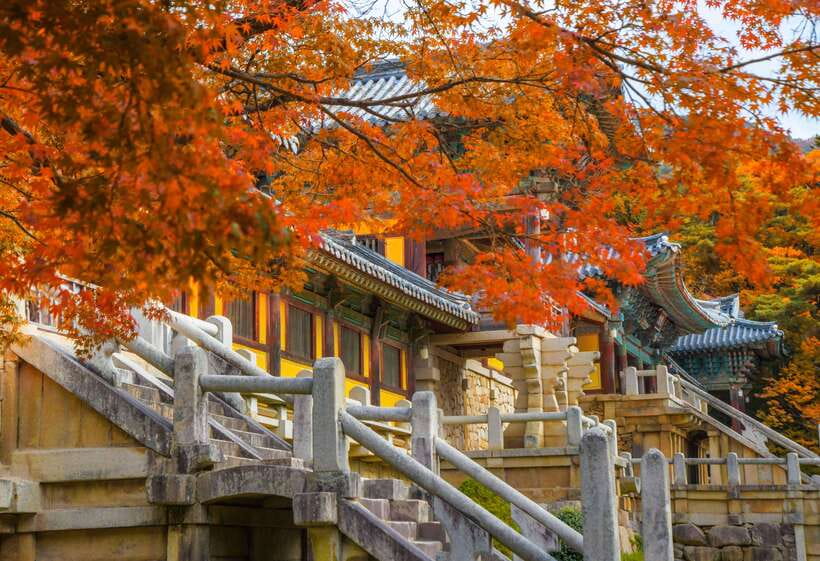
Bulguksa Temple is the first major stop, with about 70 minutes for guided sightseeing. The temple is famous for its carefully built wooden halls, stone terraces, stairways, and Buddhist sculpture. Even if you are not deeply interested in religious architecture, the setting gives you a useful introduction to the artistic skill and spiritual life of Silla Korea.
A guide helps here because the details are easy to miss. Rather than simply walking through a pretty complex, you can learn how the terraces, gates, pagodas, and halls fit together. Guides including Song, Jun-a, and Bobby Kim are repeatedly praised for explaining the significance of each place in clear language.
The time is enough for an overview and photos, but not for a slow study of every corner. Stairs and uneven surfaces are part of the visit, so sturdy shoes will help. If you have limited walking ability, tell the provider in advance and be realistic about the pace. The schedule has several more stops ahead.
Package A, Yangdong Folk Village and traditional homes
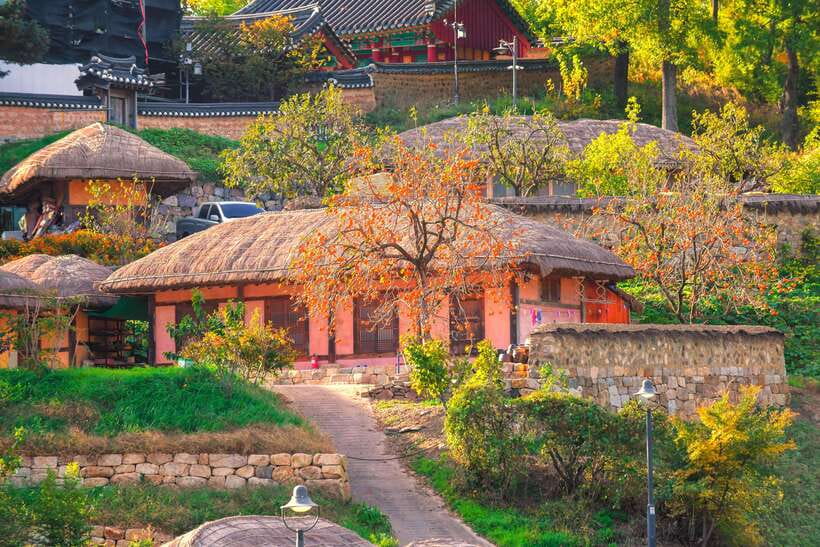
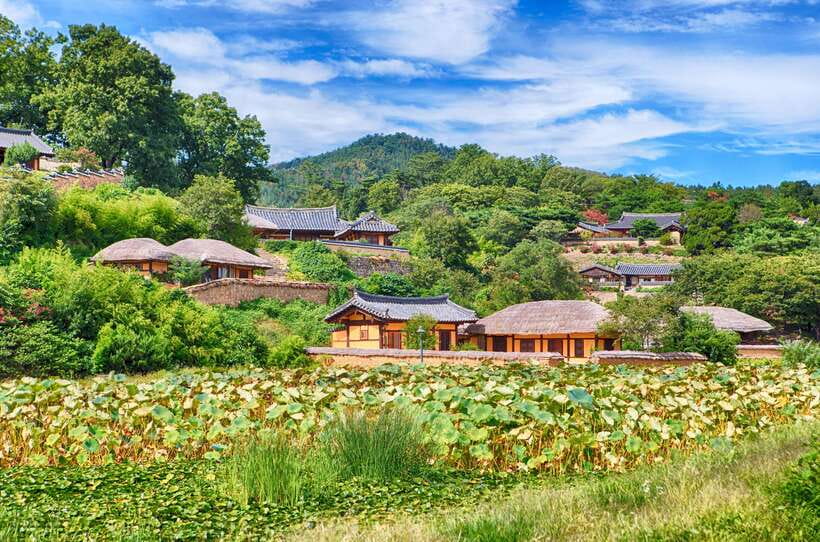
Package A takes you to Yangdong Folk Village for around 90 minutes. This UNESCO World Heritage site presents a traditional Korean village with hanok homes, tiled roofs, thatched structures, lanes, and surrounding countryside. It offers a different kind of history from Bulguksa because the focus shifts from royal Buddhism to family life and the social order of the Joseon dynasty.
I like this option for travelers who want more than monuments. You get a sense of how homes were arranged and how Korean traditions were preserved through architecture and village customs. The stop also gives the day a calmer, more rural mood before the urban cafes and evening lights later on.
Do not expect a long independent walk through every lane. Ninety minutes passes quickly, especially when your guide is explaining the setting and the group is gathering at several points. Yangdong Village entry is included in Package A, which improves its value.
Package B, Gyochon Traditional Village and old family homes
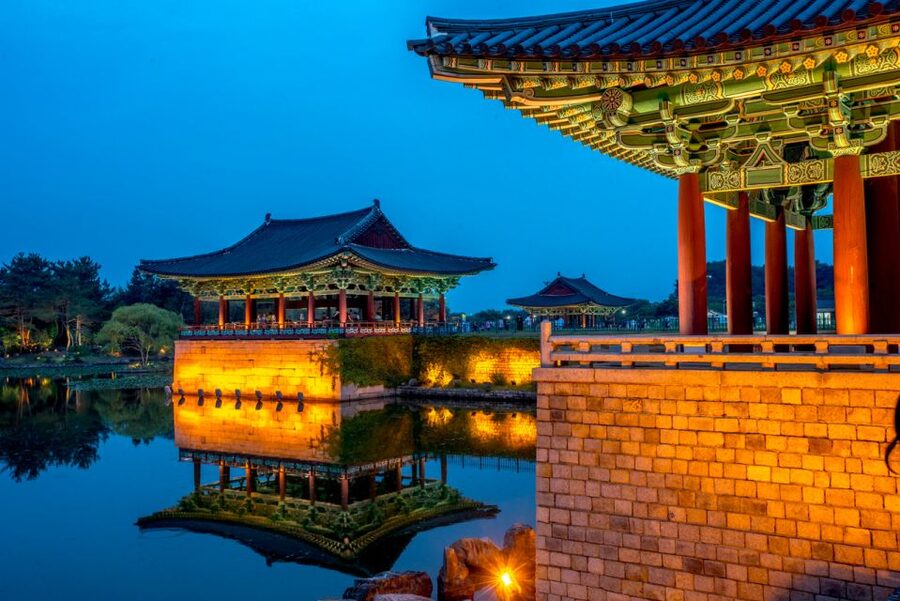
Package B replaces Yangdong with Gyeongju Gyochon Traditional Village, visited for about 100 minutes. This area is linked to the Gyeongju Choi clan and its old family homes. It gives you another look at Korean heritage, but the experience feels more connected to the city than Yangdong’s village setting.
Choose Package B if you want traditional architecture close to central Gyeongju and prefer a route that flows naturally toward the tombs and Hwangnidan Street. The village is a good place to listen to the guide, look at the older buildings, and notice how historic homes sit alongside present-day Gyeongju.
The choice between A and B is not about finding a clear winner. Yangdong offers a broader village experience, while Gyochon gives you a more central cultural stop. Since both routes continue to Daereungwon, Hwangnidan Street, Woljeong Bridge, and Donggung Palace, your decision mainly depends on which type of traditional setting appeals to you.
More History Tours in Gyeongju
- From Busan: Echoes of Silla Gyeongju Historical Day Tour
★ 4.8 · 55 reviews - Gyeongju Historic Areas Day Tour with Sky Capsule from Busan
★ 5.0 · 18 reviews - Gyeongju The UNESCO World heritage sites tour(Private tour)
★ 5.0 · 17 reviews - From Busan: Gyeongju Historical Day Tour with Sky Capsule
★ 4.7 · 17 reviews
Daereungwon, where royal tombs shape the city
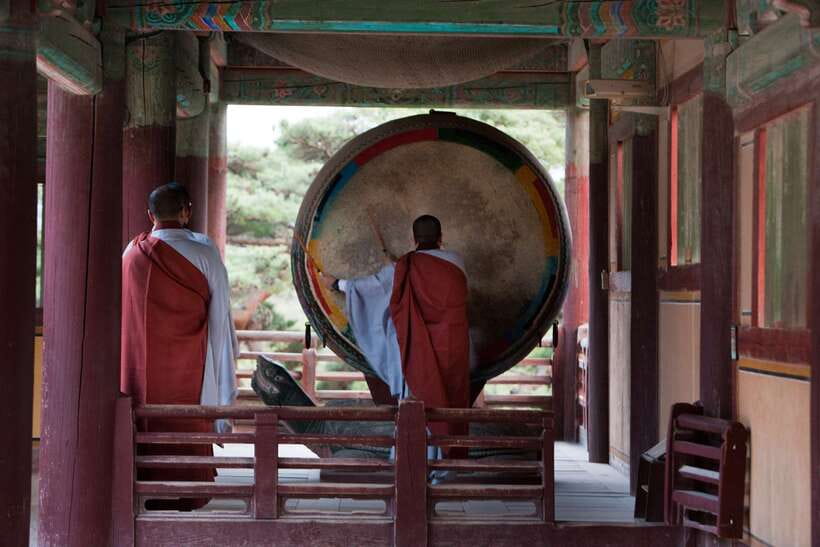
All three packages include the Daereungwon Royal Tomb area, with roughly 75 minutes for a guided visit. Large rounded burial mounds rise across green open ground, giving Gyeongju one of its most recognizable sights. These are not ordinary hills. They are royal tombs from the Silla period, and their size hints at the power of the people buried within them.
Package A includes entry to the Cheonmachong Tomb, also called the Heavenly Horse Tomb. Going inside adds context because you can see how a royal burial mound was excavated and what kind of objects were placed with the deceased. Admission details differ by package, so check exactly what is included when booking.
This is one of the better stops for understanding why Gyeongju is sometimes described as a museum without walls. Historic remains are not isolated behind distant fences. They appear among streets, parks, cafes, and ordinary city life.
The open space can be exposed to sun, rain, or cold, depending on the season. Bring weather-appropriate clothing, and save some energy because the tour keeps moving.
Hwangnidan Street, a modern break in an old city
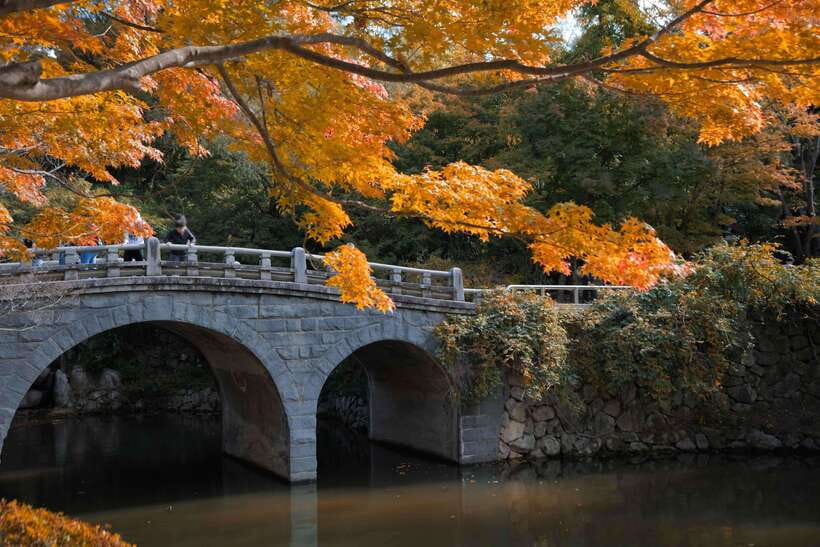
After the tombs, you get about 30 minutes of free time on Hwangnidan Street. This lively area mixes older-style buildings with cafes, small shops, boutiques, snacks, and contemporary Korean food. It is a useful contrast to the temple and tombs, showing how Gyeongju’s past is used in present-day city life.
Thirty minutes is enough for a drink, a quick snack, or a few photographs. It is not enough for a serious shopping session or a leisurely meal. Since lunch is not included, some departures may arrange a restaurant stop separately, and one guide may collect meal choices on the bus before arrival. That can save time, but you should budget extra for food.
Vegetarian choices may be more limited at the group meal, so mention your needs early. The tour data does not promise a particular restaurant or menu. Treat lunch as a practical group break rather than a central feature of the experience.
Woljeong Bridge after dark
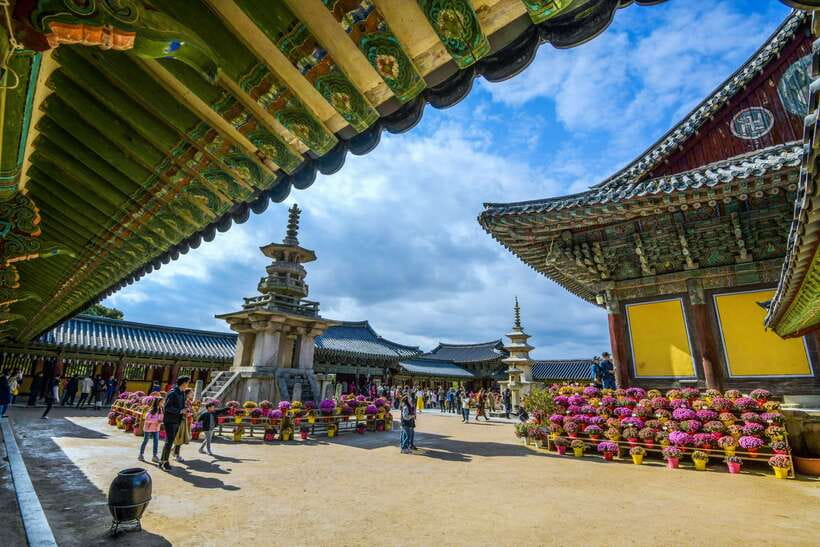
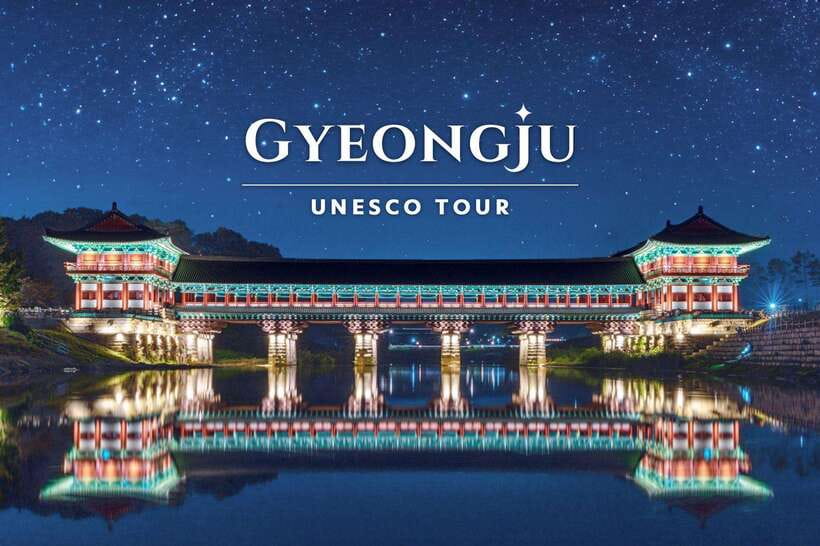
Packages A and B continue to Woljeong Bridge, usually as a 20-minute photo stop. The wooden bridge has been reconstructed in the style of an older Silla bridge and looks especially attractive when lit at night. You will not have a long time here, but the short visit is well chosen for photographs.
This is one of those stops where your guide can make a real difference. Several guides are praised for pointing out the best photo positions and helping solo visitors or couples take pictures. Bobby Kim, Song, and Jun-a are especially noted for this friendly touch.
The bridge is more about atmosphere and photography than a long historical visit. Keep your group in sight, listen for the meeting time, and take your photos early rather than waiting until the final minutes.
Donggung Palace and Wolji Pond, the evening highlight
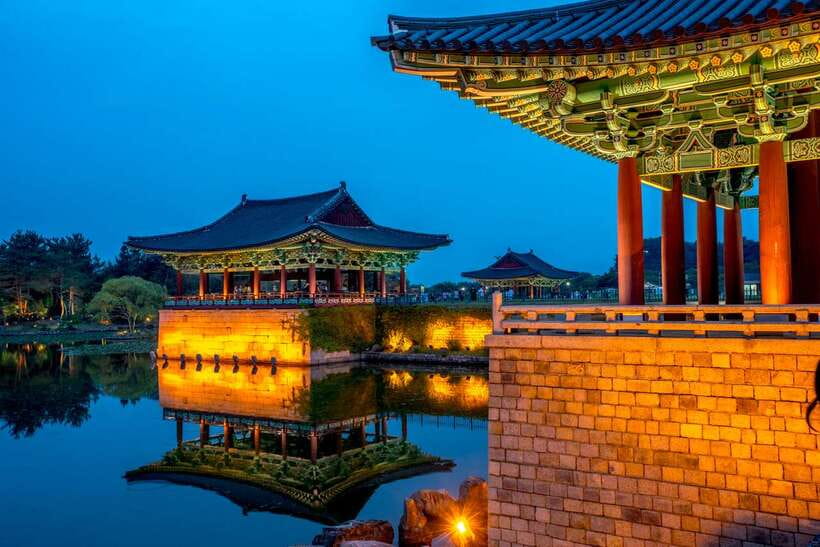
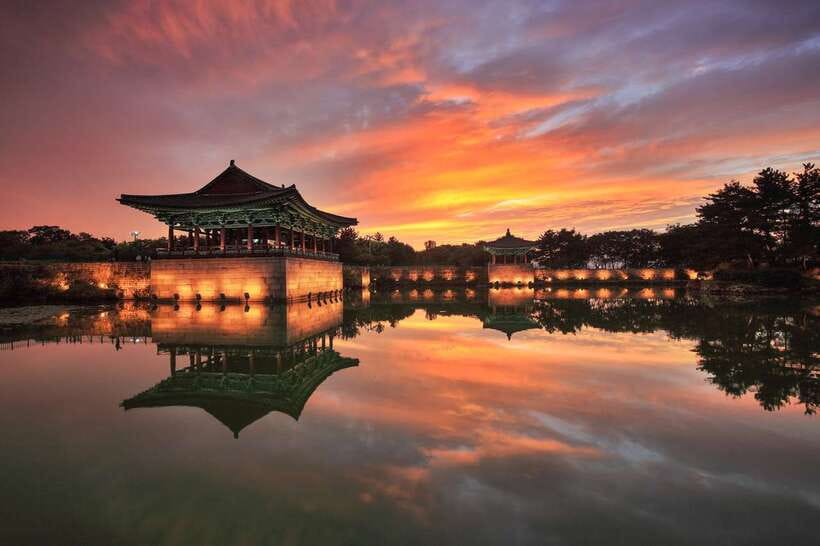
For Packages A and B, the final major stop is Donggung Palace and Wolji Pond, with about an hour for sightseeing. This former Silla palace complex is known for its carefully framed pond, reconstructed buildings, and reflections after sunset.
The night view is the emotional high point of the route. Lights shimmer across the water, and the buildings take on a softer appearance than they have during daylight. It is a fitting end to a day about vanished kingdoms because the site feels both archaeological and alive.
An hour gives you time to walk around, hear the guide’s explanation, and take photographs without feeling rushed. Still, this is not a quiet private visit. The site can be busy, particularly around major Korean holidays. One useful tip from the experience: Chuseok can bring large crowds, so avoid that period if you want more breathing room.
Donggung and Wolji admission is included in Packages A and B. Package C follows a different evening plan, so do not choose C expecting the same night view.
Package C, a stronger choice for museum lovers
Package C visits Bulguksa, Hwangnidan Street with the Daereungwon and Cheomseongdae area, and Gyeongju National Museum. The museum stop lasts about an hour and focuses on Silla artifacts, including golden crowns and Buddhist relics.
I would choose this package if you want objects and indoor displays to complete the story. The outdoor stops show the scale of Gyeongju, while the museum helps explain the craftsmanship, burial customs, and religious art behind what you have seen.
The tradeoff is clear. Package C ends with the museum rather than the illuminated Woljeong Bridge and Donggung Palace. If evening photography is your main reason for visiting Gyeongju, choose A or B. If you prefer historical objects and a more museum-centered finish, C may suit you better.
Guides, group care and the value of a planned route
The strongest part of this experience is the guiding. Names vary by departure, but the praise is consistent for Bobby Kim, Jun-a, Olivia, Song, Brian, Victoria, Rico, Angela, Charles, and others. The best guides do more than recite dates. They explain why a place matters, keep the group moving, answer questions, and suggest good photo spots.
Several guides also help with practical details. Bobby Kim is praised for looking after older participants, helping with stairs, handling a difficult moment without disrupting the group, and taking photos for couples and solo visitors. Jun-a is described as warm, funny, organized, and easy to approach. Song is praised for his historical explanations and photography help.
That human support matters on a packed route. You do not need to research every site in advance, and you can ask questions as the story unfolds. The compromise is that you follow the group’s clock. Free time is provided, but this is not a slow, independent day.
Timing, transport and what to bring
The total outing lasts 8 to 12 hours, including the two roughly 100-minute coach rides. Starting times vary, so check availability for your date. Six pickup and drop-off choices make the tour practical for people staying in different parts of Busan, but read the exact meeting instructions carefully.
Wear comfortable shoes. You will walk through temple grounds, villages, tomb areas, streets, and palace grounds, often with stairs or uneven paths. Bring water, weather protection, and a phone or camera with enough battery for the evening sights.
The itinerary can change because of traffic and weather. This matters most on weekends, public holidays, and peak periods such as Chuseok. The guides are praised for managing traffic and keeping the schedule together, but no coach tour can control Busan congestion.
Infants aged 0 to 2 can join free if they do not occupy a seat. If you bring a stroller, notify the provider at least 48 hours ahead. The group may be as small as one person or as large as 43, so the experience can range from personal to quite social.
Who should book this Gyeongju tour?
I recommend it most strongly for first-time visitors staying in Busan who want to see the main historic areas in one day. It also suits solo visitors who appreciate help with photos, couples who want an easy route, and anyone who wants historical context without arranging several separate transfers.
Choose Package A for Yangdong Village and the broadest traditional village feel. Choose Package B for Gyochon and a more city-centered heritage stop. Choose Package C if the National Museum matters more to you than night views.
I would not choose this tour if you dislike early starts, long coach rides, group schedules, or walking. Independent visitors with several days in Gyeongju may prefer to slow down and spend more time at each site. For a single day from Busan, though, the planning is efficient and the $52 price is sensible, especially with guiding and included admissions on the relevant routes.
FAQ
How long does the Gyeongju tour from Busan last?
The tour lasts between 8 and 12 hours, depending on the selected option, traffic, and schedule.
Where does the tour meet in Busan?
Pickup options include Seomyeon Station Exit 12, Haeundae Station Exit 5, and KTX Busan Station Exit 1. The exact meeting point depends on the option booked.
Which languages are available?
Live guiding and staff support are available in English, Chinese, and Korean.
Are meals included?
No. Meals are not included. A restaurant stop may be arranged, and food costs are paid separately.
Which package visits Yangdong Folk Village?
Package A, the Gyeongju UNESCO Tour, visits Yangdong Folk Village.
Which package visits Gyeongju Gyochon Traditional Village?
Package B, the Echoes of Silla Tour, visits Gyeongju Gyochon Traditional Village.
Which package visits Gyeongju National Museum?
Package C, the Gyeongju Museum Tour, visits Gyeongju National Museum.
Are Donggung Palace and Wolji Pond admission fees included?
Admission is included for Packages A and B. Package C follows a different route and ends at Gyeongju National Museum.
Can infants join the tour?
Infants aged 0 to 2 can join free if they do not occupy a seat. If you bring a stroller, inform the activity provider 48 hours in advance.
Can I cancel the booking?
You can cancel up to 24 hours in advance for a full refund. The reserve now and pay later option is also available.
More UNESCO Sites in Busan
- Busan: Gyeongju UNESCO Legacy Tour with National Museum
★ 5.0 · 172 reviews - From Busan to Gyeongju UNESCO Legacy Tour with National Museum
★ 5.0 · 87 reviews - 3-Days 2-Nights Gyeongju UNESCO Sites & Busan City [Private Tour from Seoul]
★ 4.5 · 11 reviews - UNESCO Tongdosa Temple + Gourmet Eonyang Style Bulgogi Lunch
★ 5.0 · 7 reviews
Just added in Busan
- Small Group 7D Korea package Tour with Seoul Gyeongju Busan Jeju★ 4.5 · 13 reviews
- Private Transfer from Seoul to Busan(up to 12 passengers)★ 5.0 · 1 review
- Jinhae Cherry Blossom + Busan Sunrise from Seoul★ 4.5 · 5 reviews
- 7 days Flexible Tour for Major Cities(Seoul,Busan,Gyeongju etc)★ 5.0 · 5 reviews
- PREMIUM 5 Days Tour for Wonder of Korea(Mt. Seoraksan, Andong, Gyeongju, Busan)★ 5.0 · 1 review
- 5 Days Tour for Korea’s past and present(Mt.Seoraksan, Andong, Gyeongju, Busan)★ 5.0 · 1 review
- 7 Days Highlight Korea Tour(Seoul, Nami, DMZ, Andong, Gyeongju, Busan)★ 5.0 · 1 review
- 5-Day Korea Golden route by K-shuttle Tour from Seoul Including Busan, Yeosu★ 4.5 · 37 reviews
UNESCO World Heritage Tours, compared.
East Jeju Essentials – Seongsan Ilchulbong (UNESCO) & Haenyeo
Read our review →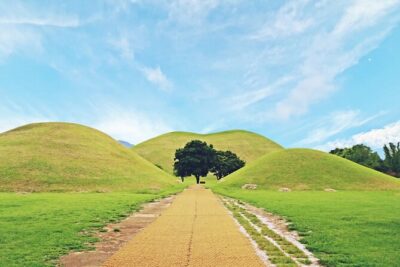
Gyeongju UNESCO World Heritage Guided Day Tour from Busan
Read our review →
Jeju Southern UNESCO Full Day Tour with Mt.Halla
Read our review →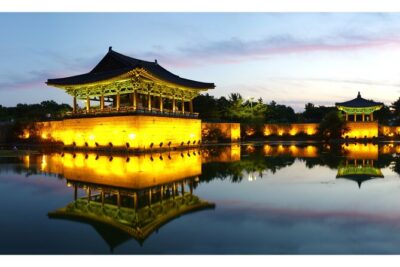
Gyeongju UNESCO sites Private tour with licensed tour guide
Read our review →
Private Gyeongju Tour – Explore Gyeongju UNESCO Sites
Read our review →
Browse the lists this tour appears in