
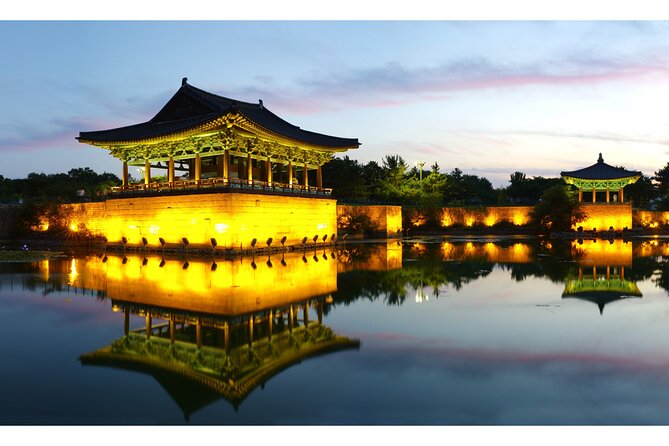
Reviewed · UNESCO WORLD HERITAGE TOURS
Gyeongju UNESCO sites Private tour with licensed tour guide
Gyeongju rewards a well-planned day. This private tour brings together Bulguksa Temple, Seokguram Grotto, royal tombs, the National Museum, and old city sights without making you piece together buses and taxis. I like the private air-conditioned vehicle and the way the day can begin in Busan and end in Gyeongju, or work in reverse.
I also like the personal pace. Guides such as Jino, Joy, Sang, Cynthia, Jake, and William have adjusted stops for families, older adults, and guests with mobility concerns. The trade-off is simple: this is a long sightseeing day, often eight hours, with plenty of walking at the historic sites.
In This Review
- Key points before you book
- Why a private vehicle makes Gyeongju easier
- Bulguksa Temple and the first look at Silla Buddhism
- Seokguram Grotto, a mountain journey for one sculpture
- Daereungwon and the royal tombs of Silla
- Gyeongju National Museum and the objects behind the monuments
- Cheomseongdae Observatory and the old royal district
- Gyochon Village and the Choi family legacy
- Woljeonggyo Bridge at the end of the route
- Four hours or a full nine-hour day?
- Guide quality and the human side of the day
- Walking, meals, fees, and other practical details
- Who should book this Gyeongju tour?
- Should you book it?
- FAQ
- Where does the tour take place?
- How long does the experience last?
- Is the tour private?
- Can I choose a one-way tour?
- What transportation is provided?
- Is a guide included?
- Are meals included?
- Are entrance fees included?
- Is the tour suitable for people with limited mobility?
- What is the cancellation policy?
Key points before you book
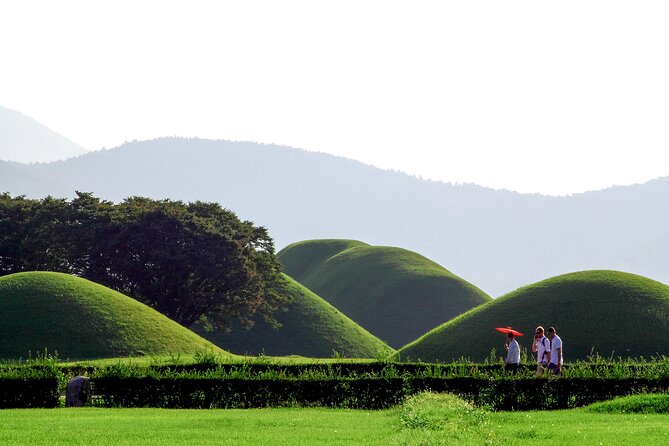
- A practical way to cover scattered sights: Gyeongju’s temples, tombs, museum, and village are spread across the area, with some temple sites roughly 20 miles from the central tomb district.
- UNESCO highlights come first: Bulguksa Temple and Seokguram Grotto provide the day’s grandest Buddhist monuments.
- Flexible pickup and drop-off: You can depart from Busan or Gyeongju and choose a round trip or one-way arrangement.
- Strong guide service: Jino, Joy, Sang, Cynthia, Jake, William, and others are praised for clear explanations, good driving, photography help, and practical local suggestions.
- Good for mixed-age groups: Families with young children and groups with older adults have benefited from the private format, including slower pacing and extra breaks.
- Allow time for walking: The vehicle gets you close to each area, but it cannot remove steps, paths, and uneven ground from an ancient capital.
Why a private vehicle makes Gyeongju easier
Gyeongju is not one compact museum district. Its major sights are spread across a broad area, from the mountains around Bulguksa and Seokguram to the tombs, museum, village streets, and restored bridge near the city center.
That geography is the main reason to consider this tour. Public transportation can work, but fitting several major stops into four to nine hours takes planning. With a private car, you can move between areas while your guide explains what you are seeing, rather than spending your limited holiday time waiting for the next connection.
The vehicle is air-conditioned, and parking fees and tolls are included. That matters on a full day, especially if you are coming from Busan. Several people used the tour as a transfer day, sightseeing in Gyeongju before being dropped at a hotel in Gyeongju or Busan.
Pickup is offered from either city, but confirm the exact pickup point when booking. One group appreciated receiving a map and picture showing where to meet the guide, a small detail that can save trouble in an unfamiliar place.
The tour is private, so only your group participates. That gives you room to stop for a bathroom break, slow down for a child, spend less time in a museum, or ask for more explanation at a temple. It also means the price deserves a closer look. At $186.50 per person, it is not a budget bus excursion, but the value improves for larger groups because you are paying for a dedicated vehicle, guide, parking, tolls, and a custom route. Group discounts may also be available.
More Gyeongju trips:
- Busan: Gyeongju Guided Day Trip to Three Kingdoms Capital
★ 4.8 · 1,925 reviews - From Busan: Gyeongju UNESCO World Heritage Guided Day Tour
★ 4.8 · 1,250 reviews - Gyeongju UNESCO World Heritage Guided Day Tour from Busan
★ 5.0 · 660 reviews
Bulguksa Temple and the first look at Silla Buddhism
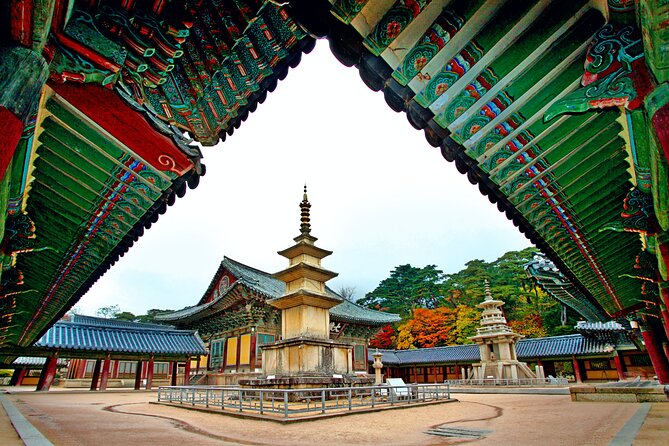
Bulguksa Temple is usually the emotional high point of the morning. Built in the eighth century during the Silla period, it combines stone terraces, pagodas, wooden halls, and carefully ordered spaces in a way that makes the site feel both grand and calm.
You have about an hour here. That is enough to see the main features and hear the story behind them without turning the visit into a rushed photo stop. A good guide helps you notice the stonework and explains why this temple matters within Silla Buddhist culture.
The temple is free to enter according to the tour details. Still, expect walking, steps, and time on your feet. If your knees or balance are a concern, tell the guide at the start. Jino, for example, has helped adjust routes for someone with mobility issues, while other guides have supported families with strollers.
Bulguksa rewards attention. It is easy to look quickly at the pagodas, take a picture, and move on. I would ask your guide to point out the details you might miss alone, then leave a few quiet minutes to look without narration.
Seokguram Grotto, a mountain journey for one sculpture
A short drive from Bulguksa takes you to Seokguram Grotto, another eighth-century UNESCO site. The grotto contains a serene granite Buddha and is valued for its Buddhist art as much as for its mountain setting.
The scheduled visit is about 40 minutes. That is a sensible amount of time for the grotto itself, though the visit can feel brief if you want to linger around the approach and surrounding views. The tour information lists admission as free.
This stop is less about wandering through a large complex and more about seeing a single, carefully designed sacred space. Your guide can give the sculpture and grotto their proper context, which is especially useful if you do not already know how Silla-era Buddhist art developed.
The mountain location adds effort. Ask about walking conditions if someone in your group has limited mobility. The private car helps, but Seokguram still requires leaving the vehicle and making your way to the grotto.
Daereungwon and the royal tombs of Silla
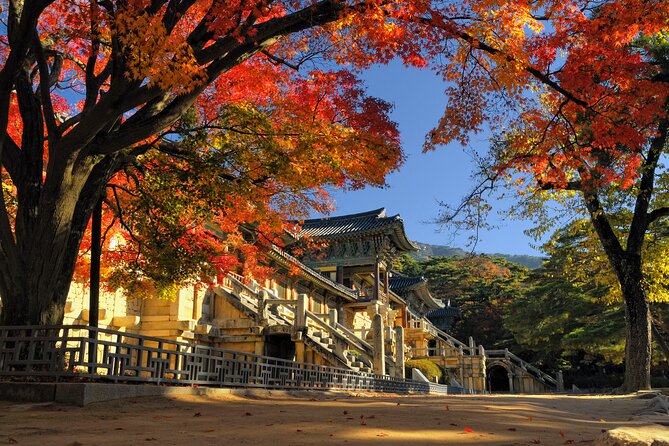
Back in the central area, Daereungwon Tomb Complex changes the mood. Instead of carved halls and mountain temples, you see large grassy burial mounds linked to Silla rulers and the royal court.
The visit lasts about 40 minutes, and admission is not included. Cheonmachong, or Heavenly Horse Tomb, is the main draw because it was excavated and opened to the public. Inside, you can learn about the burial objects found in the mound, including the kind of goldwork and royal items that make Silla archaeology so memorable.
This is one of the places where a guide adds real value. The mounds can look simple at first glance. Without context, you may see rounded hills and move on. With an explanation of how they were built, who was buried there, and what excavation revealed, the site becomes much easier to read.
The broad spacing also means walking. Comfortable shoes are a must. If you are traveling with children, this is a good place to let them ask questions about how archaeologists found the tomb contents. Guides such as Sang have kept younger visitors interested by connecting the old sites with everyday Korean life and modern culture.
More UNESCO sites in Gyeongju:
- Private Gyeongju Tour – Explore Gyeongju UNESCO Sites
★ 5.0 · 272 reviews - Busan: Gyeongju UNESCO Legacy Tour with National Museum
★ 5.0 · 172 reviews - Gyeongju: UNESCO Heritage Tour Including Bulguksa Temple
★ 4.8 · 104 reviews - Gyeongju UNESCO World Heritage Sites and History Full-Day Tour with Lunch
★ 5.0 · 104 reviews
Gyeongju National Museum and the objects behind the monuments
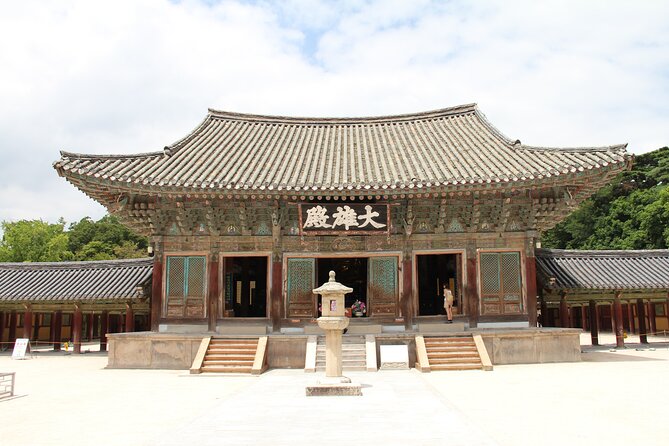
The Gyeongju National Museum brings the day’s history indoors. Its collections include more than 100,000 objects from the Silla Kingdom, which lasted from 57 BC to AD 935.
You have roughly 40 minutes here. That is enough for a focused visit, not enough for every gallery. Ask your guide to help you choose priorities. The famed 20-ton bell and the gold crowns from royal tombs deserve attention, especially after seeing the tomb complex earlier in the day.
The museum gives physical form to what you have already heard. At Bulguksa, you see architecture. At Daereungwon, you see burial mounds. Here, you encounter the metalwork, religious objects, and royal artifacts that explain the skill and power of Silla society.
Admission is free. The short scheduled time is useful for people who prefer variety, but museum lovers may wish to request extra time and trim another stop. That is one of the advantages of booking privately.
Cheomseongdae Observatory and the old royal district
Cheomseongdae is a compact stop, but it carries unusual importance. Built during Queen Seondeok’s reign from 632 to 647, it is described as the oldest surviving astronomical observatory in Asia.
The stone tower rises 9.17 meters and uses 36 layers of stone. You may not need a long visit, but it is worth hearing how the structure relates to Silla astronomy and court life. The open setting also makes it an easy place for photographs.
This stop works well between the larger sites because it does not demand a long indoor visit. Still, the surrounding area involves walking, and the value comes mainly from the explanation. On your own, you might see a stone cylinder and wonder what makes it special. With a guide, the tower becomes part of the wider story of a highly organized ancient kingdom.
Gyochon Village and the Choi family legacy
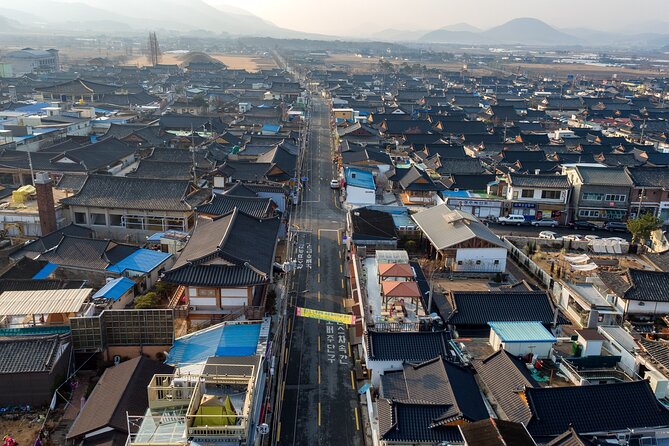
Gyeongju Gyochon Traditional Village offers a different kind of history. Its homes and lanes are tied to the Gyeongju Choi Clan, known for a 12-generation legacy. The historic Choi family house helps show how an influential Korean family lived and maintained its place in local society.
The planned visit is about 40 minutes, with no admission fee listed. This is a pleasant change from major monuments because the setting feels more like a neighborhood than an archaeological site.
I would use this stop to ask your guide about Korean family traditions, education, social rank, and how old customs fit into present-day life. Guides have also suggested local restaurants and cafes, and one group enjoyed eating at a restaurant connected with the House of Choi. Food is not included, so lunch is something you arrange with the guide during the day.
Because the route is private, you can spend more time here if the village interests you, or move on if your group has had enough temples and artifacts. That flexibility is especially useful with teenagers or young children.
Woljeonggyo Bridge at the end of the route
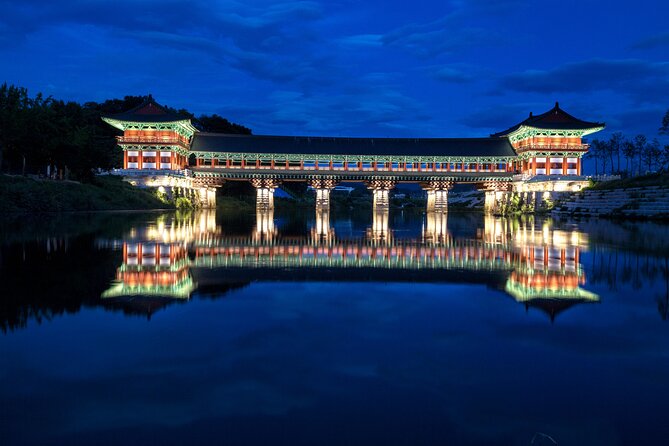
Woljeonggyo Bridge is a short final stop, scheduled for about 20 minutes. The reconstructed wooden bridge follows a design first built in AD 760 during the Unified Silla period.
The original bridge was destroyed during the Joseon dynasty, and reconstruction took place from 2008 to 2018. Today, its long wooden form offers one of the clearest visual reminders of Silla engineering and ceremonial architecture.
Twenty minutes is enough for a walk and photographs, but it may feel too short if you want to study the bridge or see it at a slower pace. Tell your guide if this is a priority. The stop is free according to the tour details.
It also makes a good closing scene. After temples, tombs, and museum cases, you finish with a structure that is easy to understand at a glance. The result is a day covering religion, royal burial, science, domestic life, art, and engineering.
Four hours or a full nine-hour day?
The advertised duration ranges from four to nine hours, so you should choose the format carefully.
A four-hour tour can work if you are already staying in Gyeongju and want a focused visit to the main Buddhist sites. One shorter tour included hotel pickup and two Buddhist temples, with the guide adding restaurant and sightseeing advice for the rest of the stay.
For the full route, allow closer to a full day. The complete schedule includes several 40-minute visits, driving between separated districts, meal time, photographs, and normal pauses. One group spent about eight hours on the road and still found the day packed.
Starting in Busan makes the tour particularly useful. The drive is about an hour, and the guide can provide historical background along the way. Families have appreciated a rest-stop break for snacks and coffee, along with child seats and help carrying a stroller in areas with steps. These details are not guaranteed for every booking, so request them in advance if needed.
A one-way arrangement can save you from backtracking. You might begin in Busan, tour Gyeongju, and finish at your Gyeongju accommodation, or use the day to continue toward Busan. Confirm the final route before booking.
Guide quality and the human side of the day
The strongest feature here is the guide service. The tour includes an English or Chinese-speaking licensed guide, and the named guides praised for their work include Jino, Joy, Sang, Cynthia, Jake, William, CK, Lily, Finn, and Soo-Hyeon Kim.
The best guide style for Gyeongju is not nonstop facts. Jino was appreciated for explaining significance without overloading the day. Joy has been praised for arranging a larger vehicle for a group of eight, helping with photos, and keeping the mood light. Sang has helped families with small children, found food stops, offered photography help, and adjusted the schedule to suit different ages.
Jake is noted for strong English, safe driving, and broad explanations of Korean history and present-day life. William has adapted the pace for older adults, while Soo-Hyeon Kim combined Gyeongju’s major sites with a visit to Jagalchi Market for a port pickup group.
Your guide will shape the experience more than the vehicle will. At booking, state your interests clearly. You might want more archaeology, more Buddhist art, fewer museum galleries, extra photo stops, or a slower route. The private format gives the guide something useful to work with.
Walking, meals, fees, and other practical details
You need moderate physical fitness. The amount of walking varies by stop, but temples, tombs, village lanes, and outdoor monuments all require leaving the vehicle. Older adults and people with mobility limits can still enjoy the tour, though you should explain your needs early and ask which stops can be shortened.
The tour includes the air-conditioned vehicle, private transport, a licensed English or Chinese-speaking guide, parking fees, and tolls. Meals are not included. Entrance fees are also not included if a charge applies, although several listed stops are free and admission is free for people over 65 according to the supplied details.
Service animals are allowed. Confirmation arrives at booking, and the activity is private for your group alone.
The tour has a 5.0 rating from 276 reviews and a 99 percent recommendation rate. Those numbers suggest unusually consistent service, but they do not remove the need to choose the right duration. A private day can be comfortable and flexible, yet the full route remains busy.
Who should book this Gyeongju tour?
I would choose this tour if you have one day for Gyeongju, especially from Busan, and you want the major sites explained rather than simply photographed. It is also a smart fit for families, multigenerational groups, and anyone who values hotel pickup and a flexible pace.
It may not suit you if you prefer to wander slowly at one or two sites, spend hours in museums, or travel at the lowest possible cost. Independent visitors can save money with public transportation, but they will need more planning and may see fewer places in a short visit.
At $186.50 per person, compare the price with your group size and route. For a couple, it is a premium day. For a larger group using one vehicle, with tolls, parking, a licensed guide, and possible group discounts, the value is easier to defend.
Should you book it?
Book this tour if your priority is seeing a lot of Gyeongju in one organized day while learning why each place matters. Request the pace, pickup plan, vehicle needs, and preferred lunch stop before the date.
I would especially recommend it for a Busan-to-Gyeongju transfer day or for families who need flexibility. If you have several days in Gyeongju and enjoy public transport and unhurried walks, you can explore independently. For most short visits, though, the private vehicle and strong guide service make this a practical way to reach the city’s far-flung Silla treasures.
FAQ
Where does the tour take place?
The tour takes place in Gyeongju, South Korea, with pickup available from Gyeongju or Busan.
How long does the experience last?
The tour lasts approximately four to nine hours, depending on the option selected and the route arranged.
Is the tour private?
Yes. Only your group participates in the activity.
Can I choose a one-way tour?
Yes. The tour offers a choice between a round-trip or one-way arrangement.
What transportation is provided?
You travel in a private, air-conditioned vehicle. Private transportation, parking fees, and tolls are included.
Is a guide included?
Yes. An English or Chinese-speaking licensed tour guide is included.
Are meals included?
No. Meals are not included in the tour price.
Are entrance fees included?
Entrance fees are not included if a charge applies. Several listed stops have free admission, and admission is free for people over 65 according to the tour details.
Is the tour suitable for people with limited mobility?
The tour requires moderate physical fitness and includes walking at many stops. Guides may adjust the pace or route, but you should explain mobility needs before the tour.
What is the cancellation policy?
You can cancel at least 24 hours before the start time for a full refund. Cancellations or changes made less than 24 hours before the start time are not accepted for a refund.
Just added in Gyeongju
- Yangdong village & Gyeongju Unesco Site Private Van Tour★ 5.0 · 1 review
- Small Group 7D Korea package Tour with Seoul Gyeongju Busan Jeju★ 4.5 · 13 reviews
- Gyeongju UNESCO Sites Tour by KTX train; The Museum Without walls★ 4.5 · 11 reviews
- Full-Day Small Group GyeongJu History Tour from Seoul★ 5.0 · 2 reviews
- 7 days Flexible Tour for Major Cities(Seoul,Busan,Gyeongju etc)★ 5.0 · 5 reviews
- PREMIUM 5 Days Tour for Wonder of Korea(Mt. Seoraksan, Andong, Gyeongju, Busan)★ 5.0 · 1 review
- 5 Days Tour for Korea’s past and present(Mt.Seoraksan, Andong, Gyeongju, Busan)★ 5.0 · 1 review
- 7 Days Highlight Korea Tour(Seoul, Nami, DMZ, Andong, Gyeongju, Busan)★ 5.0 · 1 review
UNESCO World Heritage Tours, compared.
Gyeongju UNESCO World Heritage Guided Day Tour
Read our review →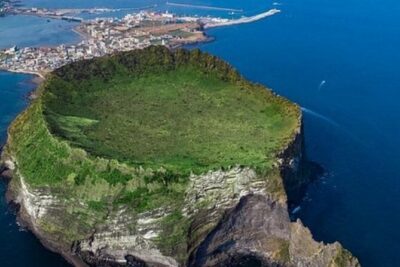

East Jeju Essentials – Seongsan Ilchulbong (UNESCO) & Haenyeo
Read our review →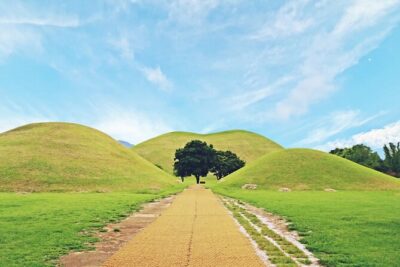
Gyeongju UNESCO World Heritage Guided Day Tour from Busan
Read our review →
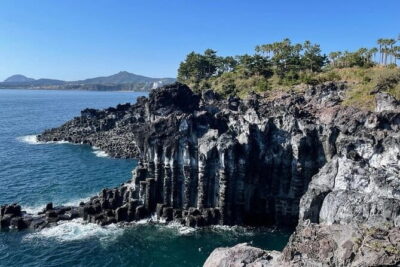
Jeju Southern UNESCO Full Day Tour with Mt.Halla
Read our review →
Private Gyeongju Tour – Explore Gyeongju UNESCO Sites
Read our review →
Browse the lists this tour appears in