
Reviewed · DMZ TOURS
5 Days Essential Tour for Korea’s past and present(Seoul, DMZ, Gyeongju, Busan)
Korea packs centuries into five busy days. This private tour links Seoul’s palaces, the DMZ, Silla-era Gyeongju, and coastal Busan, giving you a useful first look at both old and new Korea. I like the private vehicle and English-speaking licensed guide, which make a demanding route much easier to manage. I also like the generous meal plan, with two breakfasts, five lunches, and four dinners included. The main consideration is pace: you cover a lot of ground, and the schedule leaves little room for lingering.
This is a strong choice if you want Korea’s major sights without arranging trains, hotels, admission tickets, and meals yourself. I especially appreciate that the DMZ visit is built into the trip, since access can be difficult to organize. Just know that the $2,499 price is aimed at convenience and a private experience, not budget travel.
In This Review
- Key Points at a Glance
- What This Five-Day Route Does Well
- Day One: Palaces, Hanok Streets, and Seoul Street Food
- Day Two: The DMZ and Seoul from Namsan
- Day Three: Gyeongju and the Silla Kingdom
- Day Four: Busan’s Coast, Seafood, and War Memory
- Day Five: Gamcheon Culture Village Before Departure
- Meals, Hotels, and the $2,499 Cost
- Who Will Enjoy This Tour Most
- Should You Book It?
- FAQ
- How long is the tour?
- Where does the tour begin?
- Is hotel pickup included?
- Is this a private tour?
- What transportation is provided?
- Is a guide included?
- How many meals are included?
- Are admission fees included?
- Is the DMZ included?
Key Points at a Glance
- Private sightseeing across four major destinations: Your group travels together rather than joining a large shared coach.
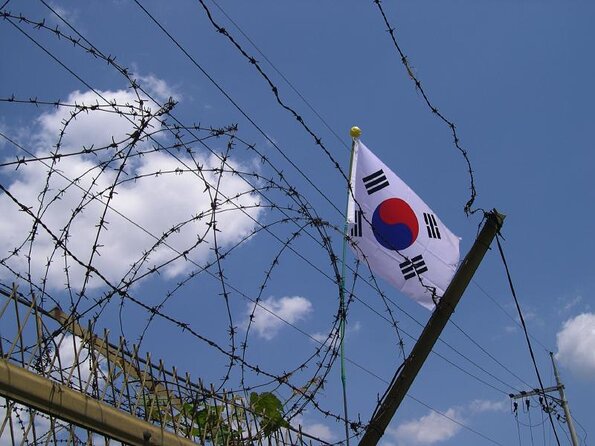
- The DMZ is arranged for you: The three-hour visit includes Imjingak Park, the Freedom Bridge, the Third Infiltration Tunnel, and Dora Observatory.
- Korea’s historic core gets proper attention: Gyeongbokgung Palace, Bulguksa Temple, Seokguram, royal tombs, and Silla monuments show different eras of Korean culture.
- Food is part of the structure: Ten meals are included, helping reduce daily planning and restaurant decisions.
- The pace is full but practical: Seoul receives two sightseeing days, Gyeongju one day, Busan one and a half days.
- Bergen Park is the named tour contact: The supplied feedback praises Bergen Park for handling a full schedule, local food, and the complicated DMZ arrangements.
What This Five-Day Route Does Well
The clever part of this tour is its range. In Seoul, you move from royal ceremony to Buddhist practice, traditional homes, street food, and a modern city stream. In Gyeongju, the focus shifts to the Silla Kingdom, which ruled much of the Korean Peninsula for centuries. Busan then brings beaches, seafood, war memorials, and hillside neighborhoods.
You are not seeing every corner of Korea. You are getting a well-packed introduction to the country’s main themes. That distinction matters. If you prefer slow mornings and long café stops, this schedule may feel hurried. If you want to return home knowing how Seoul, Gyeongju, Busan, and the Korean War connect, the route earns its keep.
Transportation is arranged in an air-conditioned private vehicle. That is valuable here because the route involves several long transfers, and you do not have to handle luggage, rail connections, or local taxis between stops. Hotel pickup and drop-off in Seoul are included, with a stated start time of 9:00 a.m.
Two nights of accommodation in a three-star or four-star hotel are included. Rooms are based on two people sharing, with a single room for an odd-numbered group arrangement. The supplied details do not identify the hotels, so you should confirm the exact properties before booking if location or room style matters to you.
More DMZ tours:
- Best DMZ Tour Korea from Seoul (Red Suspension Bridge Optional)
★ 5.0 · 41,422 reviews - DMZ Tour: 3rd Tunnel, Option(Suspension Bridge, Boat) from Seoul
★ 5.0 · 21,373 reviews - DMZ tour south Korea from Seoul (NK experience hall, defector)
★ 5.0 · 20,599 reviews
Day One: Palaces, Hanok Streets, and Seoul Street Food
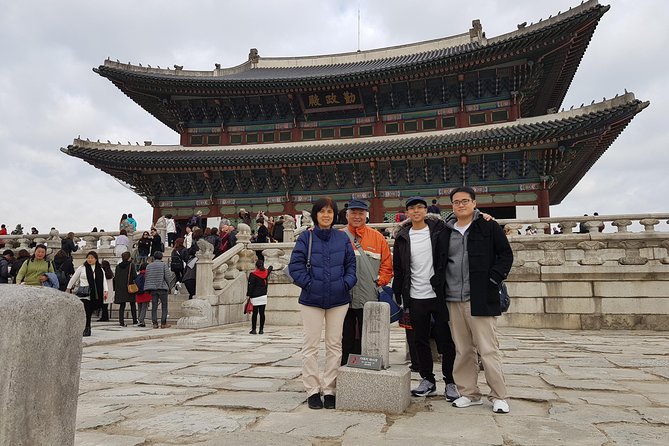
The first day introduces old Seoul in a tightly arranged series of stops. Gyeongbokgung Palace is the natural opening point. Built in 1395 as the first of the Joseon Dynasty’s five major palaces, it was the setting for royal ceremonies, including the king’s inauguration and receptions for foreign envoys.
Give your attention to Geunjeongjeon Hall, the palace’s main building, and Gyeonghoeru Pavilion, which sits beside an artificial pond. The 90-minute visit is long enough to see the key buildings without turning the morning into a palace marathon. Admission is included.
The National Folk Museum follows with a shorter 30-minute visit. Its focus is everyday Korean life, from birth through death, rather than royal architecture. I like this pairing because the palace shows how rulers lived, while the museum turns to ordinary customs and household culture. The stop is brief, so expect an introduction rather than a museum study session.
Bukchon Hanok Village offers another change of scale. Its narrow streets and traditional tiled-roof homes occupy an area historically associated with royal relatives and high officials. The 40-minute visit gives you time to see the old residential setting, but not much time for extensive wandering or photography.
You should remember that Bukchon is still a residential area. Keep voices low and follow the guide’s directions. The appeal is seeing traditional homes within central Seoul, not visiting an open-air theme park.
Jogyesa Temple adds a living religious site to the morning. It is the headquarters of the Jogye Order, Korea’s largest Buddhist sect. The main Daeungjeon Hall contains a seated Buddha statue, and a white pine tree said to be more than 500 years old grows nearby. The 30-minute stop is short, but it gives the day a quiet pause after the palace and village streets.
Insadong is the day’s main cultural shopping area. Its streets contain craft workshops, antique shops, galleries, restaurants, and traditional teahouses. You receive about an hour here, including a refreshment, so this is a good place to browse Korean handicrafts without spending half a day shopping.
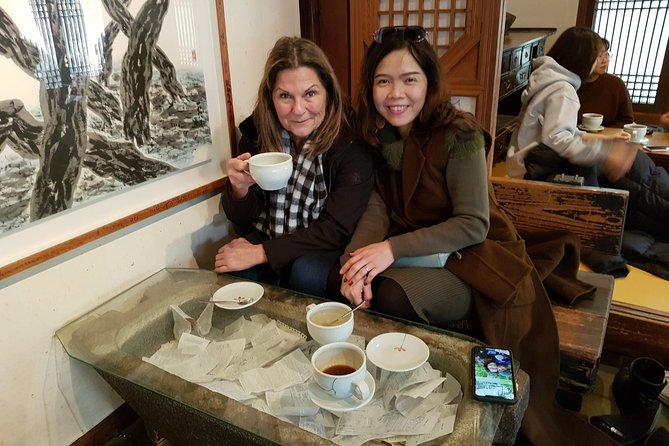
The Kyung-In Museum of Fine Art brings you to Dawon Traditional Tea Garden, located in a hanok. You can choose from more than 15 homemade Korean teas while sitting among antique furniture and a private garden. This half-hour stop may be one of the most pleasant parts of the day because it offers a moment of stillness in central Seoul.
Cheonggyecheon Stream shows modern Seoul’s ability to reshape itself. Once covered by concrete and an automobile overpass, the downtown waterway was later restored as an 11-kilometer urban stream. The visit lasts only 20 minutes, but the site provides a quick lesson in the city’s shift from postwar industrial growth toward public spaces.
Baek In-je’s House returns you to traditional architecture. This large hanok has a garden and an elevated position with views over Bukchon. It has been preserved as a Citizens’ Cultural Heritage site and converted into a museum. The one-hour visit deserves attention, especially if you want to see how a wealthy household used space differently from the smaller homes around Bukchon. It is closed every Monday, an important detail when choosing your dates.
The day ends at Gwangjang Market, Korea’s first commercial market, opened in 1905. This is where the tour’s food focus becomes most obvious. You can see traditional stalls, clothing, and inexpensive street foods in one of Seoul’s best-known market settings. A 90-minute stop gives you time to eat, browse, and watch daily commerce at close range.
The first day is long, but its structure makes sense. You begin with monarchy, move through home life and religion, pause for tea, then finish with food. Wear comfortable shoes, since several stops involve walking on uneven or sloping streets.
Day Two: The DMZ and Seoul from Namsan
The DMZ visit takes about three hours and includes several major sites. The Freedom Bridge and Imjingak Park help explain the division created after the Korean War. The Third Infiltration Tunnel offers a more direct look at the military tension beneath the border, while Dora Observatory provides a view toward North Korea.
The DMZ is not simply another sightseeing stop. It is a place where modern Korean history remains present and unresolved. The experience can also involve strict scheduling and access rules, so having the arrangements handled by the guide is a real advantage. The supplied feedback gives special praise to Bergen Park for getting the group through the DMZ portion, a useful sign for anyone worried about the practical details.
You should expect the DMZ portion to be structured rather than leisurely. The schedule is not designed for wandering or independent detours. Follow instructions closely, and keep in mind that access can depend on official conditions.
The afternoon or evening moves to N Seoul Tower in Namsan Park. The two-hour visit gives you time to reach the tower and take in the panoramic view over Seoul. After seeing palace courtyards and old neighborhoods, the city spread below helps you understand the scale of modern Korea.
N Seoul Tower is a viewpoint first, not a cultural museum. Visibility will affect how much you see, and the experience is more rewarding when the air is clear. Still, it provides a useful visual counterpoint to the DMZ: one stop looks across a divided peninsula, the other looks over a city that has grown at remarkable speed.
Day Three: Gyeongju and the Silla Kingdom
Day three shifts from Seoul to Gyeongju, Korea’s great ancient capital. The focus is the Silla Kingdom, and the sights are more widely spread than the central Seoul stops. Private transport is particularly helpful here.
Bulguksa Temple is the day’s major religious monument. Built in 751, it is known for wooden halls, stone bridges, pagodas, and seven national treasures. UNESCO added Bulguksa to its World Heritage list in 1995. The hour-long visit gives you time to see the main compounds and appreciate how stonework and timber fit together.
Seokguram, also built in 751 on Mount Tohamsan, is a Buddhist stone sanctuary with a large granite Buddha in a round main hall. The Buddha’s calm expression and the lotus-carved setting are the focus. It is also a UNESCO World Heritage site, listed in 1995.
The one-hour stop is meaningful, but the site’s setting on a mountain slope means you should be ready for walking. The tour details do not specify the exact transfer time between Bulguksa and Seokguram, so ask how the day is arranged if mobility or hiking distance is a concern.
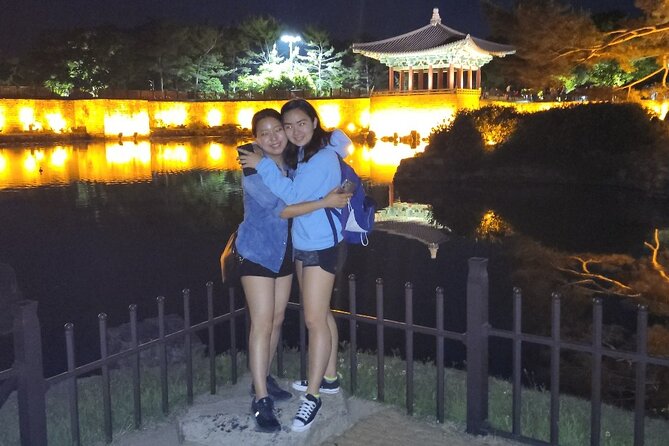
Donggung Palace and Wolji Pond shows the Silla court in a more atmospheric setting. The pond was created in 674 for the crown prince’s secondary palace and for official banquets. It was later known as Anapji until a pottery fragment helped identify the older name, Wolji, meaning a pond that reflects the moon.
The visit lasts 30 minutes, enough for the key views but not a long stroll around the water. Cheomseongdae Observatory follows, with another 30-minute stop. This 7th-century granite structure is said to contain 362 stone blocks, corresponding to the days of a lunar year. Its compact form makes it easy to overlook, but its purpose gives it weight: Silla was studying the heavens more than a thousand years ago.
Daereungwon Tomb Complex closes the Gyeongju portion. The area contains 26 large tombs of Silla kings and nobles. At Cheonmachong, you can enter one excavated tomb and see objects connected with royal life, including jewelry and a gold crown found during the 1970s excavations.
This is a history-heavy day, and the guide matters. Without context, a pond, stone tower, and grass-covered mound can blur together. With explanation, they form a clear picture of Silla power, religion, burial customs, and science.
More Busan trips:
- 5-Day Korea Golden route by K-shuttle Tour from Seoul Including Busan, Yeosu
★ 4.5 · 37 reviews - Small Group 7D Korea package Tour with Seoul Gyeongju Busan Jeju
★ 4.5 · 13 reviews - 3-Days 2-Nights Gyeongju UNESCO Sites & Busan City [Private Tour from Seoul]
★ 4.5 · 11 reviews - Jinhae Cherry Blossom + Busan Sunrise from Seoul
★ 4.5 · 5 reviews
Day Four: Busan’s Coast, Seafood, and War Memory
Busan begins with Haedong Yonggungsa Temple, one of Korea’s most distinctive religious sites because it sits beside the sea rather than in the mountains. Founded in 1376, it includes the main sanctuary, a sea-facing goddess Buddha, a cave shrine, and a three-story pagoda with four lions.
The one-hour visit involves stairs and coastal paths, so comfortable footwear remains important. The setting is the attraction as much as the buildings. Waves, rock, and temple architecture create a different mood from Bulguksa’s inland mountain setting.
Nurimaru APEC House sits on Dongbaek Island and was used for the 13th APEC summit in 2005. Its three-story design draws on the form of a Korean traditional pavilion. From the terrace, you can see Haeundae Beach, Gwang’an Bridge, and several islands.
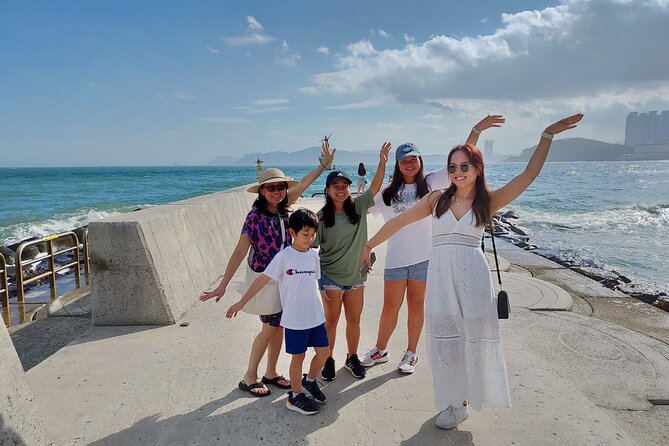
Dongbaekseom adds a 30-minute coastal walk. The island’s name refers to camellias, and a walking and jogging path follows the shore. This is a welcome breathing space after the formal temple and conference building. You get sea views and a sense of Busan as a port city, not just another collection of attractions.
Jagalchi Market is Busan’s famous seafood market. The stop is only 30 minutes, so it is more of a quick introduction than a full meal experience. The market’s arrangement is straightforward: seafood is bought on the first floor and prepared in restaurants upstairs. If you want to sample more, ask the guide how the included meals relate to this stop, since food and drinks are only included when specified in the schedule.
The UN Memorial Cemetery provides a quiet and serious counterpoint. It honors UN soldiers from 16 countries and aid workers from five countries who died in the Korean War. With memorial halls, national monuments, ponds, and remaining graves, it adds international context to a conflict often presented only through Korean history.
The one-hour visit rewards a slower pace and respectful attention. It also ties back to the DMZ, making the tour’s modern-history thread easier to follow.
Day Five: Gamcheon Culture Village Before Departure
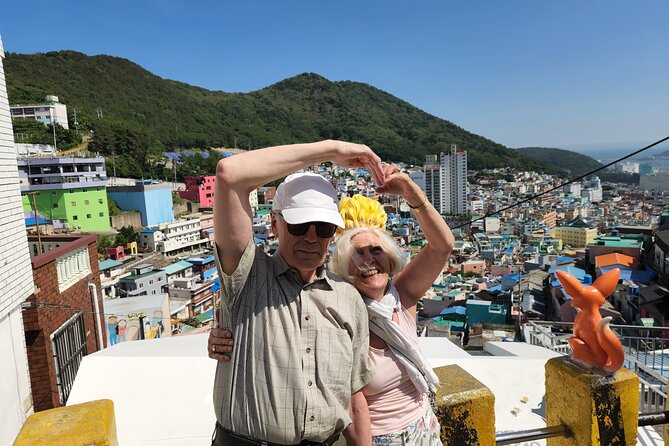
The final stop is Busan Gamcheon Culture Village, known for homes built in stair-step rows on a coastal mountainside. Murals and sculptures fill the narrow alleys, and the neighborhood’s origins lie with refugees who settled there during the Korean War.
Busan later began a maintenance and renewal project in the area, helping turn the hillside community into a major cultural stop. The one-hour visit is enough to see the main lanes and artwork, but it is not enough for every alley or a long café break.
Gamcheon is photogenic, yet its importance is not only visual. The village connects housing, displacement, local creativity, and city planning. I like ending the route here because it leaves you with a modern community rather than another royal or religious monument.
The tour’s final arrangements matter. Pickup and drop-off are specified for hotels in Seoul, but the information does not clearly explain the exact end point after the Busan portion. Confirm where the five-day experience finishes before booking flights or arranging onward transport.
Meals, Hotels, and the $2,499 Cost
At $2,499 per person, this is expensive compared with arranging a Seoul stay and a few independent day trips. The price becomes easier to assess when you count what is bundled: private air-conditioned transportation, admission fees, a licensed English-speaking guide, two hotel nights, and ten meals.
The strongest value comes from the route itself. Seoul, the DMZ, Gyeongju, and Busan require careful coordination, particularly when you add luggage and multiple admission sites. You are paying to save time and remove much of the friction.
The value is weaker if you already enjoy planning Korean rail travel, choosing restaurants, and booking your own hotels. It is also worth checking the room arrangements and hotel locations before paying, since the accommodation category is given as three-star or four-star rather than by named property.
The meal plan can be a benefit for first-time visitors who want local food without making every decision from scratch. It can also limit spontaneity. Food and drinks outside the specified meals are not included, and special dietary needs are not addressed in the supplied details, so ask before booking if that affects you.
Who Will Enjoy This Tour Most
I would recommend this tour to first-time visitors with only five days, families or friends who want a private vehicle, and people who value a guide’s help with historical sites. It also suits anyone who specifically wants the DMZ but does not want to arrange that visit independently.
The schedule is less suitable for independent-minded visitors who want free time in Seoul or Busan. You should also think carefully if you dislike long sightseeing days, frequent stops, or moving between cities.
The single supplied rating is five out of five, and its praise focuses on the full schedule, local food, and Bergen Park’s handling of the DMZ. That is useful evidence about the tour’s strengths, but it is a very small sample, so I would not treat it as proof that every departure will feel identical.
Cancellation is flexible only up to three full days before the start time. After that point, the payment is not refunded, and late changes are not accepted.
Should You Book It?
Book this tour if you want a fast, guided introduction to Korea and place a high value on private transport, included meals, and a prearranged DMZ visit. The route gives you royal Seoul, divided Korea, ancient Gyeongju, and seaside Busan in five days, which is a lot of country in a short time.
Skip it if your ideal trip includes slow mornings, spontaneous meals, and several unplanned hours in each city. Before paying, confirm the hotel names, room arrangement, exact final drop-off point, and how meals are handled around the market visits. If those details suit you, the price buys real convenience and a well-connected first chapter in Korea.
FAQ
How long is the tour?
The experience lasts approximately five days.
Where does the tour begin?
The tour begins in Seoul, with a stated start time of 9:00 a.m.
Is hotel pickup included?
Yes. Pickup and drop-off at a hotel in Seoul are included.
Is this a private tour?
Yes. Only your group participates in the private activity.
What transportation is provided?
Private transportation in an air-conditioned vehicle is included.
Is a guide included?
Yes. The tour includes a professional English-speaking guide with an official tour guide license.
How many meals are included?
The package includes two breakfasts, five lunches, and four dinners, for ten meals in total.
Are admission fees included?
Yes. Admission fees for the included attractions are covered.
Is the DMZ included?
Yes. The DMZ visit lasts about three hours and includes the Freedom Bridge, Third Infiltration Tunnel, Imjingak Park, and Dora Observatory.
Just added in Seoul
- Seoul: Korean & English Language Exchange Global Party★ 5.0 · 28 reviews
- Your Personal Seoul Photographer!★ 4.1 · 15 reviews
- You’re Invited to Our Home in Seoul: The Only Cooking Class!★ 5.0 · 8 reviews
- From Seoul: Yongpyong Ski Day Tour with Transportation★ 4.9 · 40 reviews
- From Seoul: Hwacheon Ice Fishing and Lighting Festival Tour★ 4.5 · 4 reviews
- Seoul: Gangneung BTS K-Pop & K-Drama Filming Locations Tour★ 4.6 · 14 reviews
- Unique Native Experience : Han River Picnic, Board game, BBQ★ 5.0 · 3 reviews
- Seoul: Euljiro Gastroventure Tour★ 4.0 · 1 review
DMZ Tours, compared.
Best DMZ Tour Korea from Seoul (Red Suspension Bridge Optional)
Read our review →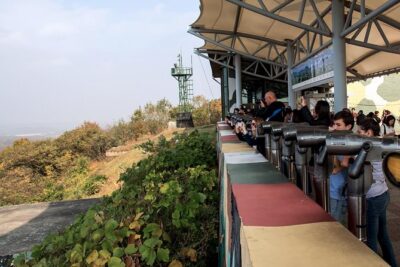
DMZ Tour: 3rd Tunnel, Option(Suspension Bridge, Boat) from Seoul
Read our review →DMZ tour south Korea from Seoul (NK experience hall, defector)
Read our review →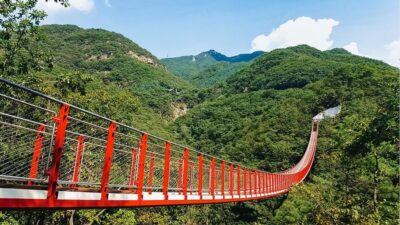
DMZ Insider Tour: 3rd Tunnel, NK Defector Meet & Red Bridge
Read our review →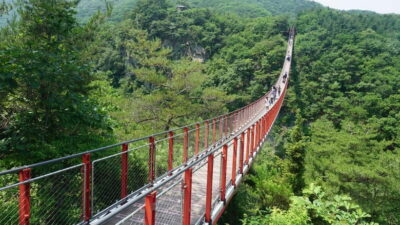
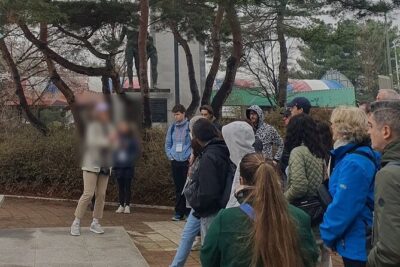
Signature DMZ Tour: Exclusive Defector Talk & Suspension Bridge
Read our review →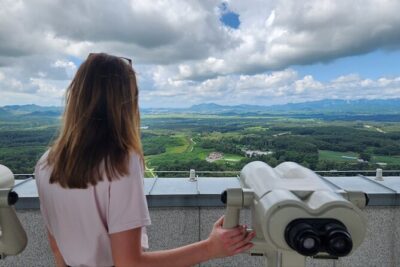
Thrilling Korean DMZ 3rd Tunnel Tour from Seoul + Red Bridge Rush
Read our review →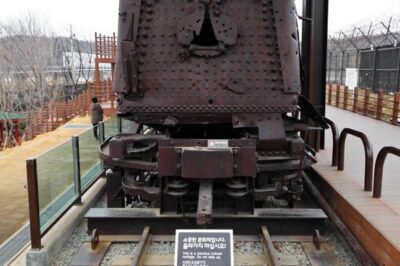
DMZ Past and Present: Korean Demilitarized Zone Tour from Seoul
Read our review →Browse the lists this tour appears in