
Reviewed · SEORAKSAN HIKES
5 Days Tour for Korea’s past and present(Mt.Seoraksan, Andong, Gyeongju, Busan)
Korea’s past meets its fast-moving present. This private five-day route links Seoraksan’s mountain scenery with Andong and Gyeongju’s cultural treasures, then finishes in modern Busan. I like the private vehicle and licensed English-speaking guide, and I like that meals, hotels, admissions, and Seoul hotel pickup are bundled into one price. The main drawback is the pace: you cover a large part of the country in only five days, so several stops are short and driving time will be part of the experience.
The tour costs $2,499 per person, which is a serious price, but it covers four hotel nights, 13 meals, transport, entrance fees, and guiding. It suits you best if you value convenience and cultural range over independent travel, especially if you do not want to arrange separate trains, hotels, meals, and local tours.
In This Review
- Key things to know before booking
- Why this route gives you more than a Seoul add-on
- Day 1: Seoraksan’s granite peaks, cable car, and Sinheungsa
- Day 2: Buseoksa, Hahoe Folk Village, and Andong jjimdak
- Day 3: Gyeongju and the Silla Kingdom
- Day 4: Busan from coastal temple to war memorial
- Day 5: Gamcheon Culture Village and the end of the road
- What the $2,499 price includes
- Who should book this five-day tour?
- FAQ
- Where does the tour start?
- Is this a private tour?
- How many nights of accommodation are included?
- Are meals included?
- Are admission fees included?
- What is the cancellation policy?
- Should you book it?
Key things to know before booking
- Seoraksan begins the trip with a cable-car view and a historic temple, giving you mountain scenery and Korean Buddhist culture on the first morning.
- Andong receives a full cultural day, including Hahoe Folk Village, Buyongdae cliff, Byeongsan Seowon, and dinner at Andong Old Market.
- Gyeongju packs in major Silla-era sites, including Bulguksa, Seokguram, Donggung Palace and Wolji Pond, Cheomseongdae, and Daereungwon.
- Busan brings a sharp change of mood, from the seaside Haedong Yonggungsa Temple to Jagalchi Market, the UN Memorial Cemetery, and Gamcheon Culture Village.
- Your guide matters a great deal on a private tour. The guide named in the available feedback is Mr. Park, praised for clear communication and for choosing good places to visit, eat, and stay.
- The package is built for ease, with an air-conditioned private vehicle, Seoul hotel pickup and drop-off, admission fees, breakfast, lunch, and dinner.
Why this route gives you more than a Seoul add-on
Many short Korean holidays stay around Seoul, perhaps adding a quick trip to the DMZ or a day in Busan. This tour takes a different approach. You leave Seoul and travel through mountain country, traditional villages, Confucian academies, Silla royal sites, and Korea’s best-known southern port city.
I like the way the route connects different parts of Korean life. Seoraksan shows you the country’s natural beauty. Andong preserves village traditions and Confucian culture. Gyeongju presents the grandeur of the Silla Kingdom. Busan adds seafood, memorials, beaches, coastal temples, and colorful hillside neighborhoods.
The private format is important here. You are not tied to a large group’s interests or waiting for people at every stop. You can ask questions as you go, and the guide can explain the meaning behind a temple hall, tomb complex, or market dish in a way that a quick photograph cannot.
Still, this is not a slow retreat. The tour starts at 8:00 a.m., and the schedule includes several stops each day. You should expect early starts, frequent hotel changes or transfers, and a fair amount of time in the vehicle. The reward is breadth, but the cost is unhurried time in any single place.
More Busan trips:
- 5-Day Korea Golden route by K-shuttle Tour from Seoul Including Busan, Yeosu
★ 4.5 · 37 reviews - Small Group 7D Korea package Tour with Seoul Gyeongju Busan Jeju
★ 4.5 · 13 reviews - 3-Days 2-Nights Gyeongju UNESCO Sites & Busan City [Private Tour from Seoul]
★ 4.5 · 11 reviews
Day 1: Seoraksan’s granite peaks, cable car, and Sinheungsa
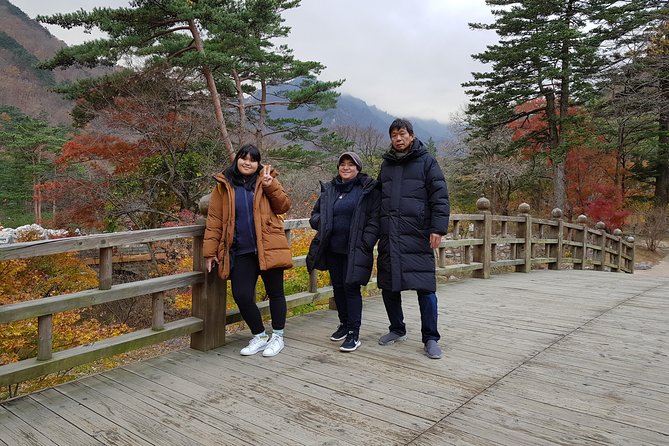
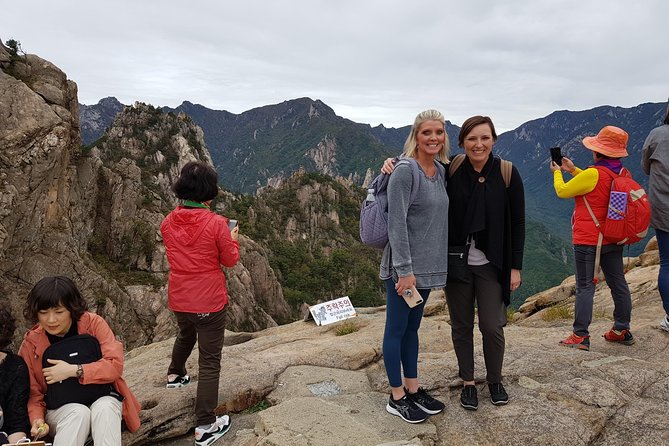
The first day is devoted to Seoraksan National Park, Korea’s best-known mountain area. The park is known for sharp granite peaks, valleys, waterfalls, and long ridges. Even with about an hour assigned to the park stop, you get a taste of the scenery that makes eastern Korea different from Seoul.
The next stop is Gwongeumseong Fortress, reached by cable car. The cable-car ride saves you a steep climb and gives you broad views of Mt. Seoraksan. This is one of the trip’s most efficient sightseeing moments: you gain altitude quickly, then spend your time looking across the mountain ridges rather than walking for hours to reach a viewpoint.
The cable car can also make this stop feel more structured than a proper mountain hike. If you want a long trail day, this itinerary is not designed for that. If you want dramatic mountain views without giving up the rest of the schedule, it is a sensible choice.
The day ends at Sinheungsa Temple, founded in 652 during the Silla period. Its long history and cultural holdings give the mountain visit a second layer. You are not simply stopping for scenery, then moving on. You also see a working Buddhist temple setting with historic buildings, including Geungnakbojeon Hall.
The three one-hour stops create a clear introduction to the region, but they leave little room for wandering. Wear comfortable shoes, keep your camera ready, and listen closely to the guide because the time at each site is limited.
Day 2: Buseoksa, Hahoe Folk Village, and Andong jjimdak
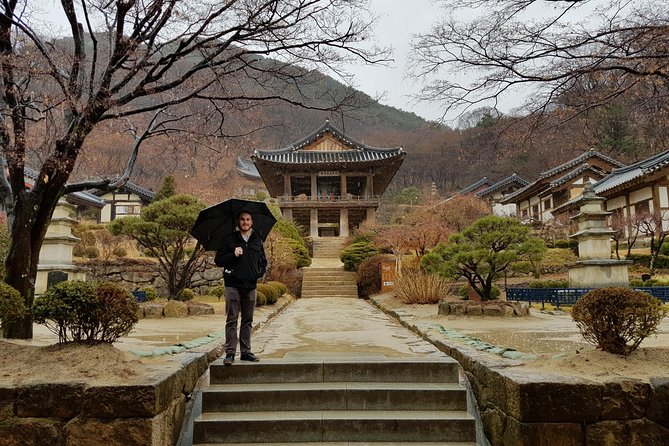
Day two shifts from mountain scenery to traditional culture. At Buseoksa Temple, built in 676, you see one of Korea’s important Buddhist sites and its long wooden buildings. The temple is noted for its setting and national treasures, making it a valuable stop for anyone interested in Korean architecture.
The one-hour visit is enough for an introduction, but not for a slow study of every building or artwork. This is a recurring feature of the tour: you visit important places with a guide, then continue before the experience becomes a full day at one site.
The center of the day is Andong Hahoe Folk Village, where you have about three hours. The village preserves the shape of a traditional Korean community, with housing and daily-life patterns linked to the early Joseon period. Compared with a palace visit, Hahoe helps you picture how a community functioned, not just how a royal family lived.
Three hours gives you the best chance to explore at your own pace. You can look at the traditional homes, follow the village lanes, and pause when something catches your eye. The tour description promises interactive visits and free time, and Hahoe is the place where that balance matters most.
Next comes Buyongdae, a cliff about 64 meters high across the river from Hahoe. From the summit, you get the broad view of the village that photographs often show. The climb adds effort to the day, but the reward is perspective. After walking through the village, you can see how it fits into the surrounding river country.
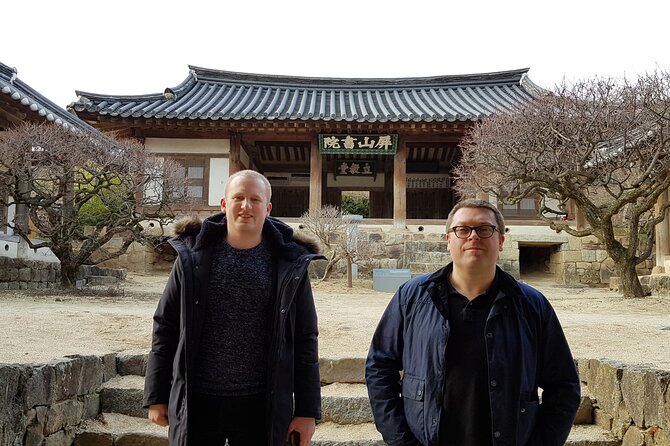
At Byeongsan Seowon, the focus turns to Confucian education. A seowon served as a private school and a shrine honoring respected scholars. This stop gives you a better sense of the intellectual and social traditions that shaped Joseon-era Korea.
The day ends at Andong Old Market, where dinner is Andong jjimdak. The dish combines steamed chicken, noodles, and vegetables, and the market has many restaurants associated with the local specialty. This is one of the more grounded food stops on the tour because you eat a regional dish in the city known for it, rather than receiving a generic meal at a hotel.
Four breakfasts, five lunches, and four dinners are included across the trip, but the package does not cover food and drink outside the specified meals. That distinction matters if you like snacks, coffee, or extra dishes during free time. Bring some Korean won or another accepted payment method for personal purchases, though the supplied information does not specify which payment types each stop accepts.
Day 3: Gyeongju and the Silla Kingdom
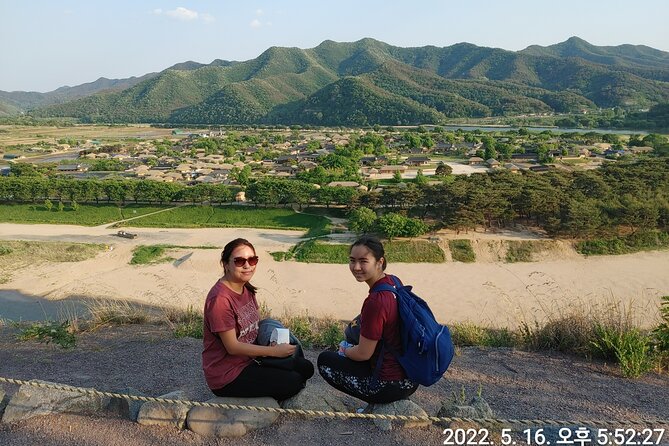
Gyeongju is the historical heart of this route. The city was the capital of the Silla Kingdom, and the day gives you a concentrated look at Buddhist art, royal ceremony, science, and burial customs.
At Bulguksa Temple, built in 751, you see the best-known Buddhist landmark in Gyeongju. Its stone work and temple design are central to the city’s identity. The visit lasts about an hour, so your guide’s explanations will help you focus on the parts with the greatest historical and architectural importance.
Then you travel up Mt. Tohamsan to Seokguram, another Silla-era site built in 751. This stone temple has a round main hall and a large granite Buddha statue. It is a different kind of religious site from Bulguksa, and seeing both in one day helps you understand the range of Silla craftsmanship.
The schedule gives Seokguram about an hour. The mountain setting and the temple’s interior make this a stop where patience helps. The route is full, so you should not expect a long personal meditation or extensive independent exploration.
In the afternoon, the sites become shorter and more connected to royal life. Donggung Palace and Wolji Pond was a secondary palace used by the crown prince and a venue for banquets and important visitors. You have about 30 minutes, enough to understand its role and take in the pond setting.
At Cheomseongdae Observatory, you see a seventh-century Silla structure used for astronomy. The visit is also about 30 minutes. It is a compact stop, but it adds a useful reminder that Gyeongju’s story is not limited to kings and temples. Scientific observation was part of the kingdom’s organized society.
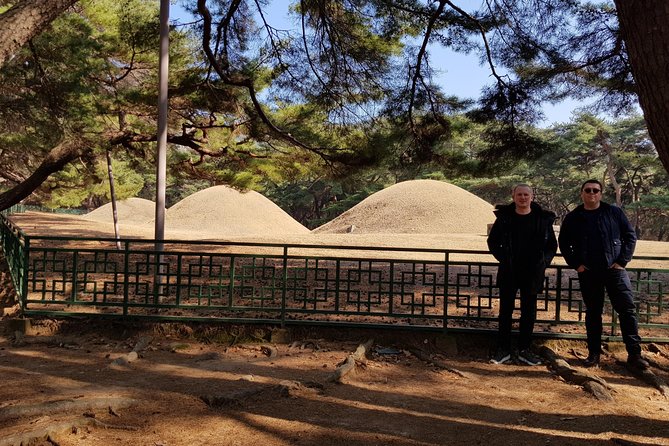
The day finishes at Daereungwon Tomb Complex, home to 26 large tombs connected with Silla kings and nobles. The famous Cheonmachong and Hwangnamdaechong tombs were excavated, giving you a clearer look at how these burial mounds functioned and what they revealed.
I like the sequence of this day. Bulguksa and Seokguram show faith and artistic skill. Donggung Palace shows royal life. Cheomseongdae points to science. Daereungwon brings you face to face with the burial traditions of the ruling class. The drawback is density. Five major sites in one day can feel like a history lesson delivered at speed, so take notes or ask the guide to help you choose what deserves your closest attention.
More Gyeongju trips:
- Gyeongju UNESCO Sites Tour by KTX train; The Museum Without walls
★ 4.5 · 11 reviews - 7 days Flexible Tour for Major Cities(Seoul,Busan,Gyeongju etc)
★ 5.0 · 5 reviews - 7 Day Essential Korea Tour(Seoul, Nami, DMZ, Andong, Gyeongju, Busan_Meal Incl.)
★ 5.0 · 3 reviews - Full-Day Small Group GyeongJu History Tour from Seoul
★ 5.0 · 2 reviews
Day 4: Busan from coastal temple to war memorial
Busan changes the tone immediately. Haedong Yonggungsa Temple sits beside the coast, a rare setting in a country where many temples are inland or in the mountains. The combination of Buddhist buildings and the shoreline makes this one of the most visually distinctive stops.
The visit lasts about an hour. You should expect steps and uneven surfaces at some points, although the supplied information says most people can participate. If you have mobility concerns, ask for more details before booking because the tour data does not provide a specific accessibility assessment.
At Nurimaru APEC House, you visit the building used for the 13th APEC summit in November 2005. Admission is free. The stop adds a modern political chapter to a tour otherwise filled with ancient temples and royal remains.
Nearby Dongbaekseom is known for camellias, reflected in its name. The island area gives you a chance to walk beside the coast and see a quieter side of the Haeundae area. One hour at both Nurimaru and Dongbaekseom allows the guide to connect the conference site, the shore, and Busan’s modern identity.
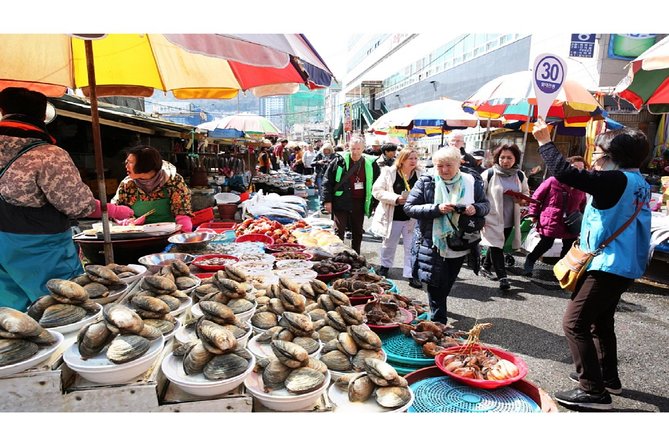
Then comes Jagalchi Market, Korea’s largest fish market and one of Busan’s defining food places. The market layout includes fish shops on the first floor and restaurants where purchased seafood can be prepared. The tour includes the scheduled meal, but any extra food or drink beyond the included arrangements is your responsibility.
The final stop, UN Memorial Cemetery, is more solemn. It honors UN soldiers from 16 countries and UN support personnel from five countries who died during the Korean War from 1950 to 1953. This visit gives the Busan day emotional weight and helps explain the international dimension of Korea’s modern past.
The mix is strong, but the day asks you to change gears several times. You move from religion to diplomacy, coastal walking, seafood, and war remembrance. Follow the guide’s lead and allow the memorial to be a quiet stop rather than treating the entire day as a photo checklist.
Day 5: Gamcheon Culture Village and the end of the road
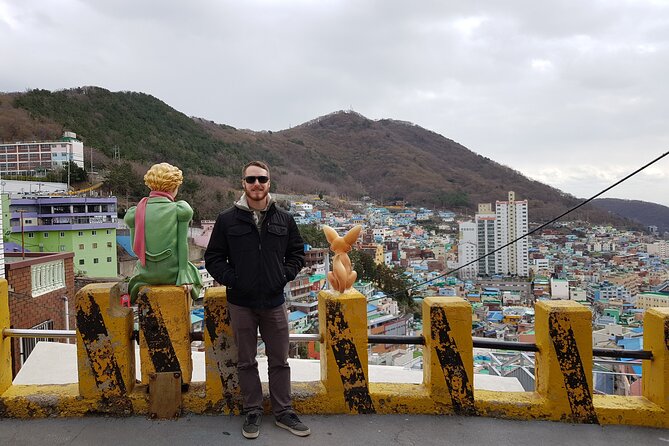
The final stop is Gamcheon Culture Village, where homes climb the hillsides in a staircase pattern above the coast. The neighborhood is often compared with Santorini because of its arrangement and colorful appearance, but you should think of it as a Busan community with its own identity rather than a Korean copy of a Mediterranean town.
You have about an hour here. That is enough to see the main character of the area and walk through some alleys, but not enough to explore every corner at a relaxed pace. The hills and stairways also mean you should wear shoes with a secure grip.
Ending in Gamcheon works well. After several days of temples, tombs, and traditional buildings, you finish in a living urban neighborhood shaped by Busan’s hillside geography. It is a modern counterpart to Hahoe Folk Village: both show how people use space, but one preserves traditional village forms while the other reflects a later urban setting.
The supplied information lists Seoul hotel pickup and drop-off. Because the fifth-day stop is in Busan, confirm how the final transfer back to Seoul is handled before you pay. The tour includes private transportation, but the exact end-of-tour timing and return arrangement are not specified.
What the $2,499 price includes
At $2,499 per person, this is not a budget tour. Its value comes from combining services that would otherwise require careful planning: a private air-conditioned vehicle, an official licensed English-speaking guide, four nights of accommodation, 13 meals, admission fees, and pickup and drop-off at Seoul hotels.
The accommodation is listed as four-star or three-star hotels, with two people sharing a room. If your party has an odd number, the arrangement is two people in one room and one person in a single room. Solo room pricing is not provided, so ask for the exact arrangement if you are not traveling as a pair.
The meal plan is substantial: four breakfasts, five lunches, and four dinners. That makes the price easier to assess, especially on days when finding a restaurant between several scheduled stops could be inconvenient. You are still responsible for food and drinks not specifically included.
A private vehicle also has practical value. This itinerary crosses several regions, and public transport connections would take time and planning. You are paying for the route to be assembled for you, not just for admission to individual attractions.
The strongest value comes if you want guidance. A private tour depends heavily on the person leading it. The available feedback gives Mr. Park special credit for clear communication and for selecting good places to visit, eat, and stay. That is the kind of praise that matters here because the guide can shape how much meaning you take from a very full schedule.
Who should book this five-day tour?
I would recommend it to you if you want a broad first look at Korea beyond Seoul and prefer one organized payment to a stack of separate bookings. It is particularly suitable for couples, families, or small private groups who want their own vehicle and guide.
You will also appreciate it if Korean history interests you but you do not want to research the difference between Silla Buddhist sites, Joseon Confucian institutions, traditional villages, and modern war memorials on your own.
I would be more cautious if you prefer slow travel. You have only one hour at several important places, and the tour does not promise long hikes in Seoraksan, extended market time, or free evenings in each city. The route is broad rather than leisurely.
The package also works best for people comfortable with early starts and a busy schedule. The starting time is 8:00 a.m., and the itinerary includes multiple attractions most days. Most people can participate, but the supplied details do not describe the level of walking at every stop.
You can cancel for a full refund if you do so at least three full days before the start time. Cancellations made less than three full days before the start are not refunded, and late changes are not accepted.
FAQ
Where does the tour start?
The tour starts in Seoul, with pickup and drop-off offered at hotels. The listed start time is 8:00 a.m.
Is this a private tour?
Yes. Only your group participates, and transportation is provided in a private air-conditioned vehicle.
How many nights of accommodation are included?
Four nights of accommodation are included. The hotels are described as three-star or four-star properties.
Are meals included?
Yes. The package includes four breakfasts, five lunches, and four dinners. Food and drinks outside the specified meals are not included.
Are admission fees included?
Yes. Admission fees for the listed attractions are included. Nurimaru APEC House, Dongbaekseom, Jagalchi Market, the UN Memorial Cemetery, and Gamcheon Culture Village are listed with free admission.
What is the cancellation policy?
You can receive a full refund if you cancel at least three full days before the experience start time. Cancellations or changes made less than three full days beforehand are not accepted for a refund.
Should you book it?
Book this tour if you want Korea’s major cultural contrasts in one organized sweep: mountain park, Buddhist temples, traditional village, Silla capital, coastal Busan, seafood market, and war memorial. The private vehicle, included meals, hotel nights, and English-speaking guide make the high price easier to justify.
Skip it if your ideal trip means lingering for half a day at one temple or choosing your own restaurant every evening. For the right person, this is an efficient and personal route through Korea’s past and present, with Mr. Park’s reported attention to communication and food adding real value to the experience.
More Seoraksan Hikes
- Seoul: Mt Seorak + Naksansa Temple or Nami Island Group Tour
★ 4.7 · 422 reviews - [Premium Private Tour] Mt Seorak & East Sea or Nami island from Seoul
★ 5.0 · 67 reviews - Seoraksan National Park Ulsanbawi Hiking from Seoul
★ 5.0 · 15 reviews - Seoul: Mt. Seoraksan National Park Autumn Foliage Day Tour
★ 4.3 · 15 reviews
Just added in Seoul
- Seoul: Korean & English Language Exchange Global Party★ 5.0 · 28 reviews
- Your Personal Seoul Photographer!★ 4.1 · 15 reviews
- You’re Invited to Our Home in Seoul: The Only Cooking Class!★ 5.0 · 8 reviews
- From Seoul: Yongpyong Ski Day Tour with Transportation★ 4.9 · 40 reviews
- From Seoul: Hwacheon Ice Fishing and Lighting Festival Tour★ 4.5 · 4 reviews
- Unique Native Experience : Han River Picnic, Board game, BBQ★ 5.0 · 3 reviews
- Seoul: Gangneung BTS K-Pop & K-Drama Filming Locations Tour★ 4.6 · 14 reviews
- Seoul: Euljiro Gastroventure Tour★ 4.0 · 1 review
Seoraksan Hikes, compared.
Mt Seorak + Naksansa Temple or Nami Island Group Tour
Read our review →![[Premium Private Tour] Mt Seorak & East Sea or Nami island from Seoul](https://j2.koreatourreviews.com/wp-content/uploads/premium-private-tour-mt-seorak-east-sea-or-nami-island-from-seoul-400x267.jpg)
[Premium Private Tour] Mt Seorak & East Sea or Nami island from Seoul
Read our review →
Private DMZ Tour from Sokcho near Seoraksan Mt.
Read our review →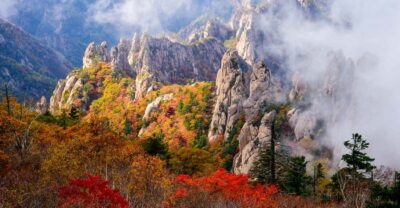
Mt. Seoraksan National Park Autumn Foliage Day Tour
Read our review →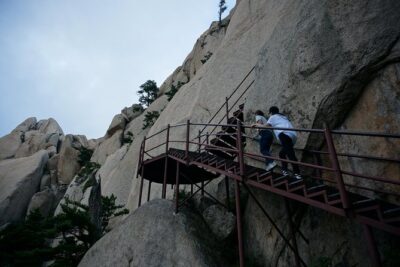
Seoraksan National Park Ulsanbawi Hiking from Seoul
Read our review →
2-Day Hike through the Scenic Valleys of Mt. Seoraksan from Seoul
Read our review →
Browse the lists this tour appears in