
Reviewed · GYEONGJU TOURS
7 days Flexible Tour for Major Cities(Seoul,Busan,Gyeongju etc)
Korea rewards curious visitors. This seven-day private tour links royal palaces, war memorials, ancient tombs, ocean temples, food markets, and modern Seoul without making you plan every transfer yourself. I especially like the flexible schedule and the fact that airport transport, a private van, entrance tickets, fuel, tolls, parking, and bottled water are included. The main consideration is price: at $2,000 per person, this is a premium trip, and you still pay separately for hotels, meals, and the N Seoul Tower cable car.
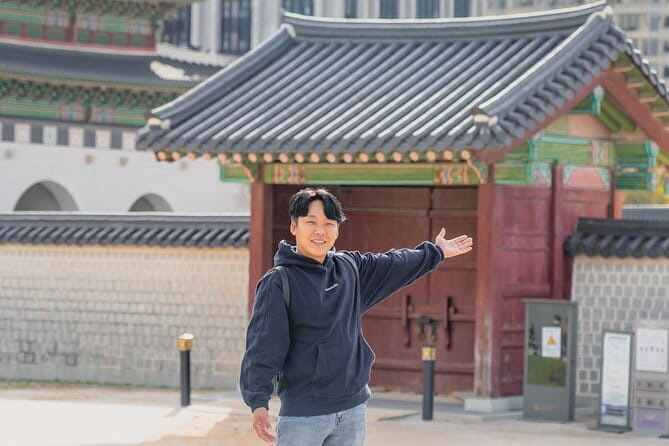
I also like the human touch offered by guides Hun and Sean, who are described as warm, cheerful, and attentive to family needs. The tour can be adjusted around your interests, taken over nonconsecutive days, or extended with extra touring. That freedom is useful in Korea, where long road journeys and busy sightseeing days can make a rigid schedule tiring.
In This Review
- Key points to know before booking
- What the $2,000 price really buys
- Day 1: Joseon palaces, old neighborhoods, and Korean food
- Day 2: Seoul views, Gangnam, and the Han River
- Day 3: The DMZ and Korea’s divided story
- Day 4: Suwon Fortress and a living history set
- Day 5: The long road to Gyeongju
- Day 6: Gyeongju after dark
- Day 7: Busan markets, temples, and the coast
- Guides, comfort, and the flexible format
- Who should book this Korea tour?
- Final verdict: a strong choice for convenience and personal care
- FAQ
- How long is the tour?
- What cities and areas does the tour visit?
- Is airport transportation included?
- Are hotels and meals included?
- Is the tour private?
- What is the cancellation policy?
Key points to know before booking
- Seoul to Busan in one private itinerary: You see Korea’s major urban and historic centers, with Gyeongju between them.
- A real mix of Korea: Joseon palaces, Korean War sites, the DMZ, royal tombs, Buddhist temples, markets, bamboo forest, and K-drama filming locations all appear.
- Private transport throughout: A fancy mini van, fuel, tolls, parking, and bottled water are included, along with one or two English-speaking driving guides.
- Flexible by design: The seven touring days do not have to run consecutively, and you can add touring or finish in Busan instead of returning to Seoul.
- Strong family appeal: The guides focus on comfort and personal attention, with past groups describing Hun and Sean as friendly and caring toward older family members.
- Plan for long days: Several days pack in many stops, and the trip from Seoul toward Gyeongju takes about six hours before the Space Walk visit.
What the $2,000 price really buys
The price is easiest to understand when you treat this as a private, multi-city transport service as well as a sightseeing tour. You are not simply paying for seven sets of admission tickets. You are paying for an English-speaking driving guide, private vehicle use, airport transport, parking, tolls, fuel, bottled water, and help shaping the route.
That matters in a country where Seoul, Gyeongju, and Busan are spread far apart. A public-transport trip can cost less, especially for a solo visitor who is comfortable arranging trains, hotels, taxis, and day tours. But a private vehicle becomes more useful for families, small groups, and anyone who wants to carry luggage between cities without managing each connection.
Entrance fees on the planned route are included. Meals and hotels are not, so your real budget will be higher than $2,000 per person. The cable car at N Seoul Tower also requires separate payment. Ask for a clear hotel plan before you arrive, since the guide can assist with hotel bookings but the accommodation itself is outside the package.
For a group, the value improves because the price is per person and group discounts are offered. The private format also means only your party participates, which makes it easier to adjust the pace, swap the Starfield Library for a traditional village, take a day off, or add another tour.
More Busan trips:
- 5-Day Korea Golden route by K-shuttle Tour from Seoul Including Busan, Yeosu
★ 4.5 · 37 reviews - Small Group 7D Korea package Tour with Seoul Gyeongju Busan Jeju
★ 4.5 · 13 reviews - 3-Days 2-Nights Gyeongju UNESCO Sites & Busan City [Private Tour from Seoul]
★ 4.5 · 11 reviews
Day 1: Joseon palaces, old neighborhoods, and Korean food
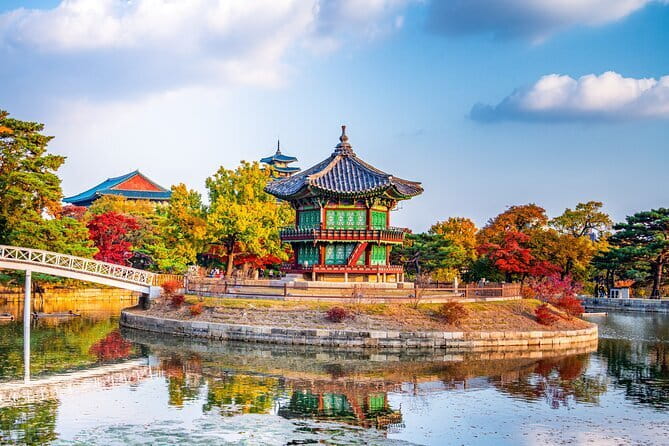
The opening day gives you a strong introduction to Seoul’s past and present. At Gyeongbokgung Palace, plan on about two hours with a full guided visit. This was the main royal palace of the Joseon Dynasty, and its size makes a guide useful. You can focus on the major buildings, hear the stories behind the site, and pause at good photo spots instead of wandering without context.
Next comes Bukchon Hanok Village, a traditional neighborhood associated with Seoul’s old noble class. The value here is contrast. Gyeongbokgung shows royal power, while Bukchon shows how elite residential life looked. The hillside setting can mean some walking, so comfortable shoes are important.
Insadong is a gentler stop after the palace and village. Its streets are lined with Korean pottery, art, antiques, and Korean-style cafés. Lunch is followed by traditional tea, giving you a pause before the afternoon’s heavier subject matter.
The War Memorial of Korea deserves its full two hours. You will see weapons, tanks, memorials, and exhibits explaining the Korean War. This is not a light sightseeing stop, but it adds necessary context to later visits near the DMZ. I like that the day does not treat Seoul as only palaces and shopping districts.
The final stop is Gwangjang Market, where your guide introduces traditional foods and the market’s background. You can try snacks and see everyday food culture in a lively setting. Since meals are not included, this is also a convenient place to buy your own dinner or sample several small dishes.
The drawback is pace. Five stops in one day cover a lot of ground, and the palace, Bukchon, and War Memorial each deserve attention. The flexible format helps, since you can ask to shorten or rearrange the day.
Day 2: Seoul views, Gangnam, and the Han River
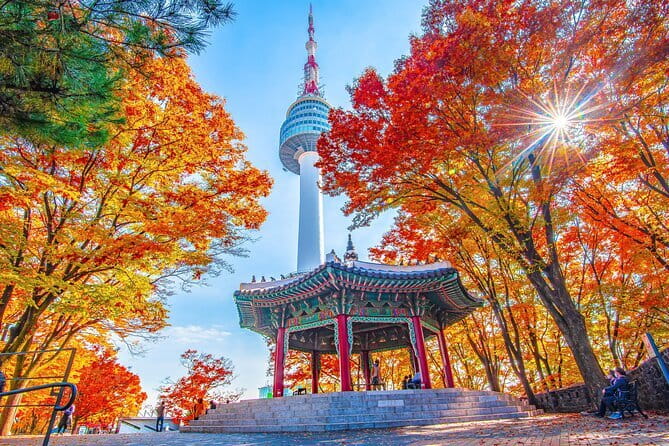
Day two shifts from old Seoul to modern city life. At N Seoul Tower, you spend about two hours on the mountain and at the tower area. The guide handles the route and photo opportunities, but the cable car fare is not included. Prepare to pay that separately, or discuss the alternative mentioned by the operator.
Bongeunsa Temple gives you a quiet change of mood in the middle of Seoul. The temple grounds feature colorful lanterns and lotus flowers, and your guide explains the site’s background and meaning. It is a useful reminder that Seoul’s modern districts still contain active religious and historic places.
Starfield Library is a modern photo stop, with more than 50,000 books arranged in towering shelves. It is visually impressive, though you should know that this visit is more about architecture and atmosphere than reading. If that sounds too commercial, you can request a traditional Korean village instead.
The brief Gangnam Style statue stop lasts only about ten minutes. It is a quick pop-culture photo opportunity, not a major attraction, but it helps connect Seoul with the song that brought worldwide attention to the city.
The day finishes on the Han River with the E-Land Cruise. The plan includes chicken or noodles before boarding, although meals overall are not included in the tour price, so confirm exactly what food arrangement applies. A nighttime cruise beneath the bridges offers a pleasant change from museums and historic sites, especially if you enjoy K-drama locations and city views.
This is another full day, and the attractions have very different characters. I would ask the guide to protect enough time at Bongeunsa and the cruise rather than letting photo stops take over.
Day 3: The DMZ and Korea’s divided story
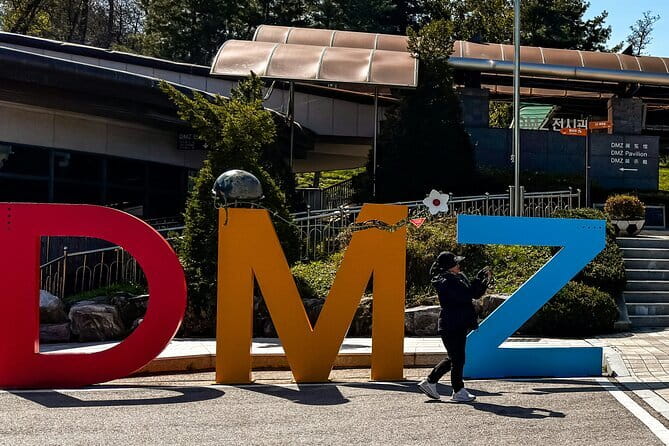
The DMZ day begins at Imjingak Pyeonghoa-Nuri Park. You will see the Bridge of Freedom, an abandoned steam train, and other reminders of the division between North and South Korea. Starting here gives the day an emotional frame before you enter the DMZ area.
Private cars cannot drive inside the DMZ, so you transfer to a public bus for that section. Your overall tour remains private, but the bus ride is shared with other visitors. This is an important practical detail for anyone expecting a private vehicle every minute of the day.
The Third Tunnel requires moderate physical fitness. It is about 73 meters, or 240 feet, underground, and the round trip takes roughly 20 minutes. The tunnel is narrow and requires walking, so ask about the walking conditions if anyone in your group has mobility concerns.
At Dora Observatory, you look toward North Korea. The guide explains the region and the stark differences in living conditions described by the tour. The view can be affected by weather or visibility, so think of this as a place of historical and political meaning, not a guaranteed photo spectacle.
The Museum of Modern History of Korea rounds out the day. After the Korean War material, you see reconstructed scenes of South Korean daily life from the 1950s onward. That pairing is valuable. The DMZ shows the division itself, while the museum helps explain how ordinary life developed on the southern side.
Because the DMZ has security rules and public-bus procedures, this is the least flexible day. Bring patience, listen closely to the guide, and expect a serious change of tone from the food and shopping stops elsewhere.
More Gyeongju trips:
- Gyeongju UNESCO Sites Tour by KTX train; The Museum Without walls
★ 4.5 · 11 reviews - 7 Day Essential Korea Tour(Seoul, Nami, DMZ, Andong, Gyeongju, Busan_Meal Incl.)
★ 5.0 · 3 reviews - Full-Day Small Group GyeongJu History Tour from Seoul
★ 5.0 · 2 reviews - PREMIUM 5 Days Tour for Wonder of Korea(Mt. Seoraksan, Andong, Gyeongju, Busan)
★ 5.0 · 1 review
Day 4: Suwon Fortress and a living history set
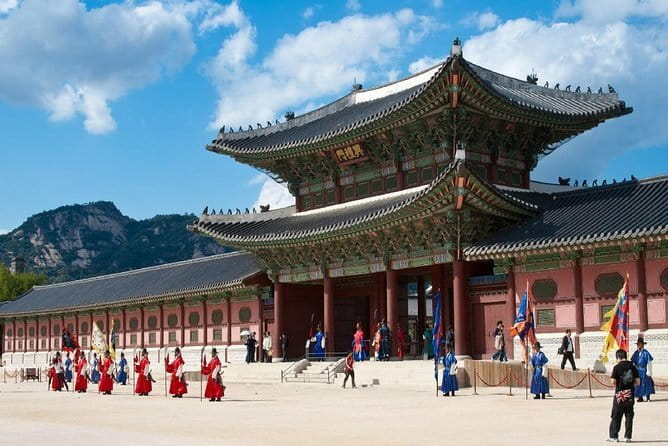
Day four focuses on Suwon’s fortress area. Banghwasuryujeong Pavilion, also called Dongbukgakru, is both scenic and tied to the 22nd king of Joseon. The guide adds the story behind its location and its use as a place for royal gatherings.
Janganmun Gate brings a darker layer. Its name connects to the tragic story of the same king, and bullet holes from the Korean War remain visible. This is a good example of how the tour links Joseon history with more recent Korean events.
At Yeonmudae, once a command center and training area, you can try archery. The site also offers some of the best fortress views and photo opportunities. Changryongmun Gate follows, with an unusual design that makes more sense once you understand the fortress layout.
The Korean Folk Village takes about three hours and is the day’s main stop. It is large, with traditional houses, farming displays, performances, and locations used in Korean historical dramas. Your guide walks with you and explains what you are seeing, which keeps the visit from becoming a quick pass through recreated buildings.
This day is a good fit if you like history presented through places, stories, and activities. It may feel less essential if your priority is modern Seoul or food. The upside is that it gives you more than another palace interior, while the downside is the amount of walking across a large site.
Day 5: The long road to Gyeongju
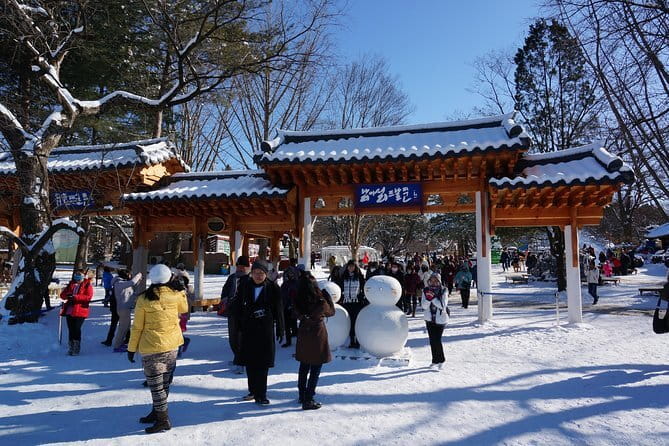
The journey toward Gyeongju takes about six hours and includes one or two attractions along the way, plus lunch in Pohang. This is the trip’s biggest transport day, so set realistic expectations. You are moving between regions, not spending six uninterrupted hours sightseeing.
The Space Walk provides a chance to stretch after the drive. You can walk the structure with the guide and enjoy the views. It is described as safe and fun, but anyone uneasy with heights should say so before setting out.
This day’s value is practical as much as scenic. Instead of arranging a separate transfer from Seoul to Gyeongju and losing a day to logistics, you continue with the same guide and vehicle. Still, six hours on the road can be tiring, particularly for children or anyone who prefers a slower trip.
The route can be adjusted because the tour does not have to be taken on seven consecutive days. You could discuss a rest day or extra time in a city, but confirm the exact plan before booking hotels.
Day 6: Gyeongju after dark
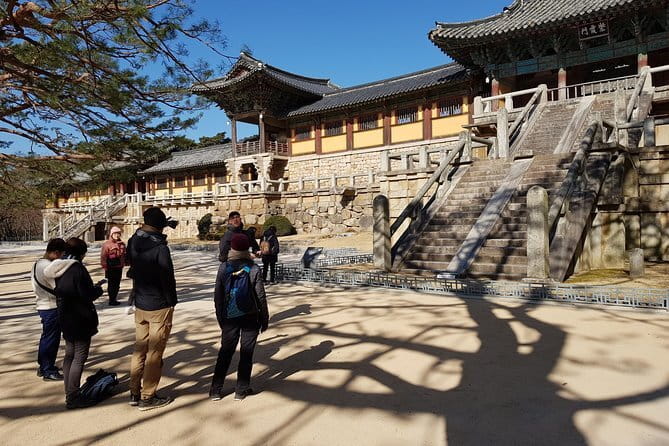
Gyeongju is where the itinerary reaches Korea’s ancient Silla past. At Daereungwon Tomb Complex, you see burial mounds dating mainly from the fourth to sixth centuries. One open tomb can be entered to view artifacts and understand how the tombs were built.
Hwanglidangil adds a modern food-and-street stop. You can try local specialties, including coin bread. This is a nice counterpoint to the tombs, since Gyeongju is not only an archaeological site but also a living city with its own snack culture.
Woljeonggyo Bridge was originally built in 760 and later reconstructed from historical documents and site research. The plan is to visit at night, when its lighting gives the bridge a more dramatic appearance.
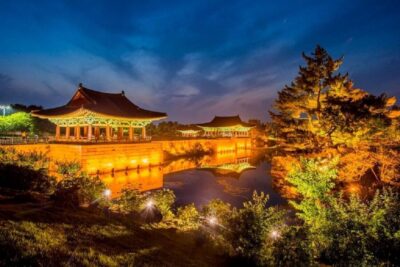
Donggung Palace and Wolji Pond also work best after dark. The palace was abandoned after a new dynasty took power and later reconstructed from historical records. Reflections around the pond can make this one of the most memorable photo stops of the trip.
Cheomseongdae Observatory dates to 633 and has survived intact. Its connection with ancient astronomy and agriculture gives you a glimpse of how early Korean society used the night sky.
The Gyeongju National Museum finishes the day with original treasures, including crowns and other artifacts. I would pay close attention here, because the museum gives meaning to the tombs and palace sites you have already seen.
Six stops make this a packed day. The night visits are a smart choice, but they also mean a late finish. If you want time to look carefully at museum displays, ask whether one street stop can be shortened.
Day 7: Busan markets, temples, and the coast
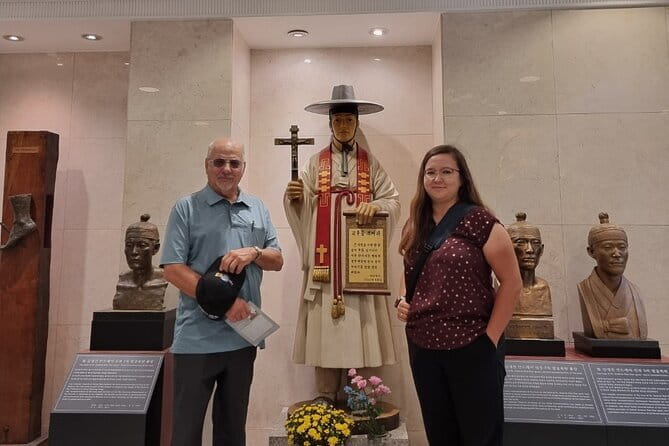
The final day opens at Gukje Market, a large traditional market with affordable goods, household items, blankets, and local food. Its development is linked to Busan’s wartime role and the city’s early commercial growth. This is a useful place to see practical, everyday commerce rather than polished retail districts.
Songdo Cable Car carries you over the ocean. The itinerary also mentions a lower Sky Capsule alternative for people uncomfortable with heights, though you should confirm which ticket and option are available on your date. The car’s transparent viewing areas and phone connection for music add a playful touch.
Haedong Yonggungsa is one of the most scenic stops in Busan, with a temple by the sea. The site is relatively new compared with Korea’s oldest temples, but its setting makes it a favorite photo stop. Expect stairs and walking around the grounds.
Busan Gamcheon Culture Village is colorful, but the tour does not ignore its difficult beginnings. Your guide explains how refugees settled there, built homes, and shaped the community. That background makes the painted houses and narrow streets more meaningful than a quick photo visit.
Ahopsan Forest closes the tour with a slower walk through bamboo. Bamboo carries associations of straightness and nobility in Korean culture, and the forest offers quiet after a week of cities, roads, museums, and markets.
The final day is strong visually, but it covers several parts of Busan. If you finish in Busan, airport transport can be arranged from there. You can also return to Seoul with the tour, which is helpful if your flight departs from the capital.
Guides, comfort, and the flexible format
The tour includes one or two experienced English-speaking driving guides for the full trip. Hun and Sean receive the strongest personal praise, especially for being cheerful, flexible, and considerate toward older family members. One family described feeling as if they were being looked after by friends, and another praised the care given to their mother.
That personal style is central to the tour’s appeal. Hun is described as contacting clients before the trip, asking about preferred places and foods, then shaping the route around those wishes. You should use that flexibility early. Send a clear list of priorities, dietary needs, preferred pace, and any sites you would skip.
The private van is another major advantage. You do not need to move luggage between public trains and taxis each day, and the guide can handle fuel, tolls, parking, and driving. The tradeoff is that much of the sightseeing occurs on foot, and the moderate fitness requirement is real, especially at Bukchon, the Third Tunnel, the fortress, and Haedong Yonggungsa.
Pickup is offered, including airport transport. The normal start time is 10:00 a.m., but clarify the airport arrival plan and the first day’s timing before you pay.
Who should book this Korea tour?
I would recommend it to families, multigenerational groups, first-time visitors, and small groups that want one person to manage the driving and daily route. It is also a good match for people who want both major sights and less obvious stops, from Gwangjang Market and Hwanglidangil to the War Memorial and Ahopsan Forest.
You should think twice if you prefer independent rail travel, slow museum days, or a low-cost holiday. The $2,000 price excludes hotels and meals, and several days are tightly filled. Solo visitors may find the cost hard to justify unless the convenience and personal guiding matter more than saving money.
Cancellation terms are worth reading carefully. You receive a full refund when canceling at least six full days before the start time. A cancellation two to six days ahead receives 50 percent, while cancellations less than two full days ahead are nonrefundable. Changes follow similar cutoffs, and all times use local Korean time.
Final verdict: a strong choice for convenience and personal care
This is a big, ambitious week. You move from Seoul’s royal center to the DMZ, Suwon’s fortress, Silla-era Gyeongju, and Busan’s coast. The route gives you a broad picture of Korea, including painful history, royal culture, local food, modern pop culture, and dramatic scenery.
The best reason to book is not any single stop. It is the combination of private transport, flexible planning, airport help, and attentive guides such as Hun and Sean. If your group values comfort and wants to spend its time seeing Korea instead of organizing Korea, the price can be fair.
I would ask for a detailed day-by-day quote, hotel plan, meal arrangements, and confirmation of cable car costs before booking. If those details suit your budget and you are ready for several long days, this tour offers a practical way to see far more of South Korea than a Seoul-only visit.
FAQ
How long is the tour?
The tour lasts approximately seven days, but the days do not have to be taken consecutively. You can schedule a day off or add extra touring.
What cities and areas does the tour visit?
The planned route includes Seoul, the DMZ area, Suwon, Gyeongju, Pohang, and Busan. You can also discuss other places with the tour provider.
Is airport transportation included?
Yes. Airport transport is included. You can return to Seoul with the tour or finish in Busan, depending on your plans.
Are hotels and meals included?
No. Hotels and meals are not included. The guide can help with hotel bookings.
Is the tour private?
Yes. Only your group participates in the private tour. Inside the DMZ, private cars are not permitted, so you use a public bus for that section while the guide continues to provide explanations.
What is the cancellation policy?
You can receive a full refund if you cancel at least six full days before the start time. Cancellations two to six full days ahead receive a 50 percent refund. Cancellations less than two full days before the start time are nonrefundable.
Just added in Seoul
- Seoul: Korean & English Language Exchange Global Party★ 5.0 · 28 reviews
- Your Personal Seoul Photographer!★ 4.1 · 15 reviews
- You’re Invited to Our Home in Seoul: The Only Cooking Class!★ 5.0 · 8 reviews
- From Seoul: Yongpyong Ski Day Tour with Transportation★ 4.9 · 40 reviews
- From Seoul: Hwacheon Ice Fishing and Lighting Festival Tour★ 4.5 · 4 reviews
- Seoul: Gangneung BTS K-Pop & K-Drama Filming Locations Tour★ 4.6 · 14 reviews
- Unique Native Experience : Han River Picnic, Board game, BBQ★ 5.0 · 3 reviews
- Seoul: Euljiro Gastroventure Tour★ 4.0 · 1 review
Gyeongju Tours, compared.
Gyeongju Guided Day Trip to Three Kingdoms Capital
Read our review →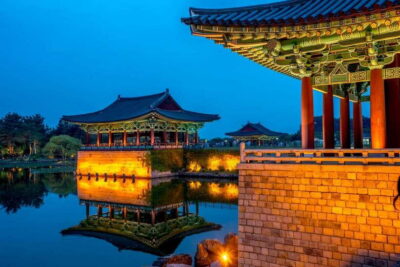
Gyeongju UNESCO World Heritage Guided Day Tour
Read our review →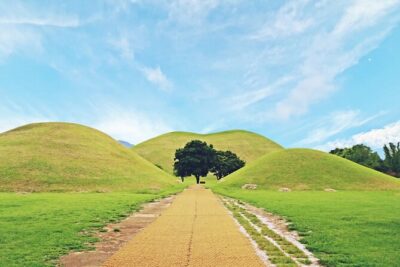
Gyeongju UNESCO World Heritage Guided Day Tour from Busan
Read our review →
Old Korea Thousand History Tour of Gyeongju from Busan
Read our review →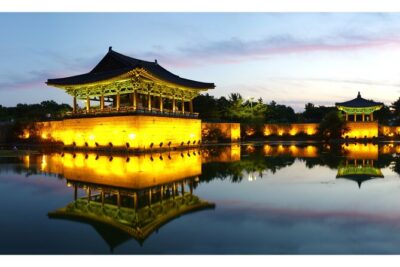
Gyeongju UNESCO sites Private tour with licensed tour guide
Read our review →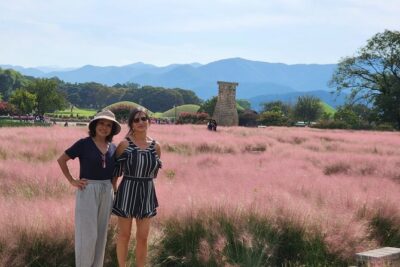
Private Gyeongju Tour – Explore Gyeongju UNESCO Sites
Read our review →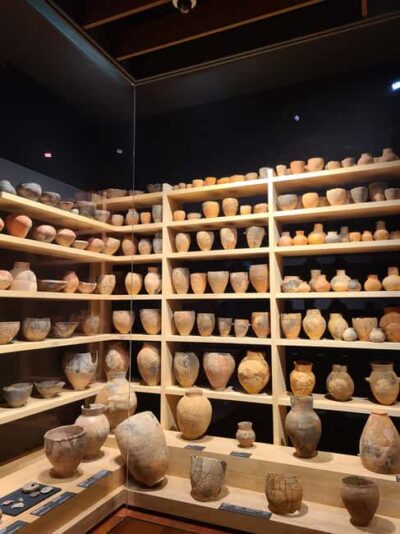
Gyeongju UNESCO Legacy Tour with National Museum
Read our review →
UNESCO Heritage Tour Including Bulguksa Temple
Read our review →Browse the lists this tour appears in