
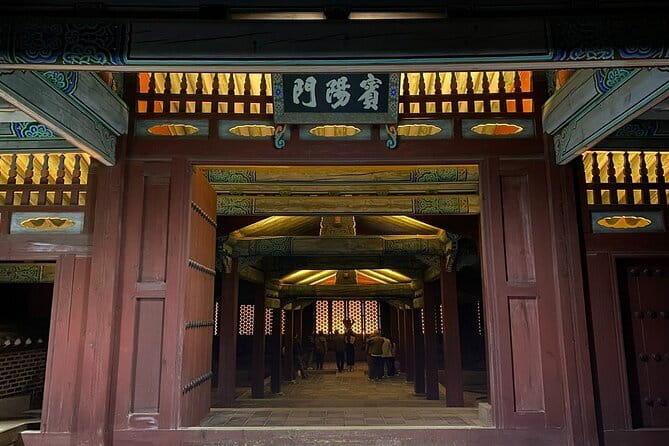
Reviewed · PALACE TOURS
Dark story of Palace
Palace walls feel different after dark. This two-hour evening walk through Seoul’s Changgyeonggung Palace combines nighttime scenery with ghost stories, royal tragedies, and professionally recorded audio drama played at the very places tied to the tales. I like the court-costumed guide, which gives the walk a theatrical touch, and I like the sound effects and character voices, which make the stories easier to follow than a standard palace talk.
The main caution is the subject matter. This is not a calm introduction to Joseon architecture or palace etiquette. It focuses on curses, strange deaths, fear, family conflict, and cruel events. Some people will find that gripping; others may prefer a brighter and more traditional sightseeing tour.
In This Review
- Key points to know before booking
- Why Changgyeonggung works so well at night
- Meeting at Honghwamun Gate at 7 p.m.
- Okcheongyo Bridge and the palace’s protective figures
- Sungmundang and King Yeongjo’s troubled fatherhood
- Myeongjeongjeon and the royal events tied to its hall
- Tongmyeongjeon and the curse of a royal woman
- The death of Crown Prince Sohyeon
- Munjeongjeon and the tragedy of Crown Prince Sado
- Audio drama, guide, and group size
- Who will get the most from the $48 price?
- Booking, cancellation, and practical planning
- Should you book Dark Story of Palace?
- FAQ
- Where does the tour begin?
- What time does the experience start?
- How long does the tour last?
- Is palace admission included?
- How large is the group?
- Can I cancel for a full refund?
Key points to know before booking
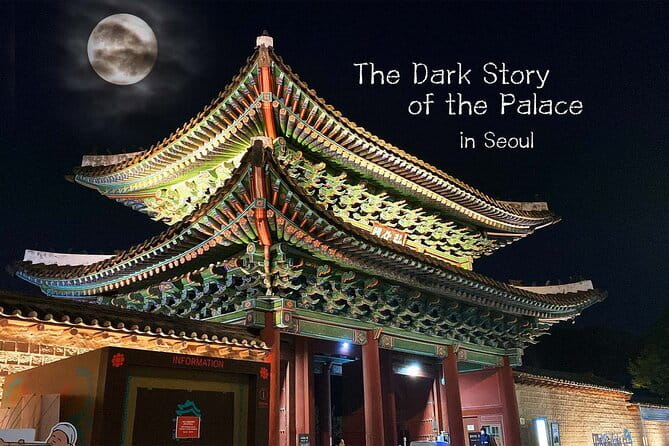
- The palace looks and feels different at 7 p.m. Evening darkness changes the mood around the gates, bridges, and halls.
- Audio drama is central to the experience. You use an audio guide system and earphones to hear professional voice actors during the walk.
- The stories focus on royal suffering. Crown Prince Sado, King Yeongjo, Crown Prince Sohyeon, a queen, and a concubine all feature in the evening’s tales.
- A guide dressed as a court figure leads the route. The guide also explains historical background and palace locations.
- The group is limited to 15 people. That is a useful size for an audio-based walk, especially at night.
- The tour costs $48 per person. The value depends on how much you enjoy guided storytelling, theatrical effects, and unusual palace history.
Why Changgyeonggung works so well at night
Seoul’s palaces are often treated as daytime sightseeing stops. You arrive, admire the roofs, take photographs, and move on. This experience asks you to return after sunset, when the same courtyards and buildings carry a more uneasy mood.
The appeal is not simply that the palace is dark. The route connects specific locations with particular people and events. A bridge becomes a place watched by protective stone figures. A royal study becomes the setting for a troubled father. A women’s chamber becomes the backdrop for a curse story. The buildings give the audio drama a physical setting, so you are not just listening to a narration in the abstract.
I like that approach because it gives you a reason to look closely. Instead of passing Myeongjeongjeon as another impressive wooden hall, you hear why it matters in the story. Instead of treating Munjeongjeon as a stop on a map, you connect it with the heartbreaking conflict between King Yeongjo and Crown Prince Sado.
You should also keep your expectations in check. The tour presents a dramatic version of palace history. It is designed as a time trip into an event, not as a complete survey of Joseon politics, architecture, or daily life. If you want dates, dynastic timelines, and detailed architectural analysis, this may feel selective. If you want atmosphere and a memorable story attached to each stop, the format makes good sense.
More Palace Tours in Seoul:
- Seoul: Gyeongbok Palace, Bukchon Village, and Gwangjang Tour
★ 4.9 · 2,321 reviews - Best Seoul City Tour (Gyeongbokgung Palace,Insadong,Namsan Tower)
★ 5.0 · 1,647 reviews - Small-Group Royal Palace and Seoul City Tour (hotel pick-up)
★ 5.0 · 1,474 reviews
Meeting at Honghwamun Gate at 7 p.m.
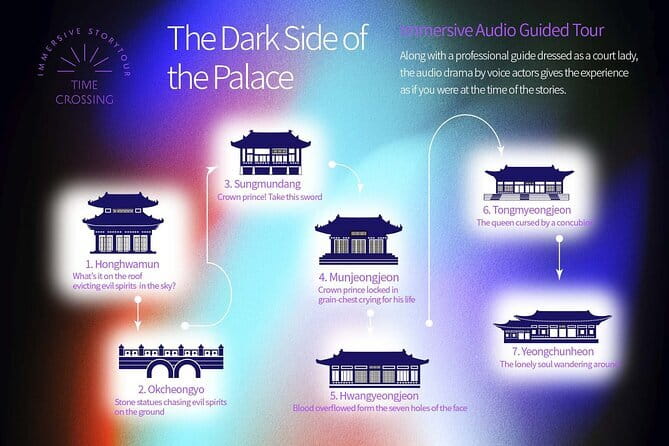
The tour begins at Honghwamun Gate, the first gate you encounter at Changgyeonggung Palace. The supplied meeting address is 185 Changgyeonggung-ro in Seoul’s Jongno District, and the location is near public transportation.
Arriving a little early is sensible. The start time is 7 p.m., and the experience begins at the gate rather than with a hotel pick-up. You need to make your own way there, since transportation to and from your hotel is not included.
Honghwamun introduces one of the tour’s recurring ideas: protection from evil. A stone figure here is described as chasing away evil spirits in the sky. That detail sets the tone immediately. The palace is not presented only as a former royal residence. It becomes a place where people once tried to guard themselves from danger, bad fortune, and forces they could not control.
The guide wears a court-style costume, which helps establish the mood without requiring elaborate staging. You also receive an audio guide system and earphones. The combination of a live guide and recorded drama is important. The guide explains the place, while the audio voices bring historical figures into the scene.
Okcheongyo Bridge and the palace’s protective figures
The walk continues to Okcheongyo Bridge, with about 15 minutes devoted to the stop. This location has a practical feature that separates it from other palace settings: mountain water still flows through the site.
That moving water gives the stop a natural sound and a sense of movement. You are also asked to notice stone figures meant to drive away evil spirits following the water. In a daytime palace visit, these details can be easy to overlook. At night, they fit naturally into the story.
I like this stop because it is not just another explanation beside a building. The water, bridge, and protective sculptures create a small scene. The audio drama can use that setting to suggest that the palace was watched over, yet never entirely safe.
The drawback is that atmospheric storytelling depends on your attention. If you are mainly interested in taking photographs, the audio material may feel like a distraction. The tour works best when you pause, listen, and let the guide direct your eyes toward the features being discussed.
Sungmundang and King Yeongjo’s troubled fatherhood
At Sungmundang, the focus turns to King Yeongjo, the father of Crown Prince Sado. The stop lasts about 15 minutes and presents Sungmundang as a place where Yeongjo enjoyed reading.
The tone changes here. Rather than beginning with a frightening incident, the story places you near a private habit and then introduces distress. You meet a king troubled by reports of his son’s eccentric behavior. That family tension gives the later stop at Munjeongjeon more weight.
This is one of the stronger parts of the route because it treats the palace as a place of strained personal relationships. Royal history can seem remote when reduced to titles and succession. A father reading in a palace room, then struggling with fear and concern about his son, is easier to understand on a human level.
The experience does not present this as a long academic lecture. The audio drama lets you hear a conversation or scene connected to the event, while the guide supplies historical explanation. That structure should appeal to you if you remember stories better than lists of facts.
A few more options to weigh up in Seoul
- Best DMZ Tour Korea from Seoul (Red Suspension Bridge Optional)
★ 5.0 · 41,422 reviews - DMZ Tour: 3rd Tunnel, Option(Suspension Bridge, Boat) from Seoul
★ 5.0 · 21,373 reviews - DMZ tour south Korea from Seoul (NK experience hall, defector)
★ 5.0 · 20,599 reviews - Seoul: DMZ Tour with Optional Suspension Bridge
★ 4.8 · 5,277 reviews
Myeongjeongjeon and the royal events tied to its hall
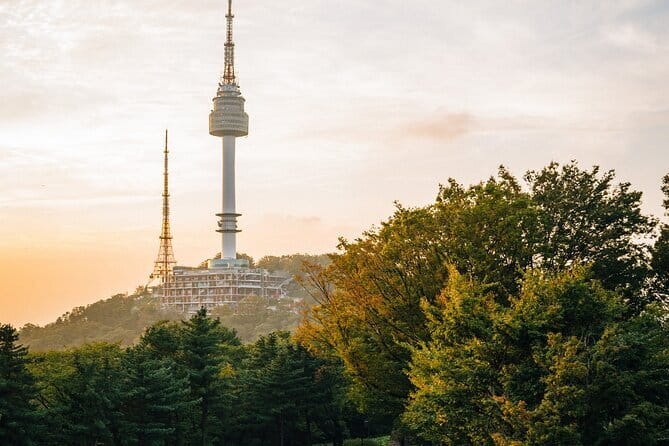
Myeongjeongjeon receives about 20 minutes, making it the longest stop on the route. It was rebuilt in 1616 and is described as the oldest structure in a Joseon palace. The stop also connects the hall with important events involving the royal family.
This is where the tour’s historical and dramatic sides meet most clearly. The building has architectural importance, but the audio drama gives it emotional force. You are not only told that the hall is old. You are asked to imagine the people, decisions, and consequences associated with it.
Twenty minutes is enough time for the guide to explain the hall and for the audio segment to develop. It also means the overall pace is not rushed. Since the full experience lasts roughly two hours, the longer stop at Myeongjeongjeon is balanced by shorter visits elsewhere.
The tour’s nighttime setting changes how you read the architecture. Rooflines, gates, and courtyards become part of the drama rather than a backdrop for daytime photographs. Still, you should not book this expecting access to every interior space. The information provided describes a guided route through palace locations, not an interior tour of rooms.
Tongmyeongjeon and the curse of a royal woman
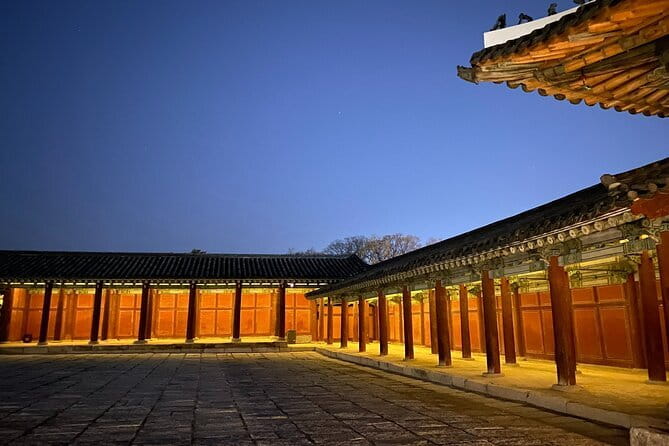
Tongmyeongjeon is described as a women’s space, used mainly as a queen’s bedchamber. The 15-minute stop centers on the curse story of a concubine who lived there.
This section adds a different kind of tension. The earlier story at Sungmundang deals with a father and son. Tongmyeongjeon turns toward rivalry, status, and the confined world of palace women. The setting matters because it links the story to a room associated with private royal life rather than formal ceremonies.
The audio drama is especially useful here. A curse can sound flat when read as a short paragraph in a guidebook. A professional voice performance, heard through earphones while you stand at the relevant place, gives the tale a stronger sense of presence.
The tone is also one of the reasons to think carefully before booking. The experience includes cruel and frightening stories. It may not suit young children or anyone who wants a gentle cultural walk. The supplied information does not give a minimum age, so you should use your own judgment about how comfortable your group is with dark subject matter.
The death of Crown Prince Sohyeon

Another 15-minute section focuses on Crown Prince Sohyeon, who died after the Manchu Invasion. The story adds political and historical tragedy to an evening that otherwise concentrates heavily on family conflict and palace curses.
This stop broadens the experience beyond ghost stories. You still hear a mysterious and unsettling account, but the subject is connected to a major period of upheaval. The palace becomes a setting for the consequences of war, not only private sorrow inside the royal family.
I appreciate that the route includes different kinds of darkness. Some stories involve supernatural beliefs. Others concern difficult relationships, royal pressure, or unexplained death. That variety prevents the walk from becoming a simple collection of ghost tales.
The supplied information identifies this location as Changgyeonggung Palace, though it does not specify a separate building name for the stop. The guide’s explanation is therefore important. Listen closely when the group moves between locations, since the historical connections are part of what you are paying for.
Munjeongjeon and the tragedy of Crown Prince Sado
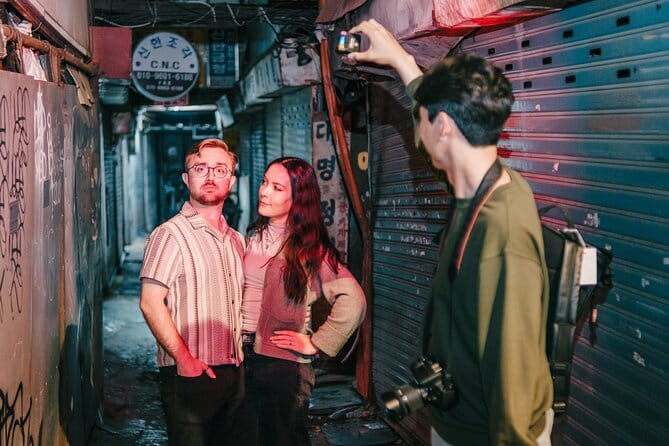
The final major stop is Munjeongjeon, where the tour presents the most emotionally intense story: a father who wants to lock his son in a rice chest, and a son crying for his life. This is the story of King Yeongjo and Crown Prince Sado.
The earlier Sungmundang stop prepares you for this scene by introducing Yeongjo’s distress over Sado’s behavior. At Munjeongjeon, that concern becomes a catastrophic family conflict. The audio drama places the conversation at the location associated with the event, which is the clearest example of the experience’s time-trip format.
This is likely to be the part you remember most. It is direct, tragic, and difficult to hear. The story is not softened into a simple tale of good and evil. Instead, it presents a father and son trapped in a royal system where personal fear and public duty could have terrible results.
The route then returns to the meeting point at Honghwamun Gate. The experience lasts about two hours in total, though individual stops are approximate and may change because of weather or other circumstances.
Audio drama, guide, and group size
The $48 price needs to be judged against the format. You are paying for more than palace entry. The cost includes palace admission, taxes and fees, a certified guide, the audio guide system, and earphones.
The guide’s certification number is 2024-01-0381. No guide name is provided, so you should not expect to choose a particular presenter. The guide’s role is split between explaining historical editorials and leading the group through the locations, while professional voice actors perform the recorded scenes.
That division is a real benefit. A standard audio guide can feel impersonal, while a standard group tour may not provide enough drama. Here, you get both a human guide and recorded characters. The five-star assessment supplied for this experience specifically praises the sound effects and describes the evening as more interesting than expected, which fits the tour’s strongest feature.
The group maximum is 15 people. That is small enough to keep the walk manageable and makes it easier to hear instructions. It also suits a story-based tour, where the mood can be weakened by a large crowd.
You should have moderate physical fitness. The route includes several stops around the palace grounds, and the experience is on foot. The information does not give a precise distance, step count, or accessibility details, so anyone with mobility concerns should confirm the route before booking.
Who will get the most from the $48 price?
I would recommend this experience to you if you have already seen Seoul’s palaces in daylight and want a different angle. It also works well if you enjoy folklore, historical mysteries, audio theater, and stories driven by personalities rather than dates.
The price is fair for a small guided group with palace admission, equipment, and professional audio production. It is less convincing if you only want to walk around Changgyeonggung at night. In that case, you may feel that the storytelling portion is doing most of the work.
The tour is also a good fit for repeat visitors to Seoul. Changgyeonggung is not treated as a quick photo stop. The route gives you specific reasons to revisit its gates, bridge, halls, and chambers.
I would be cautious about booking it for a group seeking a relaxed, family-friendly palace introduction. The stories include death, curses, family violence, and frightening material. The experience is atmospheric rather than light.
You also need to accept that the route may change because of weather or circumstances. The main appeal is the combination of place and story, but the exact sequence or locations may vary.
Booking, cancellation, and practical planning
Confirmation is sent within 48 hours of booking, subject to availability. Since the start time is fixed at 7 p.m. and the meeting point is at Honghwamun Gate, leave enough time to reach Jongno District using public transportation.
The tour has free cancellation up to 24 hours before the start time for a full refund. Cancellations or changes made less than 24 hours before the start time are not accepted for a refund, and the cut-off follows Seoul local time.
Hotel pick-up, hotel drop-off, and tour insurance are not included. Those are small details, but they matter when you are planning an evening around the palace. Bring only what you need, keep your earphones secure, and expect to spend the full two hours moving between stops and listening.
Should you book Dark Story of Palace?
Book it if you want Changgyeonggung Palace to feel like a stage for royal tragedy rather than a collection of old buildings. The court-costumed guide, professional voice acting, sound effects, and specific locations create a clear reason to visit after dark.
Skip it if you want a broad architectural tour, a gentle introduction to Korean royal culture, or a simple evening stroll. For the right audience, $48 buys a focused and unusual experience. For everyone else, the darkness and tragic stories may be more intense than expected.
FAQ
Where does the tour begin?
The tour begins at Honghwamun Gate, at 185 Changgyeonggung-ro in Seoul’s Jongno District.
What time does the experience start?
The scheduled start time is 7 p.m.
How long does the tour last?
The experience lasts approximately two hours.
Is palace admission included?
Yes. Admission tickets, all fees and taxes, the audio guide system, earphones, and a certified tour guide are included.
How large is the group?
The maximum group size is 15 people.
Can I cancel for a full refund?
Yes. You can cancel at least 24 hours before the scheduled start time for a full refund. Cancellations or changes made less than 24 hours before the start time are not accepted for a refund.
Just added in Seoul
- Seoul: Korean & English Language Exchange Global Party★ 5.0 · 28 reviews
- Your Personal Seoul Photographer!★ 4.1 · 15 reviews
- You’re Invited to Our Home in Seoul: The Only Cooking Class!★ 5.0 · 8 reviews
- From Seoul: Yongpyong Ski Day Tour with Transportation★ 4.9 · 40 reviews
- From Seoul: Hwacheon Ice Fishing and Lighting Festival Tour★ 4.5 · 4 reviews
- Seoul: Gangneung BTS K-Pop & K-Drama Filming Locations Tour★ 4.6 · 14 reviews
- Unique Native Experience : Han River Picnic, Board game, BBQ★ 5.0 · 3 reviews
- Seoul: Euljiro Gastroventure Tour★ 4.0 · 1 review
Palace Tours, compared.
Gyeongbok Palace, Bukchon Village, and Gwangjang Tour
Read our review →
Best Seoul City Tour (Gyeongbokgung Palace,Insadong,Namsan Tower)
Read our review →
Small-Group Royal Palace and Seoul City Tour (hotel pick-up)
Read our review →
Seoul City Sightseeing Tour Including Gyeongbokgung Palace, N Seoul Tower, and Namsangol Hanok Village
Read our review →Gyeongbok Palace, Bukchon Village, and Gwangjang Tour
Read our review →
Seoul Highlights: Gyeongbok Palace, Insadong & N Seoul Tower
Read our review →
Seoul City Half Day Tour-Gyeongbok Palace Guard Changing Ceremony
Read our review →Browse the lists this tour appears in