
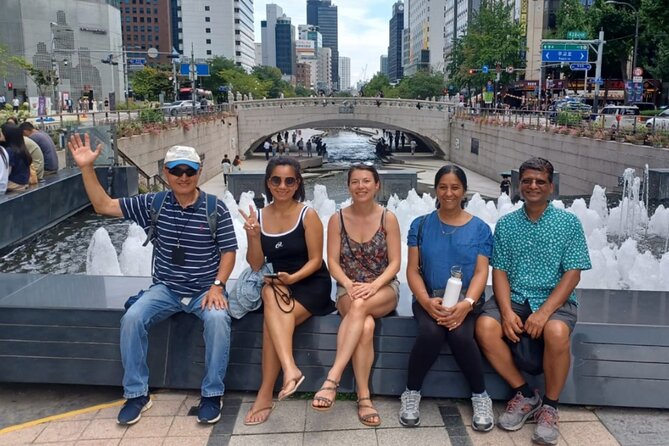
Reviewed · PALACE TOURS
Deoksugung & Jeongdong-gil: A Walk in Korea’s Rich Heritage
Seoul’s past is hiding in plain sight. This three-hour walking tour links Deoksugung Palace, Jeongdong-gil, and Gwanghwamun Square, showing you how Joseon traditions, Korean imperial history, Christian education, and modern city life meet in one compact part of Seoul. I like the clear historical arc, and I like the small group size, capped at 15 people. The main drawback is that some stops are brief, so anyone wanting a slow palace visit may feel hurried.
I also like the chance to walk with a local English-speaking guide rather than simply move between photo stops. Sam, one of the guides, is praised for making the outing both fun and informative. Keep in mind that the tour requires good weather and includes no meal, so dress for a few hours outdoors and eat before you arrive.
In This Review
- Key Points to Know Before You Go
- Why This Seoul Walk Works
- Starting at Deoksugung Palace at 9:30
- Gyeonghuigung Palace and a Quieter Royal Stop
- Appenzeller Noble Memorial Museum and Seoul’s Foreign Influence
- A Practical Break at Jeongdong Theater
- Jungmyeongjeon Hall and the Imperial Turning Point
- Gwanghwamun Square and the Walk Toward Today
- The Pace, Group Size, and Walking Demands
- What the $48 Price Includes
- Who Will Get the Most From This Experience
- Should You Book the Deoksugung and Jeongdong-gil Walk?
- FAQ
- How long does the Deoksugung and Jeongdong-gil tour last?
- Where does the tour start?
- Where does the tour end?
- What is included in the price?
- How large is the group?
- Is the tour suitable for most people?
- What happens if the weather is poor?
Key Points to Know Before You Go
- Deoksugung begins the story: The palace introduces Joseon architecture and Korea’s imperial period right in central Seoul.
- Jeongdong-gil blends old and new: The route brings traditional Korean sites together with Western-style buildings and institutions.
- Six stops fit into about three hours: Several visits last only 10 to 20 minutes, with walking time connecting them.
- Jungmyeongjeon Hall carries serious historical weight: The former imperial library later became Emperor Gojong’s temporary residence.
- A small group keeps the walk manageable: The maximum is 15 people, useful when the guide is explaining details outdoors.
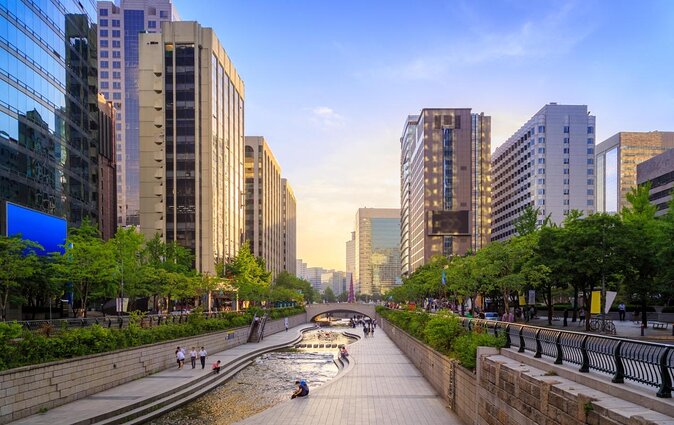
- The tour finishes near Cheonggyecheon Stream: You can continue exploring central Seoul after the guided walk ends.
Why This Seoul Walk Works
At $48 per person, this is not a bargain-priced stroll, but the value comes from the guide and the range of places covered. You are not paying only to enter a single palace. You are paying for a connected explanation of how Seoul changed from royal capital to imperial center and then to a modern national capital.
The route is especially useful if you are new to Seoul. Deoksugung gives you an immediate sense of the city’s royal past, while Jeongdong-gil introduces the Western influence that arrived in the late 19th and early 20th centuries. By the time you reach Gwanghwamun Square, you have a clearer sense of why Seoul can feel both very old and very new within the same city block.
The group limit of 15 matters. A guide can usually speak to a group that size without turning every stop into a crowded lecture. The walking format also lets you notice the relationship between sites, something you miss when you visit each place separately by taxi or subway.
Still, this is a survey tour rather than an exhaustive study. You receive short visits at most locations, with about 20 minutes at each palace and only 10 minutes at the Appenzeller Noble Memorial Museum. I would choose it for orientation and context, then return independently to the places that catch your interest.
More History Tours in Seoul
- Seoul: Evening Dark History, Folklore & Ghost Story Walking Tour
★ 5.0 · 593 reviews - Hanbok Photoshoot and History Tour at Gyeongbokgung Palace
★ 5.0 · 276 reviews - From Seoul: Dae Jang Geum Park Historic K-Drama Set Tour
★ 4.9 · 143 reviews
Starting at Deoksugung Palace at 9:30
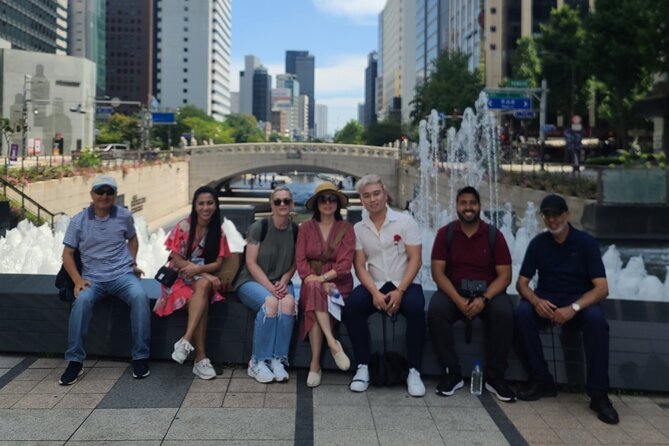
The tour starts at Deoksugung Palace, at 99 Sejong-daero in Seoul’s Jung District. This is a practical meeting point in central Seoul, close to public transportation and easy to combine with other sightseeing before or after the walk.
Deoksugung, also known as Gyeongun-gung, was built during the Joseon Dynasty and later became closely linked with Korea’s imperial period. Its setting is part of its appeal. Rather than sitting far from city life, the palace is surrounded by major roads and modern buildings, making the contrast impossible to miss.
You have about 20 minutes here. That is enough for an introduction to the palace and its place in Korean history, but not enough for a full, leisurely visit. I would arrive a little early if you want to get your bearings before the guide begins.
The guide’s role matters most at this first stop. Palace buildings can look beautiful without explaining much on their own. A good introduction helps you understand why Deoksugung is important and prepares you for the later sites, especially Jungmyeongjeon Hall and the story of Emperor Gojong.
Gyeonghuigung Palace and a Quieter Royal Stop
The second stop is Gyeonghuigung Palace, also called Gyeonghui Palace, in Seoul’s Jongno-gu district. It was built in 1623 during the Joseon Dynasty as a royal residence.
The visit lasts about 20 minutes. Compared with the larger and more famous palace sites in Seoul, this stop is useful because it broadens your view of royal life beyond the best-known names. You get another piece of the Joseon court story, while the guide can explain how the city’s royal spaces related to one another.
I would not expect a long architectural inspection here. The pace is designed to keep the group moving through several parts of central Seoul. That is a fair trade if you want range, but less satisfying if your main goal is detailed palace photography or extended time inside historic buildings.
The pairing of Deoksugung and Gyeonghuigung gives the morning a strong opening. One palace is linked closely with the final royal and imperial era, while the other reaches further back into the Joseon period. Together, they help you see that Korean history is not one single chapter.
Appenzeller Noble Memorial Museum and Seoul’s Foreign Influence
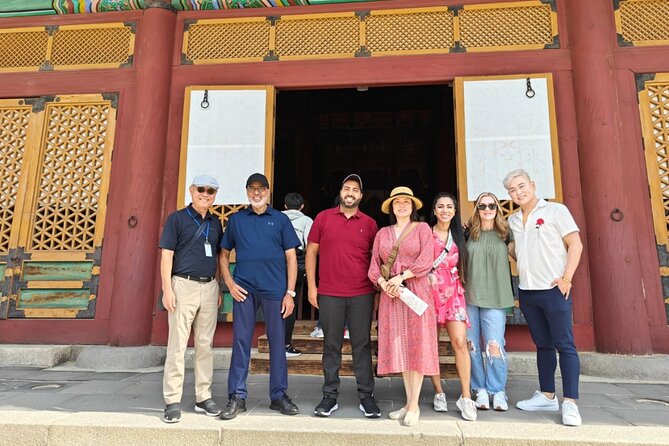
The Appenzeller Noble Memorial Museum receives about 10 minutes, making it the shortest formal stop. It occupies the former home of Baekjae Hakdang, a missionary school that later expanded into a university, now known as Pai Chai University in Daejeon.
The museum explains the school’s development and its Methodist connection. This adds a different voice to the tour. Until this point, the story centers mainly on palaces and royal power. Here, you begin to see the role of education, religion, and foreign visitors in Korea’s transition during the late 19th and early 20th centuries.
Ten minutes is enough for a concise explanation, but it does limit what you can take in. If this subject interests you, pay close attention to the guide’s overview and note the museum’s name for a later return. The value of this stop is less about a long museum visit and more about showing how new institutions entered Seoul’s traditional setting.
This is one reason the route feels more thoughtful than a simple palace walk. You are not only looking at royal buildings. You are also seeing the social forces that helped reshape Korea.
More Walking Tours in Seoul
- Seoul moonlight walking tour with local historian
★ 5.0 · 940 reviews - Seoul: Nighttime Hidden Gems Walking Tour
★ 5.0 · 775 reviews - Seoul: Dark Side of the City and Ghost Stories Walking Tour
★ 4.8 · 484 reviews - Gangnam Walking Tour on Youth and Society in Seoul Korea
★ 5.0 · 401 reviews
A Practical Break at Jeongdong Theater
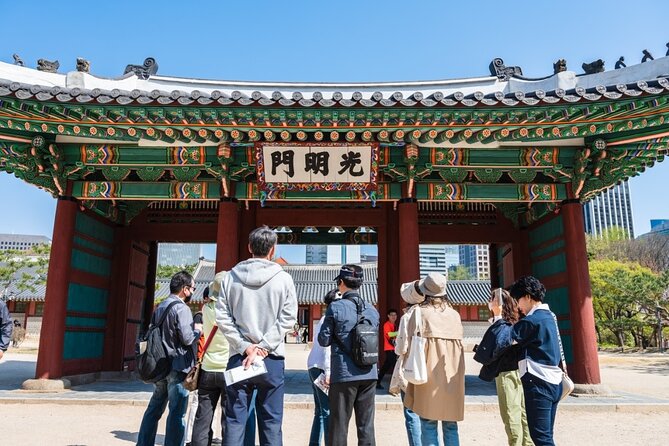
The tour then pauses at Jeongdong Theater for about 25 minutes. The theater presents concerts, plays, and musicals that incorporate elements of traditional Korean culture.
You are not attending a performance during this visit. The stop gives you time to get coffee or another drink and use the restroom, which is welcome after several historic sites and city streets. A break also keeps the tour from becoming a nonstop march through dates and names.
For me, this is a smart part of the schedule. Three hours on foot feels much easier when the guide builds in a pause. It also gives you a moment to absorb the earlier palace visits before the group moves into the more politically charged part of the walk.
The theater adds another example of Seoul’s old and new combination. Traditional Korean forms appear in a modern performance venue, just as royal sites sit beside present-day roads and offices. The stop is brief, but it reinforces one of the tour’s central ideas.
Jungmyeongjeon Hall and the Imperial Turning Point
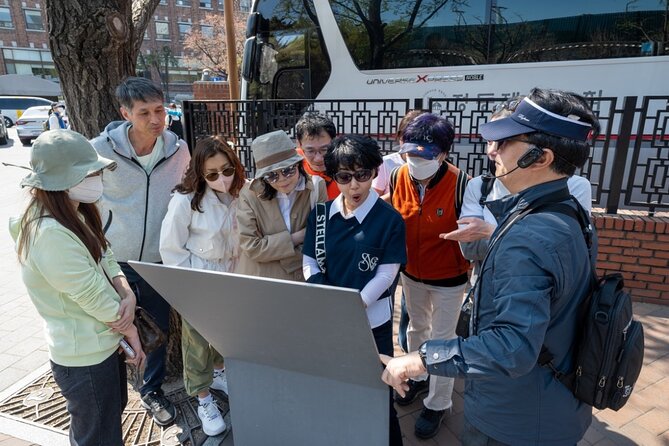
The most historically weighty stop may be Jungmyeongjeon Hall, built in 1899 as the imperial library of the Korean Empire. After Deoksugung Palace caught fire in 1904, it became the temporary residence of Emperor Gojong.
The building is also linked with the Eulsa Treaty, a painful event in Korea’s history. The tour’s late 19th and early 20th century focus comes into sharp view here. You are no longer looking only at palace design or institutional change. You are confronting the political pressure and loss of sovereignty that shaped modern Korea.
The scheduled visit lasts about 15 minutes. That is enough for a focused explanation, but the subject deserves attention. I would listen carefully here and resist treating the stop as just another building on the route. The story of the imperial library, the palace fire, Emperor Gojong’s temporary residence, and the Eulsa Treaty gives the walk its emotional center.
This is also where a strong guide can make a real difference. Dates alone can flatten history. A clear explanation helps you connect the building to the larger changes taking place in Korea at the time.
Gwanghwamun Square and the Walk Toward Today
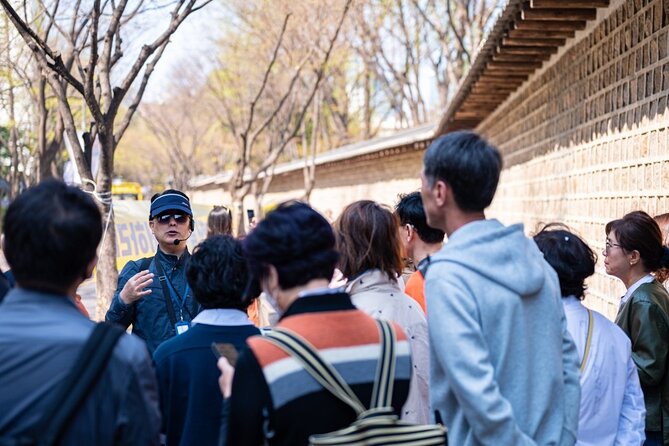
The final major stop is Gwanghwamun Square, a large public space in central Seoul created in 2009. It includes a fountain, a statue of King Sejong the Great, and other public features.
The square gives the tour a modern finish. You begin among royal buildings and end in a civic space used by people in present-day Seoul. The statue of King Sejong connects the modern city with one of Korea’s most important historical rulers, while the square itself shows how the capital presents national memory in a public setting.
You have about 20 minutes here. The guide can help explain the square’s role and point out its major features. Afterward, the tour ends at Cheonggyecheon Stream in Jongno District.
That ending is convenient. You are not left at an isolated site, and you can continue your own visit around central Seoul after the guided portion ends. The stream gives you another nearby place to walk, rest, or plan your next stop.
The Pace, Group Size, and Walking Demands
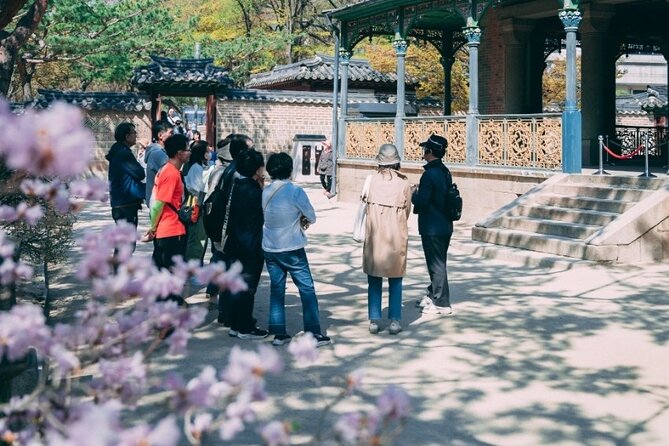
The total duration is approximately three hours, beginning at 9:30 a.m. The listed stops add up to about 110 minutes, so the remaining time is used for walking, explanations, and the break at Jeongdong Theater.
That pace is active but not extreme. The tour is not designed as a strenuous hike, and most people can participate. You should still wear comfortable shoes because the experience depends on moving between several central locations rather than remaining inside one complex.
The maximum group size is 15 people. That is large enough to provide a social atmosphere, but small enough for the guide to keep the group together without the outing feeling like a long procession.
A mobile ticket makes entry and meeting details easier to keep on your phone. Confirmation is sent within 48 hours of booking, subject to availability. The meeting point is Deoksugung Palace, and the end point is Cheonggyecheon Stream, so plan your day around a one-way route rather than expecting to finish where you started.
What the $48 Price Includes
The price is $48 per person. It includes a professional English-speaking tour guide, while lunch and personal purchases are not included.
The value depends on how much help you want with context. If you are comfortable reading signs and researching the palaces yourself, you could visit some of these areas independently for less. The paid advantage here is the route design and the guide’s explanation of how the sites fit together.
I think the price is easier to justify for a first Seoul visit, especially if you want one morning that introduces several historical periods without spending hours planning connections. It is also a reasonable choice for anyone who prefers a small group and direct explanation over a self-guided audio tour.
I would be less likely to book it if I had already studied Seoul’s imperial history or wanted long visits at each palace. The short stop times are the clearest limit.
Who Will Get the Most From This Experience
I would recommend this walk to you if you want:
- A first look at Seoul’s royal and imperial past
- A guided introduction to late 19th and early 20th century Korea
- A mix of palaces, museums, civic spaces, and cultural institutions
- A small group rather than a large coach outing
- A morning activity close to public transportation
- A route that ends near another central Seoul attraction
Families, couples, solo visitors, and most people interested in history should find the format manageable. The guide’s approach can shape the whole morning, and Sam has been specifically praised for making the walk fun as well as informative.
You may want another option if you need extensive indoor time, dislike walking between stops, or want to spend an hour or more inside each palace. You should also remember that the tour depends on good weather. If conditions force cancellation, you receive the choice of another date or a full refund.
Free cancellation is available if you cancel at least 24 hours before the start time. Cancellations or changes made less than 24 hours ahead are not refunded or accepted, so keep that deadline in mind when arranging your Seoul schedule.
Should You Book the Deoksugung and Jeongdong-gil Walk?
Book this tour if you want a well-shaped introduction to Seoul’s history rather than a single-site palace visit. I especially like the way it moves from Deoksugung and Gyeonghuigung to education, theater, imperial politics, and modern civic space. The route gives you useful context quickly.
Skip it if your priority is slow exploration, detailed photography, or independent museum time. At $48, you are paying for interpretation, structure, and convenience, not a full admission-filled day.
For a first morning in Seoul, this is a sensible choice. You finish near Cheonggyecheon Stream with a better sense of how the city’s royal past still shapes its present.
FAQ
How long does the Deoksugung and Jeongdong-gil tour last?
The tour lasts approximately three hours and begins at 9:30 a.m.
Where does the tour start?
The meeting point is Deoksugung Palace at 99 Sejong-daero in Seoul’s Jung District.
Where does the tour end?
The tour ends at Cheonggyecheon Stream in Seoul’s Jongno District.
What is included in the price?
The $48 price includes a professional English-speaking tour guide. Lunch and personal purchases are not included.
How large is the group?
The tour has a maximum of 15 participants.
Is the tour suitable for most people?
Yes. Most people can participate, and the tour is located near public transportation. You should be prepared to walk between several central Seoul sites.
What happens if the weather is poor?
The experience requires good weather. If it is canceled because of poor weather, you are offered a different date or a full refund.
More Palace Tours in Seoul
- Seoul: Gyeongbok Palace, Bukchon Village, and Gwangjang Tour
★ 4.9 · 2,321 reviews - Best Seoul City Tour (Gyeongbokgung Palace,Insadong,Namsan Tower)
★ 5.0 · 1,647 reviews - Small-Group Royal Palace and Seoul City Tour (hotel pick-up)
★ 5.0 · 1,474 reviews - Seoul City Sightseeing Tour Including Gyeongbokgung Palace, N Seoul Tower, and Namsangol Hanok Village
★ 5.0 · 1,423 reviews
Just added in Seoul
- Seoul: Korean & English Language Exchange Global Party★ 5.0 · 28 reviews
- Your Personal Seoul Photographer!★ 4.1 · 15 reviews
- You’re Invited to Our Home in Seoul: The Only Cooking Class!★ 5.0 · 8 reviews
- From Seoul: Yongpyong Ski Day Tour with Transportation★ 4.9 · 40 reviews
- From Seoul: Hwacheon Ice Fishing and Lighting Festival Tour★ 4.5 · 4 reviews
- Seoul: Gangneung BTS K-Pop & K-Drama Filming Locations Tour★ 4.6 · 14 reviews
- Unique Native Experience : Han River Picnic, Board game, BBQ★ 5.0 · 3 reviews
- Seoul: Euljiro Gastroventure Tour★ 4.0 · 1 review
Palace Tours, compared.
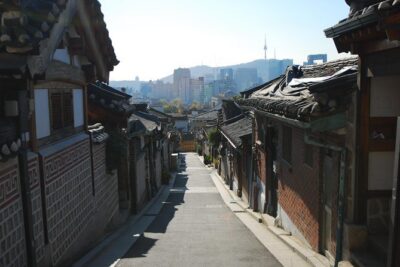
Gyeongbok Palace, Bukchon Village, and Gwangjang Tour
Read our review →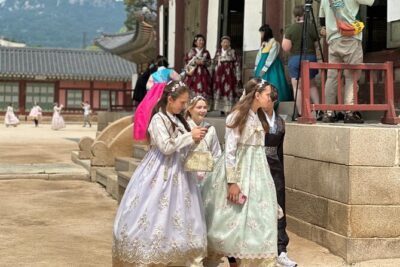
Best Seoul City Tour (Gyeongbokgung Palace,Insadong,Namsan Tower)
Read our review →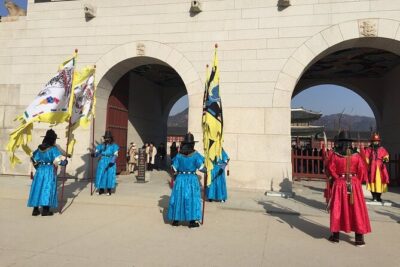
Small-Group Royal Palace and Seoul City Tour (hotel pick-up)
Read our review →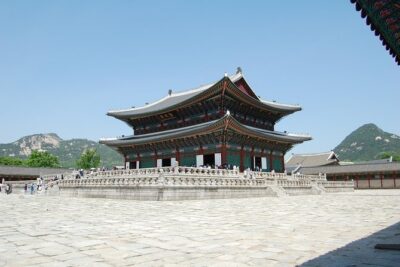
Seoul City Sightseeing Tour Including Gyeongbokgung Palace, N Seoul Tower, and Namsangol Hanok Village
Read our review →Gyeongbok Palace, Bukchon Village, and Gwangjang Tour
Read our review →
Seoul Highlights: Gyeongbok Palace, Insadong & N Seoul Tower
Read our review →
Seoul City Half Day Tour-Gyeongbok Palace Guard Changing Ceremony
Read our review →Browse the lists this tour appears in