
Reviewed · WALKING TOURS
Gangnam Walking Tour on Youth and Society in Seoul Korea
Gangnam has more stories than shopping. This 2.5-hour walking tour uses Seoul’s richest district to explain the pressures behind South Korea’s success, from housing costs and cram schools to plastic surgery, dating, and mental health. I like the serious, honest subject matter and the chance to see ordinary streets through a local guide’s eyes. I also like the small group limit of 15, which leaves room for questions and personal comparisons.
The main drawback is simple: this is a discussion-led walk, not a sightseeing parade. You will spend much of the time walking along regular Gangnam streets, listening to explanations, and sometimes sitting down rather than entering major attractions. At $31.98, I think it offers good value if you want social context, but less so if you mainly want famous sights or photo stops.
In This Review
- Key points to know before booking
- Why this Gangnam walk is different from a standard Seoul tour
- Starting near Yeoksam and the rise of Gangnam
- Love hotels and changing ideas about relationships
- Gangnam Daeseong Cram School and the pressure to succeed
- Sinsa-dong, plastic surgery, and lookism
- The Han River and the cost of rapid development
- How much walking and transport should you expect?
- What the small group adds
- What the $31.98 price gets you
- Who should book this experience?
- Should you book the Gangnam youth and society walk?
- FAQ
- How long is the Gangnam Walking Tour on Youth and Society?
- What time does the tour start?
- Where does the tour begin?
- Where does the tour finish?
- How large is the tour group?
- Is transportation included?
- What subjects are covered?
- Is the tour suitable for most people?
- What happens if the tour is canceled because of weather?
Key points to know before booking
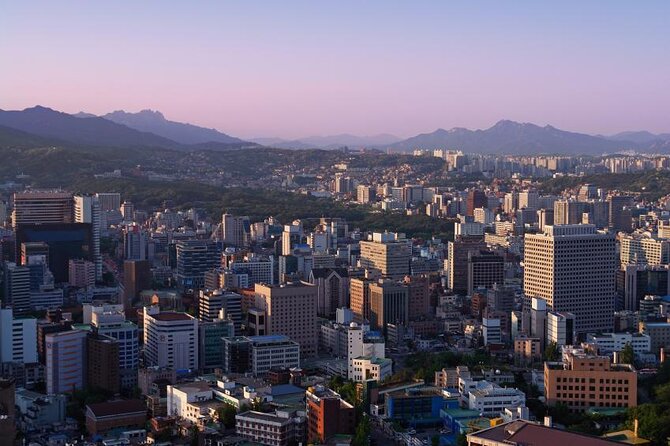
- Gangnam becomes a classroom: The tour uses housing, education, beauty, dating, and public spaces to explain modern Korean society.
- The route covers serious topics: Expect frank discussion of academic pressure, low birth rates, plastic surgery, love motels, development, and suicide.
- Guides bring different strengths: June is praised for historical context and clear explanations, while Jessica is known for warmth, patience, and lively storytelling.
- The group stays small: A maximum of 15 people makes it easier to ask questions and discuss cultural differences.
- One subway ride is part of the route: Bring 1,800 won for the transportation fee.
- Comfortable walking matters: The route lasts about 2 hours and 30 minutes and includes several stretches on foot.
Why this Gangnam walk is different from a standard Seoul tour

Most first visits to Gangnam focus on polished shopping streets, K-pop associations, restaurants, and bright signs. This walk looks behind that polished image. It asks how South Korea’s rapid economic rise affects young people trying to study, find work, afford housing, form relationships, and fit social expectations.
I like the basic idea because the neighborhood itself becomes the teaching tool. A private academy is not just another building. A plastic surgery clinic is not merely part of the streetscape. A love hotel district opens a discussion about dating and privacy. The Han River becomes a place to consider both national development and suicide.
That approach gives you more than a list of facts. You begin to connect what you see on the street with larger questions about daily life. The guide explains the setting, then you can ask how those pressures compare with your own country.
This is also a good choice if you have already seen Seoul’s palaces and markets. The tour does not concentrate on classical monuments. Instead, it shows the modern city as a place shaped by competition, status, family expectations, and fast development.
The tone can be uncomfortable at times. Topics include mental health and suicide, so this is not a light entertainment walk. Still, the purpose is not to portray Korea as gloomy. The strongest explanations balance the country’s remarkable achievements with the costs that can sit underneath them.
More Walking Tours in Seoul
- Seoul moonlight walking tour with local historian
★ 5.0 · 940 reviews - Seoul: Nighttime Hidden Gems Walking Tour
★ 5.0 · 775 reviews - Seoul: Evening Dark History, Folklore & Ghost Story Walking Tour
★ 5.0 · 593 reviews
Starting near Yeoksam and the rise of Gangnam
The tour begins at 820-10 Yeoksam-dong at 10:30 a.m., close to Gangnam Station. The first stop is Gangnam Station Intersection, a useful place to discuss why this part of Seoul became so wealthy and influential.
The guide explains housing problems and the development of modern Korea. That context matters because Gangnam’s status did not appear by accident. Its streets reflect decades of planned growth, investment, and intense demand for desirable property.
I especially like this opening because it gives you a way to read the district. Instead of seeing expensive buildings as background scenery, you start asking who can afford to live here, who commutes in, and how development has changed family life.
June is particularly strong on this part of the experience. His explanations connect current youth concerns with Seoul’s dramatic development over the past seven decades. If you enjoy history but do not want a formal museum lecture, his approach may suit you.
Do not expect a long stop with an official attraction. Admission is free, and the value comes from the guide’s commentary. You will spend about 15 minutes here before moving on.
Love hotels and changing ideas about relationships
The route then reaches the Hotel Seattle area, identified as a love hotel district. The stop lasts about 10 minutes and examines Korean dating culture and the role of love hotels.
For many people, this is one of the most revealing parts of the walk. It gives you a way to discuss relationships, privacy, marriage expectations, and the difference between public appearances and private life. The buildings may look ordinary from the outside, but the guide uses the district to explain a part of urban culture that a visitor would easily miss.
This is also a good example of the tour’s style. You are not visiting a museum exhibit about relationships. You are standing in a functioning neighborhood and listening to the guide interpret what is around you.
The subject can be handled in different ways depending on the guide and the questions from the group. June and Jessica both receive praise for direct, open explanations, but the experience remains a walking conversation rather than a scripted show.
Gangnam Daeseong Cram School and the pressure to succeed
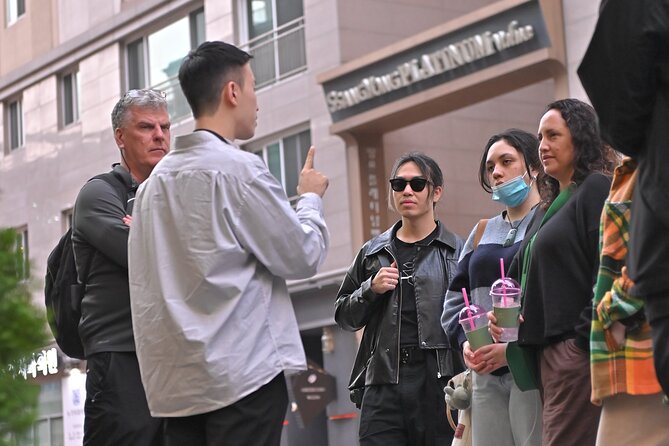
At Gangnam Daeseong Cram School, the guide discusses private education, academic competition, and birth rates. The stop lasts about 20 minutes.
This is one of the clearest examples of how a physical place can explain a national issue. A cram school, or private institute, represents the enormous effort many families put into education. The guide connects that pressure with the expectations placed on young people and with the decision many make about marriage and children.
You will likely come away with a better sense of why low birth rates cannot be explained by one simple cause. Education costs, housing, career pressure, and the difficulty of building a stable adult life all connect. The tour does not treat young Koreans as uninterested in family life. Instead, it examines the obstacles that can make family plans harder.
This section is especially useful for parents, teachers, and anyone curious about school culture. It also gives you a better framework for understanding the intense study routines often shown in Korean television dramas.
The tradeoff is that you do not tour the academy itself. You see it from the outside and hear the explanation. If you want a close look at classroom facilities, this stop may feel limited. If you want social context, it is one of the route’s strongest sections.
A completely different kind of day:
- Best DMZ Tour Korea from Seoul (Red Suspension Bridge Optional)
★ 5.0 · 41,422 reviews - DMZ Tour: 3rd Tunnel, Option(Suspension Bridge, Boat) from Seoul
★ 5.0 · 21,373 reviews - DMZ tour south Korea from Seoul (NK experience hall, defector)
★ 5.0 · 20,599 reviews - Seoul: DMZ Tour with Optional Suspension Bridge
★ 4.8 · 5,277 reviews
Sinsa-dong, plastic surgery, and lookism
The walk continues to Sinsa-dong, described as Seoul’s leading area for plastic surgery. The guide spends about 20 minutes discussing beauty culture and the pressure to look a certain way.
This can be a sensitive subject, but it is central to understanding modern Korean society. The guide explains how appearance can affect confidence, social judgment, and ideas about success. You may see clinics and advertisements that look like ordinary commercial signs, yet the guide helps explain the larger expectations behind them.
I find this stop valuable because it avoids the shallow idea that plastic surgery is simply a quirky feature of Korean culture. The conversation reaches questions of competition, self-image, status, and lookism, meaning the way people can be judged by their appearance.
You should expect the guide to offer personal perspective here. Jessica is praised for being friendly, relatable, and patient, while June is noted for thoughtful explanations of current culture. The exact tone depends on who leads your walk, but the subject is presented as part of everyday life rather than as a spectacle.
Again, this is not a clinic visit. There is no medical consultation or procedure included. You are looking at the neighborhood and discussing the social forces represented by it.
The Han River and the cost of rapid development
The final major stop is a playground in Hangang Park, where the guide discusses the Han River, national development, and suicide. The scheduled discussion lasts about 20 minutes.
This is a powerful change of setting. The Han River is often presented as a symbol of Seoul’s prosperity and modern growth. Here, the guide adds a harder question: what happens when a society achieves impressive economic success but many people still feel trapped by pressure, isolation, or failure?
The location provides a calm place for a serious conversation. It also helps you connect public space with private struggles. The guide may discuss how the river figures in Seoul’s development while also acknowledging its association with suicide.
This is the point where the tour’s subject matter is most emotionally heavy. I would not book this walk expecting only cheerful sightseeing. If you prefer a serious, candid look at social problems, the stop adds real value. If you are sensitive to discussions of suicide, consider that before booking.
The tour finishes near Apgujeong Station Exit 4. The closest station to the riverside ending point is listed as Apgujeong Station, so you can continue your day from there.
How much walking and transport should you expect?

The experience lasts approximately 2 hours and 30 minutes. The listed discussion stops add up to about 85 minutes, leaving the remaining time for walking, transitions, and one subway ride.
The route begins in the Yeoksam and Gangnam Station area and ends near Hangang Park by Apgujeong Station. You should wear comfortable shoes and allow enough energy for regular city walking. One person specifically noted that the walk can be demanding for senior citizens, so older participants should think carefully about the length and pace.
A mobile ticket is provided, and the tour is near public transportation. The subway fare is not included. You will need 1,800 won for the single ride used during the tour.
The walk can take place in changing weather conditions, but the experience requires good weather. If poor weather forces a cancellation, you can choose another date or receive a full refund. A minimum number of participants is also required, with the same options if the tour does not run.
What the small group adds
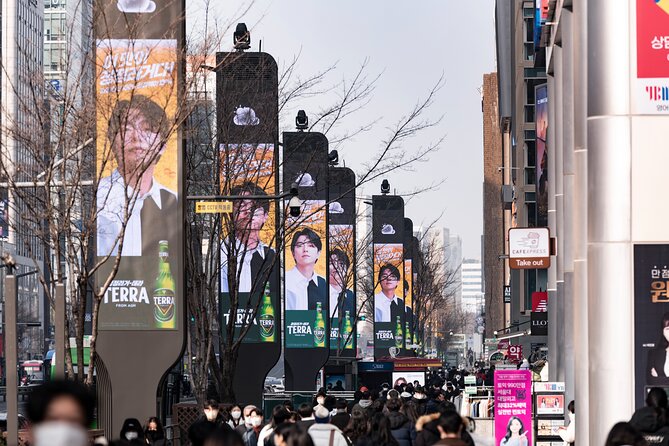
The maximum group size is 15 people. That is not a private tour, but it is small enough for the guide to hear questions and adjust explanations.
That matters on a subject-heavy walk. You may want to ask about dating, education, beauty standards, or how young people see these pressures themselves. A small group gives the conversation more room than a large coach tour would.
The guides also seem comfortable comparing Korean life with other cultures. Jessica’s familiarity with American culture, for example, helps her explain differences in a way that makes sense to English-speaking visitors. June is praised for excellent English, historical context, and his ability to cover many subjects while staying on schedule.
Your guide may be June, Jessica, or another member of the SeoulDude’s Walking Tours team. The names associated with this experience are worth noting because the guide’s personality shapes a discussion-based tour more than it would shape a basic sightseeing route.
What the $31.98 price gets you
At $31.98 per person, the tour is not priced like a simple neighborhood stroll. You are paying for a local guide’s interpretation, a carefully chosen route, group discussion, and access to social context that is difficult to gather on your own.
There are no admission charges because the stops are public streets, schools seen from outside, commercial districts, and a riverside park. Gratuities are included, while the subway fare is extra.
The value depends on your goal. If you want famous landmarks, interiors, or a long list of photo opportunities, you may feel you are paying mostly for conversation. One part of the route can involve walking down ordinary Gangnam streets or sitting at a cafe, so the physical sightseeing is limited.
If you want to understand the pressures behind Korea’s economic success, the price is fair. A good guide can help you notice connections you would otherwise miss, and that kind of context often becomes the part of a trip you remember longest.
Who should book this experience?
I would choose this tour if you are interested in modern Korean society, youth culture, social expectations, education, or the less polished side of Seoul. It is also a strong fit if you have already visited the city’s major historic sites and want a different angle.
K-drama and K-pop fans may enjoy it because it adds context to the polished images of Korean life often shown in entertainment. Parents, educators, sociologists, and anyone curious about demographic change will find plenty to discuss.
You should think twice if you want a relaxed sightseeing walk with constant landmarks. The tour deals with serious issues, and some time is spent listening rather than looking at unique buildings. It is also less suitable for anyone who finds 2.5 hours of city walking difficult.
The best way to approach it is with questions. Ask how the guide’s experience compares with your own country. Ask what has changed, what remains difficult, and how young people respond. The more curious you are, the more useful the experience becomes.
Should you book the Gangnam youth and society walk?
Book it if you want the Seoul behind the glossy signs. The route gives you a thoughtful look at housing, private education, dating, beauty culture, development, and mental health, all tied to places you can actually see.
I would not book it as your only Gangnam outing if you want shopping, architecture, or major attractions. Pair it with a separate visit to enjoy Gangnam’s food and commercial districts, then use this walk to understand what those streets mean to the people living there.
The strongest reasons to go are the frank subject matter, the local point of view, and the chance to ask questions in a group of no more than 15. At $31.98, that makes it a worthwhile choice for culturally curious visitors who prefer explanation over spectacle.
FAQ
How long is the Gangnam Walking Tour on Youth and Society?
The tour lasts approximately 2 hours and 30 minutes.
What time does the tour start?
The tour starts at 10:30 a.m.
Where does the tour begin?
The meeting point is 820-10 Yeoksam-dong in Gangnam District, Seoul, South Korea.
Where does the tour finish?
The tour finishes at Hangang Park. The closest listed station is Apgujeong Station, Exit 4.
How large is the tour group?
The tour allows a maximum of 15 participants.
Is transportation included?
The tour includes one subway ride during the route, but the 1,800 won transportation fee is not included in the price.
What subjects are covered?
The guide discusses housing and development, love hotel culture, private education, birth rates, plastic surgery, beauty standards, the Han River, and suicide.
Is the tour suitable for most people?
Most people can participate, but the experience involves substantial walking. Senior citizens or anyone with difficulty walking should consider the 2.5-hour duration.
What happens if the tour is canceled because of weather?
If poor weather causes cancellation, you can choose a different date or receive a full refund. A full refund is also available when you cancel at least 24 hours before the start time.
Just added in Seoul
- Seoul: Korean & English Language Exchange Global Party★ 5.0 · 28 reviews
- Your Personal Seoul Photographer!★ 4.1 · 15 reviews
- You’re Invited to Our Home in Seoul: The Only Cooking Class!★ 5.0 · 8 reviews
- From Seoul: Yongpyong Ski Day Tour with Transportation★ 4.9 · 40 reviews
- From Seoul: Hwacheon Ice Fishing and Lighting Festival Tour★ 4.5 · 4 reviews
- Seoul: Gangneung BTS K-Pop & K-Drama Filming Locations Tour★ 4.6 · 14 reviews
- Unique Native Experience : Han River Picnic, Board game, BBQ★ 5.0 · 3 reviews
- Seoul: Euljiro Gastroventure Tour★ 4.0 · 1 review
Walking Tours, compared.
Seoul moonlight walking tour with local historian
Read our review →
Evening Dark History, Folklore & Ghost Story Walking Tour
Read our review →
Dark Side of the City and Ghost Stories Walking Tour
Read our review →
Gyeongbok Palace and Bukchon Hanok Walking Tour
Read our review →
Best Walking Tour to Gyeongbok Palace Bukchon Hanok Village
Read our review →
Highlights & Hidden Gems With Locals: Best of Seoul Private Walking Tour
Read our review →
Street photoshoot and Seoul Hidden gem History Walking Tour
Read our review →Browse the lists this tour appears in