
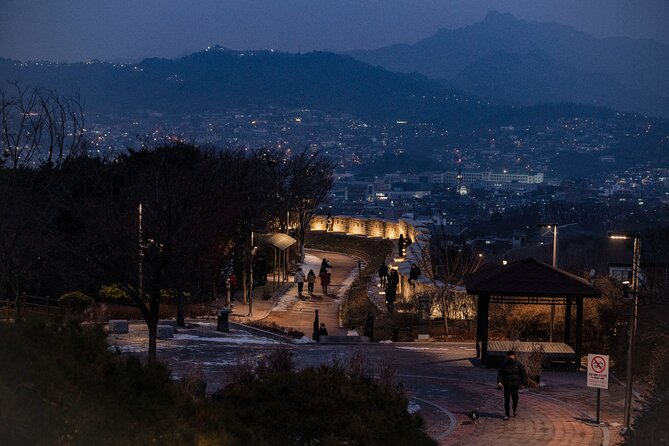
Reviewed · WALKING TOURS
Seoul moonlight walking tour with local historian
Seoul shines brightest from its hills. This two-hour evening walk links Hyehwa’s theater district with Ihwa Mural Village, Naksan Park, and the old city wall, giving you both a clear look at Seoul’s past and some of the city’s finest nighttime views. I especially like the mix of local social history and scenery, plus the guides’ easy humor, with Jessica, Ethan, June, Smin, Sumin, Leah, and Shin all praised for making the walk lively and personal.
The price is $31.98 per person, a fair deal for a small-group experience capped at 20 people. The main caution is the uphill route and stairs. You should wear proper walking shoes, carry water, keep your phone charged, and bring bug spray in warm weather.
In This Review
- Key points before you book
- Why this evening walk feels different from a standard Seoul tour
- Starting in Hyehwa among theaters and students
- Seoul University Hospital Medical Museum and modern Korean life
- Naksan Park turns the climb into a history lesson
- Ihwa Mural Village and the social side of Seoul
- Walking the Seoul City Wall after sunset
- The guides make or break the evening
- What the $31.98 price gets you
- Who should book this walk
- Booking, cancellation, and practical details
- Should you book the Seoul Moonlight Walking Tour?
- FAQ
- How long does the Seoul Moonlight Walking Tour last?
- How much does the tour cost?
- Where does the tour begin?
- Where does the tour end?
- What locations does the tour visit?
- Are admission tickets included?
- Is dinner included?
- How large can the group be?
- Can I cancel for a full refund?
Key points before you book
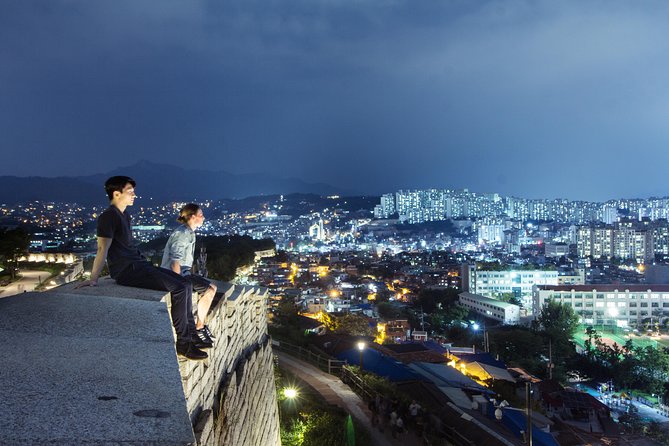
- The best views come after the uphill work: Naksan Park and the Seoul City Wall reveal broad views of Seoul’s lights after sunset.
- Hyehwa adds local character: You begin among theaters, music, student life, and cafés rather than at a standard sightseeing stop.
- The guide’s storytelling shapes the experience: Jessica, Ethan, June, Smin, Sumin, Leah, and Shin have all been praised for humor, cultural insight, and useful local advice.
- The tour covers more than old monuments: You hear about university culture, education pressure, class, housing, and the way Seoul developed around its capital.
- The route is manageable but not flat: Expect uphill walking and stairs, followed by a descent.
- Food comes afterward: A meal session may be offered after the walk, but it costs extra and is optional.
Why this evening walk feels different from a standard Seoul tour
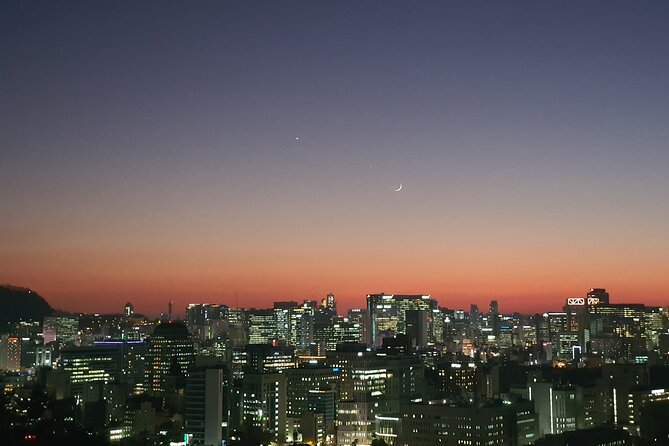
Seoul has plenty of grand palaces, shopping streets, and famous towers. This walk takes a smaller-scale approach. You begin in an active neighborhood, climb through old hillside streets, and finish beside a historic defensive wall with the city spread below.
That route gives the evening a useful rhythm. You start with present-day Seoul, move into questions about class and urban growth, then reach the historical remains that help explain why the city looks the way it does.
I like that the tour does not treat history as a string of dates. The guides connect the places to daily life. At Seoul University Hospital Medical Museum, the conversation includes university culture and the unusual status of the institution’s highest reachable point for students. In Naksan Park, the focus shifts to why Seoul became the capital and how the city changed around that decision.
The result should suit you if you want more than attractive photographs. You get views, but you also get some context for the neighborhoods beneath them.
More Walking Tours in Seoul
- Seoul: Nighttime Hidden Gems Walking Tour
★ 5.0 · 775 reviews - Seoul: Evening Dark History, Folklore & Ghost Story Walking Tour
★ 5.0 · 593 reviews - Seoul: Dark Side of the City and Ghost Stories Walking Tour
★ 4.8 · 484 reviews
Starting in Hyehwa among theaters and students
The meeting point is at Hyehwa120 on Daehak-ro in Jongno District. The area is near public transportation, which makes the start practical, especially if you are staying elsewhere in central Seoul.
Hyehwa is known for live theaters and performances. The first part of the evening introduces you to Marronnier Park, a cultural area associated with live shows. You spend only about five minutes there, but it helps set the tone. This is not simply a walk from one monument to another. You begin in a neighborhood where people gather for art, study, food, and nightlife.
That opening can be especially useful on your first evening in Seoul. One person described using the tour as a way to meet people while getting a feel for the area, and that makes sense. The group setting, with up to 20 people, gives solo visitors an easy social start without requiring a full-day commitment.
The short stop at Marronnier Park will not satisfy you if you want a long theater visit or a performance. It works better as an introduction to Hyehwa’s character. The main walking and storytelling come later.
Seoul University Hospital Medical Museum and modern Korean life
The first scheduled stop is the Seoul University Hospital Medical Museum, where the group spends about 10 minutes. Admission is free, and no special equipment is needed for the visit.
The theme here is less about a conventional museum tour and more about current university culture in Korea. The guide discusses the importance of education and the place of universities in Korean society. This gives the tour a modern starting point before it turns toward the older city wall and historic capital.
That contrast is one of the walk’s strongest ideas. Seoul’s old streets and stone walls can look timeless, but the city is also shaped by intense academic competition, social expectations, and rapid change. The university stop helps you see that modern side early.
Do not expect a long museum visit. Ten minutes is enough for a focused explanation, not a full examination of every display. The value comes from the guide’s interpretation and from linking the location to broader Korean life.
Sumin was praised for explaining the role of education and university entrance in Korea. Ethan was also praised for presenting present-day Korean society in a frank, open way. If you enjoy tours that explain how people live now, this section may be more useful than a simple architectural stop.
Naksan Park turns the climb into a history lesson
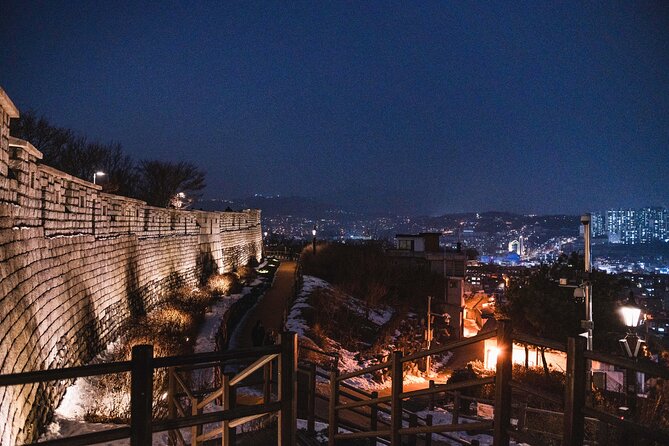
From Hyehwa, the route moves toward Naksan Park. The park stop is listed at about 10 minutes, but the walk around it and toward the wall forms a major part of the experience.
Here the guide explains how Seoul became Korea’s capital and how the city changed as its political role grew. That question gives the route a clear purpose. You are not only walking uphill for a view. You are following part of the city’s historical shape.
Naksan Park is also where the climb becomes more noticeable. The route rises, and you should expect stairs. Several people described the uphill sections as the main physical challenge, though others found the pace comfortable and said the stairs did not feel overwhelming because the guide stopped for stories and photographs.
I would call this an easy-to-moderate urban walk rather than a flat stroll. You do not need special hiking supplies, but comfortable shoes matter. If hills are difficult for you, ask yourself how you feel about repeated uphill sections before booking.
The park is particularly effective around sunset and after dark. As you gain height, more of Seoul’s lights come into view. The changing light gives the route a natural sense of progress, with the scenery improving as the group climbs.
A completely different kind of day:
- Best DMZ Tour Korea from Seoul (Red Suspension Bridge Optional)
★ 5.0 · 41,422 reviews - DMZ Tour: 3rd Tunnel, Option(Suspension Bridge, Boat) from Seoul
★ 5.0 · 21,373 reviews - DMZ tour south Korea from Seoul (NK experience hall, defector)
★ 5.0 · 20,599 reviews - Seoul: DMZ Tour with Optional Suspension Bridge
★ 4.8 · 5,277 reviews
Ihwa Mural Village and the social side of Seoul
The group then reaches Ihwa Mural Village, where about 20 minutes are set aside. The neighborhood is known for murals and hillside streets, but the guide also discusses its connection to less wealthy residents.
That social context matters. Without it, a mural village can become a backdrop for photographs. With it, you begin to think about who lived on Seoul’s hills, why these neighborhoods developed where they did, and how art and tourism affect local communities.
The stop offers a useful correction to the polished image of Seoul. The city is famous for technology, design, shopping, and entertainment, yet its hills also tell stories about income, housing, and access to opportunity. The tour brings those subjects into the evening without turning the walk into a formal lecture.
You should be respectful here. Ihwa is a residential area, not just an outdoor attraction. Keep voices down near homes, avoid blocking narrow paths, and take photographs with care.
The visit lasts long enough to hear the main ideas and enjoy the setting, but not long enough to inspect every mural. If you want an extended photography session, you may feel rushed. If you prefer a guided overview that keeps moving, the timing is sensible.
Walking the Seoul City Wall after sunset
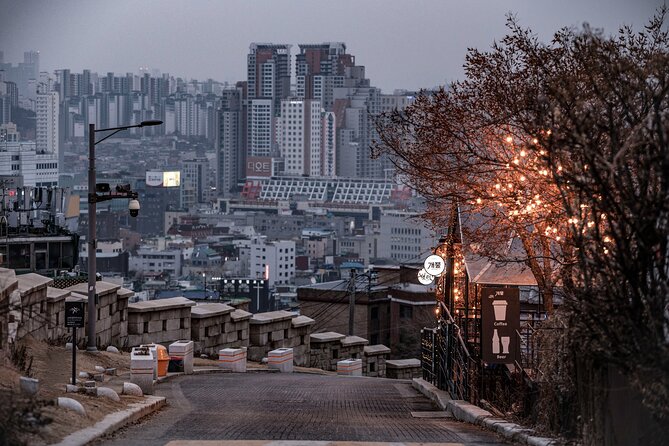
The high point of the tour is the Seoul City Wall, a historic monument running along the hill. This is where the old city and modern Seoul meet most clearly.
The wall provides the evening’s strongest sense of place. On one side, you have a surviving piece of the city’s historic defenses. On the other, the lights of a huge modern capital stretch into the distance. The contrast is the reason to book this walk rather than simply visit a viewpoint.
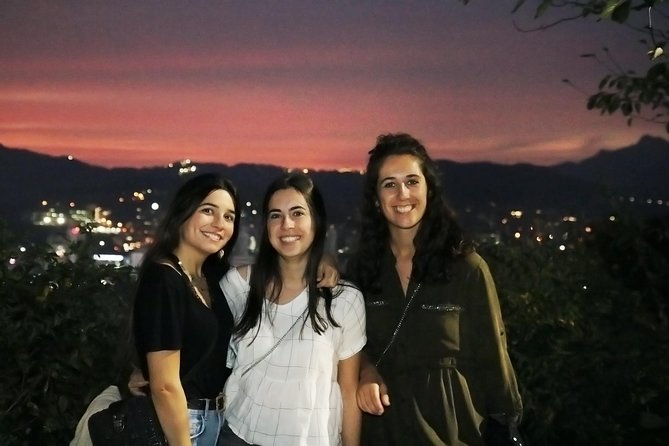
The timing can also bring sunset, depending on the season and start time. Several people especially valued seeing the sky change before the city lights took over. Even after sunset, the wall has a quieter, more romantic feel than Seoul’s major commercial districts.
The views are the main reward for the uphill effort. You will want your phone charged, since the tour includes several photo opportunities. A fully charged phone also helps if you need maps before or after the walk.
The city wall section is listed at about 20 minutes, though the actual experience includes the approach through Naksan Park and Ihwa. Do not read the stop times as a minute-by-minute schedule. The walk is built around pauses, explanations, and group pace.
The guides make or break the evening
This experience depends heavily on the person leading it. The strongest guide descriptions focus on humor, clear explanations, patience, and the ability to connect Korean history with present-day life.
Jessica received especially warm praise for combining detail with jokes and for making the group feel like friends exploring together. Ethan was described as calm, funny, and generous with answers and food suggestions. June was praised for explaining Korean history in an engaging way, while Smin was noted for strong English, warmth, and a good sense of humor.
Sumin and Leah were also praised for making the walk informative and friendly. Shin was described as an effective guide who brought useful knowledge to the route. The guide you receive may affect the tone, but the recurring strengths are clear: storytelling, cultural explanation, and willingness to answer questions.
There is one important qualification. At least one participant found the guide’s English difficult to follow and felt the storytelling was weaker than expected. That appears to be an exception among the supplied feedback, but it is still worth noting if detailed English explanations are central to your decision.
The group size can reach 20 people. That is not a private tour, and a larger group may make narrow paths or questions less personal. On the other hand, the size is still small enough for a shared walking experience rather than a large coach outing.
What the $31.98 price gets you
At $31.98 per person, the price is reasonable if you value interpretation rather than transport or admission tickets. The walk includes five meaningful locations, local cultural context, sunset or night views, and a guide who can answer questions about Korean society.
You are not paying for a meal, museum admission package, vehicle, or special equipment. The stops are free, and the tour is entirely on foot. That keeps the cost focused on the guide and the route.
The value is strongest for first-time visitors who might not find these streets on their own. You could reach Naksan Park independently, but the tour gives you a reason to pause at places that may otherwise seem incidental. The university culture discussion, social context of the hillside neighborhoods, and capital-city story add substance to the views.
The optional food session after the walk is not included. Treat it as a possible extra rather than part of the advertised price. If you want dinner, budget separately.
Who should book this walk
I would choose this tour if you want a compact introduction to Seoul’s history, current culture, and hillside neighborhoods. It suits solo visitors, couples, and curious first-time visitors who prefer local streets to a packed schedule of major monuments.
It is also a good choice for anyone who likes city views but wants to earn them. The climb is part of the experience, not an inconvenience to be ignored. You should be comfortable walking uphill and descending stairs afterward.
This may not suit you if you need a completely flat route, dislike group activities, or want extensive time for photography at each stop. It is also not the right pick if you expect a formal museum tour or a full meal included in the fee.
Plan to wear supportive shoes and bring water. Bug spray is a smart addition in warm weather, and a charged phone will help you make the most of the views. Since the activity depends on good weather, a poor-weather cancellation may lead to a new date or a full refund.
Booking, cancellation, and practical details
The tour lasts about two hours and returns to the meeting point at Hyehwa120, Daehak-ro. Confirmation is provided when you book, and the activity uses a mobile ticket.
Most people can take part, but the uphill route deserves honest attention. You do not need special walking equipment, yet this is not a level pavement walk. Give yourself time to arrive at the start, especially if you are using public transportation.
Free cancellation is available up to 24 hours before the start time for a full refund. Changes or cancellations made within 24 hours are not accepted for a refund, and the provider may cancel because of poor weather.
Should you book the Seoul Moonlight Walking Tour?
Yes, if you want a thoughtful evening walk with strong views and a local explanation of how Seoul developed. The most valuable part is the combination of places: Hyehwa’s performance culture, university life, hillside housing, Naksan Park, and the city wall all fit into one compact route.
Book it early in your stay if you want neighborhood ideas and food suggestions for later. Skip it if stairs are a serious problem or if you prefer to explore at your own pace without a group.
For $31.98, this is a good-value introduction to a less obvious side of Seoul. Bring good shoes, a charged phone, and enough energy for the climb. The city lights are waiting at the top.
FAQ
How long does the Seoul Moonlight Walking Tour last?
The tour lasts approximately two hours.
How much does the tour cost?
The price is $31.98 per person.
Where does the tour begin?
The meeting point is Hyehwa120, Daehak-ro, Jongno District, Seoul, South Korea.
Where does the tour end?
The activity ends back at the meeting point.
What locations does the tour visit?
The route includes Seoul University Hospital Medical Museum, Marronnier Park, Naksan Park, Ihwa Mural Village, and the Seoul City Wall.
Are admission tickets included?
The listed stops have free admission, and no separate admission fee is included or required.
Is dinner included?
No. An optional food session takes place after the tour, but the fee is not included.
How large can the group be?
The tour has a maximum of 20 participants.
Can I cancel for a full refund?
Yes. You can cancel at least 24 hours before the start time for a full refund. Cancellations made less than 24 hours before the start time are not refunded. If poor weather causes the provider to cancel, you will be offered another date or a full refund.
Just added in Seoul
- Seoul: Korean & English Language Exchange Global Party★ 5.0 · 28 reviews
- Your Personal Seoul Photographer!★ 4.1 · 15 reviews
- You’re Invited to Our Home in Seoul: The Only Cooking Class!★ 5.0 · 8 reviews
- From Seoul: Yongpyong Ski Day Tour with Transportation★ 4.9 · 40 reviews
- From Seoul: Hwacheon Ice Fishing and Lighting Festival Tour★ 4.5 · 4 reviews
- Seoul: Gangneung BTS K-Pop & K-Drama Filming Locations Tour★ 4.6 · 14 reviews
- Unique Native Experience : Han River Picnic, Board game, BBQ★ 5.0 · 3 reviews
- Seoul: Euljiro Gastroventure Tour★ 4.0 · 1 review
Walking Tours, compared.
Evening Dark History, Folklore & Ghost Story Walking Tour
Read our review →
Dark Side of the City and Ghost Stories Walking Tour
Read our review →
Gangnam Walking Tour on Youth and Society in Seoul Korea
Read our review →
Gyeongbok Palace and Bukchon Hanok Walking Tour
Read our review →
Best Walking Tour to Gyeongbok Palace Bukchon Hanok Village
Read our review →
Highlights & Hidden Gems With Locals: Best of Seoul Private Walking Tour
Read our review →
Street photoshoot and Seoul Hidden gem History Walking Tour
Read our review →Browse the lists this tour appears in