
Reviewed · FOOD & DRINK
Getting a good feel of local Seoul through food (itseoulgood)
Seoul tastes better with a guide. This three-hour walk pairs Kwangjang Market’s famous food stalls with Insadong’s old lanes, local dumplings, and a traditional teahouse. I like the small maximum of six people, and I like that every tasting is included, so you can focus on trying unfamiliar food instead of counting won.
The tour’s strongest points are its former-chef guide, Mike, and the way it mixes food with Seoul’s past and present. He explains what you are eating, helps you choose among confusing market stalls, and can offer restaurant and nightlife suggestions afterward. The main consideration is the pace: one hour is set aside for walking, and the food may be unfamiliar if you prefer cautious eating.
In This Review
- Key points before you book
- Why this food walk feels different
- Starting at 10:30 a.m. near Dongho-ro
- Insadong: dumplings, tea, and old Seoul
- Kwangjang Market: let someone else choose the stalls
- The back alleys between market and teahouse
- What makes the guide valuable
- Is $94 a fair price?
- Who should book this Seoul food tour?
- Practical details that shape the morning
- Should you book it?
- FAQ
- How long does the Seoul food tour last?
- What time does the tour start?
- Where does the tour begin?
- Where does the tour end?
- Is food included in the price?
- How many people can join the tour?
- Is the tour suitable for people with limited fitness?
- Can I cancel for a full refund?
Key points before you book
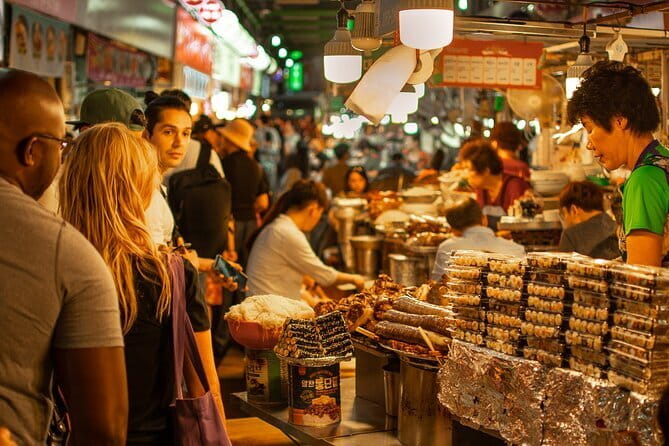
- Kwangjang Market guidance: Mike helps you sort through a crowded food market, where even locals may not agree on the best stalls.
- A real tea stop in Insadong: You taste traditional tea rather than the powdered version served in many places.
- Small group of six or fewer: This gives you more room to ask questions and follow the guide through narrow lanes.
- All planned food is included: Bring extra cash only if you want to buy more for later.
- A mix of old and new Seoul: The route includes market food, cultural back alleys, historical Insadong, shopping areas, and a traditional teahouse.
- Three hours with moderate walking: The start time is 10:30 a.m., and the tour finishes near Anguk Station.
Why this food walk feels different
Many Seoul food tours stay focused on dishes. This one tries to show you how food fits into the city around it. You move from one of Seoul’s oldest and largest food markets into smaller lanes and cultural areas, then finish with tea in a traditional setting.
That mix matters. Kwangjang Market gives you the noise, choices, and fast-moving energy of a major food hall. Insadong gives you older streets, shops, tea, and a slower cultural feel. You get two different versions of Seoul in one morning.
The group size is a real advantage. With no more than six people, you should have a better chance to hear explanations, ask about ingredients, and tell Mike what you can or cannot eat. The guide has run tours for eight years and previously worked as a chef, which is useful when a dish needs more than a quick name and a thumbs-up.
I also like the practical tone of the experience. Mike does not just point out food. He explains what makes a dish worth trying, shares local context, and offers recommendations for the rest of your stay. That can be especially helpful on a first visit, when a market full of unfamiliar signs and dishes can feel like a test you did not study for.
More Food Tours in Seoul:
- Seoul Street Food Market Tour
★ 5.0 · 1,226 reviews - Seoul: Night Market Food Tour with Local Guide
★ 4.9 · 943 reviews - Downtown Seoul Guided Food & Market Tour with 8+ Local Tastings
★ 5.0 · 580 reviews
Starting at 10:30 a.m. near Dongho-ro
The meeting point is at 407 Dongho-ro in Seoul’s Jongno District. The tour begins at 10:30 a.m., giving you a reasonable start after breakfast without pushing into the afternoon.
The exact route description presents Kwangjang Market and Insadong as the main food and cultural areas, with walking through smaller alleys between them. The listed stop order places Insadong first and Kwangjang Market second, while the broader description says the market comes first. I would confirm the day’s order with the guide if that matters to you, but the important point is that both areas are included.
The tour is near public transportation, which makes it easier to reach without arranging a private car. Since the start point is given as a full street address, check the map carefully before leaving. Seoul’s districts can have similar-sounding places, and arriving early is wise for a small-group tour.
Insadong: dumplings, tea, and old Seoul
Insadong is one of the best places in central Seoul to connect food with traditional culture. It is known for historic streets, shops, galleries, and tea houses, and this experience uses the area as more than a backdrop.
You begin with local dumplings and traditional tea. The tea is specifically described as real tea rather than powder, a small detail that tells you what kind of stop to expect. This is not simply a quick drink between attractions. The tea gives Mike room to explain what you are having and why traditional tea remains part of the area’s identity.
The dumplings make the stop approachable. If you are new to Korean food, a familiar format can help you settle in before the more varied market tastings. If you already know Korean food, the value is in trying the version selected by someone who has spent years tasting and comparing local dishes.
Insadong is also a good place to slow down. The tour includes time to stroll through the historical area, look at shops, and notice how old traditions sit beside modern Seoul. You should not expect a long shopping session, though. The walk has several food stops and only about three hours in total, so browsing will be limited.
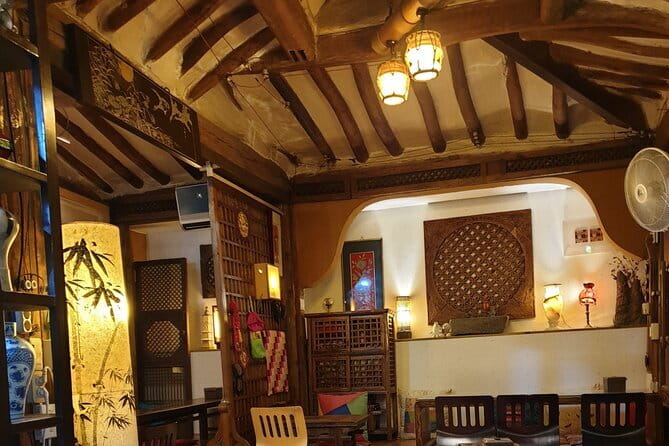
The final teahouse is described as one of the most traditional hidden teahouses in a traditional area and is near Toto’s Nostalgia Museum. The end point is at 169-2 Gwanhun-dong, close to Anguk Station. That is convenient if you want to continue exploring Insadong, visit nearby cultural sights, or return to your hotel by subway.
Kwangjang Market: let someone else choose the stalls
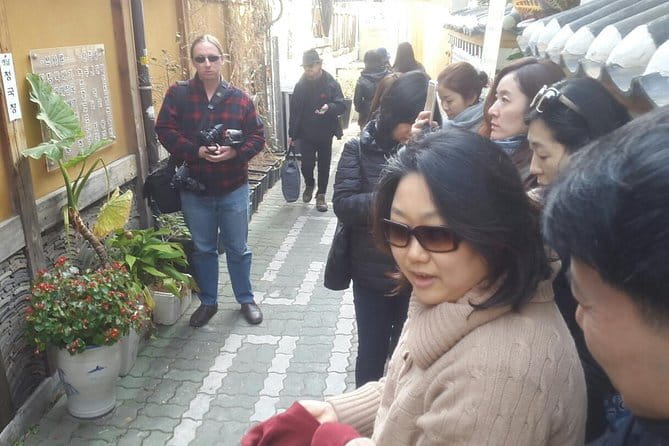
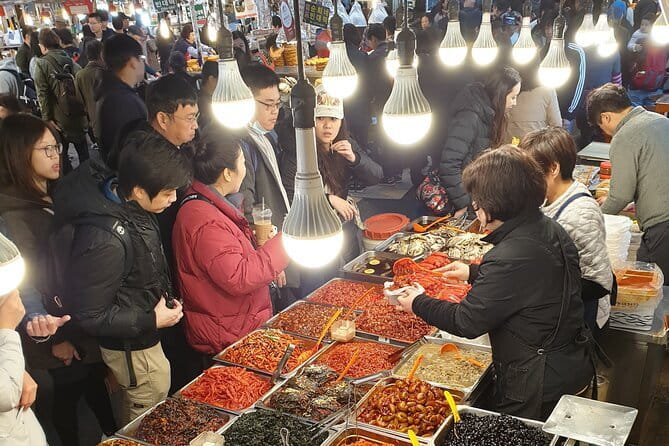
Kwangjang Market is the part of the tour where a guide earns his fee. The market is one of Seoul’s oldest and biggest food markets, and its many stalls can be intimidating when you do not know what you are looking at.
You will sample a broad range of food rather than sit down for one large meal. The exact dishes can vary, but the experience is designed around tasting many distinctive Korean items in small portions. That lets you try more without committing to a full serving of something you may not like.
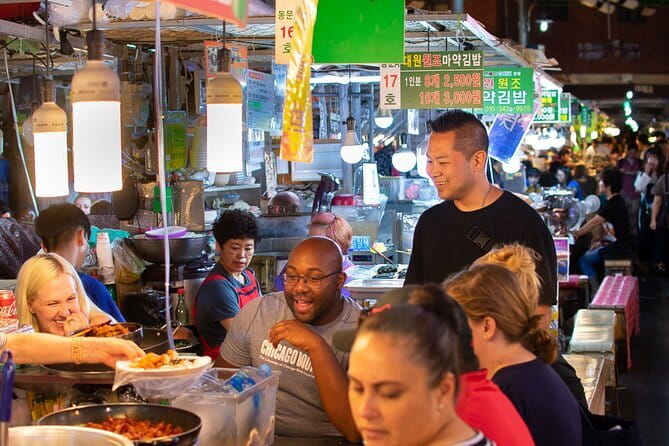
This is where Mike’s former-chef background becomes useful. He can explain flavors, ingredients, preparation, and the reasons a particular stall or dish deserves your attention. The food is not treated as a checklist. You get help understanding it.
The market is also a social place. You will see how people shop, eat, and move through an everyday part of Seoul. It may be crowded and noisy, and you may need to walk close to the group. That is normal for a market tour, but it is worth knowing if you want a quiet, slow meal.
I would come with an open mind and a light breakfast. The tour includes a lot of tastings, and the appeal is variety. You do not need to arrive hungry enough for a feast, but you should have room to sample many small items.
A completely different kind of day:
- Best DMZ Tour Korea from Seoul (Red Suspension Bridge Optional)
★ 5.0 · 41,422 reviews - DMZ Tour: 3rd Tunnel, Option(Suspension Bridge, Boat) from Seoul
★ 5.0 · 21,373 reviews - DMZ tour south Korea from Seoul (NK experience hall, defector)
★ 5.0 · 20,599 reviews - Seoul: DMZ Tour with Optional Suspension Bridge
★ 4.8 · 5,277 reviews
The back alleys between market and teahouse
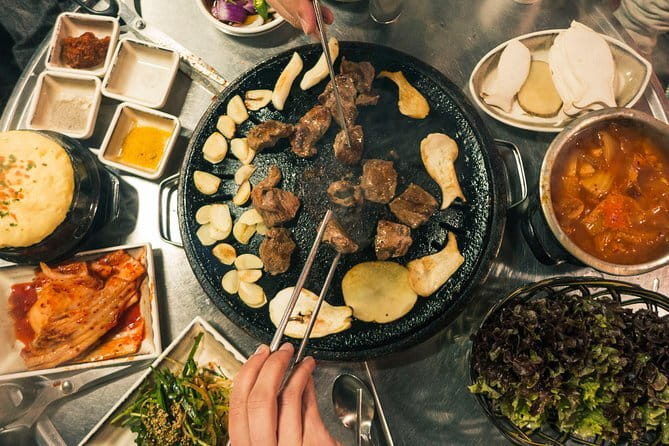
The walking portion lasts about one hour. This is not a tour where you spend all your time seated at food counters. You move through small lanes, modernized cultural areas, and older neighborhoods that show the contrast between Seoul’s new development and its traditional core.
The route’s value is in the transitions. A market can feel like a separate attraction if you enter, eat, and leave. Walking through the surrounding districts helps connect the food to the city. You see how older alleys and cultural spaces remain part of a modern capital.
Expect a moderate level of physical activity. The tour requires walking for the remaining hour, and the notes recommend a moderate fitness level. Wear comfortable shoes and avoid carrying more than you need. The narrow lanes and market setting are easier to enjoy when you are not managing a large bag.
The walking time may be a drawback for anyone with limited mobility or for visitors hoping for a purely food-focused outing. Service animals are allowed, but the tour still involves market crowds, streets, and a fair amount of movement.
What makes the guide valuable
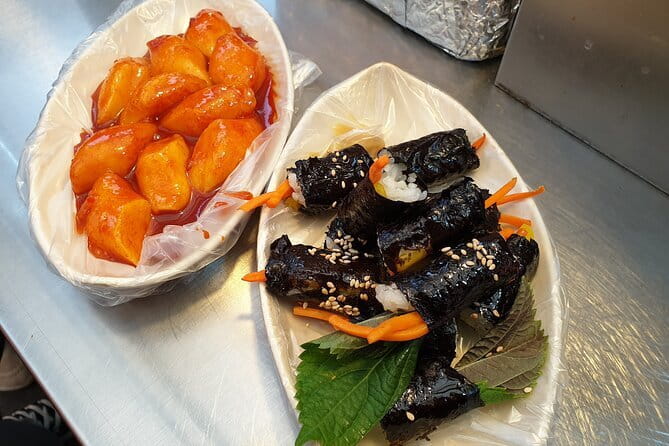
The most consistent praise for this experience centers on Mike’s food judgment, clear English, friendly manner, and flexibility with food choices. Those traits matter more than a long list of stops. A food tour succeeds when you feel safe trying something unfamiliar and understand what you are tasting.
Mike has led tours for eight years and has worked as a chef. He also speaks English very well, which should make it easier to discuss dietary preferences, ask detailed questions, or request a recommendation for later in your trip.
Past participants have returned for a second tour with him, which suggests that the experience is not treated as a one-time script. The guide appears comfortable adjusting to the group and continuing the conversation beyond the scheduled stops. He has also arranged a rice wine tasting on at least one outing, though that is not listed as a guaranteed part of this tour. Do not book expecting alcohol, but you can ask what is planned for your date.
The guide’s recommendations may be one of the most useful extras. After three hours of eating and walking, you will have a better idea of the food you like, the neighborhoods you want to revisit, and the kinds of places worth seeking out elsewhere in Seoul.
Is $94 a fair price?
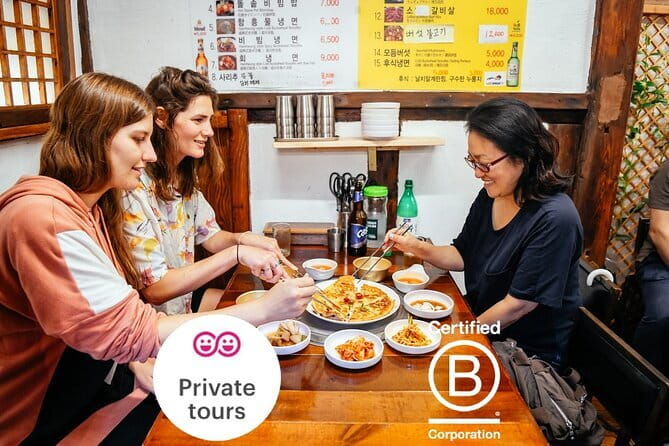
The price is $94 per person. That is not a bargain if you compare it with buying individual snacks at a market on your own. You can certainly spend less on food in Seoul.
The value comes from access, selection, and explanation. All food included in the tour fee means you are not paying extra at each planned stop. You are also paying for someone to identify good places, order or explain items, and help you avoid wasting money on food that does not suit you.
The maximum group size of six improves that value. A large food tour can leave you waiting behind other people or struggling to hear. Here, the guide can spend more time with each person, and the group can move through small spaces with less trouble.
I would call the price reasonable for a first or second day in Seoul, especially if you want a quick introduction to Korean food and neighborhoods. It is less attractive for a confident Seoul regular who already knows Kwangjang Market and Insadong well.
The included food is also helpful for budgeting. Bring cash only if you want extra purchases, souvenirs, or additional market items. You are not required to keep paying for each tasting as the morning continues.
Who should book this Seoul food tour?
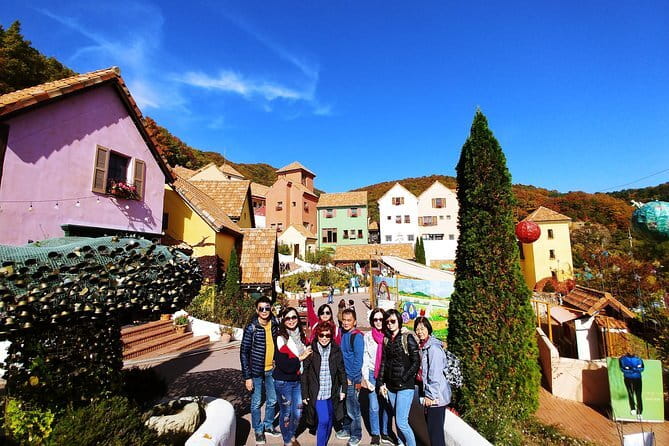
I would recommend it most strongly for first-time visitors who want guidance without joining a large group. The tour gives you food, neighborhood context, and a starting point for further exploration.
It also suits people who like trying many dishes instead of eating one formal meal. You will get more out of it if you enjoy asking questions and are willing to taste unfamiliar items.
Food-focused couples and small friend groups should find the format comfortable. Solo visitors may also appreciate the small group, since the guide creates a natural setting for conversation.
This is not the best pick if you want a long sit-down lunch, a cooking lesson, or a detailed historical tour of every site in Insadong. It is a compact introduction, not a full-day program. You should also consider another activity if an hour of walking or market crowds would be difficult.
Practical details that shape the morning
You receive confirmation when you book, and the experience uses a mobile ticket. The tour starts at 10:30 a.m. and lasts about three hours.
The end point is Toto’s Nostalgia Museum at 169-2 Gwanhun-dong, near Anguk Station. That makes the finish useful for continuing around Insadong rather than sending you back to the starting point.
Free cancellation is available if you cancel at least 24 hours before the local start time. Changes or cancellations inside that window are not accepted for a refund. The experience also requires a minimum number of people, so a cancellation by the provider for that reason results in another date or experience, or a full refund.
The tour is limited to six people and allows service animals. Since the activity is near public transportation, you can reach it without private transport, but you should allow extra time to find the specific starting address.
Should you book it?
Book this experience if you want a trusted introduction to Korean food, a very small group, and a guide who can explain both the dishes and the neighborhoods around them. The combination of Kwangjang Market, Insadong, traditional tea, dumplings, alley walks, and included tastings gives you a useful first taste of central Seoul.
Skip it if you already know the market well, want a quiet restaurant meal, or dislike walking through crowded food areas. For most first-time visitors, though, $94 buys more than snacks. It buys a confident way into Seoul’s food culture, plus recommendations that can improve the rest of your trip.
FAQ
How long does the Seoul food tour last?
The experience lasts approximately three hours. About one hour is set aside for walking.
What time does the tour start?
The tour starts at 10:30 a.m.
Where does the tour begin?
The meeting point is 407 Dongho-ro in Seoul’s Jongno District, South Korea.
Where does the tour end?
It ends at Toto’s Nostalgia Museum, 169-2 Gwanhun-dong, Jongno District, near Anguk Station.
Is food included in the price?
Yes. All food included as part of the tour is covered by the tour fee. Bring extra cash if you want to buy additional items.
How many people can join the tour?
The maximum group size is six people.
Is the tour suitable for people with limited fitness?
The tour requires a moderate level of physical fitness because about one hour is spent walking.
Can I cancel for a full refund?
Yes, if you cancel at least 24 hours before the experience start time. Cancellations or changes made less than 24 hours before the start are not accepted for a refund.
Just added in Seoul
- Seoul: Korean & English Language Exchange Global Party★ 5.0 · 28 reviews
- Your Personal Seoul Photographer!★ 4.1 · 15 reviews
- You’re Invited to Our Home in Seoul: The Only Cooking Class!★ 5.0 · 8 reviews
- From Seoul: Yongpyong Ski Day Tour with Transportation★ 4.9 · 40 reviews
- From Seoul: Hwacheon Ice Fishing and Lighting Festival Tour★ 4.5 · 4 reviews
- Seoul: Gangneung BTS K-Pop & K-Drama Filming Locations Tour★ 4.6 · 14 reviews
- Unique Native Experience : Han River Picnic, Board game, BBQ★ 5.0 · 3 reviews
- Seoul: Euljiro Gastroventure Tour★ 4.0 · 1 review
Food & Drink, compared.
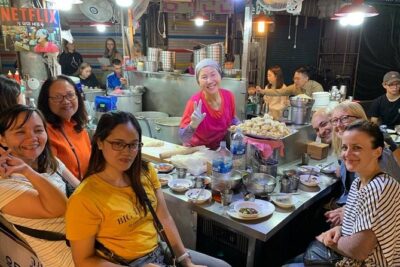
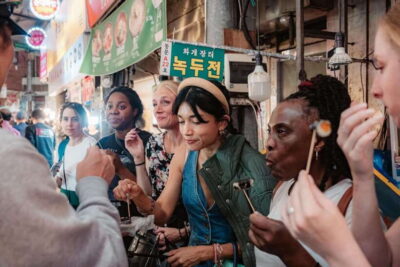
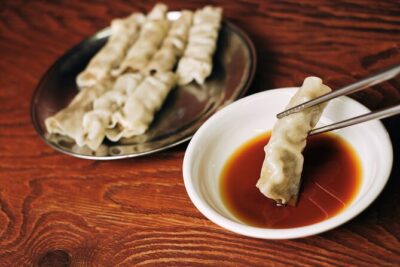
Downtown Seoul Guided Food & Market Tour with 8+ Local Tastings
Read our review →
Seoul Night Palace & Market Food Tour with Vehicle
Read our review →
Seoul Fun Food Tour: 12 different food tastings
Read our review →
The Award-Winning PRIVATE Food Tour of Seoul: The 10 Tastings
Read our review →
Baseball Game Ticket with Dinner/Beer with the host
Read our review →Browse the lists this tour appears in