
Reviewed · HISTORICAL TOURS
Incheon Port History Tour by 19th Century Electric Car, KTourTOP10
Old Incheon rolls by in a small electric car. This short tour gives you a pleasant look at the city’s open-port district, with stops near Chinatown, the Jjajangmyeon Museum, and Jemulpo Club. I like the unusual 19th-century-style vehicle and the way the route links Korean, Chinese, Japanese, and foreign history in one compact outing.
I also like the small-group setup, with a maximum of 20 people and a tour price of $45 per group for up to three people. The main caution is communication: one experience had an English-speaking guide who provided patient explanations, but another had a pleasant driver with no English and prerecorded commentary. Confirm the operating details before you go, especially if your time in Incheon is limited.
In This Review
- Quick points about the electric-car tour
- Why old Incheon is worth an hour
- Riding through Incheon Art Platform
- The Cheongiljogyeji Stairway and the old foreign quarters
- Haean Catholic Church and Chinese immigrant life
- Jjajangmyeon Museum and the story of Gonghwachun
- Euiseon-dang, a quiet shrine in Chinatown
- Songwol-dong Donghwa Village and the cheerful streets
- Chohanji and Three Kingdoms Mural Street
- Jemulpo Club and Incheon’s foreign residents
- Is $45 a fair price for up to three people?
- Guide quality and the English-language question
- Timing, meeting point, and weather concerns
- Who should book this Incheon tour?
- Should you book the electric-car tour?
- FAQ
- How long does the Incheon Port History Tour last?
- How much does the tour cost?
- Where does the tour begin?
- Where does the tour end?
- What vehicle is used?
- What sights are included?
- Is food included?
- Can I cancel for a refund?
Quick points about the electric-car tour
- The 50-minute route covers old Incheon efficiently: You pass several historic streets and landmarks without making a long walking circuit.
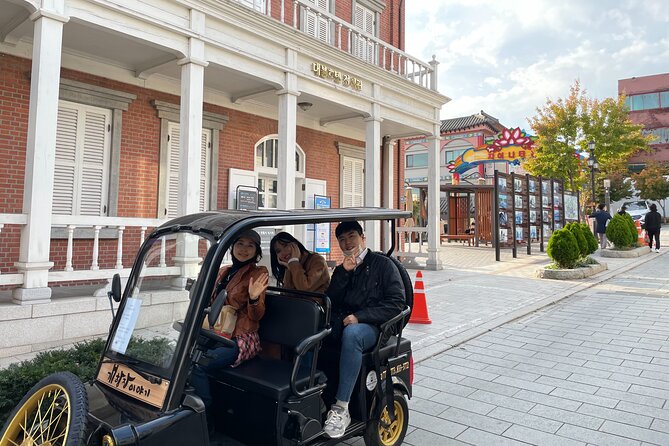
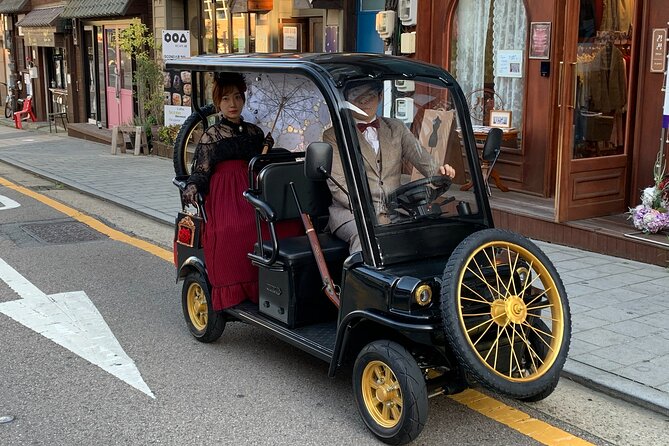
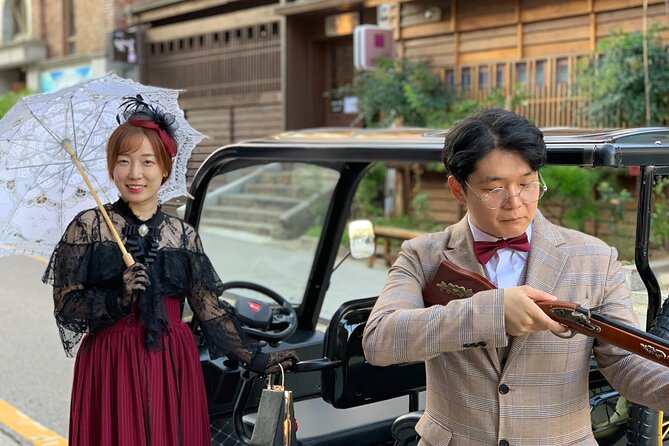
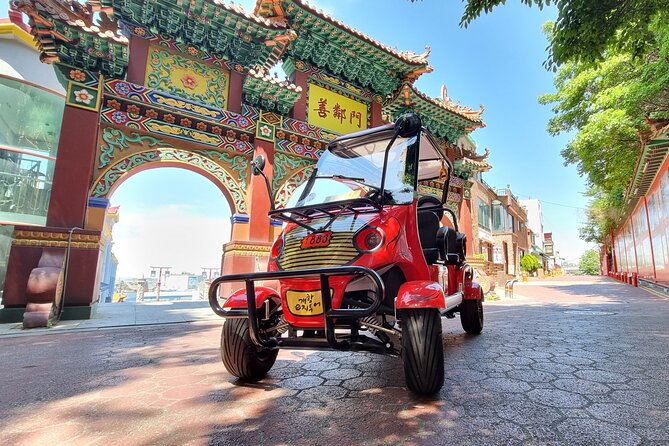
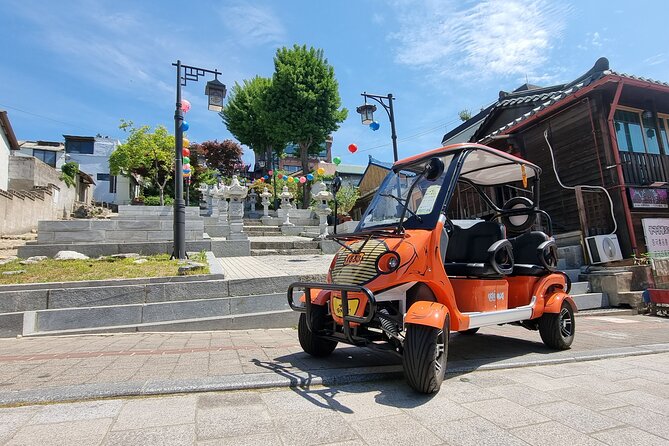
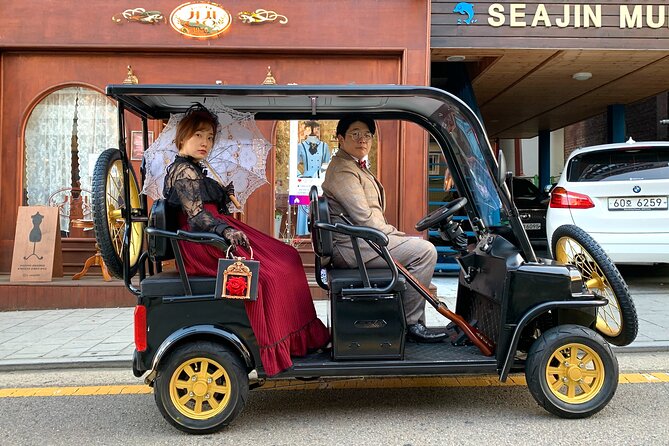
- The electric vehicle is the main attraction: Its old-fashioned design gives the ride a gentle sightseeing feel, while the electric motor keeps it quiet and eco-friendly.
- Chinatown is only one part of the story: The route also covers Chinese and Japanese settlement areas, Catholic history, immigration, murals, and foreign social life.
- Jjajangmyeon gets its own museum: The museum occupies the former site of Gonghwachun, the restaurant associated with the first original jjajangmyeon.
- Guide quality can shape the experience: Soonie received especially warm praise for adjusting a tour time and explaining old Incheon carefully, while language support has not always been consistent.
- The price works best for a small party: At $45 for up to three people, the cost is easier to justify when shared.
Why old Incheon is worth an hour
Incheon Port opened in 1883, changing the city into a major gateway for foreign trade and settlement. That history is still visible in the area around Open Port Street, where Chinese, Japanese, Korean, and Western influences appear close together.
You will not get a long academic lecture in 50 minutes. Instead, you get a moving introduction to the district, with brief views of buildings, streets, stairs, religious sites, food history, and public art. I see this as a good first look rather than a complete study of Incheon.
The electric car matters because it saves your legs and time. The historic quarter includes stairs, sloping streets, and several nearby districts. You can sit back, listen, and get a sense of how the area fits together before deciding where to return on foot.
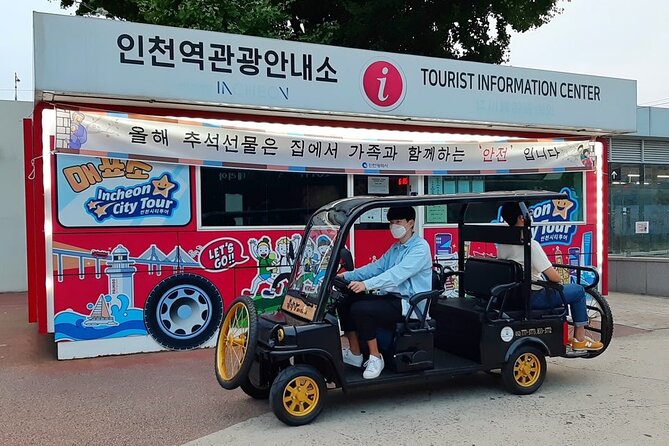
The experience begins at 266 Jemullyang-ro in Jung-gu and ends at the same meeting point. Several departure times are available, which helps if you are fitting the tour around a flight, a port visit, or a short stay in the city.
More Incheon trips:
- Private Airport Transfer : Incheon to/from Seoul (up to 7 pax)
★ 5.0 · 344 reviews - Flexible Private Guided Tour in Seoul (Optional Incheon Layover)
★ 5.0 · 323 reviews - Private Airport Transfer * Incheon Airport <-> Seoul (1-5 people)
★ 5.0 · 235 reviews
Riding through Incheon Art Platform
The Incheon Art Platform is one of the first important stops. Its red-brick buildings hold the story of the open port while now serving as a place for exhibitions and performances in art, music, literature, and film.
This stop gives you a useful contrast. The buildings are tied to the city’s past, but the site is used for present-day cultural activity. You may not have time to explore its programs during a 50-minute ride, but seeing it helps show that old Incheon is not only preserved architecture.
The short format is both helpful and limiting here. You get an outside view and an introduction, but this is not a gallery visit with time to study exhibitions. If you want to spend time inside the art spaces, plan a separate visit after the car ride.
The Cheongiljogyeji Stairway and the old foreign quarters
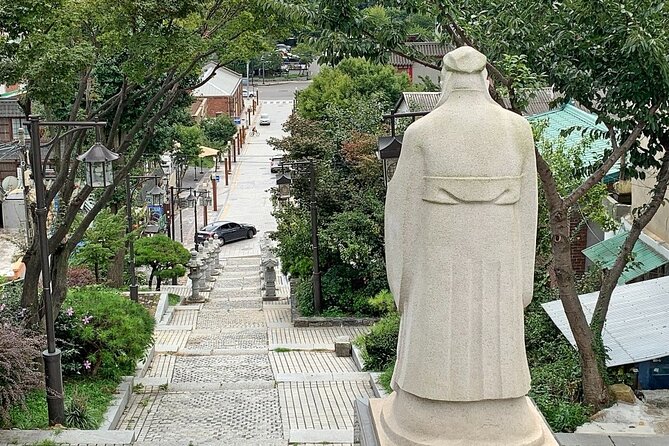
The Cheongiljogyeji Stairway is tied to the former foreign settlement areas. The word Jogye refers to a designated area for foreign residents or trade, and the stairway area is divided around Chinese and Japanese buildings.
This is one of the more useful parts of the route because it shows that Incheon’s port story was not limited to one overseas community. The nearby connection to Jayu Park also gives the route a broader setting, with views toward Incheon Sea available from the area.
You should not expect a long stop or a serious walking tour of every building. The car gives you a quick orientation, and some sights may be pointed out rather than explored. That is fine if you want an overview, but less satisfying if your goal is detailed architecture or extended photography.
The stairs also explain why the electric vehicle can be practical. You can cover the area without turning a short historical outing into a tiring walk.
Haean Catholic Church and Chinese immigrant life
Haean Catholic Church adds a religious and community story to the port district. It was created in the 1960s for devoted Catholics among the overseas Chinese community in Incheon.
This stop helps correct a common impression of Chinatown as only a food and shopping district. The area also reflects the daily lives, faith, and challenges of people who left their homeland and built new lives near the port.
The church is historically important, but the tour does not present it as a long interior visit. Treat it as one piece of the wider route. If you want to understand how immigrant communities developed around the port, this brief stop is useful because it moves beyond the most familiar tourist images.
More History Tours in Incheon:
- From Busan: Gyeongju UNESCO World Heritage Guided Day Tour
★ 4.8 · 1,250 reviews - Gyeongju UNESCO World Heritage Guided Day Tour from Busan
★ 5.0 · 660 reviews - Seoul: Evening Dark History, Folklore & Ghost Story Walking Tour
★ 5.0 · 593 reviews - Old Korea Thousand History Tour of Gyeongju from Busan
★ 5.0 · 518 reviews
Jjajangmyeon Museum and the story of Gonghwachun
The Jjajangmyeon Museum is probably the most playful stop on the route. It occupies the site of Gonghwachun, the restaurant associated with the first original jjajangmyeon.
Inside, displays cover the dish, the restaurant, and related objects. The museum connects food with migration and port life, showing how Chinese cooking became part of everyday Korean culture.
I like this stop because food history makes the past easier to understand. You are not simply looking at an old building. You are learning how a dish tied to Chinese immigrants became a familiar Korean meal.
The drawback is that the museum may feel more specialized than essential if you are not interested in food culture. The 50-minute route also means you should not count on an extended museum visit. The car tour introduces the site, while a separate visit would give you more time with the displays.
Euiseon-dang, a quiet shrine in Chinatown
Euiseon-dang is a Chinese-style shrine inside Chinatown. Chinese immigrants built it as a place of comfort while dealing with the loneliness and difficulty of life away from home.
This is a more reflective stop than the mural streets or food museum. It points to the emotional side of migration, not just trade, restaurants, and colorful façades. The port brought opportunity, but it also brought separation and hardship.
The tour’s value here depends heavily on explanation. A guide who can describe the shrine’s purpose adds much more than a passing glimpse from the car. If the commentary is prerecorded or limited by language, you may see the structure without fully understanding why it matters.
That communication issue is worth taking seriously. One experience had a driver who was pleasant but did not speak English, making it difficult to ask questions. If you need detailed English explanations, confirm that support before arrival.
Songwol-dong Donghwa Village and the cheerful streets
Songwol-dong began as an area where foreigners lived after Incheon Port opened. Over time, younger residents moved away and mainly older people remained. The area was later remade as Donghwa Village, a storybook-themed neighborhood.
This is where the tour becomes more colorful and lighthearted. Fairytale streets and themed decorations make an easy contrast with the serious history of trade, immigration, and colonial-era change.
The decoration can also feel cheesy. That is not necessarily a problem. Several parts of old Incheon mix genuine history with later tourism projects, and Donghwa Village is clearly more playful than historic. I would enjoy it as a quick visual break, not mistake it for an untouched old neighborhood.
If you have children or want colorful photographs, this stop may be a favorite. If you prefer plain historic streets, it may seem less convincing than the port buildings and religious sites.
Chohanji and Three Kingdoms Mural Street
The Chohanji Mural Street and Three Kingdoms Mural Street use painted scenes from famous Chinese historical novels. The murals bring stories from Chohanji and the Three Kingdoms into the streets of Chinatown.
For someone familiar with those tales, the murals may offer extra meaning. For everyone else, they still provide a striking street setting, though the characters and scenes may not be easy to identify without explanation.
This is another place where a guide can make a real difference. A short explanation of the stories gives the murals context. Without it, you may simply see a series of colorful wall paintings while the car moves along.
The stop fits the tour’s purpose well. You get a quick sense of how Chinatown presents Chinese cultural traditions, both through older religious buildings and newer public art.
Jemulpo Club and Incheon’s foreign residents
Jemulpo Club is one of the strongest historical stops. It began in 1881 as a social club for foreigners living in Incheon. The building included a social room, billiard room, and reading room, with a tennis court outside.
Later, in 1914 during the Japanese colonial period, its role changed. The stop therefore links foreign settlement with the political changes that followed the opening of the port.
The building helps you picture the social world of foreign residents. This was not simply a place to conduct business. It was also a club for conversation, recreation, reading, and social life.
Admission to Jemulpo Club is listed as free. The tour includes about five minutes at the stop, so you should expect a short look rather than a long museum visit.
I consider Jemulpo Club one of the best reasons to choose this route over a simple Chinatown ride. It gives the port district a wider international frame and shows how different groups lived and socialized in the same city.
Is $45 a fair price for up to three people?
The price is $45 per group, with up to three people included. That makes the math fairly reasonable for a couple or small family. Split three ways, it costs $15 per person before any food or other spending.
The value depends on what you want from the outing. You are paying for a 50-minute ride, an old-style electric vehicle, and a guide. You are not paying for a meal, snack, or a long museum program. Those are separate.
I would call it fair for a small party that wants a quick orientation without arranging its own route. The electric car adds a novelty factor, and the vehicle can save time in an area where walking between every stop may be tiring.
The value is weaker if you expect a full hour of detailed guiding or extensive stops. One experience felt short for the price, even though the vehicle and guide were well liked. Read the duration carefully: this is approximately 50 minutes, not a half-day tour.
Guide quality and the English-language question
The guide can make or break this experience. Soonie received especially strong praise for patiently explaining old Incheon and accommodating a last-minute request to move to a later departure time.
That kind of personal help is valuable. A flexible, engaged guide can turn a simple ride into a clear story about the port, the neighborhoods, and the people who shaped them.
But English service has not been consistent. One ride relied on prerecorded commentary because the driver did not speak English, and that made questions difficult. You should confirm the language arrangement if asking questions is important to you.
The overall rating is 3.9 from eight reviews, which suggests a mixed but generally workable experience. The strongest praise goes to the friendly service, the fun vehicle, and the chance to see old Incheon in a short period. The sharpest criticism concerns a missed departure and weak communication.
Timing, meeting point, and weather concerns
The tour starts and finishes at 266 Jemullyang-ro, Jung-gu, Incheon. It uses a mobile ticket, and confirmation is sent at booking. Several tour times are offered, which makes it useful for a tight schedule.
Still, do not treat the departure as something to handle casually. One family waited 45 minutes during a long layover and received no response by text. If this tour is your only plan before a flight, confirm that the vehicle is operating before you arrive and leave enough time for airport transport.
The tour has a maximum of 20 people, though the price is set for a group of up to three. Service animals are allowed, and the meeting point is near public transportation. Most people can participate.
Good weather is required. If poor weather cancels the tour, you can choose another date or receive a full refund. The same applies if the minimum number of participants is not met. You can cancel for a full refund if you do so at least 24 hours before the start time. Changes or cancellations inside that window are not accepted.
Who should book this Incheon tour?
I would recommend it to you if you have limited time, want a gentle introduction to old Incheon, or prefer not to walk between every stop. It also suits small groups, especially when three people can share the $45 cost.
It is a good fit for a flight layover only if you confirm the operation and allow plenty of extra time. The tour itself lasts 50 minutes, but transport delays and an uncertain departure could create stress.
Families may enjoy the electric car, fairytale streets, murals, and food museum. History-minded visitors will get more from Jemulpo Club, the foreign settlement area, Euiseon-dang, and Haean Catholic Church.
I would hesitate to recommend it if you want a long, detailed English lecture or time inside every museum. In that case, a walking visit with confirmed language support may suit you better.
Should you book the electric-car tour?
Book it if you want a short, easy introduction to Incheon’s port district and like the idea of seeing Chinatown, murals, old foreign quarters, and Jemulpo Club from an unusual vehicle.
Before paying, confirm the departure and language support. That one step addresses the two biggest concerns: a missed start and limited opportunities to ask questions.
For a small party sharing the price, the tour offers fair value and a pleasant way to get your bearings fast. It will not replace a full historical tour, but it can show you which parts of old Incheon deserve a closer look on foot.
FAQ
How long does the Incheon Port History Tour last?
The tour lasts approximately 50 minutes.
How much does the tour cost?
The price is $45 per group for up to three people.
Where does the tour begin?
The meeting point is 266 Jemullyang-ro, Jung-gu, Incheon, South Korea.
Where does the tour end?
The tour ends back at the meeting point.
What vehicle is used?
The experience uses an old-style electric car designed to resemble a 19th-century vehicle.
What sights are included?
The route includes Incheon Art Platform, Cheongiljogyeji Stairway, Haean Catholic Church, Jjajangmyeon Museum, Euiseon-dang, Songwol-dong Donghwa Village, Chohanji and Three Kingdoms Mural Street, and Jemulpo Club.
Is food included?
No. Meals and snacks are not included.
Can I cancel for a refund?
You can cancel at least 24 hours before the start time for a full refund. Poor-weather cancellations or cancellations caused by not meeting the minimum number of participants offer a different date or a full refund.
Just added in Incheon
- Seoul Incheon Airport (ICN) to Seoul – Arrival Private Transfer★ 5.0 · 1 review
- Chinatown Incheon★ 5.0 · 1 review
- Private Transfer Incheon Cruise Terminal from and to Seoul★ 5.0 · 10 reviews
- Private Guided Tour in DMZ with Lake (Optional Incheon Layover)★ 5.0 · 9 reviews
- Private Transfer Incheon Airport<->Seoul(12 passengers)★ 5.0 · 2 reviews
- Private Airport Transfer: Seoul City to Incheon Airport 1-12 pax★ 4.5 · 11 reviews
- Incheon Airport ⇄ Seoul: Stress-Free Rides, Just for You!★ 5.0 · 1 review
- Private Airport Transfer – Incheon Airport ⇔ Seoul (Up to 7 or 11 people)★ 5.0 · 42 reviews
Historical Tours, compared.
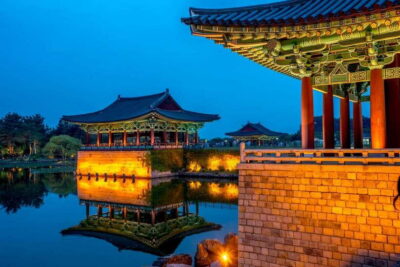
Gyeongju UNESCO World Heritage Guided Day Tour
Read our review →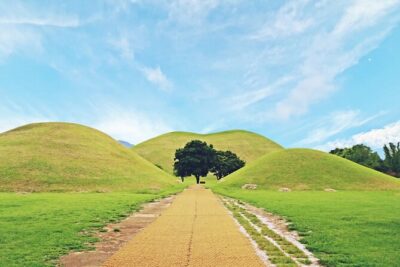
Gyeongju UNESCO World Heritage Guided Day Tour from Busan
Read our review →
Evening Dark History, Folklore & Ghost Story Walking Tour
Read our review →
Old Korea Thousand History Tour of Gyeongju from Busan
Read our review →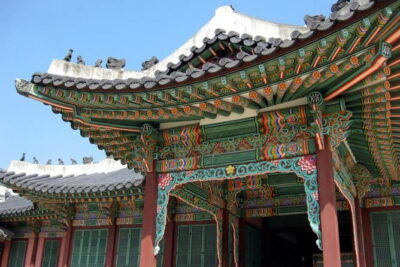
Hanbok Photoshoot and History Tour at Gyeongbokgung Palace
Read our review →
UNESCO Heritage Tour Including Bulguksa Temple
Read our review →
Gyeongju UNESCO World Heritage Sites and History Full-Day Tour with Lunch
Read our review →Browse the lists this tour appears in