
Reviewed · TEMPLE STAYS
Gyeongju: UNESCO Heritage Tour Including Bulguksa Temple
Ancient Korea is spread across a very walkable day. I like the way this 8-hour Gyeongju tour links Bulguksa Temple, Seokguram Grotto, royal tombs, and palace ruins without making you sort out buses or taxis. I also like the human touch: guides such as Sue and Steve have earned praise for clear stories, humor, and calm handling of crowds. The main drawback is the price, especially if you already stay in Gyeongju and could arrange some visits yourself.
Gyeongju rewards context. A grassy mound can look simple until you learn it held a Silla king, and a stone tower becomes far more interesting when you understand its role in early astronomy. The schedule is full, so you will see the major sights efficiently, but you should not expect long, unhurried visits at every stop.
In This Review
- Key points to know before booking
- Why Gyeongju makes a good full-day outing
- Gyochon Village and the Choi Clan home
- Daereungwon Tombs and the world beneath the grassy mounds
- Cheomseongdae, a stone tower built for the sky
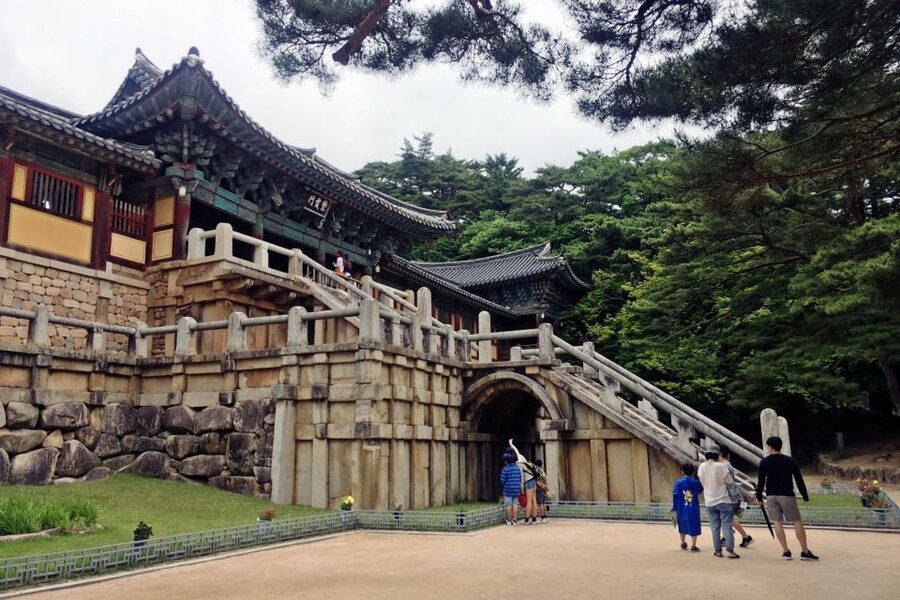
- Bulguksa Temple, the day’s essential monument
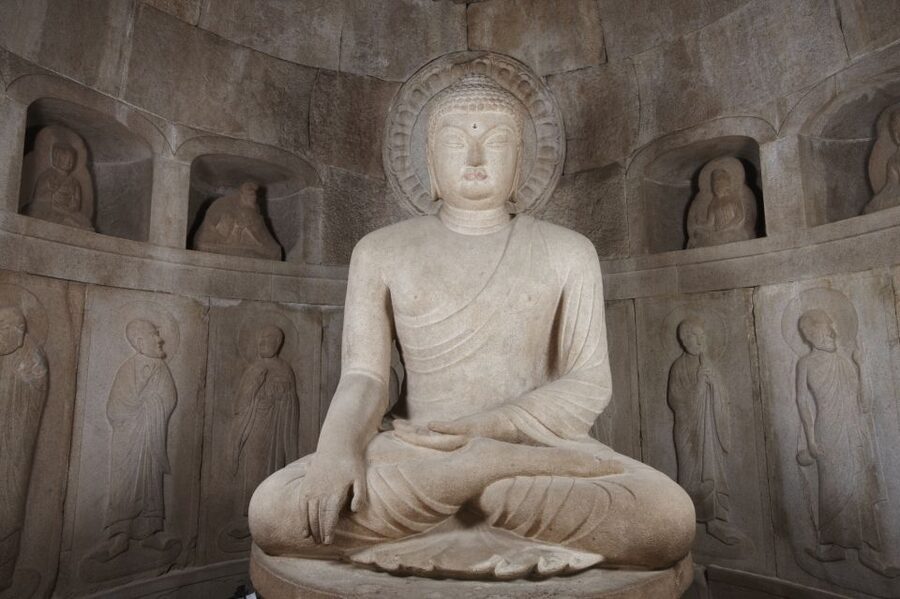
- Seokguram Grotto and the granite Buddha
- Lunch as part of the cultural lesson
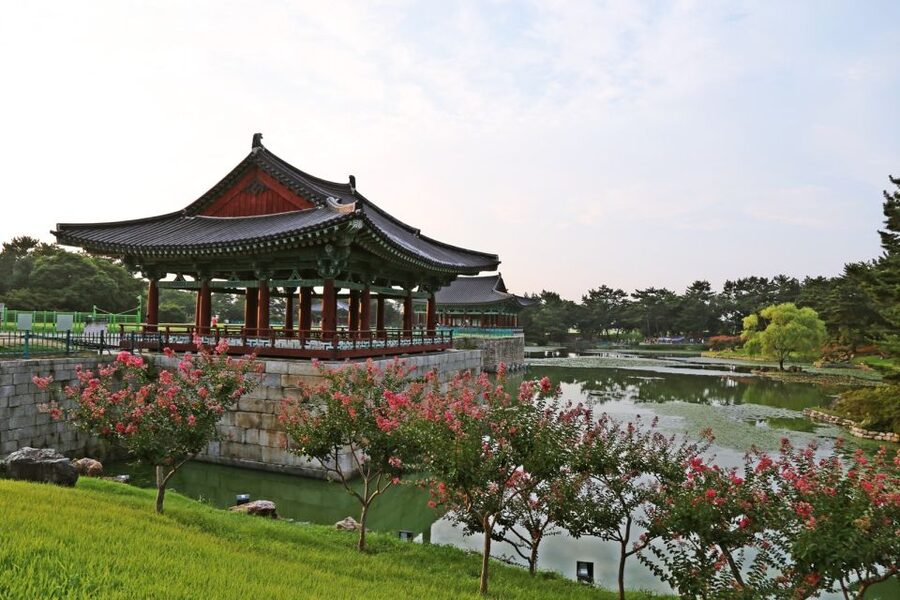
- Wolji Pond at the Donggung Palace site
- Transport, timing, and the pace of the day
- Who should book this Gyeongju tour?
- Should you book it?
- FAQ
- Where does the tour begin?
- Where does the tour end?
- How long does the experience last?
- Is transportation included?
- Which sites are visited?
- Is lunch included?
- Are entrance fees included?
- Is the tour private or shared?
- Is the tour conducted in English?
- Can I cancel the booking?
Key points to know before booking
- Bulguksa and Seokguram anchor the day: These UNESCO sites provide the tour’s strongest cultural and artistic moments.
- Hotel pickup and drop-off are included: You can begin and end in Busan or Gyeongju, with an air-conditioned van handling the long connections.
- Sue and Steve receive especially warm praise: Their approach combines historical explanation, humor, photography help, and practical care.
- Lunch and entrance fees are covered: That makes the $189 cost easier to judge, though the price may still feel high from Gyeongju.
- The schedule covers six major stops: Expect a fast-moving day with roughly one hour at most principal sites.
- A small group or private format is available: This is useful if you want questions answered and timing adjusted when crowds or traffic interfere.
Why Gyeongju makes a good full-day outing
Gyeongju was the capital of the Silla Dynasty for roughly a millennium. Today, its royal tombs, Buddhist monuments, observatory, village lanes, and palace remains sit among open fields and wooded hills rather than behind one large museum entrance.
That is why Gyeongju is often called a museum without walls. The city works best when you connect the places. Bulguksa shows the religious and architectural ambition of Silla Korea. Seokguram presents a refined Buddhist image in stone. Daereungwon reveals how rulers were buried. Cheomseongdae points to scientific skill, while Wolji Pond shows how royal life included carefully designed gardens and pavilions.
I think this tour is most useful from Busan. Gyeongju is close enough for a day trip, but its important sites are spread out. Public transport can take time, and a taxi plan requires more coordination than many first-time visitors want. Here, the guide and driver keep the day moving while adding the history that makes each stop matter.
The tour costs $189 per person. That includes transport, an English-speaking guide, lunch, water, and all entrance fees. For a private booking or a small group, that package can be fair, particularly if you are traveling as a couple or family and value convenience. If you are already based in Gyeongju, the price deserves closer thought. One past booking specifically felt the Gyeongju departure cost much more than a similar Busan tour, so compare options before paying.
More History Tours in Gyeongju
- From Busan: Gyeongju UNESCO World Heritage Guided Day Tour
★ 4.8 · 1,250 reviews - Gyeongju UNESCO World Heritage Guided Day Tour from Busan
★ 5.0 · 660 reviews - Old Korea Thousand History Tour of Gyeongju from Busan
★ 5.0 · 518 reviews
Gyochon Village and the Choi Clan home
Gyochon Traditional Village gives you a softer opening than a temple or burial ground. Its hanok houses, tiled roofs, and quiet lanes offer a look at traditional Korean architecture and the social world of prominent families.
The House of the Gyeongju Choi Clan is the key point. Your guide can explain the family’s local importance and the craftsmanship of the home, while the village itself gives you time to notice details at street level. This is not a grand monument in the same way as Bulguksa. Its value is more personal. You see how status, family life, and design were expressed in a historic Korean settlement.
When available, you may also try Gyeongju Gyodong Beopju, a traditional liquor associated with the area. Treat this as a possible local taste rather than a guaranteed part of the day.
The village is also useful as a change of pace. Gyeongju’s major monuments can feel formal and grand. Gyochon lets you slow down briefly before the royal tombs and temple visits. Since the full schedule is tight, do not expect a long independent wander through every lane.
Daereungwon Tombs and the world beneath the grassy mounds
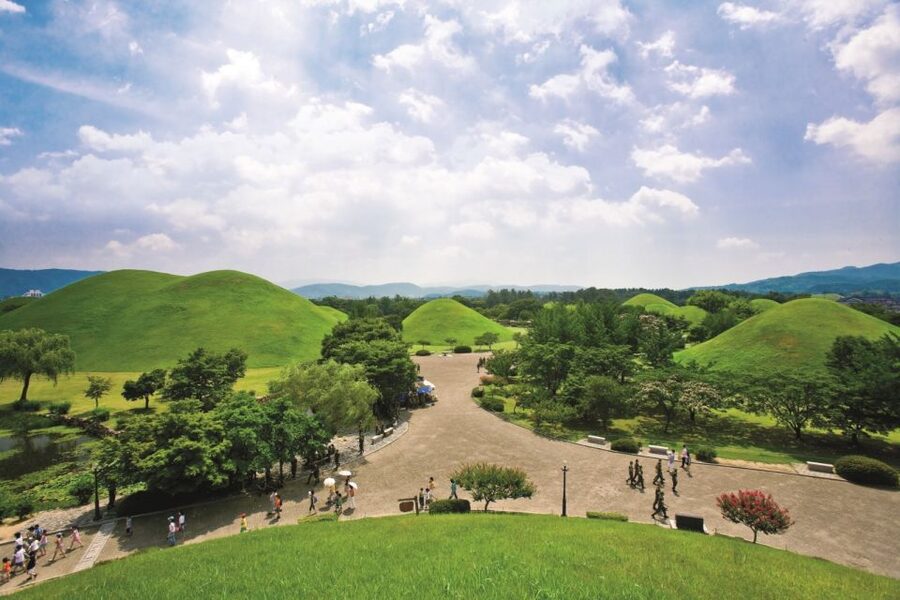
Daereungwon Tomb Complex is one of the most memorable stops because its shape is so easy to understand. Large grassy burial mounds rise across the grounds, marking the resting places of Silla kings and aristocrats.
The site feels calm, but the scale tells you plenty. These are not small family graves. They reflect a society with strong royal power, skilled labor, and elaborate burial customs. Your guide helps turn the rounded hills into historical evidence rather than scenery.
Cheonmachong is the best-known tomb here. It is associated with the famous ancient horse painting, and its name refers to that image. Hwangnamdaechong is another major tomb, known for its size and the importance of the objects found within it.
I like this stop because it combines open air and archaeology. You are not simply moving from one building to another. You walk among the burial mounds and see how the royal center once organized its dead. The drawback is that the site can feel less immediately dramatic if you do not have explanation, which makes the guide’s role especially important.
Allow about an hour here. Wear comfortable shoes, and be ready for outdoor walking. The grounds are easy to appreciate at a relaxed pace, but the larger day means your time will be controlled.
Cheomseongdae, a stone tower built for the sky
Cheomseongdae is a short stop, listed at about 30 minutes, but it fills an important gap in the story. Built during the reign of Queen Seondeok, it is recognized as the oldest existing astronomical observatory in Asia.
The tower’s unusual shape and carefully arranged stone construction are the main visual draw. It is not a huge monument, so a quick visit is enough to see it, hear its story, and take photographs. The real reward comes from understanding what it says about Silla society. The dynasty was not focused only on war, ritual, and royal display. It also observed the heavens and developed systems of scientific thought.
This is a good example of why a guided day works better than a simple checklist. Without context, Cheomseongdae can look like a curious stone structure in a field. With a clear explanation, it becomes evidence of a sophisticated court and its interest in astronomy.
More Temple Visits in Gyeongju:
- From Daegu: Gyeongju UNESCO Tour 7 Highlights with Bulguksa
★ 4.6 · 5 reviews - Gyeongju UNESCO World heritage tour including Bulguksa from Seoul by KTX train
★ 5.0 · 1 review - Seoul: Mt Seorak + Naksansa Temple or Nami Island Group Tour
★ 4.7 · 422 reviews - Best Things to Do – Half Day Seoul Trip (Seoul Palace & Temple)
★ 5.0 · 190 reviews
Bulguksa Temple, the day’s essential monument
Bulguksa Temple is the central stop, and the one I would most want to protect if the schedule starts slipping. The temple is a UNESCO World Heritage Site, valued for both its Buddhist meaning and its architecture.
You will see ancient stone bridges, temple courtyards, and the celebrated Dabotap and Seokgatap pagodas. The design brings together stairs, platforms, stonework, wooden halls, and mountain surroundings. It is easy to rush from one feature to the next, but try to pause and look at how the parts fit together.
Bulguksa also gives you a direct introduction to Korean Buddhism. The site is not just attractive old architecture. It was created as a sacred setting, with movement through the grounds carrying religious meaning. A good guide explains those connections without turning the visit into a lecture.
The scheduled guided visit lasts about an hour. That is enough for the major features, but not enough for every corner. Crowds can affect the pace, particularly during Korean holidays. One booking took place during Korean Thanksgiving, and the guide had to adjust around heavy local sightseeing crowds. That is a useful reason to value an experienced guide and driver.
Bulguksa involves steps and walking through outdoor temple grounds. The tour includes transportation, but it does not remove the need for comfortable footwear or a little stamina.
Seokguram Grotto and the granite Buddha
The road continues up Tohamsan Mountain to Seokguram Grotto. This is another UNESCO site and one of Korea’s most important works of Buddhist art.
Inside, the main Buddha is carved from granite and surrounded by detailed guardian figures. The setting is more contained and focused than Bulguksa. Instead of broad courtyards and pagodas, you encounter a carefully planned sacred space centered on one powerful image.
The engineering matters here as much as the sculpture. Seokguram shows how Buddhist devotion, stone carving, and construction skill came together during the Silla period. The visit can feel intense because the grotto concentrates your attention so firmly on the Buddha and its carved companions.
The tour allows about an hour. You may find the approach and mountain setting especially appealing, but the site is not a place for loud conversation or a long free-form stop. Listen closely to the guide, then give yourself a quiet moment to take in the work.
The snacks sold by women outside the grotto became a pleasant extra for one couple on the tour. They were purchased by the guide and driver, so do not treat that gesture as a promised inclusion. The included bottle of water is more certain, and iced water has also been prepared on particularly hot days.
Lunch as part of the cultural lesson
Lunch is included, which is practical on a packed day. It also gives the schedule a welcome pause between monuments.
The meal has received repeated praise, including traditional Korean food and bibimbap. One family specifically enjoyed learning how to mix and eat bibimbap properly, while another couple called the lunch a highlight and appreciated that Sue and Joe joined them.
That detail says something useful about the tone of the experience. The meal is not presented as a formal food tour, but it can add a local element to a day otherwise focused on monuments. Expect the guide to help you understand what you are eating rather than simply point you toward a restaurant.
Because the exact restaurant and menu are not specified, anyone with strict dietary needs should confirm arrangements before booking. The available information supports lunch being included, but not a particular dish every day.
Wolji Pond at the Donggung Palace site
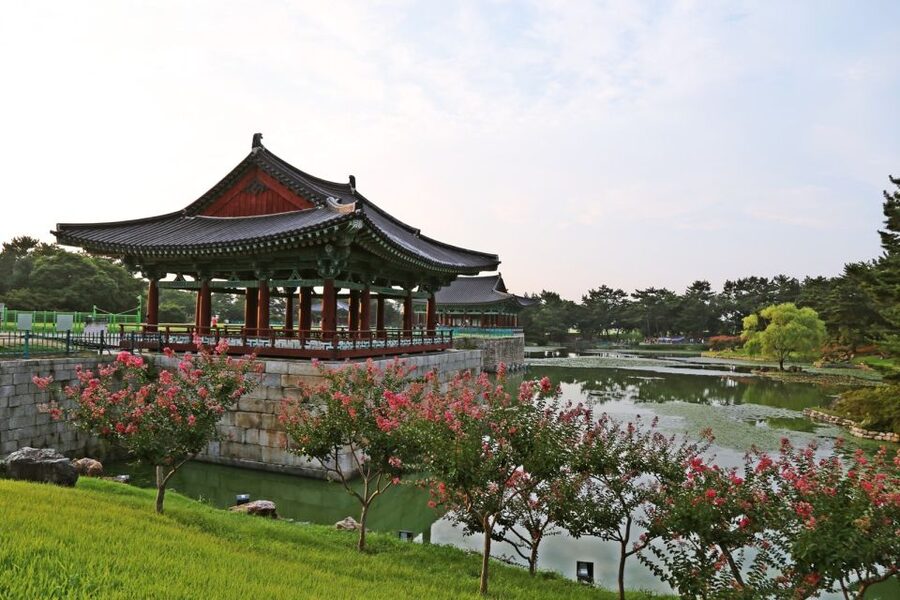
The final sightseeing stop is Donggung Palace and Wolji Pond, formerly known as Anapji Pond. It was created during the reign of King Munmu as part of a royal palace complex and garden.
The pond is designed for reflection in both senses. Water, pavilions, and trees create a composed view, especially as daylight fades. After a full day of tombs, temples, and historical explanation, this is a graceful place to finish.
The atmosphere here differs from Daereungwon and Bulguksa. You are looking at a royal garden rather than a burial ground or active religious site. The arrangement of water and buildings offers a glimpse of courtly leisure and formal design.
The planned guided visit lasts about an hour. Timing matters. If the tour starts late or traffic causes delays, this is the stop most at risk of being shortened or skipped. One booking began late and missed the final scheduled item after choosing to fit in a village instead. The guide cooperated with that change, but you should understand that an eight-hour tour cannot guarantee leisurely time everywhere.
Transport, timing, and the pace of the day
Pickup is available from any location in Busan, as well as from Gyeongju. Drop-off is offered in either city. The air-conditioned van is more than a comfort feature here. It is what makes six major visits possible in one day.
The stated visit times add up to about five and a half hours, leaving the rest of the eight-hour schedule for driving, lunch, pickup, drop-off, and changes caused by traffic. That is a realistic structure, but not a relaxed one.
You will spend much of the day getting in and out of the van. The tradeoff is clear: you cover far more ground than you likely would on foot or by local buses. One couple said they would not have managed even half the sights alone, and another called it the easiest way to see Gyeongju in one day from Busan.
Group size can be private or small. That matters when you want to ask about Silla history, Korean culture, or the meaning of a site. It also gives the guide more room to react when traffic, weather, or crowds alter the plan.
Guides Sue and Steve receive the strongest praise, though other guides including Jina, Chris, Jade, and others have led bookings. Sue is repeatedly described as funny, caring, and clear in her explanations. Steve is praised for adapting to traffic and crowds. Drivers such as Joe and Mr. Jion are noted for comfortable driving, taking photographs, and helping people find their way.
Who should book this Gyeongju tour?
I would choose this tour if you are staying in Busan and have only one day for Gyeongju. The included vehicle, guide, lunch, and entry fees remove the hardest planning problems.
It also suits first-time visitors who want a clear introduction to the Silla Dynasty without spending hours in museums. The experience stays outdoors for much of the day and uses the actual sites to explain Korean culture, religion, science, and royal life.
Families and couples may appreciate the small-group or private format. The friendly guide style described by past participants should help if you enjoy conversation and questions rather than a silent ride between stops.
I would hesitate if you are already staying in Gyeongju, prefer slow photography, or dislike a fixed timetable. You might save money and gain more control by visiting fewer sites independently. The tour is designed for coverage, not deep time at one temple or tomb complex.
Cancellation is free up to 24 hours before departure, and you can reserve now and pay later. Starting times depend on availability, so confirm the pickup time before committing to other plans.
Should you book it?
Book this Gyeongju UNESCO heritage tour if your priority is seeing the essential sites in one organized day, especially from Busan. Bulguksa, Seokguram, Daereungwon, Cheomseongdae, Gyochon Village, and Wolji Pond form a strong introduction to Korea’s ancient capital, and the guide support adds real value.
At $189, it is not a budget outing. It becomes easier to justify when you count the van, driver, English guide, lunch, water, admission fees, and the option of a private or small group. From Gyeongju, compare the cost more carefully.
My practical advice is simple: book for convenience, historical explanation, and coverage. Skip it if you want a slow, self-directed day. If you do go, protect your time at Bulguksa and Seokguram, wear good walking shoes, and be ready for the schedule to flex around traffic and crowds.
FAQ
Where does the tour begin?
Pickup is available from Busan or Gyeongju-si. The service can collect you from your hotel or another chosen location, and pickup is available anywhere in Busan.
Where does the tour end?
Drop-off is available in Busan or Gyeongju-si at your hotel or preferred location.
How long does the experience last?
The tour lasts eight hours, including transportation, sightseeing, and lunch.
Is transportation included?
Yes. The package includes hotel pickup and drop-off, an English-speaking guide, and an air-conditioned van with a driver.
Which sites are visited?
The scheduled stops are Bulguksa Temple, Seokguram Grotto, Daereungwon Tomb Complex, Donggung Palace and Wolji Pond, Cheomseongdae, and Gyeongju Gyochon Traditional Village.
Is lunch included?
Yes. Lunch and a bottle of water are included. Traditional Korean food and bibimbap have been part of the dining experience, but the exact menu is not specified.
Are entrance fees included?
Yes. All entrance fees are included in the tour price.
Is the tour private or shared?
Private and small-group options are available. The exact group format depends on the booking you choose.
Is the tour conducted in English?
Yes. The live tour guide language is English.
Can I cancel the booking?
You can cancel up to 24 hours in advance for a full refund. A reserve-now, pay-later option is also available.
More UNESCO Sites in Gyeongju
- Gyeongju UNESCO sites Private tour with licensed tour guide
★ 5.0 · 275 reviews - Private Gyeongju Tour – Explore Gyeongju UNESCO Sites
★ 5.0 · 272 reviews - Busan: Gyeongju UNESCO Legacy Tour with National Museum
★ 5.0 · 172 reviews - Gyeongju UNESCO World Heritage Sites and History Full-Day Tour with Lunch
★ 5.0 · 104 reviews
Just added in Gyeongju
- Yangdong village & Gyeongju Unesco Site Private Van Tour★ 5.0 · 1 review
- Small Group 7D Korea package Tour with Seoul Gyeongju Busan Jeju★ 4.5 · 13 reviews
- Gyeongju UNESCO Sites Tour by KTX train; The Museum Without walls★ 4.5 · 11 reviews
- Full-Day Small Group GyeongJu History Tour from Seoul★ 5.0 · 2 reviews
- 7 days Flexible Tour for Major Cities(Seoul,Busan,Gyeongju etc)★ 5.0 · 5 reviews
- PREMIUM 5 Days Tour for Wonder of Korea(Mt. Seoraksan, Andong, Gyeongju, Busan)★ 5.0 · 1 review
- 5 Days Tour for Korea’s past and present(Mt.Seoraksan, Andong, Gyeongju, Busan)★ 5.0 · 1 review
- 7 Days Highlight Korea Tour(Seoul, Nami, DMZ, Andong, Gyeongju, Busan)★ 5.0 · 1 review
Temple Stays, compared.
Mt Seorak + Naksansa Temple or Nami Island Group Tour
Read our review →
Best Things to Do – Half Day Seoul Trip (Seoul Palace & Temple)
Read our review →
Mount Seorak and Naksansa Temple One Day Tour from Seoul
Read our review →
Busan Tour: Gamcheon Village & Haedong Yonggungsa Temple + Lunch
Read our review →
Full Day Busan Tour Including Haedong Yonggungsa Temple
Read our review →
Private Busan tour with gamcheon culture village and the temple (Customizable)
Read our review →
Day Tour of Suwon Hwaseong Fortress Starfield Waujeongsa Temple
Read our review →
Half day Morning Seoul City Tour(Temple & Gyeongbok Palace)
Read our review →Browse the lists this tour appears in