
Reviewed · UNESCO WORLD HERITAGE TOURS
Gyeongju UNESCO World Heritage Sites and History Full-Day Tour with Lunch
Gyeongju packs a kingdom into one day. This tour links Bulguksa Temple and Seokguram Grotto with royal tombs, palace ruins, old villages, and the famous Cheomseongdae Observatory. I like the hotel pickup and air-conditioned minivan, and I like that lunch and admission fees are included. The main drawback is the pace: eight hours is enough for a strong first look, but not enough for every site to receive slow, thoughtful attention.
You will also spend time on the road if you are coming from Busan, so the day is partly a transport solution. Guides such as Steve, Sue, Chris, Jina, and Steve Kim have been praised for clear English and strong knowledge of Silla history, though one guest wanted more commentary between stops. Bring comfortable shoes, sunscreen, and patience for a full day of walking and sightseeing.
In This Review
- Key points before you book
- Why Gyeongju works well as a full-day outing
- Cheomseongdae Observatory and the first look at Silla science
- Donggung Palace and Wolji Pond after dark, now seen by day
- Gyochon Traditional Village and the Choi family story
- Daereungwon Tomb Complex and the open royal burial mound
- Seokguram Grotto on Tohamsan Mountain
- Bulguksa Temple, the day’s essential sight
- Lunch, walking, and the day’s pace
- Guides, transport, and group size
- Is $189.99 a fair price?
- Who should book this Gyeongju day tour?
- Final booking advice
- FAQ
- How long does the Gyeongju tour last?
- What sites are included?
- Are lunch and entrance fees included?
- Is hotel pickup available?
- Does the tour use an air-conditioned vehicle?
- How many people can join the tour?
- Can I book a private tour?
- Are vegetarian meals available?
- What happens if I need to cancel?
Key points before you book
- Bulguksa and Seokguram anchor the day: These are the tour’s most important cultural sites and the strongest reason to join.
- The minivan saves time: Pickup and drop-off make a big difference when several Gyeongju sights sit far apart.
- The schedule covers six major stops: You visit Cheomseongdae, Donggung Palace and Wolji Pond, Gyochon Village, Daereungwon, Seokguram, and Bulguksa.
- Lunch is part of the experience: A local Korean meal is included, with vegetarian and gluten-free needs accommodated when advised ahead of time.
- Group size can vary: The stated maximum is 40 people, but some departures have had only three to five passengers.
- The price suits a one-day visit: At $189.99 per person, you are paying for transport, guide time, admissions, and convenience rather than just entry tickets.
Why Gyeongju works well as a full-day outing
Gyeongju was the capital of the Silla Kingdom for centuries, from 57 BC to AD 935. That long period left the city with tombs, temple grounds, royal gardens, stone carving, and archaeological remains spread across a wide area.
That spread is the practical problem. You can walk between some central sights, but Bulguksa and Seokguram are away from the main historic center. If you are staying in Busan and have only one day, arranging trains, local buses, taxis, and entrance times can eat up much of your sightseeing time.
This tour solves that problem with a driver and guide. You are collected in the morning, driven between sites, and returned afterward. Several departures have been small enough to feel almost private, but you should remember that the official maximum is 40 people. The actual group depends on the date.
The tour begins around 8:00 am and lasts about eight hours. If you are starting in Busan, traffic can affect how much time you spend in Gyeongju itself. That is why the experience makes the most sense as an organized day trip from Busan, rather than as a way to explore Gyeongju at a slow pace while staying in the city.
More History Tours in Gyeongju
- From Busan: Gyeongju UNESCO World Heritage Guided Day Tour
★ 4.8 · 1,250 reviews - Gyeongju UNESCO World Heritage Guided Day Tour from Busan
★ 5.0 · 660 reviews - Old Korea Thousand History Tour of Gyeongju from Busan
★ 5.0 · 518 reviews
Cheomseongdae Observatory and the first look at Silla science
Cheomseongdae is a short but useful opening stop. The stone observatory dates to the reign of Queen Seon-deok, from AD 632 to 647, and is described as the oldest surviving astronomical observatory in Asia.
You get about 30 minutes here, which is enough to see the structure and hear why it mattered. Silla rulers used observations of the sky to help forecast weather, an important task for an agricultural kingdom.
The building is smaller and simpler than some first-time visitors expect. It is essentially a carefully built stone tower, not a museum with working instruments or a large interior to explore. One unhappy guest felt there was little to see, while others enjoyed the historical context.
I would treat Cheomseongdae as an introduction, not a major destination by itself. The value comes from understanding that Silla was not only a kingdom of temples and tombs. It also had organized science, government, and court life.
Donggung Palace and Wolji Pond after dark, now seen by day
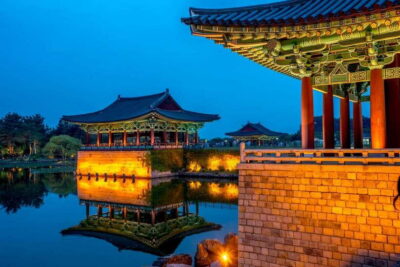
The next major stop is Donggung Palace and Wolji Pond, with about an hour to walk around the grounds. The pond was built during the reign of King Munmu in the seventh century and formed part of a palace complex.
The setting is attractive, with water, pavilions, and carefully arranged grounds. Small artificial mountains were created inside the palace area, showing how Silla court gardens were designed to create a controlled version of nature.
The name Wolji means pond that reflects the moon, and the site is especially famous for evening illumination. On this daytime tour, you see the historic layout rather than the night-time mood. Some people may find the remains more modest than expected because little of the original palace survives.
That is where the guide matters. Without explanation, you may see three pavilions and a pond. With context, the site becomes a royal reception area and a clue to the sophistication of Silla palace life. Guides Steve and Chris have been praised for bringing such remains to life, but the depth of commentary can depend on your guide and group.
Gyochon Traditional Village and the Choi family story
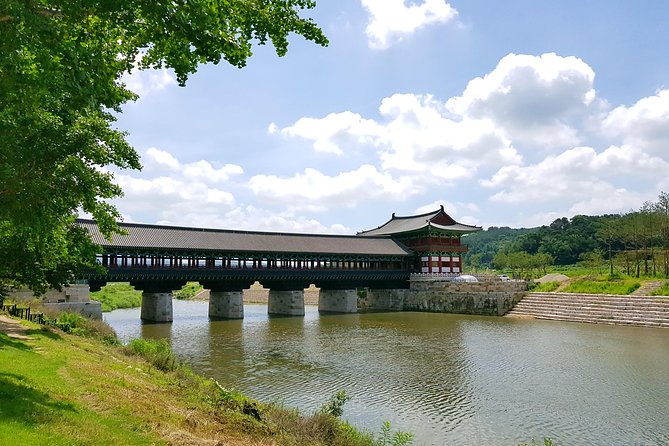
Gyochon Traditional Village offers a change of scale. Instead of monumental royal sites, you see hanok buildings and learn about the Gyeongju Choi Clan, a prominent local family.
The stop lasts about 45 minutes. It is a chance to walk through traditional Korean architecture and consider how elite family life continued after the Silla period. You might find parts of the village quiet and appealing, while other areas can feel more like a short heritage stop than a fully preserved living neighborhood.
One sharply negative experience described the village as having almost nothing open. That criticism is worth keeping in mind. Do not book the tour mainly for Gyochon Village. Its role is to add social and architectural context between the larger archaeological sites.
Still, the stop helps prevent the day from becoming six straight visits to ruins. You get a look at later Korean traditions, family homes, and the kind of architecture that gives central Gyeongju its distinctive feel.
More Gyeongju trips:
- Busan: Gyeongju Guided Day Trip to Three Kingdoms Capital
★ 4.8 · 1,925 reviews - Gyeongju UNESCO sites Private tour with licensed tour guide
★ 5.0 · 275 reviews - Private Gyeongju Tour – Explore Gyeongju UNESCO Sites
★ 5.0 · 272 reviews - Busan: Gyeongju UNESCO Legacy Tour with National Museum
★ 5.0 · 172 reviews
Daereungwon Tomb Complex and the open royal burial mound
Daereungwon is one of the day’s most memorable central sites. Large grassy mounds rise across the grounds, covering the tombs of Silla kings and nobles. Twenty-three large tombs are located in the complex, including Cheonmachong Tomb.
You have about an hour here, usually enough to walk among the mounds and enter the open tomb area. The scale is striking. These are not isolated monuments behind glass. They form part of the city, so the ancient burial grounds feel woven into modern Gyeongju.
The tombs also show how much information can come from a burial site. Silla graves revealed objects connected with status, craftsmanship, and court culture. The tour does not replace a museum visit, though. If you want to see original treasures and get more detailed explanations of the dynasty, Gyeongju National Museum would be a useful addition on another day.
That missing museum is the most credible criticism of the schedule. The tour gives you the major outdoor sites, but the museum would provide objects and labels that make the tombs easier to understand. If you have extra time in Gyeongju, add it separately.
Seokguram Grotto on Tohamsan Mountain
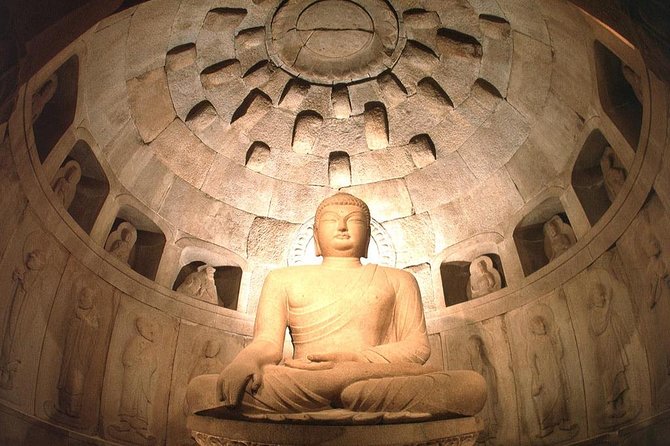
Seokguram is one of the tour’s strongest stops and one of its most unusual. Located on Tohamsan Mountain, it is a stone temple known for its seated Buddha and carefully engineered granite chamber.
You spend about an hour at the site. The approach and setting add to the experience, but the main focus is the grotto itself. Photography inside is not permitted, so you need to look carefully rather than relying on a camera.
The interior can feel brief. You do not wander through a large cave complex. Instead, you view the central sculpture and the surrounding stone figures in a controlled space. Some people may expect a bigger attraction, but the artistic quality and engineering are the point.
The guide’s explanation is especially useful here. Seokguram is not simply a scenic mountain stop. It shows the religious ambition and technical skill of Silla-era builders. The visit also pairs naturally with Bulguksa, since both sites reflect the same Buddhist culture and are located in the same wider area.
Wear sensible shoes. The tour information specifically warns against high heels, and several people recorded around 11,000 steps during the day. That is manageable for most active visitors, but heat and rain can make the walking feel harder.
Bulguksa Temple, the day’s essential sight
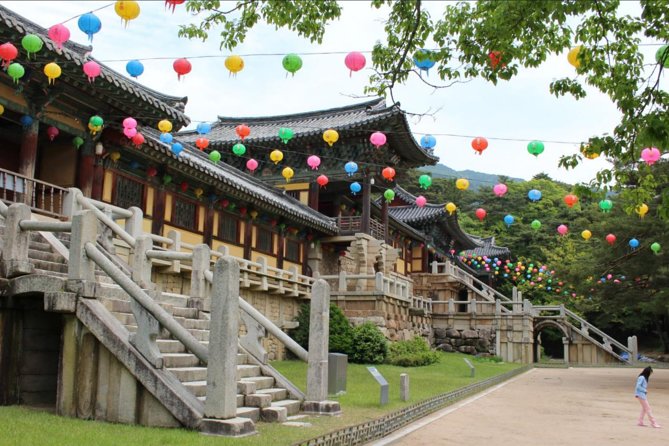
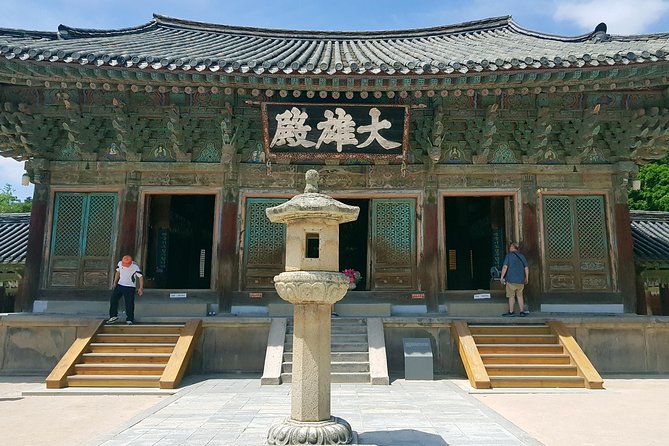
Bulguksa is the best-known attraction on the route. The temple was designated a UNESCO World Heritage site in 1995 and is widely regarded as Gyeongju’s representative historic monument.
You have about an hour to explore. The grounds contain temple halls, stone terraces, bridges, and carved stone features. The setting combines architecture with Buddhist symbolism, so this is a place where a guide can help you notice details you might otherwise pass by.
The visit is not just about seeing a beautiful temple. Bulguksa shows how Silla leaders used religious buildings to express political power, spiritual belief, and artistic achievement. Stone work is a major part of the experience, and it gives the complex a sense of permanence that rebuilt wooden structures alone would not have.
One practical point: Bulguksa can be busy, especially on holidays and weekends. A guide and driver can help with timing and drop you near the entrance, reducing unnecessary walking. Several people valued this arrangement, especially when dealing with heat or heavy rain.
If you had time for only one stop, Bulguksa would be the safest choice. On this tour, it works even better because Seokguram provides a second major Buddhist site and the earlier stops explain the kingdom that created them.
Lunch, walking, and the day’s pace
Lunch is included, and it has received unusually strong praise. Meals have been described as filling and served at local restaurants popular with Korean customers. Vegetarian requests have been accommodated, and one gluten-free guest received a suitable meal after communicating the need.
Tell the operator about dietary requirements when you book. The information specifically confirms vegetarian service when advised in advance. It does not provide a fixed menu, so expect a Korean meal rather than a guaranteed set of named dishes.
The day includes a fair amount of walking, stairs, and outdoor time. One small group recorded about 11,000 steps, while another described the walking as noticeable but not strenuous. Your experience will depend on weather, group pace, and how much time you spend moving around each site.
Summer heat can be serious. Sunscreen is recommended, and the air-conditioned vehicle provides welcome relief between stops. Heavy rain has not prevented some departures from visiting the sites, but comfortable shoes and weather-ready clothing will make the day far more pleasant.
Guides, transport, and group size
The guides are a major part of the value. Steve is repeatedly praised for clear explanations, good humor, and an engaging manner. Chris is described as friendly and well informed, while Sue has been praised for both historical explanations and careful handling of dietary needs. Jina and Steve Kim have also received strong marks for fluent English and attentive service.
That said, guide quality is not perfectly uniform. One person felt the guide did not offer enough commentary during the drives and wanted more explanation of the sights passed along the road. This is a fair expectation to clarify before booking: the tour focuses on the listed stops, and drive-time narration may vary.
The air-conditioned minivan is more than a comfort feature. It connects sites that are awkward to combine using public transport, especially Bulguksa and Seokguram. Drivers have also dropped people near entrances and collected them afterward, which saves energy.
Some departures become very small. Groups of three, four, or five have been reported, and a few bookings have effectively operated as private tours. You cannot count on that. The advertised maximum is 40 people, so ask about a private upgrade if personal attention matters to you.
Is $189.99 a fair price?
At $189.99 per person, this is not a budget sightseeing day. The price includes pickup and drop-off, air-conditioned transport, a guide, lunch, and entrance fees. Those inclusions matter most if you are based in Busan and want to visit several spread-out sites without arranging each transfer.
The value is weaker if you are already staying in central Gyeongju. Cheomseongdae, Wolji Pond, Gyochon Village, and Daereungwon are close enough to combine independently, while taxis can help with the temple area. In that situation, the tour’s convenience may not justify the cost for every person.
The price also feels more reasonable when the group is small. A private or near-private departure gives you more room for questions and flexible pacing, though the standard product does not promise that arrangement.
Keep your expectations realistic. This is a carefully packed overview, not an archaeological seminar. You see the most important sites, but the brief stops and absence of the National Museum mean you will leave with a strong outline rather than every detail.
Who should book this Gyeongju day tour?
I would recommend it most strongly if you are staying in Busan, have only one day available, and want the main Silla sites without managing transport. It also suits solo visitors, couples, and first-time visitors who prefer a guide to explain what they are seeing.
It is a good fit for people who value logistics. Pickup, a dedicated driver, lunch, and a route that reaches both the city center and the mountain sites remove much of the day’s planning.
You may want another plan if you dislike organized sightseeing, need long periods at each stop, or want extensive museum time. Gyochon Village and Cheomseongdae may feel slight compared with Bulguksa and Seokguram, and the schedule leaves little room for wandering.
Free cancellation is available when you cancel at least 24 hours before the start time. Children must be accompanied by an adult, most people can participate, and the tour requires a minimum number of bookings to operate.
Final booking advice
Book this tour if your priority is seeing Gyeongju’s major UNESCO sites in one efficient day from Busan. The best parts are the temple and grotto, the smooth vehicle service, and guides such as Steve, Sue, and Chris who can turn stonework and grassy tombs into understandable history.
Skip it if you are staying in Gyeongju and prefer to explore slowly, visit the National Museum, or control your own schedule. At $189.99, the tour earns its price through convenience and coverage, not through long visits at every stop. For a first visit with limited time, that tradeoff is sensible.
FAQ
How long does the Gyeongju tour last?
The experience lasts approximately eight hours and begins at about 8:00 am.
What sites are included?
The route includes Cheomseongdae Observatory, Donggung Palace and Wolji Pond, Gyochon Traditional Village, Daereungwon Tomb Complex, Seokguram, and Bulguksa Temple.
Are lunch and entrance fees included?
Yes. Lunch and entrance fees are included in the tour price.
Is hotel pickup available?
Pickup and drop-off are offered. Several departures have used hotel pickup in Busan, but you should provide your address when booking.
Does the tour use an air-conditioned vehicle?
Yes. Transport is provided by air-conditioned minivan.
How many people can join the tour?
The maximum group size is 40 people. Some departures have been much smaller, with groups of three to five people.
Can I book a private tour?
Yes. You can upgrade to a private tour if you prefer a more personal arrangement.
Are vegetarian meals available?
Yes. A vegetarian option is available when you advise the operator at the time of booking. Gluten-free accommodation has also been provided when requested.
What happens if I need to cancel?
You can receive a full refund if you cancel at least 24 hours before the experience starts. Cancellations or changes made less than 24 hours before the start time are not accepted for a refund.
More UNESCO Sites in Gyeongju
- Gyeongju: UNESCO Heritage Tour Including Bulguksa Temple
★ 4.8 · 104 reviews - From Busan to Gyeongju UNESCO Legacy Tour with National Museum
★ 5.0 · 87 reviews - Full day Private Gyeongju UNESCO Heritage Tour : a glimpse into Silla
★ 5.0 · 60 reviews - Gyeongju The UNESCO World heritage sites tour(Private tour)
★ 5.0 · 17 reviews
Just added in Gyeongju
- Yangdong village & Gyeongju Unesco Site Private Van Tour★ 5.0 · 1 review
- Small Group 7D Korea package Tour with Seoul Gyeongju Busan Jeju★ 4.5 · 13 reviews
- Gyeongju UNESCO Sites Tour by KTX train; The Museum Without walls★ 4.5 · 11 reviews
- Full-Day Small Group GyeongJu History Tour from Seoul★ 5.0 · 2 reviews
- 7 days Flexible Tour for Major Cities(Seoul,Busan,Gyeongju etc)★ 5.0 · 5 reviews
- PREMIUM 5 Days Tour for Wonder of Korea(Mt. Seoraksan, Andong, Gyeongju, Busan)★ 5.0 · 1 review
- 5 Days Tour for Korea’s past and present(Mt.Seoraksan, Andong, Gyeongju, Busan)★ 5.0 · 1 review
- 7 Days Highlight Korea Tour(Seoul, Nami, DMZ, Andong, Gyeongju, Busan)★ 5.0 · 1 review
UNESCO World Heritage Tours, compared.
Gyeongju UNESCO World Heritage Guided Day Tour
Read our review →

East Jeju Essentials – Seongsan Ilchulbong (UNESCO) & Haenyeo
Read our review →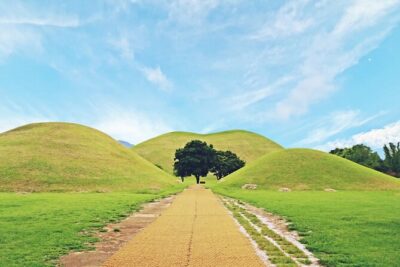
Gyeongju UNESCO World Heritage Guided Day Tour from Busan
Read our review →
Jeju Southern UNESCO Full Day Tour with Mt.Halla
Read our review →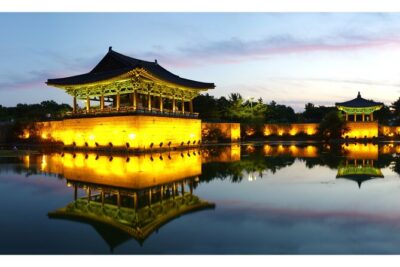
Gyeongju UNESCO sites Private tour with licensed tour guide
Read our review →
Private Gyeongju Tour – Explore Gyeongju UNESCO Sites
Read our review →Browse the lists this tour appears in