

Reviewed · UNESCO WORLD HERITAGE TOURS
Jeju Island UNESCO Heritage Bus Tour
Jeju’s best sights are spread far apart. This tour links the island’s volcanic scenery, old villages, coastal cliffs, markets, gardens, and UNESCO-listed places without asking you to master Jeju’s bus system. I especially like the mix of nature and local culture, from Saryeoni Forest Path to Seongeup Folk Village, and I like that the eastern, western, and southern routes show how different Jeju can feel from one area to the next. The main drawback is that the exact vehicle and guide style can vary, and the days are busy.
At $56 per person, the price is attractive if you want transport, fuel, parking, and a guide handled for you. The tour also includes useful seasonal swaps, such as Haenyeo Museum visits in rainy weather and alternate Mt. Halla stops when conditions change. Just remember that meals, drinks, the Seongsan Ilchulbong performance ticket, and optional tangerine picking cost extra.
In This Review
- Key points to know before booking
- What the $56 price really buys you
- Eastern Jeju: forest, stone walls, and the women divers
- Seongsan Ilchulbong without the climb
- Western Jeju: Mt. Halla, cliffs, flowers, and tea
- South and Western Jeju: markets, waterfalls, and flowers
- How the guide and vehicle affect the day
- Weather, flowers, and practical preparation
- Who should book this Jeju tour?
- Final verdict: good value, with a few important checks
- FAQ
- How much does the Jeju Island UNESCO Heritage Bus Tour cost?
- How long does the tour last?
- Is transportation included?
- Is lunch included?
- Can I hike Seongsan Ilchulbong?
- How much does the Haenyeo performance cost?
- Is tangerine picking included?
- What happens if the weather is poor?
Key points to know before booking
- Three regional routes: Eastern, Western, and South and Western stops cover a large part of Jeju.
- Haenyeo performance: At Seongsan Ilchulbong, you watch Jeju’s famous women divers rather than hike Sunrise Peak.
- Flexible weather planning: Rain and mountain conditions can replace beaches, waterfalls, or trails with other attractions.
- Guide arrangements vary: Some departures use a professional English guide, while smaller groups of up to four may ride with an English-speaking taxi driver.
- Season changes matter: Camellias, hydrangeas, canola flowers, pink muhly, silver grass, and cherry blossoms appear at different times.
- Extra costs are limited but real: Lunch, drinks, the ₩5,000 Haenyeo performance, and winter tangerine picking are not included.
What the $56 price really buys you
The strongest part of this tour is the transport. Jeju is not a compact sightseeing town. Its major sights are scattered around the island, and getting from a forest trail to a coastal cliff, then on to a market or tea field, takes time. An air-conditioned vehicle, fuel, parking, and round-trip transfers remove much of the planning work.
At $56 per person, the value is good if you want to see several parts of Jeju in a short stay. You are paying for a full sightseeing day, not a single attraction. The price also includes airport drop-off services, which can be useful if your final day is arranged around the tour.
The catch is that the experience is not always a large coach tour. Groups can range from a minimum of three to a maximum of 40 people. Up to four people may be placed in a regular taxi with an English-speaking driver, while groups of five to 10 are offered a professional English guide. That distinction matters.
Some people prefer a small car because it feels more personal and makes pickup simple. Others expect a traditional guide who walks with the group and explains every stop. If that difference matters to you, confirm the vehicle and guide arrangement before paying.
Lunch is taken at a local restaurant on the eastern and western routes, but the meal is not included. The same is true of drinks and personal purchases. I would set aside extra money for lunch, snacks, market treats, and any paid attraction.
More History Tours in Jeju
- Private Full Day Tour World Natural Heritage & UNESCO in jeju
★ 5.0 · 9 reviews - Jeju UNESCO Natural Heritage Private Tour by Certified Guide
★ 5.0 · 5 reviews - Jeju Day Tour – World Heritage & UNESCO
★ 5.0 · 4 reviews
Eastern Jeju: forest, stone walls, and the women divers

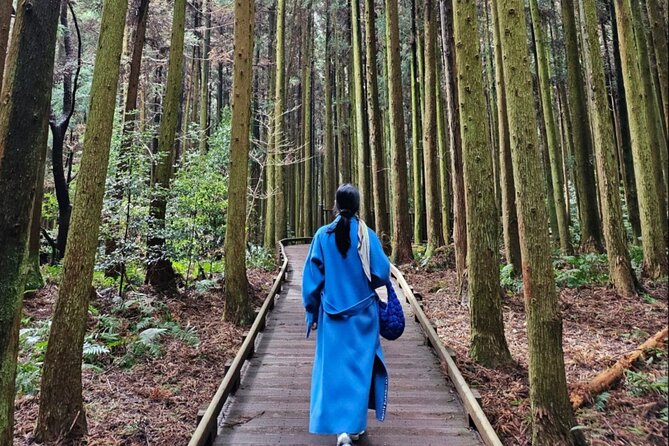
The eastern route begins with Saryeoni Forest Path, a quiet wooded trail protected as one of Jeju’s notable natural attractions. You get about 50 minutes here, enough for a walk and photographs without turning the day into a serious hike.
This is a good first stop because it gives you a feel for Jeju beyond beaches and cafes. The path is popular with people who enjoy the outdoors, but the tour does not present it as a long mountain trek. Wear shoes that are comfortable on a forest trail, and use the time to enjoy the trees rather than rush from one photo point to another.
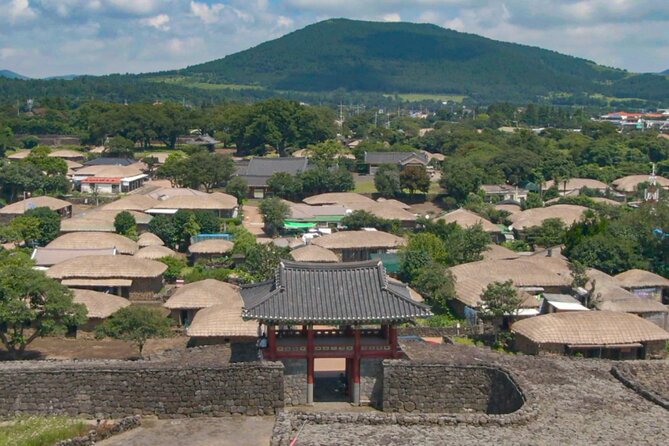
Next comes Seongeup Folk Village, where old stone walls and traditional homes show how island life adapted to strong winds. The piles of stones around the buildings are not just decoration. They help protect roofs and define the character of the village.
You have about 50 minutes here. That is enough for a useful look, though not enough for a slow, detailed study of every building. The stop works best if you pay attention to the practical details: stone construction, village layout, and the way daily life was shaped by Jeju’s weather.
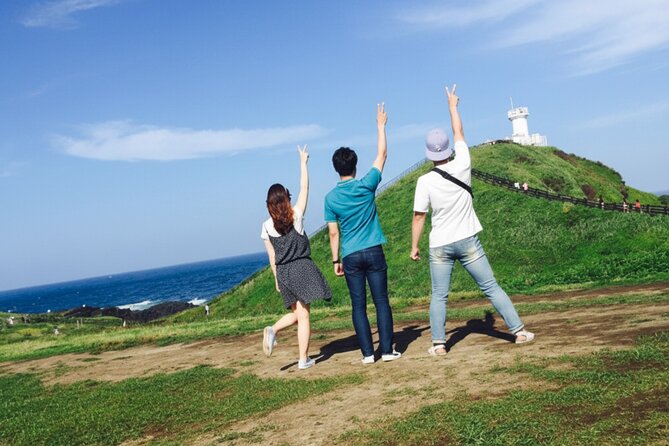
Seopjikoji brings a change of mood. This coastal point at the eastern end of the island is known for broad sea views and yellow canola flowers in April. The visit lasts about 40 minutes, so you will have time for photographs and a short walk, but not an extended coastal outing.
Flower timing is important. Canola is a major reason to visit in spring, while other routes are designed around hydrangeas, camellias, pink muhly, or silver grass at different times of year. The scenery remains worthwhile outside flower season, but the visual appeal changes.
Seongsan Ilchulbong without the climb
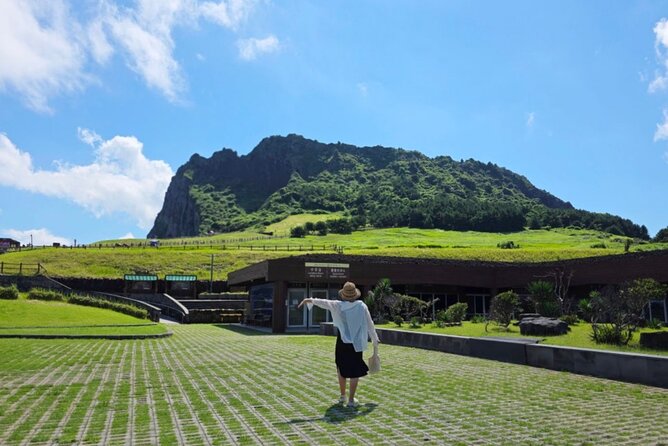
Seongsan Ilchulbong, also called Sunrise Peak, is the eastern route’s headline stop. It is a UNESCO Heritage site formed by volcanic activity, with a distinctive crater shape and dramatic coastal setting.
The important limitation is clear: hiking is not included. This visit is for photographs and the Haenyeo performance, scheduled for 2:00 p.m. Entry to the site is not included either, and the performance costs ₩5,000 per person.
The women divers, known as haenyeo, are one of Jeju’s most memorable cultural traditions. You watch them perform without modern gear, continuing a way of life associated with the island for generations. The performance gives the stop cultural meaning that a quick photo visit alone would lack.
Allow about one hour and 20 minutes. That time includes the picture stop and the show, so you should not expect to climb Sunrise Peak. If you specifically want the summit walk, this tour is not the right choice for that purpose.
The day ends at Hamdeok Beach for about an hour. This is a pleasant contrast to the volcanic rocks and forest paths, with time to enjoy the shoreline and take photographs. On rainy days, Hamdeok may be replaced by Haenyeo Museum, and the schedule also notes Jeju Stone Park as another possible weather replacement.
Manjang Cave, another UNESCO World Heritage attraction, is currently closed for anti-falling construction according to the supplied information. It is not part of the active visit, so do not book this route expecting a cave tour.
Western Jeju: Mt. Halla, cliffs, flowers, and tea
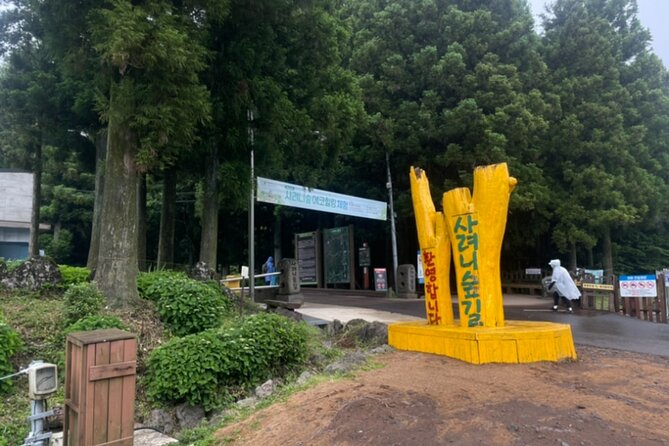
The western route starts at the Eoseungsaengak Trail on Mt. Halla. The scheduled visit lasts around one hour and 10 minutes. This is a mountain stop, but it is not a full ascent of Hallasan. You get a manageable taste of the island’s high country before returning to coastal and garden sights.
Weather can change this part of the day. Eoseungsaengak may be replaced by the 1100 Altitude Wetlands or Saebyeol Oreum. From April 11, 2026, the western course is scheduled to change to the 1100 Altitude Wetlands. That change is worth noting if your booking is after that date.
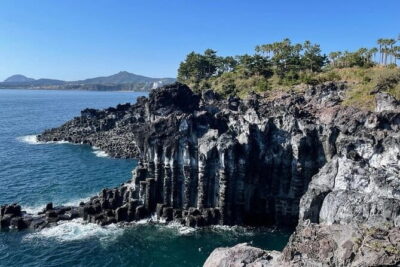
Jusangjeolli Cliff is a short but striking stop. Black hexagonal stone pillars line the coast, looking almost arranged by hand. They were formed by cooling volcanic rock, and the regular shapes make this one of Jeju’s clearest geology lessons.
You get about 40 minutes here. It is enough to view the cliffs and take pictures, but the stop is not designed for a long coastal walk. An optional tangerine-picking activity may be offered in winter for ₩5,000 per person, paid on-site.
Camellia Hill follows with about one hour and 10 minutes. The garden contains more than 500 camellia species, and its appearance depends heavily on the season. Red camellias are associated with winter, hydrangeas with summer, and golden reeds with autumn.
I like this stop for people who want an easy walk rather than another rugged viewpoint. The paths provide a calmer stretch in a day that otherwise moves at a brisk pace. The tradeoff is that anyone uninterested in gardens may find the visit less compelling outside the main bloom periods.
Sanbangsan Bomunsa Temple offers a quieter cultural pause, with a cliffside setting, ocean views, and historic Buddha carvings. You have about 40 minutes here. That is enough to take in the setting and temple atmosphere, though not enough for an unhurried religious or historical study.
From April 11, 2026, this western course is scheduled to follow the Sinchang Windmill Coastal Road instead of Bomunsa Temple. Check the date carefully because this is not a small adjustment. It changes the day from a temple and cliff setting to a coastal road experience.
O’sulloc Tea Museum and its green tea fields finish the western route. You have about 50 minutes to walk among the tea rows, see the exhibitions, and sample tea-based products or desserts. Food purchases are extra, but the fields and museum visit do not require an additional admission charge according to the tour details.
From April 11, 2026, this course is scheduled to stop at Aewol Café Street instead. That may appeal to people who prefer cafes and coastal atmosphere, while tea fans should pay close attention to the date of travel.
More Jeju trips:
- Jeju: Eastern Jeju UNESCO Spots Day Tour
★ 4.9 · 1,148 reviews - Jeju: Western and Southern Sightseeing Day Tour
★ 4.8 · 972 reviews - East Jeju Essentials – Seongsan Ilchulbong (UNESCO) & Haenyeo
★ 5.0 · 939 reviews - Jeju: Southern Top UNESCO Spots Bus Tour
★ 4.9 · 648 reviews
South and Western Jeju: markets, waterfalls, and flowers
The South and Western route also begins at Mt. Halla’s Eoseungsaengak Trail, with roughly one hour and 15 minutes at the mountain stop. Depending on weather, the visit may move to the 1100 Wetland, Eorimok, or Saebyeol Oreum.
The route then goes to O’sulloc Tea Museum for about 50 minutes. Having the tea fields on this day rather than the western route gives the three-day plan some repetition, so check how your days are assigned. If you are building a multi-day Jeju visit, you may want to ask whether the same attraction will appear twice.
Seogwipo Maeil Olle Market is one of the most useful stops for lunch. You get about an hour to choose your own meal and browse for souvenirs. This is less structured than eating at a fixed restaurant, which gives you more control over cost and what you try.
The market is also a good place to sample local snacks, but your hour will pass quickly. I would decide on food first, then shop, rather than spend the entire stop browsing and rush through lunch.
Jeongbang Waterfall is one of Jeju’s unusual natural sights because the water falls directly into the sea. The visit lasts about 40 minutes, and admission is included. If bad weather restricts access, the stop is replaced by Cheonjiyeon Waterfall.
The final stop is Hueree Natural Life Park, with about one hour and 10 minutes for seasonal flowers, easy paths, and countryside scenery. You can end your tour here, which may be useful if Hueree is closer to your accommodation or if you prefer not to return to the central meeting area.
How the guide and vehicle affect the day
The quality of this experience depends partly on the person behind the wheel. Lucas received especially strong praise for being attentive and for explaining Korean and Jeju history in an interesting way. Andy was described as thoughtful and caring, while Mr. Kim was praised as a good driver and guide. Terry was also noted as accommodating, patient, and able to speak English well.
Still, do not assume every departure has the same format. One account expected a professional English guide but received a driver who dropped the group at each site and waited nearby. That can work well if you like exploring independently, but it feels different from having a guide walk beside you.
For a small group, you may have a taxi rather than a coach. That brings comfort and flexibility, but it can also mean less formal commentary. For larger groups, the professional guide arrangement may be more likely. Ask directly about this before booking, especially if historical explanation is important to you.
The schedule is full. Most stops last between 40 minutes and one hour and 15 minutes, so you should be ready to leave when the pickup time arrives. This is a sightseeing sampler, not a slow local day.
Weather, flowers, and practical preparation
Jeju weather can affect the route. The tour may replace Hamdeok Beach with Haenyeo Museum, swap Jeongbang Waterfall for Cheonjiyeon Waterfall, or change the Mt. Halla stop. These changes protect the day from becoming unpleasant or unsafe, but they also mean the exact experience cannot be guaranteed.
Bring comfortable walking shoes, a light rain layer, and room in your bag for purchases. You will move between forest paths, coastal viewpoints, gardens, markets, and temple grounds. Even though the tour is not a demanding hike, standing and walking for several hours can be tiring.
Flower seasons are another reason to plan carefully. Cherry blossoms and canola flowers suit spring. Hydrangeas are associated with summer, pink muhly and silver grass with later in the year, and camellias with winter. The tour remains worthwhile outside peak bloom, but photographs will look very different.
Free cancellation is available until 24 hours before the start time. The tour requires at least three people and may be canceled if that minimum is not met. Poor weather can also lead to a new date or a full refund.
Who should book this Jeju tour?
I would choose this tour if you have limited time, do not want to rent a car, or want one organized plan for Jeju’s major natural and cultural sights. It is particularly useful for first-time visitors who want to compare eastern, western, and southern Jeju without arranging several separate day trips.
Families and small groups may appreciate the air-conditioned vehicle and hotel or meeting-point transfers. The route also suits people who enjoy variety: a forest in the morning, volcanic cliffs later, a market for lunch, and flowers or tea before the day ends.
I would hesitate if your priority is hiking Sunrise Peak, spending hours at one beach, or receiving detailed guiding at every stop. You should also confirm the guide format, the exact route date, and which paid extras you want before booking.
Final verdict: good value, with a few important checks
At $56 per person, the Jeju Island UNESCO Heritage Bus Tour offers a lot for the money. You get long-distance transport, several major sights, fuel, parking, transfers, and the chance to see parts of the island that are awkward to connect on your own.
Its best moments are the Haenyeo performance, Seongeup Folk Village, Jusangjeolli Cliff, the Mt. Halla area, and the changing flower sites. The main weaknesses are the packed schedule, extra charges, route changes, and uneven guide format.
Book it if you want broad coverage and easy transport. Before you do, confirm whether your group will have a coach and professional guide or a taxi driver, check the April 11, 2026 route changes, and budget for lunch and optional activities. Those small checks can make the difference between a smooth Jeju introduction and a day that feels more rushed than expected.
FAQ
How much does the Jeju Island UNESCO Heritage Bus Tour cost?
The listed price is $56 per person.
How long does the tour last?
The experience is described as approximately three days, with separate Eastern, Western, and South and Western course arrangements.
Is transportation included?
Yes. An air-conditioned vehicle, round-trip transfers to and from the meeting location, fuel, parking fees, and airport drop-off services are included.
Is lunch included?
No. Meals, drinks, and personal expenses are not included. Lunch is taken at a local restaurant on some routes, while the South and Western route allows you to choose food at Seogwipo Maeil Olle Market.
Can I hike Seongsan Ilchulbong?
No. Hiking is not included at Seongsan Ilchulbong. The stop is for photographs and the women divers’ performance.
How much does the Haenyeo performance cost?
The performance costs ₩5,000 per person and is scheduled for 2:00 p.m. at Seongsan Ilchulbong.
Is tangerine picking included?
No. The optional winter tangerine-picking experience costs ₩5,000 per person and is paid on-site.
What happens if the weather is poor?
The schedule may change. Hamdeok Beach can be replaced by Haenyeo Museum, Jeongbang Waterfall can be replaced by Cheonjiyeon Waterfall, and Mt. Halla stops may be replaced by other sites. If the tour is canceled because of poor weather, you can receive a different date or a full refund.
More UNESCO Sites in Jeju
- Jeju Southern UNESCO Full Day Tour with Mt.Halla
★ 5.0 · 400 reviews - Jeju: Eastern UNESCO Sites Tour with Haenyeo Show
★ 4.8 · 217 reviews - Jeju island Southern UNESCO Day Tour With Hallasan MT
★ 5.0 · 200 reviews - Jeju island Eastern UNESCO site Full Day Guided Tour
★ 5.0 · 170 reviews
Just added in Jeju
- Small Group 7D Korea package Tour with Seoul Gyeongju Busan Jeju★ 4.5 · 13 reviews
- Discover Jeju in 3days: A Curated All-Inclusive Experience★ 5.0 · 1 review
- 10 Days Essential Korea Tour(Seoul, Nami, DMZ, Andong, Gyeongju, Busan, Jeju)★ 5.0 · 1 review
- 1 Day Free schedule Tour a lot of experince driver in jeju island★ 5.0 · 2 reviews
- Jeju island: Van tour with a guide who the most loves JEJU★ 5.0 · 7 reviews
- Private schedule Day Tour With Local Taxi Driver in jeju island★ 5.0 · 1 review
- Jeju Unesco Eest course Package Private Van Guided Tour★ 5.0 · 17 reviews
- Full Day Jeju Private Customizable highlight Tour★ 5.0 · 5 reviews
UNESCO World Heritage Tours, compared.
Gyeongju UNESCO World Heritage Guided Day Tour
Read our review →

East Jeju Essentials – Seongsan Ilchulbong (UNESCO) & Haenyeo
Read our review →
Gyeongju UNESCO World Heritage Guided Day Tour from Busan
Read our review →
Jeju Southern UNESCO Full Day Tour with Mt.Halla
Read our review →
Gyeongju UNESCO sites Private tour with licensed tour guide
Read our review →
Private Gyeongju Tour – Explore Gyeongju UNESCO Sites
Read our review →Browse the lists this tour appears in