
Reviewed · PALACE TOURS
Best Walking Tour to Gyeongbok Palace Bukchon Hanok Village
Seoul’s past is only a few blocks from its future. This three-hour walking tour links Gwanghwamun Gate, Gyeongbokgung Palace, the National Folk Museum of Korea, Bukchon Hanok Village, and the Insadong area in one manageable route. It gives first-time visitors a useful introduction to Joseon-era Seoul without asking them to organize several separate stops.
I like the small maximum of eight people, which should make it easier to hear the guide and ask questions. I also like that palace admission is included, along with a chance to see the royal guard changing ceremony. The main caution is the walking: Bukchon includes uphill sections and steps, so this is not a gentle stroll for anyone with limited mobility.
The tour costs $88 per person and usually fills about 30 days ahead. That is not cheap for three hours, but the price can make sense if you want a guide to connect the palace buildings, Korean history, architecture, and everyday life rather than simply point out photo stops. Guide quality appears to vary, so the person leading your group can shape the experience.
In This Review
- Key points at a glance
- Why this route works for a first day in Seoul
- Starting with Gwanghwamun and King Sejong
- Gyeongbokgung Palace and the guard ceremony
- The National Folk Museum’s everyday Korea
- Bukchon Hanok Village and its uphill lanes
- Walking onward to Insadong
- What $88 buys you
- How the small group affects the experience
- Who should book this Seoul walking tour?
- Should you book it?
- FAQ
- How long does the walking tour last?
- What sights are included?
- Is palace admission included?
- How large is the group?
- Where does the tour finish?
- Is the tour suitable for people with walking difficulties?
- What happens if the weather is poor?
Key points at a glance
- See the royal guard changing ceremony at Gyeongbokgung Palace, with admission included.
- Walk through Korea’s capital across several eras, from the King Sejong statue to royal courtyards and traditional homes.
- Keep the group small, with no more than eight people.
- Visit the National Folk Museum of Korea, home to more than 98,000 artifacts about Korean life and history.
- Finish near Insadong, a useful area for food, shops, and further independent exploring.
- Wear proper walking shoes, since Bukchon’s uphill streets and steps are part of the route.
Why this route works for a first day in Seoul
Seoul can feel huge at first. Modern towers, busy streets, palace walls, old lanes, and quiet residential alleys can all appear within the same hour. This tour gives you a simple way to understand that mix.
The route begins around central Seoul and moves through the city’s royal and traditional core. You get a broad introduction rather than a long visit to just one building. That makes it particularly useful on your first full day, when you want to learn how the city fits together before exploring on your own.
The guide is the key ingredient. Strong guides such as Jay Kim, Stella, Joe, Jack, and Paul have been praised for explaining Joseon-era politics, palace design, Korean culture, language, and daily life in clear English. Several guides also used personal stories, pictures, songs, food suggestions, or connections between one sight and the next.
That personal approach can turn a palace into more than a collection of wooden buildings. You begin to understand why the architecture mattered, how the royal court functioned, and how Korea’s past still appears in present-day Seoul.
Still, guide quality is not perfectly consistent. Some participants found their guide warm, lively, and ready for questions. Others described a low-energy guide who gave limited information or referred questions to Google and YouTube. I would book this tour for its route and small size, but I would keep expectations realistic about the individual guide.
More Walking Tours in Seoul
- Seoul moonlight walking tour with local historian
★ 5.0 · 940 reviews - Seoul: Nighttime Hidden Gems Walking Tour
★ 5.0 · 775 reviews - Seoul: Evening Dark History, Folklore & Ghost Story Walking Tour
★ 5.0 · 593 reviews
Starting with Gwanghwamun and King Sejong
The opening section introduces the past and present of Seoul. The meeting point is listed at 24-1 Taepyeongno 2(i)-ga in Jung District, near public transportation. Make sure you allow enough time to locate the guide, since the starting area sits in a busy central part of the city.
The route includes the King Sejong statue, an important visual marker in central Seoul. King Sejong is closely linked with the development of Hangul, the Korean writing system, and one guide, Paul, received special praise for explaining the Korean language near the building connected with its creation.
This is a useful early stop because it gives the tour a human focus. Instead of beginning with walls and gates alone, you start thinking about the people, ideas, and decisions that shaped Korean identity.
Your guide may also point out how modern Seoul sits beside older landmarks. The city does not preserve its past in a separate museum district. Royal buildings, government areas, shopping streets, and ordinary city life overlap. That contrast is one of the best reasons to take this route on foot.
Gyeongbokgung Palace and the guard ceremony
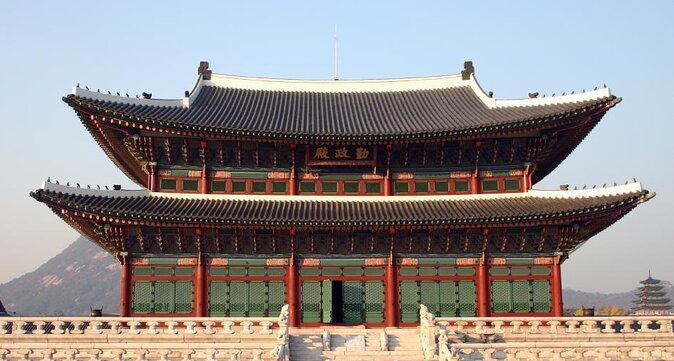
Gyeongbokgung Palace receives about an hour of the scheduled route, with admission included. It was the main royal palace of the Joseon Dynasty, and its courtyards, gates, halls, and decorative details provide the tour’s central history lesson.
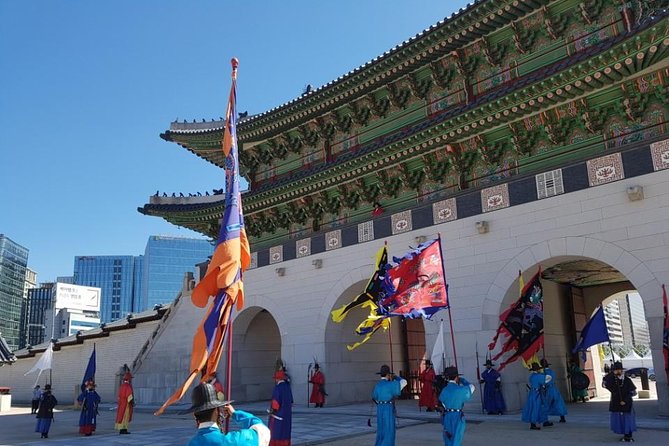
The royal guard changing ceremony is one of the main attractions. Timing matters here, since the ceremony follows a set schedule and may be affected by conditions at the palace. Ask your guide at the start when you can expect to see it, then keep your camera ready without letting the photo opportunity replace the explanation.
Inside the complex, the guide should help you read the buildings. Traditional construction techniques are easier to appreciate when someone explains what you are looking at. Rooflines, painted details, timber construction, courtyards, and the arrangement of buildings all served practical and ceremonial purposes.
The best guides on this route connect palace history with Korea’s larger story. Jay Kim has been praised for explaining Seoul and the palace in detail, while Jack was valued for linking each new sight to earlier parts of Korean history. Joe, also called Joseph by some participants, used pictures and facts to answer questions about architecture, politics, and daily life.
You should have time for photographs and some independent looking, but do not expect a leisurely half-day inside every corner of the palace. The whole experience lasts about three hours, and the route still has the folk museum, Bukchon, and the walk to Insadong ahead.
The National Folk Museum’s everyday Korea
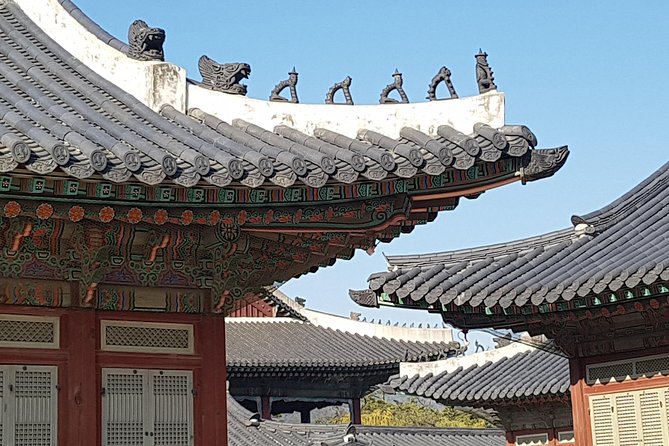
The National Folk Museum of Korea adds a needed change of pace. Gyeongbokgung presents royal life and formal architecture. The museum broadens the picture with more than 98,000 artifacts related to South Korea’s history and everyday culture.
This matters because palace tours can sometimes leave you thinking only about kings and ceremonies. The museum helps show how ordinary people lived, worked, dressed, and organized family and community life. Your guide can provide context as you move through the displays, though the amount of time available will depend on the pace of the group.
If museums are your main interest, you may want a separate visit later. On this tour, the museum functions as part of a larger story rather than as a long, detailed museum appointment. It is a useful bridge between royal Seoul and the traditional neighborhood that follows.
More Palace Tours in Seoul:
- Seoul: Gyeongbok Palace, Bukchon Village, and Gwangjang Tour
★ 4.9 · 2,321 reviews - Best Seoul City Tour (Gyeongbokgung Palace,Insadong,Namsan Tower)
★ 5.0 · 1,647 reviews - Small-Group Royal Palace and Seoul City Tour (hotel pick-up)
★ 5.0 · 1,474 reviews - Seoul City Sightseeing Tour Including Gyeongbokgung Palace, N Seoul Tower, and Namsangol Hanok Village
★ 5.0 · 1,423 reviews
Bukchon Hanok Village and its uphill lanes
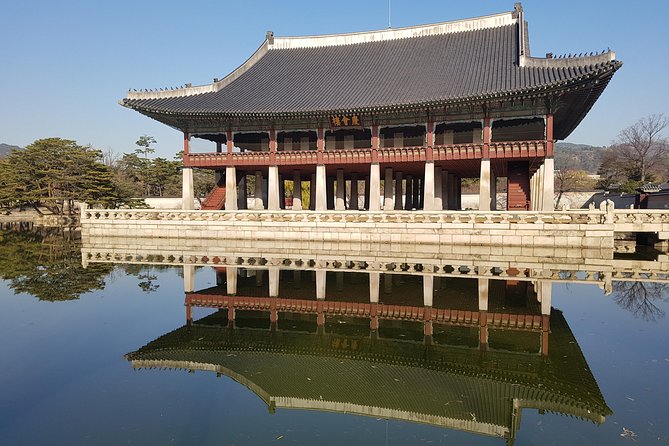
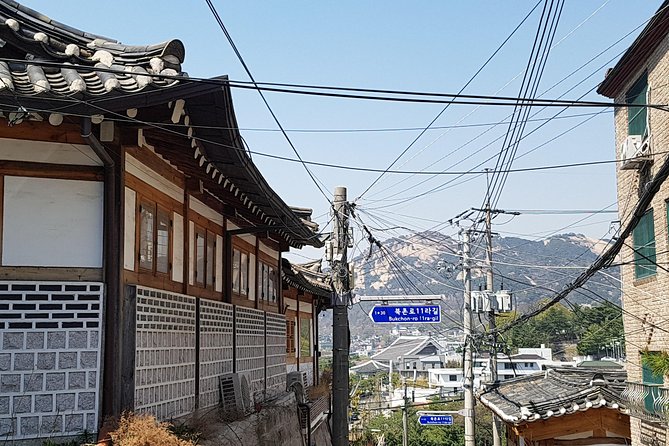
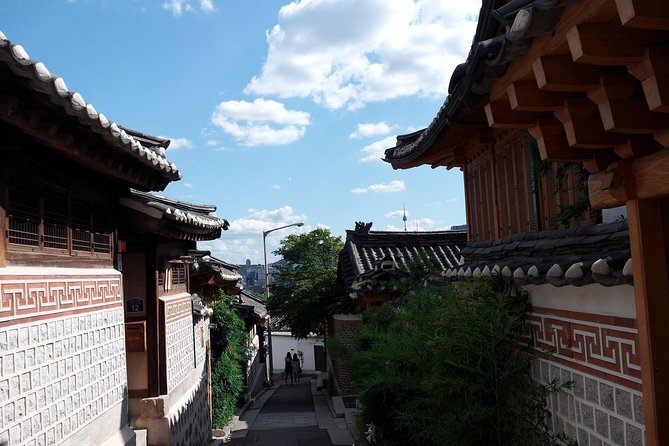
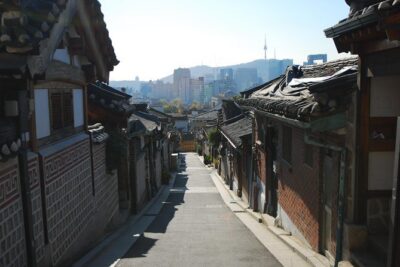
The route then heads toward Bukchon Hanok Village, where the planned visit lasts about 30 minutes. A hanok is a traditional Korean house, and Bukchon is known for its older homes, narrow lanes, slopes, and views across the surrounding city.
The phrase hidden looks captures the appeal of this part of the walk. You may peer into traditional houses and learn how Korean families lived in earlier periods. The experience is not only about photographing tiled roofs. It is also about seeing how older domestic design fits into a real Seoul neighborhood.
Bukchon is still a residential area, so follow your guide’s advice about quiet behavior and photography. The narrow streets can be crowded, and the uphill sections demand more effort than the palace grounds. Comfortable shoes are essential. The tour information specifically warns that it is not suitable for people who have difficulty with steps or uphill walking.
Thirty minutes is enough for an introduction and several photographs, but it may feel brief if you want to explore every lane. The benefit is that you can see Bukchon without spending half a day navigating its slopes alone. The drawback is that you will likely want more time afterward.
Walking onward to Insadong
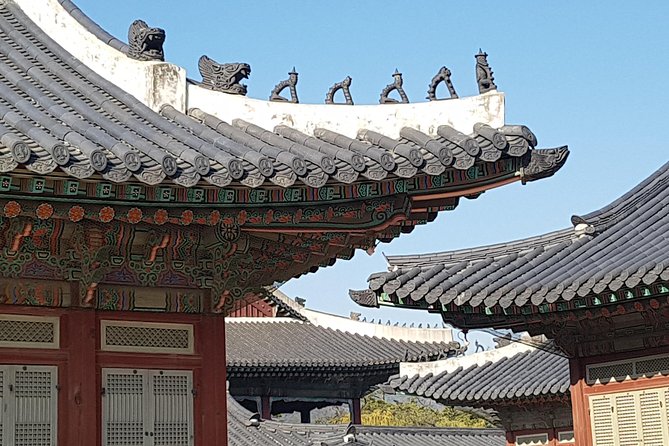
The tour ends at 75-5 Insadong in Jongno District. That is a practical finish, since Insadong gives you a place to continue your day with food, shops, and more wandering through central Seoul.
Several guides have offered useful restaurant or street-food suggestions. Paul was praised for stopping for street food on some private or very small departures, recommending restaurants, and even helping participants reach an area they wanted to see. Another guide ended the outing with a recommendation for a restaurant serving typical Korean dishes.
These extras are not guaranteed parts of the published route, so do not book the tour expecting a meal or a private detour. Think of them as the sort of help a good local guide may offer when time and group interests allow.
Ending in Insadong also makes the tour easy to pair with an afternoon of independent sightseeing. You can remain in the area after the guide leaves instead of spending time crossing the city to reach your next stop.
What $88 buys you
At $88 per person, this is a premium walking tour. The cost includes a professional guide and the palace admission fee, but the experience remains only about three hours long. You are paying mainly for structure, interpretation, and the convenience of combining several important sights.
The small group is important to the value. With a maximum of eight people, you should have a better chance of hearing the guide in courtyards and busy streets. Questions are also easier to handle than they would be in a large bus tour.
For a first visit, I can see the appeal. You avoid spending your morning working out the order of Gwanghwamun, Gyeongbokgung, the folk museum, Bukchon, and Insadong. You also gain a guide who can explain the connections between them.
The price is harder to justify if you mainly want entrance access and photographs. You could visit the sites independently for less, then read the background yourself. I would pay the premium if history, culture, and efficient planning matter to you. I would skip it if you prefer a slow, self-guided day or already know Seoul’s royal district well.
How the small group affects the experience
A group of up to eight is a good middle ground. It keeps the tour social without creating the distance that comes with a large group. You can usually stay close to the guide, and a good leader can adapt explanations to children, older family members, or people asking detailed questions.
The experience can become almost private when only one booking is made. Paul and Jack both led departures that became personal tours because no other participants joined. That can produce excellent value, since the guide may answer more questions and adjust the pace.
It can also expose weak guiding more clearly. In a large group, a quiet guide may be less noticeable. In a one-person or two-person tour, low energy and thin explanations are impossible to miss. If you are assigned a guide who is not meeting your needs, ask direct questions early and explain what interests you.
Who should book this Seoul walking tour?
I would recommend it most strongly to:
- First-time visitors who want a clear introduction to Seoul.
- Families who prefer a guided route to a day of independent navigation.
- History and architecture fans who want more than photographs.
- People with only a short stay who want several major sights in one outing.
- Solo visitors who value company and a local guide.
- Anyone who likes finishing near a district where they can continue exploring.
I would be more cautious if you have trouble with steps, slopes, or extended walking. I would also think twice if you want long, unhurried visits inside the palace and museum. The pace has to cover several places within three hours.
Bring comfortable shoes, water, weather-appropriate clothing, and a phone with the mobile ticket available. The experience requires good weather, and poor conditions may lead to a different date or a full refund. You can cancel for a full refund up to 24 hours before the start time, but changes or cancellations inside that window are not refunded.
Should you book it?
Yes, if you want an efficient first look at Seoul’s royal center and traditional neighborhoods. The route is well chosen, the palace entry is included, the group is small, and the strongest guides bring Korean history to life through stories, architecture, language, and food advice.
Book with the understanding that the guide matters greatly. Names such as Jay Kim, Stella, Joe, Jack, and Paul have been associated with warm, detailed tours, while a few departures felt flat and under-explained. The overall score is 4.8 from 138 ratings, with 97 percent recommending it, so the balance is strongly positive, but not perfect.
At $88, this is best viewed as a guided introduction rather than a bargain sightseeing ticket. If you want context and a well-planned route, it is a sensible first-day choice. If you want maximum independence or have limited walking ability, explore Gyeongbokgung and Bukchon at your own pace instead.
FAQ
How long does the walking tour last?
The tour lasts approximately three hours.
What sights are included?
The route includes Gwanghwamun Gate, the King Sejong statue, Gyeongbokgung Palace, the royal guard changing ceremony, the National Folk Museum of Korea, Bukchon Hanok Village, and the Insadong area.
Is palace admission included?
Yes. The palace admission fee is included in the tour price.
How large is the group?
The experience has a maximum of eight participants.
Where does the tour finish?
The tour finishes near 75-5 Insa-dong in Seoul’s Jongno District, in the Insadong area.
Is the tour suitable for people with walking difficulties?
It is not recommended for people who have difficulty with steps or uphill walking. A moderate level of physical fitness is advised.
What happens if the weather is poor?
The experience requires good weather. If it is canceled because of poor weather, you will be offered another date or a full refund.
More Hanok Village Tours in Seoul
- Seoul: Gyeongbok Palace, Bukchon Village, and Gwangjang Tour
★ 5.0 · 1,044 reviews - Seoul: Gyeongbok Palace and Bukchon Hanok Walking Tour
★ 4.8 · 157 reviews - Royal Seoul Cooking Class in a 100-Year-Old Hanok
★ 5.0 · 81 reviews - Afternoon Seoul: Hanok Vibes, Netflix Street Food & N Seoul Tower
★ 4.5 · 30 reviews
Just added in Seoul
- You’re Invited to Our Home in Seoul: The Only Cooking Class!★ 5.0 · 8 reviews
- Seoul: Korean & English Language Exchange Global Party★ 5.0 · 28 reviews
- Your Personal Seoul Photographer!★ 4.1 · 15 reviews
- From Seoul: Yongpyong Ski Day Tour with Transportation★ 4.9 · 40 reviews
- From Seoul: Hwacheon Ice Fishing and Lighting Festival Tour★ 4.5 · 4 reviews
- Seoul: Gangneung BTS K-Pop & K-Drama Filming Locations Tour★ 4.6 · 14 reviews
- Unique Native Experience : Han River Picnic, Board game, BBQ★ 5.0 · 3 reviews
- Seoul: Euljiro Gastroventure Tour★ 4.0 · 1 review
Palace Tours, compared.
Gyeongbok Palace, Bukchon Village, and Gwangjang Tour
Read our review →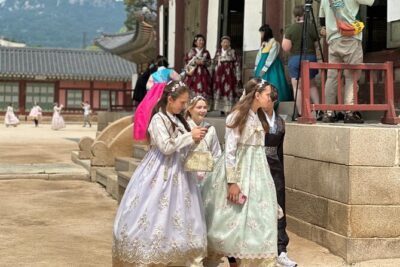
Best Seoul City Tour (Gyeongbokgung Palace,Insadong,Namsan Tower)
Read our review →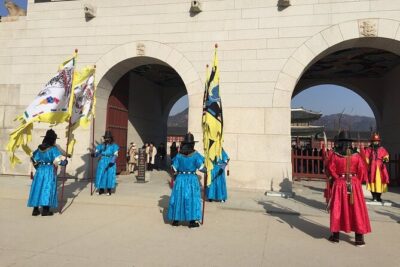
Small-Group Royal Palace and Seoul City Tour (hotel pick-up)
Read our review →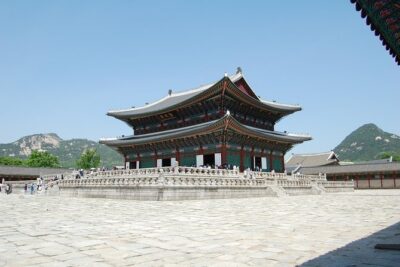
Seoul City Sightseeing Tour Including Gyeongbokgung Palace, N Seoul Tower, and Namsangol Hanok Village
Read our review →Gyeongbok Palace, Bukchon Village, and Gwangjang Tour
Read our review →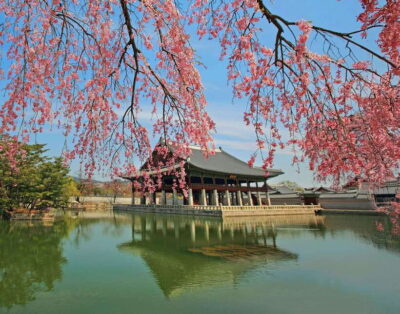
Seoul Highlights: Gyeongbok Palace, Insadong & N Seoul Tower
Read our review →
Seoul City Half Day Tour-Gyeongbok Palace Guard Changing Ceremony
Read our review →Browse the lists this tour appears in