
Reviewed · PALACE TOURS
Seoul: Gyeongbok Palace and Bukchon Hanok Walking Tour
Seoul’s old heart fits into one morning. This small-group walk links Gyeongbokgung Palace with Bukchon Hanok Village, giving you royal history, traditional streets, and useful city tips without spending a full day indoors. I especially like the early start and the chance to see the changing ceremony of the royal guards. I also like that the guide helps you understand public transport and everyday Korean customs. The main drawback is simple: three hours is tight for such a large palace and a hilly village.
The tour costs $88 per person and includes an English-speaking guide plus the palace entrance ticket. With groups limited to eight, you get more room to ask questions than on a large bus tour. Still, you should expect steady walking, long periods on your feet, and some uphill climbing in Bukchon, so comfortable shoes are not optional.
In This Review
- Key points at a glance
- Starting beside The Plaza Hotel at City Hall
- Gyeongbokgung Palace and the guard ceremony
- The National Folk Museum and daily Joseon life
- Samcheongdong Alley and Bukchon Hanok Village
- Finishing in Insadong with practical Seoul advice
- What the guides add to the experience
- Walking distance, weather, and pace
- Is $88 a fair price?
- Who should book this morning walk?
- Final verdict: a strong first morning in Seoul
- FAQ
- Where does the tour meet?
- Where does the tour end?
- How long does the tour last?
- What language is the tour offered in?
- How many people are in the group?
- Is hotel pickup included?
- Is the Gyeongbokgung entrance ticket included?
- Does the tour include the National Folk Museum of Korea?
- What should I bring?
- Is there much walking or climbing?
- Can I cancel for a full refund?
- Can I reserve now and pay later?
Key points at a glance
- Royal guards in the morning: The changing ceremony adds pageantry before your palace walk begins.
- A 500-year Joseon introduction: Gyeongbokgung gives you the political and architectural setting for understanding old Seoul.
- 98,000 artifacts nearby: The National Folk Museum offers a look at ordinary Korean life, not only royal buildings.
- Bukchon’s uphill lanes: Samcheongdong Alley brings you close to traditional homes, but the climb can be tiring.
- Small groups of eight or fewer: The format allows questions, photographs, and a pace that can feel almost private.
- A useful finish in Insadong: You end near shops, food, tea, and souvenirs, with a guide available for recommendations.
Starting beside The Plaza Hotel at City Hall
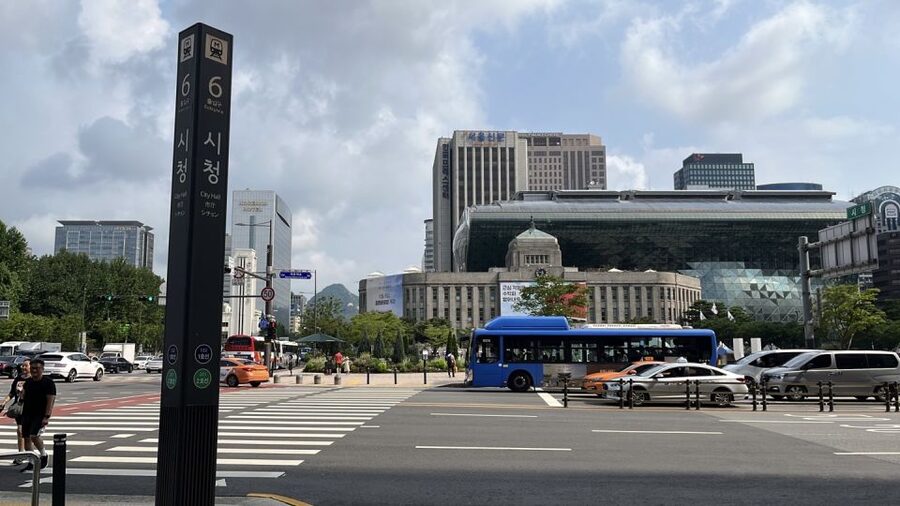
The meeting point is outside City Hall Station at Exit 6, right next to The Plaza hotel. This is a central and practical place to begin, but do not treat the station exit as a vague landmark. Seoul has many busy intersections and several nearby subway entrances, so arrive with enough time to find Exit 6.
From there, you walk toward Gyeongbokgung Palace rather than taking a coach. That choice matters. You begin seeing how modern Seoul and its older royal district fit together, while your guide explains the city and helps you get comfortable with local public transport.
This is not a hotel pickup tour. You must reach City Hall Station on your own, and the tour ends in Insadong rather than returning you to your hotel. For a first morning in Seoul, that is useful because you can continue sightseeing, shopping, or eating from the final stop.
More Walking Tours in Seoul
- Seoul moonlight walking tour with local historian
★ 5.0 · 940 reviews - Seoul: Nighttime Hidden Gems Walking Tour
★ 5.0 · 775 reviews - Seoul: Evening Dark History, Folklore & Ghost Story Walking Tour
★ 5.0 · 593 reviews
Gyeongbokgung Palace and the guard ceremony
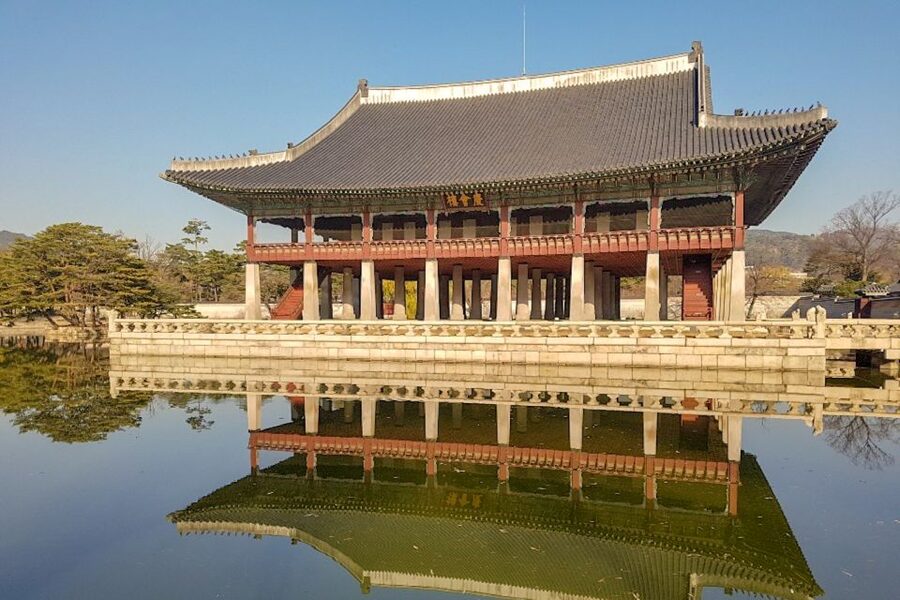
Gyeongbokgung is the grand opening act, and the morning timing is one of the tour’s best features. You watch the royal guard changing ceremony, with its traditional uniforms and formal movements, before turning to the larger story of the palace.
The site introduces the Joseon Dynasty and its roughly 500-year period of rule. A good guide can make the gates, courtyards, halls, and ceremonial spaces easier to read. Without context, a palace can become a string of attractive roofs and painted beams. With context, you begin to understand how royal power, ceremony, architecture, and social order worked together.
The guides have received especially strong praise for turning dates and buildings into stories. Joe, Stella, Jay Kim, Jack, Ben, Jae, Kay, and others are named in the available feedback, with Stella appearing particularly often. Their styles vary, but the common thread is clear: guests value guides who connect the palace to present-day Korea rather than reciting a list of facts.
You may also get help with photographs. Several guides are praised for finding good picture spots and taking photos for the group. That is a small service, but it can make a difference when you are traveling alone or trying to capture a full-group shot.
The tradeoff is time. Gyeongbokgung is large, and this tour does not give you a whole day to inspect every building. You will move through the main areas with explanations rather than linger everywhere. If palace architecture is your main interest, plan to return independently for a longer visit.
The National Folk Museum and daily Joseon life
The next stop is the National Folk Museum of Korea, located within the palace grounds. Its collection contains more than 98,000 artifacts, giving the tour a useful change of scale.
Gyeongbokgung presents the world of kings, officials, and ceremony. The museum helps you think about households, work, customs, and daily routines during the Joseon period. That balance is valuable. A country’s past is not only made of rulers and major events, and the museum gives your guide objects to use when explaining how people actually lived.
The museum stop also gives you a break from open courtyards and walking outside. How much time you have to explore individual displays depends on the pace of the group and the day’s conditions. The tour’s strength is the guide’s explanation of why objects matter. Its limitation is that you will not have time to study the entire collection in detail.
If you prefer a fast introduction before exploring on your own, this works well. If you want a museum-focused visit, you will need more time afterward.
Samcheongdong Alley and Bukchon Hanok Village
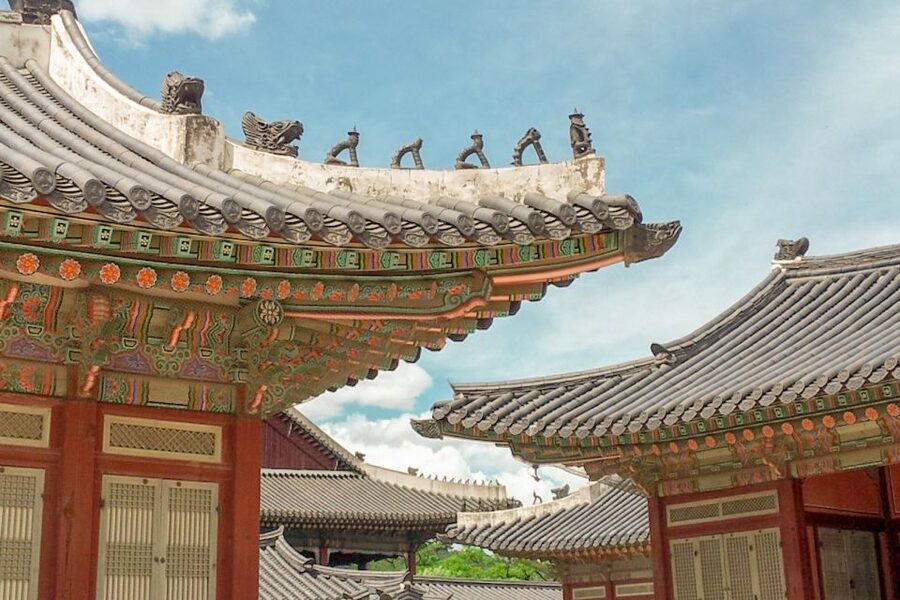
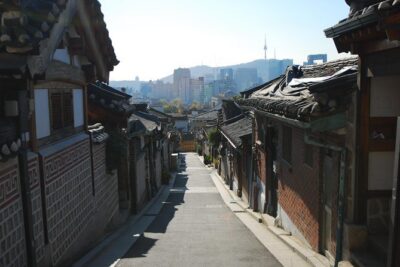
After the palace and museum, the tour moves into Bukchon Hanok Village, including a walk through Samcheongdong Alley. This is where the morning shifts from royal Seoul to a lived-in neighborhood of traditional Korean houses.
Hanok homes are the visual draw, but the bigger point is the contrast around them. Old rooflines, narrow lanes, newer shops, and modern city life occupy the same part of Seoul. Your guide helps you notice that mix instead of treating Bukchon as a simple photo backdrop.
The lanes are not flat. Several people specifically point out the uphill sections and climbing, and one description calls the village’s climb steep. Expect stairs, slopes, and plenty of standing. The tour information asks you to bring comfortable shoes and clothes, and that advice deserves attention.
The payoff is the change in pace and texture. Palace grounds are formal and spacious. Bukchon is tighter, more local in feel, and full of small turns. Guides such as Stella and Jay Kim have been praised for showing short paths and alleys that are easy to miss without someone who knows the area.
Because this is a residential district, your guide’s direction matters. You should follow instructions about where to stop and how to behave. The experience is better when you remember that the attractive houses are part of a neighborhood, not an open-air stage.
More Palace Tours in Seoul:
- Seoul: Gyeongbok Palace, Bukchon Village, and Gwangjang Tour
★ 4.9 · 2,321 reviews - Best Seoul City Tour (Gyeongbokgung Palace,Insadong,Namsan Tower)
★ 5.0 · 1,647 reviews - Small-Group Royal Palace and Seoul City Tour (hotel pick-up)
★ 5.0 · 1,474 reviews - Seoul City Sightseeing Tour Including Gyeongbokgung Palace, N Seoul Tower, and Namsangol Hanok Village
★ 5.0 · 1,423 reviews
Finishing in Insadong with practical Seoul advice
The morning ends in Insadong, a handy place for souvenirs and further exploring. You can ask your guide where to shop, eat, find Korean tea, or continue your day. The exact recommendations will depend on your interests, but the ending is well chosen because you are not left beside a palace with no idea where to go next.
Past participants have received advice on skincare, street food, vegetarian choices, photo locations, and other places to visit. One guide helped a guest find Sulwhasoo products, while another suggested Korean foods suitable for a vegetarian. These moments show the value of a small group: you can say what you want, and the guide may adjust the final part of the morning.
The public transport lesson is another practical benefit. You are not simply being moved between attractions. You can ask about using Korea’s transport system, local etiquette, and travel routes. One guest was shown how to use a T-money card, while another said the bus experience made future trips easier.
That makes this tour particularly useful on your first or second day in Seoul. You get history, but you also get a better sense of how to move through the city afterward.
What the guides add to the experience
The strongest part of this tour is the guide. A palace visit can be pleasant on its own, but the comments consistently praise guides who are friendly, patient, entertaining, and able to answer questions.
Several guides have teaching backgrounds. Joe is described as a retired teacher, and another guide was praised for a clear, well-organized way of explaining facts. That matters on a three-hour tour. You need someone who can decide what to explain, what to skip, and how to keep a group moving.
The best moments seem to come when the conversation stretches beyond palace dates. Guides have discussed Korean food, politics, social movements, pronunciation, architecture, current life, and the connection between past events and modern Seoul. Jae even used songs about the palace, while other guides added humor and personal stories.
Guide assignments can vary, so you cannot assume you will receive Stella, Joe, or Jay Kim. Still, the repeated praise for different members of the guiding team suggests that the experience is not dependent on one person alone.
The small-group limit of eight is important here. You can ask about a roof detail, stop for a photo, or explain that you need a slower pace. In quieter periods, some bookings have become one-to-one experiences, which can feel like a private tour without paying for a separate private arrangement. That is not guaranteed, but it is a pleasant possibility.
Walking distance, weather, and pace
You should think of this as an active walking tour, not a gentle sightseeing loop. You walk from City Hall toward the palace, move across palace grounds, visit the museum, continue through Bukchon, and finish in Insadong. There is also climbing in the village.
The tour lasts three hours, so the schedule is efficient. That helps you see several major areas in one morning, but it also means you will not have unlimited time at each stop. If you want to photograph every palace hall or browse every museum display, the pace may feel brisk.
Weather can change the experience. The itinerary may be adjusted for weather and traffic conditions. Bring comfortable clothes and shoes, and prepare for the fact that much of the morning takes place outdoors. A guide named Joe was praised for looking after a guest through intense cold and snow, but severe weather can still make the walk harder.
Rain did not stop one past tour from being enjoyable, but you should not count on perfect conditions. Check the forecast and dress sensibly. The morning schedule is a good way to avoid spending your entire day outside if the weather turns poor.
Is $88 a fair price?
At $88, this is not Seoul’s cheapest walking tour. The price includes the Gyeongbokgung entrance ticket, an English-speaking guide, and a three-hour route through several important parts of the city.
The value comes from the structure and the guidance. You are not paying only to enter a palace. You are paying for a planned route, historical explanation, help with public transport, local suggestions, and a small group capped at eight. If you are new to Seoul, those details can save time and reduce the stress of figuring out the old city district alone.
The price looks especially reasonable if your group is small or if you receive a near-private experience. It is less compelling if you already know Korean history, can navigate Seoul easily, and prefer to spend hours inside the palace at your own pace.
You also need to budget for anything beyond the listed inclusions. Hotel pickup and drop-off are not included. The guide may suggest food, tea, or shopping afterward, but those purchases are your responsibility.
Free cancellation is available up to 24 hours before the tour for a full refund, and you can reserve now and pay later. Those terms help if your Seoul schedule is still changing.
Who should book this morning walk?
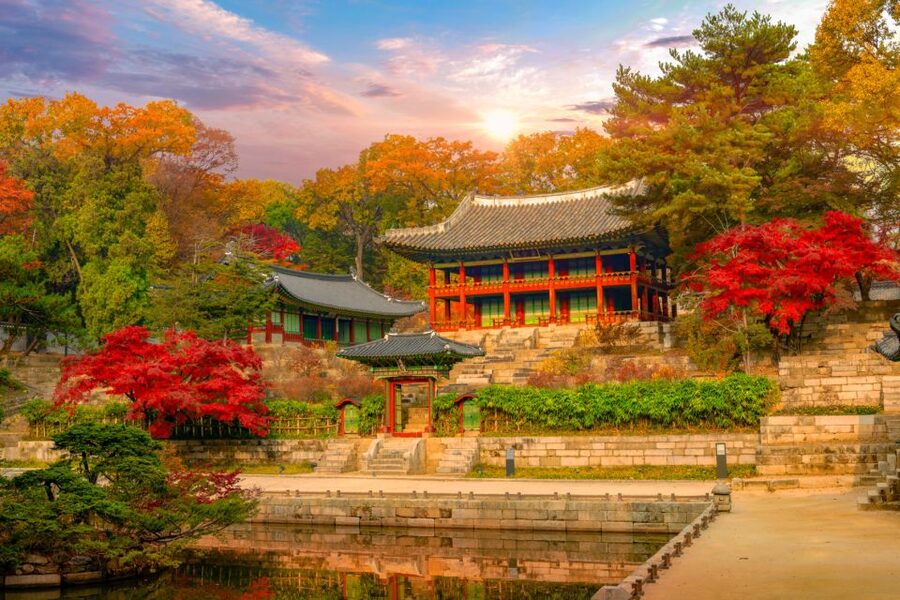
I would point this tour toward first-time visitors, solo visitors, couples, and small groups who want a useful introduction rather than a simple photo stop. It suits you especially well if you want to understand how royal Seoul connects with present-day neighborhoods.
It is also a good choice if you are unsure how to use public transport in Korea. The tour begins near a major subway station, teaches practical basics, and finishes in an area where you can continue independently.
Families with older children may enjoy the guard ceremony, palace stories, and village lanes, but the amount of walking and the uphill Bukchon section should be considered. The same applies to anyone who finds slopes or long periods of standing difficult.
You may want a different plan if your priority is a slow museum visit, detailed architectural study, or a full-day palace exploration. Three hours gives you a broad introduction, not an exhaustive inspection.
Final verdict: a strong first morning in Seoul
I would book this tour early in a Seoul visit, ideally on your first or second morning. The palace gives you the historic framework, Bukchon shows how tradition survives beside modern city life, and the Insadong finish leaves you in a useful part of town.
The strongest reasons to book are the small group, the guide-led storytelling, the guard ceremony, and the practical help with transport and local food. The main caution is the physical pace. Wear proper shoes, expect hills, and accept that some stops will be brief.
For $88, you receive more than entry to two famous areas. You receive a compact orientation to Seoul, with enough context to make the rest of your trip easier and more meaningful. If that is what you need, this is a sound choice.
FAQ
Where does the tour meet?
Meet outside City Hall Station at Exit 6, right next to The Plaza hotel.
Where does the tour end?
The morning tour ends in the Insadong area.
How long does the tour last?
The tour lasts three hours.
What language is the tour offered in?
The live tour guide speaks English.
How many people are in the group?
The group is limited to eight participants.
Is hotel pickup included?
No. Hotel pickup and drop-off are not included.
Is the Gyeongbokgung entrance ticket included?
Yes. The Gyeongbokgung entrance ticket is included.
Does the tour include the National Folk Museum of Korea?
Yes. The route includes a stop at the National Folk Museum, which is located within the palace grounds.
What should I bring?
Bring comfortable shoes and comfortable clothes.
Is there much walking or climbing?
Yes. The tour involves walking and standing, and the Bukchon Hanok Village section includes uphill areas and some climbing.
Can I cancel for a full refund?
Yes. You can cancel up to 24 hours in advance for a full refund.
Can I reserve now and pay later?
Yes. The tour offers a reserve-now, pay-later option.
More Hanok Village Tours in Seoul
- Seoul: Gyeongbok Palace, Bukchon Village, and Gwangjang Tour
★ 5.0 · 1,044 reviews - Best Walking Tour to Gyeongbok Palace Bukchon Hanok Village
★ 5.0 · 138 reviews - Royal Seoul Cooking Class in a 100-Year-Old Hanok
★ 5.0 · 81 reviews - Afternoon Seoul: Hanok Vibes, Netflix Street Food & N Seoul Tower
★ 4.5 · 30 reviews
Just added in Seoul
- Seoul: Korean & English Language Exchange Global Party★ 5.0 · 28 reviews
- Your Personal Seoul Photographer!★ 4.1 · 15 reviews
- You’re Invited to Our Home in Seoul: The Only Cooking Class!★ 5.0 · 8 reviews
- From Seoul: Yongpyong Ski Day Tour with Transportation★ 4.9 · 40 reviews
- From Seoul: Hwacheon Ice Fishing and Lighting Festival Tour★ 4.5 · 4 reviews
- Seoul: Gangneung BTS K-Pop & K-Drama Filming Locations Tour★ 4.6 · 14 reviews
- Unique Native Experience : Han River Picnic, Board game, BBQ★ 5.0 · 3 reviews
- Seoul: Euljiro Gastroventure Tour★ 4.0 · 1 review
Palace Tours, compared.
Gyeongbok Palace, Bukchon Village, and Gwangjang Tour
Read our review →
Best Seoul City Tour (Gyeongbokgung Palace,Insadong,Namsan Tower)
Read our review →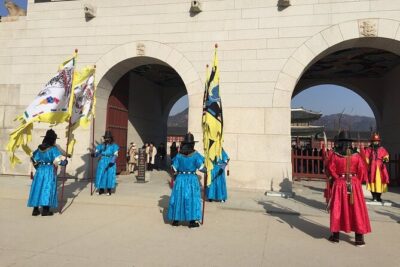
Small-Group Royal Palace and Seoul City Tour (hotel pick-up)
Read our review →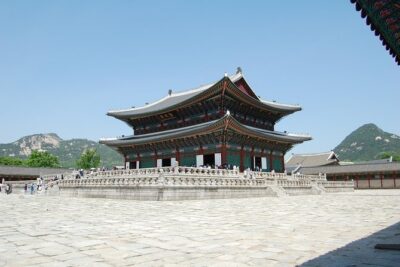
Seoul City Sightseeing Tour Including Gyeongbokgung Palace, N Seoul Tower, and Namsangol Hanok Village
Read our review →Gyeongbok Palace, Bukchon Village, and Gwangjang Tour
Read our review →
Seoul Highlights: Gyeongbok Palace, Insadong & N Seoul Tower
Read our review →
Seoul City Half Day Tour-Gyeongbok Palace Guard Changing Ceremony
Read our review →Browse the lists this tour appears in