Reviewed · GUIDED
Korean War Memorial Private Guided Tour
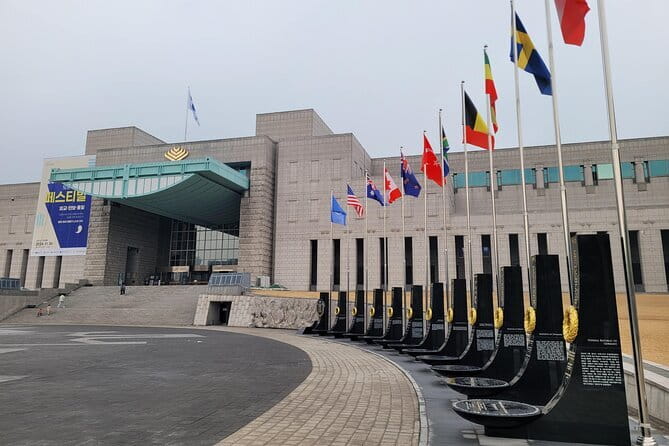
Korea’s modern story begins with a split. This private tour makes that story easier to follow, pairing the War Memorial of Korea with expert guidance on liberation, division, war, and the birth of the DMZ. I like the one-group format and the way the guide adds pictures and document copies that help bring the museum displays into focus.
I also like the calm, even-handed approach. Kichan Lee and his fellow guides explain the war as both a civil conflict and an international struggle, while discussing propaganda and the human cost. The main limitation is time: two hours is enough for a focused visit, but not enough to cover every gallery in this large museum.
In This Review
- Key points before you book
- Why the Korean War Memorial needs a guide
- The two-hour route through Rooms I, II, and III
- Room I: The background to division
- Room II: Four stages of a changing war
- Room III: Armistice and the birth of the DMZ
- What the guide adds beyond the museum displays
- Why the private format matters
- Meeting point, timing, and practical details
- The museum setting and the tone of the visit
- Who will get the most from this tour
- My verdict: book it for context, not just exhibits
- FAQ
- How long does the Korean War Memorial private tour last?
- Where does the tour take place?
- How much does the tour cost?
- Is museum admission included?
- Is this a private tour?
- Is the tour conducted in English?
- Does the tour visit the DMZ?
- Can I cancel for a full refund?
Key points before you book
- A private tour for up to five people: Your group gets the guide’s full attention, with no strangers joining you.
- The Korean War Rooms are the focus: The visit centers on Rooms I, II, and III, the museum’s main galleries on the war.
- The story begins before 1950: You examine liberation from Japan, the creation of two Korean states, and the political forces that shaped the conflict.
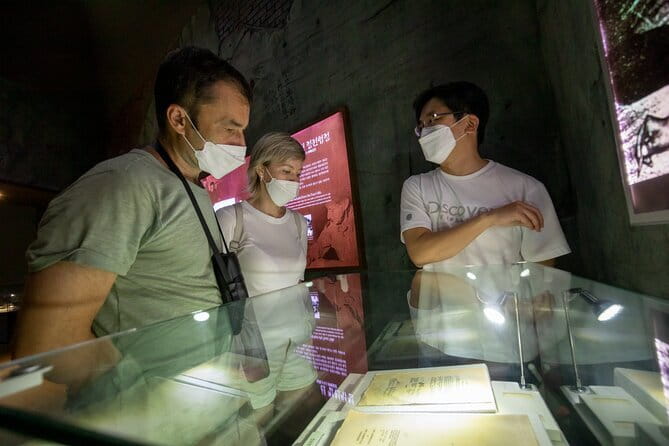
- Guides add material beyond the displays: Expect photographs and copies of documents to support the explanation.
- A strong value for a small group: At $100 per group, the price works out to $20 each for five people, with no separate admission charge.
- A serious but useful introduction to the DMZ: The tour explains how the armistice created the Demilitarized Zone, though it does not visit the DMZ itself.
Why the Korean War Memorial needs a guide
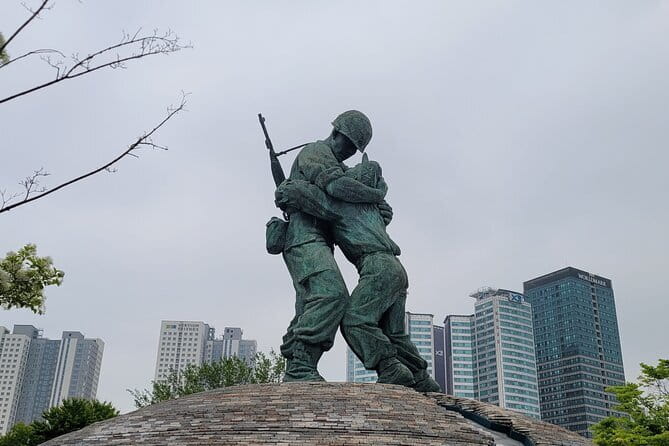
The Korean War can look simple from a distance. North Korea invaded the South, United Nations forces intervened, China entered the conflict, and the fighting ended in an armistice. Inside the museum, though, the story quickly becomes more tangled.
The war grew from Korea’s liberation from Japanese rule and the division of the peninsula into separate political zones. The two governments that emerged claimed legitimacy over all Korea. That made the conflict both a struggle among Koreans and a larger contest shaped by the United States, the Soviet Union, China, and the wider Cold War.
That is where a private guide earns the fee. The museum gives you maps, weapons, photographs, uniforms, and written displays. A guide helps you understand how those pieces connect. You are not simply looking at military objects. You are asking why the war began, why it expanded, and why the fighting stopped without a peace treaty.
The guides also bring a peace studies perspective. That matters because official military museums naturally emphasize battles, commanders, equipment, and national sacrifice. This tour gives more room to civilians, political choices, social damage, and the difference between public claims and historical evidence.
A few more options to weigh up in Seoul
- Best DMZ Tour Korea from Seoul (Red Suspension Bridge Optional)
★ 5.0 · 41,422 reviews - DMZ Tour: 3rd Tunnel, Option(Suspension Bridge, Boat) from Seoul
★ 5.0 · 21,373 reviews - DMZ tour south Korea from Seoul (NK experience hall, defector)
★ 5.0 · 20,599 reviews
The two-hour route through Rooms I, II, and III
The entire visit takes place at the War Memorial of Korea, with the Korean War Rooms as the main focus. Admission to the museum portion is free, and the guide leads your group through the key galleries rather than leaving you to find the important sections alone.
Room I: The background to division
The tour begins with the conditions that shaped postwar Korea. Liberation from Japan did not bring a united, independent government overnight. Instead, the peninsula became divided, and competing political systems took root.
This opening section is important because it prevents the war from appearing out of nowhere. You learn how the birth of South Korea and North Korea created a tense political setting before the first major fighting in 1950.
A guide can also slow down here when the museum’s displays move quickly. Terms such as liberation, trusteeship, occupation, anti-communism, and national unification carry a lot of weight. If you have only a general sense of the period, the explanation gives you a usable framework for the rest of the visit.
Room II: Four stages of a changing war
The middle part of the tour follows the war through four stages of shifting military and political circumstances. This structure helps you see that the conflict was not one steady campaign.
The front moved dramatically. Victories and defeats changed the balance, and outside powers played a major role in the direction of the fighting. Maps and military displays are easier to understand when the guide explains what changed between each stage and why the situation did not remain fixed.
This is one of the strongest reasons to choose a private visit. You can stop when a map is confusing, ask about a particular country’s role, or return to a point that needs more explanation. Kichan Lee has been praised for explaining difficult material clearly and for answering questions directly, including questions about politics and competing versions of events.
The tour does not treat every official claim as automatically true. It gives you tools for separating wartime propaganda from better-supported accounts. That does not mean the guide turns the visit into a political argument. The appeal is the measured tone and willingness to discuss uncomfortable facts.
A completely different kind of day:
- Seoul: DMZ Tour with Optional Suspension Bridge
★ 4.8 · 5,277 reviews - Signature DMZ Tour: Exclusive Defector Talk & Suspension Bridge
★ 5.0 · 4,459 reviews - Thrilling Korean DMZ 3rd Tunnel Tour from Seoul + Red Bridge Rush
★ 5.0 · 3,097 reviews - DMZ Past and Present: Korean Demilitarized Zone Tour from Seoul
★ 5.0 · 2,481 reviews
Room III: Armistice and the birth of the DMZ
The final section follows the war toward the armistice. The fighting stopped, but the conflict was not resolved through a peace agreement. The armistice created the Demilitarized Zone, a division that still shapes life on the peninsula.
This part is especially useful if you plan to visit the DMZ later. You will have a clearer idea of why the zone exists and what it represents. The guide also connects the armistice to the larger question of peace, rather than presenting it as a neat ending.
The tour does not include transport to the DMZ or a border visit. Its value is preparation: you leave with a better grasp of the political and military background before seeing the modern division for yourself.
What the guide adds beyond the museum displays
The guide is not just there to read labels aloud. The experience is built around interpretation and conversation.
Professional guides connected with this experience are PhD students with backgrounds in Korean history, peace activism, and DMZ tours. Kichan Lee receives especially strong praise for his command of Korean history, World War II, and politics, as well as for his clear English.
You also receive supporting material, including pictures and copies of documents. These additions can be useful when a museum display gives you a broad outline but not enough detail to understand the issue. They also give the discussion something concrete to return to.
The guide’s approach appears particularly helpful for visitors from countries that teach little about the Korean War. It is easy to know that the war happened without understanding the social forces behind it or the continuing political effects. The tour fills that gap without assuming that you already know the timeline.
I would also expect a more personal conversation than on a large group tour. Because only your group participates, you can ask about a family story, a political term, the role of another country, or the meaning of the armistice. The quality of that exchange will depend partly on your questions, so arrive with a few in mind.
Why the private format matters
The tour costs $100 per group of up to five people. That is a strong deal for a full two-hour private session, especially if you can fill the group.
For five people, the cost works out to $20 each. For two people, it becomes $50 each, and a solo visitor pays the entire group price. The value is therefore best for couples, families, friends, or a small private party rather than one person traveling alone.
The price includes the professional English-speaking guide and all fees and taxes. Admission to the museum portion is free, so you are paying mainly for the guide’s preparation, interpretation, and time.
That distinction matters. If you enjoy reading every panel at your own pace, you may prefer to visit without a guide. If the Korean War feels confusing or unfamiliar, the private format can save you hours of piecing together the chronology yourself.
The experience is also better suited to people who want context rather than a quick photo stop. You will spend the full two hours focused on a narrow set of galleries and themes. This is not the right choice if you want to cover the entire museum or move quickly through Seoul’s attractions.
Meeting point, timing, and practical details
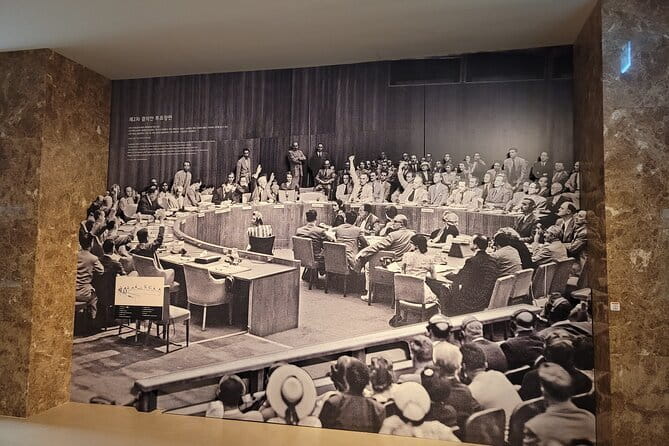
The stated starting point is 8-66 Yongsan-dong 1(il)-ga in Yongsan District. The end point is the lobby of the War Memorial of Korea at 29 Itaewon-ro, also in Yongsan District.
Because the museum address and the starting address are presented separately, confirm the exact meeting instructions before the day of the tour. The first appointment with a guide can take a moment inside a large museum complex, so allow time to reach the area and check your messages.
One useful detail comes from a delayed arrival. A guide stayed in contact with a late participant and helped that person find the group inside the exhibition room. That suggests some flexibility, but you should not treat it as a guarantee. Send an update if you are running late, and keep your phone available.
The tour is near public transportation, and a mobile ticket is provided. A moderate level of physical fitness is expected. The information does not specify the exact amount of walking or seating, so anyone with mobility concerns should ask the provider before booking.
Service animals are allowed. The tour is conducted in English, and the guide is included in the price. Tips are not included, so budget separately if you choose to give one.
You receive confirmation at booking. Free cancellation is available up to 24 hours before the start time for a full refund. Changes or cancellations inside that 24-hour window are not accepted, and a minimum number of participants may apply to the operation of the experience.
The museum setting and the tone of the visit
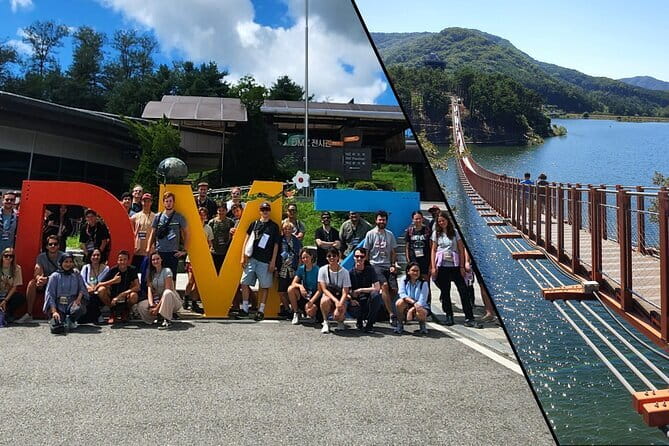
The War Memorial of Korea is a substantial museum, and the Korean War galleries are only part of what you can see there. The building and surrounding area give the visit a serious setting, with military history presented through displays and memorial material.
That atmosphere can be moving, but it may also feel formal. The tour’s peace-focused angle helps balance the military presentation by asking what the war did to ordinary people and what the continuing division means.
The guide’s tone is another important part of the experience. The strongest praise centers on fairness, clarity, and a willingness to discuss the social cost of the war. That is useful for a subject where national memory and political interpretation often pull in different directions.
You should still expect a history lesson, not an entertainment show. The material includes war, death, propaganda, division, and political conflict. Families with older children may find it worthwhile, but the subject deserves a thoughtful mood.
Who will get the most from this tour
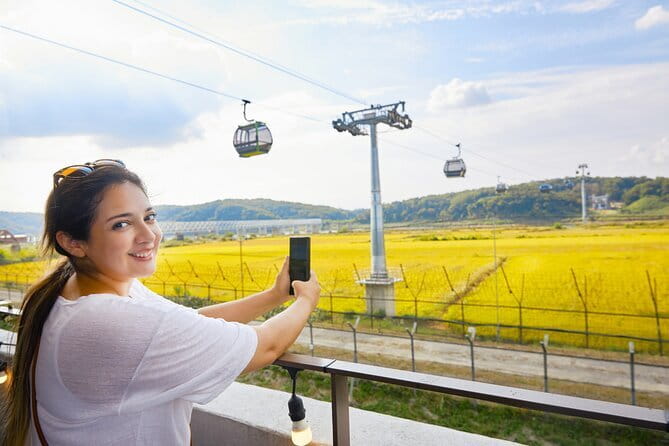
I would choose this tour if you want a clear introduction to modern Korean history or if you plan to visit the DMZ and want more background first.
It suits:
- First-time visitors who know the Korean War only in broad terms
- History students and serious readers
- Visitors interested in peace studies and Korean politics
- Small families or friend groups that can share the $100 price
- People who prefer asking questions to reading displays alone
- Anyone who wants help judging official claims and wartime propaganda
It may not suit you if you want a broad museum visit, a relaxed walk through many unrelated exhibits, or a tour focused only on military hardware. The two-hour schedule is concentrated and discussion-based.
The experience also works well as part of a longer history day in Seoul. You could use it as a foundation for later visits connected with the division of Korea, but the supplied details do not include a second Seoul attraction or transportation between sites.
My verdict: book it for context, not just exhibits
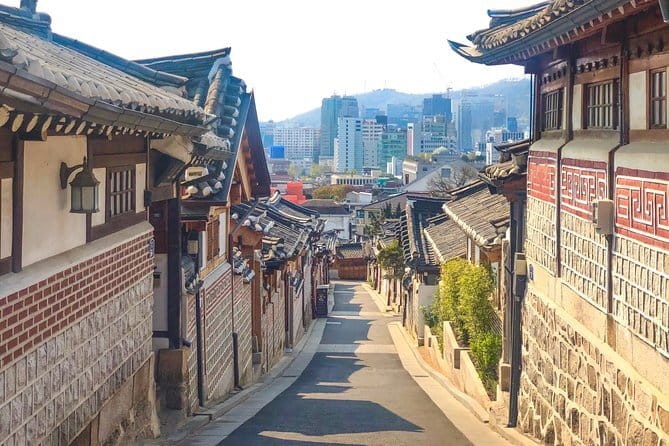
I would book this tour if the Korean War is central to your interest in Korea, especially if you are traveling with up to four companions. The private format, free museum admission, English guidance, extra documents, and strong focus on context make $100 a fair price for a small group.
The best reason to go is not the chance to see weapons or uniforms. It is the chance to understand how liberation, division, civil conflict, international intervention, propaganda, and the armistice fit together. Kichan Lee’s clear explanations and balanced treatment of difficult subjects add real value.
Skip it if you are short on time and only want a general museum visit. But if you want the Korean War to make sense before you leave Seoul, this focused two-hour session is a smart use of your morning or afternoon.
FAQ
How long does the Korean War Memorial private tour last?
The tour lasts approximately two hours.
Where does the tour take place?
The tour takes place at the War Memorial of Korea in Yongsan District, Seoul, with the Korean War Rooms I, II, and III as the main focus.
How much does the tour cost?
The price is $100 per group of up to five people.
Is museum admission included?
Admission to the War Memorial of Korea is free. The $100 price includes the professional English-speaking guide and all listed fees and taxes.
Is this a private tour?
Yes. Only your group participates, with a maximum of five people.
Is the tour conducted in English?
Yes. A professional English-speaking guide leads the experience.
Does the tour visit the DMZ?
No. The tour explains the armistice and the creation of the DMZ, but the stated experience takes place at the War Memorial of Korea.
Can I cancel for a full refund?
Yes. You can cancel at least 24 hours before the experience start time for a full refund. Cancellations or changes made less than 24 hours in advance are not accepted for a refund.
Just added in Seoul
- Seoul: Korean & English Language Exchange Global Party★ 5.0 · 28 reviews
- Your Personal Seoul Photographer!★ 4.1 · 15 reviews
- You’re Invited to Our Home in Seoul: The Only Cooking Class!★ 5.0 · 8 reviews
- From Seoul: Yongpyong Ski Day Tour with Transportation★ 4.9 · 40 reviews
- From Seoul: Hwacheon Ice Fishing and Lighting Festival Tour★ 4.5 · 4 reviews
- Seoul: Gangneung BTS K-Pop & K-Drama Filming Locations Tour★ 4.6 · 14 reviews
- Unique Native Experience : Han River Picnic, Board game, BBQ★ 5.0 · 3 reviews
- Seoul: Euljiro Gastroventure Tour★ 4.0 · 1 review
Guided, compared.
Gyeongju Guided Day Trip to Three Kingdoms Capital
Read our review →
Gyeongju UNESCO World Heritage Guided Day Tour
Read our review →
Busan Private Tour with licensed tour guide + private vehicle
Read our review →
DMZ Guided Tour with Suspension Bridge / Gondola from Seoul
Read our review →
Gyeongju UNESCO World Heritage Guided Day Tour from Busan
Read our review →
Downtown Seoul Guided Food & Market Tour with 8+ Local Tastings
Read our review →