
Reviewed · SEORAKSAN HIKES
PREMIUM 5 Days Tour for Wonder of Korea(Mt. Seoraksan, Andong, Gyeongju, Busan)
Korea packs a lot into five days. This private journey links Seoraksan’s granite peaks, Andong’s old villages, Silla-era Gyeongju, and coastal Busan without making you plan every transfer or meal. I especially like the mix of mountain scenery and major cultural sites, plus the chance to eat local dishes such as Andong jjimdak at the old market. The main concern is the pace: several days are full, and the $3,499 price requires you to value comfort and convenience.
The tour also handles the awkward parts well. Hotel pickup, private air-conditioned transport, admission fees, four nights in 4-star or better hotels, and most meals are included. Rain need not ruin the experience either: guide Bergen Park has supplied umbrellas for an entire family and stayed attentive to food and other needs during wet weather.
In This Review
- Five details that shape the experience
- What $3,499 buys you over five days
- Day 1: Granite peaks and Seoraksan’s old temple
- Day 2: Buseoksa, Hahoe, and Andong’s famous chicken dish
- Day 3: Gyeongju, the Silla capital
- Day 4: Busan’s coast, markets, and war memorial
- Day 5: Gamcheon’s steep lanes and the final morning
- Food, hotels, and the comfort factor
- Who should book this Korea tour?
- FAQ
- Where does the tour start and end?
- Is this a private tour?
- What type of transportation is included?
- How many nights of accommodation are provided?
- Which meals are included?
- Are admission fees included?
- Should you book it?
Five details that shape the experience
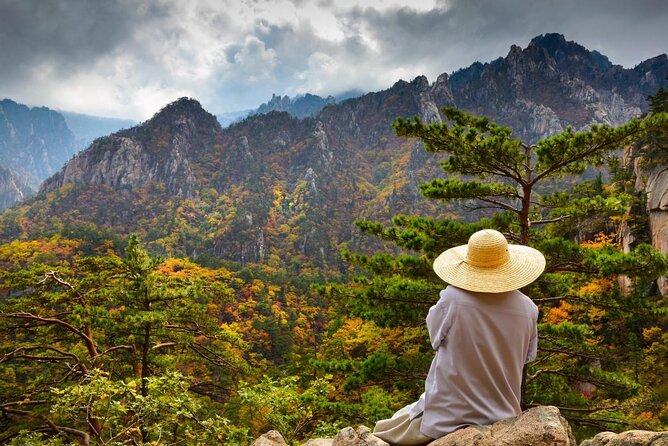
- Seoraksan by cable car: Ride to Gwongeumseong Fortress for broad mountain views without committing to a long hike.
- A private route through four regions: The schedule connects Seoul, Seoraksan, Andong, Gyeongju, and Busan in one organized trip.
- UNESCO sites with different personalities: Hahoe Folk Village, Buseoksa, Bulguksa, Seokguram, and the Gyeongju sites each show a different chapter of Korea.
- Local food is built into the plan: Four breakfasts, five lunches, and four dinners are listed, including Andong jjimdak.
- A guide-led private group: Only your party participates, with a licensed English-speaking guide and hotel pickup and drop-off in Seoul.
- A rainy-weather safety net: Bergen Park has been praised for arriving with umbrellas and taking care of practical needs when the weather turned wet.
What $3,499 buys you over five days
At $3,499 per person, this is not a bargain bus tour. You are paying for a private five-day arrangement, not simply a collection of entrance tickets.
The package includes four nights in 4-star or better accommodation, private transportation in an air-conditioned vehicle, a licensed English-speaking guide, admission fees, hotel pickup and drop-off in Seoul, four breakfasts, five lunches, and four dinners. For a couple or family, those included services can remove a great deal of daily friction.
The value is strongest if you want one person to manage the route, driving, timing, tickets, and restaurants. The value is weaker if you prefer to travel slowly, use trains and local buses, choose your own hotels, or spend hours at one archaeological site.
The private format matters. Your group does not have to wait for strangers or follow a fixed coach routine. It also gives the guide room to respond to your needs. Still, a private tour does not make the itinerary leisurely. You cover four major destinations in five days, with several stops lasting only 30 minutes or one hour.
A small booking detail is worth noting. The listed start time is 9:00 a.m., confirmation arrives within 48 hours if space is available, and the tour is usually booked well ahead, around 143 days in advance. Plan early, especially if you need particular hotel dates.
More Busan trips:
- 5-Day Korea Golden route by K-shuttle Tour from Seoul Including Busan, Yeosu
★ 4.5 · 37 reviews - Small Group 7D Korea package Tour with Seoul Gyeongju Busan Jeju
★ 4.5 · 13 reviews - 3-Days 2-Nights Gyeongju UNESCO Sites & Busan City [Private Tour from Seoul]
★ 4.5 · 11 reviews
Day 1: Granite peaks and Seoraksan’s old temple
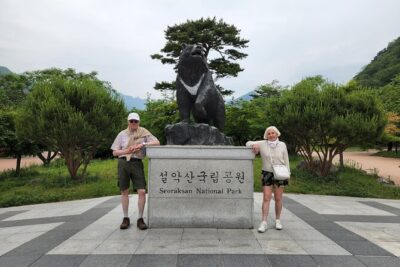
The first day goes east from Seoul to Seoraksan National Park, Korea’s best-known mountain area. The park is known for sharp granite pinnacles, long ridges, valleys, and waterfalls. The scheduled visit is one hour, so think of this as a scenic introduction rather than a full hiking day.
You then ride the cable car to Gwongeumseong Fortress. This is one of the tour’s smartest choices. You get a high view over the mountain without spending the day on a demanding trail. The cable car also makes the mountain accessible to people who want scenery but are not prepared for a serious hike.
Weather will shape this day. Clouds or rain may hide the ridges, while clear conditions can make the views memorable. Bring a light rain layer even if the morning looks good. The guide’s record of providing umbrellas is reassuring, but personal footwear and clothing still matter.
The final stop is Sinheungsa Temple, founded in 652 during the Silla period. The temple includes the Geungnakbojeon Hall and a three-story stone pagoda listed as treasures. You will see a working Buddhist setting as well as old buildings and stonework.
The temple is also associated with temple-stay activities such as communal meals, chanting, 108 bows, lotus-lantern making, and Buddhist rosary making. Those activities are not listed as part of this five-day program, so do not expect a full temple stay. The value here is the setting and the guide’s explanation, not a hands-on retreat.
Day 2: Buseoksa, Hahoe, and Andong’s famous chicken dish
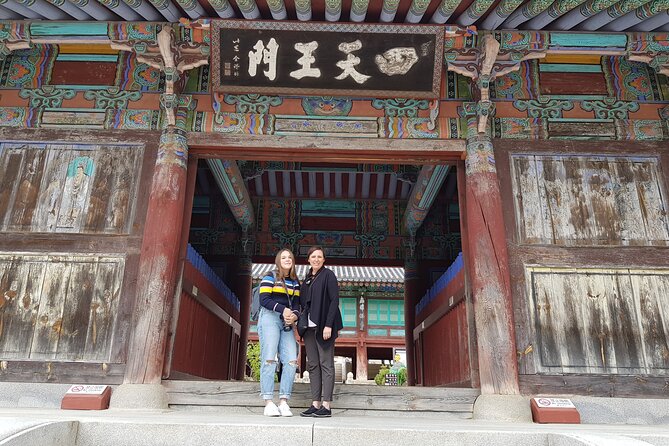
Day two shifts from mountain scenery to traditional Korea. Buseoksa Temple, founded in 676, is known for its beautiful setting and a long wooden hall. Its national treasures include historic wooden buildings, mural paintings, a Buddhist statue, a pagoda, and a stone lantern.
The visit lasts about an hour. That is enough to see the main structures and appreciate the view, but not enough for a slow study of every detail. Wear shoes suited to sloped temple paths, since the most attractive views often come after a short uphill walk.
Next comes Andong Hahoe Folk Village, a UNESCO World Heritage site since 2010. The village preserves traditional homes and its original pattern beside a river, with a mountain behind it. Its layout reflects Korean feng shui principles, with mountain to the rear and water in front.
You have two hours here, giving you time to look beyond the most photographed lanes. Hahoe is linked to mask dancing, a local tradition connected with village safety and prosperity. Its international profile grew after visits by Queen Elizabeth II in 1999 and former U.S. President George Bush.
The village is an important stop because it shows how people lived, not only where kings worshipped. The possible drawback is that a preserved village can feel quiet and carefully maintained rather than spontaneous. Your guide is important here, since the meaning of the houses, village layout, and mask tradition is not always obvious at first glance.
A short visit to Buyongdae follows. This 64-meter cliff lies across the river and gives the best broad view of Hahoe Village. Thirty minutes is a tight allowance, but it keeps the day moving. The climb and viewpoint may feel more demanding in wet weather.
The final cultural stop is Byeongsan Seowon, founded in 1613. A seowon was a private Confucian school and shrine, and nine such institutions are recognized together as a UNESCO World Heritage site. Byeongsan is especially admired for its building design and setting.
This is a quieter place than Hahoe. I like the contrast. Instead of royal Buddhism or village customs, you see the Confucian values that shaped education, public life, and social rules during the Joseon period.
Dinner comes at Andong Old Market, where jjimdak is the main event. Andong jjimdak combines steamed chicken, noodles, and vegetables. Eating it in the market gives the meal a clear local connection, though the package notes that food and drink are covered only when specified. Ask your guide what drinks or extras cost before ordering.
Day 3: Gyeongju, the Silla capital
Gyeongju is the historical center of the tour. It served as the capital of the Silla Kingdom for about 1,000 years, and the day links temples, royal tombs, an ancient observatory, and a palace pond.
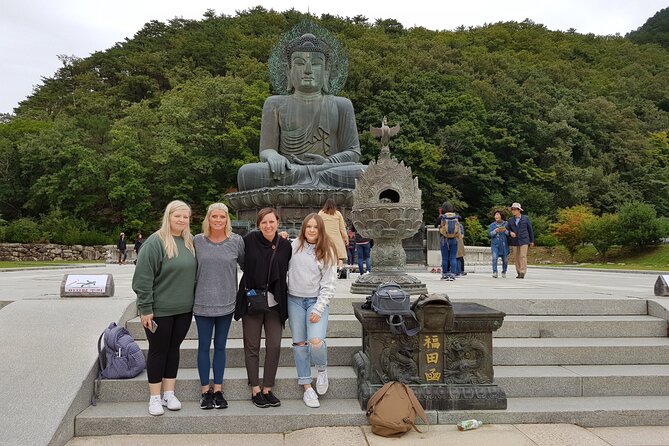
Start at Bulguksa Temple, built in 751. The complex is known for wooden buildings, stone bridges, pagodas, and seven national treasures. It became a UNESCO World Heritage site in 1995.
An hour here lets you see the main approach, stonework, and key buildings. I would pay close attention to the stone bridges and pagodas, since they show the refined design of Silla builders. The schedule is efficient, but anyone fascinated by Buddhist art may wish for more time.
Seokguram Grotto is also from 751 and sits on the slope of Mount Tohamsan. Its central granite Buddha has a gentle expression, with attendant figures and a rounded ceiling decorated with a lotus design. It is another UNESCO site, listed in 1995.
The grotto is valuable for its setting as much as its sculpture. It is not a huge complex, and the one-hour stop is likely sufficient for the principal visit. The ride up the mountain also adds a change of scenery after the temple grounds.
Later, you reach Donggung Palace and Wolji Pond, once a secondary palace for the Silla crown prince and a place for banquets and state occasions. The pond dates to 674 and includes three islands and carefully arranged hills.
The old name Anapji was used for centuries, but a pottery fragment marked Wolji helped restore the name, which refers to a pond reflecting the moon. The site’s meaning becomes clearer at dusk, but this itinerary does not promise an evening visit. Even in daylight, the water, islands, and reconstructed palace buildings make this one of Gyeongju’s most graceful stops.
At Cheomseongdae Observatory, you get 30 minutes with one of Asia’s notable ancient astronomical structures. The hollow stone tower dates to the seventh century and is made from 362 granite blocks, linked to the days in a lunar year. Twelve layers sit below the central window and twelve above it.
The last stop is Daereungwon Tomb Complex, home to 26 large tombs of Silla kings and nobles. At Cheonmachong, you can see inside one excavated tomb and learn about royal objects such as gold crowns, jewelry, accessories, and paintings.
The short 30-minute visit means you will not wander every mound. It does, however, give you a useful explanation of how the tombs reveal daily life and royal customs from roughly 1,500 years ago.
More Gyeongju trips:
- Gyeongju UNESCO Sites Tour by KTX train; The Museum Without walls
★ 4.5 · 11 reviews - 7 days Flexible Tour for Major Cities(Seoul,Busan,Gyeongju etc)
★ 5.0 · 5 reviews - 7 Day Essential Korea Tour(Seoul, Nami, DMZ, Andong, Gyeongju, Busan_Meal Incl.)
★ 5.0 · 3 reviews - Full-Day Small Group GyeongJu History Tour from Seoul
★ 5.0 · 2 reviews
Day 4: Busan’s coast, markets, and war memorial
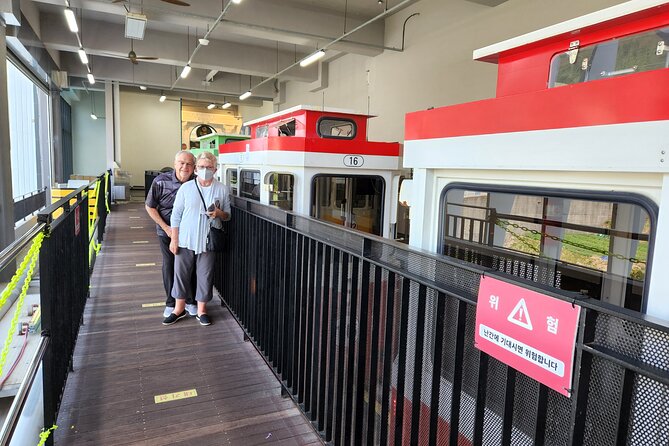
Day four brings you to present-day Busan. Begin at Haedong Yonggungsa, a Buddhist temple built beside the sea. Most Korean temples sit in mountain settings, so this coastal location feels unusual.
The complex includes the main sanctuary, a sea-facing goddess statue, a shrine, a cave sanctuary, and a three-story pagoda with four lions. Waves, stairways, and open sea give the stop a different mood from Buseoksa and Bulguksa. One hour should cover the main route, but the steps can make the visit tiring for some people.
At Nurimaru APEC House, you see the building used for the 13th APEC summit in November 2005. Its design draws on a traditional Korean pavilion, and the terrace looks toward Haeundae Beach, Gwangan Bridge, and five islands.
The nearby walk through Dongbaekseom adds about an hour. The name refers to camellias, and the island has a coastal walking and jogging path. This is a good place to slow the pace slightly, breathe sea air, and see Busan from the shore rather than from a vehicle.
Then comes Jagalchi Market, Korea’s largest fish market and one of Busan’s defining food stops. The usual arrangement is simple: fish is selected on the first floor and prepared at restaurants above. The meal can include sashimi and fish stew, but ask which items are covered, since unspecified food and drinks are not included.
The final stop, the UN Memorial Cemetery, changes the tone. The peaceful grounds honor UN soldiers from 16 countries and aid workers from five countries who died during the Korean War. About 2,300 graves remain, along with memorial halls and national monuments.
I consider this an important addition. It connects Korea’s past to the international conflict that shaped modern Busan and the country. Allow yourself a quiet hour here rather than treating it as just another photo stop.
Day 5: Gamcheon’s steep lanes and the final morning
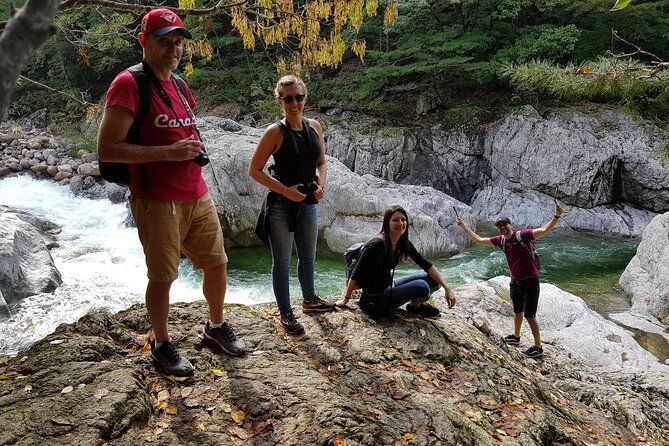
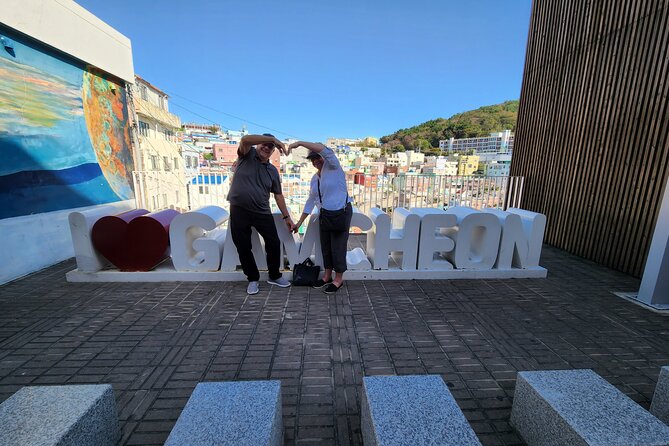
The final scheduled stop is Busan Gamcheon Culture Village, a hillside community known for stair-step housing, murals, and narrow lanes. The village began as a settlement for Korean War refugees. In the 2000s, a Busan revitalization project added murals and sculptures while preserving the area’s distinctive form.
The nickname Santorini of Busan explains the photo appeal, but the refugee story is more important than the painted walls. Look at how tightly the homes fit the slopes and remember that this was first a place of necessity, not a planned art district.
The stop lasts one hour. That is enough for a short walk and photographs, but not for every alley. Some paths are steep, so take your time. The provided information does not specify the exact final drop-off time, though hotel drop-off in Seoul is included in the overall program.
The day five schedule is much lighter than the earlier days. That can be welcome after four busy days, but it also means anyone hoping for a long final day in Busan should check the departure and return details before booking.
Food, hotels, and the comfort factor
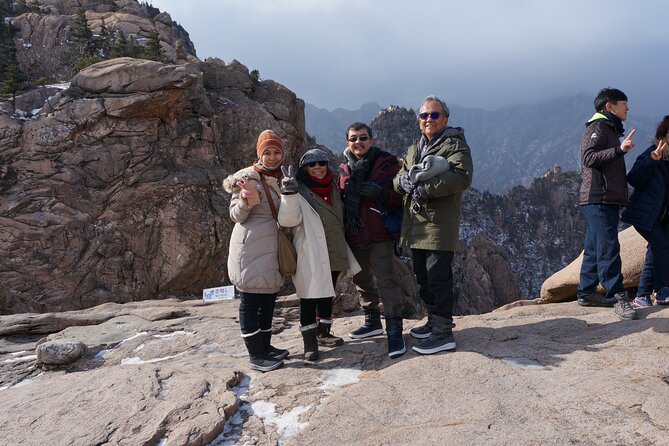
The food plan is a major reason to consider this tour. You receive four breakfasts, five lunches, and four dinners, with Andong jjimdak and a Jagalchi market meal among the named experiences. This removes the daily chore of finding restaurants while still pointing you toward regional dishes.
The tradeoff is choice. A set food plan may not suit someone with strict dietary needs or a strong preference for independent dining. The tour says food and drink are included unless specified, so you should confirm any special meal requests and clarify what is covered at each restaurant.
Four nights in 4-star or better hotels add comfort after long sightseeing days. Rooms are arranged for two people, with a single room provided alongside twin rooms if the group has an odd number. The private air-conditioned vehicle is just as important as the hotel category because the route covers substantial ground.
Bergen Park receives the strongest practical praise in the available account. During rainy weather, umbrellas were ready for everyone, and attention extended to food and other needs. That suggests a service style focused on small details, which matters on a tightly scheduled private trip.
Who should book this Korea tour?
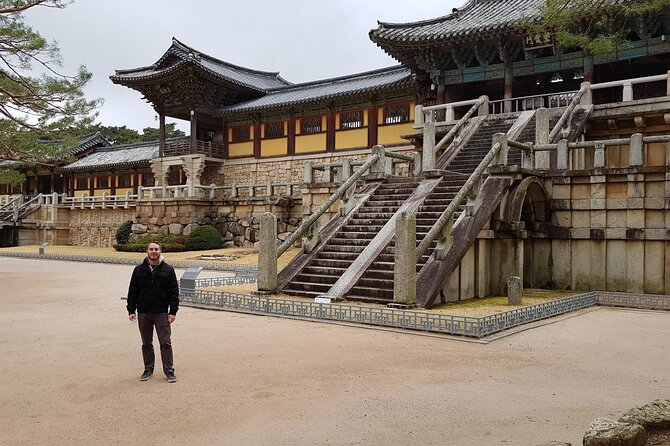
I would recommend it to a first-time visitor who wants to see nature, Buddhist heritage, Confucian culture, royal Silla sites, modern Busan, and Korean food in one organized package. It also suits families and small private groups that value help with transport and weather.
It is less suitable for independent visitors who want long museum visits, late starts, spontaneous meals, or several nights in each destination. The schedule is ambitious, and most attractions receive 30 minutes to one hour.
The cancellation terms are worth reading before paying. A full refund requires cancellation at least six full days before the start time. Cancellation two to six full days ahead brings a 50 percent refund, while cancellation less than two full days ahead is nonrefundable.
FAQ
Where does the tour start and end?
Hotel pickup and drop-off in Seoul are included. The stated start time is 9:00 a.m.
Is this a private tour?
Yes. Only your group participates in the activity.
What type of transportation is included?
Private transportation in an air-conditioned vehicle is included.
How many nights of accommodation are provided?
The tour includes four nights in a 4-star or better hotel. Rooms are arranged for two people, with a single room used if the group has an odd number.
Which meals are included?
The package lists four breakfasts, five lunches, and four dinners. Food and drinks are not included unless specifically stated, so confirm extras with the guide.
Are admission fees included?
Yes. Admission fees for the listed attractions are included.
Should you book it?
Book this tour if you want Korea’s major sights arranged in a comfortable private trip, and if you see value in having a guide handle roads, tickets, hotels, and meals. Its best moments are the contrast between Seoraksan, Hahoe, Gyeongju, and Busan, not any single attraction.
Skip it if $3,499 feels high for a five-day schedule or if you prefer a slower, self-directed trip. For families and first-time visitors, the umbrella-ready service, private vehicle, local meals, and wide range of sites make the price easier to justify. Just confirm the hotel locations, daily driving times, meal details, and final Seoul drop-off schedule before committing.
More Seoraksan Hikes
- Seoul: Mt Seorak + Naksansa Temple or Nami Island Group Tour
★ 4.7 · 422 reviews - [Premium Private Tour] Mt Seorak & East Sea or Nami island from Seoul
★ 5.0 · 67 reviews - Seoraksan National Park Ulsanbawi Hiking from Seoul
★ 5.0 · 15 reviews - Seoul: Mt. Seoraksan National Park Autumn Foliage Day Tour
★ 4.3 · 15 reviews
Just added in Seoul
- Seoul: Korean & English Language Exchange Global Party★ 5.0 · 28 reviews
- Your Personal Seoul Photographer!★ 4.1 · 15 reviews
- You’re Invited to Our Home in Seoul: The Only Cooking Class!★ 5.0 · 8 reviews
- From Seoul: Yongpyong Ski Day Tour with Transportation★ 4.9 · 40 reviews
- From Seoul: Hwacheon Ice Fishing and Lighting Festival Tour★ 4.5 · 4 reviews
- Seoul: Gangneung BTS K-Pop & K-Drama Filming Locations Tour★ 4.6 · 14 reviews
- Unique Native Experience : Han River Picnic, Board game, BBQ★ 5.0 · 3 reviews
- Seoul: Euljiro Gastroventure Tour★ 4.0 · 1 review
Seoraksan Hikes, compared.
Mt Seorak + Naksansa Temple or Nami Island Group Tour
Read our review →![[Premium Private Tour] Mt Seorak & East Sea or Nami island from Seoul](https://j2.koreatourreviews.com/wp-content/uploads/premium-private-tour-mt-seorak-east-sea-or-nami-island-from-seoul-400x267.jpg)
[Premium Private Tour] Mt Seorak & East Sea or Nami island from Seoul
Read our review →
Private DMZ Tour from Sokcho near Seoraksan Mt.
Read our review →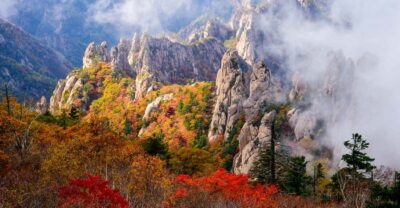
Mt. Seoraksan National Park Autumn Foliage Day Tour
Read our review →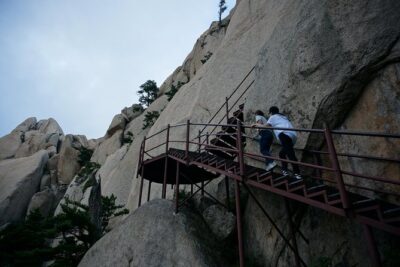
Seoraksan National Park Ulsanbawi Hiking from Seoul
Read our review →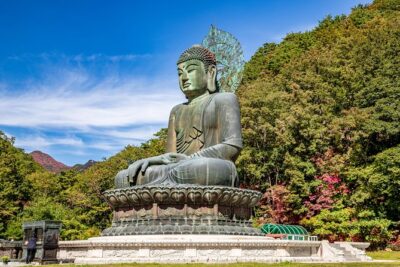
2-Day Hike through the Scenic Valleys of Mt. Seoraksan from Seoul
Read our review →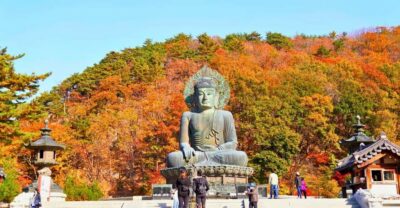
Browse the lists this tour appears in