
Reviewed · PALACE TOURS
Seoul: 6-Hour Guided Tour to City Highlights, Palace & More
Seoul rewards a guide who reads the old stones. I like the Confucian focus that gives Gyeongbokgung more meaning, and I like the mix of palace rooms, ordinary life at the National Folk Museum, and street food at Gwangjang Market. The main drawback is pace: you may walk about five miles at a brisk clip, and the six hours can feel tight.
Paul Koo is the guide, and his strength is connecting architecture with Korean culture rather than simply naming dates. He can adjust the meeting point and timing, and he adapted the plan during heavy rain for one booking. Bring water, wear good walking shoes, and expect a serious history lesson at the palace.
In This Review
- Key points to know before booking
- A six-hour introduction to Seoul’s old and new sides
- Gwanghwamun Square sets the stage
- Gyeongbokgung explains Joseon in stone and wood
- The National Folk Museum turns history toward daily life
- Bukchon Hanok Village brings tradition into modern Seoul
- Gwangjang Market ends the day with something to eat
- The Bongeunsa question needs clarification
- What $193 means for two people
- Who will enjoy Paul Koo’s guiding style
- My recommendation: book it for context, not convenience
- FAQ
- How long is the Seoul tour?
- Where does the tour start?
- Is the tour private?
- Who is the guide?
- What language is available?
- How much does the tour cost?
- Are palace admission fees included?
- Is transportation included?
- Is food included at Gwangjang Market?
- Can I cancel for a full refund?
Key points to know before booking
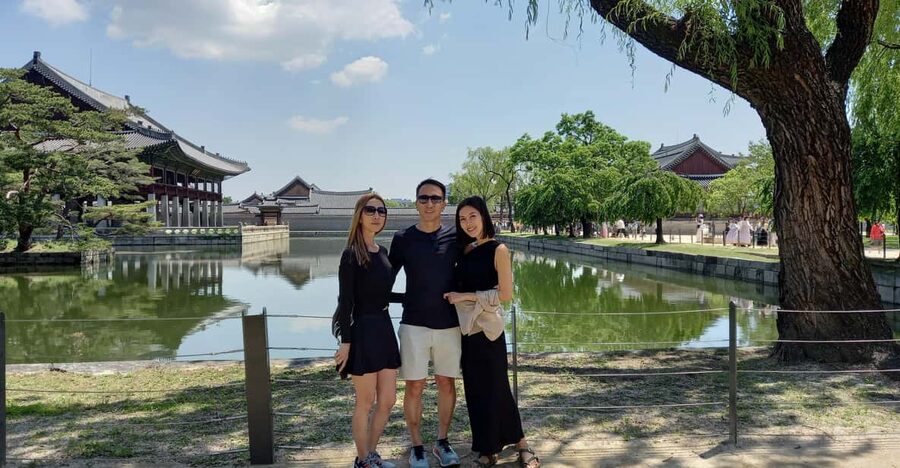
- Gyeongbokgung gets 2.5 hours: This is the heart of the tour, with a close look at Joseon-era palace design and Confucian ideals.
- The museum adds everyday life: The National Folk Museum covers birth, marriage, work, illness, seasonal customs, and death, not just royal families.
- Bukchon supplies the old-meets-new view: Traditional hanoks sit among modern Seoul buildings, with N Seoul Tower visible in the distance.
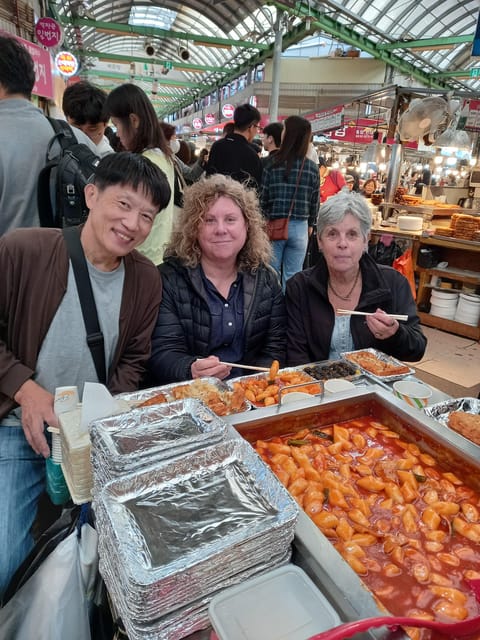
- Gwangjang Market is your food stop: Korean street food is not included, but the market gives the tour a tasty, local finish.
- Paul Koo teaches through architecture: His explanations are especially useful if you want cultural context instead of a quick photo tour.
- The price covers guiding only: At $193 for up to two people, you are paying for a private six-hour guide. Palace admission, transport, food, drinks, and insurance cost extra.
A six-hour introduction to Seoul’s old and new sides
This private tour makes sense for you if Seoul is your first stop in Korea and you want a strong cultural base. The route links royal architecture, folk customs, traditional homes, public transport, and market food in one long outing.
The central idea is Confucianism, the guiding philosophy of the Joseon Dynasty. That may sound academic at first, but it gives the tour a useful thread. You begin to see why palace buildings are arranged as they are, why ceremonial spaces matter, and how traditional Korean design reflects social order and respect.
Paul Koo presents himself as a specialist in Korean Confucian culture. His explanations are not limited to palace construction. He connects buildings to the values that shaped Korean life, which is valuable if you want to understand more than the surface beauty of the sites.
This is also a private group for up to two people, so you get a more personal experience than a large bus tour. The meeting place and start time can be adjusted after booking, and your hotel can serve as the meeting point. That flexibility is useful in Seoul, where a convenient start can save time and energy.
The trade-off is that the guide fee does not cover the rest of the day’s expenses. You pay $193 per group of up to two, then add palace admission, transport between areas, food and drinks, and any insurance you want. For a couple or two friends, the price can be fair if you value detailed instruction and a custom pace. For one person, it is a much steeper outing.
More Palace Tours in Seoul:
- Seoul: Gyeongbok Palace, Bukchon Village, and Gwangjang Tour
★ 4.9 · 2,321 reviews - Best Seoul City Tour (Gyeongbokgung Palace,Insadong,Namsan Tower)
★ 5.0 · 1,647 reviews - Small-Group Royal Palace and Seoul City Tour (hotel pick-up)
★ 5.0 · 1,474 reviews
Gwanghwamun Square sets the stage
The meeting point is Gwanghwamun Square, a fitting place to begin. It puts you near Gyeongbokgung and the civic center of modern Seoul while keeping you close to the old royal district.
Your meeting place and time can be changed after booking, so you do not have to treat the square as an absolute requirement. Still, beginning here gives the tour a clear sense of place. You are starting at the edge of an area where royal power, public life, and modern city Seoul meet.
Because the tour is private, tell Paul what matters most to you before the day begins. If you care about architecture, ask for more detail on structure and symbolism. If you prefer daily life and food, ask him to keep the palace discussion focused enough to leave breathing room later.
The schedule allows about five and a half hours at the named stops, leaving a small amount of time for movement between them. In practice, that means the day needs some discipline. A long conversation at the palace can affect the pace at Bukchon or the market.
Gyeongbokgung explains Joseon in stone and wood
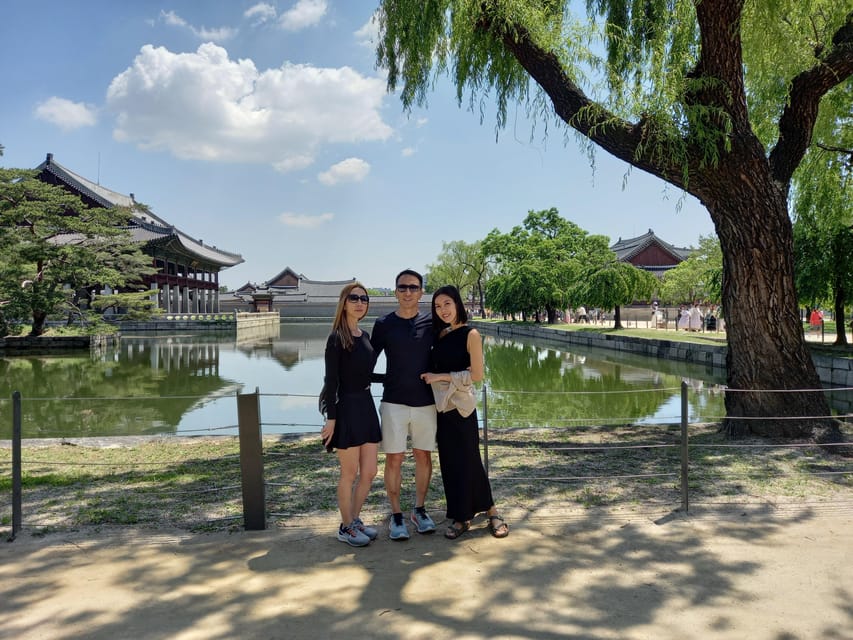
Gyeongbokgung receives the largest share of the day, about two and a half hours. That tells you where the tour’s priorities lie.
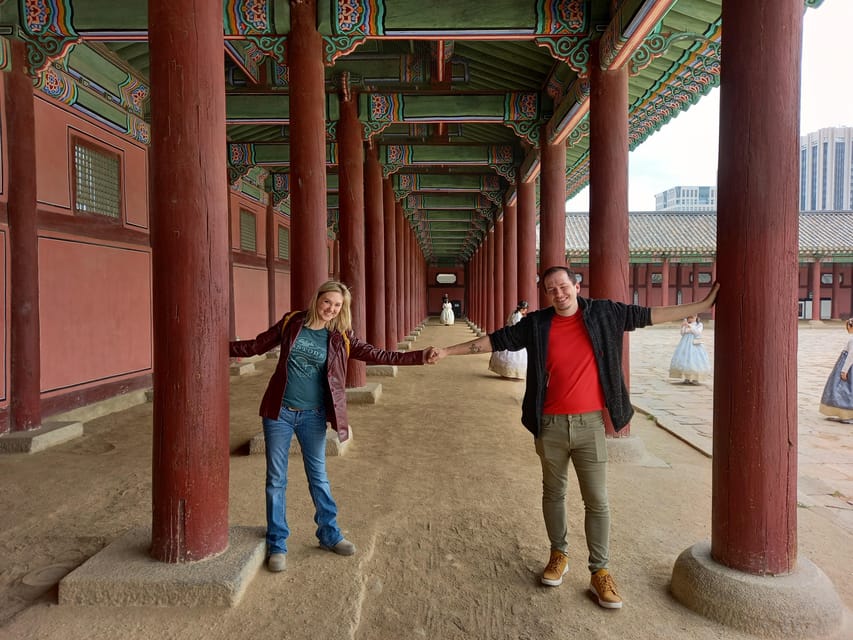
Built in 1395 as the main palace of the Joseon Dynasty, Gyeongbokgung is presented as a major expression of Confucian political and social thought. The palace is described as the largest and most magnificent of Korea’s palaces, and its position on flat ground follows an authentic Confucian palace structure.
The value here is not simply seeing grand gates and courtyards. With Paul’s guidance, you can look at the site as a planned statement about authority, ceremony, and order. The architecture becomes easier to read when you understand the beliefs behind it.
I would allow yourself to enjoy the visual details without trying to remember every date. Palace tours can become a blur of names and rulers, especially when the guide is enthusiastic and the setting offers so much to discuss. One person on a six-hour outing felt that the palace section included a little too much historical detail, leaving the rest of the day more rushed.
That is a fair warning. Paul’s strength is his depth, but you should speak up if you want shorter explanations or more time for photographs. A private guide can adjust more easily than a fixed group, and this is the moment to use that advantage.
Admission is not included, so check the current palace fee before you go. The tour information does not give an amount, and it also does not specify whether any special palace presentation or clothing rental is part of the experience. Treat those as separate choices rather than promised inclusions.
The National Folk Museum turns history toward daily life
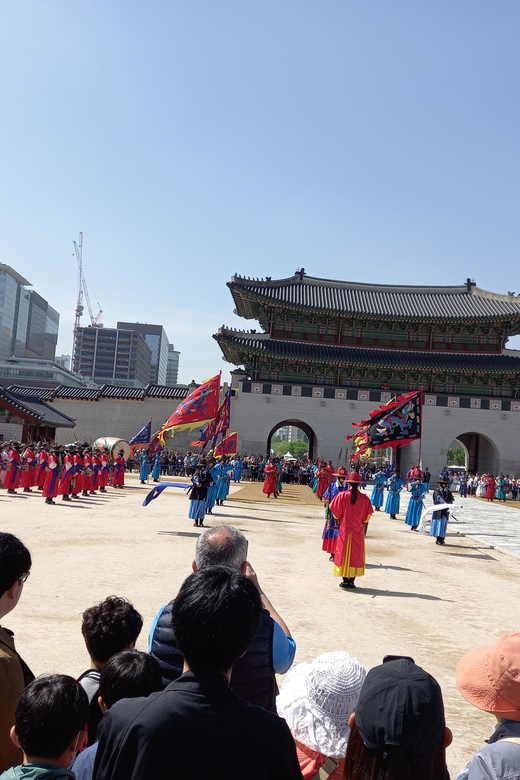
The National Folk Museum of Korea receives about 61 minutes. It is located in the palace area and shifts attention from kings and court ritual to ordinary people.
The museum covers living customs and seasonal activities, along with the stages of life from birth and childhood to marriage, aging, illness, treatment, and death. Exhibits also explain ceremonial and commemorative events in Joseon society.
This may become one of the most useful stops for you. Palace architecture shows how the state and elite society presented themselves. The museum helps explain how families lived, marked time, handled major life events, and followed customs.
One booking found the museum unexpectedly enjoyable, which makes sense because it breaks up the palace’s formal grandeur. You get a broader view of Korean culture instead of leaving with the impression that Joseon history was only about rulers and official buildings.
The hour is enough for a guided introduction, but not for every display. Listen for the themes that interest you most, then return on another visit if the museum catches your attention. Since the tour is already full, you should not expect a slow, room-by-room study of the entire collection.
A few more options to weigh up in Seoul
- Best DMZ Tour Korea from Seoul (Red Suspension Bridge Optional)
★ 5.0 · 41,422 reviews - DMZ Tour: 3rd Tunnel, Option(Suspension Bridge, Boat) from Seoul
★ 5.0 · 21,373 reviews - DMZ tour south Korea from Seoul (NK experience hall, defector)
★ 5.0 · 20,599 reviews - Seoul: DMZ Tour with Optional Suspension Bridge
★ 4.8 · 5,277 reviews
Bukchon Hanok Village brings tradition into modern Seoul
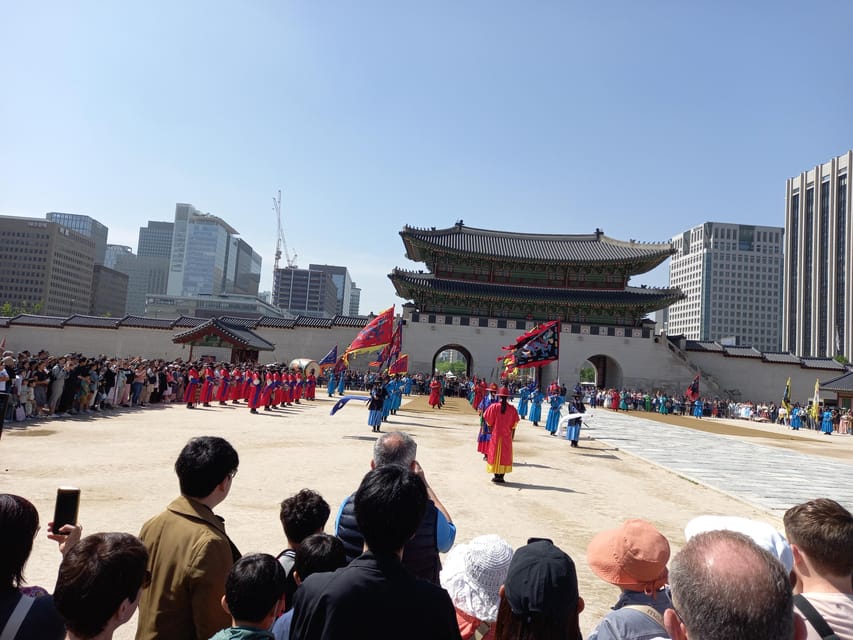
The next major stop is Bukchon Hanok Village, with about one hour of guided time. Bukchon is known for its cluster of roughly 1,000 hanoks, traditional Korean houses.
The appeal is the contrast. You see tiled roofs and traditional forms against the modern city, with Seoul’s high-rise buildings and N Seoul Tower in the background. It is a visual reminder that old and new Seoul are not separate worlds. They share the same streets and views.
This is the kind of place where a guide adds useful context. Without explanation, Bukchon can become a series of attractive alleys and rooflines. Paul can help you understand what makes a hanok different and why traditional residential design matters within the wider story of Korean culture.
Keep your expectations practical. The tour gives Bukchon one hour, not an entire afternoon. You will get an introduction and a walk through part of the village, but the route will need to stay moving. The full outing is already demanding, and the village portion comes after a long palace visit.
Your walking shoes matter here. The combined route covers about five miles at a fairly brisk pace, according to the practical guidance from the experience. Carry water, especially if the weather is warm. Rain can also affect the order and comfort of the day, though Paul has shown that he can rethink the plan when conditions change.
Gwangjang Market ends the day with something to eat
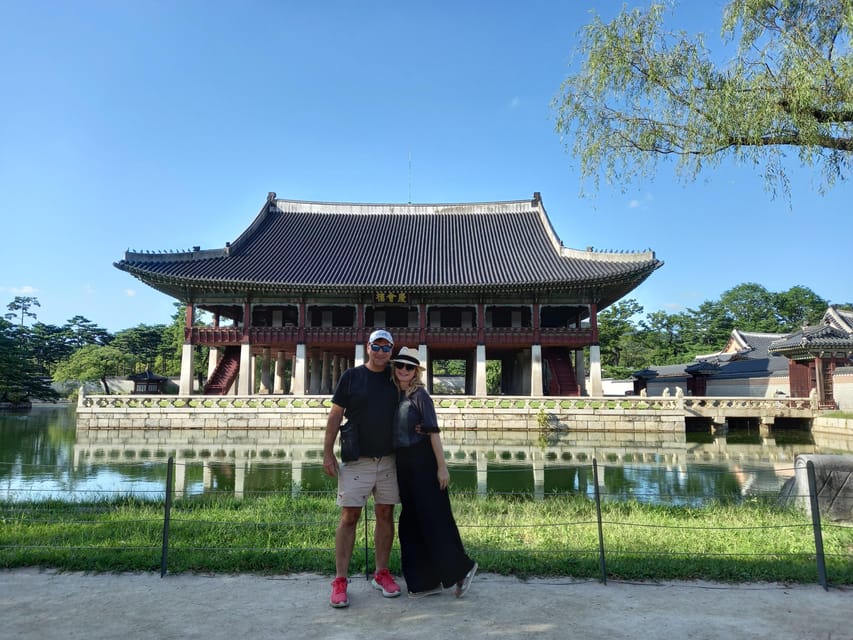
Gwangjang Market gives the itinerary a welcome change of rhythm. After several hours of architecture and history, you can turn to Korean street food and the everyday energy of a busy market.
Food and drinks are not included, so bring a separate budget. That is not a flaw in itself. It lets you choose what appeals to you rather than paying for a fixed tasting menu, though the final cost will depend on what you order.
The market is also a good cultural stop because food brings the discussion down to street level. You are no longer looking only at royal spaces or preserved homes. You are seeing a place where people eat, shop, and move through ordinary city life.
A local bus ride was one of the highlights of one booking, and public transport may be used during the day. Transportation is not included, so you should expect to pay any fares yourself. The exact route can depend on the meeting point and the day’s conditions.
Because the schedule allows about an hour here, you have time for a food stop and a look around, but not necessarily a long market crawl. If eating is a major reason for booking, tell Paul early. If the palace discussion runs long, the market is one of the places most likely to feel compressed.
The Bongeunsa question needs clarification
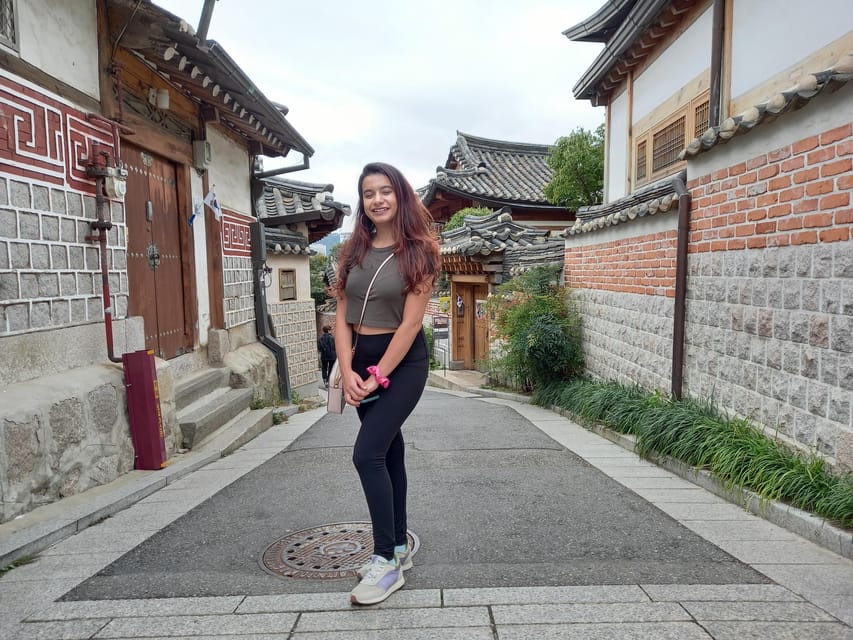
Bongeunsa Buddhist Temple appears among the tour highlights, described as a place where old religious architecture meets modern Seoul. However, the detailed six-hour schedule lists Gyeongbokgung, the National Folk Museum, Bukchon Hanok Village, and Gwangjang Market, but does not include Bongeunsa.
That difference matters. Bongeunsa is not a stop you should assume is guaranteed from the schedule provided. Ask Paul before booking whether it can be added, substituted, or included only under a revised plan.
Adding it would change the day’s balance. The listed route is already full, and a temple visit could require cutting time from another stop or changing the transport plan. If Bongeunsa is your priority, get a clear answer before you pay.
What $193 means for two people
The price is $193 per group of up to two people. It covers six hours of guide service and information, not admission tickets or the costs of moving around Seoul.
For two people, that works out to $96.50 each before extras. The value depends on your preferred travel style. If you want a private guide who can explain Confucian culture, adjust the meeting point, respond to rain, and adapt the discussion to your interests, the cost may be reasonable.
You are not paying for a packaged meal, a private vehicle, or entrance tickets. You are paying for Paul’s time and interpretation. Since the guide is the main product, this tour suits you best if you enjoy asking questions and learning as you walk.
The cost is harder to justify if you mainly want transport between sights or a quick set of photographs. You would still need to arrange or pay for transport, food, palace admission, and insurance. Budget for those items before deciding.
Free cancellation is available up to 24 hours before the start for a full refund, and you can reserve now and pay later. Availability depends on the starting time you choose, so confirm the guide before finalizing your plans.
Who will enjoy Paul Koo’s guiding style
I would choose this tour if you want cultural explanation to be the main event. Paul’s specialty is Korean traditional Confucian culture, and his approach gives the palace a strong intellectual framework.
It is especially suited to:
- First-time visitors who want an organized introduction to Seoul
- Couples or friends who prefer a private guide
- People interested in architecture, religion, and social customs
- Visitors who enjoy museums as much as famous sights
- Anyone who wants to combine historic sites with a market meal
You may want a different plan if you dislike long explanations or have limited walking ability. The pace can be brisk, and one six-hour booking covered around five miles. You should also reconsider if you want every stop to be slow and photographic, since Gyeongbokgung takes up much of the schedule.
The English-language guiding is the stated option. Paul’s ability to adjust the day is a plus, but you should still tell him your limits, food interests, and top priorities before setting out.
My recommendation: book it for context, not convenience
Book this tour if you want Seoul’s major historic sights explained through Confucian culture and architecture. Gyeongbokgung and the National Folk Museum form the strongest part, while Bukchon and Gwangjang Market keep the day connected to the living city.
Go in ready to walk, pay extra for transport and food, and possibly ask Paul to shorten the palace lecture if you prefer a looser pace. Clarify the Bongeunsa question before booking, since it appears in the highlights but not the detailed route.
For two people who value a thoughtful private guide, $193 can be good value. For a solo visitor, a budget-conscious sightseer, or anyone seeking a vehicle and all-inclusive tickets, the price may feel less attractive.
FAQ
How long is the Seoul tour?
The tour lasts six hours.
Where does the tour start?
The stated starting location is Gwanghwamun Square. The meeting place can be adjusted after booking, and your hotel can be used as the meeting point.
Is the tour private?
Yes. It is a private group experience for up to two people.
Who is the guide?
The guide is Paul Koo.
What language is available?
The live tour guide speaks English.
How much does the tour cost?
The price is $193 per group of up to two people.
Are palace admission fees included?
No. Admission to the palace is not included.
Is transportation included?
No. Transportation for moving between stops is not included.
Is food included at Gwangjang Market?
No. Food and beverages are not included, so you pay for anything you choose to eat or drink.
Can I cancel for a full refund?
Yes. You can cancel up to 24 hours in advance for a full refund.
Just added in Seoul
- Seoul: Korean & English Language Exchange Global Party★ 5.0 · 28 reviews
- Your Personal Seoul Photographer!★ 4.1 · 15 reviews
- You’re Invited to Our Home in Seoul: The Only Cooking Class!★ 5.0 · 8 reviews
- From Seoul: Yongpyong Ski Day Tour with Transportation★ 4.9 · 40 reviews
- From Seoul: Hwacheon Ice Fishing and Lighting Festival Tour★ 4.5 · 4 reviews
- Seoul: Gangneung BTS K-Pop & K-Drama Filming Locations Tour★ 4.6 · 14 reviews
- Unique Native Experience : Han River Picnic, Board game, BBQ★ 5.0 · 3 reviews
- Seoul: Euljiro Gastroventure Tour★ 4.0 · 1 review
Palace Tours, compared.
Gyeongbok Palace, Bukchon Village, and Gwangjang Tour
Read our review →
Best Seoul City Tour (Gyeongbokgung Palace,Insadong,Namsan Tower)
Read our review →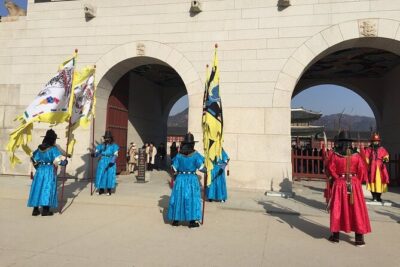
Small-Group Royal Palace and Seoul City Tour (hotel pick-up)
Read our review →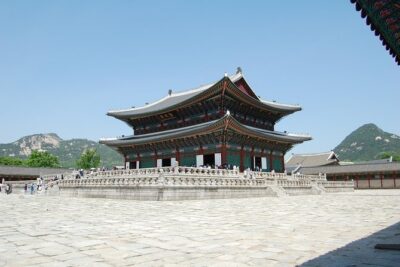
Seoul City Sightseeing Tour Including Gyeongbokgung Palace, N Seoul Tower, and Namsangol Hanok Village
Read our review →Gyeongbok Palace, Bukchon Village, and Gwangjang Tour
Read our review →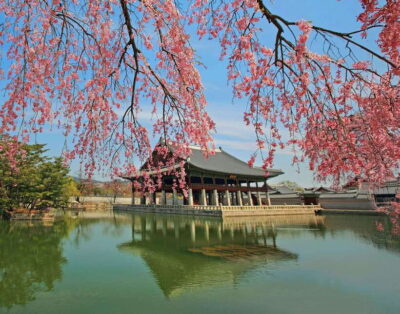
Seoul Highlights: Gyeongbok Palace, Insadong & N Seoul Tower
Read our review →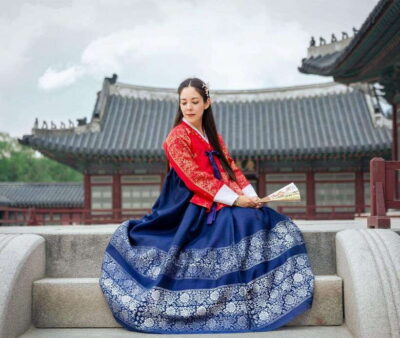
Seoul City Half Day Tour-Gyeongbok Palace Guard Changing Ceremony
Read our review →Browse the lists this tour appears in