
Reviewed · PALACE TOURS
Seoul: Full-Day Guided Tour to Gyeongbokgung, Bukchon & More
Old Seoul, new Seoul, one long day. This private tour brings together Gyeongbokgung and Bukchon Hanok Village, then adds Gwangjang Market, N Seoul Tower, and Hongdae. I like the strong cultural focus and Paul Koo’s eye for photo spots, praised by Joe from the United States. The main drawback is that the $242 price covers the guide only, so admissions, transport, meals, and drinks cost extra.
I also like the choice of a private group for up to two people, with hotel pickup and meeting time arranged after booking. Paul’s explanations of Korean culture, history, and Confucian ideas give the palace stops more meaning than a quick photo visit. Still, this is a packed eight-hour day, and the schedule may feel rushed if you want long meals, slow museum visits, or plenty of shopping.
In This Review
- Key points to know before booking
- Why this eight-hour Seoul tour works
- Gyeongbokgung: the main event for two and a half hours
- National Folk Museum and the daily life behind royal walls
- Bukchon Hanok Village and Seoul’s old-new contrast
- Gwangjang Market: a self-paid taste of Korean street food
- N Seoul Tower for the city view
- Hongdae Street and the modern alternative
- Paul Koo’s guiding style and what it adds
- Is $242 good value for a private group of two?
- Who should book this Seoul experience?
- Final verdict: book it for context, not just checkmarks
- FAQ
- How long is the Seoul tour?
- What language is the tour conducted in?
- Is this a private tour?
- Where does the tour start?
- Can the meeting place be changed?
- Is admission to Gyeongbokgung included?
- Is admission to N Seoul Tower included?
- Is transportation between stops included?
- Is food at Gwangjang Market included?
- Does the tour visit the National Museum of Korea?
Key points to know before booking
- Paul Koo’s cultural focus: The tour centers on Korean architecture, Confucian values, palace design, customs, and traditional art.
- A full Seoul cross-section: You move from Joseon-era royal buildings to a traditional market, a mountain tower, and modern Hongdae.
- Private and flexible meeting: You can choose the meeting place and time after booking, including your hotel.
- Food is not included: Gwangjang Market offers a chance to buy Korean street food, but you pay for it yourself.
- Admissions and transport are extra: Palace and N Seoul Tower tickets, as well as all movement between stops, are not covered.
- A demanding itinerary: Gyeongbokgung gets 2.5 hours, while Hongdae and N Seoul Tower each get 1.5 hours.
Why this eight-hour Seoul tour works
Seoul can be hard to read at first. A palace gate, a narrow hanok lane, a glass office tower, and a crowded food market may all appear in the same afternoon. This tour makes that contrast the main subject.
You begin at Gwanghwamun Square, close to the city’s major royal and civic sights. From there, the day moves through Gyeongbokgung, the National Folk Museum, Bukchon, Gwangjang Market, N Seoul Tower, and Hongdae Street. The route is not a quiet heritage walk. It is a broad introduction to Seoul, with plenty of visual change.
I think the tour suits you best if you want a private guide to explain what you are seeing rather than simply point out names. Paul Koo presents Korean culture through Confucianism, the belief system that shaped much of the Joseon Dynasty. That approach gives the palace buildings, symbols, rituals, and social customs a clear thread.
The day also has a practical advantage for first-time visitors: you see several famous places without having to plan the connections yourself. The catch is that the guide fee does not include transport. You need to budget for the travel between stops, along with entrance tickets and food.
More Palace Tours in Seoul:
- Seoul: Gyeongbok Palace, Bukchon Village, and Gwangjang Tour
★ 4.9 · 2,321 reviews - Best Seoul City Tour (Gyeongbokgung Palace,Insadong,Namsan Tower)
★ 5.0 · 1,647 reviews - Small-Group Royal Palace and Seoul City Tour (hotel pick-up)
★ 5.0 · 1,474 reviews
Gyeongbokgung: the main event for two and a half hours
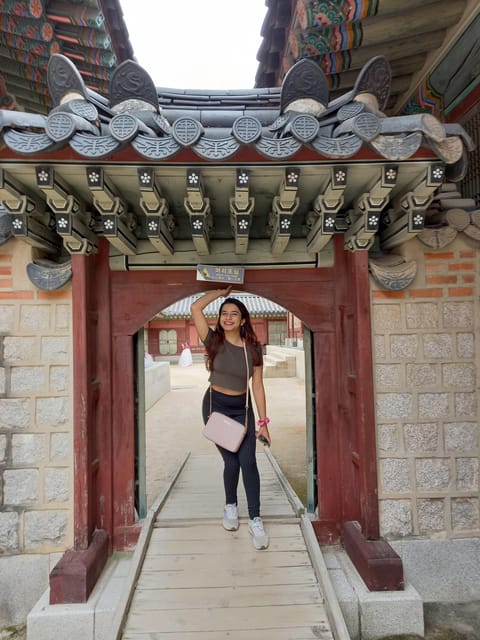
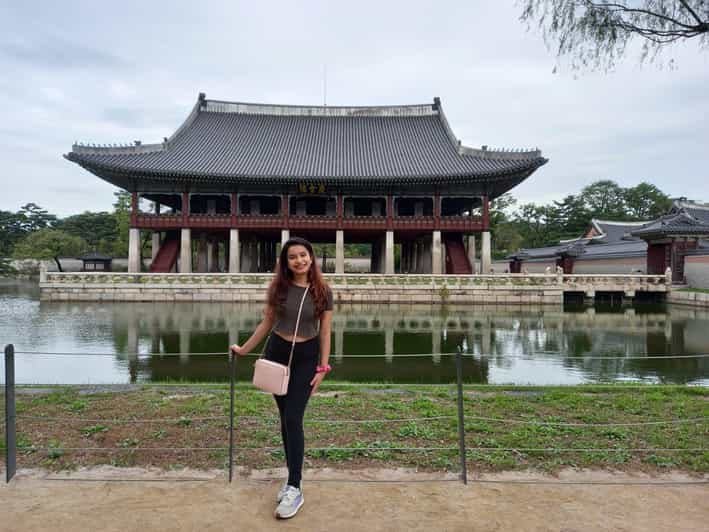
Gyeongbokgung is the heart of the day. Built in 1395 as the main palace of the Joseon Dynasty, it represents the political and cultural ideals of that period. The tour description gives it special attention, and the schedule allows 2.5 hours, more than any other stop.
That extra time matters. Gyeongbokgung is not just one grand building. It is a palace complex where gates, courtyards, halls, and lines of movement reflect an organized royal world. Paul’s focus on Confucian principles should help you understand why the buildings follow a formal north-south arrangement and why the palace was so important to the state.
I like this kind of explanation because it turns architecture into evidence. Instead of only seeing attractive roofs and painted details, you can consider how the layout expressed rank, order, ceremony, and government. The tour also covers mythological symbols and traditional Korean architecture, so you get more than a basic photo stop.
The palace is described as the largest and the only one in Korea built on a north-south linear structure based on standard Confucian palace design. That makes it especially useful for understanding Joseon-era planning.
Your admission ticket is not included. Since the palace is the day’s longest stop, check the ticket cost when you book and plan for the possibility that the complex involves a fair amount of walking. Comfortable shoes will be more useful than dress shoes here.
National Folk Museum and the daily life behind royal walls
The National Folk Museum of Korea follows Gyeongbokgung, with 30 minutes of guided time. That is brief, so I would treat it as a focused introduction rather than a full museum visit.
The museum presents the lives, customs, and culture of Korean people through important rituals. The supplied details point to weddings, funerals, ancestral ceremonies, and Korean mask dance drama. These subjects help balance the palace visit. Gyeongbokgung shows the world of the court and state, while the museum turns toward family life and community traditions.
Thirty minutes can work if Paul selects key displays and explains their meaning clearly. It will not allow you to examine every gallery at length. If the museum is a top priority for you, ask before booking how the visit will be handled and how much time can be adjusted.
I see this stop as valuable because it keeps the day from becoming a parade of monuments. You get a look at customs that shaped ordinary lives, not only royal architecture.
Bukchon Hanok Village and Seoul’s old-new contrast
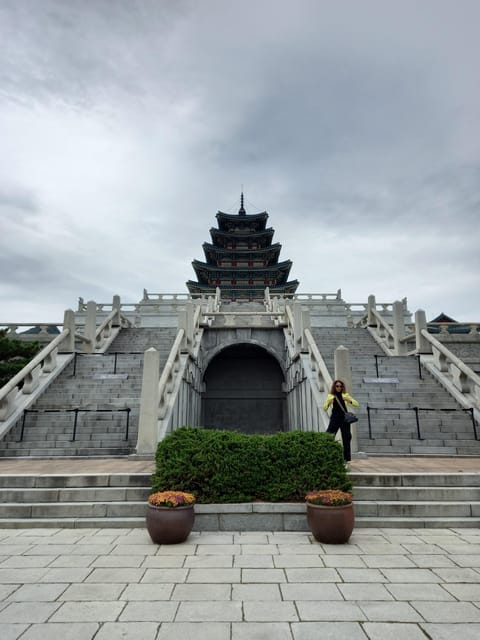
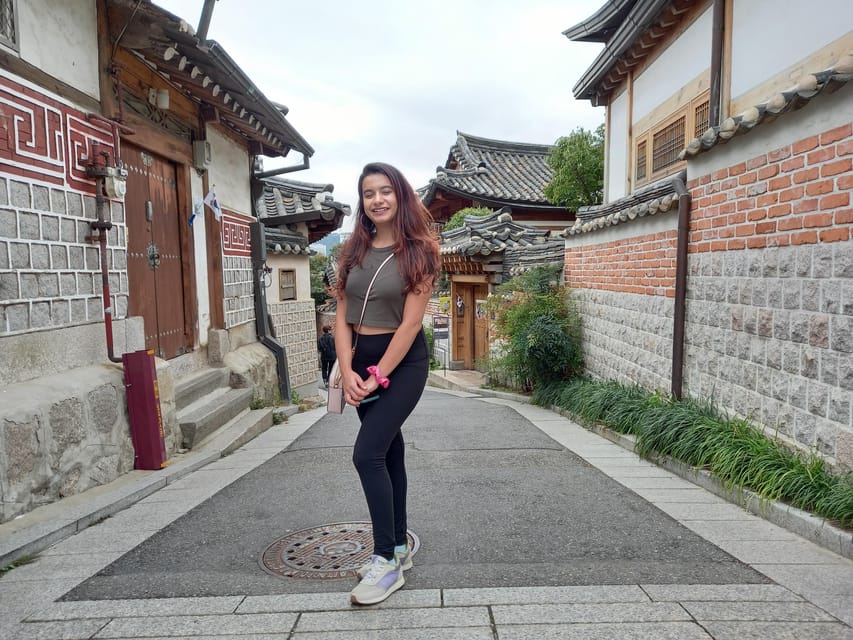
Bukchon Hanok Village receives one hour. This traditional housing area is known for hanok, the wooden homes associated with historic Korean neighborhoods. Its appeal comes from the setting: traditional streets and houses sit inside a dense modern capital.
That contrast is one of the tour’s clearest themes. You can connect the formal palace buildings with a more intimate residential setting. Bukchon shows how Korean design worked at a neighborhood scale, with homes and lanes rather than throne halls and ceremonial courtyards.
I would expect this section to focus on views, architecture, and the story of the village. Paul was specifically praised for knowing good photo opportunities, and Bukchon offers many places where rooflines, hills, and modern Seoul appear together.
The one-hour limit keeps the visit moving. If you want to browse shops, stop at cafes, or linger over photographs, you may need to choose between those pleasures and staying on schedule. This is a guided orientation, not an open-ended afternoon in the neighborhood.
You should also remember that Bukchon is a residential area. The best visit is quiet and respectful. Look, listen, and avoid treating private doorways as photo props.
More Hanok Village Tours in Seoul:
- Seoul City Sightseeing Tour Including Gyeongbokgung Palace, N Seoul Tower, and Namsangol Hanok Village
★ 5.0 · 1,423 reviews - Seoul: Gyeongbok Palace, Bukchon Village, and Gwangjang Tour
★ 5.0 · 1,044 reviews - Seoul: Gyeongbok Palace and Bukchon Hanok Walking Tour
★ 4.8 · 157 reviews - Best Walking Tour to Gyeongbok Palace Bukchon Hanok Village
★ 5.0 · 138 reviews
Gwangjang Market: a self-paid taste of Korean street food
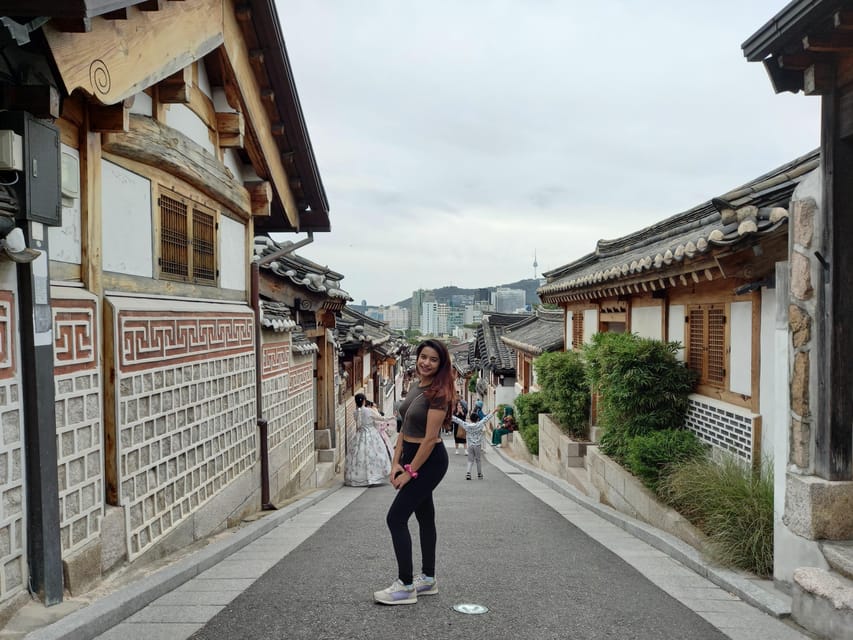
Gwangjang Market changes the mood. After palaces, museums, and residential lanes, you reach one of Seoul’s oldest traditional markets. The tour allows one hour here, with time to experience food stands and the market atmosphere.
This is where the itinerary becomes more sensory. You can see prepared food, hear the market around you, and choose something that appeals to you. The tour presents Korean traditional food as part of the cultural experience, not as a formal restaurant meal.
Food and drinks are not included. That is worth noting before you arrive, especially if you want to sample several dishes. You will need your own spending money and should tell Paul about any food concerns before ordering.
One hour is enough for a guided introduction and a snack, but it may not be enough for a leisurely meal. I would treat the stop as a chance to try one or two items and watch the market work. If you prefer a sit-down lunch, this may be the part of the day that feels most limited.
The market also gives the tour a useful connection to daily Seoul. You are not only looking at preserved culture. You are seeing traditional food in a working commercial setting.
N Seoul Tower for the city view
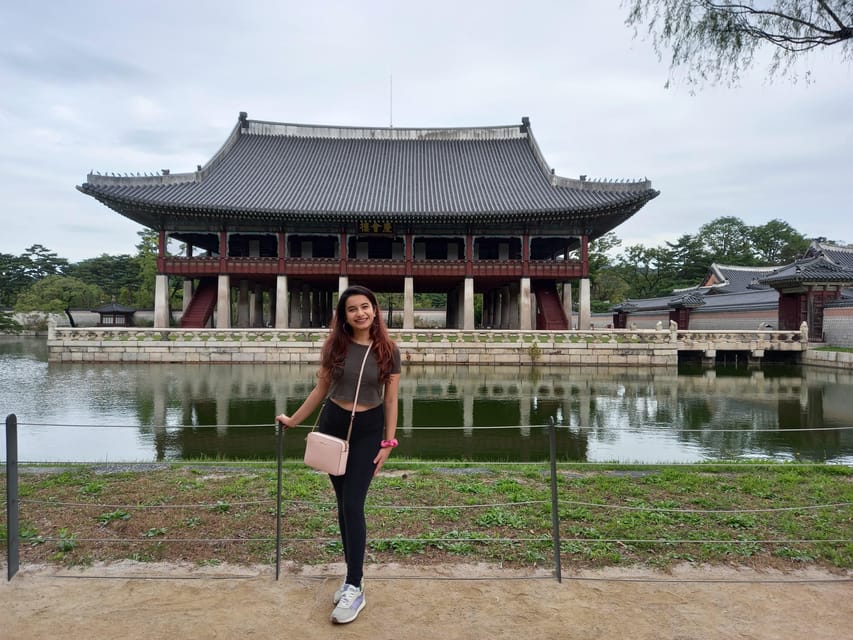
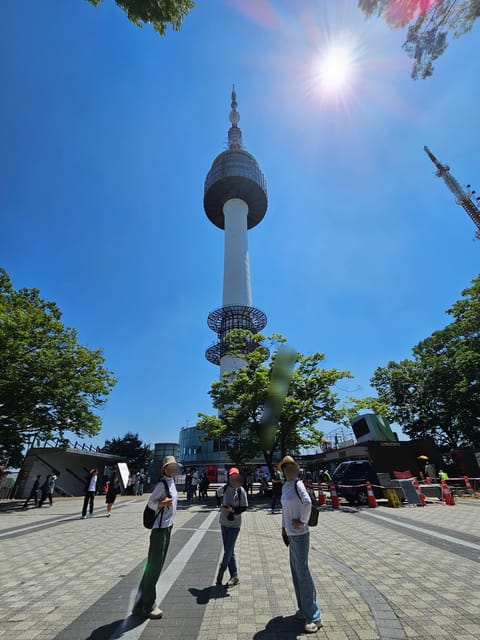
The next major stop is N Seoul Tower on Namsan Mountain, with 1.5 hours set aside. The tower sits near the center of Seoul and offers a wide view of the city.
This is the tour’s big visual pause. After several close views of gates, rooftops, objects, and food stalls, you can look out across Seoul as a whole. The view helps explain the city’s scale and shows how historic sites fit within a huge modern capital.
The admission fee is not included, so check the current cost before you commit. The description says you can enjoy the panoramic view from the tower, but it does not specify which ticket level or observation access is covered by the guide. Ask for that detail when arranging the tour.
The 1.5-hour block should allow time for the tower experience and the view, though transport and queues can affect how long you actually spend looking out. Since transport is also excluded, clarify how you will get to Namsan and onward to the next stop.
I think this is an important part of the day, even if you are mainly interested in history. The tower gives you a sense of place. After seeing individual parts of Seoul, you get a chance to understand the city’s overall shape.
Hongdae Street and the modern alternative
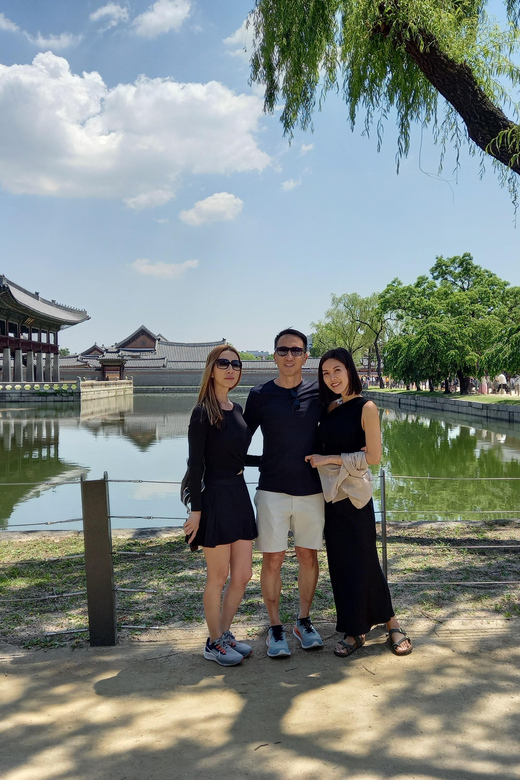
Hongdae Street closes the scheduled route, with 1.5 hours for guided exploration. It is known for young and modern culture, boutique shops, cafes, and restaurants. This final stop gives you a sharp contrast with the Joseon palace at the start of the day.
The description also presents Hongdae as an alternative to the National Museum of Korea. That matters because the broader tour explanation discusses the National Museum’s major Korean art, including Silla golden crowns and ornaments, Goryeo celadon, and Joseon white porcelain. However, the detailed stop-by-stop schedule names Hongdae, not the National Museum.
If you want to see the National Museum, ask Paul about this before booking. Do not assume both places are included in the same eight-hour route. The choice changes the character of the day: the museum would add traditional art and objects, while Hongdae adds shops, cafes, and contemporary city life.
I like Hongdae as the ending because it prevents the tour from presenting Korea as only old palaces and rituals. You finish with a modern district and a different kind of energy. Still, the stop is guided, so the time may be more about orientation than a long shopping session.
Paul Koo’s guiding style and what it adds
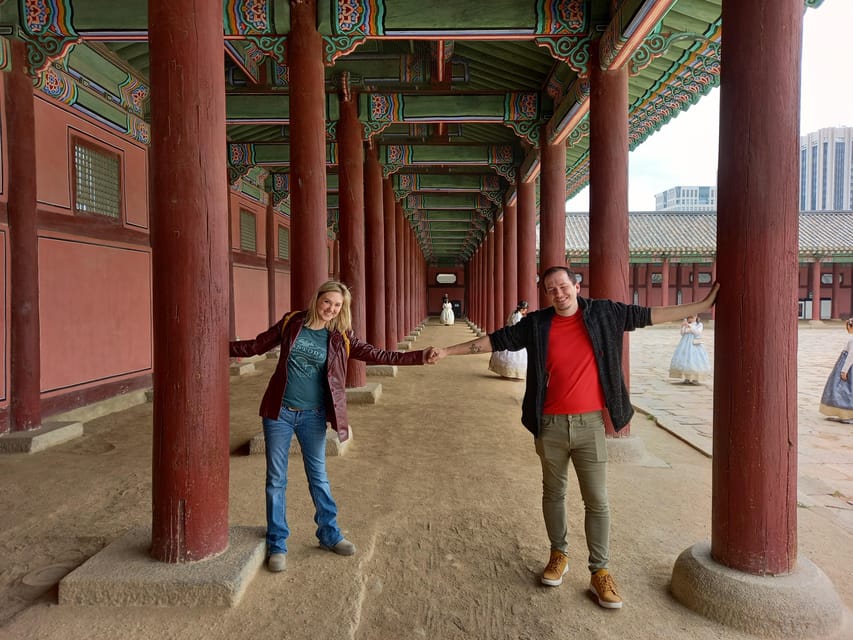
The guide is Paul Koo, and the strongest praise centers on his explanations and photography advice. Joe from the United States called him exceptional and noted his ability to find excellent photo opportunities. F from Switzerland praised the detailed, interesting explanations and the way the day showed both old and new Seoul.
Those comments point to the tour’s main strength. Paul is not simply providing transport between famous locations. His stated specialty is Korean traditional culture based on Confucianism, and that gives the day a clear subject.
You should expect an English-language tour with a live guide and a private group. That setup is useful if you want to ask questions, adjust the pace within reason, or spend more attention on a particular subject. A private tour also avoids sharing the guide with a large bus group.
The guide fee covers eight hours of guiding and information. It does not cover the physical costs of the day. You pay separately for palace admission, N Seoul Tower admission, transport, food, drinks, and insurance.
Is $242 good value for a private group of two?
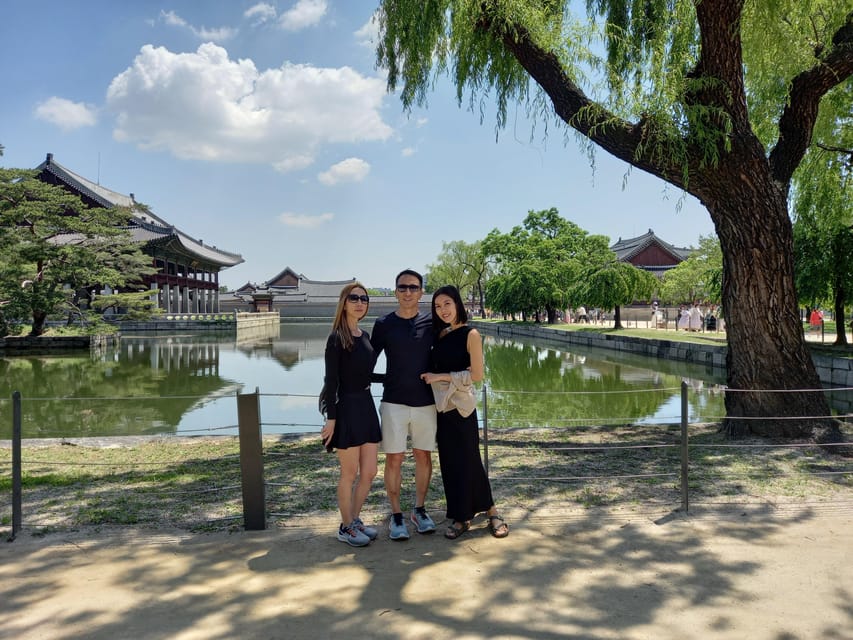
At $242 for up to two people, the effective cost is $121 per person if two people share the booking. That is not a cheap sightseeing day, but the price becomes easier to assess when you remember that it buys a private English-speaking guide for eight hours, not a package with every expense included.
I see good value here for a couple or two friends who want personal attention and a ready-made route. You get a guide who can explain Korean culture across several periods and settings. You also avoid the planning work involved in linking palace grounds, a museum, Bukchon, a market, Namsan, and Hongdae.
The value is weaker if you mainly want included transport, tickets, or meals. Those costs come on top, and the route crosses several parts of Seoul. Before booking, ask for a realistic transport plan and an estimate of additional admission costs.
The flexible meeting arrangement helps. You can choose the meeting time and location after booking, and the guide can meet you at your hotel. Cancellation is free up to 24 hours before the tour, and you can reserve now and pay later, which gives you some planning flexibility.
Who should book this Seoul experience?
I would recommend this tour if you are visiting Seoul for the first time and want a strong overview in one day. It suits you especially well if architecture, history, customs, photography, and food all interest you.
It is also a good fit for two people who value a private guide. Paul’s cultural approach should appeal to you if you want to understand why Korean sites look and function as they do, not simply collect pictures.
I would be more cautious if you dislike full days with several stops. The schedule is ambitious. The route includes long guided visits at Gyeongbokgung and N Seoul Tower, but shorter windows at the museum, Bukchon, and market. Transport time is not built into the published stop durations in a way that lets you know exactly how much time remains at each place.
People with a cold should not take this tour. That is the only stated suitability restriction, but anyone who needs a slow pace should discuss adjustments with Paul before confirming.
Final verdict: book it for context, not just checkmarks
Book this tour if you want Paul Koo’s detailed cultural explanations, a private day for two, and a quick but meaningful look at Seoul’s old and modern sides. His photo advice and clear storytelling are the qualities most likely to make the day feel personal.
Skip it if you want every ticket, meal, and ride included, or if you prefer to spend half a day in one museum or neighborhood. Also confirm whether you want Hongdae or the National Museum, since the schedule names Hongdae while the wider description presents the museum as an alternative.
For the right traveler, this is a strong first-day framework: royal Confucian architecture, folk customs, traditional housing, market food, a city panorama, and modern youth culture. Just budget for extras and accept that eight hours will give you a broad introduction rather than a slow, exhaustive visit.
FAQ
How long is the Seoul tour?
The tour lasts eight hours.
What language is the tour conducted in?
The live tour guide speaks English.
Is this a private tour?
Yes. It is designed for a private group of up to two people.
Where does the tour start?
The scheduled starting location is Gwanghwamun Square.
Can the meeting place be changed?
Yes. The meeting place and time can be chosen after booking, and the guide can meet you at your hotel.
Is admission to Gyeongbokgung included?
No. Palace admission is not included in the guide fee.
Is admission to N Seoul Tower included?
No. Admission to N Seoul Tower is not included.
Is transportation between stops included?
No. Transportation for moving between locations is not included.
Is food at Gwangjang Market included?
No. Food and beverages are paid for separately.
Does the tour visit the National Museum of Korea?
The detailed schedule lists Hongdae Street as the final stop and describes the National Museum as an alternative. Ask for confirmation before booking if the museum is important to you.
Just added in Seoul
- Seoul: Korean & English Language Exchange Global Party★ 5.0 · 28 reviews
- Your Personal Seoul Photographer!★ 4.1 · 15 reviews
- You’re Invited to Our Home in Seoul: The Only Cooking Class!★ 5.0 · 8 reviews
- From Seoul: Yongpyong Ski Day Tour with Transportation★ 4.9 · 40 reviews
- From Seoul: Hwacheon Ice Fishing and Lighting Festival Tour★ 4.5 · 4 reviews
- Seoul: Gangneung BTS K-Pop & K-Drama Filming Locations Tour★ 4.6 · 14 reviews
- Unique Native Experience : Han River Picnic, Board game, BBQ★ 5.0 · 3 reviews
- Seoul: Euljiro Gastroventure Tour★ 4.0 · 1 review
Palace Tours, compared.
Gyeongbok Palace, Bukchon Village, and Gwangjang Tour
Read our review →
Best Seoul City Tour (Gyeongbokgung Palace,Insadong,Namsan Tower)
Read our review →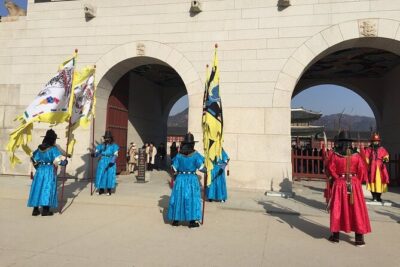
Small-Group Royal Palace and Seoul City Tour (hotel pick-up)
Read our review →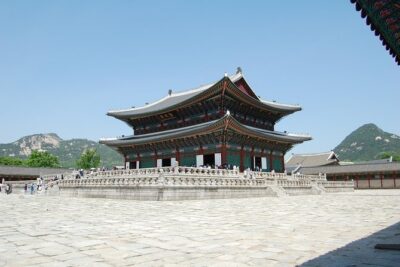
Seoul City Sightseeing Tour Including Gyeongbokgung Palace, N Seoul Tower, and Namsangol Hanok Village
Read our review →Gyeongbok Palace, Bukchon Village, and Gwangjang Tour
Read our review →
Seoul Highlights: Gyeongbok Palace, Insadong & N Seoul Tower
Read our review →
Seoul City Half Day Tour-Gyeongbok Palace Guard Changing Ceremony
Read our review →Browse the lists this tour appears in