
Reviewed · PALACE TOURS
Seoul: Gyeongbokgung Palace Half day Tour
Palace stories make old stones feel close. This two-hour Gyeongbokgung Palace tour connects the buildings to the kings, queens, and customs of Joseon, Korea’s last dynasty. I like the detailed English explanations, and I like that admission is included rather than left for you to arrange at the gate. The main consideration is timing: two hours gives you a useful introduction, but not an unhurried look at every corner.
I also like the chance to ask questions throughout the visit, especially about the palace’s carved animals and royal buildings. Guide Gabriela has earned particular praise for her kindness and for helping when a participant went to the wrong meeting point. The tour may be canceled if fewer than four people book, and Tuesday is not available because Gyeongbokgung is closed.
In This Review
- Key points to know before you book
- Why Gyeongbokgung deserves two hours of your Seoul schedule
- Meeting near the National Palace Museum
- Gwanghwamun Gate, the proper opening chapter
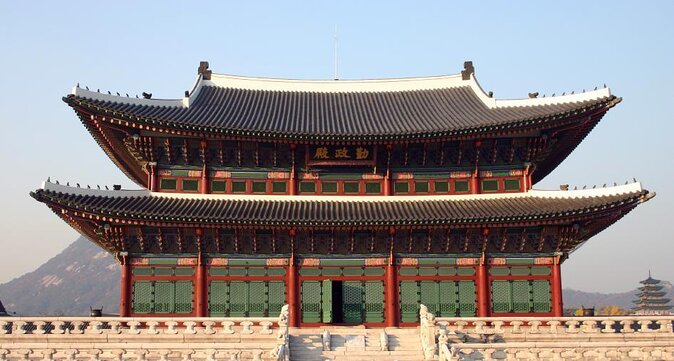
- Geunjeongjeon, where royal ceremony took place
- Sajeongjeon, the king’s working world
- Gangnyeongjeon and Gyotaejeon, royal life behind ceremony
- Gyeonghoeru Pavilion and the palace’s social side
- Animal statues and small details you could miss
- What the $35 price really buys you
- Timing, group rules, and the Tuesday problem
- Who will get the most from this palace walk
- Booking and cancellation advice
- Should you book the Gyeongbokgung tour?
- FAQ
- How long does the Gyeongbokgung Palace tour last?
- What is included in the $35 price?
- Where does the tour begin?
- Where does the tour end?
- Is the tour available on Tuesdays?
- How many people can join the tour?
- Can I join after the tour has started?
- What happens if I need to cancel?
Key points to know before you book
- Gwanghwamun begins the story: You meet near the National Palace Museum of Korea and enter the palace story through its great south gate.
- Six important buildings are covered: The route includes the throne hall, royal office, royal bed-chamber, queen’s bed-chamber, and Gyeonghoeru pavilion.
- English explanations are the main value: The guide gives context about Joseon kings, architecture, and the animal figures placed around the palace.
- Admission is included: At $35 per person, the price covers the palace entrance and a live guided visit.
- The group can reach 20 people: A larger group may feel less personal, though the guide is available for questions.
- Careful meeting instructions matter: Your name and a Korean-accessible phone number or messaging contact are required so the operator can reach you.
Why Gyeongbokgung deserves two hours of your Seoul schedule
Gyeongbokgung Palace was built in 1394 and is the oldest and most important of Seoul’s five major palaces. It was the principal royal setting of Joseon, so the buildings give you more than attractive rooflines and courtyards. They help explain how the royal court worked and how power was arranged.
I think this is a good choice if you want meaning attached to what you see. A self-guided walk can show you painted beams, stone steps, gates, and wide courtyards. A guide can explain why each space existed, which king used it, and how the palace changed over time.
The palace suffered extensive damage during the Japanese Colonial Period. Restoration work has continued, helping recover its earlier form and preserve its cultural value. That restoration is part of what you are seeing today. The palace is not simply an untouched royal compound, and the guide’s explanation can help you understand the difference between original elements and rebuilt ones.
The tour focuses on the royal center rather than trying to cover every structure. That is sensible for a two-hour visit. You get a clear route through the most important spaces without turning the morning or afternoon into a long architectural march.
More Palace Tours in Seoul:
- Seoul: Gyeongbok Palace, Bukchon Village, and Gwangjang Tour
★ 4.9 · 2,321 reviews - Best Seoul City Tour (Gyeongbokgung Palace,Insadong,Namsan Tower)
★ 5.0 · 1,647 reviews - Small-Group Royal Palace and Seoul City Tour (hotel pick-up)
★ 5.0 · 1,474 reviews
Meeting near the National Palace Museum
The meeting point is at the National Palace Museum of Korea, 12 Hyoja-ro in Jongno District. This puts you close to Gyeongbokgung’s southern approach and gives the tour a logical start before the group reaches the palace buildings.
Your final meeting time and exact instructions are sent by email or WhatsApp. Read those messages carefully. You are asked to provide your name and a phone number or messaging contact that works in South Korea. A wrong number, or one that cannot receive messages in Korea, can leave you without important updates.
The operator does not permit late joining after the tour begins. I would arrive early, especially because the meeting area has several cultural attractions and it is easy to walk toward the wrong entrance. One participant who went to the wrong meeting spot was helped by Gabriela, but it is better to avoid relying on a last-minute rescue.
The palace is near public transportation, so the area is practical to reach. The tour ends at 7-25 Tongui-dong, also in Jongno District. Since the start and end points are listed separately, check the walking route afterward if you have a timed reservation, meal booking, or another tour.
Gwanghwamun Gate, the proper opening chapter
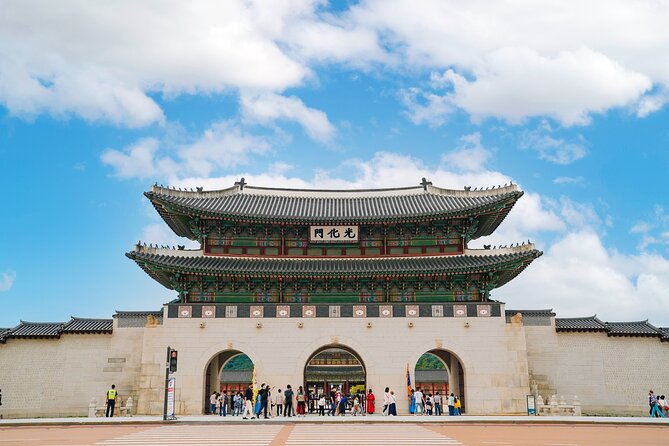
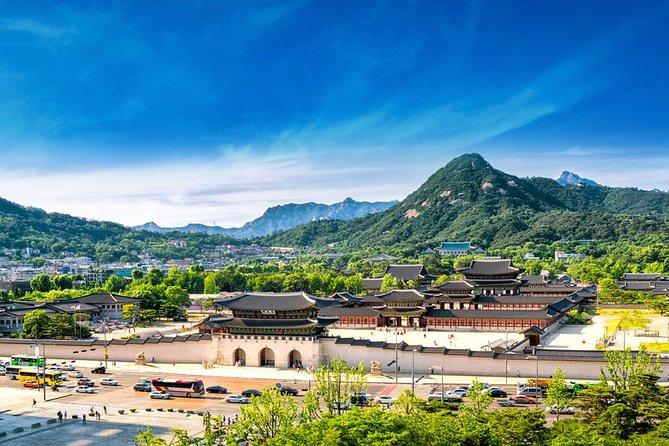
The first stop is Gwanghwamun Gate, the palace’s south gate. It is an appropriate place to begin because it introduces the scale and purpose of the compound before you move into the royal spaces.
At a major gate, I want a guide to explain more than its name. The tour promises background on the palace’s construction, Joseon rulers, and the design details found throughout the complex. That context helps you notice the relationship between the entrance, the courtyards, and the buildings beyond it.
Gwanghwamun also gives the group a fixed reference point. Once you understand that this was the formal southern entrance, the palace route makes more sense. You are not just passing from one photogenic building to another. You are following a royal plan.
The downside is that a group meeting at a famous gate can be easy to miss if you have not checked the instructions. Keep your phone available and confirm the message with the starting location before leaving your hotel.
Geunjeongjeon, where royal ceremony took place
Geunjeongjeon is the main throne hall and likely the grandest stop on the route. This was the ceremonial heart of the palace, the place most closely associated with formal royal authority.
The value of seeing it with an English-speaking guide is scale. A large hall can look impressive without making its purpose clear. Here, you can ask about the king, court ceremonies, architectural details, and the visual signals used to mark rank.
The palace’s beauty comes through roof shapes, painted decoration, stone features, and carefully ordered space. The guide’s role is to connect those details with Joseon court life. I would pay close attention to any explanation of how the building was used rather than spending the entire stop on photographs.
Geunjeongjeon can also be the point where a short tour feels a little fast. There is a lot to see in and around the hall, and a group of up to 20 people may take time to gather. If you enjoy architectural detail, keep your questions focused so you make good use of the guide’s time.
A few more options to weigh up in Seoul
- Best DMZ Tour Korea from Seoul (Red Suspension Bridge Optional)
★ 5.0 · 41,422 reviews - DMZ Tour: 3rd Tunnel, Option(Suspension Bridge, Boat) from Seoul
★ 5.0 · 21,373 reviews - DMZ tour south Korea from Seoul (NK experience hall, defector)
★ 5.0 · 20,599 reviews - Seoul: DMZ Tour with Optional Suspension Bridge
★ 4.8 · 5,277 reviews
Sajeongjeon, the king’s working world
Sajeongjeon served as the king’s office space. This stop changes the tone from public ceremony to the daily business of ruling.
That distinction matters. Palaces are often presented as grand homes, but royal power depended on administration, meetings, and decisions. Sajeongjeon helps you picture the working side of the Joseon court.
I like this part of the route because it adds balance to the throne hall. You see both the public image of monarchy and the less theatrical setting where government work took place. The guide can also connect this room to famous kings and the events of their reigns.
You may find that the office space feels less immediately dramatic than Geunjeongjeon. That is normal. Its importance comes from what happened there, and the explanation is the reason to pause.
Gangnyeongjeon and Gyotaejeon, royal life behind ceremony
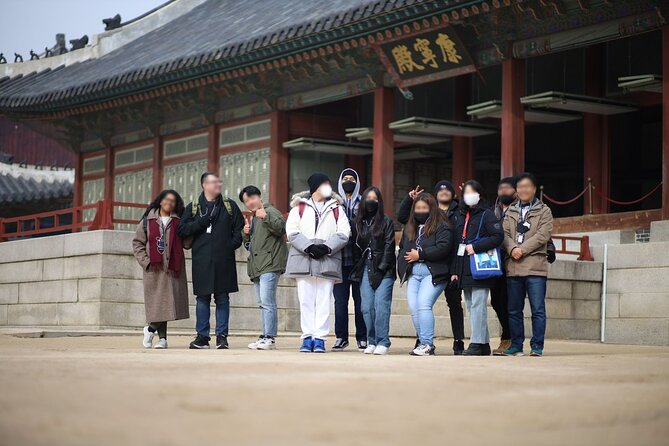
Gangnyeongjeon was the king’s bed-chamber, while Gyotaejeon was the queen’s bed-chamber. These buildings make the palace feel more personal. They show that the royal compound included private quarters as well as official halls.
The separation between public and private life is one of the useful ideas this tour can clarify. You move from the king’s formal workplace to the rooms connected with rest, family, and court routines. The queen’s residence also adds a needed reminder that palace life was not centered only on the king.
These spaces may interest you most if you want more than grand ceremonies. They give the route a human scale, although the guide’s account is especially important because the buildings alone cannot tell you much about how people lived inside them.
Because the tour covers six main locations in about two hours, the time at each bed-chamber may be limited. Think of this as an informed overview rather than a specialist study of royal domestic life. If you have a question about a particular king or queen, ask it while you are here.
Gyeonghoeru Pavilion and the palace’s social side
Gyeonghoeru is the palace’s pavilion used for events. It adds a different kind of setting to the route, with an architectural character suited to gatherings rather than throne-room ceremony or private residence.
The pavilion helps show how the palace supported royal social and diplomatic life. It also gives the guide another chance to discuss design, setting, and the way buildings were arranged for different functions.
I appreciate that the route includes an event hall instead of stopping only at the most famous gate and throne room. You get a broader picture of court life, even within a compact visit.
As with the other stops, the experience depends on the explanation. Gyeonghoeru is attractive, but its purpose and history give it greater meaning. Listen for the practical reason it was built and the kinds of occasions connected with it.
Animal statues and small details you could miss
One of the most appealing features of this tour is its attention to animal statues placed around Gyeongbokgung. These figures can be easy to overlook when you are focused on the large halls and painted roofs.
A guide can point out where to look and explain what the animals represent or why they appear in particular places. The supplied information does not specify every animal or its symbolic meaning, so you should treat this as an invitation to ask questions rather than a promise of a fixed list.
This kind of detail is where a guided walk earns its fee. You can photograph a palace roof on your own, but you may walk past a small carved figure without understanding its purpose. Gabriela’s praised willingness to answer questions is especially useful here.
The animal statues also give children and less history-focused companions something concrete to notice. Instead of listening to a long sequence of dates, you can look for details together and connect them to the larger story.
What the $35 price really buys you
The tour costs $35 per person and includes the admission ticket. I see the price as reasonable if you want a focused English explanation and prefer not to research the palace before arriving.
You are paying for two things: entry and interpretation. The palace itself is the main attraction, but the guide adds value by explaining Joseon history, famous kings, architecture, royal spaces, and details such as the animal statues.
The value is strongest for a first visit. If you already know the palace well, have read extensively about Joseon, or prefer to wander alone, you may not need a paid guide. In that case, the fixed route and group pace could feel restrictive.
The group size can reach 20 people. That is not a private tour, and you should not expect every moment to feel personal. Still, the tour specifically allows questions for the professional palace guide, and the strongest praise attached to Gabriela concerns her kindness and individual help.
A private tour estimate is available by email if you want a more tailored arrangement. The supplied information does not give the private price, so ask before deciding.
Timing, group rules, and the Tuesday problem
The visit lasts about two hours. That is long enough to cover the main royal buildings and receive a coherent explanation, but short enough to fit into a day of sightseeing in Jongno.
I would choose it when you want a structured introduction, especially early in your Seoul stay. You can use what you learn here when visiting other Joseon sites or looking at Korean royal architecture elsewhere.
The tour requires at least four participants. If that minimum is not met, it can be canceled, with notice sent by WhatsApp. The maximum is 20 people, so the actual feel may vary depending on the booking date.
Gyeongbokgung is closed on Tuesdays. Do not book this palace visit for that day. The operator offers a Deoksugung night tour as an alternative, but the provided details do not give its duration, price, or route.
The experience also requires good weather. If poor weather causes cancellation, you are offered another date or a full refund. That rule matters in Seoul, where rain can quickly change the comfort of an outdoor palace visit.
Who will get the most from this palace walk
I would recommend this tour to you if you want:
- An English explanation rather than a silent walk through the palace
- A short introduction to Joseon history and royal life
- Help noticing architecture and animal figures
- A chance to ask questions as you go
- Admission handled as part of the booking
- A compact visit that fits around other Seoul plans
It is also a sensible option for families or mixed-age groups because the route includes visual details, royal stories, and several different kinds of buildings. The information says most people can participate, although it does not provide detailed accessibility specifications.
You may want a different approach if you need a private pace, plan to film the full visit, or want to spend a long time photographing each building. Recording and filming are not allowed, and the tour does not permit pets. There is no special place to leave an animal.
The experience is not designed as a free-form palace photography session. It is an explanation-led visit, and joining after the start is not allowed because it would disrupt the group.
Booking and cancellation advice
Confirmation arrives when you book. You can cancel for a full refund up to 24 hours before the start time. Cancellations or schedule changes made less than 24 hours before the start are not refunded or accepted.
I would book only after checking your Seoul schedule, the Tuesday closure, and the weather forecast close to the date. Since the operator needs a working Korean-accessible contact, enter your details carefully and monitor email or WhatsApp.
The tour is booked on average 18 days ahead, which suggests that planning early is sensible if your dates are fixed. That does not guarantee a particular group size or guide, but it gives you a better chance of fitting the visit into your plans.
Should you book the Gyeongbokgung tour?
Book it if you want the palace to make sense, not just look beautiful. The English explanations, included admission, compact route, and chance to ask questions make this a practical first visit. Gabriela’s personal help with a misplaced participant also suggests a friendly approach, though guide assignments can vary.
Skip it if you prefer complete independence, need a private schedule, or want to record your visit. At $35, the tour is worthwhile for interpretation, but the value drops if you will not use the guide’s explanations. Check the meeting message, avoid Tuesday, arrive early, and keep two hours free for one of Seoul’s most important royal sites.
FAQ
How long does the Gyeongbokgung Palace tour last?
The tour lasts approximately two hours.
What is included in the $35 price?
Admission to Gyeongbokgung Palace is included in the $35 per-person price.
Where does the tour begin?
The meeting point is the National Palace Museum of Korea at 12 Hyoja-ro, Jongno District, Seoul, South Korea.
Where does the tour end?
The tour ends at 7-25 Tongui-dong, Jongno District, Seoul, South Korea.
Is the tour available on Tuesdays?
No. Gyeongbokgung Palace is closed on Tuesdays, so this tour is not available that day. A Deoksugung night tour may be booked instead.
How many people can join the tour?
The tour requires at least four participants and allows a maximum of 20 people.
Can I join after the tour has started?
No. Joining after the tour begins is not allowed because it affects the other people in the group.
What happens if I need to cancel?
You can cancel at least 24 hours before the start time for a full refund. Cancellations or changes made less than 24 hours before the start time are not accepted or refunded.
Just added in Seoul
- Seoul: Korean & English Language Exchange Global Party★ 5.0 · 28 reviews
- Your Personal Seoul Photographer!★ 4.1 · 15 reviews
- You’re Invited to Our Home in Seoul: The Only Cooking Class!★ 5.0 · 8 reviews
- From Seoul: Yongpyong Ski Day Tour with Transportation★ 4.9 · 40 reviews
- From Seoul: Hwacheon Ice Fishing and Lighting Festival Tour★ 4.5 · 4 reviews
- Seoul: Gangneung BTS K-Pop & K-Drama Filming Locations Tour★ 4.6 · 14 reviews
- Unique Native Experience : Han River Picnic, Board game, BBQ★ 5.0 · 3 reviews
- Seoul: Euljiro Gastroventure Tour★ 4.0 · 1 review
Palace Tours, compared.
Gyeongbok Palace, Bukchon Village, and Gwangjang Tour
Read our review →
Best Seoul City Tour (Gyeongbokgung Palace,Insadong,Namsan Tower)
Read our review →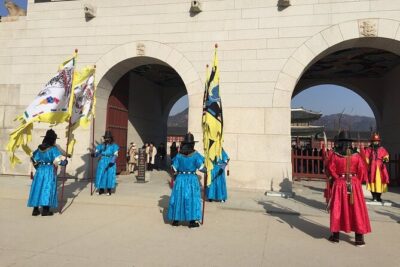
Small-Group Royal Palace and Seoul City Tour (hotel pick-up)
Read our review →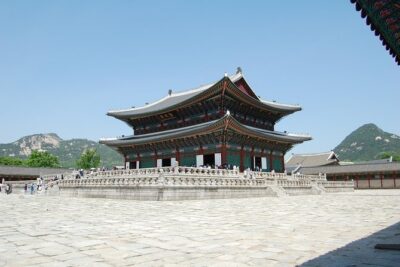
Seoul City Sightseeing Tour Including Gyeongbokgung Palace, N Seoul Tower, and Namsangol Hanok Village
Read our review →Gyeongbok Palace, Bukchon Village, and Gwangjang Tour
Read our review →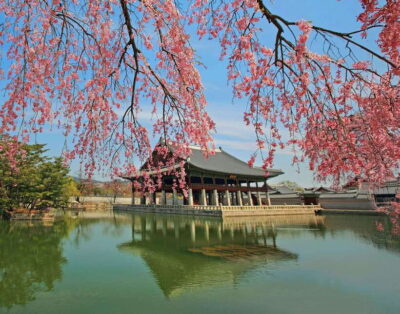
Seoul Highlights: Gyeongbok Palace, Insadong & N Seoul Tower
Read our review →
Seoul City Half Day Tour-Gyeongbok Palace Guard Changing Ceremony
Read our review →Browse the lists this tour appears in