
Reviewed · PALACE TOURS
Seoul Palace Morning Tour
Seoul’s royal past fits into one busy morning. This three-hour tour gives you a useful first look at Jogyesa Temple, Gyeongbokgung Palace, and the changing of the guard, with a guide to explain what you are seeing. I like the included hotel pickup and entrance fees, and I like that the tour ends near Seoul City Hall, where you can continue sightseeing. The main drawback is the stop at a ginseng center, which can take time away from the palace.
The tour also offers a practical introduction for families and first-time visitors. A guide, driver, air-conditioned vehicle, and group transportation take care of the basic planning, while the palace visit covers several important buildings rather than only the main gate. The tradeoff is pace: with a maximum of 30 people and several stops packed into one morning, this is a sampler, not a slow archaeological study.
For about $40 per person, the value is solid if you want transport, admission, and historical context in one package. Be clear about the pickup arrangements, though. Hotel pickup is included, but the tour ends at City Hall rather than returning you to your hotel.
In This Review
- Key points at a glance
- A useful first morning in Seoul
- Jogyesa Temple and its old trees
- Passing the Blue House without a formal stop
- Gyeongbok Palace, Seoul’s grand royal center
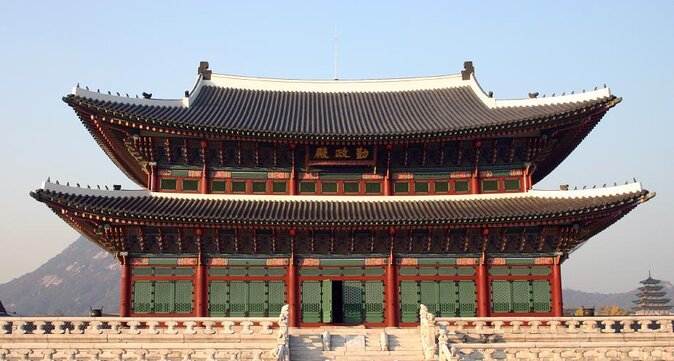
- Geunjeongjeon, the throne hall
- Sajeongjeon, the king’s office
- Gangnyeongjeon and Gyotaejeon
- Gyeonghoeru and royal banquets
- The National Folk Museum and daily Korean life
- Gwanghwamun Gate and the changing of the guard
- The ginseng center, the tour’s clear weak spot
- How the $40 price works for you
- Who should book this morning tour?
- Should you book the Seoul Palace Morning Tour?
- FAQ
- How long is the Seoul Palace Morning Tour?
- What time does the tour start?
- Is hotel pickup included?
- Does the tour return me to my hotel?
- What attractions are included?
- Can I stop at the Blue House?
- Is admission included?
- Is lunch included?
- Does the tour include shopping?
- How many people can join the tour?
- Is the tour available for families?
- What happens if I need to cancel?
Key points at a glance
- Jogyesa Temple begins the morning: See the 500-year-old locust and baeksong trees, the colorful Daeungjeon, and a seven-storey stone pagoda.
- Gyeongbok Palace gets the most attention: Visit the throne hall, royal offices, living quarters, banquet pavilion, and National Folk Museum.
- The Blue House is a drive-by sight: Security rules mean you view it from the vehicle rather than stopping in front.
- The changing of the guard is a highlight: The tour finishes at Gwanghwamun Gate for a colorful royal ceremony.
- A ginseng-center stop is included: This is the least appealing part for many people, especially if you are not interested in shopping.
- City Hall is the drop-off point: The location is useful for continuing your day, but there is no hotel drop-off.
A useful first morning in Seoul
This tour works best as an orientation. It introduces three different sides of Seoul in a short span: living Buddhist practice at Jogyesa, royal power at Gyeongbok Palace, and modern government around the Blue House and City Hall.
You begin at about 9:00 a.m. with hotel pickup. The exact pickup arrangement matters, since the experience includes collection from your Seoul hotel but does not include a ride back afterward. One booking issue has caused confusion in the past, so confirm the pickup time and location clearly before the morning begins.
The vehicle is air-conditioned, a welcome feature if the weather is hot or humid. You are not left to work out Seoul’s palace connections and admission procedures on your own. That convenience is the core value here.
The group can reach 30 people. That is large enough to make personal questions harder and to slow movement through narrow palace areas, but the guide and driver combination keeps the morning moving. If you want quiet photography and long periods at each building, use this tour as a first look and return to the palace later on your own.
More Palace Tours in Seoul:
- Seoul: Gyeongbok Palace, Bukchon Village, and Gwangjang Tour
★ 4.9 · 2,321 reviews - Best Seoul City Tour (Gyeongbokgung Palace,Insadong,Namsan Tower)
★ 5.0 · 1,647 reviews - Small-Group Royal Palace and Seoul City Tour (hotel pick-up)
★ 5.0 · 1,474 reviews
Jogyesa Temple and its old trees
Jogyesa Temple gives the morning a calm beginning. It is identified as a center of Zen Buddhism in Korea, and the first details to catch your eye are the old trees in front of the Daeungjeon, or main hall.
The locust trees and baeksong trees are about 500 years old. The baeksong is designated as a Natural Monument, which gives the courtyard more weight than a quick photo stop might suggest. Your guide can help connect the trees, building, and religious setting rather than leaving you with only a few attractive views.
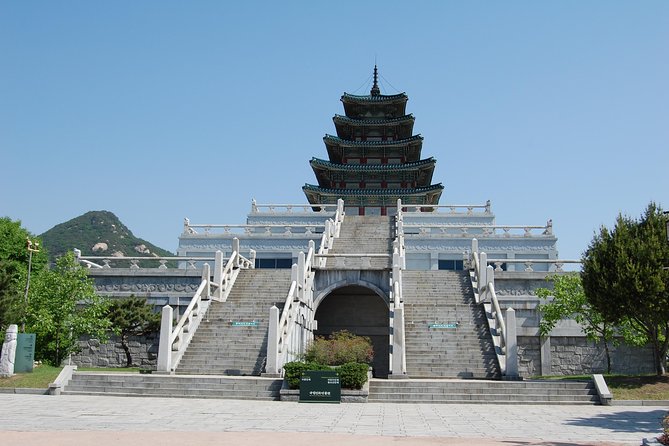
The Daeungjeon was built in 1938 and is painted in Korea’s traditional decorative colors. Inside is a statue of Seokgamoni. In front of the hall, you can also see a seven-storey stone pagoda containing Jinsinsari.
This is not a long temple visit. The schedule moves on to the palace, so you should treat Jogyesa as an introduction to Korean Buddhist design and practice. It is a valuable contrast with Gyeongbok Palace, which was built to display royal authority.
If you enjoy religious buildings, older trees, and small details, pay attention here. If you are mainly interested in royal Seoul, the temple may feel brief. Either way, it broadens the morning beyond a single palace complex.
Passing the Blue House without a formal stop
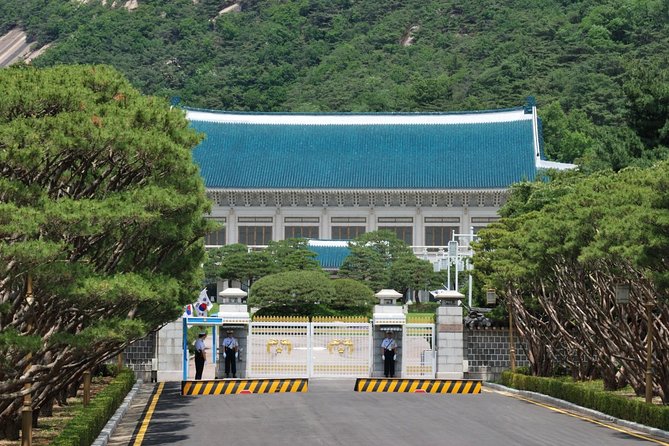
After Jogyesa, the vehicle passes the Blue House on the way to Gyeongbok Palace. The Blue House is the presidential residence referred to in the tour description, and it remains a government security area.
That means you do not get out in front of the building. You see it from the vehicle while heading toward the palace. This detail is important because the name can sound like a full sightseeing stop, but it is really a brief exterior view.
The drive-by still helps place Seoul’s traditional and modern centers in the same picture. Gyeongbok Palace represents the Joseon royal court, while the Blue House belongs to the country’s modern political life. Your guide may offer context during the drive, but do not plan on taking your time with photographs here.
This is one of the tour’s weaker sections simply because the viewing conditions are limited. If the Blue House is a main reason for booking, choose an experience designed around a proper visit. On this morning, it is a short link between the temple and palace.
Gyeongbok Palace, Seoul’s grand royal center
Gyeongbok Palace is the heart of the tour. It served as the main palace during the Joseon Dynasty, which ruled Korea for about five centuries. For many people, this is the first major royal site they see in Seoul, and the scale gives the morning its strongest sense of place.
The complex includes many buildings, so a guide is useful. Rather than wandering past names you cannot pronounce, you are shown a selected group of spaces tied to the workings of the court.
A few more options to weigh up in Seoul
- Best DMZ Tour Korea from Seoul (Red Suspension Bridge Optional)
★ 5.0 · 41,422 reviews - DMZ Tour: 3rd Tunnel, Option(Suspension Bridge, Boat) from Seoul
★ 5.0 · 21,373 reviews - DMZ tour south Korea from Seoul (NK experience hall, defector)
★ 5.0 · 20,599 reviews - Seoul: DMZ Tour with Optional Suspension Bridge
★ 4.8 · 5,277 reviews
Geunjeongjeon, the throne hall
Geunjeongjeon was the main throne hall. It represents the formal side of royal power, with ceremonies and official business centered here.
A guide can point out how the building functioned within the palace layout and explain why it mattered. You will not have unlimited time to study every roof detail or courtyard, but the stop gives you the essential framework for understanding the site.
Sajeongjeon, the king’s office
Sajeongjeon was the king’s office. This stop shifts the focus from ceremony to administration.
That distinction is useful. Gyeongbok Palace was not only a collection of grand halls for royal display. It was also a working seat of government, where the king dealt with affairs of state.
Gangnyeongjeon and Gyotaejeon
Gangnyeongjeon served as the king’s living quarters, while Gyotaejeon was the queen’s living quarters. These buildings help you picture the private side of palace life.
The tour description also highlights luxury living quarters and banquet spaces, but the visit is still guided and time-limited. You are being shown the main pieces of the palace story rather than given the freedom to examine every room at your own pace.
Gyeonghoeru and royal banquets
Gyeonghoeru was used for formal banquets for foreign envoys. Its role adds a diplomatic angle to the visit, showing how the court presented itself to visitors from abroad.
This is one of the places where the guide’s explanation adds real value. Without context, a pavilion can be just another attractive building. With the story of royal banquets and foreign envoys, it becomes part of Korea’s court life and international relations.
The National Folk Museum and daily Korean life
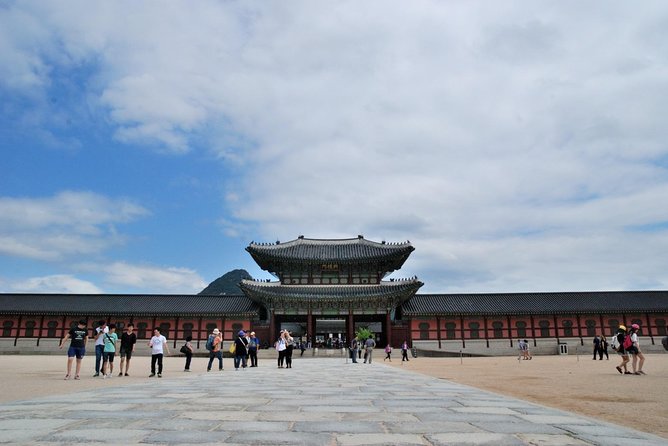
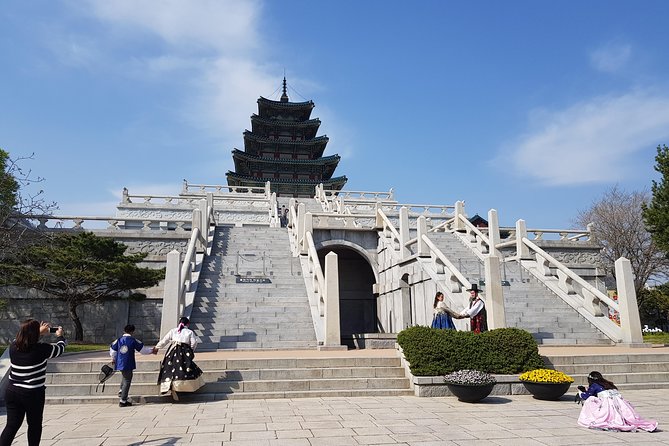
The Korean National Folk Museum is part of the Gyeongbok Palace complex. Its purpose is different from the palace halls. Instead of focusing on kings, queens, and official ceremonies, it presents daily life and traditional Korean culture.
That change of subject helps round out the morning. The palace shows how the ruling family and government operated. The museum aims to show the customs and habits of ordinary life.
The museum stop is included in the palace portion of the tour, but the schedule remains compact. You should not expect to study every exhibit. Think of it as a chance to connect palace history with wider Korean culture.
Families may find this section especially useful because it can make the past easier to understand. Children who are less interested in formal halls may respond better to displays about everyday life, though the tour does not promise a special children’s program.
Gwanghwamun Gate and the changing of the guard
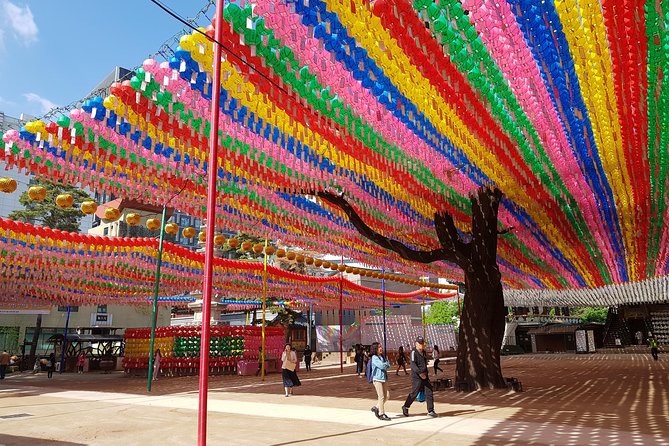
The morning ends at Gwanghwamun Gate, the south gate of Gyeongbok Palace. The changing of the royal guard ceremony is the most visual part of the experience, and it often becomes the clearest memory from the morning.
The ceremony brings color, uniforms, movement, and a strong sense of royal tradition. It also gives you a natural closing point after the quieter temple visit and the long palace walk.
Timing matters. The tour schedule is arranged around the ceremony, so the guide has to keep the group moving through the palace. That explains why some visitors may feel rushed at individual buildings. The benefit is that you reach the gate for the event rather than missing it while lingering elsewhere.
Bring patience if the group pauses or gathers around the gate. With as many as 30 people, you may not have an unobstructed view at every moment. Still, this is the part of the morning that makes the historical theme feel alive rather than purely architectural.
The ginseng center, the tour’s clear weak spot
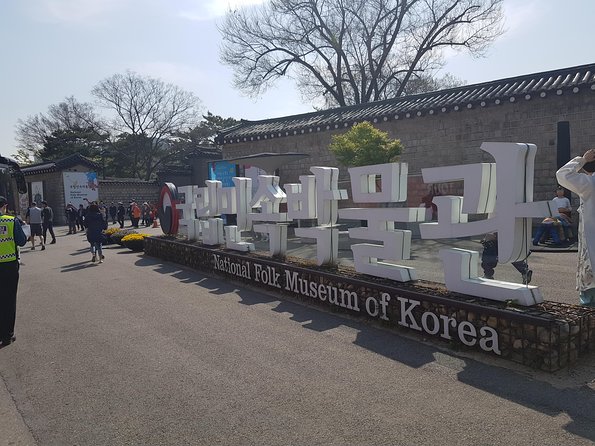
After the main sights, the tour includes a stop at a ginseng center. This is a shopping visit, not a historic attraction.
If you are interested in Korean ginseng products, you may find it useful. If you are not shopping, the stop can feel out of place, especially after a short visit to the palace’s most important buildings. Some past participants found the shopping stop lasted longer than they wanted, and that criticism is easy to understand.
This is the main reason I would hesitate to recommend the tour to someone who wants every minute devoted to culture. The palace, temple, and ceremony are the valuable parts. The ginseng center is an added commercial stop that you should expect rather than regard as a surprise.
The experience does not include lunch. Once you reach City Hall, you can arrange your own meal and continue your day. One guide, Chloe, has been praised for sharing useful information, taking photos, and recommending a restaurant after the tour. That kind of practical help can make the final drop-off more useful.
How the $40 price works for you
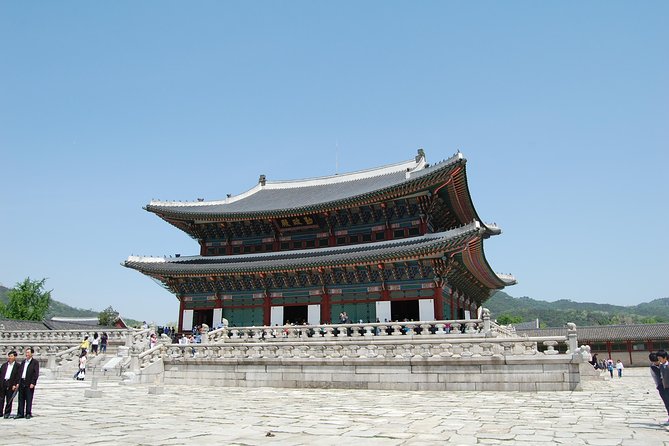
At $40 per person, the price is reasonable for a short guided introduction. You receive hotel pickup, an air-conditioned vehicle, a driver and guide, and entrance fees. Those inclusions save you from arranging transport between Jogyesa, Gyeongbok Palace, and City Hall.
The value depends on what you want from the morning. If you want a guide to explain the palace buildings and handle the route, the price is attractive. If you are comfortable using Seoul’s public transportation and reading your way through the complex, you may prefer to visit independently and spend longer inside.
The tour is also useful when your schedule is tight. It fills a morning and leaves you near City Hall, close to other central Seoul attractions. You do not get a hotel drop-off, but that can be an advantage if you want to keep sightseeing rather than return to your room.
The shopping stop reduces the value slightly for culture-focused visitors. It is the one part of the morning that feels less connected to the temple and palace theme.
Who should book this morning tour?
I would choose this experience for a first visit to Seoul, a family that wants transport and structure, or anyone with only a spare morning. It gives you the key palace buildings, a Buddhist temple, a government landmark viewed from the road, and a guard ceremony without demanding a full day.
It is also a good fit if you like having someone explain what you are looking at. The strongest guides add stories, answer questions, help with photographs, and offer practical suggestions for lunch and the rest of the day.
I would be more cautious if you are a serious photographer, a slow museum visitor, or someone who dislikes group schedules. The guide has to keep moving, and one person reported that a guide spoke too quickly and allowed too little time to look around. Guide quality can shape the morning, so do not assume every departure will feel identical.
The tour is family-friendly in its basic structure, but a three-hour group outing still involves walking and transitions. Most participants can take part, and confirmation is provided when you book. The stated group limit is 30 people, so ask for clear pickup information and arrive ready to move on time.
Should you book the Seoul Palace Morning Tour?
Book it if you want an affordable, organized introduction to Seoul’s royal and religious landmarks, especially with hotel pickup and admission included. The palace buildings and changing of the guard provide the strongest value, while Jogyesa adds welcome variety.
Skip it if the ginseng-center stop would irritate you or if you want a slow, detailed visit to Gyeongbok Palace. In that case, visit independently or choose a tour that gives the palace a full morning.
For most first-time visitors with limited time, I see this as a useful sampler with one obvious compromise: the shopping stop. Confirm your pickup details, remember that City Hall is the final destination, and treat the morning as a well-organized introduction rather than the last word on Seoul’s history.
FAQ
How long is the Seoul Palace Morning Tour?
The tour lasts approximately three hours.
What time does the tour start?
The stated start time is 9:00 a.m.
Is hotel pickup included?
Yes. Hotel pickup in Seoul is included.
Does the tour return me to my hotel?
No. Hotel drop-off is not included. The tour ends at City Hall in Seoul.
What attractions are included?
The tour visits Jogyesa Buddhist Temple, Gyeongbok Palace, the Korean National Folk Museum, and Gwanghwamun Gate. It also passes the Blue House by vehicle.
Can I stop at the Blue House?
No. Because it is a security area, the tour passes the Blue House without stopping in front of it.
Is admission included?
Yes. All entrance fees are included.
Is lunch included?
No. Lunch is not included.
Does the tour include shopping?
Yes. A stop at a ginseng center is included.
How many people can join the tour?
The activity has a maximum group size of 30 people.
Is the tour available for families?
Yes. The experience is described as family-friendly, and most people can participate.
What happens if I need to cancel?
You can receive a full refund if you cancel at least 24 hours before the scheduled start time. Cancellations or changes made less than 24 hours before the start are not accepted for a refund.
Just added in Seoul
- Seoul: Korean & English Language Exchange Global Party★ 5.0 · 28 reviews
- Your Personal Seoul Photographer!★ 4.1 · 15 reviews
- You’re Invited to Our Home in Seoul: The Only Cooking Class!★ 5.0 · 8 reviews
- From Seoul: Yongpyong Ski Day Tour with Transportation★ 4.9 · 40 reviews
- From Seoul: Hwacheon Ice Fishing and Lighting Festival Tour★ 4.5 · 4 reviews
- Seoul: Gangneung BTS K-Pop & K-Drama Filming Locations Tour★ 4.6 · 14 reviews
- Unique Native Experience : Han River Picnic, Board game, BBQ★ 5.0 · 3 reviews
- Seoul: Euljiro Gastroventure Tour★ 4.0 · 1 review
Palace Tours, compared.
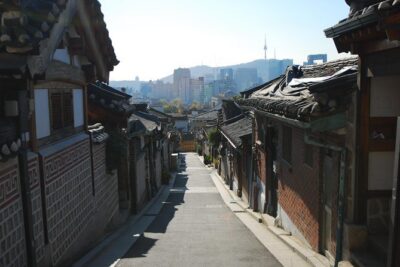
Gyeongbok Palace, Bukchon Village, and Gwangjang Tour
Read our review →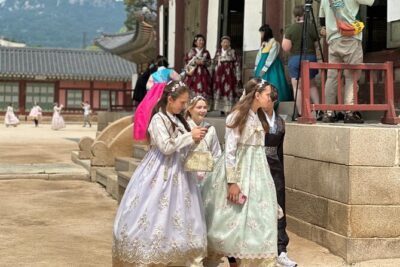
Best Seoul City Tour (Gyeongbokgung Palace,Insadong,Namsan Tower)
Read our review →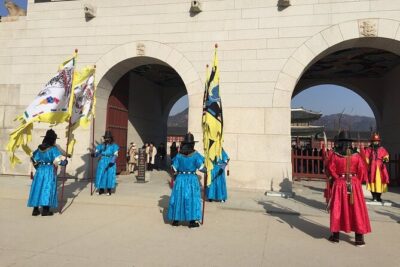
Small-Group Royal Palace and Seoul City Tour (hotel pick-up)
Read our review →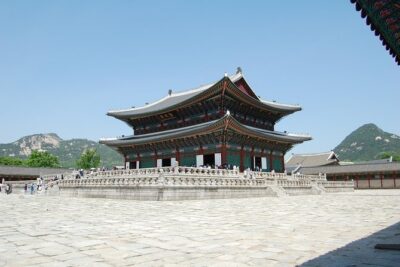
Seoul City Sightseeing Tour Including Gyeongbokgung Palace, N Seoul Tower, and Namsangol Hanok Village
Read our review →Gyeongbok Palace, Bukchon Village, and Gwangjang Tour
Read our review →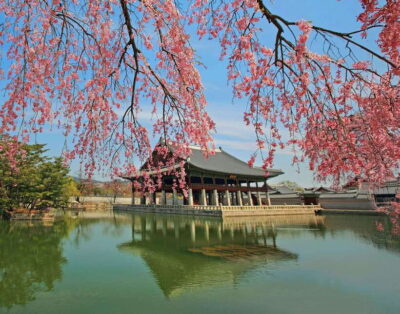
Seoul Highlights: Gyeongbok Palace, Insadong & N Seoul Tower
Read our review →
Seoul City Half Day Tour-Gyeongbok Palace Guard Changing Ceremony
Read our review →Browse the lists this tour appears in