
Reviewed · PALACE TOURS
(Small Group) Palace & Seoul Old Town Highlights
Seoul’s old center fits neatly into three hours. This small-group walk links Insadong and Jogyesa Temple with Gwanghwamun Square, Gyeongbokgung Palace, and Bukchon Hanok Village, giving you a useful first look at Joseon-era Seoul and today’s city life. I like the compact route and the maximum group size of 10, which should make it easier to ask questions and keep up with the guide. The main consideration is pace: five stops in about three hours means you will see highlights rather than explore each place at length.
Guide Lee is a major strength here. She mixes palace history with present-day Korean culture, answers questions patiently, and adds small quizzes and traditional Korean games during breaks. I also like that the palace admission is included in the $60.27 price. Still, expect plenty of walking, outdoor exposure, and a weather-dependent experience, so this is not the best choice if you want a slow, unhurried palace visit.
In This Review
- Key points to know before you book
- Why this three-hour walk works well in Seoul
- Starting at Anguk Station and entering Insadong
- A quiet pause at Jogyesa Temple
- Gwanghwamun Square and Korea’s public story
- Ninety minutes inside Gyeongbokgung Palace
- Bukchon Hanok Village and the final half-hour
- What the $60.27 price buys you
- Who will get the most from this experience
- Cancellation, weather, and practical planning
- Should you book the Palace and Seoul Old Town Highlights walk?
- FAQ
- Where does the tour begin?
- Where does the tour end?
- How long does the experience last?
- How many people can join the tour?
- Is admission to Gyeongbokgung Palace included?
- Which places are visited?
- Is the tour available with a mobile ticket?
- What happens if the tour is canceled because of bad weather?
Key points to know before you book
- Lee’s personal guiding style combines Joseon history, modern Korean culture, questions, and traditional games.
- The route covers five major areas in roughly three hours, making it useful for a first orientation to central Seoul.
- Gyeongbokgung Palace receives about 90 minutes, the longest stop and the heart of the experience.
- A maximum of 10 people keeps the group small enough for conversation and easier movement through busy areas.
- The $60.27 fee includes the palace ticket, while food, drinks, and personal costs are extra.
- The tour begins and ends at Anguk Subway Station, with free cancellation available up to 24 hours before departure.
Why this three-hour walk works well in Seoul
Seoul can feel huge when you first arrive. The subway system is excellent, but a map does not always explain how the old royal center, temple district, shopping streets, public squares, and traditional residential lanes fit together.
This tour gives you that basic map in human form. You start near Anguk Station, walk through Insadong, pause at Jogyesa Temple, continue toward Gwanghwamun Square, spend the largest block of time at Gyeongbokgung Palace, then finish in Bukchon Hanok Village before returning to the meeting point.
I see this as an orientation walk rather than a full historical study. You will not have hours to examine every palace building or wander every Bukchon lane. What you do get is a clear introduction to several of Seoul’s most important central sights, with a guide connecting them.
The small group matters. With no more than 10 people, Lee can respond to questions and adjust her explanations to the group. Several outings have been especially small, with only three people taking part, and that created the feel of a private walk without the usual private-tour price.
More Palace Tours in Seoul:
- Seoul: Gyeongbok Palace, Bukchon Village, and Gwangjang Tour
★ 4.9 · 2,321 reviews - Best Seoul City Tour (Gyeongbokgung Palace,Insadong,Namsan Tower)
★ 5.0 · 1,647 reviews - Small-Group Royal Palace and Seoul City Tour (hotel pick-up)
★ 5.0 · 1,474 reviews
Starting at Anguk Station and entering Insadong
The meeting point is outside Exit 6 at Anguk Subway Station. This is a practical starting place because it puts you near several old-city sights and avoids spending the first part of the tour on a long transfer.
From the station, you walk to Insadong. The district is known for traditional goods, restaurants, and tea houses, so it offers an early change of mood from modern Seoul. You are given about 10 minutes here, which is enough to get your bearings and hear why the area matters, but not enough for a serious shopping stop.
That short visit is useful if you are new to Seoul. You can note places to return to later, especially if you want tea, traditional products, or a meal. Do not plan to make purchases during the guided walk, though. The schedule moves on quickly.
Anguk Station is also convenient for public transportation, and the tour ends back at the same meeting point. That makes it easier to continue your own sightseeing afterward, or return to your hotel by subway.
A quiet pause at Jogyesa Temple
Jogyesa Temple gives the tour a calm center after the commercial feel of Insadong. It is the head temple of the Jogye Order of Korean Buddhism, and its history reaches back to its founding in 1910.
You have about 30 minutes here. That is a fair amount of time for a short city walk because the temple is not treated as a quick photo stop. You can listen to Lee explain its role in Korean Buddhism, take in the setting, and enjoy a brief pause before the longer walk toward the palace.
The value of this stop is contrast. Insadong presents traditional culture through shops and tea houses. Jogyesa shows a living religious institution in the middle of the capital. That difference helps you avoid treating old Seoul as a museum set.
Keep your expectations measured. The tour does not promise a ceremony, special access, or extended quiet time. It is a guided visit to an important temple, not a religious program.
Gwanghwamun Square and Korea’s public story
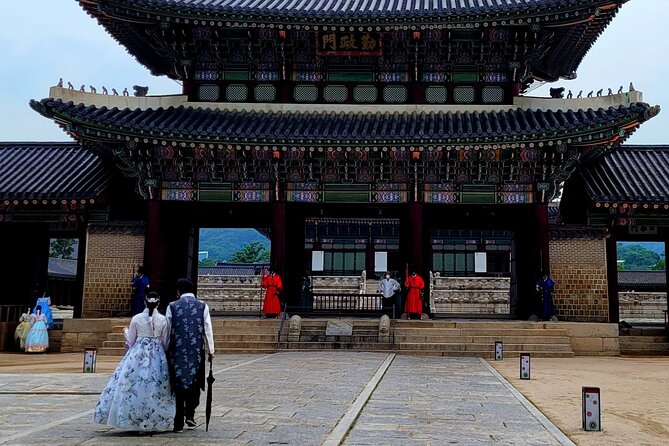
The next stop is Gwanghwamun Square, a central public plaza in front of Gyeongbokgung Palace. You spend about 20 minutes here.
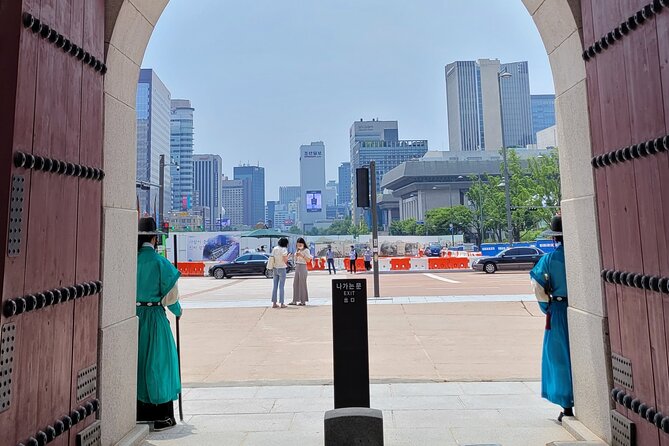
The square focuses attention on two major figures in Korean history: King Sejong the Great and Admiral Yi Sun-sin. Their statues provide a natural opening for Lee to discuss Korea’s past, national identity, and the way historical figures are presented in modern Seoul.
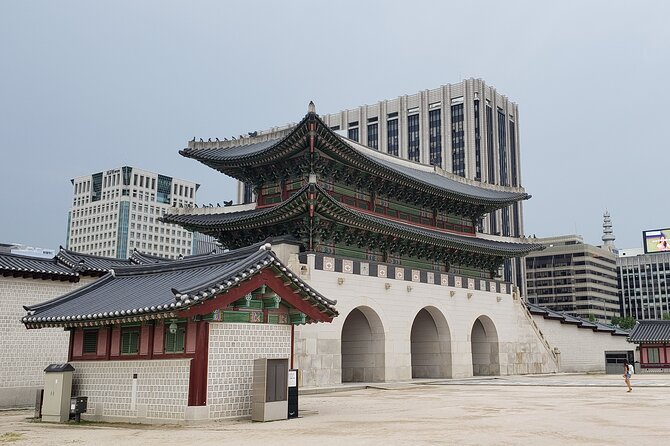
This is also a useful visual bridge between old and new. The square is a modern civic space, yet it points directly toward the Joseon royal palace. You can better understand the city’s layout before entering Gyeongbokgung.
Twenty minutes goes by quickly, so this part is mainly about explanation and orientation. If you want to linger around the statues, take photographs, or study the square on your own, plan to return later.
A few more options to weigh up in Seoul
- Best DMZ Tour Korea from Seoul (Red Suspension Bridge Optional)
★ 5.0 · 41,422 reviews - DMZ Tour: 3rd Tunnel, Option(Suspension Bridge, Boat) from Seoul
★ 5.0 · 21,373 reviews - DMZ tour south Korea from Seoul (NK experience hall, defector)
★ 5.0 · 20,599 reviews - Seoul: DMZ Tour with Optional Suspension Bridge
★ 4.8 · 5,277 reviews
Ninety minutes inside Gyeongbokgung Palace
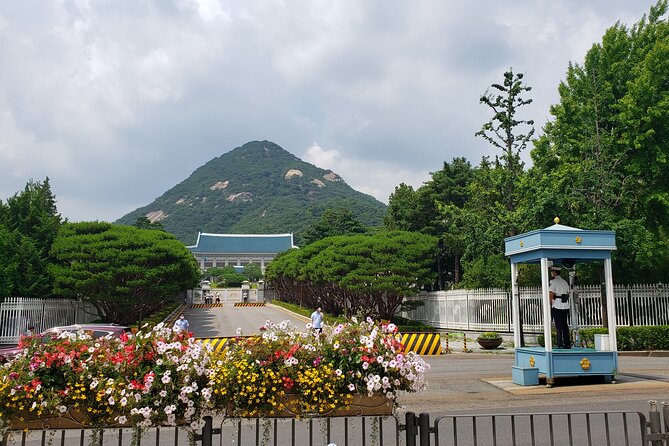
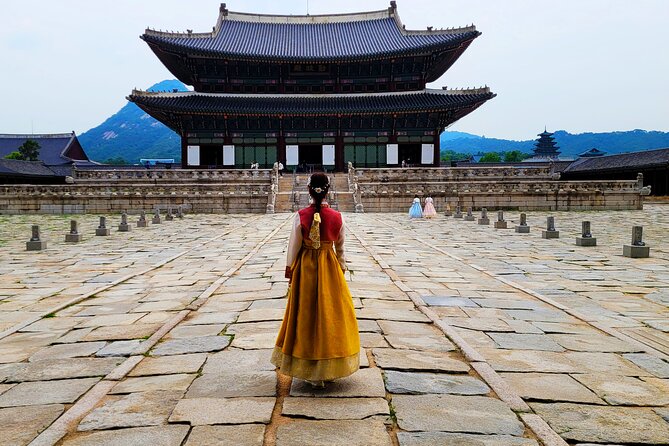
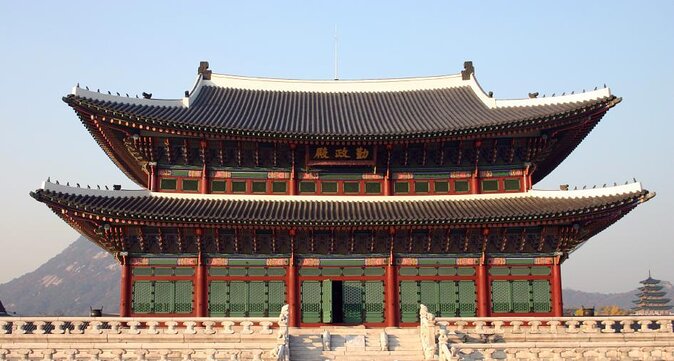
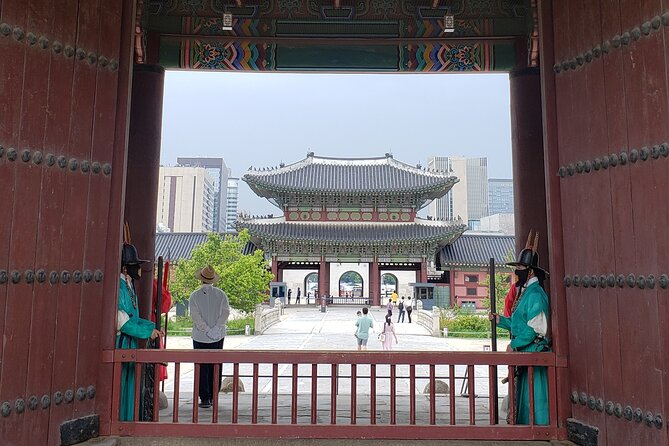
Gyeongbokgung is the center of the tour. Built in 1395, it was the main royal palace of the Joseon Dynasty. Its position, with mountains behind and the city ahead, reflects the traditional idea of royal power and order.
The tour allows about 90 minutes here, far longer than at any other stop. That is important because the palace is a large complex, and a quick walk would leave you with little sense of its scale or purpose.
I like that the admission ticket is included. At $60.27 per person, the price is not simply paying for a walk through public streets. Part of the fee covers entry to Seoul’s best-known royal site, while the rest pays for the small-group guiding and the focused route.
Lee’s approach appears to suit people who want more than dates and building names. Her explanations include Joseon history as well as modern Korean culture, and she uses mini quizzes to keep the group involved. Traditional Korean games may also appear during break periods, adding a bit of play to what could otherwise become a dense history lesson.
That style is especially helpful for families or first-time visitors who may not want a formal lecture. One account specifically praises Lee for being caring toward her group, while another highlights her patience and useful answers. These details suggest a guide who pays attention to how people are responding, not just to the clock.
You should still allow for a fair amount of standing and walking. Palace courtyards are open-air spaces, and the tour requires good weather. If rain or other poor conditions force cancellation, you can choose another date or receive a full refund.
Bukchon Hanok Village and the final half-hour
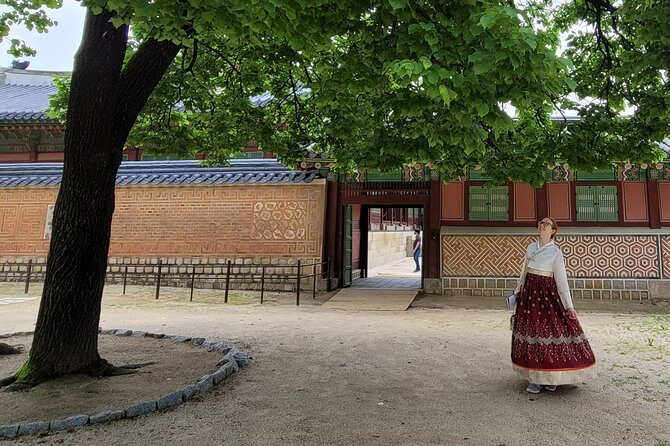
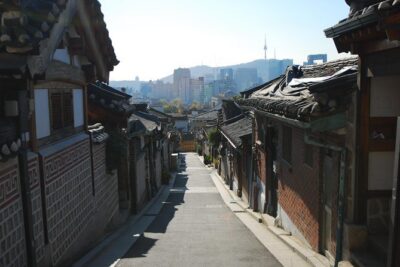
The final scheduled stop is Bukchon Hanok Village, a historic residential area between two royal palaces. Its traditional Korean houses, called hanok, line winding alleys and create a strong sense of how people once lived during the Joseon period.
The tour gives Bukchon about 30 minutes. That is enough for an introduction and a few views of the lanes and rooftops. It is not enough to explore the entire neighborhood, browse every small shop, or take an extended photography walk.
That short timing is the clearest limitation of the route. Bukchon rewards slow wandering, and its narrow lanes can be more enjoyable when you are not watching the group schedule. Still, a guided introduction helps you understand what you are seeing and tells you where to return after the tour.
Remember that Bukchon is a residential area, not just an attraction. Your guide can help frame the visit respectfully, while you should keep your voice down and avoid treating private homes as photo props.
After Bukchon, the activity ends back at the Anguk Station meeting point. That makes the tour easy to pair with an afternoon in Insadong, more time at the palace, or another central Seoul sight.
What the $60.27 price buys you
The $60.27 cost sits in the middle range for a short guided city experience. The value depends on how you use it.
If you are comfortable researching Seoul on your own, navigating the subway, and reading background information, you could visit most of these areas without a guide. The public spaces and temple do not require admission, and only Gyeongbokgung has a ticket included here.
But the tour packs five locations into one clear route. You do not have to work out the best order, connect the palace to the square, or decide how much time to spend at each place. You also get Lee’s explanations, question time, and small activities.
The fee makes the most sense for a first visit, a short stay, or a traveler who values context more than independent wandering. It is less attractive if you already know Seoul’s royal district or want long stretches of free time.
Because the average booking point is 34 days before the experience, you may want to reserve ahead if the small group size is important to you. The group can be as small as three people on some dates, but the advertised maximum is 10.
Who will get the most from this experience
I would recommend this walk to you if you want a quick, well-organized introduction to central Seoul. It is particularly suitable for:
- First-time visitors who need a clear sense of the old city
- People with only a few days in Seoul
- Families who prefer stories, quizzes, and games to a formal lecture
- Couples or small groups who want a personal feel without booking a private tour
- Anyone interested in both Joseon history and present-day Korean culture
You may want something else if your priority is shopping, food tasting, palace photography, or a slow architectural study. Insadong receives only a short visit, and there is no food or drink included. Personal expenses are also separate.
The tour is near public transportation, service animals are allowed, and most people can participate. The supplied information does not list detailed accessibility arrangements, so you should confirm any specific mobility needs before booking.
Cancellation, weather, and practical planning
You can cancel up to 24 hours before the start time for a full refund. Cancellations or changes made less than 24 hours before departure are not accepted for a refund, and the cut-off uses Seoul local time.
The experience needs good weather. If the operator cancels because of poor conditions, you can choose another date or receive a full refund. A minimum number of participants is also required, and if that minimum is not reached, you will be offered another option or a refund.
Bring a mobile ticket, since the experience uses mobile admission details. Wear comfortable shoes and plan for outdoor walking, especially around the palace and Bukchon. You will get more from the visit if you treat the three hours as a guided introduction, then return independently to the places that catch your interest.
Should you book the Palace and Seoul Old Town Highlights walk?
I would book it if you want an efficient first look at Seoul and appreciate a guide who makes history conversational. Lee’s friendly style, patient answers, modern cultural context, quizzes, and traditional games give this short tour more personality than a basic point-to-point walk.
The strongest value comes from the combination of a small group, included Gyeongbokgung admission, and a route that covers five major places in one morning or afternoon. The tradeoff is speed. You will sample Insadong, Jogyesa, Gwanghwamun, the palace, and Bukchon, not fully explore them.
For a first visit, limited vacation time, or a family seeking an easy introduction, the $60.27 price is reasonable. If you already know the palace district or prefer to set your own pace, save the money and explore independently.
FAQ
Where does the tour begin?
The tour begins outside Exit 6 of Anguk Subway Station in Seoul.
Where does the tour end?
The activity ends back at the Anguk Station meeting point.
How long does the experience last?
The tour lasts approximately three hours.
How many people can join the tour?
The tour has a maximum group size of 10 people.
Is admission to Gyeongbokgung Palace included?
Yes. The Gyeongbokgung Palace ticket is included in the tour price.
Which places are visited?
The route includes Insadong, Jogyesa Temple, Gwanghwamun Square, Gyeongbokgung Palace, and Bukchon Hanok Village.
Is the tour available with a mobile ticket?
Yes. The experience features a mobile ticket.
What happens if the tour is canceled because of bad weather?
You will be offered another date or a full refund if poor weather causes the cancellation.
Just added in Seoul
- Seoul: Korean & English Language Exchange Global Party★ 5.0 · 28 reviews
- Your Personal Seoul Photographer!★ 4.1 · 15 reviews
- You’re Invited to Our Home in Seoul: The Only Cooking Class!★ 5.0 · 8 reviews
- From Seoul: Yongpyong Ski Day Tour with Transportation★ 4.9 · 40 reviews
- From Seoul: Hwacheon Ice Fishing and Lighting Festival Tour★ 4.5 · 4 reviews
- Seoul: Gangneung BTS K-Pop & K-Drama Filming Locations Tour★ 4.6 · 14 reviews
- Unique Native Experience : Han River Picnic, Board game, BBQ★ 5.0 · 3 reviews
- Seoul: Euljiro Gastroventure Tour★ 4.0 · 1 review
Palace Tours, compared.
Gyeongbok Palace, Bukchon Village, and Gwangjang Tour
Read our review →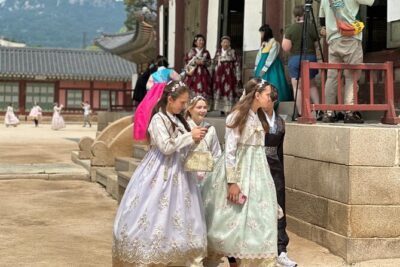
Best Seoul City Tour (Gyeongbokgung Palace,Insadong,Namsan Tower)
Read our review →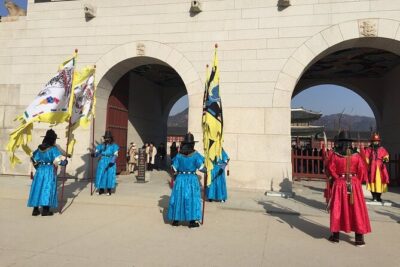
Small-Group Royal Palace and Seoul City Tour (hotel pick-up)
Read our review →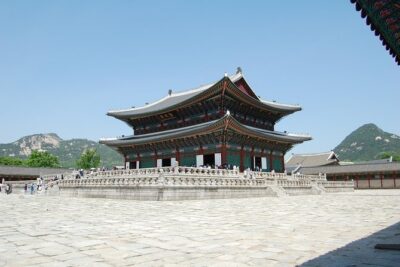
Seoul City Sightseeing Tour Including Gyeongbokgung Palace, N Seoul Tower, and Namsangol Hanok Village
Read our review →Gyeongbok Palace, Bukchon Village, and Gwangjang Tour
Read our review →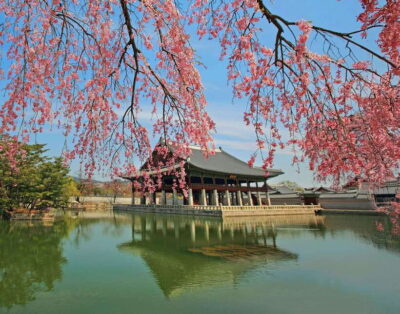
Seoul Highlights: Gyeongbok Palace, Insadong & N Seoul Tower
Read our review →
Seoul City Half Day Tour-Gyeongbok Palace Guard Changing Ceremony
Read our review →Browse the lists this tour appears in