
Reviewed · DMZ TOURS
DMZ Tour + The War Memorial of Korea Museum
History feels close here. This Seoul day tour combines the DMZ and Third Tunnel with Imjingak Peace Nuri Park and the War Memorial of Korea, giving you both the physical border zone and the story behind the Korean War. I like the clear route and the chance to see major sites without arranging separate transport. I also like that guides such as Bill Hwang, Kane Kim, Ann Jung, Jae Seo, and Kevin have been praised for careful timing, strong English, and patient explanations.
The main drawback is the long day, which begins at 7:00 a.m. and can run eight or nine hours. The Third Tunnel also requires a moderate level of fitness, and military conditions or bad weather can change the schedule, sometimes with no refund if the tour cannot operate as planned.
In This Review
- Key Points to Know Before You Book
- Why This DMZ Tour Works as a History Day
- Imjingak Peace Nuri Park and the Bridge of Freedom
- Inside the DMZ Exhibition Area
- Dora Observatory and the View Toward North Korea
- The Third Infiltration Tunnel: Worth the Walk?
- The War Memorial of Korea Adds the Missing Context
- Guides, Group Size, and the Human Side of the Day
- Is $65 Good Value for a Seoul Day Trip?
- Who Should Book This DMZ Experience?
- Final Verdict: Book It for Context, Not Just the View
- FAQ
- Where does the tour start and finish?
- What time does the tour begin?
- How long does the tour last?
- Do I need to bring my passport?
- Is lunch included?
- Can the tour be canceled or delayed?
Key Points to Know Before You Book
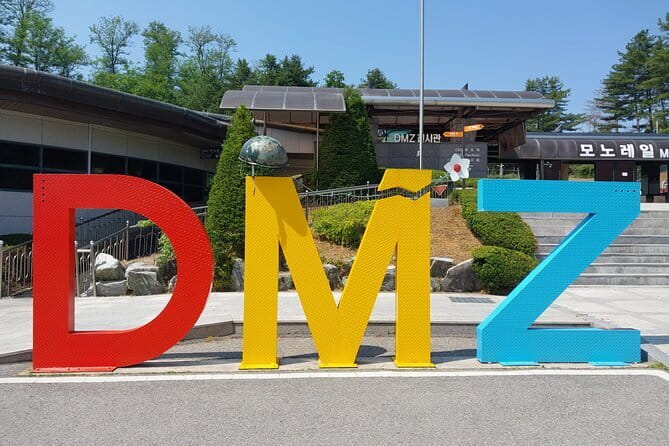
- The tour covers five important stops: Imjingak Peace Nuri Park, the DMZ exhibition area, Dora Observatory, the Third Tunnel, and the War Memorial of Korea.
- The Third Tunnel is physically demanding: It is steep, narrow, and best handled in comfortable shoes.
- Your passport is required: You cannot enter the DMZ without carrying it on the day.
- The War Memorial completes the story: The free museum helps explain the conflict after the border sites give you a sense of place.
- Guide quality matters here: Bill Hwang, Kane Kim, Ann Jung, Jae Seo, and Kevin are praised for history lessons, organization, and personal attention.
- The $65 price is reasonable for a full day: Transport, parking, guide service, and admission to the paid sites are included, but lunch is not.
Why This DMZ Tour Works as a History Day
A DMZ visit can easily become a quick photo stop with little context. This experience has a better structure. You first see memorials and wartime remains at Imjingak, then visit the controlled DMZ area, and finish at a large museum in Seoul.
That order helps you understand the border before looking at the wider story. The War Memorial comes late, so you may already have questions about the armistice, divided families, military tension, and the Korean War. The museum gives those questions a place to land.
One guide, Jae Seo, reportedly carried a tablet, printed material, and a Korean flag to make the explanations easier to follow. That sort of preparation matters on a day when rules, military access, and tight timing can limit what you see.
The tour starts at Myeongdong Station Exit 4 on Subway Line 4. Pickup is listed for 7:00 a.m., with the return near the Myeongdong area. The drive to Imjingak takes about an hour and a half, depending on road conditions. An air-conditioned vehicle and parking fees are included, which removes the hardest part of visiting this border area independently.
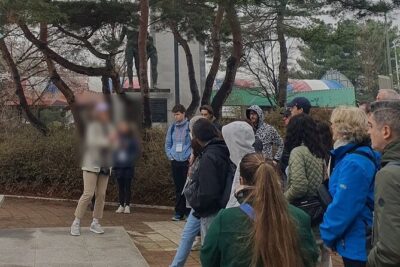
The group can be as large as 40 people, though some departures use a smaller van. Smaller groups received especially warm praise because the guide could adjust the walking pace, answer more questions, and help with photographs. Group size may affect the feel of your day, so keep that in mind when booking.
More Museum Tours in Seoul
- Seoul: War Memorial of Korea Private Guided Museum Tour
★ 4.9 · 29 reviews - Color Pool Museum
★ 4.0 · 22 reviews - SEOUL: Gugak – Korean Traditional Music Museum&Concert Tour
★ 4.7 · 17 reviews
Imjingak Peace Nuri Park and the Bridge of Freedom
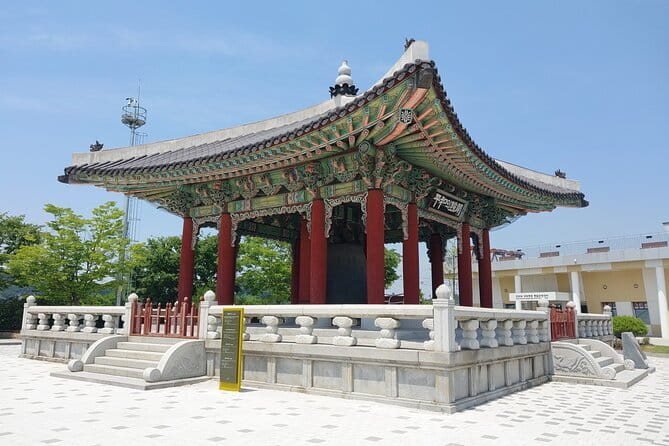
Imjingak Peace Nuri Park is your first major stop, with about 90 minutes to see its memorials and wartime displays. It is more than a roadside pause. The park presents the emotional cost of a divided country through objects and memorials tied to the Korean War.
The Bridge of Freedom is the best-known feature. It was used by people returning from the North after the war and has become a symbol of separation, lost homes, and the hope of reunification. The bridge itself is simple, but that is part of its force. You are not looking at an ornate monument. You are looking at a practical structure connected to people who crossed it under extraordinary circumstances.
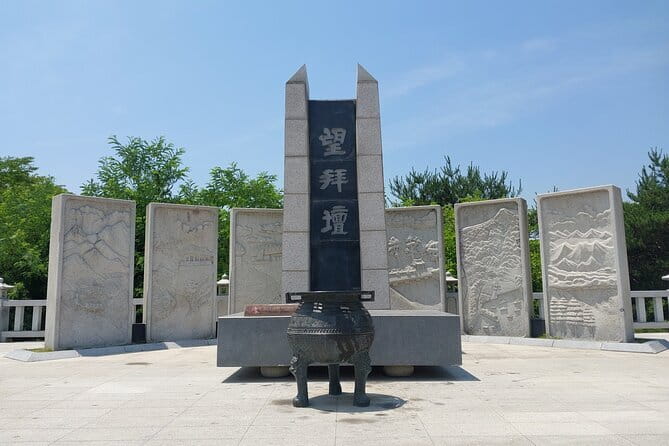
You will also see the Mangbaedan Memorial Altar, a place associated with families separated by the border. It represents a painful part of Korean history that can be easy to miss if you focus only on military hardware and lookout points.
Another important object is the damaged steam locomotive from Jangdan Station. Its bullet holes and twisted metal connect the broad story of war to one physical survivor. I find this kind of exhibit useful because it makes the conflict less abstract.
The park is also where you begin to sense the difference between a normal sightseeing day and a visit shaped by military history. The mood is reflective, and the guide’s explanation helps you read the site rather than simply take pictures and move on.
Inside the DMZ Exhibition Area
The DMZ portion includes a theater presentation about the Korean War and an exhibition hall with records, relics, and general information about the Demilitarized Zone. The scheduled visit is about 30 minutes, so this is an orientation stop rather than a full museum visit.
That short length is useful. The DMZ has a complicated history, and the video gives you basic facts before the more visually striking parts of the day. It also helps explain why access is controlled and why your schedule may change.
Do not expect a relaxed public park. Military procedures guide the visit, and the route can be affected by weather or an unexpected military matter. The tour operator states that the departure time or access may change for these reasons.
Carry your passport in a secure place. This is not optional paperwork. The stated rule is clear: without it, you will not be allowed to enter the DMZ.
Dora Observatory and the View Toward North Korea
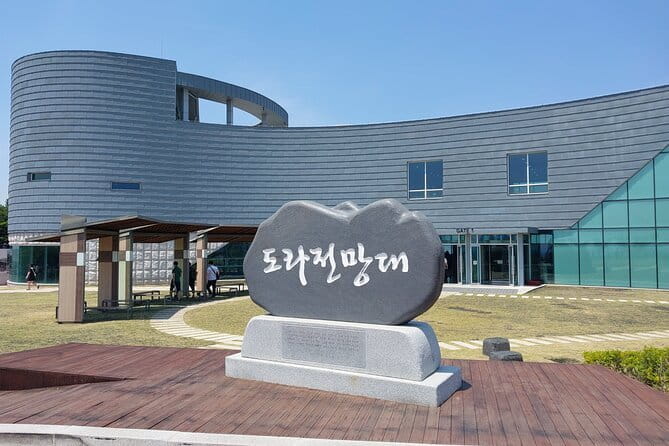
Dora Observatory provides views across the DMZ and toward North Korean territory. Binoculars are available for viewing, giving you a chance to look toward features such as the North Korean propaganda village and the jamming tower.
The view is the moment when the border becomes most immediate. You are looking across a restricted zone rather than at a display about one. Still, expectations should be realistic. Weather, visibility, military rules, and the exact viewing position all affect what you can make out.
Photography is restricted in some areas. A guide may tell you not to photograph North Korea, and soldiers at the viewing platform watch for violations. The practical advice is simple: listen carefully, keep your camera away when instructed, and do not assume that a scenic view is automatically open for photographs.
One account noted that access to the normal viewing platform had changed because of current conditions, with North Korea viewed from an auditorium instead. That did not prevent the history lesson, but it shows why you should treat this as a controlled military site, not a fixed sightseeing attraction.
The observatory visit lasts about an hour. Your guide can point out what you are seeing and explain the purpose of the structures across the border. Without that help, the view can be difficult to interpret.
More DMZ tours:
- Best DMZ Tour Korea from Seoul (Red Suspension Bridge Optional)
★ 5.0 · 41,422 reviews - DMZ Tour: 3rd Tunnel, Option(Suspension Bridge, Boat) from Seoul
★ 5.0 · 21,373 reviews - DMZ tour south Korea from Seoul (NK experience hall, defector)
★ 5.0 · 20,599 reviews - Seoul: DMZ Tour with Optional Suspension Bridge
★ 4.8 · 5,277 reviews
The Third Infiltration Tunnel: Worth the Walk?
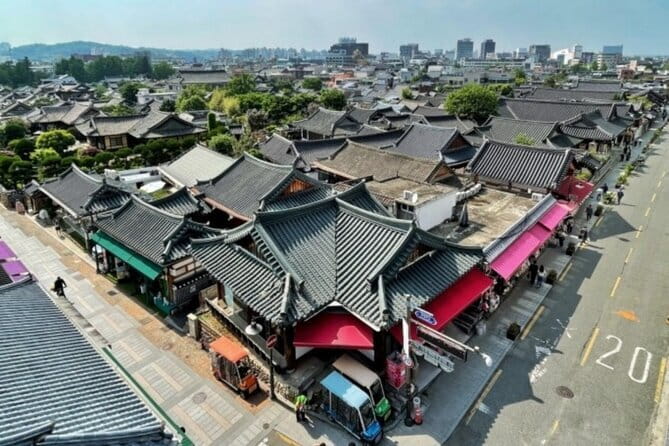
The Third Tunnel is the most physical part of the tour. North Korean forces dug it beneath the border, and the South later discovered it. The tunnel is presented as evidence of a planned invasion route.
You walk down a steep slope into a narrow passage. The tour information recommends a moderate fitness level, comfortable clothes, and sturdy shoes. That advice should be taken seriously. The walk is not described as technically difficult, but the incline and confined space can be tiring.
There are benches along part of the first section, which gives you places to rest. The tunnel has no stairs going down, but the slope still demands effort. You will also need to walk back uphill after reaching the permitted section.
The tunnel is narrow enough that the visit feels very different from the open observatory. It is not necessarily claustrophobic for everyone, but people who dislike tight spaces should think carefully before booking. You cannot bring a camera into the tunnel, so this is a place for observation, not photographs.
The tunnel’s reported slope is approximately 0.003 degrees, though the more useful point for your planning is that it feels steep enough to require a steady pace. Some guides walk with the group and adjust their speed for older people. Bill Hwang was praised for doing this, while also offering to take group photos at places where photographs were allowed.
Allow roughly an hour for the tunnel visit. Wear shoes with a good grip, keep your hands free, and do not rush the descent. The historical importance is strong, but the physical demands are real.
The War Memorial of Korea Adds the Missing Context
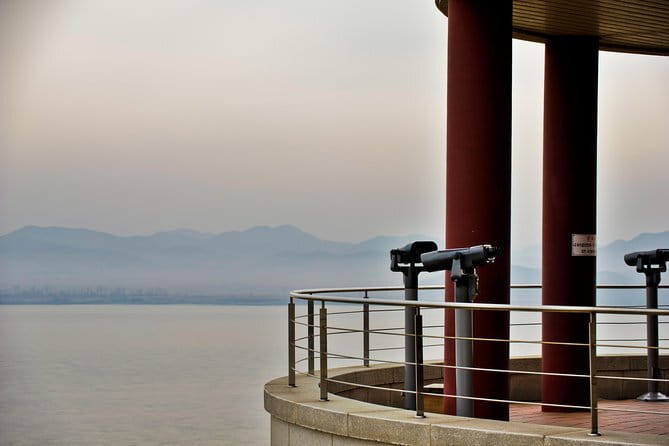
The final stop is the War Memorial of Korea, with about an hour inside. Admission is free, and it is one of the best-value parts of the day because it broadens the focus beyond the border itself.
The museum covers Korea’s long military story as well as the Korean War. On this tour, the guide concentrates on records and displays connected to the conflict. The explanations can help you connect the damaged locomotive at Imjingak, the divided families, the tunnel, and the modern border into one story.
An hour is enough for a guided introduction, but not enough to see everything in the museum. If military history is a major interest, I would return independently for a longer visit. The tour gives you a useful framework, while a second visit would let you read more displays at your own pace.
The timing is also worth considering. One Spanish-speaking visitor felt the museum might have been even more helpful earlier in the day, before the DMZ sites. I understand that view. Starting with the museum would give you more background first. Still, the existing order has an advantage: the museum becomes a fuller explanation after you have seen the places discussed in its displays.
Guides have received strong praise for their work here. Bill condensed the history into clear stories, while Kane was praised for keeping the group on schedule and explaining the conflict in an easy-to-follow way. This stop depends heavily on the guide. With good narration, an hour can be useful. Without it, the museum may feel too large for the time allowed.
Guides, Group Size, and the Human Side of the Day
This tour’s strongest feature is not a vehicle or a ticket. It is the guide.
Bill Hwang is repeatedly praised for clear communication, warmth, and personal attention. He contacted some people through WhatsApp before departure, clarified the meeting arrangements, and answered questions. He also helped older members of the group manage the tunnel at a comfortable pace.
Kane Kim is praised for organization, history knowledge, and time management. He reportedly provided snacks and water, though you should not assume these extras are guaranteed on every departure. Ann Jung was praised for answering questions before the tour and checking that everything was going well during the day.
Jae Seo’s use of a tablet and printed visual material is especially useful when the weather or military restrictions affect what you can see. Kevin is also described as friendly and well informed.
Guide assignments can change, so you should not book on the assumption that one particular person will lead your departure. The consistent pattern is what matters: expect an English-speaking guide whose role is to explain, organize, and help you follow the rules.
The maximum group size is 40. That is not tiny, but smaller departures may use a van and allow more individual attention. If you are traveling with older relatives, a small group could make the tunnel and boarding process easier.
Is $65 Good Value for a Seoul Day Trip?
At $65 per person, the tour is fairly priced for what it includes. You receive round-trip transport from the Myeongdong area, an air-conditioned vehicle, parking fees, a professional guide, and admission to the listed DMZ attractions.
The value is strongest if you do not want to manage military access, transport connections, and timing on your own. The DMZ is not a place where casual improvisation works well. A guide also adds meaning to sites that might otherwise be hard to understand.
Lunch is not included. Bring money for a meal or snacks, and do not expect the price to cover food. The day begins early and may finish in the late afternoon or early evening, depending on the exact schedule and road conditions.
The cancellation terms are generous if you plan ahead. You can cancel at least 24 hours before the start time for a full refund. Changes or cancellations within 24 hours are not refunded. Bad weather or military issues can also alter the day, and the stated policy allows a new date or full refund when the operator cancels for poor weather or does not meet the minimum group size.
Who Should Book This DMZ Experience?
I would choose this tour if you want one organized day that connects the border with the Korean War. It suits first-time visitors to Seoul, history-minded people, and anyone who prefers explanations to simply being dropped at a viewpoint.
It is also a good fit for solo visitors. A guide can make the day easier to navigate, and a smaller group can provide more conversation and support. Families with older members should consider the tunnel carefully, but the guide may be able to adjust the pace if the group is small.
I would hesitate if you want a flexible day, dislike early starts, or have difficulty with steep and narrow passages. The tour follows military rules, and no operator can guarantee perfect weather, a clear view, or access to every viewpoint.
Bring your passport, wear comfortable shoes, carry water and money for lunch, and keep your schedule open for eight to nine hours. Most important, approach the DMZ as a place of living political tension and human loss, not just as a photo stop.
Final Verdict: Book It for Context, Not Just the View
I recommend this $65 tour for most first-time visitors who want a practical introduction to the DMZ and the Korean War. Imjingak gives you the emotional setting, Dora Observatory provides the border view, the Third Tunnel adds physical reality, and the War Memorial supplies the wider story.
The day is long and the tunnel takes effort. Views may change, photography is restricted, and military conditions can disrupt the plan. But with a strong guide such as Bill, Kane, Ann, Jae, or Kevin, you get much more than transport to a checkpoint. You get a clear, human explanation of why this border still matters.
FAQ
Where does the tour start and finish?
The tour starts at Myeongdong Station Exit 4 on Subway Line 4 in Seoul. It returns to the Myeongdong area near the bus drop-off point.
What time does the tour begin?
The listed start time is 7:00 a.m.
How long does the tour last?
The experience lasts approximately eight to nine hours.
Do I need to bring my passport?
Yes. You must carry your passport on the day of the tour. Without it, you will not be allowed to enter the DMZ.
Is lunch included?
No. Lunch is not included in the tour price.
Can the tour be canceled or delayed?
Yes. Military issues or bad weather can cause a delay or cancellation. If the operator cancels because of poor weather or because the minimum number of participants is not reached, you can be offered another date or experience, or a full refund.
Just added in Seoul
- Seoul: Korean & English Language Exchange Global Party★ 5.0 · 28 reviews
- Your Personal Seoul Photographer!★ 4.1 · 15 reviews
- You’re Invited to Our Home in Seoul: The Only Cooking Class!★ 5.0 · 8 reviews
- From Seoul: Yongpyong Ski Day Tour with Transportation★ 4.9 · 40 reviews
- From Seoul: Hwacheon Ice Fishing and Lighting Festival Tour★ 4.5 · 4 reviews
- Seoul: Gangneung BTS K-Pop & K-Drama Filming Locations Tour★ 4.6 · 14 reviews
- Unique Native Experience : Han River Picnic, Board game, BBQ★ 5.0 · 3 reviews
- Seoul: Euljiro Gastroventure Tour★ 4.0 · 1 review
DMZ Tours, compared.
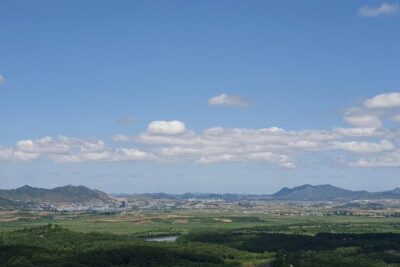
Best DMZ Tour Korea from Seoul (Red Suspension Bridge Optional)
Read our review →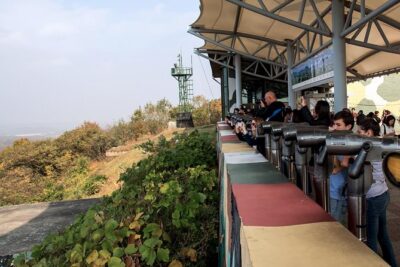
DMZ Tour: 3rd Tunnel, Option(Suspension Bridge, Boat) from Seoul
Read our review →DMZ tour south Korea from Seoul (NK experience hall, defector)
Read our review →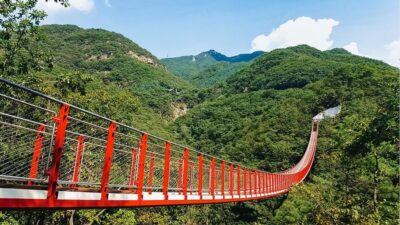
DMZ Insider Tour: 3rd Tunnel, NK Defector Meet & Red Bridge
Read our review →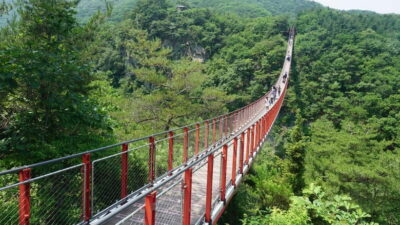
Signature DMZ Tour: Exclusive Defector Talk & Suspension Bridge
Read our review →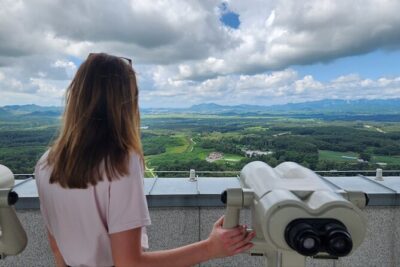
Thrilling Korean DMZ 3rd Tunnel Tour from Seoul + Red Bridge Rush
Read our review →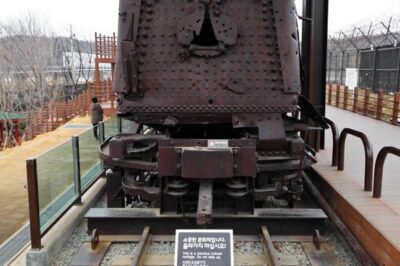
DMZ Past and Present: Korean Demilitarized Zone Tour from Seoul
Read our review →Browse the lists this tour appears in